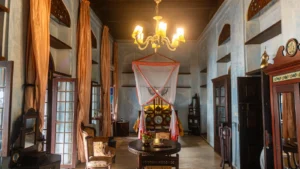
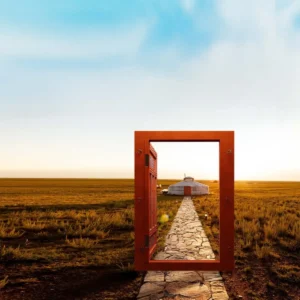
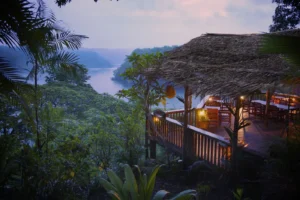
Las Qolqas is a safari-tent eco-lodge near Ollantaytambo that treats its wastewater in wetlands, lights itself with solar panels and grows food on restored Inca terraces.
Accommodation Eco Score
3.4/5Accommodation Eco Score
Throne Standard 2.2 · Evidence coverage 100% · Evidenced performance 58.8%. Weighted sources are shown below.
Recorded research, grouped by subject; claims remain unverified unless linked to reviewed evidence. Blue bars show how much information is held; they are not positive or negative scores. Fields with nothing behind them are counted, not listed.
7 groups · 27 fields
Features1 of 8
What to do generally
The tents sit in a native botanical garden two kilometres from Ollantaytambo in Peru's Sacred Valley, close to the Machu Picchu train station. Guests visit Machu Picchu and weaving villages in the Patacancha valley, hike to Inca quarries and waterfalls, take cooking classes and use the spa and yoga dome.
Scan result2 of 4
Eco Score
3
Eco Score Label
Moderate evidenced performance
Identity1 of 4
Closest Airport name
Cusco (CUZ)
Energy, water and land1 of 10
Water Management Type
Drinking water is filtered by membranes, UV, reverse osmosis and carbon; wastewater is treated in bio-digesters and wetlands and reused for irrigation. lasqolqas.com
Claims and evidence1 of 5
Verified
Researched and source checked in three passes, Oct 2026
People Targeting
Wellness Seekers / Andean Explorers
Secluded / Isolated
High Seclusion
Eco Amenities
Solar panels meet the lodge's lighting needs and the tents use thermal insulation (official site, 2025 to 2026). Drinking water is filtered on site, wastewater is treated in bio-digesters and a constructed wetland then reused for irrigation, and drip irrigation is used on the terraces. A strict no single-use plastic policy, filtered water in place of bottles and composting on site. Produce is grown organically on centuries-old Inca terraces, the restaurant doubles as a greenhouse, and honey, trout and fruit come from neighbours. The tents sit in a botanical garden of native Sacred Valley plants and the lodge's association runs a native tree reforestation project. Guests sleep in low-impact safari tents, and the lodge works with the Ministry of Culture to restore historic Inca agricultural terraces on and around its land (official site, 2026). The village is a 20-minute walk away and a free shuttle runs guests to the Machu Picchu train station.
Activities to do
While at Las Qolqas, you can take guided hikes to ruins, enjoy river-side relaxation and bird watching. Las Qolqas offers on-site guided valley/nature tours.
Drinking water is filtered on site, wastewater is treated in bio-digesters and a constructed wetland then reused for irrigation, and drip irrigation is used on the terraces.
3/4 · Several systems, such as rain harvesting plus wastewater treatment and reuse plus low flow fittings
7.5 / 10 points
Drinking water is filtered on site, wastewater is treated in bio-digesters and a constructed wetland then reused for irrigation, and drip irrigation is used on the terraces.
3/4 · Own farm or organic land supplies a large share, with named local suppliers and seasonal menus; consolidated local supply rather than daily imports
11.25 / 15 points
Produce is grown organically on centuries-old Inca terraces, the restaurant doubles as a greenhouse, and honey, trout and fruit come from neighbours.
2/4 · One specific practice, such as a historic building reused, local natural materials, or passive cooling design
7.5 / 15 points
Guests sleep in low-impact safari tents, and the lodge works with the Ministry of Culture to restore historic Inca agricultural terraces on and around its land (official site, 2026).
2/4 · Specific practices, systems and named suppliers published
2.5 / 5 points
The ecolodge page names specific systems such as solar lighting, biodigesters with wetlands, and named partners like Casa Kuska, but publishes no measured data or third party certificate.
“Wastewater treatment using bio-digesters and wetlands, with treated water used for irrigation.”
Throne Standard for stays 2.2. Accommodation Eco Score weights: Nature, biodiversity and regeneration 30%, Energy and climate 15%, Water 10%, Waste and plastic 10%, Food, farming and sourcing 15%, Buildings, heritage reuse and land use 15%, Measurement, transparency and certification 5%. Each pillar earns its weight times its level divided by four. The score is 1 plus 4 times the evidenced performance, shown to one decimal, so 0% is 1.0 and 100% is 5.0. A pillar the stay does not disclose, after we read its own pages, counts as 0 and is shown as Not disclosed, with every page we read linked, because silence is an answer too. Every finding quotes its source word for word. Below 85% coverage, below 70% performance, or with less than half the weight at level 2 or above, the score is held under the next whole number (3.4 or 2.4). A 5.0 band needs 90% coverage and performance, level 4 evidence on half the weight and the key pillar at level 3 or above. Green flags are pillars at level 3 or 4. Every level can be earned from public, dated evidence; no score requires a visit. Evidence must be rechecked within two years. Guest travel is not scored; everyone gets there how they can.
2/4 · Public supply filtered at the tap or a refill station, with no single use bottled water as the default
12.5 / 25 points
The ecolodge page says drinking water is filtered through membranes, UV light, reverse osmosis and carbon filters and that no plastic bottles are needed.
“Filtered water is provided. No need for plastic bottles.”
2/4 · Named organic or own garden produce in some meals, and plant based meals available
10 / 20 points
The restaurant page says the greenhouse restaurant grows part of its own ingredients organically and offers vegetarian and vegan dishes.
“Our greenhouse restaurant allows us to grow part of our own ingredients, while our zero-mile philosophy ensures that everything else is sourced locally and seasonally.”
Throne Standard for stays 2.2. Purity Score weights: Water you drink and bathe in 25%, Food on your plate 20%, Grounds and pest control 15%, Cleaning, laundry and fragrance 15%, Linen, towels and mattresses 10%, Air and quiet 10%, Pool and bathing water 5%. Each pillar earns its weight times its level divided by four. The score is 1 plus 4 times the evidenced performance, shown to one decimal, so 0% is 1.0 and 100% is 5.0. A pillar the stay does not disclose, after we read its own pages, counts as 0 and is shown as Not disclosed, with every page we read linked, because silence is an answer too. Every finding quotes its source word for word. Below 85% coverage, below 70% performance, or with less than half the weight at level 2 or above, the score is held under the next whole number (3.4 or 2.4). A 5.0 band needs 90% coverage and performance, level 4 evidence on half the weight and the key pillar at level 3 or above. Green flags are pillars at level 3 or 4. Every level can be earned from public, dated evidence; no score requires a visit. Evidence must be rechecked within two years.
The ecolodge page describes a non profit association, the Casa Kuska library sponsorship, school donations, reforestation and weavers who keep all proceeds, plus named local suppliers.
“we established a non-profit association dedicated to enhancing the well-being of the Patacancha River Valley and its people.”
The ecolodge page says pillows are handwoven by artisans from five river communities who keep all sales proceeds, and the lodge works with the Ministry of Culture on restoring historic terraces.
“we collaborate closely with the Ministry of Culture on the restoration of historic agricultural terraces.”
3/4 · Several programmes plus named local suppliers and makers
15 / 20 points
The ecolodge page describes a non profit association, the Casa Kuska library sponsorship, school donations, reforestation and weavers who keep all proceeds, plus named local suppliers.
“we established a non-profit association dedicated to enhancing the well-being of the Patacancha River Valley and its people.”
3/4 · Heritage conserved and interpreted with the community, makers paid
7.5 / 10 points
The ecolodge page says pillows are handwoven by artisans from five river communities who keep all sales proceeds, and the lodge works with the Ministry of Culture on restoring historic terraces.
“we collaborate closely with the Ministry of Culture on the restoration of historic agricultural terraces.”
Throne Standard for stays 2.2. People Score weights: Ownership and control 30%, Local work and fair pay 25%, Community benefit 20%, Access to beach and land 15%, Culture and heritage 10%. Each pillar earns its weight times its level divided by four. The score is 1 plus 4 times the evidenced performance, shown to one decimal, so 0% is 1.0 and 100% is 5.0. A pillar the stay does not disclose, after we read its own pages, counts as 0 and is shown as Not disclosed, with every page we read linked, because silence is an answer too. Every finding quotes its source word for word. Below 85% coverage, below 70% performance, or with less than half the weight at level 2 or above, the score is held under the next whole number (3.4 or 2.4). A 5.0 band needs 90% coverage and performance, level 4 evidence on half the weight and the key pillar at level 3 or above. Green flags are pillars at level 3 or 4. Every level can be earned from public, dated evidence; no score requires a visit. Evidence must be rechecked within two years.
You have the verdict. The working is behind the pass.
The summary and the instant check are free on every record, always. Members also get the results table item by item, the certificates as checked on each register, and information that has not yet been independently verified.
These source pages were captured on 2026-10-02. Capturing a page does not establish a rating or verify its claims. Only the reviewed pillar evidence above earns assessment points. Missing findings remain unavailable.