Destinations › Caribbean · The Destination Index · universal template · every figure sourced
Grenada.
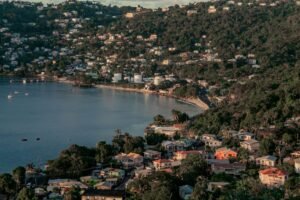
Caribbean, island between the Caribbean Sea and Atlantic Ocean, north of Trinidad and Tobago. 344 sq km and 117,303 people, 121 km of coastline, tropical; tempered by northeast trade winds.
Region · CaribbeanPopulation · ~117,303Languages · Grenadian Creole English, English (official). Kweyol is still spoken in the northEco Index · 68/100 · Passable
The Eco Index across 12 pillars · scored 0 to 5 · World Bank, OWID, WHO/UNICEF JMP, FiBL, Protected Planet, IUCN, UNESCO (2023-24)
Conservation
Wildlife
Water
Food & farming
Organic & clean
Climate & energy
Waste
Health
Heritage
Ownership
Governance
Future
The History of Grenada.
Grenada, and especially the sister island of Carriacou, holds strong living African rooted heritage. The Big Drum or Nation Dance traces songs and steps to specific West African nations and is performed at ancestral Saraca feasts that honour the dead.
Where the name comes from
The Kalinago called it Camerhogne. Spanish sailors renamed it for Granada in Andalusia. Source: national and regional toponymic records.
The land itself: volcanic in origin, with mountains through the centre. Its high point is Mount Saint Catherine, 840 m. Source: national mapping and survey records.
Where it starts
Camahogne
Grenada sits at the southern end of the chain, about 90 miles from Trinidad and Venezuela. It was long thought to be the first stopping point for migrations into the Caribbean from South America, but Bayesian modelling of 2,484 radiocarbon dates published in 2019 found that colonists reached the northern Antilles before the southern islands, refuting that stepping stone model. The Pearls site was occupied from around AD 400 and lasted twelve centuries. Sabazan on Carriacou, dated by 26 radiocarbon assays, ran from AD 400 to 1400. Savanne Suazey stood from AD 900 to 1650. The people who lived here called the island Camahogne.
How it got here
Resistance, then plantation
French settlement from the 1650s was resisted by the Kalinago. The island was ceded to Britain in 1763 and worked as a plantation economy on enslaved African labour until abolition in 1834. Independence came in 1974.
The timeline
c. AD 400
Pearls is settled.
The Pearls site on the north-east coast is occupied from around AD 400, through the Saladoid and Barrancoid periods and on into the Suazan-Troumassoid, lasting until the seventeenth century. ↗
AD 400 to 1400
Sabazan on Carriacou.
One of the earliest settlements in the archipelago, its chronology supported by 26 radiocarbon assays. Hanna, Journal of Anthropological Archaeology. ↗
AD 600 to 1300
The Troumassoid centuries.
Villages across Grenada and the Grenadines flourish through the Troumassoid period, farming and fishing the coast. ↗
AD 900 to 1650
Savanne Suazey.
A major Suazan-Troumassoid settlement occupied for seven centuries, into the era of European contact. ↗
Before 1498
Camahogne.
The island's Indigenous occupants called it Camahogne. Grenada is the southernmost island of the chain, roughly 90 miles from Trinidad and Venezuela. It was long thought to be the first stopping point for migrations into the Caribbean from South America, but a 2019 Bayesian analysis of radiocarbon dates found the northern Antilles were reached first and refuted that stepping stone model. ↗
1498
European sighting.
A European fleet sights the island in 1498, on the third voyage of Columbus. ↗
1650s
French settlement and Kalinago resistance.
French settlement begins and is resisted by the Kalinago. Grenada National Museum. ↗
1763
Ceded to Britain.
The Treaty of Paris transfers the island to Britain after the Seven Years War. Grenada becomes one of the Ceded Islands, and British planters expand sugar across land the French had worked. ↗
1834
Abolition.
The Slavery Abolition Act takes effect on 1 August 1834, ending slavery on the sugar estates the British had expanded here after 1763. Everyone over the age of six is held as an unpaid apprentice until 1838. Parliament pays £20 million in compensation to slave owners and nothing at all to the people they had enslaved. ↗
1974
Independence.
Grenada becomes independent on 7 February 1974, after two decades dominated by Eric Gairy. ↗
Grenada set itself a target and did not meet it. The government committed under the Caribbean Challenge to 25 per cent nearshore and 25 per cent terrestrial protection by 2020. Its three marine protected areas cover approximately 4 per cent of nearshore coastal resources, and its ten terrestrial protected areas approximately 6 per cent of the land.
Is wild Grenada protected? 8.8% of the land is, against a 30% target for 2030
How protected is nature in Grenada?
Forest cover52.06%
Terrestrial protected area8.8%
Marine protected area0.1%
61 (mammals, birds, fish & plants) listed as threatened.
Found only here. Grenada dove and Grenada frog, both found only here
The watchlist
ThreatenedGrenada Dove (Leptotila wellsi)Critically Endangered on the IUCN Red List, and recorded in Grenada in GBIF occurrence data (bird).
ThreatenedHawksbill (Eretmochelys imbricata)Critically Endangered on the IUCN Red List, and recorded in Grenada in GBIF occurrence data (turtle).
ThreatenedGrenada Frog (Pristimantis euphronides)Critically Endangered on the IUCN Red List, and recorded in Grenada in GBIF occurrence data (amphibian).
ThreatenedReef starlet coral (Siderastrea siderea)Critically Endangered on the IUCN Red List, and recorded in Grenada in GBIF occurrence data (coral).
ThreatenedFire coral (Millepora complanata)Critically Endangered on the IUCN Red List, and recorded in Grenada in GBIF occurrence data (coral).
ThreatenedMaze coral (Meandrina meandrites)Critically Endangered on the IUCN Red List, and recorded in Grenada in GBIF occurrence data (coral).
ThreatenedBrain coral (Diploria labyrinthiformis)Critically Endangered on the IUCN Red List, and recorded in Grenada in GBIF occurrence data (coral).
ThreatenedGreen Cactus Coral (Madracis decactis)Critically Endangered on the IUCN Red List, and recorded in Grenada in GBIF occurrence data (coral).
Critically Endangered, the last IUCN category before Extinct in the Wild, and still recorded in Grenada. GBIF holds 548 verified occurrence records.
Hawksbill (Eretmochelys imbricata)
Critically Endangered, the last IUCN category before Extinct in the Wild, and still recorded in Grenada. GBIF holds 4 verified occurrence records.
Grenada Frog (Pristimantis euphronides)
Critically Endangered, the last IUCN category before Extinct in the Wild, and still recorded in Grenada. GBIF holds 2 verified occurrence records.
Reef starlet coral (Siderastrea siderea)
Critically Endangered, the last IUCN category before Extinct in the Wild, and still recorded in Grenada. GBIF holds 11 verified occurrence records.
Species named here are drawn from GBIF occurrence records for Grenada filtered to the IUCN Red List threatened categories. Species are listed where GBIF holds occurrence records for them in this country. Record counts are not published here because the figure cannot be reproduced from a public GBIF query.
Marine protected area in Saint George, mapped and named in the open record for Grenada. OpenStreetMap.
Water and Ocean in Grenada.
Mainland Grenada is a surface water island, drawing on 29 water supply facilities, 23 of them surface water, with drinking water mainly harvested in dams in the northern mountains. Average annual rainfall is around 1,150 mm and 75 per cent of it falls in the rainy season, which is the whole problem. Dry season yield drops to around 31,800 cubic metres a day against demand of 54,600, and the utility has reported stream production deficits as steep as 60 per cent, with the Clozier plant falling from 40,000 gallons to 7,000.
Does Grenada have enough fresh water? Yes, with headroom
89.9% of people here have safely managed drinking water at home (2017, WHO/UNICEF JMP). Most homes have a safe supply, but coverage is not universal, so check locally before drinking from the tap.
Cleanest water: Molinere Bay Underwater Sculpture Park (Marine Protected Area)
How much fresh water does Grenada have, per person?
1,711 m³
Grenada
1,000 m³
the UN “water scarce” line
Grenada withdraws about 14 million cubic metres of fresh water a year (2022). That is 7.0% of the fresh water actually available to it, which FAO counts as no water stress. Of what is taken, farming takes 15%, homes and towns 85%, industry 0%. Source: FAO AQUASTAT.
What are the rules on Grenada beaches?
·Tap water: Varies.
✓Plastic rules: Polystyrene from Sept 2018, all single use plastics from Feb 2019.
✕Solo travel: rated moderate on the record for this destination.
✕Marine protection: 4% of the sea is protected. The 30x30 pledge for 2030 is not met yet.
How is the sea around Grenada doing?
One cross-section, every answer measured.
Surface
What the coast carries
Leatherback turtle nesting at Levera Beach ~March–August, best April–June (beach closed after dark in season).
Nearshore
Protected water
0.1% of territorial waters are protected, against the 30% pledged for 2030 under the Global Biodiversity Framework.
Cleanest
Where the water is cleanest
Molinere Bay Underwater Sculpture Park (Marine Protected Area).
The record
Measured
Mainland Grenada is a surface water island, drawing on 29 water supply facilities, 23 of them surface water, with drinking water mainly harvested in dams in the northern mountains. Average annual rainfall is around 1,150 mm and 75 per cent of it falls in the rainy season, which is the whole problem.
Sea protected
4%
Against the 30% pledged for 2030 under the Global Biodiversity Framework.
Threatened species
61 (mammals, birds, fish & plants)
Mammals, birds, fish and higher plants on the IUCN list.
Cleanest water
here
Molinere Bay Underwater Sculpture Park (Marine Protected Area).
Is the tap water safe in Grenada?
89.9% of people have safely managed drinking water at home (2017, WHO/UNICEF JMP). Renewable fresh water works out at about 1,711 cubic metres per person a year (World Bank).
How hard is the water supply being pushed?
Of every 10 buckets nature refills, 1 are already taken. Withdrawals run at 7.0% of what Grenada renews internally each year (2022, World Bank / FAO AQUASTAT). That is inside the 25% mark generally treated as water stress, so the supply has headroom.
When is the best time to visit Grenada? Tap your month.
Tap your month.
JanFebMarAprMayJunJulAugSepOctNovDec
.
How much fresh water does Grenada actually have?
Nature renews about 1,711 cubic metres of fresh water per person per year here. That ranks Grenada 78 of 208 countries measured, putting it in the drier half of the world. The UN treats anything under 1,000 cubic metres as water scarce, and this is above that line. World Bank / FAO AQUASTAT.
Nutmeg is the claim and it stands up. Grenada is responsible for more than 20 per cent of world nutmeg production, second only to Indonesia at around 75 per cent. Nutmeg is around 9 per cent of the harvested area and provides income to roughly 30 per cent of the population, and Grenadian yields at 579 kg per hectare are well above the regional average of 372.
Where does the food in Grenada come from?
24.2% imported
about US$158m a year
On the plate: Nutmeg and mace (the 'Spice Isle'), cocoa, bananas, ground provisions and callaloo (dasheen leaves), national dish is 'oil down' (breadfruit, salt, callaloo, coconut ).
How often each food is on the plate
Share of people eating each one regularly. These overlap, so they do not add up to 100%.
Nutmeg60%
Cocoa42%
Bananas33%
Ground provisions24%
2 of 10
bites are imported
The island buys in more food energy than it eats. About US$158m a year leaves the country to pay for it. The green slice is roughly what still grows here.
About 24.2% of everything Grenada buys in from abroad is food, roughly 2 in every 10 imported items on the dock (2024, World Bank). Farming itself is 2.5% of the economy and 23.5% of the land is agricultural, of which 8.8% is arable. The green slice is roughly what still grows here.
What is killing people in Grenada? The imported diet.
Cause of death, and the diet behind it.
Non-communicable diseases, all combined59.1%
Diabetes11.3%
Adults living with overweight or obesity. 59.9%.
Can Grenada feed itself?
8.8%
Arable land
23.5%
Agricultural land
7,413
Arable acres
2.5%
Agriculture, share of GDP
Harvest: Nutmeg much of the year, cocoa heaviest around the turn of the year
Feeding itself
Nutmeg is the claim and it stands up. Grenada is responsible for more than 20 per cent of world nutmeg production, second only to Indonesia at around 75 per cent.
Certification
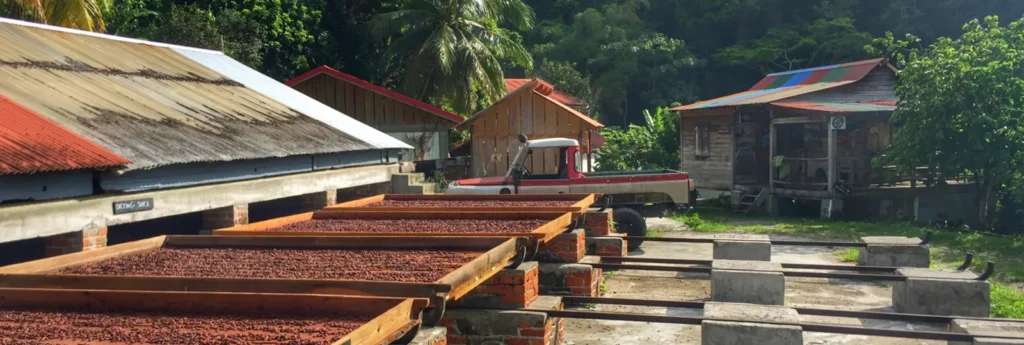
Grenada's organic story is cocoa and it is genuine. Belmont Estate's cocoa farm was certified organic in 2003, having converted in 2000 because the Grenada Chocolate Company, already making chocolate from organically grown cocoa, was looking for a local supplier. Belmont is now its biggest supplier.
Water for crops
Mainland Grenada is a surface water island, drawing on 29 water supply facilities, 23 of them surface water, with drinking water mainly harvested in dams in the northern mountains. Average annual rainfall is around 1,150 mm and 75 per cent of it falls in the rainy season, which is the whole problem.
Why the organic number looks like that. Certified-organic farmland is not separately reported for Grenada, and that is a certification gap rather than proof nothing is grown cleanly. What the official land record does show: 23.5% of the country is agricultural land and 8.8% is arable (2023, World Bank). Certification is paid for per farm per year by a foreign body, which prices out smallholders, so the organic number reads worse than the practice.
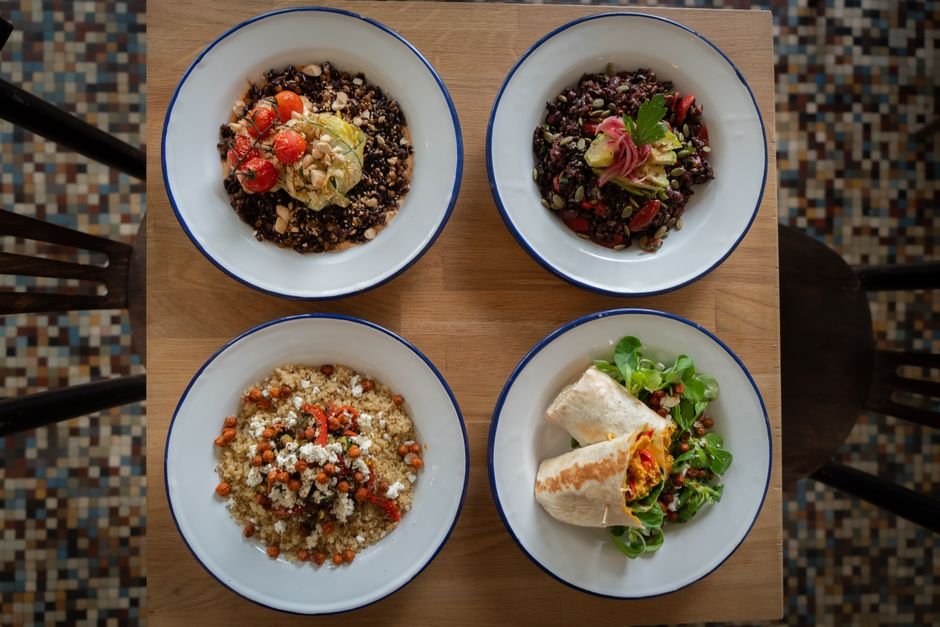
The plant-based kitchen here is not an import. By tonnage, the largest crops grown in Grenada are sugarcane, coconuts and bananas (FAO, FAOSTAT crop production, 2024). That is what the land itself puts on a plate.
Buy direct where residents buy: Serving Ourselves Farm, "Mont Rose" Organic Farm, Pride of the Meadow, Lewisville Family Farms, Farm and Garden Center, Excellent Farms Ltd. Every one is a farm shop we have checked and listed ourselves, so the money goes to the grower rather than the importer. The checked list
Checked kitchens from the directory: Vegan Vibes → Vegan Vibes is a restaurant in Grenada. See its verified sustainability rating and review to help you decide w; Belmont Estate Restaurant → Belmont Estate Restaurant is a restaurant in Grenada. See its verified sustainability rating and review to hel; Volcan Vegan → Volcan Vegan is a restaurant in Grenada. See its verified sustainability rating and review to help you decide; Bogles Round House → Bogles Round House is a restaurant in Grenada. See its verified sustainability rating and review to help you d. Every kitchen listed here is checked for how plant-based the menu really is before it earns its place.
Grenada's electricity is almost entirely diesel generated, with fossil fuels supplying about 98 per cent and renewables under 2 per cent in 2024. Per person emissions are low at 3.22 tonnes of CO2 in 2024, a reflection of the island's small scale rather than clean energy. The government has a target of 30 per cent renewable electricity by 2030 and is exploring geothermal and solar, but delivery so far is minimal. The near total reliance on imported diesel keeps the score low despite modest absolute emissions.
What powers Grenada?
Renewable 0%Fossil 100%
Climate pollution per person
The safe amount, what the planet can absorb
2 tonnes
One person here
1.5 tonnes
The world average, for comparison
4.7 tonnes
The worst it ever got
1.56 tonnes
The grid
Grenada's electricity is almost entirely diesel generated, with fossil fuels supplying about 98 per cent and renewables under 2 per cent in 2024. Per person emissions are low at 3.22 tonnes of CO2 in 2024, a reflection of the island's small scale rather than clean energy.
Pollution
Grenada legislated early and in stages, under the Non-Biodegradable Waste Control Act. Importing polystyrene was banned from 1 September 2018, the sale of styrofoam from 1 March 2019 and the offer for sale of food in or with it from 1 April 2019. The plastics stage began on 1 February 2019 with a ban on importing and locally manufacturing single use plastic shopping bags with handles, followed by a ban on selling them from 1 December 2019.
Water stress
Mainland Grenada is a surface water island, drawing on 29 water supply facilities, 23 of them surface water, with drinking water mainly harvested in dams in the northern mountains. Average annual rainfall is around 1,150 mm and 75 per cent of it falls in the rainy season, which is the whole problem.
What pollutes most here
1The gridThe share of electricity still generated from fossil fuel.98%
2AirModelled annual mean against a WHO guideline of 5 µg/m³.4.7
3On the recordGrenada legislated early and in stages, under the Non-Biodegradable Waste Control Act.
What has Grenada promised on climate?
Electricity renewable today2% (2021)
Land protected, against a 30% target8.8% by 2025
Sea protected, against a 30% target0.1% by 2025
Measured on delivery, 2% of electricity is already renewable (2021, World Bank), so 98% of the grid is still to be converted. The pledge on file is measured here against what has actually been delivered, not taken on its own (UNFCCC NDC Registry, CBD Kunming-Montreal Target 3).
The biggest line item
One return flight against a whole year of living.
A resident's entire year1.5 t CO2e
Safe-climate budget, per year2 t CO2e
Singapore return, economy3.22 t CO2e
Sydney return, economy2.86 t CO2e
Dubai return, economy2.17 t CO2e
Johannesburg return, economy1.91 t CO2e
Frankfurt return, economy1.37 t CO2e
How much CO2 does flying to Grenada emit?
Tap where you would fly from. One return flight, economy.
Every prompt runs on a machine in a building on somebody’s grid. What that costs the planet depends less on the prompt than on what is burning to power it. Here is what would power one in Grenada.
Data centres
0
Registered colocation and interconnection facilities, PeeringDB, 2026
Grid renewable
0.0 %
What a machine here runs on.
What powers a data centre in Grenada?
Almost everything a machine here consumes is burned fossil fuel.
Renewable 0%Fossil 100%
Cooling water. Every one of those halls runs on the national grid, which is 2% renewable today (World Bank). A data centre is only as clean as the electricity behind it, so the same figure that decides this country's climate score also decides the footprint of the AI running inside it. Cooling water use is not separately published by facility, and no operator here reports it.
The rules. Grenada has 0 colocation and interconnection facilities on the public PeeringDB register, alongside 1 internet exchange (GREX).
Where the cables land. 3 landing points · Carriacou, Conference, Point Salines
18% residents to 82% visitors across a year. 526,000 international arrivals in 2019 against 117,303 people who live here (2025, World Bank / UN Tourism).
Where a visitor dollar goes in Grenada
217k
Visitors a year
1.9
Visitors per resident
How deep in debt is Grenada?· for every $100 Grenada earns in a year, it owes…
Pay to the order of: the creditorsmemo · the 2013 peak
$ 105The worst year on the IMF record. Grenada owed $105 for every $100 it earned.
IMF World Economic Outlook, 2013signed, the creditors
Pay to the order of: the creditorsmemo · today
$ 69What is owed now, for every $100 of national income (2026).
IMF World Economic Outlook, 2026signed, the creditors
Pay to the order of: the creditorsmemo · projected 2031
$ 67The IMF's own forecast has this falling to $67 by 2031.
IMF World Economic Outlook projection, 2031signed, the forecast
For every $100 Grenada earns in a year, it owes $69 (2026, IMF World Economic Outlook). The interest on that is paid before schools, clinics or coastline get their turn.
Where does a tourist dollar actually go in Grenada?
Play one tourist dollar around the board. Every square is a measured fact from this page.
START!
1
GO: a visitor lands
$100 goes on the table. 526,000 international arrivals in 2019 against 117,303 residents, 4.5 visitors for every resident (World Bank / UN Tourism).
$100 in play
2
The bed
Who owns the largest places to stay in Grenada is not published in the records we can check, so this square is left open rather than guessed. Where a listing names its owner, it is shown in the ownership table below.
not published
3
The plate
Food is 24.2% of everything Grenada imports (2024, World Bank), so a large part of every restaurant bill is paid to a supplier abroad. Eating what the land here actually grows, sugarcane, coconuts, vegetables, fruits, bananas, plantains, grapefruits, avocados, mangoes/guavas, keeps that money with the grower.
sails in
4
The power
98% of the electricity is fossil (2021, World Bank). Lighting, cooling and hot water are paid for largely in imported fuel.
burns away
5
What actually stays
Of the two parts of a visitor's bill that can be measured here, the plate and the power mostly leave Grenada. Choosing locally grown food is the part of that a visitor can actually control.
less than you think
6
Pay the bank first
Grenada owes $69 for every $100 it earns (IMF World Economic Outlook, 2026 projection). The interest is paid before anything else on this board.
$69 per $100
7
A spread hand
The largest single export, milling products, malt and starch, is 13.6% of the total (2023, UN Comtrade). No one shock can take the whole board.
top export 13.6%
8
Community chest
Tourism earns 88.2% of everything Grenada makes from exports (2018, World Bank / UN Tourism). That is how much of the economy depends on the game continuing.
88.2% of exports
9
The flight
Getting here is usually the biggest single line on the bill. From Singapore a return economy seat is 3.22 t CO2, on the UK Government's published conversion factors. It is the one part of the trip this board cannot reduce.
3.22 t CO2
10
Back to GO
The economy turns over about US$1 billion a year (IMF World Economic Outlook, 2026 projection). Every lap of this board is a choice about how much of it stays.
US$1bn
GDPUS$1.4bn
Agriculture, share of GDP2.5%
Visitors a year217,000
Visitors per resident1.9
Residents~117,303
Agriculture
Farming is 2.5% of the economy. Nutmeg is the claim and it stands up.
Natural materials
The living craft here is wood, and it carries the highest credential available. Traditional wooden boatbuilding in Carriacou and Petite Martinique was inscribed on the UNESCO Representative List of the Intangible Cultural Heritage of Humanity in 2023.
Energy
Grenada's electricity is almost entirely diesel generated, with fossil fuels supplying about 98 per cent and renewables under 2 per cent in 2024. Per person emissions are low at 3.22 tonnes of CO2 in 2024, a reflection of the island's small scale rather than clean energy.
Who owns the biggest hotels in Grenada?
By rooms · company records and press.
Crayfish Bay Organic EstateOwnership not publishednot published
Petite Anse HotelOwnership not publishednot published
Almost Paradise Cottage RetreatsOwnership not publishednot published
Visitors, over time
2015437k
2016474k
2017468k
2018529k
2019526k
2020217k
International tourism receipts run at about US$0.55 billion in 2018 (World Bank / UN Tourism). That is 88.2% of everything the country earns from exports.
How much of your money actually stays here?
Tap the holiday you are planning.
All-inclusive resortForeign-owned hotel and tourist restaurantsLocally owned stay and local restaurantsGuesthouse, markets and public transport
Resort guest, villa renter, family, nomad or backpacker. The honest playbook for each, from the same sourced numbers.
Already booked a resort? · the rescue list
Five swaps that move your money back on-island
1. Eat where the country eats Choose kitchens cooking what the land here grows, sugarcane, coconuts, vegetables, fruits, bananas, plantains, grapefruits, avocados and mangoes/guavas, over an imported menu. The checked list →
2. Book with a local operator Never the lobby desk. The margin on a tour is the part that stays. Eco tours →
3. Stay somewhere locally owned Ownership decides where the room rate books. Eco stays →
4. Use the transport residents use Local buses on the mainland; ferry or light aircraft to Carriacou
5. Buy the craft, not the souvenir Natural-materials work made here pays the maker directly; imported gifts pay a shipping line.
swipe →
First time here
Grenada is the spice island and the claim is real: after Indonesia it is the second largest supplier of whole nutmeg to the main European markets, with 11 per cent of German and 13 per cent of Italian whole nutmeg imports against Indonesia's 79 and 85 per cent. It is also volcanic, river fed and forested, with cocoa estates you can walk through from pod to bar.
Best time: January to April is driest. Nutmeg and cocoa are harvested across much of the year, with cocoa heaviest around the turn of the year. The Carriacou Maroon and String Band Music Festival is at the end of April, and Grenada's carnival, Spicemas, is in August.
Getting around
Local buses on the mainland; ferry or light aircraft to Carriacou
Transport is where the fare either stays or leaves.
Eating here
The everyday plate that actually grows here is sugarcane, coconuts, vegetables, fruits, bananas, plantains, grapefruits, avocados and mangoes/guavas. Ordering those keeps the money with the grower and cuts the imported share of the meal.
Eating what the country grows is the cheapest way to cut the import bill.
Good to know
Carriacou was hit by Hurricane Beryl as a category 4 on 1 July 2024 and 98 per cent of its infrastructure was damaged. It is green again and trading, but go with that in mind and spend locally.
Water is short in the dry season on the mainland and permanently tight on Carriacou, where 91 per cent of households run on cisterns.
Do not buy fruit to feed the mona monkeys at Grand Etang. They are an introduced species and the feeding is a habit worth ending. And ask where a spice basket was woven before you buy it, because we could not establish whether they are made here.
Rate my hotel. Tap yours for the honest verdict.
Ownership from company records and press.
Crayfish Bay Organic EstatePetite Anse HotelAlmost Paradise Cottage Retreats
.
Who owns the big hotels
Crayfish Bay Organic EstateOwnership not published
Petite Anse HotelOwnership not published
Almost Paradise Cottage RetreatsOwnership not published
None of the 3 properties listed here publishes who ultimately owns it, so no claim is made either way. Ownership is what decides how much of a room rate stays in the country, which is why we show it when a listing states it.
Society and Governance in Grenada.
How well is Grenada actually run?
Governance, measured · World Bank WGI
Four measured answers, none of them opinion. Averaged across corruption control, delivery and accountability, Grenada scores 58 out of 100 (2024, World Bank Worldwide Governance Indicators). That matters here because every pledge on this page is only as good as the machinery meant to deliver it.
How well is Grenada run? · each scored out of 100, higher is better
Clean government, scored 58 of 100
Control of corruption scores 57.6 out of 100 (2024, World Bank Worldwide Governance Indicators). That is above the halfway mark of governments measured.
58
Freedom and rights, scored 64 of 100
Voice and accountability, which measures free expression, free media and the ability to choose a government, scores 63.5 out of 100 (2024, World Bank WGI). Citizens have some room to question their government.
64
Government effectiveness, scored 52 of 100
Government effectiveness, which measures the quality of public services and how well policy is actually delivered, scores 51.7 out of 100 (2024, World Bank WGI). Delivery is rated above average.
52
Income equality, scored 44 of 100
The Gini index of income inequality reads 43.8 (2018, World Bank). Zero is perfect equality and 100 is one person holding everything. Above 40 is the level usually treated as socially strained, and Grenada sits above it.
What is daily life in Grenada really like? Measured
Getting around, breathing, throwing away, learning. The honest checklist.
TransportAirWaterWastePower
✓How you get around Local buses on the mainland; ferry or light aircraft to Carriacou
✓Air quality, measured Modelled annual mean 4.7. The WHO guideline is 5 µg/m³.
✓Tap water Varies
✓What to drink Mountain dams and rivers on the mainland; rainwater cisterns on Carriacou
✓Plastic rules Polystyrene from Sept 2018, all single use plastics from Feb 2019
✓Sockets and voltage 230V, UK three pin
97.8%
literacy. Public spending on education runs at 5.1% of GDP and 11.4% of all government spending, and secondary enrolment stands at 100.7% gross (UNESCO Institute for Statistics, 2023 to 2025).
Made in Grenada.
The living craft here is wood, and it carries the highest credential available. Traditional wooden boatbuilding in Carriacou and Petite Martinique was inscribed on the UNESCO Representative List of the Intangible Cultural Heritage of Humanity in 2023. Every step of processing done at home is value that stops leaving the country.
What Grenada actually sells the world
The single biggest thing Grenada sells the world is milling products, malt and starch, 13.6% of all exports in 2023 (about US$0.01 billion, UN Comtrade). The next four are coffee, tea and spices at 10.5%, animal feed residues at 10.0%, tanning and dyeing extracts at 8.9%, beverages, spirits and vinegar at 6.7%.
Made now · natural materials
Contours
Worked in Grenada from local material, and still a working craft rather than a museum piece.
Made now · natural materials
Frank Belfon
Worked in Grenada from local material, and still a working craft rather than a museum piece.
Made now · natural materials
Who trades as The Culture Man at the Grand Anse Craft Market
Worked in Grenada from local material, and still a working craft rather than a museum piece.
Buys in · 17.8% of imports
Mineral fuels and oils
Grenada imported US$0.11 billion of mineral fuels and oils in 2023, 17.8% of everything it bought abroad, and sells none of it back. Every point of that is a business that could be built at home rather than shipped in. UN Comtrade.
Buys in · 8.5% of imports
Machinery and mechanical appliances
Grenada imported US$0.05 billion of machinery and mechanical appliances in 2023, 8.5% of everything it bought abroad, and sells none of it back. Every point of that is a business that could be built at home rather than shipped in. UN Comtrade.
Buys in · 6.1% of imports
Vehicles
Grenada imported US$0.04 billion of vehicles in 2023, 6.1% of everything it bought abroad, and sells none of it back. Every point of that is a business that could be built at home rather than shipped in. UN Comtrade.
Buys in · 3.6% of imports
Meat
Grenada imported US$0.02 billion of meat in 2023, 3.6% of everything it bought abroad, and sells none of it back. Every point of that is a business that could be built at home rather than shipped in. UN Comtrade.
The maths for an entrepreneur. Grenada produces about US$1 billion a year, which is roughly US$12,107 per person (2025, World Bank). Farming is 2.5% of that, while food is 24.2% of everything the country imports. The country buys in more food than its own farms contribute to the economy, and every point of that gap is a business someone could build here rather than ship in. With 8.8% of the land arable, the raw material for that is already in the ground.
A living tradition of Grenada, still practised rather than archived.
Quadrille of Carriacou
A living tradition of Grenada, still practised rather than archived.
Saraca ancestral feasts for the dead
A living tradition of Grenada, still practised rather than archived.
Spicemas carnival with Jab Jab
A living tradition of Grenada, still practised rather than archived.
Shortknee masqueradeA living tradition of Grenada, still practised rather than archived.
CalypsoA living tradition of Grenada, still practised rather than archived.
Does Grenada protect its heritage by law?
Partly, and the gaps say as much as the protections.
What is kept alive. Grenada, and especially the sister island of Carriacou, holds strong living African rooted heritage. The Big Drum or Nation Dance traces songs and steps to specific West African nations and is performed at ancestral Saraca feasts that honour the dead. Quadrille, calypso, soca and steelpan are part of everyday cultural life, and the annual Spicemas carnival brings out Jab Jab and Shortknee masquerade.
Who it belongs to. Carriacou holds one of the most intact African cultural memories in the English speaking Caribbean. The Big Drum or Nation Dance honours the West African ancestors brought under slavery, fusing the dance and music of nations such as the Akan of Ghana with colonial and other African influences, and it is performed at Maroons, village festivals held in spring to call for rain, transmitted almost entirely by oral tradition. Be accurate about status.
Only here. Grenada is the second largest supplier of whole nutmeg to the main European markets after Indonesia, holding 11 per cent of German and 13 per cent of Italian whole nutmeg imports against Indonesia's 79 and 85 per cent. Molinere, installed in 2006, is widely recognised as the first underwater sculpture park of its kind. Carriacou's wooden boatbuilding was inscribed by UNESCO in 2023.
Three futures for Grenada, every one run forward from measured data.
Where the making actually happens
Named cultural and craft sites on the open map: Grenada National Museum (St. George's), Grand Etang Forest Museum (Saint Andrew), Carriacou Museum (Hillsborough). OpenStreetMap.
Every measured trend on one line
Run forward at the pace already recorded.
+0%
Forest cover
1995: 52.1 % → 2023: 52.1 %
+149%
CO2 per person
1995: 0.6 t → 2024: 1.5 t
-41%
Tourist arrivals
1995: 369 k → 2020: 217 k
+300%
Protected land
2013: 2.2 % → 2025: 8.8 %
-27%
Agricultural land
1995: 32.4 % → 2023: 23.5 %
+6%
Urban population
1995: 34.5 % → 2025: 36.7 %
-9%
Air pollution
1995: 12.2 µg/m³ → 2023: 11 µg/m³
-11%
Fresh water per person
1995: 1925.5 m³ → 2022: 1710.7 m³
+48%
Adult overweight
1995: 40.4 % → 2022: 59.9 %
+12%
Electricity access
1998: 85 % → 2024: 95.6 %
+268%
GDP per person
1995: 3294 → 2025: 12107
+12%
Population
1995: 104 k → 2025: 117 k
+35%
Renewable energy use
1995: 7.4 % → 2022: 10 %
+5%
Life expectancy
1995: 72.1 yrs → 2024: 75.4 yrs
+1%
Cereal yield
1995: 983.3 ha → 2024: 996.6 ha
-72%
Fertiliser use
2002: 229 ha → 2023: 64.7 ha
-3%
Rural population
1995: 65.5 % → 2025: 63.3 %
-13%
Water productivity
2005: 89.6 $/m3 → 2022: 78 $/m3
-13%
Health spending
2000: 5.36 % → 2023: 4.65 %
+0%
Forest area
1995: 177 km2 → 2023: 177 km2
+50%
Emissions: Agriculture
1990: 0.02 e → 2023: 0.03 e
+300%
Emissions: Building
1990: 0.01 e → 2023: 0.04 e
+260%
Emissions: Electricity/Heat
1990: 0.05 e → 2023: 0.18 e
+208%
Emissions: Energy
1990: 0.12 e → 2023: 0.37 e
+0%
Emissions: Manufacturing/Construction
1990: 0.02 e → 2023: 0.02 e
+175%
Emissions: Transportation
1990: 0.04 e → 2023: 0.11 e
World Bank open data, recorded series
How much forest is left?
Forest cover moved from 52.1% to 52.1% across 28 recorded years.
World Bank AG.LND.FRST.ZS
How much climate pollution per person?
CO2 per person moved from 0.6 t to 1.5 t across 29 recorded years.
World Bank EN.GHG.CO2.PC.CE.AR5
How many people visit?
Tourist arrivals moved from 369k to 217k across 25 recorded years.
World Bank ST.INT.ARVL
How much land is protected?
Protected land moved from 2.2% to 8.8% across 12 recorded years.
World Bank ER.LND.PTLD.ZS
How much land is farmed?
Agricultural land moved from 32.4% to 23.5% across 28 recorded years.
World Bank AG.LND.AGRI.ZS
How fast is it urbanising?
Urban population moved from 34.5% to 36.7% across 30 recorded years.
World Bank SP.URB.TOTL.IN.ZS
Is the air getting cleaner?
Air pollution moved from 12.2 µg/m³ to 11.0 µg/m³ across 28 recorded years.
World Bank EN.ATM.PM25.MC.M3
Is water getting scarcer?
Fresh water per person moved from 1925.5 m³ to 1710.7 m³ across 27 recorded years.
World Bank ER.H2O.INTR.PC
Is diet-related disease rising?
Adult overweight moved from 40.4% to 59.9% across 27 recorded years.
World Bank SH.STA.OWAD.ZS
Who has power?
Electricity access moved from 85.0% to 95.6% across 26 recorded years.
World Bank EG.ELC.ACCS.ZS
Is income rising?
GDP per person moved from 3294 to 12107 across 30 recorded years.
World Bank NY.GDP.PCAP.CD
How fast is it growing?
Population moved from 104k to 117k across 30 recorded years.
World Bank SP.POP.TOTL
What share of all energy is renewable?
Renewable energy use moved from 7.4% to 10% across 27 recorded years.
World Bank EG.FEC.RNEW.ZS
How long do people live?
Life expectancy moved from 72.09 yrs to 75.37 yrs across 29 recorded years.
World Bank SP.DYN.LE00.IN
How much does a hectare of cereal produce?
Cereal yield moved from 983.3 kg/ha to 996.6 kg/ha across 29 recorded years.
World Bank AG.YLD.CREL.KG
How much fertiliser goes on the land?
Fertiliser use moved from 229 kg/ha to 64.67 kg/ha across 21 recorded years.
World Bank AG.CON.FERT.ZS
How many people still live rurally?
Rural population moved from 65.51% to 63.33% across 30 recorded years.
World Bank SP.RUR.TOTL.ZS
How much value per cubic metre of water?
Water productivity moved from 89.57 $/m3 to 77.99 $/m3 across 17 recorded years.
World Bank ER.GDP.FWTL.M3.KD
How much goes on health?
Health spending moved from 5.36% to 4.65% across 23 recorded years.
World Bank SH.XPD.CHEX.GD.ZS
How much forest is there in total?
Forest area moved from 177 km2 to 177 km2 across 28 recorded years.
World Bank AG.LND.FRST.K2
How have agriculture emissions moved?
Agriculture emissions moved from 0.02 to 0.03 MtCO2e across 33 recorded years.
Climate Watch (WRI), historical emissions
How have building emissions moved?
Building emissions moved from 0.01 to 0.04 MtCO2e across 33 recorded years.
Climate Watch (WRI), historical emissions
How have electricity/heat emissions moved?
Electricity/Heat emissions moved from 0.05 to 0.18 MtCO2e across 33 recorded years.
Climate Watch (WRI), historical emissions
How have energy emissions moved?
Energy emissions moved from 0.12 to 0.37 MtCO2e across 33 recorded years.
Climate Watch (WRI), historical emissions
How have manufacturing/construction emissions moved?
Manufacturing/Construction emissions moved from 0.02 to 0.02 MtCO2e across 33 recorded years.
Climate Watch (WRI), historical emissions
How have transportation emissions moved?
Transportation emissions moved from 0.04 to 0.11 MtCO2e across 33 recorded years.
Climate Watch (WRI), historical emissions
Worst caseCurrent pathBest case
Worst case
Every measured decline continues at the pace already recorded. The weakest pillar, conservation at 2/5, is the one that gives way first.
Computed from: recorded series extended with no policy change
Current path
Every line above is a recorded World Bank series for this country. The current path is simply those series continuing at the pace already measured.
Computed from: recorded series, no policy change assumed
Best case
The pledges are met on their own stated timetables and the weakest pillars are lifted to match the strongest. Grenada already shows it can do this: heritage scores 5/5.
Computed from: each published target delivered on its own date
What the best case actually asks for
Lift conservation
It scores 2 out of 5 today, among the weakest parts of Grenada's record. Grenada set itself a target and did not meet it. The government committed under the Caribbean Challenge to 25 per cent nearshore and 25 per cent terrestrial protection by 2020. Its three marine protected areas cover approximately 4 per cent of nearshore coastal resources, and its ten terrestrial protected areas approximately 6 per cent of the land.
What exists is good. Grand Etang National Park and Forest Reserve protects rainforest and montane cloud forest along the central ridge and acts as the primary watershed for the island's rivers. Sandy Island Oyster Bed Marine Protected Area off Carriacou, established 31 July 2010, covers reef, mangrove and seagrass from the Tyrrel Bay mangroves to Lauriston.
The Molinere Underwater Sculpture Park deserves its reputation. Created by Jason deCaires Taylor and installed in 2006, it is widely recognised as the first underwater sculpture park of its kind, built in pH neutral cement textured for coral to attach, sited in sand at five to eight metres. It was made after Ivan and Emily wrecked the reefs, it draws divers away from stressed natural reef, and it helped push the government to designate the site a marine protected area. Lifting it toward the 5/5 the strongest pillars already reach is what the best case turns on.
measured each year
Costs: spending and enforcement, not new technology
Lift energy
It scores 2 out of 5 today, among the weakest parts of Grenada's record. Grenada's electricity is almost entirely diesel generated, with fossil fuels supplying about 98 per cent and renewables under 2 per cent in 2024. Per person emissions are low at 3.22 tonnes of CO2 in 2024, a reflection of the island's small scale rather than clean energy. The government has a target of 30 per cent renewable electricity by 2030 and is exploring geothermal and solar, but delivery so far is minimal. The near total reliance on imported diesel keeps the score low despite modest absolute emissions. Lifting it toward the 5/5 the strongest pillars already reach is what the best case turns on.
measured each year
Costs: spending and enforcement, not new technology
Lift recycling
It scores 2 out of 5 today, among the weakest parts of Grenada's record. The Perseverance Landfill on the west coast is the primary disposal site, semi aerobic, sits about 500 metres from Halifax harbour and is nearing capacity. The last of its six cells was being completed in 2023 with a life expectancy of five years, and the original landfill there, commissioned in February 2001, collapsed within nine months on slope stability.
Grenada has moved on recycling and home composting through OECS and Recycle Organics programmes, though we found no published national rate. After Hurricane Beryl the waste authority set up five debris sites on Carriacou plus temporary storage on Petite Martinique, with EC$7 million committed to a three month clean up. Lifting it toward the 5/5 the strongest pillars already reach is what the best case turns on.
measured each year
Costs: spending and enforcement, not new technology
Government and Goals in Grenada.
Who is in charge of Grenada now · Office-holders from the UN Protocol and Liaison Service public list of Heads of State and Heads of Government, 8 September 2026. Legislature and election dates from IFES ElectionGuide. Constitution dates from the Constitute Project. Governance scores from the World Bank Worldwide Governance Indicators 2024.
Dickon Mitchell
Prime Minister
Dickon Mitchell is the head of government of Grenada, in office since 24 June 2022. Every climate, protection and energy pledge on this page is delivered, or not, under this administration.
Public opinion, measured
Voice and accountability, the freedom to question government: 63.5 / 100. Above the halfway mark of governments measured. World Bank WGI 2024
Control of corruption: 57.6 / 100. Above the halfway mark of governments measured. World Bank WGI 2024
Political stability and absence of violence: 86.4 / 100. Among the strongest measured. World Bank WGI 2024
Rule of law: 66.3 / 100. Above the halfway mark of governments measured. World Bank WGI 2024
Regulatory quality: 55.6 / 100. Above the halfway mark of governments measured. World Bank WGI 2024
Dickon MitchellPrime Minister
ParliamentLegislature, bicameral
Last election23 June 2022
Constitution1973, as revised to 1992
Government typeparliamentary democracy under a constitutional monarchy; a Commonwealth realm
Grenada national goals: what has been pledged, and how far it has got · each pledge measured against this country's own recorded delivery
2030
30% of land protected
✕ far behind
Target 3 of the Kunming-Montreal Global Biodiversity Framework, adopted by more than 190 parties in December 2022. Grenada currently protects 8.8% of its land, which is 29% of the way to the pledge. ↗
2030
30% of sea protected
✕ far behind
The marine half of the same 30x30 pledge. Grenada currently protects 0.1% of its territorial waters, which is 0% of the way there. ↗
2030
Paris Agreement pledge
on record
Grenada has a Nationally Determined Contribution lodged with the UNFCCC. The registry holds the current text, its target year and the sectors it covers. ↗
Plastic policy
in force
Polystyrene from Sept 2018, all single use plastics from Feb 2019.
Grid, as it stands
2% renewable
Recorded renewable share of electricity output, the number every energy pledge is measured against. ↗
Plain Answers About Grenada.
The questions people actually type, answered in full sentences from the sourced data above.
swipe →
Is Grenada sustainable?
Grenada scores 68 out of 100 on the Throne Eco Index, across twelve equally weighted pillars. Grenada is the spice island and the claim is real: after Indonesia it is the second largest supplier of whole nutmeg to the main European markets, with 11 per cent of German and 13 per cent of Italian whole nutmeg imports against Indonesia's 79 and 85 per cent. It is also volcanic, river fed and forested, with cocoa estates you can walk through from pod to bar. Carriacou is its own story.
Is the water in Grenada safe and plentiful?
Mainland Grenada is a surface water island, drawing on 29 water supply facilities, 23 of them surface water, with drinking water mainly harvested in dams in the northern mountains. Average annual rainfall is around 1,150 mm and 75 per cent of it falls in the rainy season, which is the whole problem. Dry season yield drops to around 31,800 cubic metres a day against demand of 54,600, and the utility has reported stream production deficits as steep as 60 per cent, with the Clozier plant falling from 40,000 gallons to 7,000.
Can Grenada feed itself?
Nutmeg is the claim and it stands up. Grenada is responsible for more than 20 per cent of world nutmeg production, second only to Indonesia at around 75 per cent. Nutmeg is around 9 per cent of the harvested area and provides income to roughly 30 per cent of the population, and Grenadian yields at 579 kg per hectare are well above the regional average of 372.
Is it easy to eat plant-based in Grenada?
St George's Market Square at the foot of Young Street is the main produce market, open through the week and at its best on Saturday morning when farmers come in from the outlying parishes with island produce, spices, cocoa and vanilla. For eating at the source, Belmont Estate is a working organic farm that takes you through growing, harvesting, fermenting and sun drying cocoa into chocolate, with a restaurant and a goat dairy. Belmont Estate's cocoa farm was certified organic in 2003, having converted in 2000 because the Grenada Chocolate Company, already making chocolate from organically grown cocoa, was looking for a local supplier. Belmont is now its biggest supplier.
How much of Grenada is actually protected?
Grenada set itself a target and did not meet it. The government committed under the Caribbean Challenge to 25 per cent nearshore and 25 per cent terrestrial protection by 2020. Its three marine protected areas cover approximately 4 per cent of nearshore coastal resources, and its ten terrestrial protected areas approximately 6 per cent of the land.
What wildlife is left in Grenada?
The Grenada dove is the national bird, is found only on Grenada, and is Critically Endangered with approximately 160 mature individuals left across two populations. Monitoring is led from the University of Chester with Toledo Zoo and the IUCN Pigeon and Dove Specialist Group. Its habitat is fragmented, only partly protected, and under development pressure, so we name the sanctuaries and publish no site level detail.
Is Grenada on clean energy?
Grenada's electricity is almost entirely diesel generated, with fossil fuels supplying about 98 per cent and renewables under 2 per cent in 2024. Per person emissions are low at 3.22 tonnes of CO2 in 2024, a reflection of the island's small scale rather than clean energy. The government has a target of 30 per cent renewable electricity by 2030 and is exploring geothermal and solar, but delivery so far is minimal.
How polluted is Grenada?
Grenada legislated early and in stages, under the Non-Biodegradable Waste Control Act. Importing polystyrene was banned from 1 September 2018, the sale of styrofoam from 1 March 2019 and the offer for sale of food in or with it from 1 April 2019. The plastics stage began on 1 February 2019 with a ban on importing and locally manufacturing single use plastic shopping bags with handles, followed by a ban on selling them from 1 December 2019. The then environment minister who drove it, Simon Stiell, later became UN Climate Change Executive Secretary.
Does recycling work in Grenada?
The Perseverance Landfill on the west coast is the primary disposal site, semi aerobic, sits about 500 metres from Halifax harbour and is nearing capacity. The last of its six cells was being completed in 2023 with a life expectancy of five years, and the original landfill there, commissioned in February 2001, collapsed within nine months on slope stability. Grenada has moved on recycling and home composting through OECS and Recycle Organics programmes, though we found no published national rate.
Is the farming in Grenada organic?
Grenada's organic story is cocoa and it is genuine. Belmont Estate's cocoa farm was certified organic in 2003, having converted in 2000 because the Grenada Chocolate Company, already making chocolate from organically grown cocoa, was looking for a local supplier. Belmont is now its biggest supplier. Crayfish Bay at Victoria is a small working organic cocoa estate you can actually sleep on, and the Diamond Chocolate Factory at Victoria is farmer owned.
Are there natural materials and craft in Grenada?
The living craft here is wood, and it carries the highest credential available. Traditional wooden boatbuilding in Carriacou and Petite Martinique was inscribed on the UNESCO Representative List of the Intangible Cultural Heritage of Humanity in 2023. Shipwrights choose trees for their natural bends and contours and fell them at the right phase of the moon on the guidance of elders.
Is there living culture in Grenada?
Carriacou holds one of the most intact African cultural memories in the English speaking Caribbean. The Big Drum or Nation Dance honours the West African ancestors brought under slavery, fusing the dance and music of nations such as the Akan of Ghana with colonial and other African influences, and it is performed at Maroons, village festivals held in spring to call for rain, transmitted almost entirely by oral tradition. Be accurate about status.
What heritage does Grenada keep alive?
Grenada, and especially the sister island of Carriacou, holds strong living African rooted heritage. The Big Drum or Nation Dance traces songs and steps to specific West African nations and is performed at ancestral Saraca feasts that honour the dead. Quadrille, calypso, soca and steelpan are part of everyday cultural life, and the annual Spicemas carnival brings out Jab Jab and Shortknee masquerade.
So is Grenada actually green? The measured answer
What is working: the record is thin on the headline measures, and the sourced numbers below say why.
What is not: land protected at 8.8% against a 30% mark, sea protected at 0.1% against a 30% mark, renewable electricity at 2% against a 100% mark.
Grenada sits 37 of 77 at 68/100. Every name links to its own destination page, built exactly like this one. The full ranking →
What is Grenada particularly good at?
✓Culture, scored 5/5. Carriacou holds one of the most intact African cultural memories in the English speaking Caribbean. The Big Drum or Nation Dance honours the West African ancestors brought under slavery, fusing the dance and music of nations such as the Akan of Ghana with colonial and other African influences, and it is performed at Maroons, village festivals held in spring to call for rain, transmitted almost entirely by oral tradition.
Be accurate about status. The Big Drum is not on any UNESCO list. Grenada's two inscriptions are Carriacou and Petite Martinique boatbuilding in 2023 and Shakespeare Mas in 2024. The Carriacou Maroon and String Band Music Festival at the end of April is promoted by the national tourism authority, so treat the festival as the visitor facing layer over a village tradition that exists without it.
At Sauteurs, Leapers' Hill is where a band of around forty Kalinago jumped to their deaths in 1651 rather than be taken by French colonists, and the French named the place for it. It is a mass death site. Go, and treat it as one.
✓Heritage, scored 5/5. Grenada, and especially the sister island of Carriacou, holds strong living African rooted heritage. The Big Drum or Nation Dance traces songs and steps to specific West African nations and is performed at ancestral Saraca feasts that honour the dead. Quadrille, calypso, soca and steelpan are part of everyday cultural life, and the annual Spicemas carnival brings out Jab Jab and Shortknee masquerade. These are living ancestral traditions carried across generations, not staged revivals.
✓Food and farming, scored 4/5. Nutmeg is the claim and it stands up. Grenada is responsible for more than 20 per cent of world nutmeg production, second only to Indonesia at around 75 per cent. Nutmeg is around 9 per cent of the harvested area and provides income to roughly 30 per cent of the population, and Grenadian yields at 579 kg per hectare are well above the regional average of 372. A nutmeg seed is on the national flag.
Do not let anyone tell you it recovered from Hurricane Ivan. The 2004 and 2005 storms destroyed 555,000 nutmeg trees, reported as more than 90 per cent, against pre hurricane production of around 2,000 tonnes a year worth about $13 million. By 2011 recovery was still under 15 per cent of pre hurricane volumes. Trees take seven to nine years to first harvest and twenty to reach full potential, and a current problem is that many farmers unknowingly planted male trees that will never fruit.
We could not verify a Grenada specific food import percentage and are not attaching the CARICOM regional figure to it.
Where does Grenada score worst?
✕Energy, scored 2/5. Grenada's electricity is almost entirely diesel generated, with fossil fuels supplying about 98 per cent and renewables under 2 per cent in 2024. Per person emissions are low at 3.22 tonnes of CO2 in 2024, a reflection of the island's small scale rather than clean energy. The government has a target of 30 per cent renewable electricity by 2030 and is exploring geothermal and solar, but delivery so far is minimal. The near total reliance on imported diesel keeps the score low despite modest absolute emissions.
✕Recycling, scored 2/5. The Perseverance Landfill on the west coast is the primary disposal site, semi aerobic, sits about 500 metres from Halifax harbour and is nearing capacity. The last of its six cells was being completed in 2023 with a life expectancy of five years, and the original landfill there, commissioned in February 2001, collapsed within nine months on slope stability.
Grenada has moved on recycling and home composting through OECS and Recycle Organics programmes, though we found no published national rate. After Hurricane Beryl the waste authority set up five debris sites on Carriacou plus temporary storage on Petite Martinique, with EC$7 million committed to a three month clean up.
✕Water, scored 2/5. Mainland Grenada is a surface water island, drawing on 29 water supply facilities, 23 of them surface water, with drinking water mainly harvested in dams in the northern mountains. Average annual rainfall is around 1,150 mm and 75 per cent of it falls in the rainy season, which is the whole problem.
Dry season yield drops to around 31,800 cubic metres a day against demand of 54,600, and the utility has reported stream production deficits as steep as 60 per cent, with the Clozier plant falling from 40,000 gallons to 7,000. Grand Etang, the crater lake, is a backup supporting the Annandale system and it depletes too.
Carriacou and Petite Martinique are a different island entirely in this respect. With limited groundwater and no permanent streams they depend almost entirely on rainwater harvesting, and 91 per cent of households there rely on cisterns as their main storage, supplemented by two private desalination operations. Hurricane Beryl damaged both the Carriacou plant and the Petite Martinique desalination plant in July 2024.
Similar countries doing it better and worse
BelizeScored on the same twelve pillars as Grenada.78
St Vincent and the GrenadinesScored on the same twelve pillars as Grenada.75
JamaicaScored on the same twelve pillars as Grenada.73
Turks & CaicosScored on the same twelve pillars as Grenada.52
British Virgin IslandsScored on the same twelve pillars as Grenada.48
St BarthsScored on the same twelve pillars as Grenada.47
A note from the lens of mother natureswipe →
Energy, 2/5
Grenada's electricity is almost entirely diesel generated, with fossil fuels supplying about 98 per cent and renewables under 2 per cent in 2024. Per person emissions are low at 3.22 tonnes of CO2 in 2024, a reflection of the island's small scale rather than clean energy.
Consequence: It is the lowest-scoring part of Grenada's record, so it is where the score moves first.
Food and farming, 4/5
Nutmeg is the claim and it stands up. Grenada is responsible for more than 20 per cent of world nutmeg production, second only to Indonesia at around 75 per cent.
Heritage, 5/5
Grenada, and especially the sister island of Carriacou, holds strong living African rooted heritage. The Big Drum or Nation Dance traces songs and steps to specific West African nations and is performed at ancestral Saraca feasts that honour the dead.
The Grenada Directory.
Everything on Hold The Throne that sits in Grenada, checked and listed.
World Bank Worldwide Governance Indicators, 2024. Percentile among all governments measured.
Government effectiveness
51.7 / 100
World Bank Worldwide Governance Indicators, 2024. Percentile among all governments measured.
Rule of law
66.3 / 100
World Bank Worldwide Governance Indicators, 2024. Percentile among all governments measured.
Political stability
86.4 / 100
World Bank Worldwide Governance Indicators, 2024. Percentile among all governments measured.
Voice and accountability
63.5 / 100
World Bank Worldwide Governance Indicators, 2024. Percentile among all governments measured.
Environmental Performance Index
45.8 / 100 · 89 of 180
Yale Environmental Performance Index 2024, ranked 89 of 180 countries assessed.
Ecosystem vitality
39.9 / 100 · 141 of 180
Yale Environmental Performance Index 2024, ranked 141 of 180 countries assessed.
Biodiversity and habitat
21.0 / 100 · 163 of 180
Yale Environmental Performance Index 2024, ranked 163 of 180 countries assessed.
Air pollution
76.5 / 100 · 73 of 180
Yale Environmental Performance Index 2024, ranked 73 of 180 countries assessed.
Terrestrial biomes protected
27.3 / 100 · 137 of 180
Yale Environmental Performance Index 2024, ranked 137 of 180 countries assessed.
Marine protected areas
100.0 / 100 · 9 of 131
Yale Environmental Performance Index 2024, ranked 9 of 131 countries assessed.
How Grenada Is Scored. The Throne Standard.
Every destination on the index is scored the same way, so a 4 in Barbados means exactly what a 4 means in Iceland. No self-declared data and no brochure claims are accepted. Every figure on this page carries its named source and year, and the history on each page names what empire took as plainly as it scores the present.
The 12 pillars every destination is scored on, equally weighted
01
Conservation
Land and sea actually protected, not pledged
02
Wildlife
What survives, what is endemic, what is lost
03
Water
Fresh water per person, and the ocean’s health
04
Food & farming
Whether the place can feed itself
05
Organic & clean
Certified land and pesticide reality
06
Climate & energy
Emissions per person, how the grid is powered
07
Waste
Where the rubbish goes, what comes back
08
Health
What people eat and die of
09
Heritage
Living culture, and what the law keeps standing
10
Ownership
Who owns the economy, how much of a dollar stays
11
Governance
Freedom, honesty, promises kept
12
Future
Measured trends run forward, pledges against pace
What each 0 to 5 pillar score means, in plain words
The institutions above are the ones cited on this page, ranked by how many of its figures they carry. This same sectioned page renders for all 77 scored destinations, each with its own researched history, comparison charts and three-way future. Read the full methodology
Every figure on this page, and where it came from: 95 sources across 46 institutions
World Bank17 FIGURES
forest cover 52.1%, 2023
Threatened species (mammals EN.MAM.THRD.NO, birds EN.BIR.THRD.NO, fish EN.FSH.THRD.NO, higher plants EN.HPT.THRD.NO), 2022 check
Forest area (% of land area) AG.LND.FRST.ZS, 2023 check
Terrestrial protected areas (% of land) ER.LND.PTLD.ZS, 2025 check
Marine protected areas (% of territorial waters) ER.MRN.PTMR.ZS, 2025 check
Renewable electricity output (% of total) EG.ELC.RNEW.ZS, 2021 check
CO2 emissions per capita EN.GHG.CO2.PC.CE.AR5, 2024 check
IUCN Red List category for Leptotila wellsi (Grenada Dove) corroboration check
IUCN Red List category for Eretmochelys imbricata (hawksbill turtle), Critically Endangered on the IUCN Red List, and recorded in Grenada in GBIF occurrence data (turtle). check
IUCN Red List category for Eretmochelys imbricata (hawksbill turtle) corroboration check
IUCN Red List category for Eretmochelys imbricata (hawksbill turtle) corroboration check
IUCN Red List category for Pristimantis euphronides (Grenada Frog) corroboration check
IUCN Red List category for Acropora palmata (elkhorn coral), Critically Endangered on the IUCN Red List, and recorded in Grenada in GBIF occurrence data (coral). check
IUCN Red List category for Acropora palmata (elkhorn coral) corroboration check
IUCN Red List category for Acropora palmata (elkhorn coral) corroboration check
Government of Grenada6 FIGURES
National Symbols, The Grenada dove is the national bird, is found only on Grenada, and is Critically Endangered with approximate check
Second largest supplier of whole nutmeg to the leading European markets (CBI, updated 8 March 2024); no current source supports the one third of the population figure check
Belmont certified organic 2003; the chocolate company was already using organically grown cocoa before Belmont converted, and Belmont is its biggest supplier rather than its first check
Not the first: Chocolates El Rey has made chocolate in Venezuela, a cocoa producing country, since 1929; the equal pay detail is not stated by any source that could be opened check
The 1 February 2019 phase covered importation and local manufacture of single use plastic shopping bags with handles only, per the Ministry of Climate Resilience, with the sale ban from 1 December 2019 check
Beside Halifax Bay; the sixth and final cell was being commissioned in 2023 with a five year life, and it was the original 2001 landfill that collapsed within nine months (Grenada Solid Waste Management Authority) check
The stepping stone model is refuted by Napolitano et al. 2019 in Science Advances, which found the northern Antilles were settled first and supports the southward route hypothesis check
Harrison4 FIGURES
B. and Beston, J. (2026), 'Relationship Between Endemic and Invasive Frogs on Grenada', Ecology and Evolution 16(1):e72889, The Grenada frog is also endemic and Critically Endangered, one of only two endemic terrestrial vertebrates on check
B. and Beston, J. (2026), 'Relationship Between Endemic and Invasive Frogs on Grenada', Ecology and Evolution 16(1):e72889 corroboration check
B. and Beston, J. (2026), 'Relationship Between Endemic and Invasive Frogs on Grenada', Ecology and Evolution 16(1):e72889 corroboration check
B. and Beston, J. (2026), 'Relationship Between Endemic and Invasive Frogs on Grenada', Ecology and Evolution 16(1):e72889 corroboration check
Fletcher3 FIGURES
S. (2017), 'Analysis of a Failed Primary Commodity Cartel: The Grenada Cooperative Nutmeg Association (GCNA) and the Association of Indonesian Nutmeg Exporters (ASPIN) Joint Marketing Agreement', PhD thesis, Aston University, Grenada is the spice island and the claim is real: it is the world's second largest nutmeg producer after Indo check
S. (2017), 'Analysis of a Failed Primary Commodity Cartel: The Grenada Cooperative Nutmeg Association (GCNA) and the Association of Indonesian Nutmeg Exporters (ASPIN) Joint Marketing Agreement', PhD thesis, Aston University corroboration check
S. (2017), 'Analysis of a Failed Primary Commodity Cartel: The Grenada Cooperative Nutmeg Association (GCNA) and the Association of Indonesian Nutmeg Exporters (ASPIN) Joint Marketing Agreement', PhD thesis, Aston University corroboration check
IUCN (2012)3 FIGURES
IUCN Red List Categories and Criteria, Version 3.1, Second edition, Section IV 'The Categories', Critically Endangered, the last IUCN category before Extinct in the Wild, and still recorded in Grenada. check
IUCN Red List Categories and Criteria, Version 3.1, Second edition, Section IV 'The Categories' corroboration check
IUCN Red List Categories and Criteria, Version 3.1, Second edition, Section IV 'The Categories' corroboration check
UNESCO Institute for Statistics3 FIGURES
government expenditure on education as a percentage of GDP, Grenada, Public spending on education runs at 5.1% of GDP and 11.4% of all government spending, and secondary enrolment check
government expenditure on education as a percentage of GDP, Grenada corroboration check
government expenditure on education as a percentage of GDP, Grenada corroboration check
UNESCO Intangible Cultural Heritage3 FIGURES
element 01893, 'Traditional wooden boatbuilding in Carriacou and Petite Martinique' (Internet Archive capture, 7 December 2023), Traditional wooden boatbuilding there was inscribed by UNESCO in 2023, and boats are still built on the beach check
element 01893, 'Traditional wooden boatbuilding in Carriacou and Petite Martinique' (Internet Archive capture, 7 December 2023) corroboration check
element 01893, 'Traditional wooden boatbuilding in Carriacou and Petite Martinique' (Internet Archive capture, 7 December 2023) corroboration check
BirdLife International, IUCN and UNEP-WCMC2 FIGURES
UN SDG Global Database, terrestrial Key Biodiversity Areas covered by protected areas (%) ER_PTD_TERR, Grenada, 2025 (34.5%), country-reported check
UN SDG Global Database, marine Key Biodiversity Areas covered by protected areas (%) ER_MRN_MPA, Grenada, 2025 (30.2%), country-reported check
FAO2 FIGURES
FAOSTAT Crops and Livestock Products (QCL), bulk data, released 23 December 2025, By tonnage, the largest crops grown in Grenada are sugarcane, coconuts and bananas (FAO, FAOSTAT crop producti check
FAOSTAT Crops and Livestock Products (QCL), bulk data, released 23 December 2025 corroboration check
FAO, Global Forest Resources Assessment2 FIGURES
UN SDG Global Database, forest area (% of land area) AG_LND_FRST, Grenada, 2025 (52.1%), country-reported check
UN SDG Global Database, forest area inside legally established protected areas (%) AG_LND_FRSTPRCT, Grenada, 2025 (13.1%), country-reported check
Grenada goods exports by HS chapter, 2023, The largest single export, milling products, malt and starch, is 13.6% of the total (2023, UN Comtrade). check
Grenada goods exports by HS chapter, 2023 corroboration check
ACAPS1 FIGURE
Grenada: impact of Hurricane Beryl, 18 July 2024 check


 BelizeScored on the same twelve pillars as Grenada.78
 St Vincent and the GrenadinesScored on the same twelve pillars as Grenada.75
 JamaicaScored on the same twelve pillars as Grenada.73
 Turks & CaicosScored on the same twelve pillars as Grenada.52
 British Virgin IslandsScored on the same twelve pillars as Grenada.48
 St BarthsScored on the same twelve pillars as Grenada.47