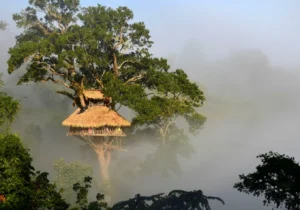
Explore / Accommodations / Resort / Walindi Plantation Resort
Accommodation · Kimbe

Walindi Plantation Resort

Verdict Accommodation Eco Score

A family-run dive resort on Kimbe Bay whose owners founded the Mahonia Na Dari marine education centre and moor every dive site instead of anchoring.

Accommodation Eco Score
4.0/5 Accommodation Eco Score
Throne Standard 2.2 · Evidence coverage 100% · Evidenced performance 75%. Weighted sources are shown below.
Against accommodations
Records scored in accommodations476
Category average2.3/5
Scores below this one97%
Walindi Plantation Resort
Visit official website
Link to the brand’s own site.
No brand pays for a place or a score. Membership funds the scans; affiliate links cover the rest.
Where it is
Kimbe
Get directions

Google reviews

Google rating · 4.5/5 · 146 reviews

Stored Google rating; this is separate from the Accommodation Eco Score or Throne Score. The current Google rating may have changed.

Read reviews on Google Maps

About Walindi Plantation Resort

28 of 94 fields held
Recorded research, grouped by subject; claims remain unverified unless linked to reviewed evidence. Blue bars show how much information is held; they are not positive or negative scores. Fields with nothing behind them are counted, not listed.
7 groups · 28 fields
Features 1 of 8
What to do generally Walindi sits in tropical gardens on the shore of Kimbe Bay, a Coral Triangle hope spot with more than half the world's coral species. Guests dive over 40 sites, snorkel, birdwatch and meet resident marine researchers.
Scan result 2 of 4
Eco Score 4
Eco Score Label Strong evidenced performance
Ownership and legal entity 2 of 16
Owner Name The Benjamin family (Cecilie Benjamin and family; founded by Max and Cecilie Benjamin)
Ownership Type Independent
Identity 1 of 4
Closest Airport name Hoskins Airport (HKN)
Claims and evidence 1 of 5
Verified Researched and source checked in three passes, Oct 2026
Place and access 2 of 3
Continent/Region Asia
Google Place ID ChIJJTh1_brl62gRtZYZVDwNutI
Further detail 19 of 54
Booking Site Website
Street Kimbe Coastal Road
City Kimbe
Country West New Britain
Closest Airport KM 20
Stars 3-star
Type Resort
Environment Type Beach Front
Rooms 20 rooms (12 beachfront bungalows and 8 Plantation House rooms)
Room Types Beachfront bungalows, Plantation House rooms
People Targeting Scuba Divers / Marine Biologists
Secluded / Isolated High Seclusion (Remote)
Eco Amenities Walindi has installed over 100 dive-site moorings so boats never anchor on reefs, its owners founded the Mahonia Na Dari marine education NGO in 1997, it co-runs a resident researcher programme with James Cook University, and it has planted mangroves as a fish nursery. Water comes from on-site bores through UV filters so guests drink tap water, with gravity-fed tanks when generators are off. A water refill station at the bar cuts plastic bottles, glass, plastic and aluminium are separated and recycled, and old linens and furniture go to staff and villages for reuse. Most produce comes from staff, neighbouring villages and Kimbe market growers, with fruit trees and herbs on site, beef from a neighbouring plantation and no endangered fish served. All structures use local materials including sago palm thatch and selectively logged village timber, raised on posts with cross-ventilation and fan cooling. The resort buys locally to cut transport and packaging, and employs 70 staff mostly from surrounding villages.
Activities to do While at Walindi Plantation Resort, you can go scuba diving, snorkeling and rainforest hiking. Walindi Plantation Resort offers an on-site swimming pool and on-site guided diving/nature tours.
Farm / Garden Kitchen garden
Food Options All meals included
Food Type Western and Asian dishes with local seafood, fruit and vegetables
Google rating 4.5
Google review count 146

Filed under 21 terms held

Environmental evidence and weighted assessment

4.0/5 Accommodation Eco Score · Evidence coverage 100% · Evidenced performance 75%

Green flags

  • Nature, biodiversity and regeneration, level 4/4.

    Walindi has installed over 100 dive-site moorings so boats never anchor on reefs, its owners founded the Mahonia Na Dari marine education NGO in 1997, it co-runs a resident researcher programme with James Cook University, and it has planted mangroves as a fish nursery.

    Source · 2026-10-29 · Corroborating source
  • Waste and plastic, level 3/4.

    A water refill station at the bar cuts plastic bottles, glass, plastic and aluminium are separated and recycled, and old linens and furniture go to staff and villages for reuse.

    Source · 2026-10-29
  • Food, farming and sourcing, level 3/4.

    Most produce comes from staff, neighbouring villages and Kimbe market growers, with fruit trees and herbs on site, beef from a neighbouring plantation and no endangered fish served.

    Source · 2026-10-29 · Corroborating source
  • Buildings, heritage reuse and land use, level 3/4.

    All structures use local materials including sago palm thatch and selectively logged village timber, raised on posts with cross-ventilation and fan cooling.

    Source · 2026-10-29 · Corroborating source
Environmental evidence by pillar
PillarWeightLevel and what it meansContributionEvidence, quote and source
Nature, biodiversity and regeneration30%4/4 · Legal protection such as a reserve or conservation easement, or measured outcomes published with dates and figures (hectares restored, species monitored, nests or hatchlings counted)30 / 30 points

Walindi has installed over 100 dive-site moorings so boats never anchor on reefs, its owners founded the Mahonia Na Dari marine education NGO in 1997, it co-runs a resident researcher programme with James Cook University, and it has planted mangroves as a fish nursery.

Source · 2026-10-29 · Corroborating source
Energy and climate15%2/4 · One specific system, such as solar hot water, a stated photovoltaic share, or buildings designed to need no air conditioning7.5 / 15 points

The sustainable design page says the bungalows face the sea breeze and are built to reduce energy costs, and rooms are fan cooled with no air conditioning. Power still comes from generators.

“All the Bungalows are positioned along the waterfront, to maximize the breeze from the ocean and their architectural design means reduced energy costs.”

Source · 2026-11-03
Water10%2/4 · One specific system, such as rainwater harvesting, greywater reuse, or taps and showers at or under 8.5 litres a minute5 / 10 points

Water comes from on-site bores through UV filters so guests drink tap water, with gravity-fed tanks when generators are off.

Source · 2026-10-29
Waste and plastic10%3/4 · Composting plus recycling plus no single use plastic in rooms and food service7.5 / 10 points

A water refill station at the bar cuts plastic bottles, glass, plastic and aluminium are separated and recycled, and old linens and furniture go to staff and villages for reuse.

Source · 2026-10-29
Food, farming and sourcing15%3/4 · Own farm or organic land supplies a large share, with named local suppliers and seasonal menus; consolidated local supply rather than daily imports11.25 / 15 points

Most produce comes from staff, neighbouring villages and Kimbe market growers, with fruit trees and herbs on site, beef from a neighbouring plantation and no endangered fish served.

Source · 2026-10-29 · Corroborating source
Buildings, heritage reuse and land use15%3/4 · Several practices, such as reuse of existing structures, local natural materials, passive design and a small footprint on the land11.25 / 15 points

All structures use local materials including sago palm thatch and selectively logged village timber, raised on posts with cross-ventilation and fan cooling.

Source · 2026-10-29 · Corroborating source
Measurement, transparency and certification5%2/4 · Specific practices, systems and named suppliers published2.5 / 5 points

The sustainable design page describes specific practices such as sago palm roofing, local timber, bore water with UV filters and sorted recycling, but no certificate or measured data.

“All of the structures at Walindi, are built using locally sourced materials. This includes all the rooms, the main house building, and all staff housing.”

Source · 2026-11-03

Throne Standard for stays 2.2. Accommodation Eco Score weights: Nature, biodiversity and regeneration 30%, Energy and climate 15%, Water 10%, Waste and plastic 10%, Food, farming and sourcing 15%, Buildings, heritage reuse and land use 15%, Measurement, transparency and certification 5%. Each pillar earns its weight times its level divided by four. The score is 1 plus 4 times the evidenced performance, shown to one decimal, so 0% is 1.0 and 100% is 5.0. A pillar the stay does not disclose, after we read its own pages, counts as 0 and is shown as Not disclosed, with every page we read linked, because silence is an answer too. Every finding quotes its source word for word. Below 85% coverage, below 70% performance, or with less than half the weight at level 2 or above, the score is held under the next whole number (3.4 or 2.4). A 5.0 band needs 90% coverage and performance, level 4 evidence on half the weight and the key pillar at level 3 or above. Green flags are pillars at level 3 or 4. Every level can be earned from public, dated evidence; no score requires a visit. Evidence must be rechecked within two years. Guest travel is not scored; everyone gets there how they can.

Purity, what touches your body

2.3/5 Purity Score · Evidence coverage 100% · Evidenced performance 31.3%

Green flags

  • Water you drink and bathe in, level 3/4.

    The sustainable design page says drinking water comes from bores on the property treated with UV filters, and a refill station at the bar reduces plastic bottles. No chlorine is mentioned.

    “Our water is supplied by several underground bores on Walindi property, which are fed through UV Filters allowing for safe drinking water directly from our taps throughout the resort.”

    Source · 2026-11-03
Purity evidence, what touches your body by pillar
PillarWeightLevel and what it meansContributionEvidence, quote and source
Water you drink and bathe in25%3/4 · The stay's own natural source (spring, river, well or rain) for drinking and bathing, treated without chlorine18.75 / 25 points

The sustainable design page says drinking water comes from bores on the property treated with UV filters, and a refill station at the bar reduces plastic bottles. No chlorine is mentioned.

“Our water is supplied by several underground bores on Walindi property, which are fed through UV Filters allowing for safe drinking water directly from our taps throughout the resort.”

Source · 2026-11-03
Food on your plate20%2/4 · Named organic or own garden produce in some meals, and plant based meals available10 / 20 points

The community page says most fruit, vegetables and herbs come from staff, neighbouring villages and market sellers growing in their own organic gardens, with resort fruit trees and herbs. A plant based menu is not described.

“The resort's restaurant sources majority of its fruits, vegetables and herbs from staff members, the neighbouring villages and from the sellers at the Kimbe markets that grow everything in their own organic gardens.”

Source · 2026-11-03
Grounds and pest control15%0/4 · Not disclosed on the stay's own pages0 / 15 points

Not disclosed on the stay's own pages, checked 2026-11-03.

Page read · 2026-11-03 · Page read · Page read · Page read · Page read · Page read · Page read · Page read
Cleaning, laundry and fragrance15%0/4 · Not disclosed on the stay's own pages0 / 15 points

Not disclosed on the stay's own pages, checked 2026-11-03.

Page read · 2026-11-03 · Page read · Page read · Page read · Page read · Page read · Page read · Page read
Linen, towels and mattresses10%0/4 · Not disclosed on the stay's own pages0 / 10 points

Not disclosed on the stay's own pages, checked 2026-11-03.

Page read · 2026-11-03 · Page read · Page read · Page read · Page read · Page read · Page read · Page read
Air and quiet10%1/4 · Claim only2.5 / 10 points

The sustainable design page says the rooms use cross ventilation and open plans for natural cooling, but the pages do not state a smoke free policy.

“In the interior, open floor plans, cross-ventilation, ceiling vents, ample windows, use of local materials and large trees all combine to create a natural cooling effect.”

Source · 2026-11-03
Pool and bathing water5%0/4 · Not disclosed on the stay's own pages0 / 5 points

Not disclosed on the stay's own pages, checked 2026-11-03.

Page read · 2026-11-03 · Page read · Page read · Page read · Page read · Page read · Page read · Page read

Throne Standard for stays 2.2. Purity Score weights: Water you drink and bathe in 25%, Food on your plate 20%, Grounds and pest control 15%, Cleaning, laundry and fragrance 15%, Linen, towels and mattresses 10%, Air and quiet 10%, Pool and bathing water 5%. Each pillar earns its weight times its level divided by four. The score is 1 plus 4 times the evidenced performance, shown to one decimal, so 0% is 1.0 and 100% is 5.0. A pillar the stay does not disclose, after we read its own pages, counts as 0 and is shown as Not disclosed, with every page we read linked, because silence is an answer too. Every finding quotes its source word for word. Below 85% coverage, below 70% performance, or with less than half the weight at level 2 or above, the score is held under the next whole number (3.4 or 2.4). A 5.0 band needs 90% coverage and performance, level 4 evidence on half the weight and the key pillar at level 3 or above. Green flags are pillars at level 3 or 4. Every level can be earned from public, dated evidence; no score requires a visit. Evidence must be rechecked within two years.

People, ownership, work and community

3.0/5 People Score · Evidence coverage 100% · Evidenced performance 50%

Green flags

  • Community benefit, level 3/4.

    The community page lists two schools built on resort land, microloans for staff, free water and a conservation NGO, plus buying from local suppliers and supporting local entrepreneurs.

    “Walindi also allows the neighbouring village to pipe water from a natural spring (on Walindi land) directly into the village, allowing free and easy access to safe drinking water.”

    Source · 2026-11-03
  • Access to beach and land, level 3/4.

    The community page says the resort donated land for two community schools and lets the neighbouring village pipe water from a spring on resort land.

    “Walindi also allows the neighbouring village to pipe water from a natural spring (on Walindi land) directly into the village, allowing free and easy access to safe drinking water.”

    Source · 2026-11-03
People evidence, ownership, work and community by pillar
PillarWeightLevel and what it meansContributionEvidence, quote and source
Ownership and control30%2/4 · A named owner, with the share held locally or by the family stated15 / 30 points

The community page names Max and Cecilie Benjamin as the owners, and the home page says the resort is family owned and operated since 1983.

“The land has been donated by Walindi's owners Max and Cecilie Benjamin and was constructed by Walindi at cost.”

Source · 2026-11-03
Local work and fair pay25%1/4 · Claim only, such as local staff6.25 / 25 points

The community page says the resort employs 70 staff from surrounding villages and mainland PNG, trained in house and paid fair wages, but gives no local share or pay figure.

“Walindi employs 70 staff members, from surrounding villages as well as mainland PNG. All employees are trained in-house and paid at fair wages.”

Source · 2026-11-03
Community benefit20%3/4 · Several programmes plus named local suppliers and makers15 / 20 points

The community page lists two schools built on resort land, microloans for staff, free water and a conservation NGO, plus buying from local suppliers and supporting local entrepreneurs.

“Walindi also allows the neighbouring village to pipe water from a natural spring (on Walindi land) directly into the village, allowing free and easy access to safe drinking water.”

Source · 2026-11-03
Access to beach and land15%3/4 · The community uses the land, through festivals, schools or an estate open to the public11.25 / 15 points

The community page says the resort donated land for two community schools and lets the neighbouring village pipe water from a spring on resort land.

“Walindi also allows the neighbouring village to pipe water from a natural spring (on Walindi land) directly into the village, allowing free and easy access to safe drinking water.”

Source · 2026-11-03
Culture and heritage10%1/4 · Claim only2.5 / 10 points

The community page says the Blue Taro Boutique sells local carvings and handicrafts and that artwork in the rooms is by local artists, but makers are not named.

“The resort supports indigenous artistry through the Blue Taro Boutique that sells local carvings and handicrafts.”

Source · 2026-11-03

Throne Standard for stays 2.2. People Score weights: Ownership and control 30%, Local work and fair pay 25%, Community benefit 20%, Access to beach and land 15%, Culture and heritage 10%. Each pillar earns its weight times its level divided by four. The score is 1 plus 4 times the evidenced performance, shown to one decimal, so 0% is 1.0 and 100% is 5.0. A pillar the stay does not disclose, after we read its own pages, counts as 0 and is shown as Not disclosed, with every page we read linked, because silence is an answer too. Every finding quotes its source word for word. Below 85% coverage, below 70% performance, or with less than half the weight at level 2 or above, the score is held under the next whole number (3.4 or 2.4). A 5.0 band needs 90% coverage and performance, level 4 evidence on half the weight and the key pillar at level 3 or above. Green flags are pillars at level 3 or 4. Every level can be earned from public, dated evidence; no score requires a visit. Evidence must be rechecked within two years.

Free pass · three reports a month
You have the verdict. The working is behind the pass.

The summary and the instant check are free on every record, always. Members also get the results table item by item, the certificates as checked on each register, and information that has not yet been independently verified.

Start with a free pass See current plans and prices
What the full scan adds
The results table, item by item
Named mills, factories and suppliers
Reviewed certificate evidence where available
The source behind each figure, and its date
What the brand would not disclose
Collected research sources

These source pages were captured on 2026-10-02. Capturing a page does not establish a rating or verify its claims. Only the reviewed pillar evidence above earns assessment points. Missing findings remain unavailable.

Represent this accommodation? Add source-backed evidence.

Keep exploring

Compare recordsYour saved records View your itinerary
Something need changing?
Tell us.

Provide the corrected finding and its source. Changes and ownership require independent review.

Report a correction