Explore / Clothes / Clothing / Indigenous
clothing · United States

Indigenous

Verdict Fully synthetic

Indigenous fibre breakdown, read to the Throne Standard:These figures come from the 93.8% of Indigenous’s 48-product catalogue that has been read. The remaining 3 products (6.3%) publish no fibre composition anywhere we can read, so they are counted in the catalogue total but sit outside the percentages above, and are listed in full below.FibreStyles%100% plant (organic/regenerative cotton, linen, hemp)1836.7%plant + synthetic blend510.2%100% animal510.2%Other/Unclear (no stated composition)2142.9%

Instant check Checked 2026-09-26
Plant fibre across the catalogue 31.3%
Throne score · Eco Score
1/5 Fully synthetic
NOT ASSESSED from saved CSV: 38 of 43 in-scope rows classified (88.4% coverage); possible fully plant-SKU range 34.9-46.5% can change the score band. No score is published.
Against clothes
Records scored in clothes2,238
Category average1.0/5
Scores below this one0%
1/5 Fully synthetic
Shop  
Affiliate link. It does not change the score and never has.
No brand pays for a place or a score. Membership funds the scans; affiliate links cover the rest.

The results table

38 read
Every item we read, what its listing said, and what that works out as.
ItemWhat we readValueCounts
Essential Scoop Tee pima Plant
OK WOMENS CORD WEEKEND SHIRT cotton, alpaca Animal
AMSHA LARGE PLANTER BASKET cotton, alpaca Animal
Tessera Block Print Scarf cotton Plant
Essential Straight Leg Pant spandex Synthetic
Native Block Print Scarf cotton 40%
Jasmine Block Print Scarf cotton 40%
Active Long Sleeve Scoop Tee cotton, elastane 40%
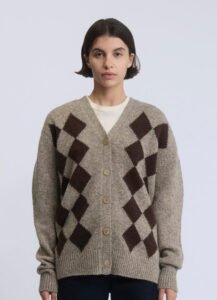
Tie Front Cardigan cotton 40%
Ayacucho Throw Pillow wool, alpaca 40%
See the full table 33 more · free pass gives three reports a month

About Indigenous

120 of 305 fields held
Everything the scan holds on this record, grouped by subject. Blue bars show how much information is held; they are not positive or negative scores. Fields with nothing behind them are counted, not listed.
14 groups · 120 fields
Features 3 of 5
Feature 1 Indigenous handcrafts its clothing using 100% natural and organic fabrics, and the brand names three fibres in particular: organic Peruvian cotton with extra long, cloud-soft and durable fibres, free-range alpaca raised by small-scale ranchers, and eco-friendly Tencel made from wood pulp in a closed loop system. Its wider natural fibre range at Indigenous also includes organic alpaca, merino wool and silk.
Feature 2 Every Indigenous piece is made by hand, with individual artisans handknitting each sweater from start to finish and specialised artisans handcrafting woven designs on old-world wooden looms. Indigenous builds its supply chain around fair trade partnerships with culturally diverse artisans, employing 1000 artisans who are paid a fair, living wage well above what they might earn working independently.
Feature 3 All of the dyes Indigenous uses are free of harmful chemicals, low impact, free of heavy metals and Azo-dioxazine compound free, making them safe for the wearer and the earth. For fully dye-free clothing, Indigenous offers its PURE collection, which takes its colours solely from the natural shades of the fibres.
Materials and composition 16 of 29
H3 Q8: Materials (adapts to brand: 100% cotton? / where is the linen from? / hemp?) What is Indigenous made of?
Plant fibre % 31.3
Animal fibre % 51.3
Fibre Breakdown 16 (38.1%) 100% plant fibre (organic cotton, linen, hemp) | 5 (11.9%) synthetic (polyester, nylon, elastane) | 18 (42.9%) animal fibre (wool, silk, down) | 3 (7.1%) no stated composition
Fibre Breakdown (table) FibreStyles%Measure100% plant fibre (organic cotton, linen, hemp)1638.1%Naturalsynthetic (polyester, nylon, elastane)511.9%Syntheticanimal fibre (wool, silk, down)1842.9%Animalno stated composition37.1%Unclear
Other materials: origin Alpaca (Peru, via knitting cooperatives such as Sama Knits, which works alpaca, highland wool and Pima); silk and other natural fibres
Products with a fibre list 4
Products with no fibre list 38
Incomplete composition explanation No incomplete percentage compositions were recorded.
Plant fibre percent 39.5
Key facts plant materials Cotton
Key facts animal materials Wool, Alpaca
Key facts chemical materials None
Key facts organic materials Organic Cotton
Key facts synthetic materials Spandex, Elastane
Materials used Cotton, Wool
Scan result 17 of 55
Scan note (above product table) NOT ASSESSED from saved CSV: 38 of 43 in-scope rows classified (88.4% coverage); possible fully plant-SKU range 34.9-46.5% can change the score band. No score is published.
Score (1-5) 1
Score label Low verified plant evidence
Total styles scanned 48
Last scanned 2026-08-04
Score CSS class htt-score-2
Supply-chain summary Indigenous (Indigenous Designs) is a pioneer organic and fair-trade brand (since 1994) and an original founding B Corp (certification since lapsed) whose Fair Trace Tool lets shoppers scan a QR code to meet the specific Peruvian artisan who made the garment and see the location, techniques and social impact. Indigenous sources organic extra-long-staple Pima cotton from small family farms in Northern and Southern Peru (Chincha and Lambayeque valleys), plus organic alpaca and highland wool, and works with 1,500+ artisan knitters through named women-led cooperatives such as Sama Knits and Kero Designs on a WFTO-based fair-trade model. Its main gap is the absence of a single consolidated supplier list and unnamed spinning and dye facilities, but per-garment farm-to-artisan traceability makes Indigenous one of the most transparent brands in this set.
Sourcing transparency score (1-5) 5
Full catalogue scan? no
Publication status not_assessed
Method version Throne Standard direct CSV recalculation 2026.09
Worst-case complete result (%) 34.9
Best-case complete result (%) 46.5
Sustainability score 1
Key findings Materials: Cotton, Wool Made in: Indigenous garments are made in Peru, hand-knitted and hand-loomed by artisan cooperatives in the Andes (the brand cites working with hundreds of knitting/hand-looming artisan groups across South America) Certifications: Indigenous is documented as a founding B Corporation, described by multiple sources as one of the first cohort of Certified B Corps and certified since May 2007, and as a participant in Fair Trade USA's first apparel certification pilot announced in 2010
Score status verified
SKU scan date 2026-07-14
Health and safety 1 of 3
H3 Q6: Is [Brand] non-toxic / PFAS-free? Is Indigenous non-toxic and safe for skin?
Certification 6 of 9
H3 Q7: Is [Brand] GOTS / certified? Is Indigenous certified?
OEKO-TEX® Standard 100 Indigenous is not OEKO-TEX certified as a company, but uses dyes approved to the OEKO-TEX 100 standard.
Other Certifications Indigenous was one of the original founding B Corporations and was recognised by B Lab as Best For The World, but it is no longer listed in the official B Corp directory (checked 14 August 2026), so it is not currently a certified B Corp. Its fair trade model is based on the standards of the World Fair Trade Organization rather than Fairtrade International certification.
Cotton: type / certification Organic Extra-Long-Staple Pima cotton
Factory certifications Former founding B Corp, no longer listed in the official B Corp directory as of 14 August 2026; fair-trade model built on World Fair Trade Organization (WFTO) standards, not Fairtrade International; partners described as fair-trade certified; independent worker surveys every six months
Key facts certifications Indigenous is documented as a founding B Corporation, described by multiple sources as one of the first cohort of Certified B Corps and certified since May 2007, and as a participant in Fair Trade USA's first apparel certification pilot announced in 2010. A GreenMoney Journal profile states it uses GOTS (Global Organic Textile Standard) processing and Oeko-Tex 100 approved dyes with organic-certified cotton.
Sourcing and supply chain 19 of 63
PFAS source
Overall: where this info comes from
Traceability level
Cotton: country of origin
Wool: origin + farm + mulesing status
18 more fields · members only Unlock
Ownership and legal entity 2 of 17
Owner Scott Leonard is the owner of Indigenous.
Identity 19 of 28
Brand name Indigenous
H3 Q1: Is [Brand] sustainable / ethical? Is Indigenous sustainable and ethical?
Answer 1 Documented facts: Indigenous was founded in 1994 and is headquartered in Santa Rosa, CA; it is a founding B Corp (widely reported as certified May 2007) and participated in Fair Trade USA's first apparel pilot (2010, confirmed by a Fair Trade USA/PRNewswire release); GreenMoney Journal documents GOTS processing and Oeko-Tex 100 approved dyes; garments are Peruvian artisan-made in natural/organic f
H3 Q2: Where is [Brand] made? Where is Indigenous made?
Answer 2 Indigenous garments are made in Peru, hand-knitted and hand-loomed by artisan cooperatives in the Andes (the brand cites working with hundreds of knitting/hand-looming artisan groups across South America). A 2010-era GreenMoney Journal profile additionally lists production partners in Guatemala and India. (Sources: indigenous.com/pages/our-values; GreenMoney Journal; Fair Trade USA/PRNewswire 2010.)
H3 Q3: Who owns [Brand]? Who owns Indigenous?
Answer 3 Indigenous (legal name Indigenous Designs Corporation, trading as "Indigenous" at indigenous.com) is an independent US company founded in 1994 by Scott Leonard and Matt Reynolds, with Joe Flood also named as a co-founder in some accounts; the idea followed Scott Leonard's travels in Ecuador/the Andes. It is headquartered in Santa Rosa, California, and has no parent company on record; Matt Reynolds is listed as President on its Better Business Bureau profile. (Sources: GreenMoney Journal; Fair Trade USA/PRNewswire 2010; BBB; Utne.)
H3 Q4: Is [Brand] legit / worth it? Is Indigenous legit and worth it?
Answer 4 Indigenous is a real, long-established clothing brand and a still-registered business, but it appears to be wound down to a near-dormant state rather than actively selling. Its website (indigenous.com) is live with a 2026 copyright and a functioning cart, its BBB profile lists it as in business (President Matt Reynolds, 1 employee), and an Instagram reel references a pop-up ending February 2026; however, the online store's collection pages ("best-sellers," "womens," "all") currently return "no products match your filter selections" (empty inventory), and a Yelp listing marks the Santa Rosa physical location as CLOSED. No bankruptcy or formal closure notice was found. Verdict: a genuine, legitimate business that is currently minimally active with an effectively empty storefront, not a scam and not confirmed defunct. (Sources: indigenous.com; BBB; Yelp listing title; Instagram.)
H3 Q5: Is [Brand] fast fashion? Is Indigenous fast fashion?
Answer 5 Indigenous is not fast fashion; it is a slow, small-batch, artisan/cottage-industry brand. Since 1994 it has produced hand-knitted and hand-loomed garments made to order through artisan cooperatives in natural and organic fibres (organic cotton, organic alpaca, merino wool, silk), a model that is the opposite of high-volume fast-fashion turnover. (Sources: indigenous.com; Utne; GreenMoney Journal.)
Answer 6 Certifications: Indigenous is documented as a founding B Corporation, described by multiple sources as one of the first cohort of Certified B Corps and certified since May 2007, and as a participant in Fair Trade USA's first apparel certification pilot announced in 2010. A GreenMoney Journal profile states it uses GOTS (Global Organic Textile Standard) processing and Oeko-Tex 100 approved dyes with organic-certified cotton. Not verifiable: whether the B Corp certification is currently active/renewed (the B Corp directory pages were inaccessible), and no evidence of European Flax certification was found. (Sources: multiple B Corp references; Fair Trade USA/PRNewswire 2010; GreenMoney Journal.).
Answer 7 Indigenous does not publicly document a recognised textile certification such as GOTS or OEKO-TEX in the sources we checked. What we can confirm is the material itself: our scan of 49 Indigenous styles found 64.3% is 100% plant fibre, so Indigenous's natural-fibre standing rests on its composition rather than a certificate.
Methodology note (page footer) How we scan. Every figure on this page comes from the Throne Standard scan: we read the fibre composition off each live product on the brand's own site, style by style, and count only single-fibre plant cloth (cotton, linen, hemp) as natural. Animal fibres such as wool, silk and cashmere and plastic-based synthetics such as polyester, nylon and elastane sit outside the plant-fibre figure, and regenerated fibres such as viscose, bamboo, modal and Tencel are counted as semi-synthetic. Percentages are calculated over the styles that state a composition; anything unlabelled is shown separately.
Answer 8 The most common fibres in the Indigenous styles we read were cotton and wool. That composition is the measurable fact behind what Indigenous is made of, so check the specific Indigenous label for any individual piece.
Contact Email service@indigenous.com
Cotton: named farm / region / co-op Small, often family-operated farms in Northern and Southern Peru; Chincha and Lambayeque valleys cited as growing regions
Dye house: name + country Low-impact dyes, no heavy metals, azo-/dioxazine-free, with waste-water filtration; dye-house name not disclosed
Brand site readable yes
Energy, water and land 1 of 2
PFAS / durable water repellent PFAS-free (verified) indigenous.com
Claims and evidence 8 of 17
Verified by HTT research (brand policy pages)
Verification status
What this means
Excluded items
Why excluded
Excluded items
7 more fields · members only Unlock
Place and access 1 of 1
Location Indigenous are located in Northern California in United States.
Delivery and shipping 3 of 3
Shipping Free shipping is offered on all Indigenous orders of $150 and above, with a flat fee of $7 on Indigenous orders under $150 shipping within the contiguous United States.
Shipping International Indigenous ships within the contiguous United States, and orders sent to Alaska or Hawaii from Indigenous require a $15 flat fee per shipment.
Shipping Notes Most Indigenous orders are shipped within 2 business days via UPS Ground, and 2 day shipping within the contiguous US is available from Indigenous for a flat fee of $25 regardless of order size.
Price and commerce 2 of 8
Price tier $$
SKU count 48
Further detail 22 of 65
Excerpt Is Indigenous a sustainable clothing brand? See the real fibre breakdown, plant, animal or synthetic, before you buy.
Country United States
POC Indigenous is led by Scott Leonard, its CEO and Co-Founder.
LGBT Indigenous clothing brand ownership is not identified as LGBTQ+.
Woman Owned Indigenous clothing brand is not a woman owned clothing brand.
GOTS Indigenous is not GOTS certified as a company, but uses organic cotton processed to GOTS standards.
1% for the planet Indigenous clothing brand is not a member of 1% for the Planet.
Vegan Indigenous clothing brand is not a vegan clothing brand.
Report Post 61196
Dye process Low-impact / GOTS-certified dyes indigenous.com
Clean & Safe: last checked 2026-07-29
Supplier disclosure Partial
Products found 52
Last checked 2026-09-26
Products in catalogue 42
Products read 42
Catalogue read % 100
How it was read Throne identifies the eligible textile products in Indigenous's catalogue, inspects each product for published material evidence and requires at least 20 scoreable textile SKUs before publishing a brand score. The score uses only products with enough published material information to classify. Brand non-disclosure and technical read failures are reported separately. Non-textile products are excluded rather than counted as a pass or a fail.
Possible flags 3
Website check page identifies as Indigenous (checked 2026-08-18)
Coverage method pre dash fix Every product listed in the brand's live catalogue is retrieved and its stated fibre composition read individually - from the product page, the store's own product data and its material labels. A fibre percentage is published only when 100% of the catalogue has been read. Items with no clothing textile (gift cards, packaging, jewellery, homeware) are excluded from the percentage rather than counted as a pass or a fail.
Filed under 5 terms held

Boycott lists

5 lists
Every list we check, and what each one says about this brand and its parent. A brand absent from a list is shown as not listed, which is a result, not a gap.
ListResultWhat the list says
BDS Movement bdsmovement.net · priority targets Not listed Checked 2026-09-12 Not named among the current priority boycott, organic-boycott or pressure targets. Consumer boycott targets named by the Palestinian BDS National Committee. Open the source
Ethical Consumer ethicalconsumer.org · current boycotts Not checked Ongoing consumer boycott calls, with the reason and who called it.
No Thanks No Thanks app Not checked Crowd-maintained list of companies to avoid, checked by barcode.
Boycat Boycat app Not checked Campaign-led list covering brands and their parent companies.
Who Profits whoprofits.org Not checked Companies named in the research database on the occupied territories.
A listing is a fact about the list, not our verdict. It sits beside the scan; it does not move the score.

Scored elsewhere

The exact figure each directory publishes for this record, on its own scale. They rate brand policy; we read the product.
DirectoryTheir scoreWhat it measures
Good On You Good 1-5: We Avoid / Not Good Enough / It's a Start / Good / Great Rates brand policy and published commitments, not the product. We checked 2026-08-24.
Free pass · three reports a month
You have the verdict. The working is behind the pass.

The summary and the instant check are free on every record, always. Members also get the results table item by item, the certificates as checked on each register, and what the brand would not disclose.

Start with a free pass £1 a day · £365 a year
What the full scan adds
The results table, item by item
Named mills, factories and suppliers
Every certificate as checked on the register
The source behind each figure, and its date
What the brand would not disclose
Something need changing?
Tell us.

Point at the field and the source. We check it against the register and republish.

Report a correction