
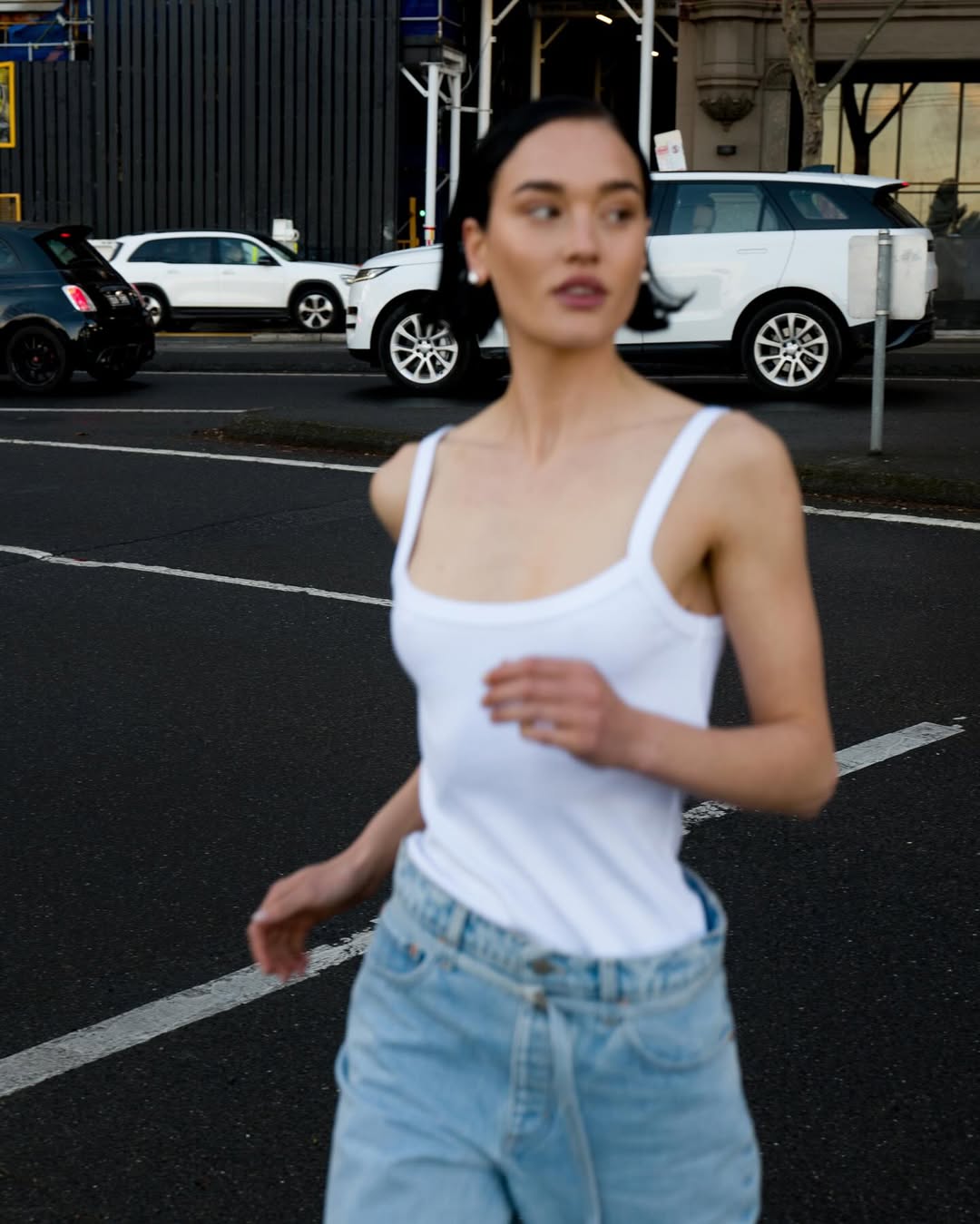
Nobody Denim Review: Sustainable and Ethically Sourced Chemical Free Demin

Nobody Denim

This report documents what Nobody Denim publishes about its ownership and supply chain — see the sourcing and transparency sections below. Nobody Denim’s supply-chain transparency is rated 4 out of 5.

Nobody Denim’s product range has not been scanned product-by-product to the Throne Standard, so no whole-catalogue fibre percentage is shown here — a headline fibre figure is only published once 100% of a catalogue has been read.

2/5 · Mostly unnatural · 50.5% plant fibre · 179 styles scanned
179 styles%
100% plant fibre50.5%
Synthetic49.5%

179 Styles Scanned

2026-08-04

The full style-by-style breakdown for Nobody Denim is being added.

About Nobody Denim

Documented facts: founders brothers John and Nick Condilis, Melbourne 1999; the original company went into voluntary liquidation on 10 October 2023 with ~US$3.6m debt and owed worker entitlements; Melbourne partner Denim 108 closed and ~40 workers were laid off; Outland Denim acquired assets/trademarks (not debts) and now makes Nobody Denim in Cambodia at its Maeka facility; SMETA/SA8000 supply-ch
Historically (1999-2023), Nobody Denim garments were made in Australia at the brand’s own cut-and-sew facility and wash house in Fitzroy, inner Melbourne, and it was accredited by Ethical Clothing Australia for its Australian-made garments. That local manufacturing ceased in 2023: its Melbourne manufacturing partner Denim 108 Pty Ltd shut down (reportedly laying off around 40 garment workers) ahead of the collapse. Under Outland Denim ownership, Nobody Denim garments are now made in Cambodia at Outland’s fully integrated cut-and-sew facility and wash house (the Maeka Standard factory in Phnom Penh). The current nobodydenim.com “About Us” page states denim “is made in our fully integrated cut-and-sew facility and wash house in Cambodia,” while the homepage markets the brand as “Designed in Melbourne.”
Nobody Denim is an Australian denim label founded in 1999 in Melbourne by brothers John and Nick Condilis, beginning as a small family-built denim laundry in inner Melbourne. It traded as an independent, founder-owned business until 2023. On 10 October 2023 the company (its operating entity) entered voluntary liquidation, and Queensland-based competitor Outland Denim (founded and led by CEO James Bartle) acquired Nobody Denim’s assets, trademarks, stock and manufacturing equipment out of administration. Nobody Denim is therefore NOT independent today: it is a brand owned by the Outland Denim group (marketed as the “Maeka Group”/Outland Denim family), alongside the Outland Denim brand and the group’s Cambodian manufacturing arm Maeka. Founder John Condilis was subsequently retained/tapped by Outland for factory work.
Nobody Denim is a real, legitimate and currently-trading brand: nobodydenim.com is an active online store selling current collections priced in AUD, and the brand continues to operate under Outland Denim ownership after its 2023 acquisition. Important nuance: the original founder-owned company that traded 1999-2023 collapsed into voluntary liquidation (10 October 2023) with reported debts of around US$3.6 million (roughly US$2.64 million owed to manufacturer Denim 108, plus unpaid worker entitlements). The brand name, trademarks and goodwill were bought by Outland Denim, which did NOT inherit the old company’s debts, and the label continues to trade under new ownership.
Nobody Denim is positioned as a premium, small-batch slow-fashion denim brand rather than fast fashion. It makes durable premium jeans (typically well over AUD $150-250), historically manufactured in-house in Melbourne and now in a single owned facility in Cambodia, with no high-frequency micro-drop model. Good On You classifies it as producing durable products using few lower-impact materials. It is not a mass-market fast-fashion retailer; however, the 2023 move from local Melbourne production to lower-cost Cambodian manufacturing was driven by CEO James Bartle’s stated view that local production was “not viable at the price points we sell.”
Certifications: Documented, brand-specific: Nobody Denim’s supply chain has been third-party audited to SMETA and SA8000 standards, and the brand sources Responsible Wool Standard (RWS) certified wool (per Good On You). Historically (pre-2023 Melbourne operation), it was accredited by Ethical Clothing Australia (audited by the textile workers’ union) and stated most of its fabrics were certified to OEKO-TEX Standard 100; those Australian-made accreditations lapsed when local manufacturing ended in 2023. Parent-level: Outland Denim (now the owner) is a Certified B Corporation and operates the Maeka Standard manufacturing certification, but B Corp status attaches to Outland/Maeka, not verified as a separate Nobody Denim certification. No evidence Nobody Denim holds GOTS, Fair Trade, or European Flax certification. Not publicly documented that Nobody Denim itself is separately B Corp certified..
Nobody Denim holds the following certifications: Documented, brand-specific: Nobody Denim’s supply chain has been third-party audited to SMETA and SA8000 standards, and the brand sources Responsible Wool Standard (RWS) certified wool (per Good On You). Beyond any paper certification, our scan of 172 Nobody Denim styles found 67.5% is 100% plant fibre, which is the measurable material fact behind Nobody Denim’s claims.
The most common fibres in the Nobody Denim styles we read were cotton and hemp. That composition is the measurable fact behind what Nobody Denim is made of, so check the specific Nobody Denim label for any individual piece.
How we scan. Every figure on this page comes from the Throne Standard scan: we read the fibre composition off each live product on the brand’s own site, style by style, and count only single-fibre plant cloth (cotton, linen, hemp) as natural. Animal fibres such as wool, silk and cashmere and plastic-based synthetics such as polyester, nylon and elastane sit outside the plant-fibre figure, and regenerated fibres such as viscose, bamboo, modal and Tencel are counted as semi-synthetic. Percentages are calculated over the styles that state a composition; anything unlabelled is shown separately.

Share this page: Nobody Denim

Facebook
X
LinkedIn
Reddit
Threads
Email
WhatsApp