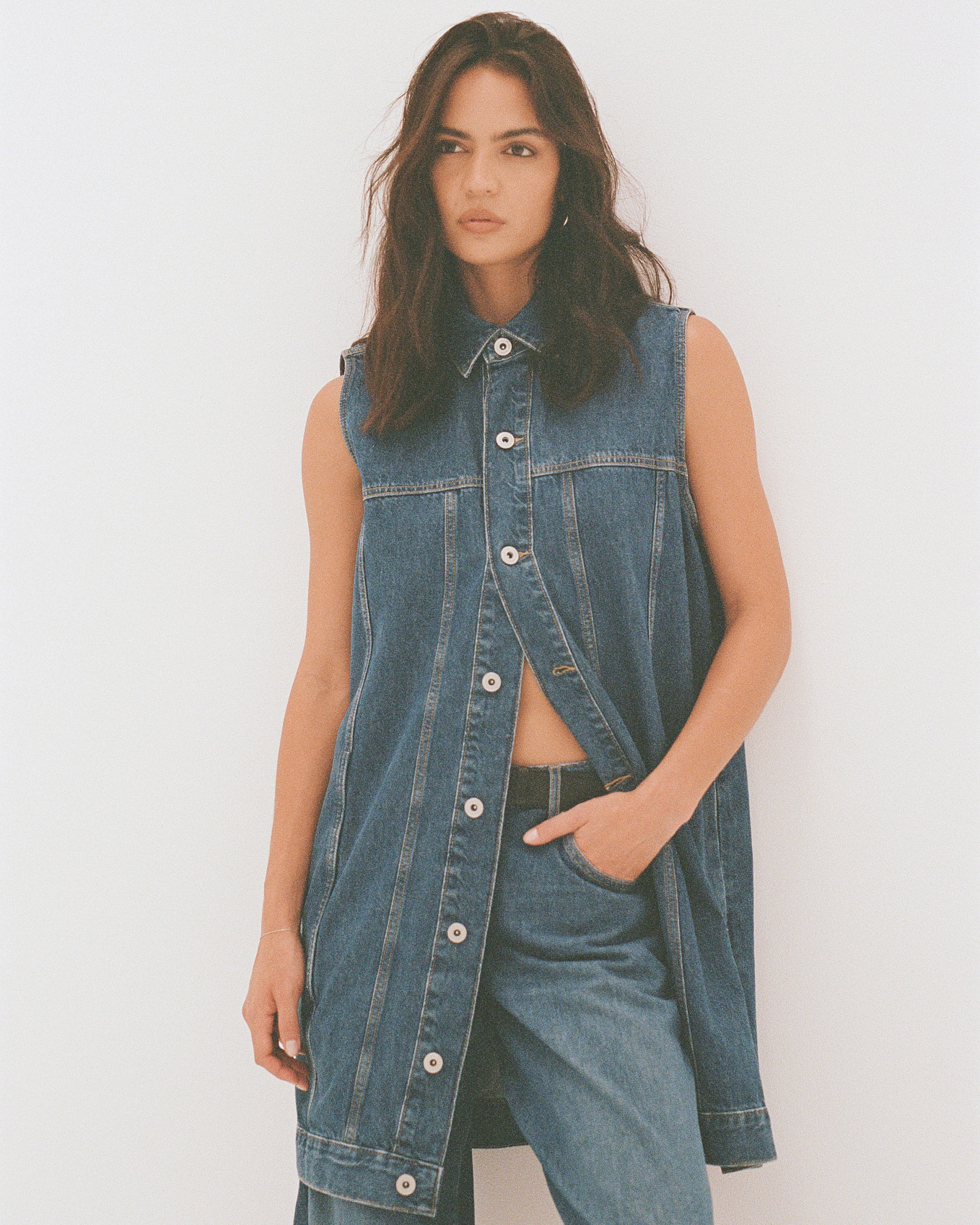
Outland Denim Review: Sustainable and Ethically Sourced Chemical Free Demin

Outland Denim

Outland Denim sells clothes with 89.9% natural plant fibre material across 80 scanned styles. The rest breaks down as 0% animal fibre, 3.8% synthetic and 6.3% semi-synthetic. Every product in the range was read for this figure.

3/5 · Part natural · 83.5% plant fibre · 86 styles scanned
86 styles%
100% plant fibre83.5%
Synthetic12.9%
Semi-synthetic3.5%

86 Styles Scanned

2026-08-04

The full style-by-style breakdown for Outland Denim is being added.

About Outland Denim

Outland Denim is partly sustainable on materials: our scan of all 80 styles found 89.9% plant fibre (3.8% synthetic, 0% animal). Documented facts (verifiable from primary and reputable sources): Outland Denim is a Certified B Corporation (since 2018, score 160.2); it owns a vertically integrated Cambodian manufacturing facility founded to employ and train survivors and at-risk young women; it uses GOTS-certified organic cotton denim from Bossa (Turkey), which is also OEKO-TEX Standard 100 and ISO 14001 certified; it aligns
Outland Denim garments are cut, sewn and finished at the brand’s own vertically integrated production facility in rural Cambodia, which the company founded to train and employ young women who have experienced or are at risk of exploitation and human trafficking; the operation started with five seamstresses and grew to roughly 65-100 production staff, and it includes a dedicated laundry/wash house using water- and energy-reducing processing technology. The denim fabric itself is not made in Cambodia: Outland Denim sources its GOTS-certified organic cotton denim from its long-standing mill partner Bossa in Turkey. So the short answer is finished garments made in Cambodia, denim fabric milled in Turkey.
Outland Denim is an Australian ethical denim brand founded by James Bartle, who launched the company in 2011 (developing it conceptually before bringing product to market around 2016) and remains its founder and CEO. Outland Denim is not owned by a large fashion conglomerate; it is a privately held, founder-led business that has also opened part-ownership to the public through equity crowdfunding campaigns (via the Birchal platform), so it has many small equity investors alongside Bartle. It sits at the head of a broader group (reported under the parent/holding name Maeka Group / Outland Denim Group), which in October 2023 acquired the Melbourne heritage brand Nobody Denim (established 1999) out of administration, and also includes the group’s Cambodian manufacturing arm and a textile-waste solution. Headquarters and design are in Australia; garment production is in Cambodia.
Outland Denim is a real, currently-trading, legitimate business, not defunct. Its own e-commerce site is live and actively selling with a 2026 copyright notice, it is stocked by established retailers (e.g. Holt Renfrew, and historically David Jones via its Nobody Denim arm), and it has recent corporate activity: it acquired Nobody Denim in October 2023 and ran a subsequent equity crowdfunding raise (1,800+ investors) to fund integration and global expansion. It gained major mainstream visibility in 2018 when Meghan, Duchess of Sussex, wore its jeans on a royal tour of Australia. This is the Australian ethical clothing/denim brand, distinct from any similarly named companies in other industries.
Outland Denim is a slow-fashion, small-batch, ethically-focused brand, not fast fashion. It operates a single owned production facility in Cambodia rather than mass outsourced supply chains, emphasises paying living wages, small production teams, and long product life, and positions itself around social impact and durable, higher-priced denim rather than high-volume, low-cost, rapidly-churning collections. Its scale (dozens of production staff, founder-led, crowdfunded) is consistent with a small-batch operation, and none of the sources describe fast-fashion practices.
Outland Denim is a mixed bag for non-toxicity: 89.9% of its range is plant fibre that breathes and biodegrades, with 3.8% plastic-based synthetics that can shed microplastics. Certifications: Outland Denim is a Certified B Corporation, first certified in 2018 (reported as the first Australian denim label and the second denim brand globally to earn B Corp status), with a publicly cited B Impact score of 160.2 and multiple “Best for the World” honouree recognitions (including Community in 2022). Its denim uses GOTS (Global Organic Textile Standard) certified organic cotton, and the brand states it verified a full organic-cotton denim supply chain from seed to mill via its supplier Bossa in 2021. The Bossa denim used is also described as OEKO-TEX Standard 100 certified (tested against harmful substances) and Bossa holds ISO 14001 environmental certification. Outland Denim additionally aligns its supplier code with the Ethical Trading Initiative (ETI) Base Code and reports to the UN Global Compact. Note: it does not appear to hold or claim Fair Trade certification or European Flax (it is a cotton denim brand, not linen). I could not independently confirm the exact current B Corp recertification date for 2025/2026 from the B Lab directory (that page was inaccessible), though multiple sources indicate it has recertified and remained certified..
Outland Denim holds the following certifications: Outland Denim is a Certified B Corporation, first certified in 2018 (reported as the first Australian denim label and the second denim brand globally to earn B Corp status), with a publicly cited B Impact score of 160. Beyond any paper certification, our scan of 80 Outland Denim styles found 61.3% is 100% plant fibre, which is the measurable material fact behind Outland Denim’s claims.
Our scan of all 80 Outland Denim styles found 89.9% of the range is 100% plant fibre, with 0% animal fibre, 3.8% synthetic and 6.3% semi-synthetic. The most common fibres in the Outland Denim styles we read were cotton and hemp. That composition is the measurable fact behind what Outland Denim is made of, so check the specific Outland Denim label for any individual piece.
How we scan. Every figure on this page comes from the Throne Standard scan: we read the fibre composition off each live product on the brand’s own site, style by style, and count only single-fibre plant cloth (cotton, linen, hemp) as natural. Animal fibres such as wool, silk and cashmere and plastic-based synthetics such as polyester, nylon and elastane sit outside the plant-fibre figure, and regenerated fibres such as viscose, bamboo, modal and Tencel are counted as semi-synthetic. Percentages are calculated over the styles that state a composition; anything unlabelled is shown separately.

Share this page: Outland Denim

Facebook
X
LinkedIn
Reddit
Threads
Email
WhatsApp