
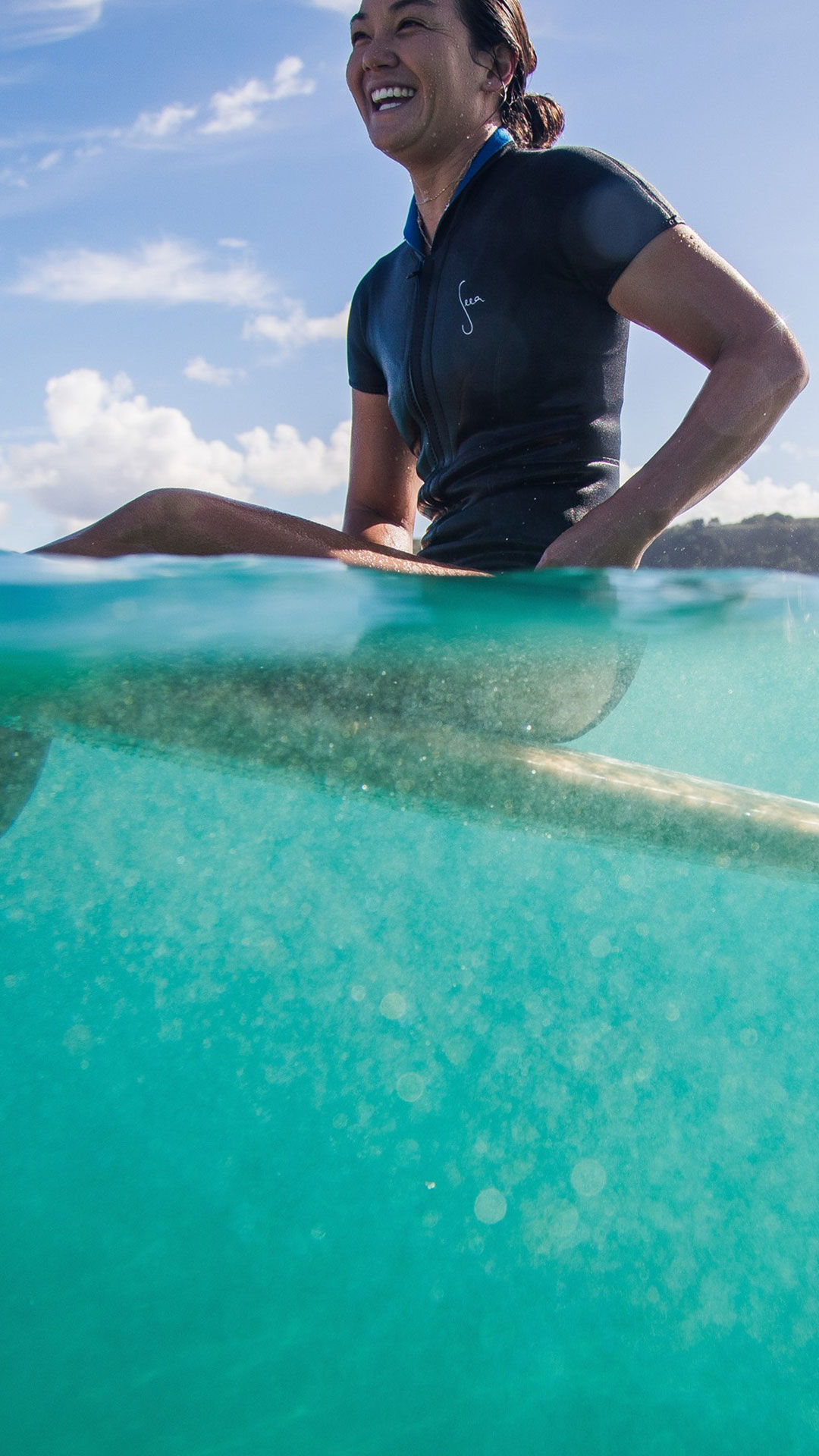
The Seea Yulex Wetsuit Review: Sustainable Yulex Natural Rubber Wetsuit

The Seea

This report documents what The Seea publishes about its ownership and supply chain — see the sourcing and transparency sections below. The Seea’s supply-chain transparency is rated 3 out of 5.

The Seea’s product range has not been scanned product-by-product to the Throne Standard, so no whole-catalogue fibre percentage is shown here — a headline fibre figure is only published once 100% of a catalogue has been read.

1/5 · Unnatural · 0.6% plant fibre · 362 styles scanned
362 styles%
100% plant fibre0.6%
Synthetic99.4%

362 Styles Scanned

2026-08-04
🔒
See every The Seea style

The full product-by-product breakdown of all 362 scanned styles, with the fibre in each one, is free with an account.

Create a free account

Sign up and get 0 full reports free · Log in

About The Seea

The Seea manufactures all of its collections in California, USA (with the sole exception of its Yulex wetsuits), stating “we sew and produce within 70 miles of our San Clemente headquarters.” The Seea names one specific production partner, a family-owned factory in Santa Ana, California operating since 1985, and references additional small, independent California-based factories; the brand emphasises long-term relationships with local seamstresses.
The Seea is an independent, women-led and women-owned surf swimwear brand founded in 2011 by Amanda Chinchelli (now Amanda Chinchelli Greer), who is Italian-born and Brazilian-raised and started the company sewing suits in her garage in San Clemente, California. The Seea remains privately owned and run by its founder as its own company (headquartered at 944 Calle Amanecer, San Clemente, CA 92673); no parent company or acquisition is documented in reliable sources, and the brand describes itself as “proudly women-led and women-run” with a small team.
The Seea is a real, currently-trading, legitimate business as of July 2026. The Seea’s official site (theseea.com) is live and actively selling, showing a 2026 copyright, a Summer 2026 (SU26) collection, Spring 2026 and Resort ’25 lines, and blog content dated June 2026, and its products are also stocked by third-party retailers including SwimOutlet, Backcountry, Free People, and via a Stio x Seea collaboration. This is the women’s surf/swimwear clothing brand, not a same-named company in another industry.
The Seea is slow, small-batch fashion, not fast fashion. The Seea describes itself as making “small batch, locally produced swim suits designed for female surfers, by female surfers,” producing within a 70-mile radius of its California headquarters using local factories rather than high-volume overseas mass production; the brand positions itself around durability, seasonal (not micro-trend) collections, and long-term maker relationships.
Certifications: The Seea’s only documented third-party certification is Forest Stewardship Council (FSC) certification, which applies to the natural rubber used in its Yulex wetsuits (the brand states the rubber is “harvested from FSC-certified rubber trees”). The Seea does NOT publicly hold or claim GOTS, OEKO-TEX, Fair Trade, B Corp, or European Flax certification; while its recycled fabrics such as Econyl and recycled polyester come from supply chains that industry-wide often carry OEKO-TEX/bluesign, no reliable source shows The Seea itself holding those certifications, so they should not be attributed to the brand..
The Seea holds the following certifications: The Seea’s only documented third-party certification is Forest Stewardship Council (FSC) certification, which applies to the natural rubber used in its Yulex wetsuits (the brand states the rubber is “harvested from FSC-certified rubber trees”). Beyond any paper certification, our scan of 95 The Seea styles found 0.0% is 100% plant fibre, which is the measurable material fact behind The Seea’s claims.
The most common fibres in the The Seea styles we read were polyester and nylon. That composition is the measurable fact behind what The Seea is made of, so check the specific The Seea label for any individual piece.
How we scan. Every figure on this page comes from the Throne Standard scan: we read the fibre composition off each live product on the brand’s own site, style by style, and count only single-fibre plant cloth (cotton, linen, hemp) as natural. Animal fibres such as wool, silk and cashmere and plastic-based synthetics such as polyester, nylon and elastane sit outside the plant-fibre figure, and regenerated fibres such as viscose, bamboo, modal and Tencel are counted as semi-synthetic. Percentages are calculated over the styles that state a composition; anything unlabelled is shown separately.

Share this page: The Seea

Facebook
X
LinkedIn
Reddit
Threads
Email
WhatsApp