
Accommodation · Rewa Village
Rewa Eco-Lodge
Verdict
Accommodation Eco Score
An Indigenous village owns and runs this solar-powered river lodge, and its arapaima fishing programme helped bring the giant fish back to more than 4,000.
Accommodation Eco Score
4/5
Accommodation Eco Score
Model 2.1 · Evidence coverage 85% · Evidenced performance 76.5%. Weighted sources are shown below.
Against accommodations
Records scored in accommodations124
Category average3.1/5
Scores below this one82%
Image unavailable · no suitable source verified
Visit official websiteLink to the brand’s own site.
No brand pays for a place or a score. Membership funds the scans; affiliate links cover the rest.
Google reviews
Google rating · 4.8/5 · 19 reviews
Stored Google rating; this is separate from the Accommodation Eco Score or Throne Score. The current Google rating may have changed.
Read reviews on Google MapsAbout Rewa Eco-Lodge
Recorded research, grouped by subject; claims remain unverified unless linked to reviewed evidence. Blue bars show how much information is held; they are not positive or negative scores. Fields with nothing behind them are counted, not listed.
Features
What to do generally
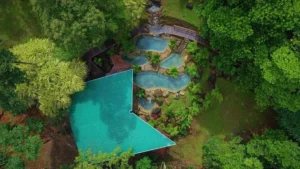
The lodge sits in a forest clearing where the Rewa meets the Rupununi, reached only by boat. Guests track wildlife with village guides, walk rainforest trails, and fish for arapaima on a catch and release basis.
Scan result
Eco Score
4
Eco Score Label
Strong evidenced performance
Ownership and legal entity
Owner Name
Rewa Village community (Macushi, Patamona, Wapishana and Wai Wai villagers)
Ownership Type
Community owned
Identity
Brand Name
Rewa Eco-Lodge
Closest Airport name
Lethem Airport (LTM), then road and boat transfer
Claims and evidence
Verified
Researched and source checked in three passes, Oct 2026
Place and access
County/State/Region
Rupununi
Continent/Region
South America
Price and commerce
Price Range
£
Further detail
Booking Link
rewaecolodge.com
rewaecolodge.com
Booking Site
Website
City
Rewa Village
Country
Guyana
Type
Eco Lodge
Environment Type
Rainforest
Rooms
6 cabins and 2 benabs (4 rooms)
Room Types
Self-contained cabins with en suite, traditional benab rooms with shared facilities, hammock space
POC Owned
1
Secluded / Isolated
High Seclusion
Eco Amenities
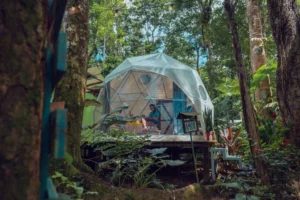
The lodge's arapaima page (live in October 2026, linking a 2027 fly fishing price list) says its community protection, research and tagging work has helped restore the arapaima population to more than 4,000. The figure is the lodge's own and undated, but it is a quantified conservation outcome. The accommodations page (October 2026) says the lodge is fully powered by solar energy. The FAQ adds that solar power is limited and may not run 24 hours a day, which confirms solar is the only source. The accommodations page says meals use river fish, village-raised chicken and local beef. That is one local sourcing practice, with no garden, farm or named suppliers, so level 2. The FAQ says the lodge has a refill station in the dining area, provides reusable bottles, and asks guests to refill rather than use plastic. Bottled water is still offered. Guests stay in traditional benabs, the region's vernacular building style, built by the village, alongside six small cabins in a jungle clearing. All guides and support staff come from the local area, so the lodge is staffed by the village itself.
Activities to do
Rewa Eco-Lodge guides lead hikes up Awarmie Mountain, night boat trips, turtle watching and fly fishing for arapaima.
Food Options
On-site restaurant
Food Type
Traditional Rupununi dishes with river fish, village-raised chicken and local beef
Plastic Status
Reduced plastic
rewaecolodge.com
Plastic Policy
Rewa Eco-Lodge provides reusable bottles and a refill station, and asks guests to bring their own bottle to cut plastic waste.
rewaecolodge.com
Google rating
4.8
Google review count
19
Plastic status: date checked
2026-10-29
Filed under
More accommodations
All accommodations

Free pass · three reports a month
You have the verdict. The working is behind the pass.
The summary and the instant check are free on every record, always. Members also get the results table item by item, the certificates as checked on each register, and information that has not yet been independently verified.
What the full scan adds
The results table, item by item
Named mills, factories and suppliers
Reviewed certificate evidence where available
The source behind each figure, and its date
What the brand would not disclose
Keep exploring
Something need changing?
Tell us.
Provide the corrected finding and its source. Changes and ownership require independent review.
Report a correction