Where to Stay in Barbuda: Best Areas and Sustainable Hotels
Where to stay in Barbuda, the short answer
Barbuda is essentially one place to stay: the wild west coast strip near Codrington, where the pink sand and the beaches meet the Codrington Lagoon. There is no resort sprawl here and no chain hotels. You choose between a handful of small, locally run stays, each set on its own quiet stretch of shore.
For raw off-grid nature, Frangipani Eco Lodge is the standout, Barbuda’s first eco glamping. For a simple, family-run beachfront hideaway, choose Barbuda Cottages at Coral Group Bay. For secluded eco-luxury, Barbuda Belle Luxury Beach Hotel and its eight timber bungalows sit alone on a remote beach.
Where to stay in Barbuda by area, at a glance
Barbuda is small, flat and sparsely populated, so it does not divide up the way a bigger island would. Really there are two sides to it, and understanding them makes it easy to pick where you stay.
The first is the Codrington and Lagoon side. Codrington is the island’s main and only real settlement, a low, quiet village where most Barbudans live. Alongside it lies the Codrington Lagoon, a vast sheltered stretch of water that holds one of the largest frigatebird sanctuaries in the world. This side suits travellers who want to be near the birdlife, the boat tours and what little local life and provisioning the island has. It is about nature and community rather than luxury.
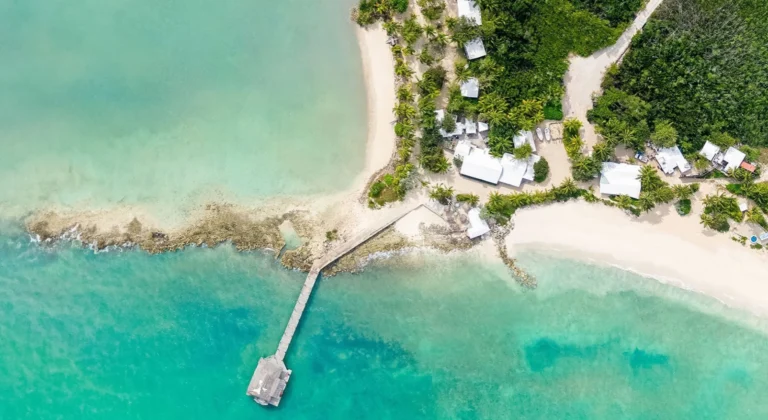
The second is the remote beach strips along the west coast, where all three of the island’s stays actually sit. This is the celebrated 17-mile beach and its named stretches: Coral Group Bay, Low Bay and Princess Diana Beach. The sand here runs from white to a soft pink, the water is calm and clear, and there is often not another soul in sight. This side suits travellers who want raw emptiness, total quiet and their own slice of shore, and who do not mind being off grid and far from shops.
The good news is that Barbuda is so compact that neither side ever feels far away. Wherever you sleep, the lagoon, the birds and the pink sand are all within an easy 4×4 ride, so your choice is really about atmosphere: the settlement and its wildlife, or the wild open beach.
Codrington and the beaches, best for wild nature, birdlife and pink sand
Codrington is the beating heart of Barbuda and its only real settlement, a low, unhurried village where nearly everyone on the island lives. Just beside it stretches the Codrington Lagoon, a huge, calm, sheltered body of water that shelters one of the largest frigatebird sanctuaries in the world, where thousands of birds roost and nest in the mangroves. Beyond the lagoon lie the beaches Barbuda is famous for: mile after mile of soft, pale, pink-tinged sand, often completely deserted. The whole island has a wild, off-grid feel, flat and empty and quiet, with few roads and fewer people. Barbuda took the full force of Hurricane Irma in 2017, and its slow, determined recovery is part of the story you feel when you visit today.
Barbuda is reached from Antigua, and there are two ways across. The most popular is the Barbuda Express ferry, which runs from St John’s in Antigua and takes roughly 90 minutes across open water, so pack for a lively crossing if the sea is up. The quicker option is a short charter or local flight, around 15 minutes in the air, landing at the small Codrington airport. Once you arrive, there is no public transport to speak of. Getting around means a 4×4 or a taxi arranged in advance. The roads are rough and unpaved in places, and the island is genuinely remote, so plan your transfers before you travel.
The signature experience is a boat tour of the Codrington Lagoon to the frigatebird sanctuary, gliding quietly among the mangroves as the birds wheel overhead and the males puff out their scarlet throat pouches. Beyond that, Barbuda is about the pink-sand beaches: endless, empty and made for long, slow walks. You can explore the island’s caves, including Darby Cave and the caves at Two Foot Bay, snorkel over clear reefs teeming with life, or simply do very little. The truest thing to do on Barbuda is nothing at all, wrapped in total quiet.
Where to stay in Codrington and the beaches
Frangipani Eco Lodge is the best place to stay for off-grid glamping, Barbuda
Frangipani Eco Lodge is Barbuda’s first eco glamping and guesthouse, set on a wild, undeveloped beach and run off grid by local hosts. It is deliberately low-impact and pared back, built for travellers who want raw nature and simplicity rather than polish. You wake to the sound of the sea, with the sand at your door and almost nothing between you and the horizon. If your idea of Barbuda is emptiness, birdsong and switching off completely, Frangipani is the place that delivers it most honestly.
Barbuda Cottages is the best place to stay for a simple beachfront hideaway, Barbuda
Barbuda Cottages is a family-run beachfront hideaway at Coral Group Bay, built by its owner and kept quiet, simple and unfussy. It works on a self-catering basis, so you have your own space right on the sand and the freedom to live at your own pace. There is no crowd, no noise and no resort machinery, just a calm stretch of shore and a family who know the island intimately. For travellers who want a homely, low-key base on one of Barbuda’s loveliest bays, this is the one.
Barbuda Belle Luxury Beach Hotel is the best place to stay for secluded eco-luxury, Barbuda
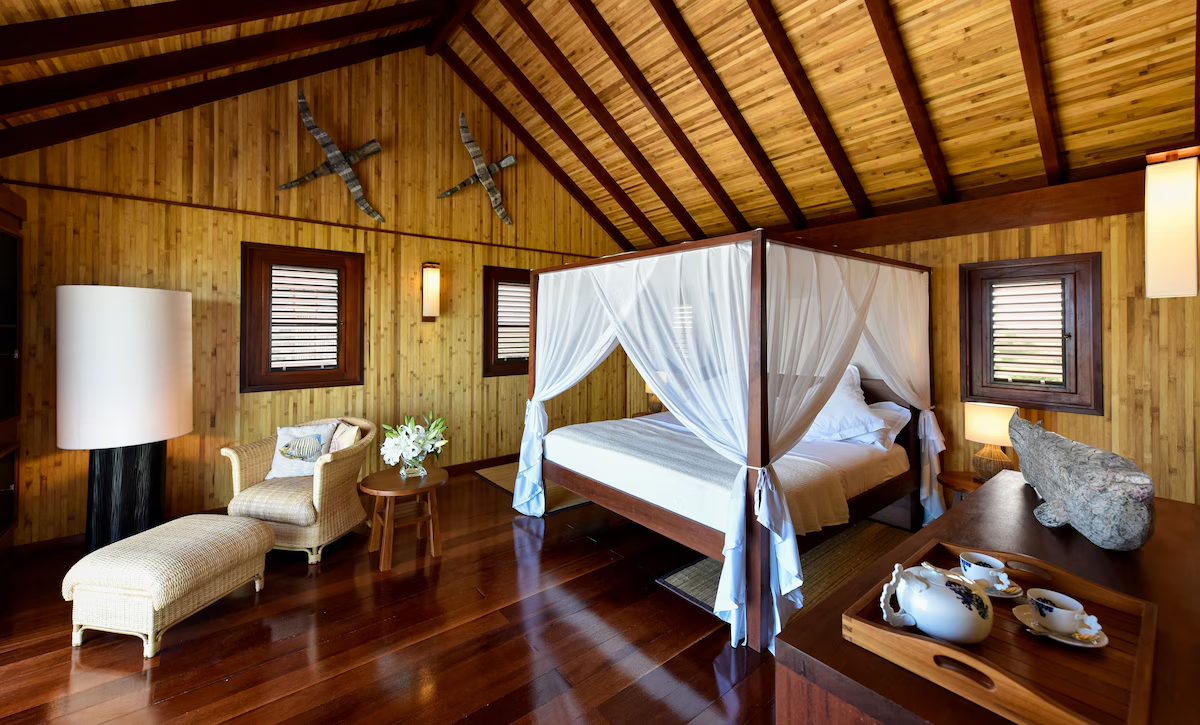
Barbuda Belle Luxury Beach Hotel is a family-owned eco-luxury boutique hotel of just eight timber bungalows, set alone on a remote beach with no neighbours in sight. Solar-influenced and thoughtfully designed, it pairs genuine seclusion with a high-end, barefoot-elegant feel. This is Barbuda at its most private and polished: your own bungalow, your own stretch of sand and a level of comfort that is rare on so wild an island. For a special occasion or a true escape, Barbuda Belle is the standout choice.
When is the best time to visit Barbuda?
The best time to visit Barbuda is the dry season, roughly December to April, when the weather is at its calmest and sunniest and the sea is easiest for crossings and boat tours. This is also peak season, so stays are in higher demand. Wildlife lovers should note that the frigatebird mating season runs roughly September to April, when the males inflate their bright red throat pouches and nesting is easy to see on the lagoon tour. Hurricane season falls between June and November, bringing quieter, cheaper visits but a greater chance of rough weather, and some stays and services may close for part of it.
Is Barbuda safe, and how do you get around?
Barbuda is very safe. It is a tiny, tight-knit community where almost everyone knows everyone, and serious crime is rare. You are far more likely to be welcomed than troubled. Getting around is the real practical challenge. There are few paved roads and no public transport, so you will need a 4×4 or a taxi arranged through your stay, and journeys can be slow and bumpy. Come prepared: bring plenty of cash, as card payment cannot be relied on, and shops and provisioning are limited, so stock up in Codrington or before you travel. Some stays are fully off grid, so check in advance what power, water and connectivity to expect.
Why we only list sustainable stays in Barbuda
Barbuda is ecologically fragile. The Codrington Lagoon, its world-class frigatebird sanctuary, the surrounding reefs and the island’s slow recovery since Hurricane Irma all mean that how visitors tread here genuinely matters. Large-scale development would threaten the very emptiness and wildlife that make Barbuda special. That is why we only list low-impact, off-grid stays that keep their footprint small and put money into local hands. All three of our recommended places, Frangipani Eco Lodge, Barbuda Cottages and Barbuda Belle Luxury Beach Hotel, are locally or family run, so staying with them supports Barbudans directly and helps protect the island you came to see.
More Caribbean Sustainable Stays


Book Your Next Stay Consciously
Travel is a wonderful opportunity to connect with Mother Earth.
However, it is also frequently undermined by reckless development and disrespectful tourism practices.
This directory is a curated, verified list of hotels, lodges, and resorts that honour our planet and are led by visionary stewards of the environment.
From farm-to-table culinary experiences to dedicated ocean conservation efforts, such as marine protection and coral restoration, these establishments are redefining hospitality.
12% Off Sustainable Swimwear
Freedom Ecowear is offering our readers 12% off their eco-friendly swimwear, perfect for your next eco getaway. Use the link and your discount is added automatically.