
Where to Stay in the British Virgin Islands: Best Areas and Sustainable Hotels
Where to stay in the British Virgin Islands
Where to stay in the British Virgin Islands by area, at a glance
Tortola is best for first-time visitors, sailing charter starts, and travellers wanting the widest choice of hotels, restaurants and ferry links
Tortola is the territory’s hub and the launch point for most bareboat and crewed charters, so it suits first-time visitors, sailors and travellers who want the widest choice of hotels, restaurants, beaches and ferry links in one place. Cane Garden Bay, Apple Bay and the surf breaks of the north coast sit alongside the shops and marinas of Road Town, and the island’s road bridge to Beef Island puts the main airport within easy reach.
Where to stay in Tortola: Top Pick
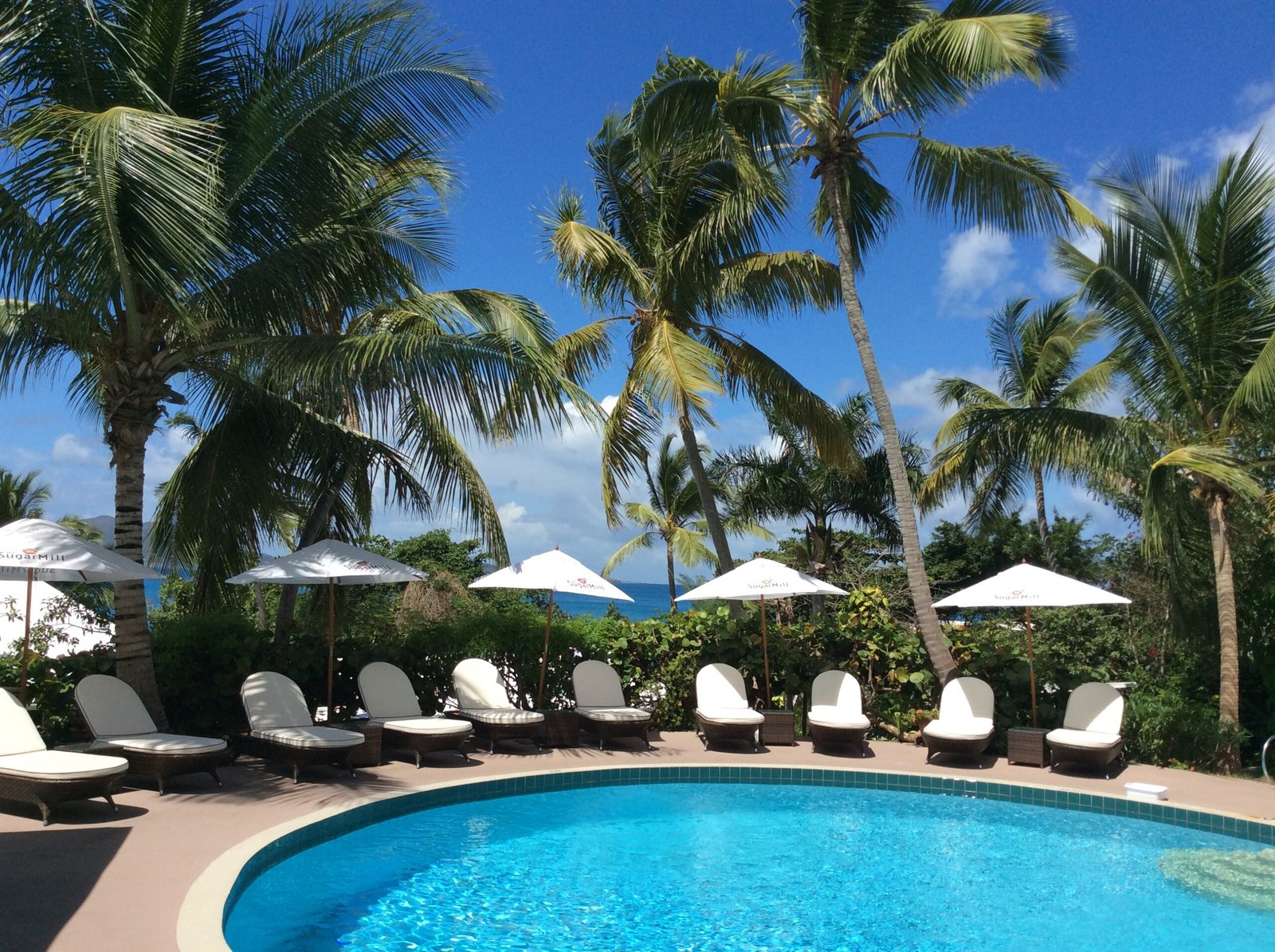
Sugar Mill Hotel is the best place to stay in Tortola, the British Virgin Islands
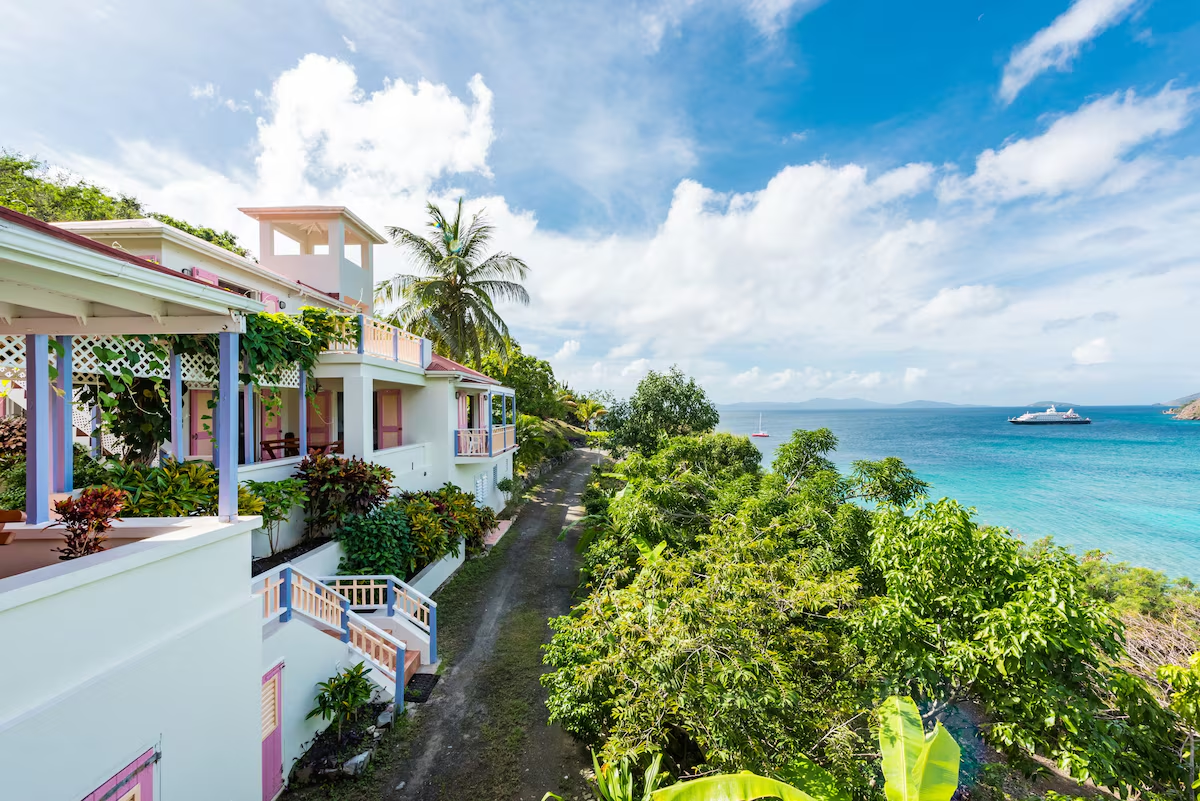
Sugar Mill Hotel is an intimate 24 room boutique inn on Tortola’s Apple Bay, built around the preserved stone ruins of a 1640 sugar mill and rum distillery that now houses its celebrated restaurant. Owner operated and wrapped in lush tropical gardens, it suits couples and quieter travellers who want character over scale. Its eco credentials rest on genuine low impact: a restored historic building, a small footprint of just 24 rooms, and a green hotel listing.
Who owns Sugar Mill Hotel?
Sugar Mill Hotel is a small, owner operated boutique property, run at a personal scale rather than as part of a large chain. That hands on ownership shows in the way the hotel has preserved and reused the historic 1640 sugar mill and distillery ruins at its heart, turning a piece of Tortola’s colonial industrial past into the setting for its restaurant rather than clearing it away. Keeping the property small and independent means decisions about how it runs stay local to Tortola.
About the rooms in Sugar Mill Hotel
There are just 24 rooms and suites at Sugar Mill Hotel, spread through mature tropical gardens that climb the hillside above Apple Bay. The low density is deliberate, giving the place a quiet, private feel and keeping its footprint light on the land. Rooms open to garden or sea views, and the intimate scale means the hotel never feels crowded, which is part of why it suits couples and travellers after somewhere calm and characterful rather than a big resort.
What food is available at Sugar Mill Hotel?
Dining at Sugar Mill Hotel centres on its restaurant set inside the restored stone walls of the original 1640 sugar mill, one of the more atmospheric places to eat on Tortola. The kitchen leans on fresh Caribbean produce and local seafood, and the setting, wrapped in the preserved ruins and gardens, ties the food experience directly to the island’s history and surroundings rather than a generic hotel dining room.
Sustainability features of Sugar Mill Hotel
Sugar Mill Hotel’s sustainability rests on genuine low impact rather than headline technology. It is an adaptive reuse of a historic building, preserving and inhabiting the 1640 sugar mill and distillery ruins instead of building new. The hotel stays deliberately small at 24 rooms, keeping its footprint and resource use modest, sits within established tropical gardens, and is listed as a green hotel choice on Tortola. Its owner operated, low density model is the kind of quiet, small scale hospitality that treads lightly on a small island.
Who is Sugar Mill Hotel for?
This is a place for couples and quieter travellers who want character, history and calm over scale and buzz. Anyone drawn to a small, owner run inn with a genuine sense of place, wrapped in gardens and steps from a surf beach, will feel at home here, as will guests who would rather their stay preserve a historic building than fill a new one. It suits slow, unhurried holidays on Tortola’s north coast.
How to get to Sugar Mill Hotel from the airport
The closest airport to Sugar Mill Hotel is Terrance B. Lettsome International Airport (EIS) on Beef Island, linked to Tortola by a short road bridge.
Private transfer or taxi to Sugar Mill Hotel
From the airport it is roughly a 45 to 55 minute drive west and north across Tortola to Apple Bay, and a taxi or pre arranged transfer is the simplest option, especially after a long journey. The hotel can arrange a transfer on request, which takes the guesswork out of the winding island roads.
Ferry and other routes to Sugar Mill Hotel
Many visitors instead arrive by ferry into Road Town or West End from St Thomas in the US Virgin Islands, then continue by taxi to Apple Bay, a shorter road leg than from the airport. However you arrive, the final stretch is along Tortola’s scenic north coast road.
Things to do while staying at Sugar Mill Hotel
Apple Bay is one of Tortola’s best surf breaks, with reliable winter swell right outside the hotel, so board riders are well placed. Cane Garden Bay, a lively beach with bars and calm swimming, lies a short drive east. Walkers can climb Sage Mountain National Park, the highest point in the Virgin Islands, for rainforest trails and long views. Quiet Smuggler’s Cove, good for snorkelling and sunset drinks, sits nearby to the west, rounding out an easy mix of surf, nature and beach days.
Virgin Gorda is best for travellers after quiet luxury, sailing, and the famous granite scenery of The Baths
Virgin Gorda is the third largest of the British Virgin Islands and one of the most scenic, famous for The Baths, a cluster of giant granite boulders forming sea pools and grottoes on its southern shore. The island is quieter and more exclusive than Tortola, with sheltered North Sound at its northeastern end a haven for sailors and a handful of high end, low impact retreats reached only by boat. It suits travellers after seclusion, natural beauty and calm anchorages rather than nightlife or shopping.
Where to stay in Virgin Gorda: Top Pick
Oil Nut Bay is the best place to stay in Virgin Gorda, the British Virgin Islands
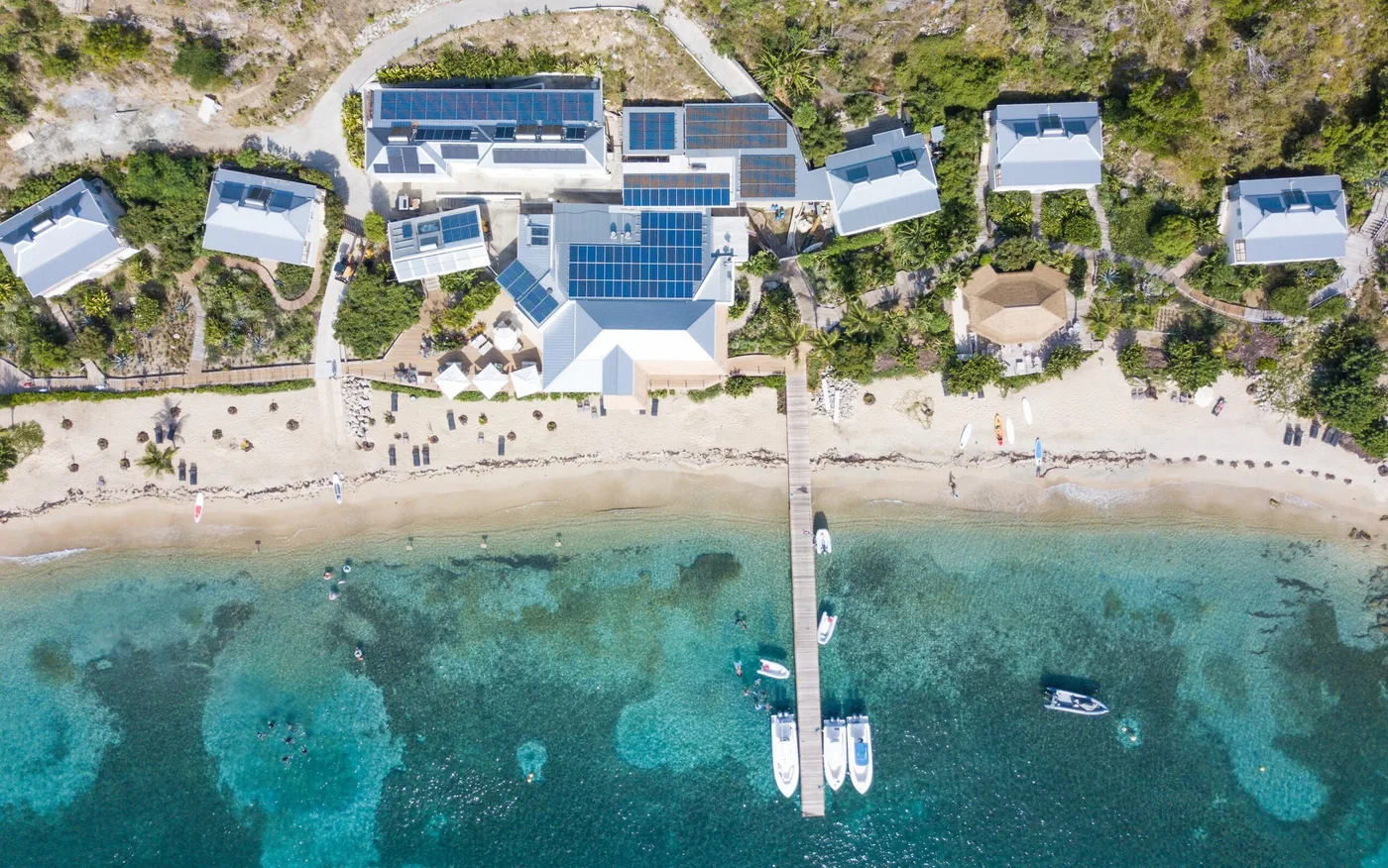
Set on the eastern tip of Virgin Gorda, where the sheltered waters of North Sound meet the open Atlantic, Oil Nut Bay is a solar powered luxury resort reachable only by boat or helicopter. It pairs genuine seclusion with serious sustainability, running on a large on site solar array with battery storage, protecting its own reef and marine life, and growing produce in its gardens. It suits couples and families after a private, off grid hideaway with high end comfort and a real environmental conscience.
Who owns Oil Nut Bay?
Oil Nut Bay is a privately developed resort and residential community on Virgin Gorda, master planned with sustainability built into its infrastructure rather than added on. That long term ownership is why it invested in its own solar plant, water systems and reef protection.
Sustainability features of Oil Nut Bay
Oil Nut Bay runs on a large solar array with battery storage that covers much of its power, harvests and treats its own water, protects the surrounding reef and marine environment, and grows produce on site. Reaching it only by boat or helicopter keeps road traffic and development pressure off this remote corner of Virgin Gorda.
Who is Oil Nut Bay for?
This is for couples, families and groups who want a private, boat access only hideaway on Virgin Gorda with luxury villas, a marina and a beach club, and who value that the whole operation is engineered to tread lightly on a fragile stretch of coast.
How to get to Oil Nut Bay from the airport
Set on the eastern tip of Virgin Gorda, where the sheltered waters of North Sound meet the open Atlantic, Oil Nut Bay is a solar powered luxury resort and villa community spread across 400 acres. Half of that land has been placed under a conservation easement, so the hillsides, beaches and native vegetation that frame this remote corner of the British Virgin Islands stay protected rather than built over. Reachable mainly by boat or helicopter, the property feels like a private world, yet it runs on clean power and its own fresh water, which makes it one of the most genuinely sustainable places to stay in the region.Who owns Oil Nut Bay?The resort is a privately developed villa community, and ownership extends beyond the buildings into the surrounding landscape through a conservation easement that locks away half of the 400 acre estate from development. Local life matters here too. The North Sound Foundation, connected to the property, funds nearby schools and led the rebuilding of the Robinson O’Neal Primary School after Hurricane Irma, putting the community at the heart of how the place is run.About the rooms in Oil Nut BayThere are private villas and resort residences at Oil Nut Bay, including hillside homes with sweeping views over North Sound and waterfront options closer to the marina and beach. Every building sits within a single storey height limit and many carry green roofs, so the architecture stays low against the land and blends into the hillside rather than dominating it. Guests staying in these homes get space, privacy and direct access to the bay, all designed to tread lightly on the surrounding terrain.What food is available at Oil Nut Bay?Dining centres on the resort’s own restaurants and beach club, where the menus lean on the fresh seafood and Caribbean produce you would expect in this part of the British Virgin Islands. Because the property is remote and largely reached by water, the kitchens cater closely to guests across the day, and villa residents can also arrange private dining within their homes. Meals are built around the relaxed, sea facing setting that defines the resort.Sustainability features of Oil Nut BayClean energy and careful land use sit at the core of how the resort operates. A community solar farm powers the property and onsite desalination provides its fresh water, removing much of the reliance on imported resources that burdens many island hotels. Turtle friendly lighting protects nesting wildlife along the shore, green roofs and a single storey building limit keep the development tucked into the landscape, and the conservation easement preserves half the estate for good. Off site, the North Sound Foundation channels support into local schools and greener community rebuilding.Who is Oil Nut Bay for?This is a destination for travellers seeking seclusion, comfort and a genuinely lighter footprint in one stay. Families, couples and small groups who want a private villa with their own stretch of the bay will feel especially at home, as will anyone drawn to sailing, diving and the quiet of North Sound. Eco minded visitors who want luxury without the guilt of wasteful resorts will find that the solar power, desalinated water and conservation commitments make Oil Nut Bay an easy choice.
Things to do while staying at Oil Nut Bay
The closest airport to Oil Nut Bay is Terrance B. Lettsome International Airport (EIS) on Beef Island, Tortola, which handles most regional connections through San Juan, Antigua and St Thomas. From there it is a short drive of roughly 15 minutes, around 5 miles, to the Trellis Bay ferry dock on Beef Island, where the resort arranges a private boat transfer across North Sound to its own marina on the eastern tip of Virgin Gorda, a crossing of around 30 to 40 minutes.Private transfer or taxi to Oil Nut BayA pre arranged private transfer is the easiest option to get to Oil Nut Bay, as the property sits on a secluded headland with no through road and the final leg can only be reached by water. The resort arranges a private boat transfer from the Trellis Bay dock, and a taxi covers the brief hop from the EIS terminal to Trellis Bay if you are not collected directly. Once you arrive at the marina, golf carts carry you between the villas, beach and amenities. Travellers who prefer can also fly into the smaller Virgin Gorda Airport (VIJ) and complete the trip by boat from there.Public transport to Oil Nut BayPublic transport to Oil Nut Bay is possible only with multiple changes, and in practice it does not reach the property at all. The British Virgin Islands have no scheduled national bus or coach network, so you would rely on shared route taxis and open air safari taxis, which run informally along the main roads of Tortola, to reach Trellis Bay on Beef Island, then a private boat across North Sound for the final approach. Because there is no through road and the last leg is always by water, a self drive hire car is of little use here. The resort’s own coordinated boat transfer, combined with an airport taxi on the Tortola side, is the simplest and most reliable choice.
Private and outer islands is best for honeymooners, divers, sailors and switch-off seekers wanting an exclusive, near self-contained single resort island
Where to stay in Private and outer islands: Top Pick
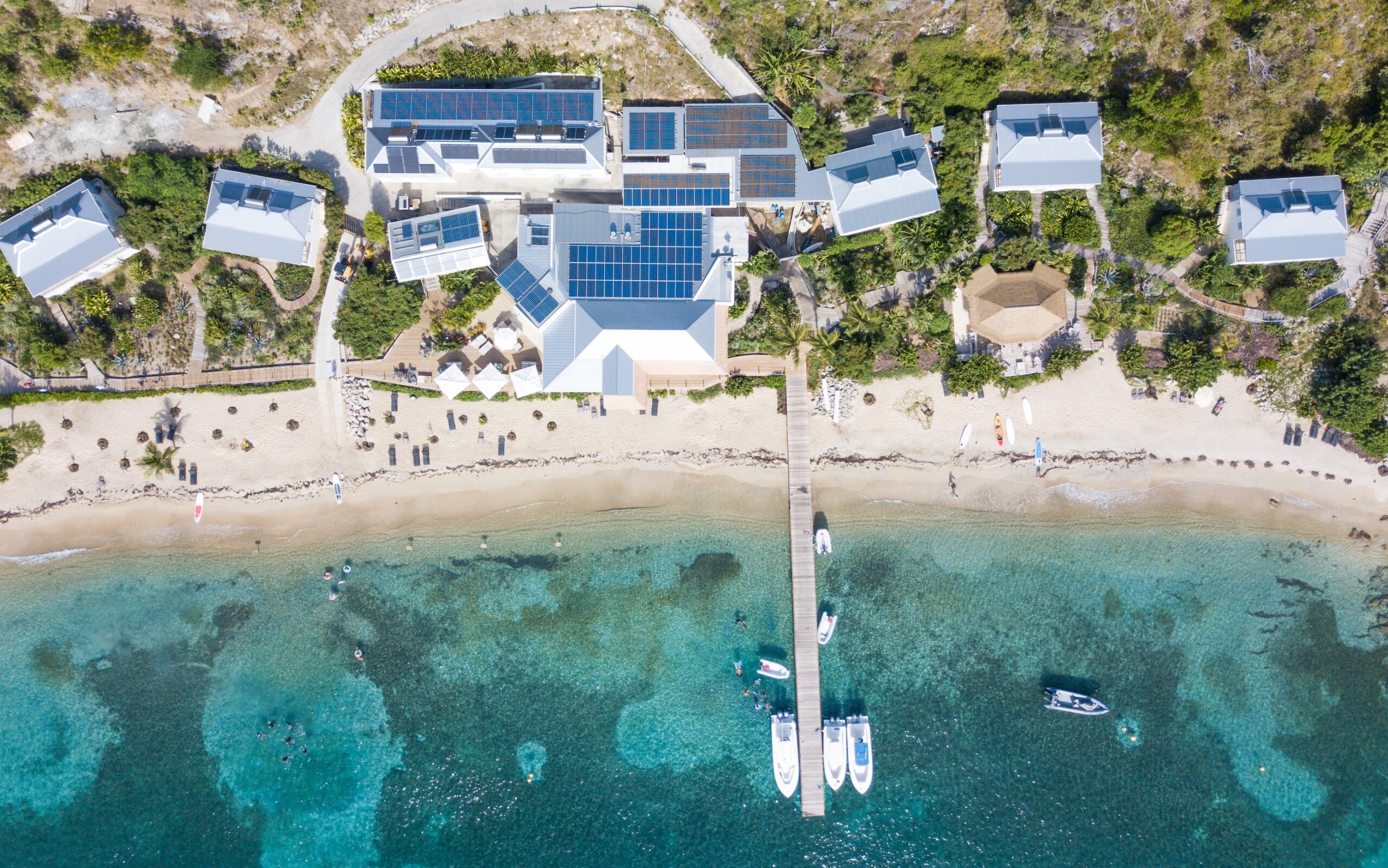
Cooper Island Beach Club is the best place to stay in Private and outer islands, the British Virgin Islands
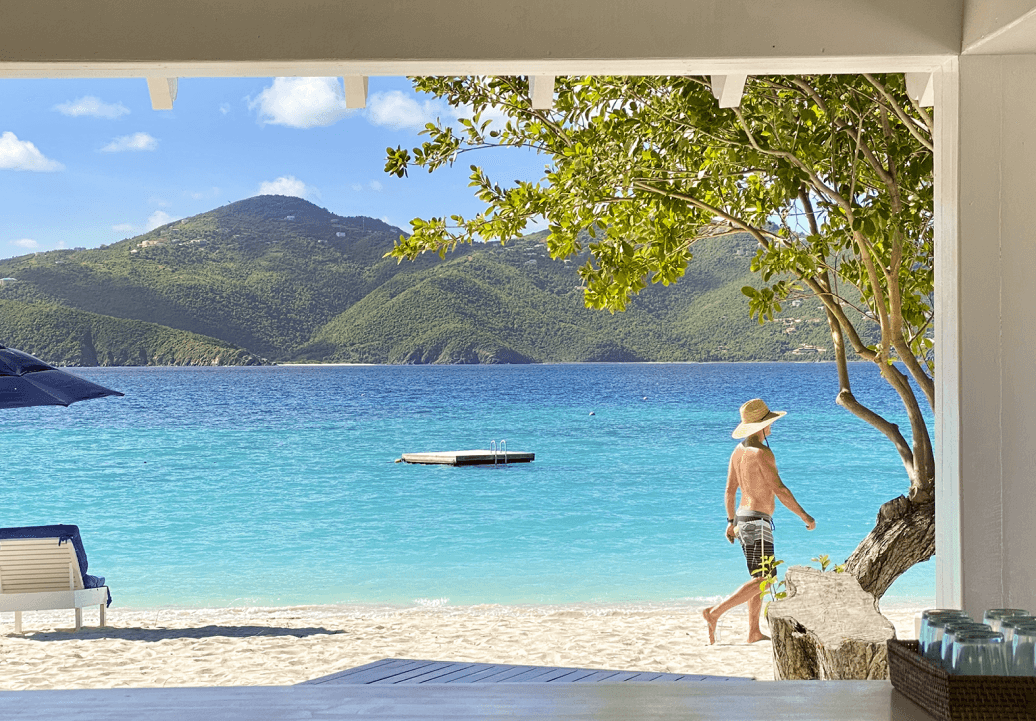
Cooper Island Beach Club is a small, solar powered eco resort on Manchioneel Bay, Cooper Island, one of the quiet outer islands of the British Virgin Islands reachable only by boat. With a handful of beachfront rooms, its own microbrewery and a rum bar, it runs largely off grid on one of the largest privately owned solar arrays in the BVI, makes its own water and cuts single use plastic. It suits divers, sailors and switch off seekers who want castaway calm without giving up comfort or their green values.
Sustainability features of Cooper Island Beach Club
Cooper Island Beach Club runs on an extensive solar array with battery storage that powers most of the resort, desalinates and bottles its own drinking water on site to cut plastic, and protects the reef and turtles of Manchioneel Bay. Being boat access only and deliberately small keeps its footprint low.
Who is Cooper Island Beach Club for?
It suits divers, sailors, honeymooners and anyone after a genuinely low impact castaway stay, with world class diving and snorkelling straight off the bay and no roads, crowds or cars to break the quiet.
How to get to Cooper Island Beach Club from the airport
Set on its own small island in the British Virgin Islands, Cooper Island Beach Club is a self sufficient, off grid eco resort that has built its reputation on doing things its own quiet way. Reached only by boat, the property sits on a calm stretch of beach with little around it but sea, sand and the slow rhythm of island life, which makes it one of the most genuinely remote and unhurried places to stay across the BVI’s private and outer islands.Who owns Cooper Island Beach Club?Run as an independent, owner operated resort rather than part of a large hotel chain, Cooper Island Beach Club has stayed small enough to make bold environmental choices that bigger groups tend to avoid. That independence shows in the detail of how the island is managed, from the energy that powers it to the conservation work it funds, and it gives the team the freedom to put sustainability ahead of scale.About the rooms in Cooper Island Beach ClubThere are a handful of rooms at Cooper Island Beach Club, including simple beachfront accommodation that looks straight out over the water and keeps things deliberately low key. Spread along the shore rather than stacked into a tower, the rooms suit guests who want comfort without excess, and the modest count means the island never feels crowded.What food is available at Cooper Island Beach Club?Dining centres on the beachfront restaurant and bar, where the menu leans on fresh seafood and Caribbean flavours served right beside the sand. One of the island’s signatures is its onsite microbrewery, home to the Turtle IPA, and $1 from every Turtle IPA brewed goes towards BVI sea turtle conservation, so a cold drink here doubles as a small contribution to protecting the waters around you.Sustainability features of Cooper Island Beach ClubFew resorts in the region go as far as this one. The whole island runs entirely on 303 rooftop solar panels that generate more power than the club consumes, while a solar powered desalination plant treats rainwater for use across the property. Wastewater is recycled through a membrane bioreactor to feed the gardens, glass bottles are crushed back into construction sand and fryer oil is turned into biodiesel, closing loops that most hotels simply send to landfill. Add the turtle conservation funding behind the onsite Turtle IPA and you have a genuinely self sufficient, off grid operation rather than a token gesture.Who is Cooper Island Beach Club for?This is the place for travellers who want a remote, off grid escape with a clear conscience, reached by boat and free of crowds. Sailors, divers and barefoot beach lovers all find a natural home here, and anyone who cares about where their power, water and waste actually go will appreciate seeing real sustainability in action. If you are after a tranquil, low impact corner of the British Virgin Islands rather than a busy resort strip, Cooper Island Beach Club is hard to beat.
Things to do while staying at Cooper Island Beach Club
The closest airport to Cooper Island Beach Club is Terrance B. Lettsome International Airport (EIS) on Beef Island, Tortola, around a 20 to 25 minute taxi ride to Road Town on the south coast. Cooper Island sits offshore with no airstrip and no road, so the final leg is always by water. Many guests arriving from further afield fly instead into Cyril E. King International Airport (STT) on St Thomas in the US Virgin Islands and connect by ferry to Tortola before the last hop across.Private transfer or taxi to Cooper Island Beach ClubA pre arranged private transfer is the easiest option to get to Cooper Island Beach Club, taking you from the airport to a small harbour near Port Purcell in Road Town and then across to the island by water. The club runs its own scheduled boat from that harbour on set days, so it is worth booking your arrival to match the launch timetable. A licensed taxi from the airport to the harbour is straightforward and quick, and from there a private charter or water taxi can drop you straight onto the mooring, while guests arriving on their own yacht can simply pick up a mooring at the resort. Arranging the boat transfer with the club in advance is strongly recommended, as there is no walk up access to the island.Public transport to Cooper Island Beach ClubPublic transport to Cooper Island Beach Club is possible with multiple changes. The British Virgin Islands has no national coach network, but on Tortola you can use the licensed open air safari taxis, the shared route taxis that run for a set fare between the airport, Road Town and the main ferry harbours, and the inter island ferries that link Tortola with St Thomas and Virgin Gorda. None of these reach Cooper Island itself, however, as there is no scheduled public ferry to the resort. After reaching Road Town by safari taxi, the only way across is the resort’s own launch or a private water taxi, so for the final crossing a pre booked transfer or charter is the practical and reliable choice.
Jost Van Dyke is best for beach bar lovers, sailors and laid back travellers after the famous Soggy Dollar scene
Where to stay in Jost Van Dyke: Top Pick
White Bay Villas is the best place to stay in Jost Van Dyke, the British Virgin Islands
White Bay Villas is a collection of individually owned hillside villas and cottages above White Bay on Jost Van Dyke, the tiny, laid back island famous for its beach bars and the Soggy Dollar. Reached by ferry and run at a small, personal scale, the villas give you self catering independence, sweeping views over the bay and an easy walk down to one of the Caribbean’s prettiest beaches. It suits couples, families and groups who want barefoot island life, space of their own and a low key, local feel rather than a big resort.
About the villas at White Bay Villas
The villas and cottages at White Bay Villas are self catering, individually styled and set on the hillside for privacy and views, so you live at your own pace with a kitchen and space to spread out, a short walk or drive from the beach bars of White Bay.
Who is White Bay Villas for?
It suits couples, families and groups of friends who want an independent, self catering base on Jost Van Dyke, close to the famous beach bar scene but with their own quiet retreat to return to.
How to get to White Bay Villas from the airport
Perched on the hillside above White Bay on Jost Van Dyke, White Bay Villas is an off grid villa retreat with sweeping views over one of the British Virgin Islands’ most celebrated stretches of sand. The property has been a pioneer of off the grid living on the island for more than 40 years, and today it is home to the largest solar installation in the western BVI. Guests come for the quiet, the elevation and the sense of a place that runs entirely on the sun and the rain that falls on its own roofs.Who owns White Bay Villas?This is an owner run retreat rather than a faceless resort, and that long stewardship shows in the detail. Over four decades the people behind White Bay Villas have built up a working off grid estate on Jost Van Dyke, leading the island on renewable living long before it was fashionable. Their hands on approach is the reason the place now carries the western BVI’s largest solar array and a settled, lived in character that a corporate operator rarely manages.About the rooms in White Bay VillasThere are individual villas at White Bay Villas, including hillside houses set above White Bay to make the most of the elevation and the sea views. Each villa is self contained and furnished with locally made pieces rather than shipped in fittings, so the interiors feel tied to Jost Van Dyke itself. Accommodation here is built around privacy and space, suiting guests who want a whole house to themselves instead of a single hotel room.What food is available at White Bay Villas?Meals lean heavily on what the island can grow and catch, with indigenous produce and locally landed seafood forming the heart of the kitchen. Sourcing close to home keeps food miles low and supports Jost Van Dyke’s own growers and fishermen. Down on the bay, the legendary beach bars of White Bay are a short walk away for anyone who wants to round off the day off the property.Sustainability features of White Bay VillasAt the centre of it all sits a 20,000 watt photovoltaic system that powers the villas and a Nissan Leaf electric fleet, so guests are driven and hosted on solar energy. Rainwater is harvested and reused across the estate, waste is recycled, and the furniture, timber and produce are drawn from indigenous and local sources rather than imported. More than 40 years of off grid practice means sustainability here is the foundation of the place, not a recent addition.Who is White Bay Villas for?Travellers who want genuine off grid living without giving up comfort will feel at home in these hillside villas. The retreat suits couples, families and small groups after privacy, a slower pace and a base that proves low impact hospitality can still feel generous. Anyone drawn to renewable powered stays, electric island transport and a quiet perch above one of the BVI’s finest beaches will find Jost Van Dyke’s White Bay Villas hard to better.
Things to do while staying at White Bay Villas
The closest airport to White Bay Villas is Terrance B. Lettsome International Airport (EIS) on Beef Island, just off Tortola, around an hour and a quarter away once you factor in the water crossing. Jost Van Dyke has no airport of its own, and the West End ferry dock on Tortola sits roughly 8 miles from the airport, about thirty to forty minutes by road, before a ferry of around twenty five minutes across to Great Harbour.Private transfer or taxi to White Bay VillasA pre arranged private transfer is the easiest option to get to White Bay Villas, and the property can help organise the road, ferry and hillside legs so they join up cleanly. Failing that, take a taxi from the airport across Tortola to the West End ferry dock, board the ferry to Great Harbour on Jost Van Dyke, then pick up a short taxi up the hill to White Bay, where local taxis run on fixed island rates rather than meters. Many guests also arrive by private boat or charter directly into White Bay, one of the most popular anchorages in the islands, which skips the road and ferry legs entirely.Public transport to White Bay VillasPublic transport to White Bay Villas is possible with multiple changes, though the British Virgin Islands has no scheduled national coach or bus network to rely on for this route. The practical public option is the scheduled inter island ferry between Tortola’s West End and Great Harbour, combined with shared route taxis at each end, which run on fixed island rates rather than meters. Once you reach Great Harbour you are a short taxi from White Bay, and as the island is so small you mostly get around on foot otherwise, so for door to door ease a pre arranged transfer through the villas is the sensible choice.
When is the best time to visit the British Virgin Islands?
Things to do around White Bay Villas range from simply walking down to White Bay itself, a famous stretch of powder soft sand and turquoise water that is calm enough for swimming and snorkelling straight off the beach, to wandering along the bay to the legendary Soggy Dollar Bar, the birthplace of the Painkiller cocktail.From there you can head over to Great Harbour for the lively bars and local eateries that give Jost Van Dyke its easygoing reputation. Nature lovers can hike the island trails or take a boat trip to the Bubbly Pool, a natural rock pool that fizzes as the Atlantic swell surges through, while a day sail to nearby Sandy Cay or Diamond Cay rewards you with deserted beaches and excellent snorkelling.The setting suits families who want safe swimming and space to roam, solo travellers and couples after a quiet hideaway, nature lovers drawn to the reefs and trails, and anyone keen to soak up the unhurried local culture of one of the least developed islands in the chain.
Is the British Virgin Islands safe, and how do you get around?
The dry season runs roughly December to April and is the peak time to visit, with the lowest rainfall and pleasant temperatures (typically 25C to 31C year round); March is the most popular month. Atlantic hurricane season officially runs 1 June to 30 November, with the greatest storm risk and heaviest rain from September to November (September is the quietest month for visitors). For better value and thinner crowds while still enjoying good weather, target the shoulder months of May and November, accepting a slightly higher chance of rain and, late in the year, some storm risk.
Why we only list sustainable stays in the British Virgin Islands
The BVI is generally safe with low violent crime; the UK Foreign Office and US State Department advise normal precautions, with petty theft (including from yachts and unattended beach belongings) the main concern, so lock up and keep valuables out of sight. Driving is on the LEFT, which is familiar to Brits, but roads are steep, narrow and winding with limited signage, roaming livestock and poor lighting at night; a hire car (4×4 recommended on Tortola and Virgin Gorda) is useful on the bigger islands, though taxis and ferries cover most needs and the small private islands need no car at all. Drivers usually need to be 25 or over with a valid licence. The currency is the US dollar, so bring dollars: cards work at larger hotels and restaurants but cash is essential for taxis, ferries and small beach bars. Tipping is expected, around 10 to 15 percent in restaurants; many hotels add a service charge of roughly 10 to 12 percent, so check the bill before adding more. (Exact ferry times, fares and resort transfer arrangements change seasonally and should be confirmed close to travel.)
More Caribbean Sustainable Stays

Book Your Next Stay Consciously
Every stay in this guide was hand picked and checked for how it actually runs, and most are locally rooted so your money stays on the islands.

12% Off Sustainable Swimwear
Freedom Ecowear is offering our readers 12% off their eco-friendly swimwear, perfect for your next eco getaway. Use the link and your discount is added automatically.
Sustainable Travel Destinations, Eco-Stays and Eco-Tour Guides
More Great Articles From Hold The Throne
Latest Data Reports
Verified eco stays in British Virgin Islands
Each stay below was inspected on site and scored against our 16-point eco checklist. Ratings are earned, never bought.
- Cooper Island Beach Club. Eco rating 5/5 Green