
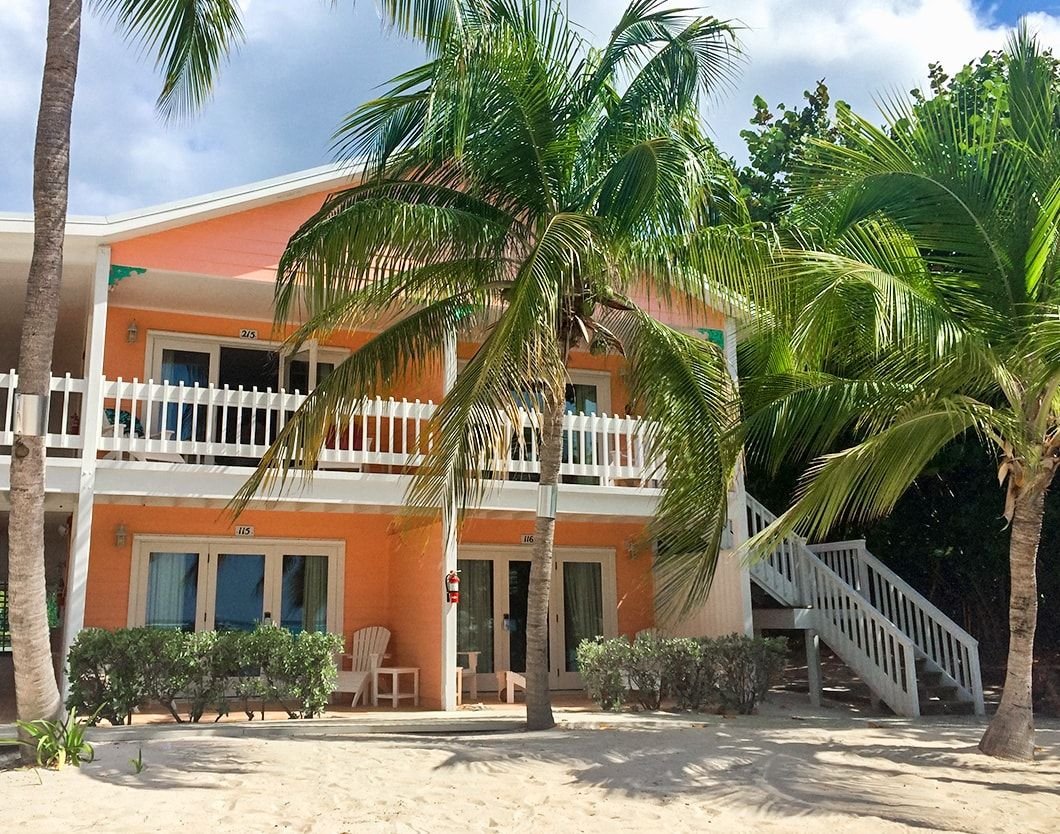
Best Eco Stays in the Cayman Islands
Where to stay in the Cayman Islands
The best areas to stay in the Cayman Islands range from a LEED Silver certified resort on Seven Mile Beach, to a Grand Cayman owned boutique hotel just off the same sand, an eco hotel set on the edge of Barkers National Park, and a Green Globe certified dive resort beside the Bloody Bay Marine Park. Options are spread from Seven Mile Beach and West Bay, George Town to Seven Mile Beach. Every stay we recommend below is genuinely sustainable and chosen so your money stays on the island.
Where to stay in the Cayman Islands by area, at a glance
Seven Mile Beach and West Bay is best for first-timers, couples, families and watersports lovers wanting beach plus easy dining
You arrive into Owen Roberts International just outside George Town, roughly a ten to twenty minute taxi north to Seven Mile Beach. Taxis run on fixed government rates and there is no Uber, so most visitors hire a car as the resorts spread along one long coastal road. This is the islands’ showpiece stretch of pale sand, home to the upscale Kimpton Seafire and the family-focused Ritz-Carlton, with calm clear water, beach bars and the West Bay sights like Stingray City trips just beyond the northern end. It suits first-timers who want everything within easy reach, couples after a polished beach base, families drawn to gentle swimming, and anyone keen on snorkelling, diving and watersports.
The difference between Seven Mile Beach and West Bay and other popular resort areas like Rum Point and the East End is that this stretch is the busy, developed heart of Grand Cayman, with the widest choice of restaurants, dive operators and beach clubs all in one place, while Rum Point and the East End trade that convenience for quieter sands, fewer crowds and a slower, more remote island mood.
Where to stay in Seven Mile Beach and West Bay: Top Pick
Vida Ocean Adventure Lodge is the best place to stay in Seven Mile Beach and West Bay, the Cayman Islands
Tucked away on Conch Point Road in West Bay, Vida Ocean Adventure Lodge is a boutique eco hotel set on the edge of Barkers National Park, a short hop from the celebrated stretch of Seven Mile Beach. The setting pairs sustainable architecture with retained and replanted native vegetation, so the 16 apartments feel woven into the landscape rather than dropped onto it. For travellers who want the Cayman Islands without the resort sprawl, this quieter corner of West Bay offers protected coastline, a genuine sense of place, and easy reach of the island’s best snorkelling and kiting.
Who owns Vida Ocean Adventure Lodge?
The lodge was co founded by environmentalist Milly Serpell alongside architect and kiter Derek Serpell, a pairing that explains the property’s twin focus on conservation and considered design. Milly’s environmental background shapes the locally centred sustainability ethos throughout the lodge, while Derek’s work as an architect is visible in the way each building sits within the native vegetation rather than clearing it. Their shared love of the water, and of kiting in particular, runs through the whole adventure lodge feel of the place.
About the rooms in Vida Ocean Adventure Lodge
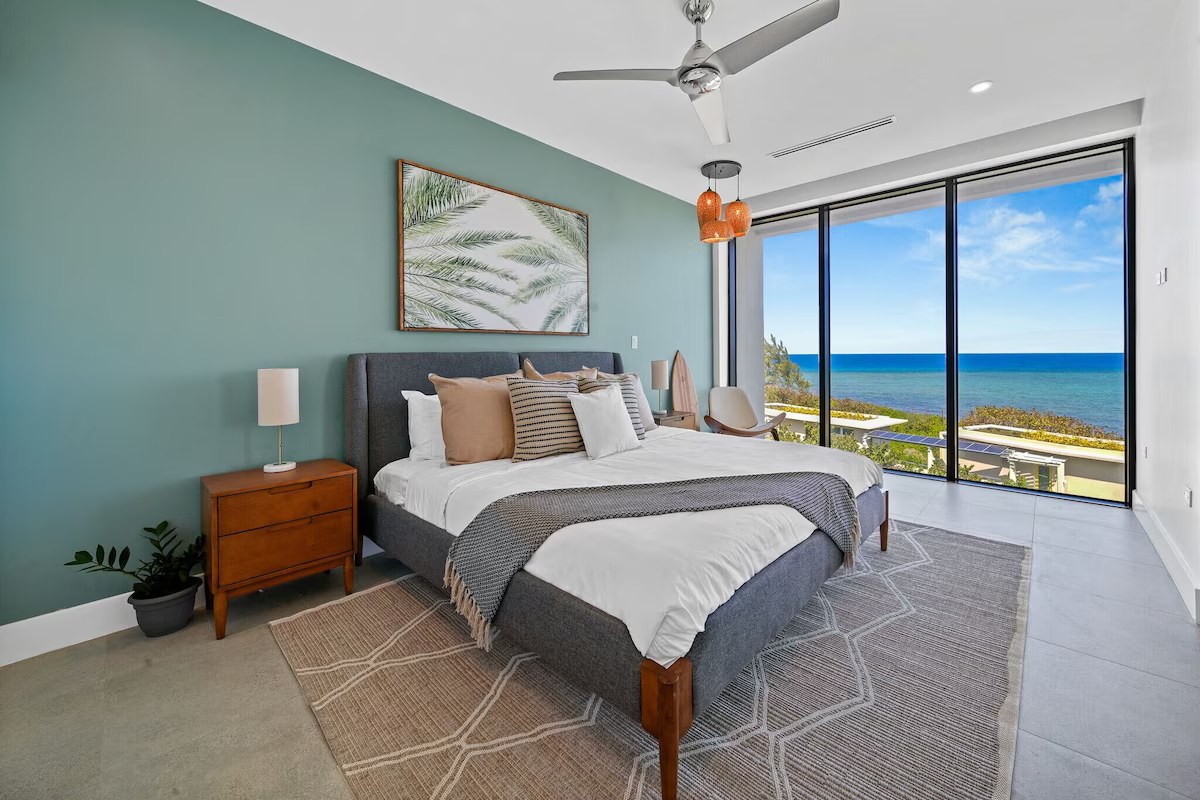
There are 16 rooms at Vida Ocean Adventure Lodge, including individually designed apartments that each carry their own character rather than following a single repeated template. Because every apartment has been designed in its own right, no two stays feel quite the same, and the sustainable architecture means the spaces are built to work with the climate and the surrounding Barkers National Park landscape. Native planting was retained and replanted around the buildings, so guests look out onto greenery that belongs to the site rather than an imported manicured garden.
What food is available at Vida Ocean Adventure Lodge?
Dining centres on the in house Nourish kitchen, which serves local farm to table cuisine drawn from Caymanian growers and producers. By leaning on nearby farms, the kitchen keeps food miles low and supports the island’s own food economy, a quiet extension of the lodge’s wider sustainability thinking. Meals here are about seasonal, locally sourced cooking, so what arrives on the plate reflects the Cayman Islands themselves rather than a generic international menu.
Sustainability features of Vida Ocean Adventure Lodge
Sustainability sits at the heart of the lodge rather than being bolted on as an afterthought. The buildings use sustainable architecture, native vegetation was retained and replanted across the grounds, and the property’s position on the edge of Barkers National Park ties it to one of West Bay’s protected natural areas. Local sourcing reaches beyond the Nourish kitchen too, with the lodge hiring local staff and commissioning Caymanian artists, so the benefit of each stay stays within the island community.
Who is Vida Ocean Adventure Lodge for?
This is a lodge suited to anyone who wants their Cayman Islands trip to tread lightly and feel rooted in the place they are visiting. Anyone drawn to the water will find a natural home here given the founders’ kiting roots and the proximity to Barkers National Park and Seven Mile Beach, while design minded guests will appreciate the individually conceived apartments. It suits conscious travellers, couples and adventurers who would rather support local farmers, artists and staff than check into an anonymous resort.
How to get to Vida Ocean Adventure Lodge from the airport
The closest airport to Vida Ocean Adventure Lodge is Owen Roberts International Airport (GCM) in George Town on Grand Cayman, which sits roughly a 25 to 35 minute drive away depending on traffic through Seven Mile Beach, covering around 18 kilometres up to the far northern tip of West Bay. The lodge is on Conch Point Road, so the practical last leg is a hire car or a taxi.
Private transfer or taxi to Vida Ocean Adventure Lodge
A pre arranged private transfer is the easiest option to get to Vida Ocean Adventure Lodge, taking you straight to Conch Point Road without working out the route yourself. Taxis are also available at the airport on fixed government rates, with no Uber on the island, so agree the fare before you set off. That said, the island is small and well signposted, and once you are settled a hire car is genuinely useful for reaching the beaches and dive sites scattered around the West Bay coast.
Public transport to Vida Ocean Adventure Lodge
Public transport to Vida Ocean Adventure Lodge is possible with multiple changes. Grand Cayman has a network of shared minibuses, marked by coloured route signs and run from the George Town depot, with the West Bay route (signed with a yellow route marker) heading up the coast. They are cheap and used by locals, but services thin out in the evenings and they do not run all the way to the remote Conch Point area, so you would step off at the end of the West Bay route and face a short taxi for the final stretch. For this far northern corner of West Bay, a hire car or a private transfer is genuinely the most practical choice.
Things to do while staying at Vida Ocean Adventure Lodge
Things to do around Vida Ocean Adventure Lodge range from kiting and watersports off the breezy Barkers shoreline, with the property’s kiter co founder a clue to how the wind here is put to good use, to slower days spent exploring on foot. Barkers National Park is right on the doorstep, a wild stretch of beach, mangrove and casuarina trees that is perfect for walking, birdwatching and quiet swims away from the crowds.
Within easy reach you have the famous Seven Mile Beach a short drive south, with its beach bars and calm clear water, the colourful gardens and rescued reptiles at the Cayman Turtle Centre nearby in West Bay, and the dive sites and snorkelling spots scattered around the coast. A little further afield, the dining and galleries of George Town and Stingray City boat trips from the northern sound round out the options.
It suits nature lovers drawn to the protected park and snorkelling, families wanting calm beaches and the turtle centre, solo travellers chasing wind and watersports, and culture seekers keen on Caymanian art and local food. Couples will appreciate the quiet, green setting too, with the busier resort strip close enough for a night out but far enough to keep the lodge peaceful.
George Town is best for cruise-day shoppers, divers and travellers wanting a walkable base near the airport
George Town sits barely five to ten minutes from Owen Roberts International Airport (GCM), so it is the quickest landing-to-bed option on Grand Cayman and a sensible base if you would rather walk to the shops, banks and ferry dock than drive everywhere. It is the island’s busy commercial and cruise hub, with duty-free shopping, easy access to shore-dive and snorkel sites, and a calmer feel in the evenings once the day-trippers have left. The area suits divers, independent travellers and anyone who wants a practical, walkable foothold close to both the terminal and the start of Seven Mile Beach, with mid-range and aparthotel options such as The Locale and the Vida-branded stays.
The difference between George Town and other popular Grand Cayman bases like Seven Mile Beach and Rum Point is that George Town is the working town rather than a pure beach strip, so you trade a little resort polish for genuine walkability, duty-free shopping and the shortest possible transfer from the airport, while still being only minutes from the famous sand.
Where to stay in George Town: Top Pick
The Locale Hotel is the best place to stay in George Town, the Cayman Islands
Set just off Seven Mile Beach in George Town, The Locale Hotel is a boutique retreat that pairs a relaxed Grand Cayman address with serious green credentials. Built to one of the smallest footprints of any property in the Caribbean, this island stay sits within easy reach of the sand, the dive sites and the shops and restaurants of the capital, yet feels tucked away enough to keep its low key, design led calm. For travellers who want the beach on their doorstep without the sprawl of a mega resort, it is a smart base for exploring the island.
Who owns The Locale Hotel?
This is a genuinely local operation. The Locale Hotel is Grand Cayman owned and run by the island based Howard Hospitality Group, so the people behind it live and work where you stay. That rootedness shows in the way it is built and managed, from the small land footprint to the choices made around energy and the gardens, and it means your spend stays closer to the community rather than flowing offshore to a distant chain.
About the rooms in The Locale Hotel
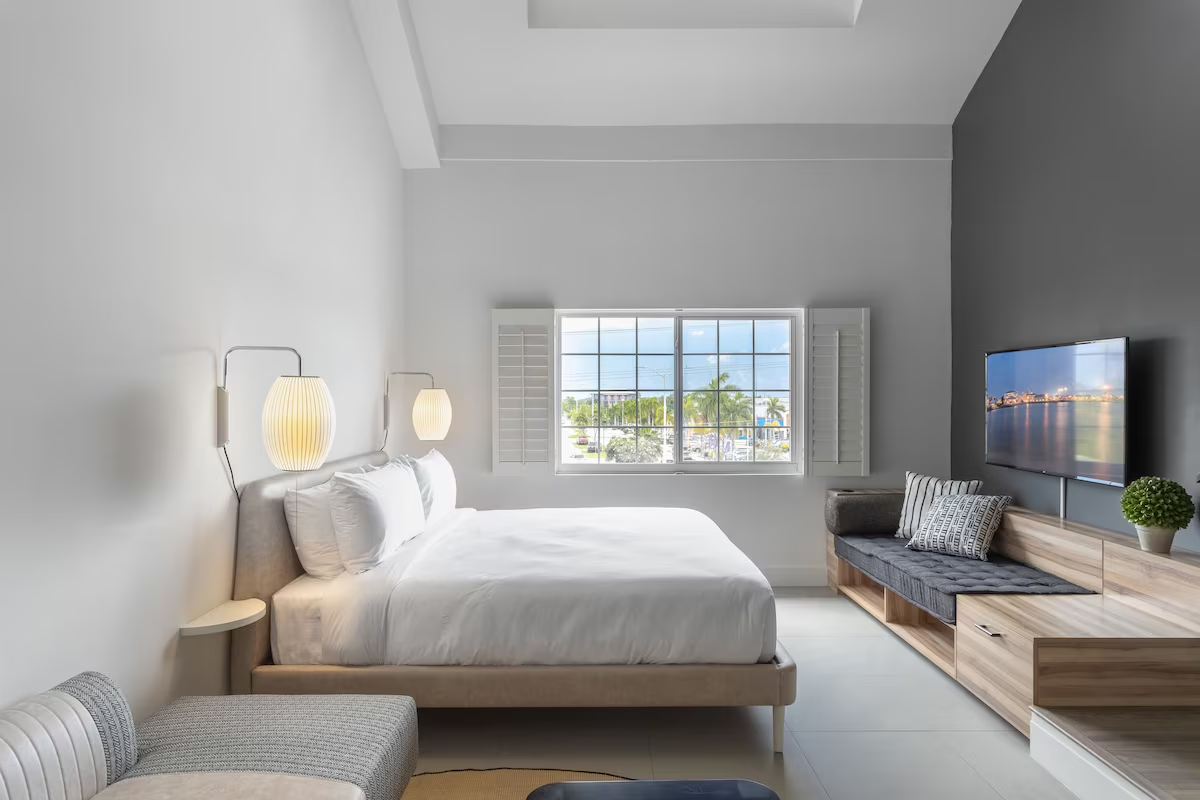
There are boutique guest rooms at The Locale Hotel, including bright, contemporary doubles and larger options designed for couples and small groups who want comfort without excess. Each space is kept deliberately efficient, with the same low impact thinking that shapes the rest of the property: air conditioning runs on a system that recovers heat to warm the hot water tanks, and bathrooms are stocked with refillable toiletries rather than a clutter of single use miniatures. The result is a stay that feels modern and easy while quietly doing less harm.
What food is available at The Locale Hotel?
Dining leans into the hotel’s pared back, place first ethos. Guests can expect honest, well made food and drink on site, with the same waste conscious approach that runs through the property, so paper straws stand in for plastic and single use packaging is kept to a minimum. Being a short stroll from George Town also puts the wider Seven Mile Beach scene within reach, from casual beach bars to the island’s celebrated seafood spots, giving you plenty of choice beyond the front door.
Sustainability features of The Locale Hotel
Few hotels in the region back up their green talk this thoroughly. A 305 panel solar array supplies almost all of the electricity here, while waste heat from the air conditioning is recovered to warm the hot water tanks, cutting energy use twice over. Outside, indigenous gardens are planted to thrive without irrigation, and turtle friendly lighting protects the nesting beaches that make this coastline so special. Add refillable toiletries, paper straws and one of the smallest building footprints in the Caribbean, and you have a property where sustainability is built into the fabric rather than bolted on.
Who is The Locale Hotel for?
This one suits eco minded travellers who want a beach holiday with a clear conscience. Couples, solo guests and small groups drawn to Seven Mile Beach will appreciate being moments from the sand while staying somewhere that genuinely walks its talk on energy, water and wildlife. It is also a natural fit for divers, design lovers and anyone who would rather support a locally owned boutique stay than a faceless resort, making it our pick for the best place to base yourself in George Town.
How to get to The Locale Hotel from the airport
The closest airport to The Locale Hotel is Owen Roberts International Airport (GCM) in George Town, the main gateway to Grand Cayman. The hotel sits just minutes from the terminal, with a typical drive of around ten to fifteen minutes over a short distance of a few miles, depending on traffic along the coast road.
Private transfer or taxi to The Locale Hotel
A pre arranged private transfer is the easiest option to get to The Locale Hotel, taking only a few minutes from the terminal and giving you a fixed price and a driver waiting on arrival. A taxi is the simple alternative: taxis on Grand Cayman work to government set fares rather than meters, so agree the price before you set off. A hire car is also worth considering if you want to explore the wider island at your own pace, as Grand Cayman is compact and easy to get around.
Public transport to The Locale Hotel
Public transport to The Locale Hotel is possible with multiple changes. There is no bus link directly from the airport, so on arrival you would first take a short taxi into central George Town to reach the public transport depot. From there the island’s shared minibus network runs along colour coded routes, and the westbound service towards West Bay and Seven Mile Beach passes close to the hotel, offering a cheap and characterful way to reach the beach and shops. For arrivals with luggage, though, a car or a private transfer remains the practical choice.
Things to do while staying at The Locale Hotel
Things to do around The Locale Hotel range from long, slow days on Seven Mile Beach, the soft white sand stretch the property sits just off, to snorkelling and diving over the reefs that ring the island. Shore-dive and snorkel sites are within easy reach, and the calm, clear water makes the area a favourite with divers of every level.
Within easy reach you have the shops and waterfront of George Town, the chance to swim with rays at Stingray City out on the sandbar, the gentle boardwalks and mangroves that draw nature lovers, and a lively local dining scene built around fresh Caribbean seafood. George Town’s markets and historic core are an easy walk away, and the wider island opens up quickly thanks to its compact size.
Families will love the calm shallows and the friendly rays, solo travellers and divers have the reefs and easy walkability, nature lovers get the mangroves and turtle nesting beaches, and anyone curious about island culture can wander George Town’s markets and historic streets. It is a base that works for almost everyone, from beach loungers to active explorers.
Seven Mile Beach is best for first timers, couples, families and anyone wanting a polished beach base with dining and watersports on the doorstep
Seven Mile Beach is Grand Cayman’s famous coastline, a long, gently curving stretch of soft white sand on the sheltered western side of the island, backed by resorts, restaurants and calm, clear water that is ideal for swimming and easy snorkelling. It is the classic Cayman base for first timers, couples and families, with Owen Roberts International Airport (GCM) at George Town only fifteen to twenty minutes away and everything from watersports to duty free shopping within easy reach.
This is the polished, resort side of the Cayman Islands, where you trade the wild seclusion of the smaller sister islands for comfort, dining and a beach that regularly ranks among the best in the Caribbean. It suits travellers who want a relaxed beach holiday with plenty on the doorstep rather than total isolation.
Where to stay on Seven Mile Beach: Top Pick
Kimpton Seafire Resort + Spa is the best place to stay on Seven Mile Beach, the Cayman Islands
Set along the famous stretch of Seven Mile Beach in Grand Cayman, Kimpton Seafire Resort + Spa is a contemporary beachfront retreat that holds the distinction of being the first LEED Silver certified resort in the Cayman Islands. Developed by Dart, the property pairs breezy, light filled interiors with a serious commitment to lower impact building, having been constructed partly from recycled material. Guests arrive to find a polished base for exploring the islands, with the calm Caribbean on the doorstep and a green conscience built into the very walls.
Who owns Kimpton Seafire Resort + Spa?
The resort was developed by Dart, the Cayman based group behind much of the island’s modern coastal development, and it operates under the Kimpton brand. That ownership shaped the building from the ground up, since Dart chose to fold reclaimed and locally sourced material into the construction rather than rely solely on new supplies. Concrete salvaged from the demolished Courtyard Marriott was reused in the build, and walking trail pavers were made from locally crushed glass, giving the property a tangible link to the materials and waste streams of the island itself.
About the rooms in Kimpton Seafire Resort + Spa
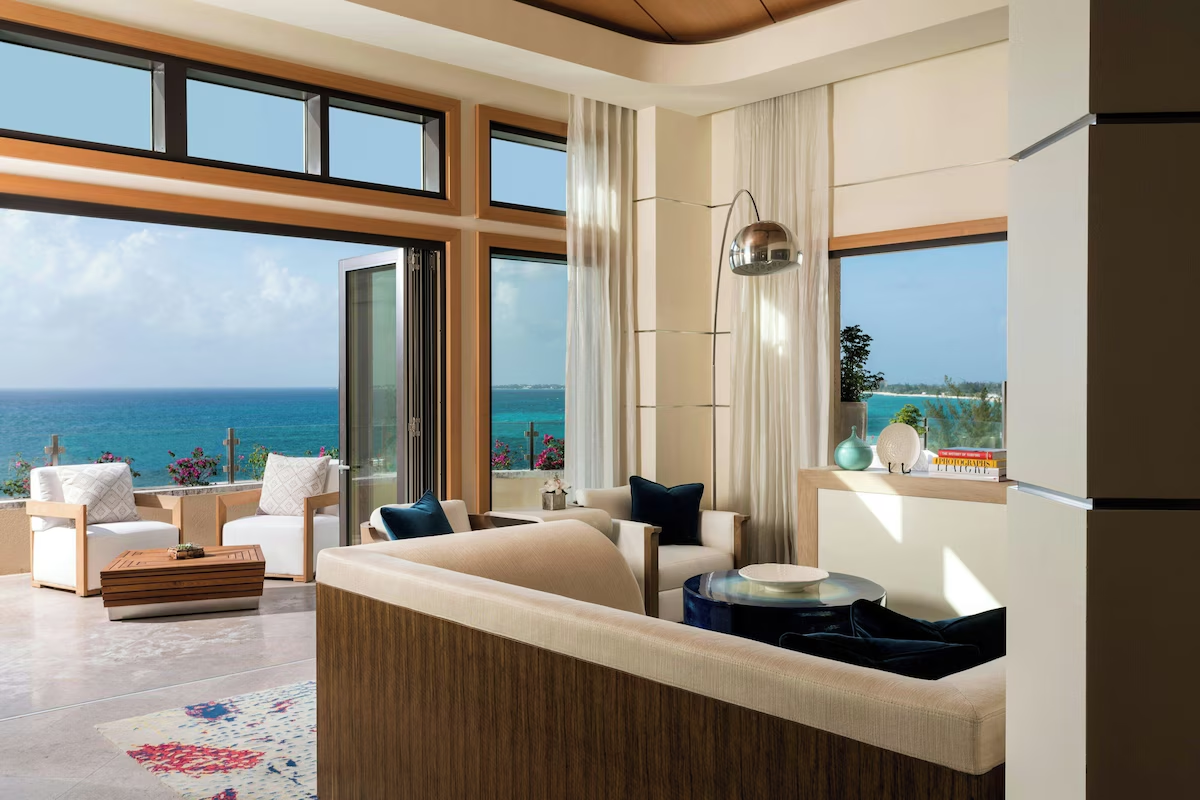
There are bright, airy guest rooms and suites at Kimpton Seafire Resort + Spa, including beach view and ocean facing options that make the most of the Seven Mile Beach setting. Accommodation leans into a clean, coastal aesthetic, and the energy used to keep each room comfortable comes from the resort’s wider sustainability systems. LED lighting runs throughout, while geothermal air conditioning keeps interiors cool with far less of the electrical load that conventional cooling demands, so a restful night need not come at the expense of the island’s resources.
What food is available at Kimpton Seafire Resort + Spa?
Dining sits at the heart of the guest experience, with kitchens serving Caribbean influenced and international plates designed around the relaxed beach setting. What sets the food operation apart is what happens behind the scenes: used cooking oil from the kitchens is turned into biodiesel that powers vehicles on the island, closing a loop that most resorts simply send to waste. The result is a place where a meal on the sand quietly feeds back into the practical running of the Cayman Islands rather than ending in a bin.
Sustainability features of Kimpton Seafire Resort + Spa
Earning LEED Silver certification, the first such recognition for a resort in the Cayman Islands, reflects a property engineered to tread lightly. A 170 kilowatt solar array generates clean power on site, geothermal air conditioning slashes the energy needed for cooling, and LED lighting keeps consumption low across the building. Rainwater harvesting captures and reuses water that would otherwise be lost, recycled material runs through the structure from reused concrete to crushed glass pavers, and the conversion of used cooking oil into biodiesel extends the resort’s green thinking beyond its own grounds and onto the island’s roads.
Who is Kimpton Seafire Resort + Spa for?
This is a resort for travellers who want the polish and ease of a Seven Mile Beach address without setting aside their environmental values. Couples, families and longer stay visitors drawn to Grand Cayman’s beaches will find a comfortable, design led base, while eco minded guests can take genuine reassurance from the LEED Silver credentials and the recycled materials, solar power and waste reuse woven through the property. Anyone who wants a Caribbean beach holiday that demonstrably lowers its footprint will feel at home here.
How to get to Kimpton Seafire Resort + Spa from the airport
The closest airport to Kimpton Seafire Resort + Spa is Owen Roberts International Airport (GCM) in George Town on Grand Cayman, which sits roughly a fifteen to twenty minute drive, around six to seven miles, from the resort on Seven Mile Beach.
Private transfer or taxi to Kimpton Seafire Resort + Spa
A pre arranged private transfer is the easiest option to get to Kimpton Seafire Resort + Spa, especially if you are arriving late or travelling with children, and the hotel can book this for you in advance. If you would rather sort it on arrival, you can take a taxi from the rank outside arrivals or pick up a hire car if you fancy exploring the island at your own pace. Traffic along West Bay Road can build at peak times, so allow a little extra in the late afternoon.
Public transport to Kimpton Seafire Resort + Spa
Public transport to Kimpton Seafire Resort + Spa is possible with multiple changes. Grand Cayman has a network of shared minibuses, marked by their distinctive licence plate colour, that run along the main routes including West Bay Road past Seven Mile Beach, so you can reach the resort cheaply by minibus from the depot near the public library in George Town. That said, the minibuses do not run directly from the airport terminal and luggage space is limited, so for arrival most guests find a taxi, private transfer or hire car far easier, and keep the minibuses for casual trips into town once they have settled in.
Things to do while staying at Kimpton Seafire Resort + Spa
Things to do around Kimpton Seafire Resort + Spa range from snorkelling straight off Seven Mile Beach, where calm, clear water and gentle reefs make for an easy first dip, to a full day of island highlights. The beachfront itself, the spa and the pools mean you never have to go far for a relaxed day.
Nearby you have Stingray City for a wade among the famous southern rays, the Cayman Turtle Centre at West Bay, the historic streets and waterfront of George Town for duty free browsing and Caymanian cuisine, and the Camana Bay town centre for dining, shops and a climb up the observation tower. Divers can head out to the walls and reefs offshore, while nature lovers will want the mangroves and the resort backed coral restoration sites.
Families love the turtle encounters and the shallow, safe swimming, solo travellers and divers gravitate to the wall dives and reef trips, nature lovers have the mangroves, birdlife and restoration work to explore, and anyone after culture can spend an afternoon in George Town and the National Museum. It suits a wide mix of travellers, which is exactly what makes it such a dependable island base.
When is the best time to visit the Cayman Islands?
The dry, cooler season runs roughly mid December to April and is the peak period, with the best weather but the highest prices, especially over Christmas, New Year and Easter. The wetter, more humid season runs May to November and overlaps the Atlantic hurricane season, officially 1 June to 30 November, when rates drop sharply and crowds thin; direct strikes on the Caymans are uncommon but possible, so travel insurance covering disruption is wise. Late spring (May and early June) and November often give the best value while still mostly dry. For diving, conditions are generally good year-round, with Little Cayman’s wall diving a particular draw.
Is the Cayman Islands safe, and how do you get around?
The Cayman Islands are among the safer Caribbean destinations, with low rates of violent crime against tourists; normal precautions apply, such as securing valuables, not leaving items on the beach and taking care walking alone late at night in quieter spots. Driving is on the LEFT (a British legacy), cars are often right-hand drive, and a Visitor’s Driving Permit is required, usually issued by the car hire firm or police on production of your UK licence; a hire car is genuinely useful on Grand Cayman as public transport is limited, while Little Cayman is best done by bike or buggy. The currency is the Cayman Islands dollar (KYD), pegged at a fixed rate to the US dollar (around 1 KYD to 1.20 USD); US dollars are widely accepted, cards are taken almost everywhere, and tipping follows the US pattern of about 15 to 20 per cent, though many restaurants already add a service charge of around 15 per cent, so check the bill before adding more.
Why we only list sustainable stays in the Cayman Islands
Every stay in this guide was hand picked and checked for how it actually runs, and most are locally rooted so your money stays on the island. For the full breakdown see our guide to the best sustainable hotels in the Cayman Islands, or zoom out to the best sustainable hotels across the Caribbean.
More Caribbean Sustainable Stays

Book Your Next Stay Consciously
Travel is a wonderful opportunity to connect with Mother Earth.
However, it is also frequently undermined by reckless development and disrespectful tourism practices.
This directory is a curated, verified list of hotels, lodges, and resorts that honour our planet and are led by visionary stewards of the environment.
From farm-to-table culinary experiences to dedicated ocean conservation efforts, such as marine protection and coral restoration, these establishments are redefining hospitality.

12% Off Sustainable Swimwear
Freedom Ecowear is offering our readers 12% off their eco-friendly swimwear, perfect for your next eco getaway. Use the link and your discount is added automatically.