
Best Eco Stays in Aruba
Where to stay in Aruba
The best areas to stay in Aruba range from the Caribbean’s first and only CarbonNeutral certified adults only beachfront resort, to a female owned, Green Globe certified casita hotel run by Aruba born sisters, a Dutch family founded wellness resort built on the sand of Eagle Beach, and a small set of solar powered eco suites tucked close to nature away from the resort strip. Options are spread from Eagle Beach, Palm Beach and Noord to Santa Cruz and the interior. Every stay we recommend below is genuinely sustainable and chosen so your money stays on the island.
Where to stay in Aruba by area, at a glance
Eagle Beach is best for couples, honeymooners and grown-up travellers who want a wide, calm beach without high-rise crowds
Everyone flies into Aruba’s single airport, Queen Beatrix International (AUA), just south of the capital Oranjestad, and Eagle Beach is roughly a 15 to 20 minute taxi or hire-car transfer north along the coast. This is the island’s low-rise district: a famously wide ribbon of white sand and divi-divi trees lined with smaller boutique hotels and intimate resorts, noticeably quieter and more grown-up than the high-rise strip just up the road. It suits couples, honeymooners and anyone who would rather trade the buzz of the big chains for space, calm and the gentle rhythm of the sea.
The difference between Eagle Beach and other popular Aruba beach areas like Palm Beach and Druif Beach is that Eagle Beach keeps its low-rise, boutique character: Palm Beach is the lively high-rise strip packed with towering hotels, casinos and nightlife, while Eagle Beach stays wide, open and uncrowded, with smaller resorts set well back behind the sand and the island’s iconic fofoti trees as its skyline rather than concrete towers.
Where to stay in Eagle Beach: Top Pick
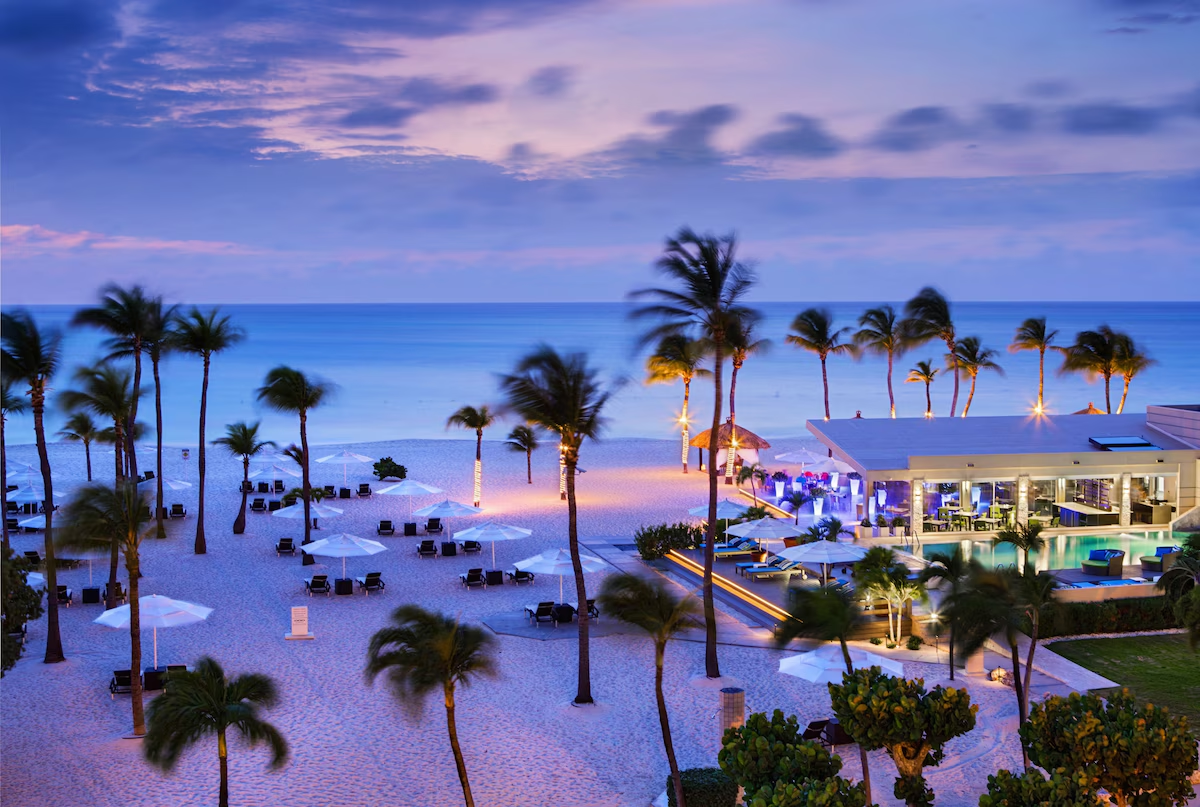
Bucuti & Tara Beach Resort is the best place to stay in Eagle Beach, Aruba
Set directly on the powder soft sands of Eagle Beach, Bucuti & Tara Beach Resort is an adults only beachfront retreat that has quietly become the most decorated green hotel in the region. It is the Caribbean’s first and only CarbonNeutral certified property, and it pairs that distinction with one of the calmest, most uncluttered stretches of shoreline on Aruba’s south western coast. Couples come here for the turquoise water and the unhurried pace, and stay because the resort treats low impact hospitality as the point rather than a marketing line.
Who owns Bucuti & Tara Beach Resort?
This is an independently run, family owned resort rather than part of a global chain, which is a large part of why its environmental commitments run so deep. Day to day direction has long been guided by owner Ewald Biemans, a long standing voice in Aruban sustainable tourism, and that personal stewardship shows in decisions most corporate operators would never make, from the on site solar investment to the partnership with the World Wildlife Fund. Because the people setting policy also live with the results, the green ethos is woven through the operation instead of bolted on.
About the rooms in Bucuti & Tara Beach Resort
There are around 100 rooms and suites at Bucuti & Tara Beach Resort, including the Bucuti beachfront rooms set right at the water’s edge and the more spacious Tara suites with their wider terraces and added comforts. Accommodation is deliberately low rise and low density, so the resort keeps its intimate, boutique feel even on a busy beach. Many rooms look straight out over the sea, and the adults only policy means the whole property stays quiet and restful throughout the day.
What food is available at Bucuti & Tara Beach Resort?
Dining centres on Elements, the resort’s beachfront restaurant, where the kitchen is fully electric and fossil fuel free, a genuine rarity in Caribbean hospitality. Guests can eat with the sand underfoot and the water a few steps away, choosing from fresh, seasonally minded plates that lean on local sourcing. Sustainability reaches into the back of house too: working with the World Wildlife Fund, the resort halved its food waste and now donates the remaining scraps to local farmers, so very little leaves the kitchen as rubbish.
Sustainability features of Bucuti & Tara Beach Resort
Few hotels anywhere can match the credentials gathered here. As the Caribbean’s first and only CarbonNeutral certified resort, it also holds Green Globe Platinum, LEED Gold and Travelife Gold, a stack of certifications that together cover energy, water, waste and social impact. Powering much of this is the island’s largest private solar array, which feeds the property’s electric, fossil fuel free kitchen. Combined with the WWF backed food waste programme and its farmer donation scheme, these features make the resort a working example of how a beach hotel can run on clean energy and close its loops.
Who is Bucuti & Tara Beach Resort for?
Adults only and unmistakably romantic, this is a resort built for couples, honeymooners and anyone wanting a peaceful, grown up escape on one of Aruba’s finest beaches. It suits travellers who want their holiday to align with their values, since the genuine, certified green credentials mean you can relax knowing the comfort is not coming at the planet’s expense. Those after children’s clubs or a lively party scene should look elsewhere, but for quiet luxury with a clear conscience, few places in the Caribbean do it better.
How to get to Bucuti & Tara Beach Resort from the airport
The closest airport to Bucuti & Tara Beach Resort is Queen Beatrix International Airport (AUA) in Oranjestad, which sits roughly a fifteen minute drive and around eight kilometres from the property along Aruba’s calm western coast. The island is compact and the roads are easy, so the practical last leg is short and simple whichever way you choose to travel.
Private transfer or taxi to Bucuti & Tara Beach Resort
A pre arranged private transfer is the easiest option to get to Bucuti & Tara Beach Resort, dropping you straight at reception, which is the most relaxed choice after a long flight. Taxis are just as straightforward, waiting directly outside the arrivals hall and running on fixed, government set fares rather than meters, so the cost to Eagle Beach is agreed before you set off and the journey takes only a quarter of an hour or so. If you would rather explore the rest of Aruba at your own pace, a hire car collected at the airport is a sensible choice, as the drive up to Eagle Beach is short and well signed and the resort has parking.
Public transport to Bucuti & Tara Beach Resort
Public transport to Bucuti & Tara Beach Resort is possible with multiple changes. Aruba’s public bus network is run by Arubus, whose Line 10 service links the airport and the main bus terminal in Oranjestad, where you change onto a westbound coast service such as Line 1 towards the Eagle Beach and Palm Beach hotel strip. Buses are inexpensive and reliable in the daytime but run less frequently in the evenings, and you may have a short walk from the main road to the resort with your luggage. For most visitors arriving with bags, a taxi, private transfer or hire car is the more comfortable choice, with the bus a budget friendly option once you are settled in.
Things to do while staying at Bucuti & Tara Beach Resort
Things to do around Bucuti & Tara Beach Resort range from a barefoot stroll along the powder soft sand of Eagle Beach, regularly named among the finest beaches in the Caribbean and home to the island’s famous wind sculpted fofoti trees, to snorkelling and diving the clear shallows right on your doorstep. The calm, shallow water makes it easy to spend whole days simply swimming, paddling and watching the light change over the sea.
Beyond the beach you can wander into nearby Oranjestad for Dutch colonial architecture, colourful shopping streets and local dining, explore the rugged Arikok National Park with its caves, desert trails and natural pools, or drive out to the California Lighthouse for sweeping coastal views. Boat trips, catamaran cruises and sunset sails are easy to arrange, and the island’s compact size means most of its highlights are within a short drive.
It suits nature lovers drawn to the marine life and the national park, culture seekers tempted by the town, and solo travellers who want a peaceful base, while couples and honeymooners will find the adults only calm especially welcome. Families with very young children may prefer the busier Palm Beach resorts, but anyone after romance, quiet and gentle days by the sea will feel completely at home here.
Palm Beach and Noord is best for families, first-timers and anyone who wants resorts, dining, nightlife and shops on the doorstep
Palm Beach is Aruba’s high-rise hub, home to the big-name resorts such as Marriott, Hilton, Hyatt, Ritz-Carlton and Holiday Inn, plus casinos, bars and a lively dining and shopping strip set right behind a long stretch of powdery white sand. It suits families who want gentle, calm Caribbean water for swimming, first-timers who like having everything within easy reach, and anyone who would rather walk the beachfront boardwalk or hop on the Arubus L10 service into Oranjestad than feel cut off. Just inland, the village of Noord offers quieter, better-value guesthouses and apartments a short drive from the sand, so you can balance the buzz of the beach with a calmer base.
The difference between Palm Beach and Noord and other popular Aruba beach areas like Eagle Beach and Druif Beach is that Palm Beach is the island’s busiest, most built-up resort strip, with the densest cluster of high-rise hotels, casinos and nightlife, while Eagle Beach is lower-rise and more spacious and Druif is quieter and closer to Oranjestad. Choosing Palm Beach and Noord means you trade a little of that calm for unmatched convenience, with shops, restaurants and entertainment all on the doorstep.
Where to stay in Palm Beach and Noord: Top Pick
Boardwalk Boutique Hotel Aruba is the best place to stay in Palm Beach and Noord, Aruba
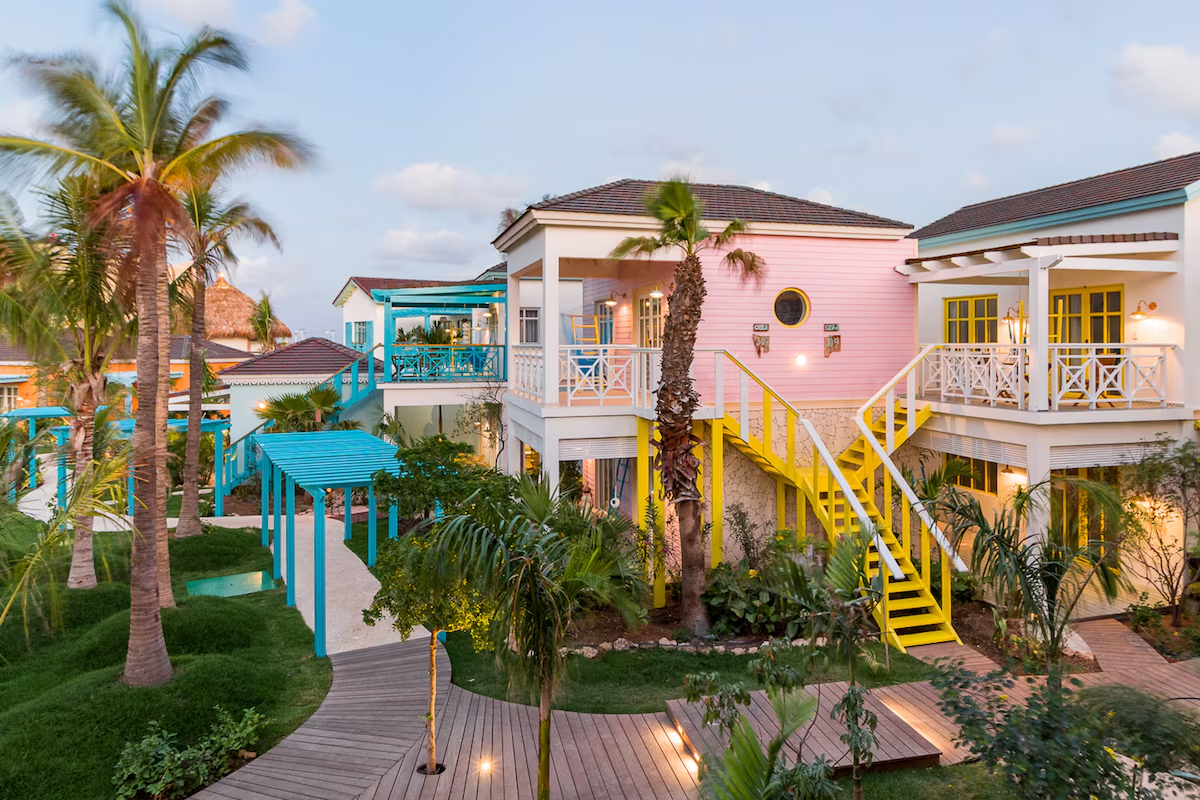
Tucked into the grounds of a former coconut plantation a short stroll from Palm Beach, Boardwalk Boutique Hotel Aruba is a casita hotel in the Noord district that trades high rise bustle for tropical calm. Low slung Caribbean casitas sit among lush gardens, palms and hammocks, giving the property the feel of a private hideaway rather than a resort. Holding Green Globe certification and recognised as Regenerative certified, it has been welcoming guests with a quietly green ethos since 2011.
Who owns Boardwalk Boutique Hotel Aruba?
This is a female owned hotel run by Aruba born sisters Stephanie and Kimberly, who have managed it since 2011. Growing up on the island shaped their hands on, deeply local approach, and the pair have built the property on the grounds of a former coconut plantation. Their stewardship is the reason the hotel carries both Green Globe and Regenerative certification, two marks that reflect years of attention to the land and the community around it.
About the rooms in Boardwalk Boutique Hotel Aruba
There are individual casitas at Boardwalk Boutique Hotel Aruba, including freestanding cottages scattered among the gardens rather than stacked in a single block. Each casita opens onto greenery and offers a private, residential feel, with the newer buildings reflecting the hotel’s ongoing investment in greener design. Every casita comes with its own compost bin, a small touch that ties each room directly into the wider sustainability story. The layout suits guests who want space, quiet and a sense of staying somewhere with character.
What food is available at Boardwalk Boutique Hotel Aruba?
Dining here leans on the abundance of Palm Beach and Noord, with the casita setup encouraging guests to settle in and explore the surrounding area’s restaurants and beach bars within easy reach. The tropical gardens, nourished by the hotel’s own compost, set a fresh and natural tone that runs through the stay. For self catering and relaxed island living, the casitas give guests the flexibility to dine on their own terms while staying close to one of Aruba’s liveliest dining strips.
Sustainability features of Boardwalk Boutique Hotel Aruba
Sustainability sits at the heart of the operation rather than being an afterthought. The newer buildings run entirely on solar power, paired with 100 per cent LED lighting throughout, while an onsite reverse osmosis plant supplies up to 30 per cent of the hotel’s water on an island where fresh water is precious. Closing the loop, every casita has its own compost bin that feeds the tropical gardens, returning organic waste straight back to the soil. Together these measures earn the property its Green Globe and Regenerative certification.
Who is Boardwalk Boutique Hotel Aruba for?
Couples, eco conscious travellers and anyone craving a peaceful base near Palm Beach will feel at home here. Those who prefer a small, owner run hideaway to a large resort, and who value genuine green credentials over greenwashing, are exactly the guests this hotel was built for. With its garden casitas, female led ownership and serious sustainability record, Boardwalk Boutique Hotel Aruba appeals to visitors who want to enjoy the best of Noord while treading lightly on the island.
How to get to Boardwalk Boutique Hotel Aruba from the airport
The closest airport to Boardwalk Boutique Hotel Aruba is Queen Beatrix International Airport (AUA), which sits on the south coast near Oranjestad, roughly a 20 to 25 minute drive of about 11 kilometres from the property depending on traffic through Noord.
Private transfer or taxi to Boardwalk Boutique Hotel Aruba
A pre arranged private transfer is the easiest option to get to Boardwalk Boutique Hotel Aruba, and the hotel can help arrange the last leg before you arrive so a driver is waiting as you land. A metered taxi from the airport rank is the simple alternative and will have you at the property in well under half an hour. Aruba is compact and easy to navigate, so many guests also hire a car at the airport, which gives you the freedom to reach the quieter beaches and the rugged north coast at your own pace.
Public transport to Boardwalk Boutique Hotel Aruba
Public transport to Boardwalk Boutique Hotel Aruba is possible with multiple changes. Aruba’s national coach service is run by Arubus from the main terminal next to the cruise port in Oranjestad, close to the airport, and the frequent Line 10 route runs up the west coast to the Palm Beach high-rise strip. From the nearest stop on the strip it is a short taxi or walk to the property in Noord. For the first leg from the airport with luggage a taxi or private transfer is the easier choice, and if you plan to explore the island independently a hire car remains the most flexible option.
Things to do while staying at Boardwalk Boutique Hotel Aruba
Things to do around Boardwalk Boutique Hotel Aruba range from a slow morning on the powdery white sand of Palm Beach, just a short stroll away, where calm Caribbean water makes for easy swimming and snorkelling, to wandering the lively dining and shopping strip that runs along the beachfront. Back at the hotel you can simply unwind in a hammock among the gardens or take a dip in the saltwater pool.
Further afield, you can take a sunset catamaran cruise along the coast, explore the wild terrain and natural pools of Arikok National Park inland, or head into the colourful Dutch streets of Oranjestad for culture and local markets. The offshore reefs reward divers and snorkellers, while the rugged north coast offers dramatic scenery for anyone hiring a car for the day.
Families love the gentle beaches and the gardens, nature lovers gravitate to the national park and the offshore reefs, solo travellers find the area safe and walkable, and culture seekers can dip into the island’s Dutch and Caribbean heritage in town. With Palm Beach so close and a calm retreat to return to, the hotel suits anyone who wants both convenience and quiet in equal measure.
Santa Cruz and the interior is best for nature lovers, self-drivers and repeat visitors wanting a local, off-strip base
Santa Cruz sits at the green heart of Aruba, around a 20 to 25 minute drive inland from Queen Beatrix International Airport (AUA), and because it is set away from the coast with little beach within walking distance a hire car is effectively essential here. This is everyday, residential Aruba of local bakeries, family shops and the rural Cunucu countryside, and it doubles as the gateway to Arikok National Park, which covers almost a fifth of the island. It suits travellers who prefer space, quiet, lower prices and authentic island life over the busy resort scene, particularly nature lovers, solo and self-driving guests, and repeat visitors who already know the beaches and now want the real island.
The difference between Santa Cruz and the interior and other popular Aruba bases like Palm Beach and Eagle Beach is that those are high-rise and low-rise resort strips built right on the famous west coast sand, packed with hotels, casinos and beach bars, whereas Santa Cruz is inland, residential and calm, where you wake to birdsong and cactus rather than crowds and you drive out to whichever coast or trail you fancy each day.
Where to stay in Santa Cruz and the interior: Top Pick
Agua Clara Eco Suites is the best place to stay in Santa Cruz and the interior, Aruba
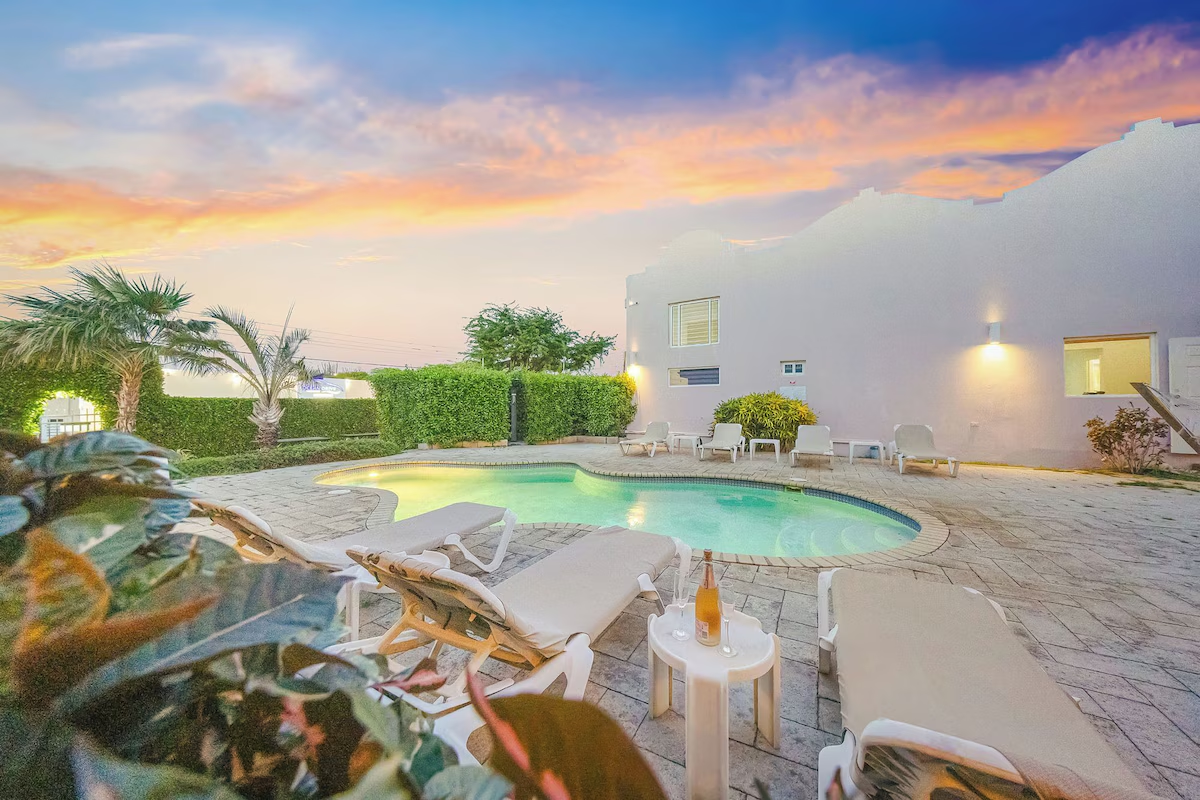
Tucked into Santa Cruz in the green heart of Aruba, Agua Clara Eco Suites is a small set of owner run suites that sit close to nature and well away from the busy resort strip. The setting is quiet and unhurried, the sort of place where you wake to birdsong and the rustle of the interior rather than the hum of a crowded beachfront. At the centre of it all sits Aruba’s only saltwater swimming pool, filled with natural seawater instead of chlorinated fresh water, a detail that sums up the gentle, low impact spirit of the whole property.
Who owns Agua Clara Eco Suites?
This is an owner run retreat, looked after personally rather than managed by a faceless chain, and that hands on care shows in every corner. Because the same people who built it also run it, guests tend to get a warm, attentive welcome and honest local advice on the island. The low impact ecological vision that shaped the place comes straight from the owners themselves, which is why sustainability feels woven into the property rather than bolted on for show.
About the rooms in Agua Clara Eco Suites
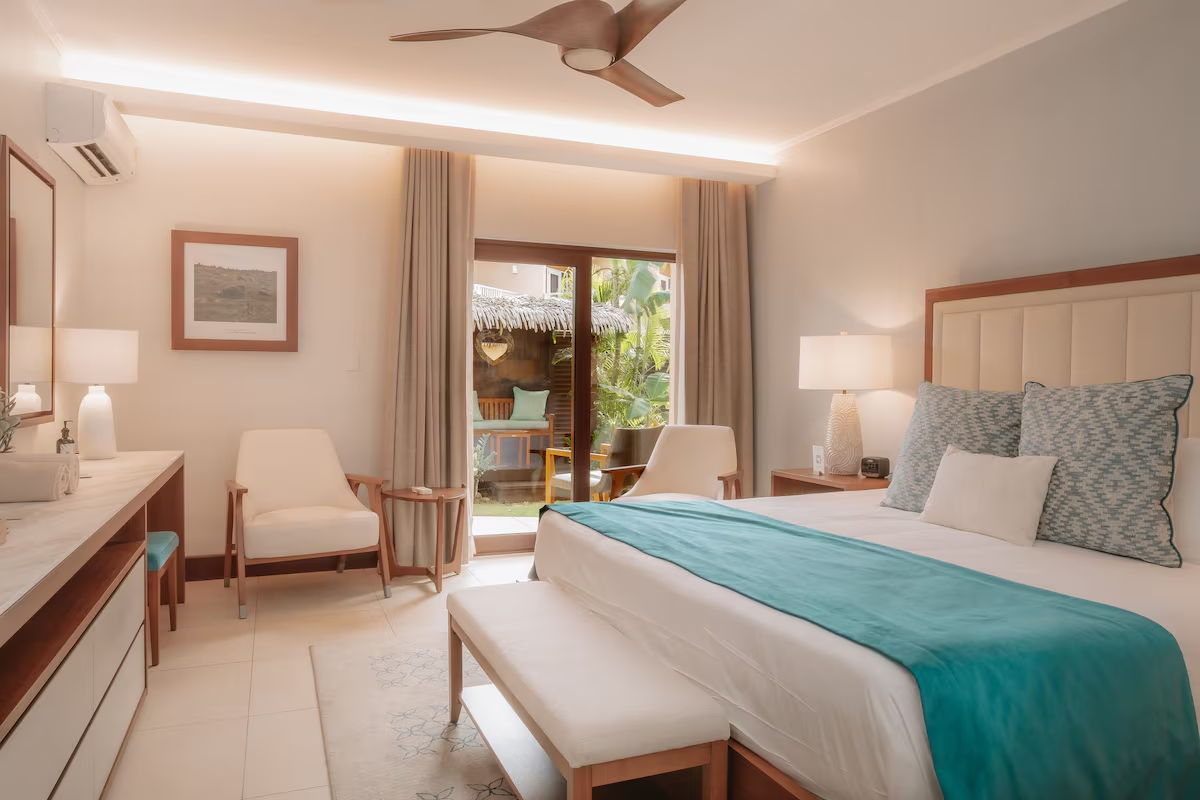
There are a handful of individual eco suites at Agua Clara Eco Suites, including self contained units designed for couples and small groups who want their own private, peaceful space. Each suite keeps things simple and comfortable, with the same eco minded thinking running through the fittings as through the rest of the property. Set close to nature and away from the strip, the rooms give you a calm base for exploring Santa Cruz and the interior, and the saltwater pool is never far from your door.
What food is available at Agua Clara Eco Suites?
Suites here are self contained, so guests have the freedom to prepare their own meals and eat at their own pace rather than being tied to set dining times. Staying in Santa Cruz also puts you within easy reach of local shops and family run eateries in the interior, where you can pick up fresh island produce and try authentic Aruban cooking. For anyone who likes to slow down and live a little more like a local, having your own space to cook is part of the appeal.
Sustainability features of Agua Clara Eco Suites
Solar panels power the property, so much of the energy guests use is drawn from the strong Aruban sun rather than fossil fuels. Water saving fittings are installed on every tap and shower, a meaningful touch on an arid island where fresh water is precious. The headline feature, though, is Aruba’s only saltwater swimming pool, filled with natural seawater instead of chlorinated fresh water, which cuts out harsh chemicals and reflects the genuinely low impact ecological vision behind the whole place.
Who is Agua Clara Eco Suites for?
Travellers who want to swap the resort crowds for somewhere quiet, green and close to nature will feel right at home in Santa Cruz. It suits couples, independent travellers and anyone who likes the freedom of self catering and the personal touch of an owner run stay. Above all, it is made for eco conscious guests who care that their solar power, water saving fittings and chemical free saltwater pool add up to a holiday that treads lightly on Aruba.
How to get to Agua Clara Eco Suites from the airport
The closest airport to Agua Clara Eco Suites is Queen Beatrix International Airport (AUA), Aruba’s only commercial airport, on the south coast just outside Oranjestad. From the terminal it is roughly a 20 to 30 minute drive inland to Santa Cruz, the village at the green heart of the island, a distance of around 15 to 20 kilometres depending on the route you take.
Private transfer or taxi to Agua Clara Eco Suites
A pre arranged private transfer is the easiest option to get to Agua Clara Eco Suites, especially with luggage after a long flight, and most suites can organise one for you on request if you send your flight details in advance. A taxi is the simple alternative: Aruba taxis run on fixed government set fares rather than meters, so agree the price before you set off, and the airport has an official taxi rank just outside arrivals. That said, many guests collect a hire car at the airport instead, since the interior is spread out and a car gives you the freedom to reach the national park and the quieter beaches throughout your stay.
Public transport to Agua Clara Eco Suites
Public transport to Agua Clara Eco Suites is possible with multiple changes. Arubus runs the island’s national bus network, with reliable services linking the airport, Oranjestad and the resort strips at Eagle Beach and Palm Beach, so you would typically ride into Oranjestad first and change onto a route heading inland towards Santa Cruz. Services into the residential interior are far less frequent and will not drop you at the door, so you would finish the journey with a short taxi from the village. For a rural base like this, a hire car or a private transfer is much more practical, and a car is really the way to make the most of the area.
Things to do while staying at Agua Clara Eco Suites
Things to do around Agua Clara Eco Suites range from exploring Arikok National Park, the rugged protected wilderness that covers almost a fifth of the island and shelters native wildlife, cactus landscapes, lava cliffs and the natural pool known as Conchi, to simply slowing down in the quiet of the Cunucu countryside. From this central base you are perfectly placed to head out in any direction each morning.
Close by you have the Ayo and Casibari rock formations with their easy climbs and wide views, the gold mill ruins at Bushiribana, and the wild windward beaches along the north coast such as Boca Prins and Dos Playa where the Atlantic rolls in. The calmer swimming sands of the west coast at Eagle Beach and Palm Beach, along with the restaurants, museums and colourful streets of Oranjestad, are all an easy drive away, so you can mix rugged adventure with classic Aruba beach days as you please.
Nature lovers and solo travellers will relish the hiking and the quiet, families appreciate the space and the national park adventures, and self-drivers love being able to reach every coast from one base. Anyone drawn to culture can dip into the island’s colonial history and local Cunucu heritage between excursions, while couples after calm get a peaceful retreat to return to each evening, away from the crowds.
When is the best time to visit Aruba?
Aruba sits in the dry, southern Caribbean off Venezuela (one of the ABC islands with Bonaire and Curacao) and enjoys warm, sunny weather all year, with average highs around 30C cooled by steady trade winds. The official Atlantic hurricane season runs 1 June to 30 November, but Aruba lies outside the main hurricane belt, so direct hits are rare and most years pass without significant storm disruption (it is not risk-free, so travel insurance is still sensible). The driest, sunniest months run roughly January to August; any brief rain tends to fall as short showers between October and December. Peak season for Brits is mid-December to mid-April, when both weather and prices are at their highest and resorts book up well ahead; the best value comes in the autumn shoulder months (September to November), when rates drop sharply for only a slightly higher chance of a passing shower.
Is Aruba safe, and how do you get around?
Aruba is one of the safer Caribbean islands and the resort areas around Eagle Beach and Palm Beach feel very relaxed, but apply normal city sense: lock hire cars, do not leave valuables on the beach or on show, and use the hotel safe. Aruba drives on the RIGHT, the opposite of the UK, which takes a little adjustment, especially at roundabouts and junctions. A hire car is not essential if you stay on the Eagle Beach or Palm Beach strip, where you can walk and use taxis or the public bus (the Arubus L10 runs between the hotel strip and the capital Oranjestad), but it is genuinely useful for reaching Santa Cruz, Arikok National Park or the wilder north coast. The local currency is the Aruban florin (AWG), but US dollars are accepted virtually everywhere at a fixed, stable rate, so most Brits simply carry and spend US dollars; cards are widely accepted and ATMs dispense both currencies. Tipping follows the American pattern: check whether a service charge (often around 10 to 15 percent) is already added, and if not, leave roughly 15 to 20 percent in restaurants, plus a few dollars a day for housekeeping and a dollar or two per bag for porters.
Why we only list sustainable stays in Aruba
Every stay in this guide was hand picked and checked for how it actually runs, and most are locally rooted so your money stays on the island. For the full breakdown see our guide to the best sustainable hotels in Aruba, or zoom out to the best sustainable hotels across the Caribbean.
More Caribbean Sustainable Stays
Book Your Next Stay Consciously
Travel is a wonderful opportunity to connect with Mother Earth.
However, it is also frequently undermined by reckless development and disrespectful tourism practices.
This directory is a curated, verified list of hotels, lodges, and resorts that honour our planet and are led by visionary stewards of the environment.
From farm-to-table culinary experiences to dedicated ocean conservation efforts, such as marine protection and coral restoration, these establishments are redefining hospitality.

12% Off Sustainable Swimwear
Freedom Ecowear is offering our readers 12% off their eco-friendly swimwear, perfect for your next eco getaway. Use the link and your discount is added automatically.