The Antigua Man Who Grows His Own Breakfast, and Finds It by Feel

Mr Lionel grows most of what he eats at Lamblion in Antigua and finds his fruit by feel as his sight fades. A morning in his garden on food self sufficiency, food sovereignty and patience, in his own plain words, on a black owned self catering eco stay you can visit.

What does food self sufficiency really mean?

Food self sufficiency means growing enough of your own food that you rarely need to buy any, closing the gap between what you eat and where it comes from. On an island that imports most of what it eats, doing it by hand is quietly radical.

The Caribbean imports the large majority of its food, the region as a whole spends billions of dollars a year shipping in what its own soil could grow, and that dependence is exactly what a garden like Lionel’s pushes back against. Every breakfast off the land is one not flown in. It is the principle behind the off grid and self sufficient eco stays we track across the Caribbean, lived out by one man at the scale of his own plate.

How does he garden as his sight fades?

He gardens by feel, picking and tending by touch as his sight goes, because the food is the part of his life he refuses to give up. It is humbling to watch.

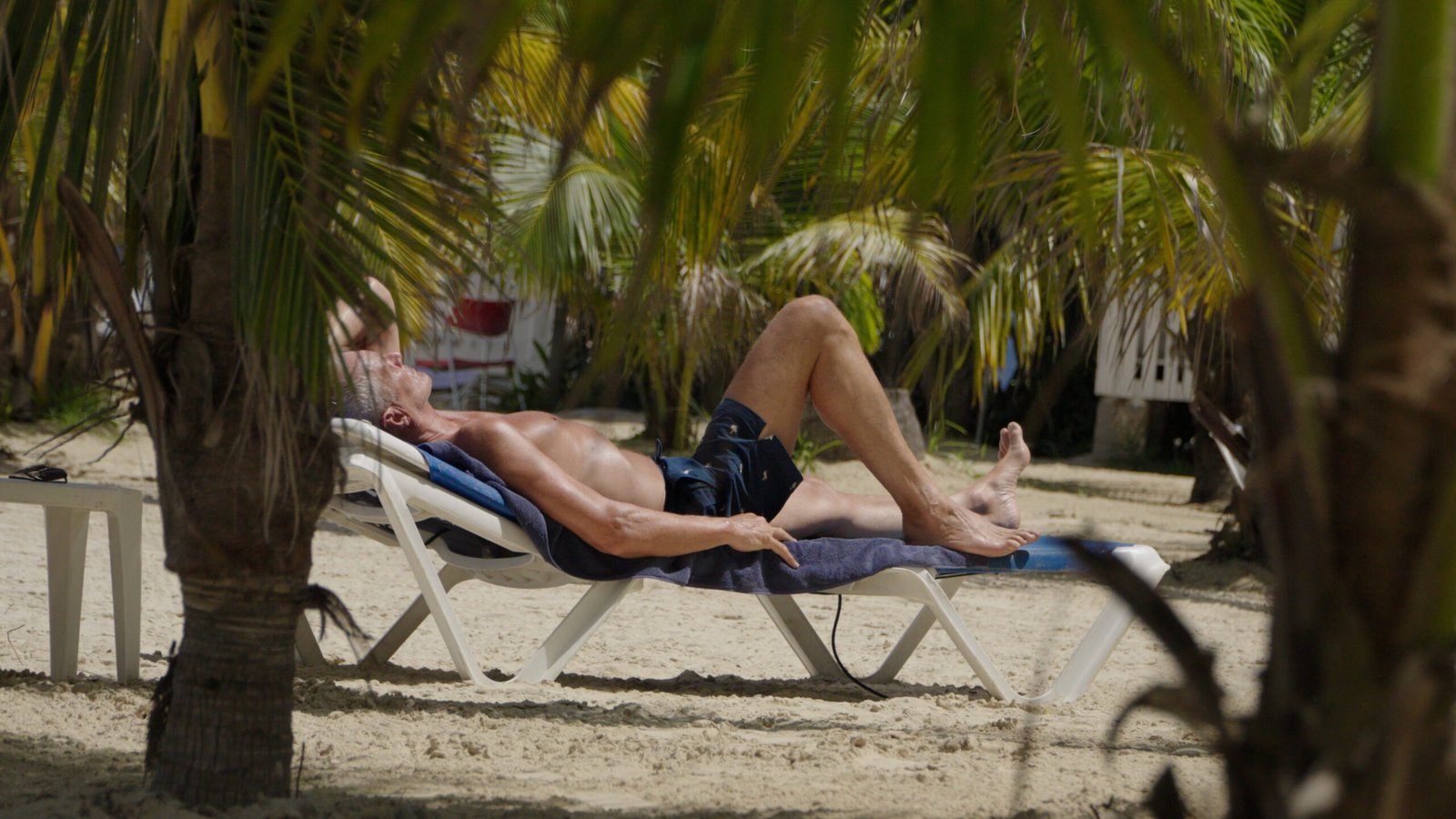
“Even though I can’t see, I come and feel around, and I can,” he said, and split a custard apple open with his thumbs as he spoke, white flesh, black seeds, no glance down. “My wife hasn’t come and picked one of the custard apple,” he added, “but we have eaten several, because I came out and picked them.” The garden is muscle memory now, decades of it, the same garden whose whole harvest you can pick as a guest.

What has he had to let go?

He is plain about the parts of the garden he can no longer manage, and he does not dress it up. A cherry tree had fallen, and he had not known.

“Part of it has fallen down,” he said. “The road is kind of black, so I can’t see so well, I don’t really know what is happening.” He will send the man who cuts the yard to look, and maybe trim it back. That honesty, about limits, about loss, is the same thing that makes the green credentials of this stay believable rather than a marketing line, and it is rare in a world of black owned, family run eco stays or otherwise.

What does the garden teach him?

The garden teaches him patience above everything, and he passes the lesson on without being asked. Watching coconut water trickle into a bowl, he told me to let it come.

“It will come out faster, but you know you’re going to lose it, so you have to have patience. All these things teach you patience.” He plants from what he already has and sprays nothing, the slow, unhurried rhythm that defines every garden eco stay worth the name in the Caribbean. It is a different clock from the one you arrive on, and it resets you within a day.

Why does a morning with him stay with you?

It stays with you because he does not flinch from the hard part, and says the thing most people avoid. Later, watching that same coconut empty, he gave me the line I keep coming back to.

“We are born, we feed, we grow. And if we’re lucky, we multiply. And then you know what comes next.” He did not stop at the comfortable part, and he was not gloomy about it either, just clear, the way a man who lives close to the soil tends to be. That clarity is the real souvenir of a stay here, more than any photo.

You can walk the garden with him on a stay, if he has the time. Lamblion is a black owned, self catering garden stay, one of the best eco stays in Antigua and the certified sustainable stays in the Caribbean. Read why you pick your own breakfast here, see the verified facts on the Lamblion listing, and book a stay through Expedia.

More Caribbean Sustainable Stays

Book Your Next Stay Consciously

Travel is a wonderful opportunity to connect with Mother Earth.

However, it is also frequently undermined by reckless development and disrespectful tourism practices.

This directory is a curated, verified list of hotels, lodges, and resorts that honour our planet and are led by visionary stewards of the environment.

From farm-to-table culinary experiences to dedicated ocean conservation efforts, such as marine protection and coral restoration, these establishments are redefining hospitality.

12% Off Sustainable Swimwear

Freedom Ecowear is offering our readers 12% off their eco-friendly swimwear, perfect for your next eco getaway. Use the link and your discount is added automatically.


Sustainable Travel Destinations, Eco-Stays and Eco-Tour Guides

Bamboo is the biggest red flag in sustainable fashion, and a natural swimwear maker will tell you why. Bamboo is woody and tough, the stuff of mats and scaffolding, not thread. To turn it soft it has to be dissolved in carbon disulfide and rebuilt as viscose rayon, so bamboo viscose is not a natural fibre and not a natural process. Sitting in the workshop with Vivi Rufino and David, the couple who run Freedom Ecowear, Vivi names it as her number one greenwashing trap, plus the other red flags the two of them watch for.
Zara, Shein and Gymshark can’t call themselves sustainable while running the same system that is destroying everything. Sitting in the workshop with Vivi Rufino and David, the couple who run Freedom Ecowear together, Vivi, who left mass production herself, explains why a green side line on top of fast fashion is hypocrisy, why Gymshark sells the experience not the product, and why people are finally waking up.
Colorism in the Dominican Republic compliments a black woman, then quietly asks her to be lighter. Angie, a black Dominican artist, on mejorar la raza, why Dominicans deny being black, and the Eurocentric beauty standard, with the historian behind Afro Historia on where the wound was engineered. I was there in her apartment for two days, and this is what she told me, in her own words.
Are hair relaxers dangerous? Yes. There is nothing relaxing about lye that burns the scalp, says Angie, a black Dominican artist, and the Dominican Republic is where this story lives, because almost every woman here straightens or relaxes her hair. Over two days I sat with the painter on the cancer study, the lawsuits, the school afro bans, the Dando Pelo documentary La Sirena backed, and where it all came from, and this is her in her own words.
Mr Lionel grows most of what he eats at Lamblion in Antigua and finds his fruit by feel as his sight fades. A morning in his garden on food self sufficiency, food sovereignty and patience, in his own plain words, on a black owned self catering eco stay you can visit.
Yes, you pick your own breakfast at this Antigua vacation rental. Lamblion is a black owned, Green Globe self catering stay in St John’s where Lionel, who is losing his sight and finds his fruit by feel, grew a food garden guests are free to eat from. I went ten days barely touching a shop. This is the place in his own words.

More Great Articles From Hold The Throne

Switching to sustainable clothing comes down to one question: can the garment return to the soil. This five step guide shows how to switch to natural fibre clothing without greenwash, how to read a fabric label, what GOTS organic certification really promises from an official interview, why lists like Vogue, Good On You and The Good Trade fail a non toxic fibre test, and the sustainable clothing brands doing it right in underwear, linen and hemp.
The Good Trade names ten sustainable underwear brands, but eight of them sell synthetics. Hold The Throne read every fabric label and found that brands like Pact, Quince and Organic Basics blend elastane, micromodal, TENCEL or recycled nylon into the underwear, while only KENT and Oddobody pass as 100% non toxic, natural materials. This is the honest sustainable underwear list: which of The Good Trade’s organic cotton and ethical lingerie picks are GOTS certified plant fibre, and which are plastic against the skin.
Vinted is being compared to the 2020 Wayfair child trafficking conspiracy after viral screenshots of overpriced toy listings described with ages, heights and coded language. Here is what France is investigating, why the upload timestamps matter, and the ultimatums Vinted now has to answer.
Ethical Consumer’s A to Z of ethical fashion brands gets the ethics right and the fibre wrong. Out of 29 picks, only Earthmonk and Where Does It Come From? are actually 100% plant fibre. The other 27 carry bamboo viscose, TENCEL, wool, elastane or mixed secondhand fibre.
I burned my whole swimwear business down to start again. At its peak doing five figures a month, Vivi Rufino and her partner David stopped producing entirely and spent seven years rebuilding Freedom Ecowear from polyester to natural fibres like hemp and organic cotton. Standing in the workshop the two of them built, Vivi explains why even recycled polyester failed, and why destruction was the only way forward.
Vogue’s 28 best sustainable clothing brands list is right about ethics and wrong about fibre. Of 28 brands, 26 fail a plant-fibre-only test because they lean on TENCEL, viscose, wool, silk and recycled polyester. Here is the proof, composition by composition.
5 certified eco hotels in Singapore near the Marina Bay Street Circuit for F1 Singapore Grand Prix, each verified green, from LEED and Green Key stays to carbon neutral operations, all close to the action.

Latest Data Reports

Share this page: The Antigua Man Who Grows His Own Breakfast, and Finds It by Feel

Facebook
X
LinkedIn
Reddit
Threads
Email
WhatsApp