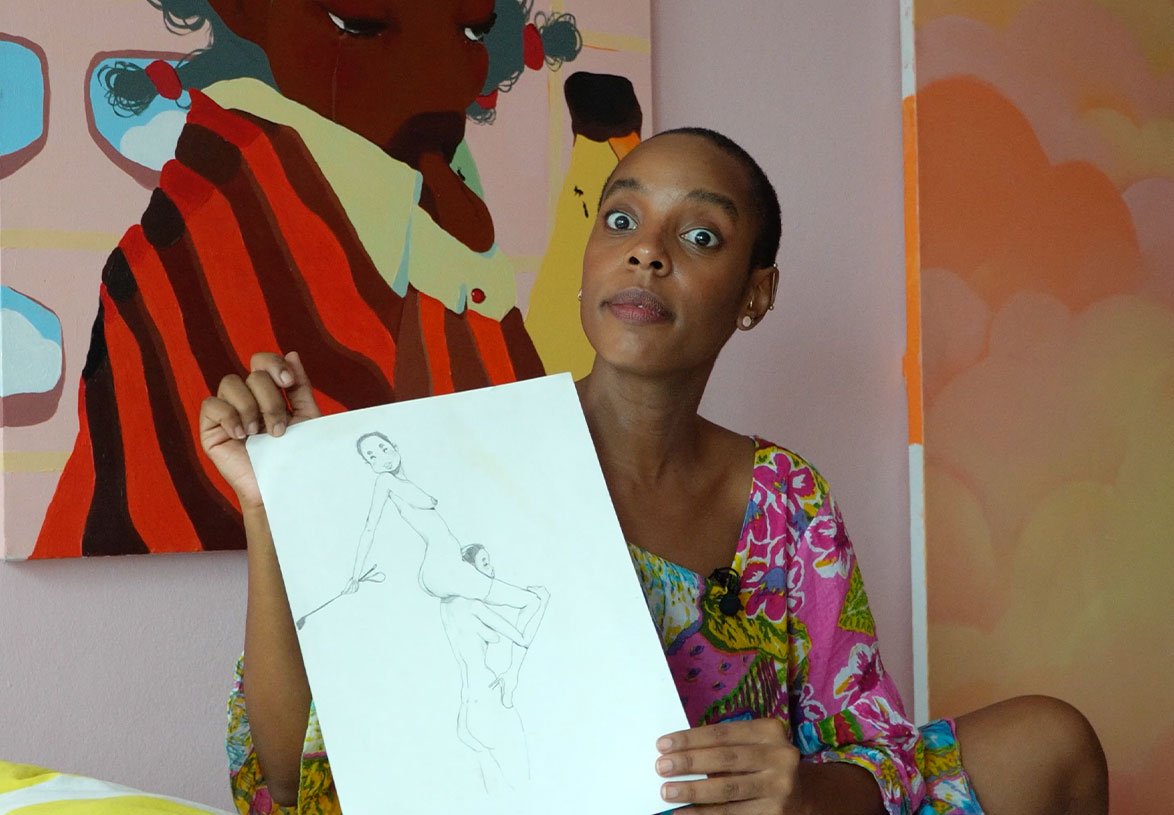
No, It Isn't Bravery
Every artist wants to know how to be a confident artist, how to make bold work without the fear. Angie thinks the word we reach for, bravery, is wrong, and the reason is the most useful thing she gave me across two days in her flat. I asked the black Dominican painter, brush still going, how she got so self assured, and almost everything below is her.
“Do you think I’m confident?” she asked me back. Then, when I said yes, she corrected the frame. “It’s not bravery. It’s just something natural. I don’t feel less than anything, but I don’t see anyone less than me.”
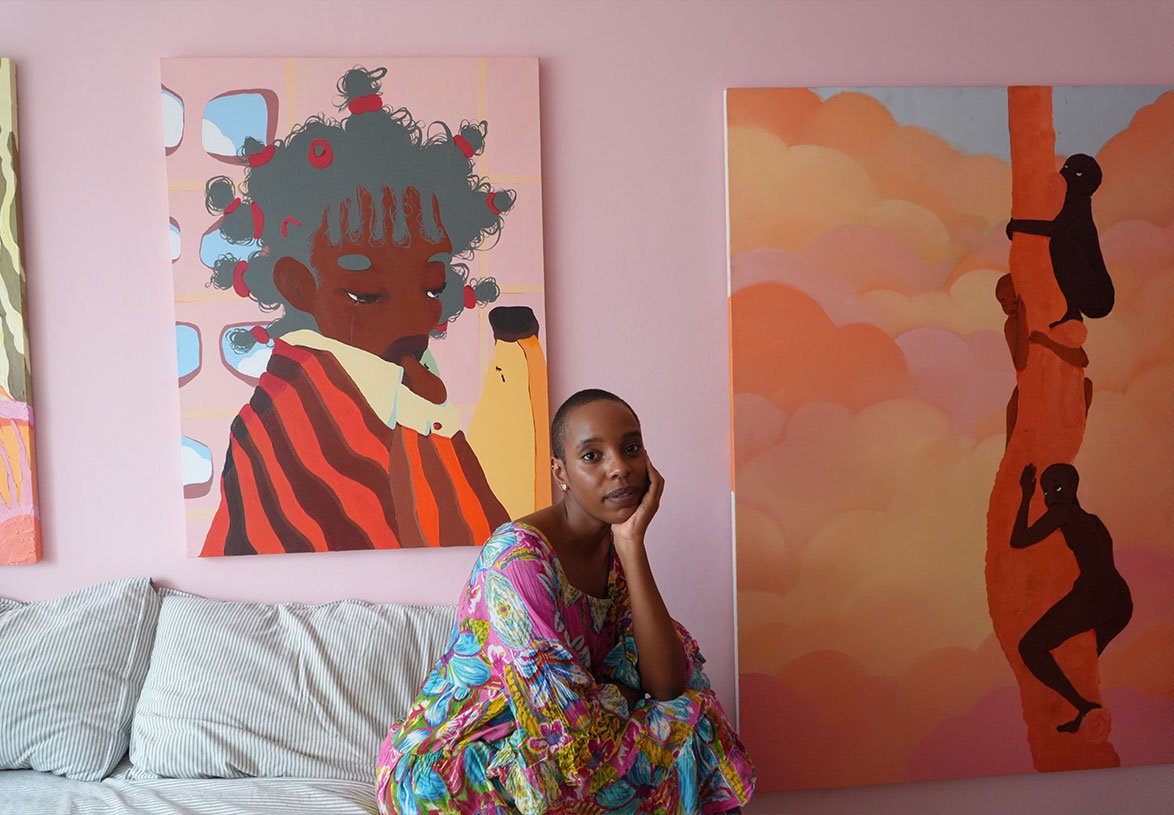
How to be a confident artist, and why it is not bravery
To be a confident artist you stop treating confidence as daily courage and start treating it as a settled relationship with yourself. Real creative confidence is when the work no longer needs permission, so making bold art costs you nothing. Angie, a Dominican artist, reframes artist confidence as something natural, not brave, because she does not see herself as less than anyone, and does not see anyone as less than her.
If your self expression depends on overriding fear every single time, you will burn out. The goal is the opposite, to reach the place where it is not a fight at all. “I’m not scared of being judged,” she said, but the deeper line was, “I don’t think about it, it’s just natural.”
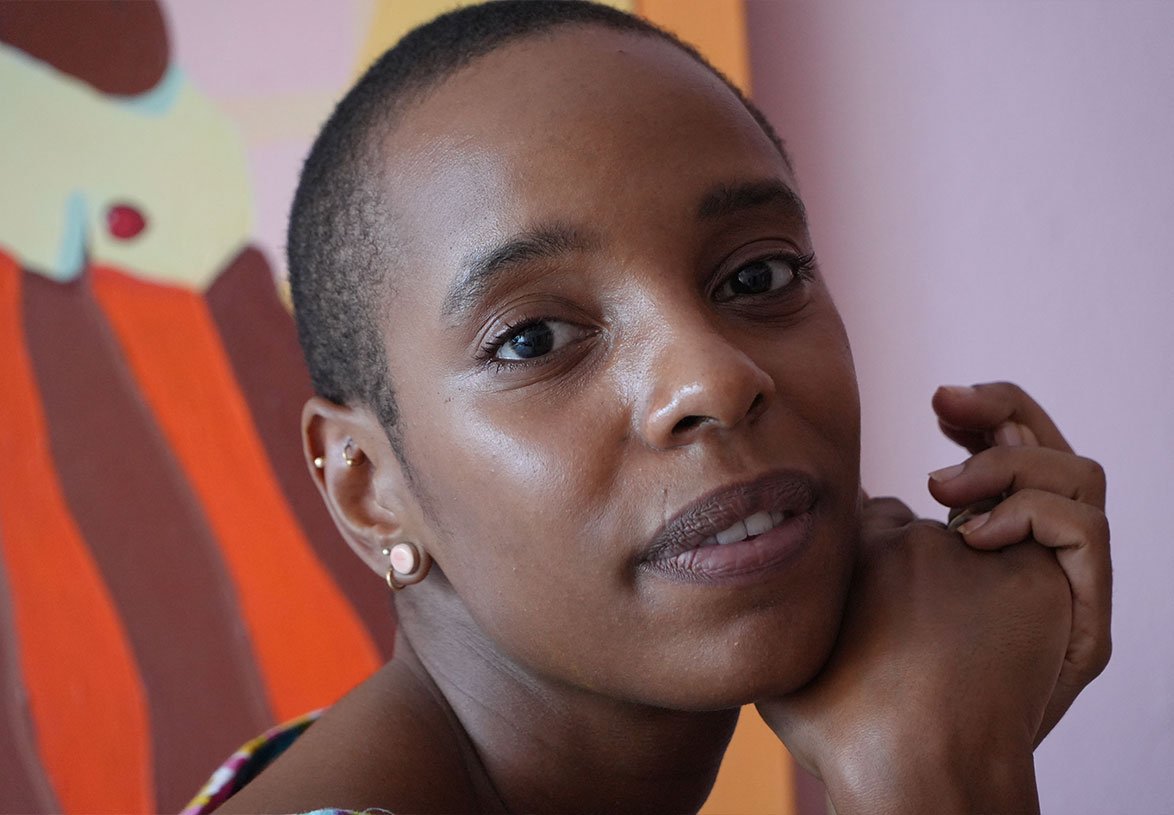
Where creative confidence actually comes from
Creative confidence comes from the absence of a cruel inner voice, not the presence of courage. Angie’s self belief was built by a childhood with no negative words, so the punishing voice most artists fight was never installed. You cannot re-run your childhood, but you can rebuild that absence as an adult, deliberately, which is what makes confidence learnable rather than innate.
“I never heard the word ugly related to me when I was growing,” she told me. “I never heard the word wrong. And that’s a privilege that I cannot even say thank you enough.” Because the negative voice was never installed, she never had to fight it. “I’m a weird person that never felt weird while I was growing.” I have spent a lot of my own life unlearning a cruel inner voice. Hearing someone describe simply never having one was like looking at a room with no furniture I had assumed was load bearing.
Silencing the artist inner critic and negative self talk
To silence the artist inner critic, replace negative self talk with the voice you would use for a friend or a pet. Speaking to yourself harshly makes you fragile, not sharp, while a kinder inner voice builds the resilience that keeps you at the easel. Angie’s method is to talk to herself with patience instead of punishment, because you cannot accept the good in your life through a voice that only tells you the bad.
“I really try to talk with myself as if I was a little pet,” she told me. “Not, you’re stupid, you did it wrong. More like, you can do better.” She thinks the cruel voice is learned, a parent’s voice that moved in. “That voice is more like a parent thing that states into you, and I didn’t have that from my mother or my father.” She is naming what the research on self compassion keeps finding (Dr Kristin Neff on self compassion). For an artist, that voice decides whether you walk back to the easel or quit.
Imposter syndrome and making art with no shame
Imposter syndrome and creative block are usually shame in disguise, the fear that your truest subject is too much, too strange, too revealing. The cure is to stop treating your own taste as something to apologise for. Angie makes work many would be embarrassed to sign and feels no shame, because she owns what she likes without justifying it, and the shame you feel about your real subject is usually the signal you are standing on something true.
“If I like the things that I like, it’s because I like them,” she said, and she does not justify the subject matter past that. She owns it. Expression is not a reward you earn by being good enough first. It is the point.
How a confident artist handles criticism and comparison
A confident artist stays open to criticism by separating the comment from their worth, and survives comparison by not measuring their work against anyone else’s. Useful critique, even harsh, gets kept, while a comment whose only job is to wound gets dropped. Angie welcomes critique because she is sure of what she is doing, and reads a personal jab as information about the other person, not about her.
“I really like to listen to critique, I think we need to be critiqued,” she told me. “Even if they’re cruel, because I’m pretty sure about what I’m doing.” The test she uses is whether the comment is there to help the work or only to hurt. “If someone criticizes the way you walk or the way you talk, that’s a big problem for them,” she said. “It’s not to add to the conversation, it’s to add to the hate.”
Pushing your art to its limit when self doubt hits
Confidence and discomfort can sit together, so you push your art to its limit even while the self doubt is loud. You do not wait to stop feeling nervous, you act through it. Angie is, by her own account, very afraid of social interactions, especially with other artists, and she walks into those rooms anyway, because exposing yourself to what scares you is the same muscle as making brave work.
“Expose yourself to the places you’re most afraid of,” she told me, about getting work seen. “It’s the exact same thing about pushing yourself. I don’t like it, but you have to do it.” Push to your limit on the canvas, and push past it in the rooms where the canvas gets seen.
Interview yourself to build self belief as an artist
The fastest way to build self belief as an artist is to interview yourself, asking why you make what you make until the answers are yours. Knowing your own reasons is what makes you immovable when someone challenges the work. Angie literally interviews herself, with hard questions and gentle ones, because your confidence lives in your honest answers, and most artists never ask.
“Have conversations with yourself as if it was an interview,” she said. “I really like to ask myself why you do the things that you do.” The hard ones, “why do you paint yourself like that,” and the tender ones, “why is this the most perfect colour in the world.” You got to the answer first, so no challenge can knock you off it.
What we can take from a confidence she did not earn
Angie is the first to call her start a privilege, and that honesty is the gift in it. Her point is not “just love yourself”, which helps no one. It is mechanical and doable. Notice the voice. Hear that it sounds like a parent and not like you. Answer it the way you would answer a friend, or a small pet who is trying their best. Interview yourself until you know why you make what you make. Walk into the room that scares you. That is a practice, not a personality. You can start it at thirty, at fifty, today.
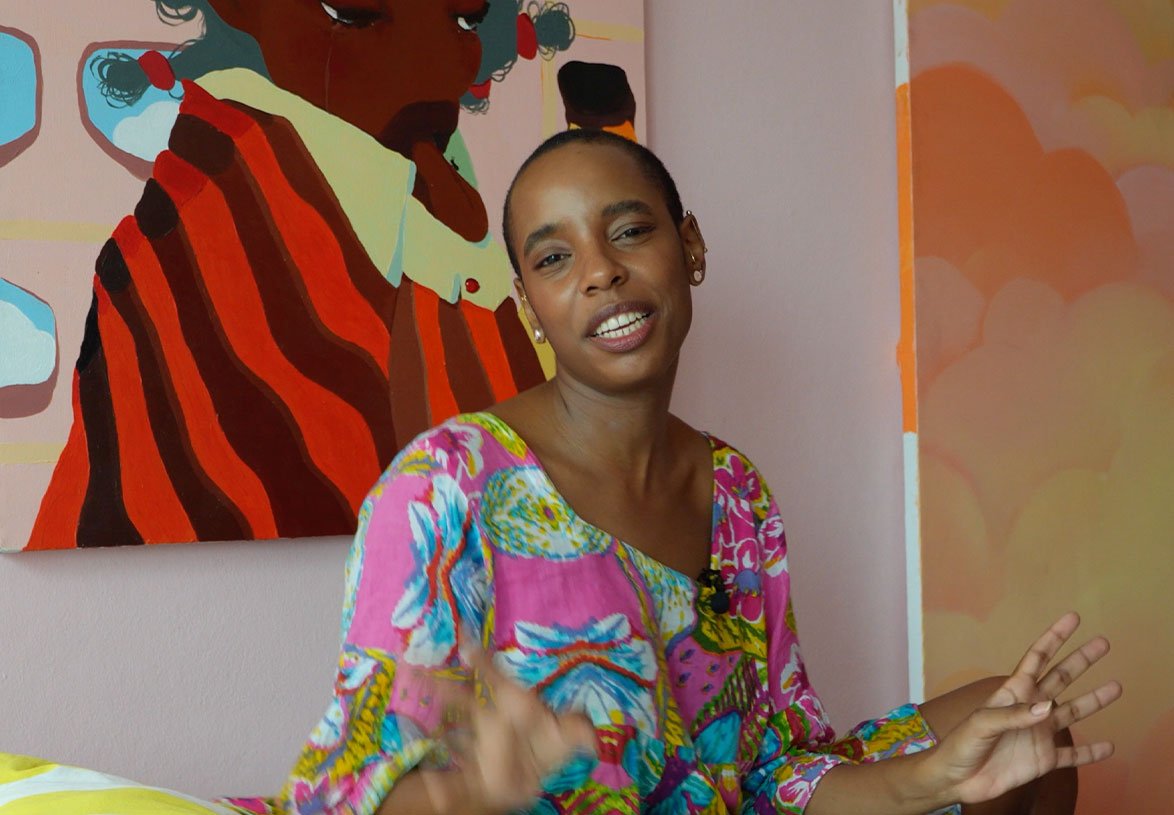
Thank you for reading all the way to the end of something this gentle, and for letting a black Dominican artist hand you a tool instead of a slogan. Take the pet voice and the self interview with you, and try them tomorrow, on your next piece.
If it landed, read the companion piece on how she defines her own style instead of painting through a borrowed eye, and on the colorism that presses against exactly this self love. When you travel, our black owned eco stays put your money beside people building that same confidence in their own communities. See you in the next one, my loves.
Thanks for reading. @queenofvitality
- Facts to confirm with Angie: her full name (only “Angie” given, flag below), and her permission to reference the Control Yourself piece.
- Photos needed: Angie at the easel mid sentence (hero), a self portrait sketch, and her brushes. Alt text “how to be a confident artist, Dominican artist Angie”.
- Quotes that need a home: the Control Yourself piece is homed in the self portraits post; kept out here (one quote, one home).
- Keyword gaps: “overcome self doubt as an artist”, “imposter syndrome artist”, “creative confidence”, “negative self talk” now placed in H2s and answer paragraphs.
- Lived detail to add: the butterfly passing the window (Day 1) could open a future piece; noted so it is not wasted.

12% Off Sustainable Swimwear
Freedom Ecowear is offering our readers 12% off their eco-friendly swimwear, perfect for your next eco getaway. Use the link and your discount is added automatically.