
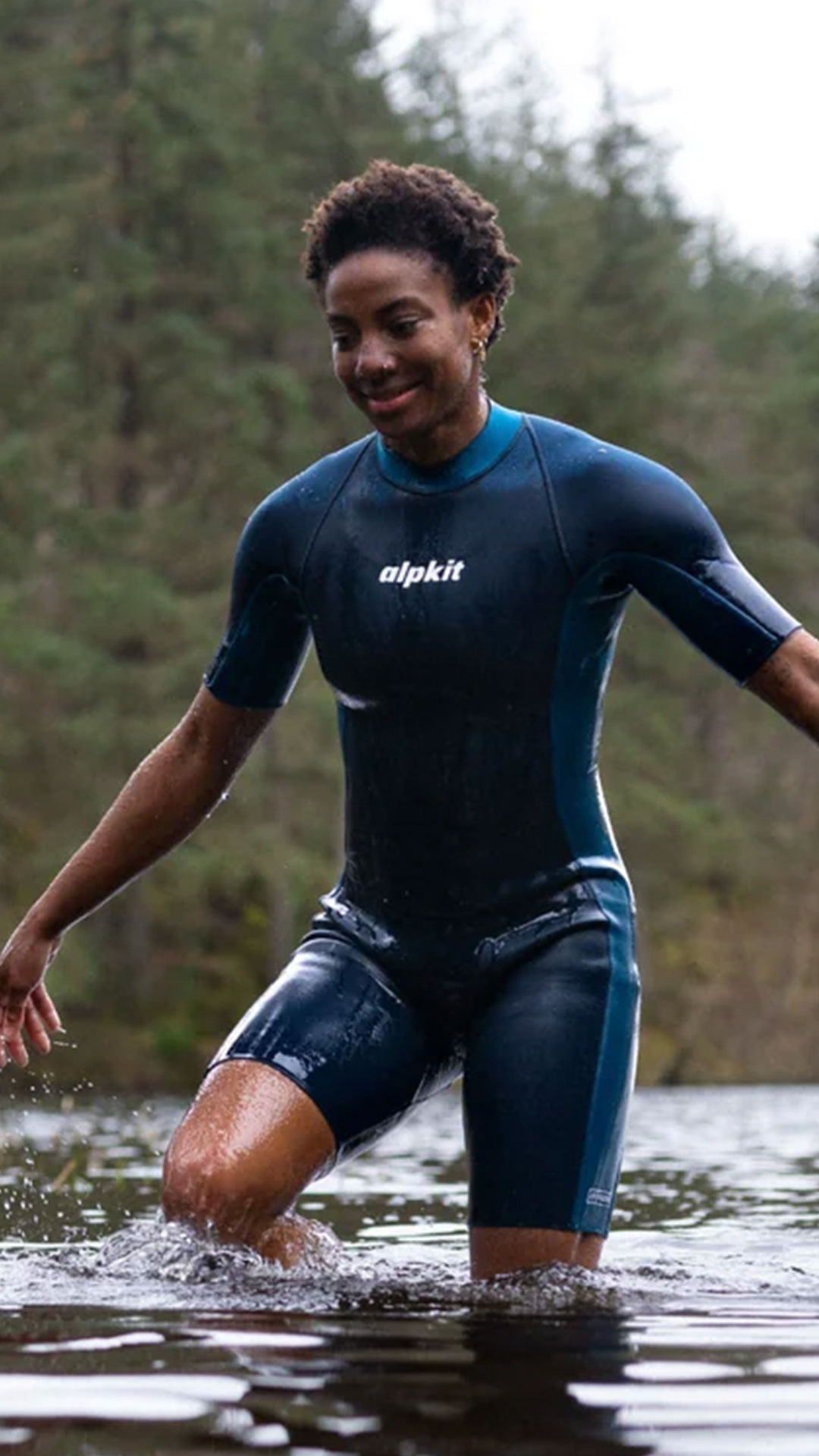
Alpkit Yulex Wetsuit Review: Sustainable Yulex Natural Rubber Wetsuit

Alpkit

This report documents what Alpkit publishes about its ownership and supply chain — see the sourcing and transparency sections below. Alpkit’s supply-chain transparency is rated 4 out of 5.

Alpkit’s product range has not been scanned product-by-product to the Throne Standard, so no whole-catalogue fibre percentage is shown here — a headline fibre figure is only published once 100% of a catalogue has been read.

1/5 · Unnatural · 18% plant fibre · 2758 styles scanned
2758 styles%
100% plant fibre18%
Animal fibre16.5%
Synthetic64.3%
Semi-synthetic1.2%

2758 Styles Scanned

2026-08-04

The full style-by-style breakdown for Alpkit is being added.

About Alpkit

Documented facts (from Alpkit’s own disclosures and independent sources): B Corp certification 2020 (95.1) and 2024 recertification (122.6); Living Wage Foundation accreditation; GOTS-or-BCI-only cotton policy; a stated ban on cotton from Turkmenistan, Uzbekistan and the Xinjiang region; a policy that suppliers agree to the Ethical Trading Initiative (ETI) base code as a minimum with senior-manage
Alpkit garments and gear are made in a mix of locations. According to its own supply-chain disclosures, the majority of Alpkit’s suppliers are based in China, the UK and Taiwan. A “Made in Britain” range (bikepacking bags, custom bags, bouldering mats, and Sonder bikes/wheels) is designed, cut and stitched at the Alpkit Campus on the edge of the Peak District (Nottinghamshire). Most technical clothing is still made overseas, though Alpkit has publicly stated a goal to shift about 15% of production out of higher-risk sourcing regions toward EU and UK suppliers. It does not publish a full factory-by-factory list publicly.
Alpkit (registered as Alpkit Ltd, HQ 3 Coombe Rd, Newthorpe, Nottinghamshire, NG16 3SU, England) is an independent, co-founder-led and co-founder-owned UK outdoor gear and clothing company founded in 2004 by four friends: Nick Smith, Jim Evans, Col Stocker and Kenny Stocker, who had previously worked together at Rab. It is not owned by a larger parent group; instead it is broadly held, with over 4,000 customer and staff shareholders arising from two crowdfunding raises. Alpkit also owns the bike brand Sonder (launched 2015) and the waxed-canvas bag maker Trakke. Its first products (sleeping bags) launched in 2005, initially sold online and at festivals.
Alpkit is a real, currently-trading, legitimate UK business (Alpkit Ltd). As of 2024-2025 it operates an online store, around 10 physical stores across the UK plus a Munich (Germany) location opened in 2024, a UK manufacturing facility near the Peak District, and publishes annual sustainability reports. This is the outdoor clothing/gear brand, distinct from any similarly named entity in other industries.
Alpkit is not fast fashion. It is a direct-to-consumer outdoor performance brand built around durable, technical, repairable gear rather than seasonal fashion cycles. Its stated ethos is “Gear You Love For Longer,” it runs a repairs/refurbishment programme, offers a 25-year “Alpine Bond” guarantee on UK-made bags, and produces some limited/small-batch UK-made runs. It sells at accessible prices via a DTC model, but its product philosophy, longevity focus and B Corp/Living Wage credentials place it in the slow/durable-gear category, not fast fashion.
Certifications: Alpkit is a Certified B Corporation (first certified 2020 with a score of 95.1; recertified in 2024 with a score of 122.6) and holds Living Wage Foundation accreditation (2020). For cotton, Alpkit’s own responsible-cotton-sourcing policy states that only GOTS (Global Organic Textile Standard) or BCI (Better Cotton Initiative) certified cotton goes into its products. Independent verification: Ethical Consumer Magazine has named Alpkit products “Best Buy.” No public evidence was found that Alpkit holds Fair Trade, OEKO-TEX, bluesign, or European Flax certifications as a company (Not publicly documented for those four). Note: GOTS/BCI apply at the cotton/material level, not company-wide..
Alpkit holds the following certifications: Alpkit is a Certified B Corporation (first certified 2020 with a score of 95. Beyond any paper certification, our scan of 161 Alpkit styles found 10.1% is 100% plant fibre, which is the measurable material fact behind Alpkit’s claims.
The most common fibres in the Alpkit styles we read were polyester and nylon. That composition is the measurable fact behind what Alpkit is made of, so check the specific Alpkit label for any individual piece.
How we scan. Every figure on this page comes from the Throne Standard scan: we read the fibre composition off each live product on the brand’s own site, style by style, and count only single-fibre plant cloth (cotton, linen, hemp) as natural. Animal fibres such as wool, silk and cashmere and plastic-based synthetics such as polyester, nylon and elastane sit outside the plant-fibre figure, and regenerated fibres such as viscose, bamboo, modal and Tencel are counted as semi-synthetic. Percentages are calculated over the styles that state a composition; anything unlabelled is shown separately.

Share this page: Alpkit

Facebook
X
LinkedIn
Reddit
Threads
Email
WhatsApp