
Kotn

Kotn sells clothes with 86.9% natural plant fibre material across 1032 scanned styles. The rest breaks down as 2.8% animal fibre, 6.2% synthetic, 3.8% semi-synthetic and 2.1% with no stated composition.

2026-06-14

The full style-by-style breakdown for Kotn is being added.

About Kotn

Kotn is strongly sustainable on materials: our scan of 1032 styles found 86.9% plant fibre (6.2% synthetic). Documented facts: Kotn is a Certified B Corp (score 102.6); it publicly lists partner farms and factories and undergoes third-party BSCI audits; supplier facilities carry OEKO-TEX, ISO 9001, and SA 8000; it pays wages above the local Egyptian minimum (independent analysis puts the lowest supplier wage at roughly 14% above local minimum and the average around 26% above); it has funded schools for i
Kotn’s cotton is grown in Egypt, sourced through direct trade from smallholder family farms in the Nile Delta and Faiyum regions, and its garments are manufactured in Egypt and Portugal. Kotn publicly lists its partner farms and factories, and its cited long-staple Egyptian cotton is the Giza 94 variety. First and second stages of production for some items are noted as being done closer to its Canadian home to reduce climate impact, but assembly is in Egypt and Portugal, not Canada.
Kotn is an independent, founder-led clothing and homeware brand founded in 2015 in Toronto, Canada, by three co-founders: Rami Helali, Benjamin Sehl, and Mackenzie Yeates (now Mackenzie Sehl). It has no parent company and remains privately held and run by its founders; the trio were named to Forbes’ 30 Under 30 (Retail & Ecommerce) in 2018. The name “Kotn” derives from the Arabic word for cotton, reflecting its Egyptian-cotton sourcing.
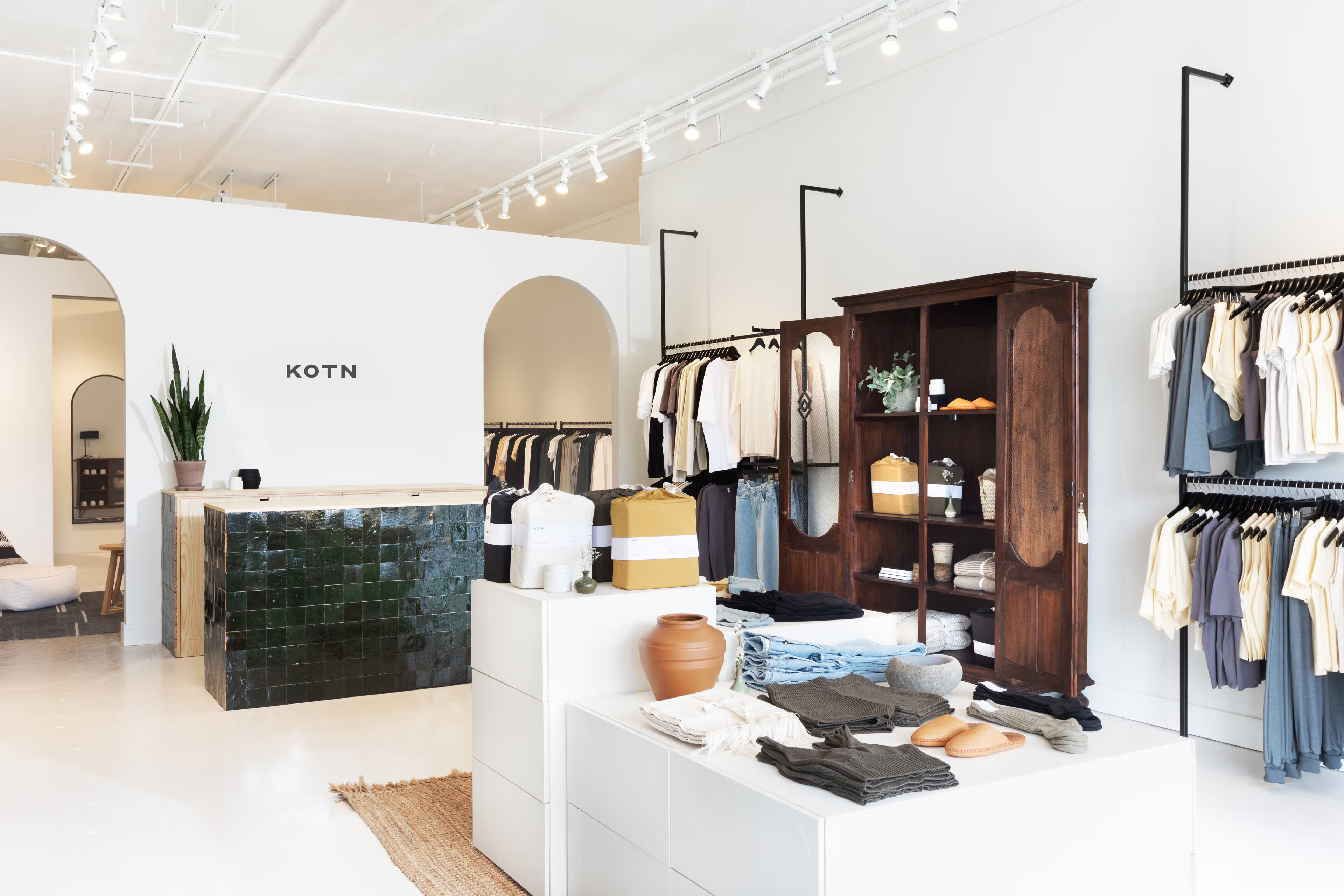
Kotn is a real, currently-trading, legitimate business as of 2026. It is actively selling (its Pre-Spring 2026 collection is live) and operates physical retail stores in Toronto, Montreal, Vancouver, New York (Lower East Side and Brooklyn), Los Angeles, and London, alongside its e-commerce site kotn.com. It reported roughly 142 employees across multiple continents in 2026. This is the Toronto clothing/homeware brand, verified distinct from same-named entities in other industries.
Kotn is not fast fashion; it operates as a slow, small-batch brand built on a core collection with limited seasonal styles rather than high-volume, rapidly-changing drops. Its model centers on direct-trade Egyptian cotton, traceability from farm to garment, and durable wardrobe basics, which is the opposite of the fast-fashion churn model.
Kotn is largely non-toxic: 86.9% of its range is plant fibre that breathes and biodegrades, with 6.2% plastic-based synthetics that can shed microplastics. Certifications: Kotn is a Certified B Corporation (certified 2017; B Impact Score of 102.6, well above the ~50.9 median, and it has been named “Best for the World”). Its manufacturing facilities carry OEKO-TEX (non-toxic dyes/textiles), ISO 9001, and SA 8000 certifications, and factories undergo BSCI (Business Social Compliance Initiative) audits. Kotn uses GOTS-certified organic cotton in select products only, not across its full range; independent raters deduct points for the lack of certified organic across the whole line. Kotn does NOT hold Fair Trade certification, and no European Flax certification applies (it is a cotton brand, not linen)..
Kotn holds the following certifications: Kotn is a Certified B Corporation (certified 2017; B Impact Score of 102. Beyond any paper certification, our scan of 1032 Kotn styles found 86.9% is 100% plant fibre, which is the measurable material fact behind Kotn’s claims.
Our scan of 1032 Kotn styles found 86.9% is 100% plant fibre, 2.8% animal fibre, 3.8% semi-synthetic (such as bamboo viscose), 6.2% synthetic, 2.1% with no stated composition. The most common fibres in the Kotn styles we read were cotton and linen. That composition is the measurable fact behind what Kotn is made of, so check the specific Kotn label for any individual piece.
How we scan. Every figure on this page comes from the Throne Standard scan: we read the fibre composition off each live product on the brand’s own site, style by style, and count only single-fibre plant cloth (cotton, linen, hemp) as natural. Animal fibres such as wool, silk and cashmere and plastic-based synthetics such as polyester, nylon and elastane sit outside the plant-fibre figure, and regenerated fibres such as viscose, bamboo, modal and Tencel are counted as semi-synthetic. Percentages are calculated over the styles that state a composition; anything unlabelled is shown separately.

Share this page: Kotn

Facebook
X
LinkedIn
Reddit
Threads
Email
WhatsApp