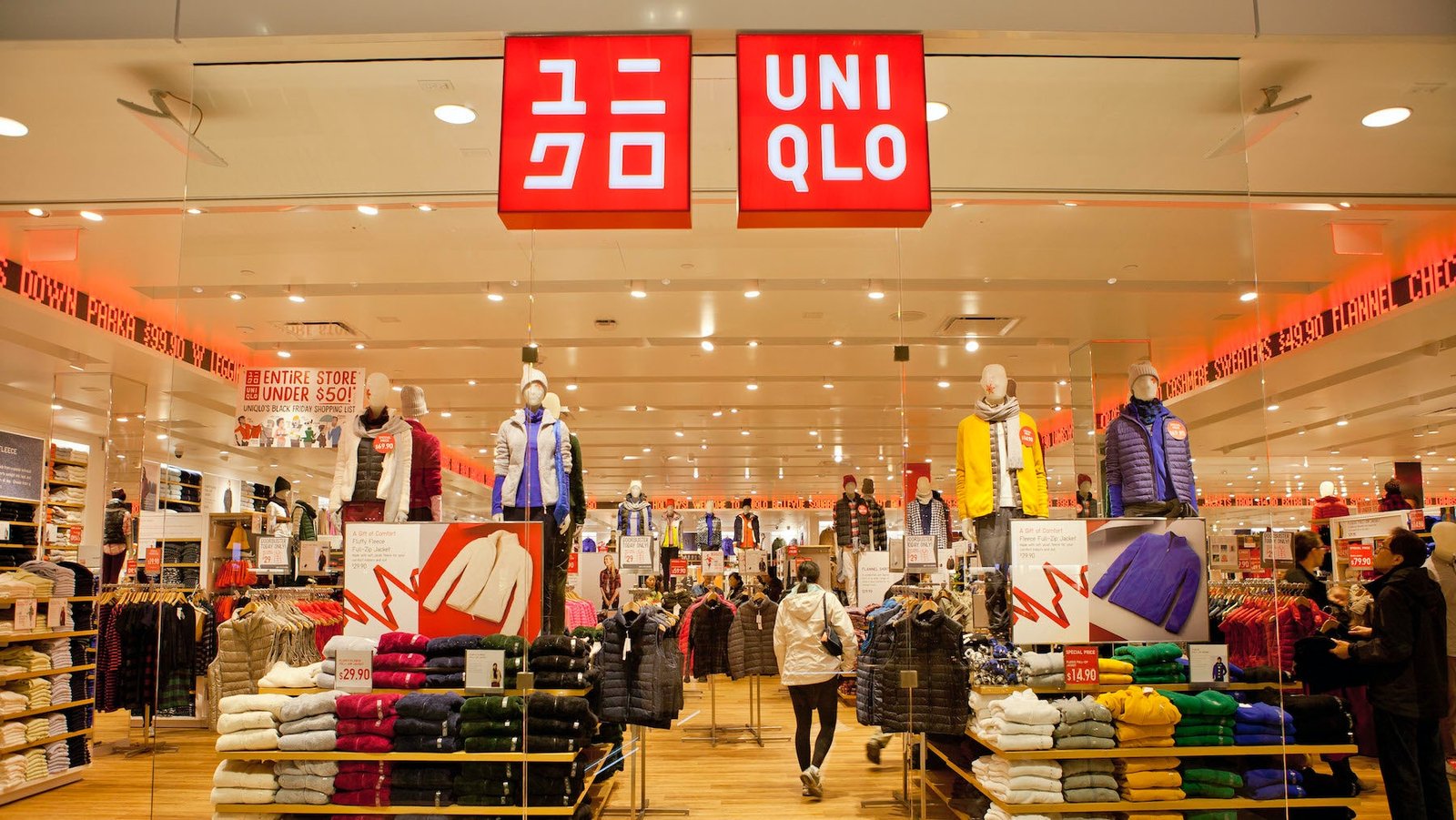
UNIQLO

This report documents what UNIQLO publishes about its ownership and supply chain — see the sourcing and transparency sections below. UNIQLO’s supply-chain transparency is rated 4 out of 5.

UNIQLO’s product range has not been scanned product-by-product to the Throne Standard, so no whole-catalogue fibre percentage is shown here — a headline fibre figure is only published once 100% of a catalogue has been read.

2026-08-04

The full style-by-style breakdown for UNIQLO is being added.

About UNIQLO

UNIQLO sources some cotton against Better Cotton and GOTS standards and runs the RE.UNIQLO take-back programme, but Good On You and others note a lack of published evidence of living wages, and a 2021 US Customs seizure over suspected Xinjiang cotton remains a documented supply-chain flag.
UNIQLO does not own its factories; it outsources garment production to partner factories concentrated in China, Vietnam, Bangladesh, Indonesia and India, and publishes a public core partner factory list.
UNIQLO is owned by Fast Retailing Co., Ltd., the Japanese apparel group listed on the Tokyo Stock Exchange (ticker 9983). It was founded by Tadashi Yanai, who opened the first UNIQLO store in Hiroshima in 1984 and remains chairman and controlling shareholder.
UNIQLO is a legitimate, actively trading business: Fast Retailing is publicly listed with FY2025 revenue of 3.4 trillion yen and over 2,500 UNIQLO stores worldwide. For the price you get durable, well-made basics, but note that most of the range is synthetic rather than natural fibre.
UNIQLO is generally classed within fast fashion: it produces high volumes of low-priced clothing, though it positions its ‘LifeWear’ basics apart from trend-driven rivals like Shein and Zara rather than copying runway trends rapidly.
Its AIRism and HEATTECH performance fabrics are engineered synthetics; UNIQLO does not publish a company-wide OEKO-TEX chemical-safety certification.
How we scan. Every figure on this page comes from the Throne Standard scan: we read the fibre composition off each live product, style by style, and count only single-fibre plant cloth (cotton, linen, hemp) as natural. Animal fibres and plastic-based synthetics sit outside the plant-fibre figure, and regenerated fibres such as viscose, rayon, modal and Lyocell are counted as semi-synthetic.

Share this page: UNIQLO

Facebook
X
LinkedIn
Reddit
Threads
Email
WhatsApp