Destinations › Europe · The Destination Index · universal template · every figure sourced
Finland.
Northern Europe, bordering the Baltic Sea, Gulf of Bothnia, and Gulf of Finland, between Sweden and Russia. 338,145 sq km and 5,646,436 people, 1,250 km of coastline, cold temperate; potentially subarctic but comparatively mild because of moderating influence of the North Atlantic Current, Baltic Sea, and more than 60,000 lakes.
Region · EuropePopulation · ~5,646,436Languages · Finnish, Swedish (both official), plus three Sami languagesEco Index · 73/100 · Passable
The Eco Index across 12 pillars · scored 0 to 5 · World Bank, OWID, WHO/UNICEF JMP, FiBL, Protected Planet, IUCN, UNESCO (2023-24)
Conservation
Wildlife
Water
Food & farming
Organic & clean
Climate & energy
Waste
Health
Heritage
Ownership
Governance
Future
The History of Finland.
Finland is a modern and largely secular society, but distinct living heritage endures. The kantele and the runic song tradition of the Kalevala remain part of Finnish cultural life, alongside pelimanni folk music and dance.
Where the name comes from
Suomi in Finnish, of debated origin. 'Finland' comes from a Germanic name for the peoples of the region. Source: UK Permanent Committee on Geographical Names toponymic factfile.
The land itself: low, flat to rolling plains, interspersed with lakes and low hills, rising to fells in Lapland. Its high point is Halti, 1,324 m. Source: UK Permanent Committee on Geographical Names toponymic factfile.
Where it starts
The oldest net in the world
The ice sheet retreated around 9000 BC and the first communities settled the coasts and lakes. The Antrea net, made of willow bast with bark floats and stone weights and dated to about 8300 BC, was long the oldest dated fishing net found in Europe. Red ochre paintings were made on lakeside cliffs from about 5000 BC, including Astuvansalmi, dated about 4000 to 2200 BC and recorded by the Finnish Heritage Agency as the largest continuous rock painting surface in Finland, with over 80 figures. Kierikki on the River Ii was lived in year round and traded over long distances, changing what had been assumed about Stone Age life this far north.
How it got here
Sweden, Russia, and 1906
Sami communities held the north with reindeer herding, hunting and fishing, and Finnic peoples the south and west. Finland was part of the Swedish realm for over six centuries from the 1150s, then an autonomous Grand Duchy of Russia from 1809. In 1906 it gave women both the vote and the right to stand for parliament, among the first countries in the world to do so, and in 1907 it elected the world's first women MPs. Independence was declared in 1917.
The timeline
c. 9000 BC
After the ice.
The ice sheet retreats and the first communities settle the coasts and lakes. ↗
c. 8300 BC
The Antrea net.
A willow-bast fishing net with bark floats and stone weights, long the oldest dated fishing net found in Europe. ↗
c. 5000 to 3000 BC
Rock paintings.
Red ochre paintings are made on lakeside cliffs, including Astuvansalmi, the largest continuous rock painting surface in Finland, with over 80 figures. ↗
c. 3500 BC
Kierikki.
A year-round settlement on the River Ii with large houses and long-distance trade, changing what was assumed about Stone Age life this far north. ↗
c. 500 BC onward
Sami and Finnic peoples.
Sami communities hold the north with reindeer herding, hunting and fishing, and Finnic peoples the south and west. ↗
1150s to 1809
Swedish rule.
Finland is part of the Swedish realm for over six centuries. ↗
1809 to 1917
Grand Duchy.
Finland becomes an autonomous Grand Duchy of Russia in 1809, taken from Sweden. The autonomy was real: Finland kept its own laws, currency and Lutheran church. ↗
1906
Votes for women.
Finland gives women both the vote and the right to stand for parliament, among the first countries in the world to do so. ↗
1917
Independence.
The Parliament of Finland adopts the Declaration of Independence on 6 December 1917, a month after the Bolshevik seizure of power in Russia ended more than a century of rule as an autonomous Grand Duchy of the Russian Empire. ↗
Finnish Heritage Agency, Museovirasto · National Museum of Finland · Kierikki Stone Age Centre
Nature and Biodiversity in Finland.
The World Bank records 13.6% of Finland's land and 11.8% of its seas as protected in 2024, managed through a well-run national-park and nature-reserve network. Enforcement is generally strong, but the continued clear-cutting of old-growth boreal forest remains a live and contested conservation gap.
Is wild Finland protected? 13.9% of the land is, against a 30% target for 2030
How protected is nature in Finland?
Forest cover73.72%
Terrestrial protected area13.9%
Marine protected area11.8%
23 (mammals, birds, fish & plants) listed as threatened.
Found only here. Saimaa ringed seal, found only in Lake Saimaa (530 individuals counted in 2025)
The watchlist
ThreatenedMustela lutreolaAssessed Critically Endangered on the IUCN Red List. The Finnish occurrence records in GBIF are historical rather than recent.
ThreatenedEmberiza aureolaAssessed Critically Endangered on the IUCN Red List, and present in GBIF occurrence records for Finland.
ThreatenedAnguilla anguillaAssessed Critically Endangered on the IUCN Red List, and present in GBIF occurrence records for Finland.
ThreatenedVanellus gregariusAssessed Critically Endangered on the IUCN Red List, and present in GBIF occurrence records for Finland.
Critically Endangered, the IUCN category immediately below Extinct in the Wild, and present in GBIF occurrence records for Finland. GBIF holds 2 verified occurrence records.
Emberiza aureola
Critically Endangered, the IUCN category immediately below Extinct in the Wild, and present in GBIF occurrence records for Finland. GBIF holds 293 verified occurrence records.
Bottle-palm (Beaucarnea recurvata)
Critically Endangered, the IUCN category immediately below Extinct in the Wild, and present in GBIF occurrence records for Finland. GBIF holds 3 verified occurrence records.
Anguilla anguilla
Critically Endangered, the IUCN category immediately below Extinct in the Wild, and present in GBIF occurrence records for Finland. GBIF holds 18 verified occurrence records.
Species named here are drawn from GBIF occurrence records for Finland filtered to the IUCN Red List threatened categories. Species are listed where GBIF holds occurrence records for them in this country. Record counts are not published here because the figure cannot be reproduced from a public GBIF query.
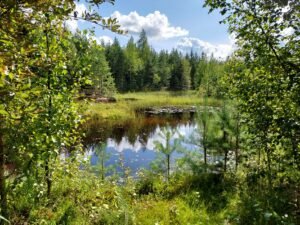
Nature reserve in Kainuu, mapped and named in the open record for Finland. OpenStreetMap.
Water and Ocean in Finland.
Finland sits on roughly 188,000 lakes and abundant groundwater, and Helsinki draws its supply from Lake Päijänne through a 120 km tunnel. The WHO/UNICEF Joint Monitoring Programme records 99.6% of the population on safely managed drinking water in 2024, among the most secure supplies in the world.
Does Finland have enough fresh water? Yes, with headroom
99.6% of people here have safely managed drinking water at home (2024, WHO/UNICEF JMP). Tap water is safe for a visitor nearly everywhere.
Cleanest water: Lakeland and Lapland (Lakes Saimaa and Päijänne, the Teno river)
How much fresh water does Finland have, per person?
19,258 m³
Finland
1,000 m³
the UN “water scarce” line
Finland withdraws about 3,000 million cubic metres of fresh water a year (2022). That is 7.1% of the fresh water actually available to it, which FAO counts as no water stress. Of what is taken, farming takes 36%, homes and towns 18%, industry 46%. Source: FAO AQUASTAT.
What are the rules on Finland beaches?
✓Tap water: Drinkable.
✓Plastic rules: EU single-use-plastic ban (straws, cutlery, plates, EPS containers) since 2021; voluntary retail Green Deal on bags rather than a statutory levy.
✓Solo travel: rated easy on the record for this destination.
✕Marine protection: 11.8% of the sea is protected. The 30x30 pledge for 2030 is not met yet.
Where does the sewage go?
90.1%
of people have safely managed sanitation
90.1% of people here use a safely managed sanitation service, meaning waste is contained, emptied and treated rather than reaching the ground or the sea untreated (2024, World Bank / WHO-UNICEF JMP, SDG 6.2.1). That is close to universal coverage.
How is the sea around Finland doing?
One cross-section, every answer measured.
Surface
What the coast carries
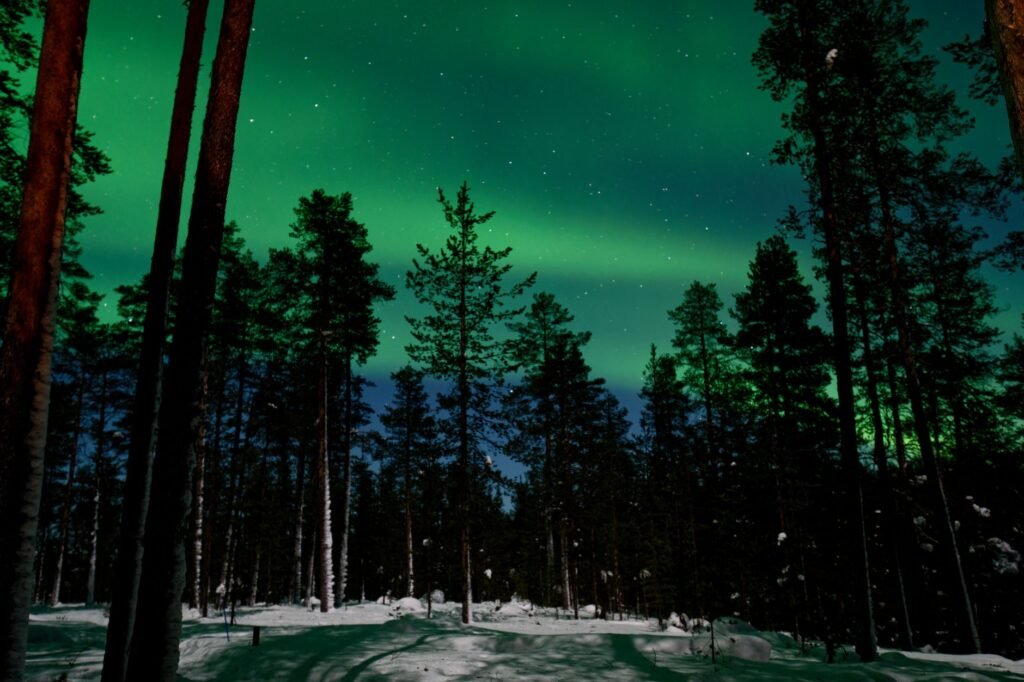
Midnight sun Jun–Jul, aurora Sep–Mar; Lapland winters are dark and freezing.
Nearshore
Protected water
11.8% of territorial waters are protected, against the 30% pledged for 2030 under the Global Biodiversity Framework.
Cleanest
Where the water is cleanest
Lakeland and Lapland (Lakes Saimaa and Päijänne, the Teno river).
The record
Measured
Finland sits on roughly 188,000 lakes and abundant groundwater, and Helsinki draws its supply from Lake Päijänne through a 120 km tunnel. The WHO/UNICEF Joint Monitoring Programme records 99.6% of the population on safely managed drinking water in 2024, among the most secure supplies in the world.
Sea protected
11.8%
Against the 30% pledged for 2030 under the Global Biodiversity Framework.
Threatened species
23 (mammals, birds, fish & plants)
Mammals, birds, fish and higher plants on the IUCN list.
Cleanest water
here
Lakeland and Lapland (Lakes Saimaa and Päijänne, the Teno river).
Is the tap water safe in Finland?
99.6% of people have safely managed drinking water at home (2024, WHO/UNICEF JMP). Renewable fresh water works out at about 19,258 cubic metres per person a year (World Bank).
How hard is the water supply being pushed?
Of every 10 buckets nature refills, 1 are already taken. Withdrawals run at 7.1% of what Finland renews internally each year (2022, World Bank / FAO AQUASTAT). That is inside the 25% mark generally treated as water stress, so the supply has headroom.
When is the best time to visit Finland? Tap your month.
Tap your month.
JanFebMarAprMayJunJulAugSepOctNovDec
.
How much fresh water does Finland actually have?
Nature renews about 19,258 cubic metres of fresh water per person per year here. That ranks Finland 176 of 208 countries measured, placing it among the 40 best-watered countries measured. The UN treats anything under 1,000 cubic metres as water scarce, and this is above that line. World Bank / FAO AQUASTAT.
Finland is highly self-sufficient in staples such as dairy, cereals, pork and poultry, but its northern climate means nearly all fruit, vegetables and warm-climate produce are imported, so roughly a third of consumed food comes from abroad. Farming also leans heavily on imported feed protein, fuel and fertiliser, a recognised vulnerability.
Where does the food in Finland come from?
8.8% imported
about US$7,491m a year
On the plate: Rye bread, oats, potatoes, root vegetables, wild berries (bilberry, lingonberry, cloudberry), foraged mushrooms
How often each food is on the plate
Share of people eating each one regularly. These overlap, so they do not add up to 100%.
Rye bread60%
Oats51%
Potatoes42%
Root vegetables33%
Foraged mushrooms15%
1 of 10
bites are imported
The island buys in more food energy than it eats. About US$7,491m a year leaves the country to pay for it. The green slice is roughly what still grows here.
Food is 8.8% of everything Finland imports (2024, World Bank). Farming itself is 2.6% of the economy and 7.4% of the land is agricultural, of which 7.4% is arable. The green slice is roughly what still grows here.
What is killing people in Finland? The imported diet.
Cause of death, and the diet behind it.
Non-communicable diseases, all combined92.3%
Diabetes6.9%
Adults living with overweight or obesity. 55.3%.
Can Finland feed itself?
7.4%
Arable land
7.4%
Agricultural land
100,852
Farmers
5,545,036
Arable acres
2.6%
Agriculture, share of GDP
Harvest: Berry and mushroom foraging July to September; new potatoes early summer
Feeding itself
Finland is highly self-sufficient in staples such as dairy, cereals, pork and poultry, but its northern climate means nearly all fruit, vegetables and warm-climate produce are imported, so roughly a third of consumed food comes from abroad. Farming also leans heavily on imported feed protein, fuel and fertiliser, a recognised vulnerability.
Certification
FiBL's OrganicTargets4EU factsheet puts 13.6% of Finnish farmland under certified organic management in 2024, above the EU average of 11.1%. Organic area is concentrated in the south and west where most farming sits.
Water for crops
Finland sits on roughly 188,000 lakes and abundant groundwater, and Helsinki draws its supply from Lake Päijänne through a 120 km tunnel. The WHO/UNICEF Joint Monitoring Programme records 99.6% of the population on safely managed drinking water in 2024, among the most secure supplies in the world.
Why the organic number looks like that. Certified-organic farmland is not separately reported for Finland, and that is a certification gap rather than proof nothing is grown cleanly. What the official land record does show: 7.4% of the country is agricultural land and 7.4% is arable (2023, World Bank). Certification is paid for per farm per year by a foreign body, which prices out smallholders, so the organic number reads worse than the practice.
What actually grows here
BarleyOatsWheatPotatoesSugar beetsPeasRye
The food that already fits
The plant-based kitchen here is not an import. By tonnage, the largest crops grown in Finland are oats, barley, wheat, sugar beet and potatoes (FAO, FAOSTAT crop production, 2024). That is what the land itself puts on a plate.
Finland has one of the cleanest electricity systems in the industrial world, with nuclear power and wind and hydropower together supplying roughly 90 per cent low-carbon generation after the Olkiluoto 3 reactor and rapid wind growth came online. Fossil CO2 emissions are moderate at about 5.8 tonnes per person in 2023, reflecting a cold climate, high energy use and heavy industry, though emissions have fallen sharply. Finland's Climate Act sets one of the world's most ambitious targets, carbon neutrality by 2035. The clean grid and leading policy outweigh the mid-range emissions.
What powers Finland?
Renewable 56.5%Fossil 3.7%
Climate pollution per person
The safe amount, what the planet can absorb
2 tonnes
One person here
5.54 tonnes
The world average, for comparison
4.7 tonnes
The worst it ever got
14.21 tonnes
The grid
Finland has one of the cleanest electricity systems in the industrial world, with nuclear power and wind and hydropower together supplying roughly 90 per cent low-carbon generation after the Olkiluoto 3 reactor and rapid wind growth came online. Fossil CO2 emissions are moderate at about 5.8 tonnes per person in 2023, reflecting a cold climate, high energy use and heavy industry, though emissions have fallen sharply.
Pollution
The Finnish Meteorological Institute's Pallas station in Lapland records some of Europe's cleanest air, and the country's population-weighted PM2.5 was just 4.57 µg/m³ in 2023 according to the World Bank, far below the older WHO guideline. EU single-use-plastic bans are in force and litter is very low.
Water stress
Finland sits on roughly 188,000 lakes and abundant groundwater, and Helsinki draws its supply from Lake Päijänne through a 120 km tunnel. The WHO/UNICEF Joint Monitoring Programme records 99.6% of the population on safely managed drinking water in 2024, among the most secure supplies in the world.
What pollutes most here
1The gridThe share of electricity still generated from fossil fuel.44.1%
2IndustryPeat extraction and burning, old-growth clear-cut forestry, and metal mining such as Talvivaara/Terrafame.named
3AirModelled annual mean against a WHO guideline of 5 µg/m³.4.57
4On the recordThe Finnish Meteorological Institute's Pallas station in Lapland records some of Europe's cleanest air, and the country's population-weighted PM2.5 was just 4.57 µg/m³ in 2023 according to the World Bank, below the current WHO guideline of 5 micrograms, which few countries meet.
What has Finland promised on climate?
Net zero, whole economy2035
Electricity renewable today52.9% (2021)
Land protected, against a 30% target13.9% by 2025
Sea protected, against a 30% target11.8% by 2025
The net-zero target year on file with Climate Watch is 2035, status: in law; in policy document. Measured against it, 52.9% of electricity is already renewable (2021, World Bank), so 47.1% of the grid is still to be converted. The pledge on file is measured here against what has actually been delivered, not taken on its own (UNFCCC NDC Registry, CBD Kunming-Montreal Target 3).
The biggest line item
One return flight against a whole year of living.
A resident's entire year5.54 t CO2e
Safe-climate budget, per year2 t CO2e
Sydney return, economy2.74 t CO2e
Johannesburg return, economy1.73 t CO2e
Singapore return, economy1.67 t CO2e
Los Angeles return, economy1.63 t CO2e
New York return, economy1.19 t CO2e
How much CO2 does flying to Finland emit?
Tap where you would fly from. One return flight, economy.
Every prompt runs on a machine in a building on somebody’s grid. What that costs the planet depends less on the prompt than on what is burning to power it. Here is what would power one in Finland.
Data centres
36
Registered colocation and interconnection facilities, PeeringDB, 2026
Grid renewable
56.5 %
What a machine here runs on.
What powers a data centre in Finland?
A machine here runs mostly on renewables, but not entirely.
Renewable 56.5%Fossil 43.5%
Cooling water. Every one of those halls runs on the national grid, which is 52.9% renewable today (World Bank). A data centre is only as clean as the electricity behind it, so the same figure that decides this country's climate score also decides the footprint of the AI running inside it. Cooling water use is not separately published by facility, and no operator here reports it.
The rules. Finland has 36 colocation and interconnection facilities on the public PeeringDB register, concentrated in Helsinki (12), Espoo (8), Oulu (4), alongside 14 internet exchanges (FICIX 2 (Helsinki), TREX Tampere, FICIX 3 (Oulu), FICIX 1 (Espoo)). Named sites include Digita Helsinki Pasila Broadcasting Tower, IP-Only Espoo, Equinix HE3 - Helsinki, Suvilahti, Equinix HE4 - Helsinki, Hansa.
Where the cables land. 11 landing points · Espoo, Hamnäs, Hanko, Haradsholm
63% residents to 37% visitors across a year. 3,290,000 international arrivals in 2019 against 5,646,436 people who live here (2025, World Bank / UN Tourism).
Where a visitor dollar goes in Finland
896k
Visitors a year
0.2
Visitors per resident
How deep in debt is Finland?· for every $100 Finland earns in a year, it owes…
Pay to the order of: the creditorsmemo · today
$ 93What is owed now, for every $100 of national income (2026).
IMF World Economic Outlook, 2026signed, the creditors
Pay to the order of: the creditorsmemo · projected 2031
$ 101The IMF's own forecast has this rising to $101 by 2031.
IMF World Economic Outlook projection, 2031signed, the forecast
For every $100 Finland earns in a year, it owes $93 (2026, IMF World Economic Outlook). The interest on that is paid before schools, clinics or coastline get their turn.
Where does a tourist dollar actually go in Finland?
Play one tourist dollar around the board. Every square is a measured fact from this page.
START!
1
GO: a visitor lands
$100 goes on the table. 3,290,000 international arrivals in 2019 against 5,646,436 residents, 0.6 visitors for every resident (World Bank / UN Tourism).
$100 in play
2
The bed
Who owns the largest places to stay in Finland is not published in the records we can check, so this square is left open rather than guessed. Where a listing names its owner, it is shown in the ownership table below.
not published
3
The plate
Food is only 8.8% of everything Finland imports (2024, World Bank), so most of a meal is bought from producers inside the country. Eating what the land here actually grows, barley, oats, wheat, potatoes, sugar beets, peas, rye, keeps that money with the grower.
mostly home-grown
4
The power
52.9% of the electricity is renewable (2021, World Bank), so the energy on the bill is mostly generated inside the country rather than shipped in.
made at home
5
What actually stays
Of the two parts of a visitor's bill that can be measured here, the plate and the power stay inside Finland. This is not an economy where a visitor's money drains away, and the board is shorter for it.
most of it
6
Pay the bank first
Finland owes $93 for every $100 it earns (IMF World Economic Outlook, 2026 projection). The interest is paid before anything else on this board.
$93 per $100
7
A spread hand
The largest single export, machinery and mechanical appliances, is 14.4% of the total (2023, UN Comtrade). No one shock can take the whole board.
top export 14.4%
8
Community chest
Tourism earns 1.8% of everything Finland makes from exports (2020, World Bank / UN Tourism). That is how much of the economy depends on the game continuing.
1.8% of exports
9
The flight
Getting here is usually the biggest single line on the bill. From Sydney a return economy seat is 2.74 t CO2, on the UK Government's published conversion factors. It is the one part of the trip this board cannot reduce.
2.74 t CO2
10
Back to GO
The economy turns over about US$338 billion a year (IMF World Economic Outlook, 2026 projection). Every lap of this board is a choice about how much of it stays.
US$338bn
GDPUS$317.0bn
Agriculture, share of GDP2.6%
Visitors a year896,000
Visitors per resident0.2
Residents~5,646,436
Agriculture
Farming is 2.6% of the economy. Finland is highly self-sufficient in staples such as dairy, cereals, pork and poultry, but its northern climate means nearly all fruit, vegetables and warm-climate produce are imported, so roughly a third of consumed food comes from abroad.
Natural materials
Living natural-materials traditions include Finnsheep wool, hand-knitted villasukat socks and mittens, linen (pellava) weaving, and the woven ryijy rug and räsymatto rag rugs still made in homes and craft guilds. Reusable and repair culture is strong.
Energy
Finland has one of the cleanest electricity systems in the industrial world, with nuclear power and wind and hydropower together supplying roughly 90 per cent low-carbon generation after the Olkiluoto 3 reactor and rapid wind growth came online. Fossil CO2 emissions are moderate at about 5.8 tonnes per person in 2023, reflecting a cold climate, high energy use and heavy industry, though emissions have fallen sharply.
Who owns the biggest hotels in Finland?
By rooms · company records and press.
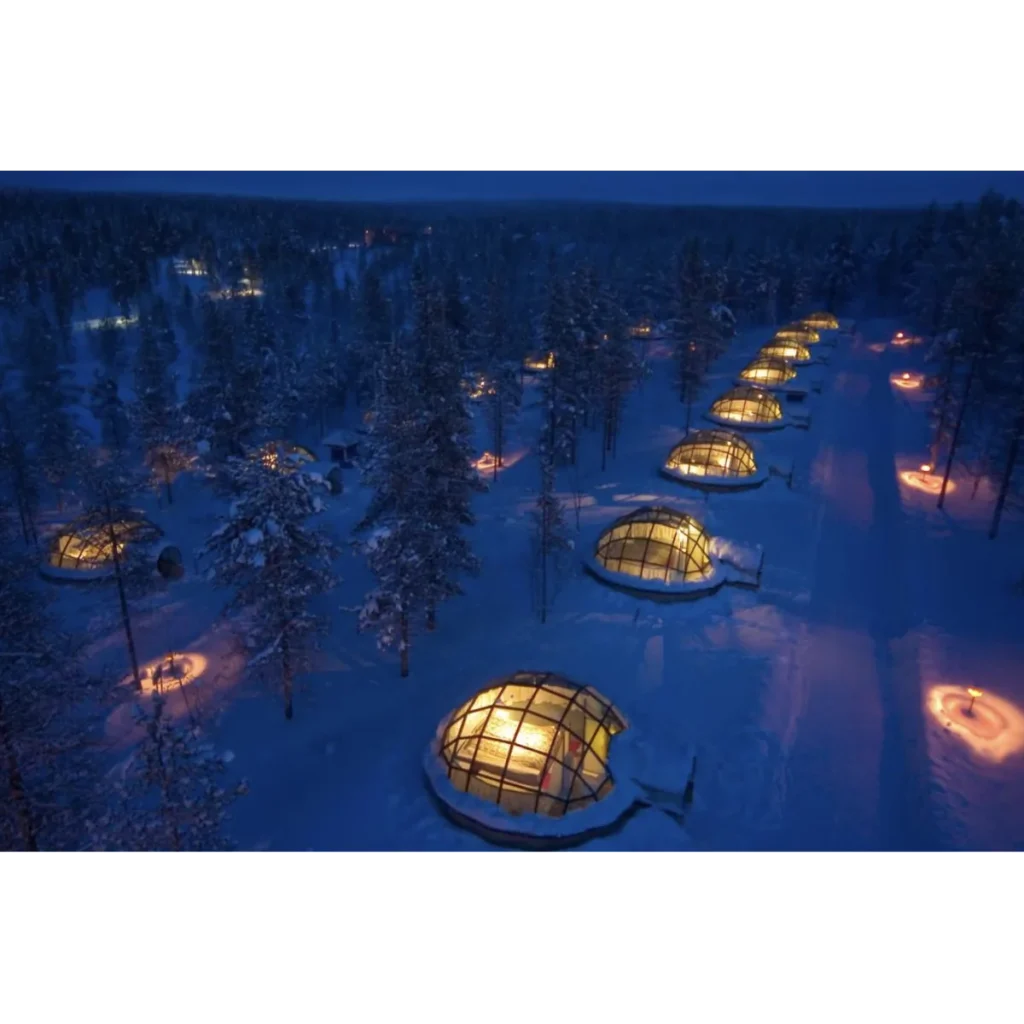
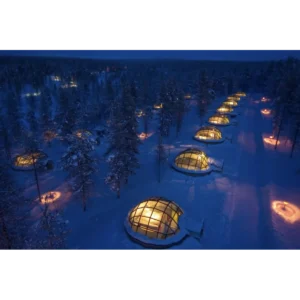
Kakslauttanen Arctic Resort · ~150 roomsIndependentnot published
Ollero Eco Lodge · ~2 roomsIndependentnot published
Visitors, over time
20152,622k
20162,789k
20173,180k
20183,224k
20193,290k
2020896k
International tourism receipts run at about US$1.76 billion in 2020 (World Bank / UN Tourism). That is 1.8% of everything the country earns from exports.
How much of your money actually stays here?
Tap the holiday you are planning.
All-inclusive resortForeign-owned hotel and tourist restaurantsLocally owned stay and local restaurantsGuesthouse, markets and public transport
Resort guest, villa renter, family, nomad or backpacker. The honest playbook for each, from the same sourced numbers.
Already booked a resort? · the rescue list
Five swaps that move your money back on-island
1. Eat where the country eats Choose kitchens cooking rye bread, oats, potatoes, root vegetables, wild berries (bilberry, lingonberry, cloudberry), foraged mushrooms over imported menus. The checked list →
2. Book with a local operator Never the lobby desk. The margin on a tour is the part that stays. Eco tours →
3. Stay somewhere locally owned Ownership decides where the room rate books. Eco stays →
4. Use the transport residents use VR trains and long-distance buses between cities, domestic flights to Lapland, trams and metro in Helsinki; a car helps in rural areas
5. Buy the craft, not the souvenir Natural-materials work made here pays the maker directly; imported gifts pay a shipping line.
swipe →
First time here
The EU's most forested country, with near pristine air, roughly 188,000 lakes and living Sámi culture in the Arctic north.
Best time: June to August for lakes and midnight sun; December to March for aurora and snow
Getting around
VR trains and long-distance buses between cities, domestic flights to Lapland, trams and metro in Helsinki; a car helps in rural areas
Transport is where the fare either stays or leaves.
Eating here
The everyday plate is rye bread, oats, potatoes, root vegetables, wild berries (bilberry, lingonberry, cloudberry), foraged mushrooms. Everyday plant staples are rye, the national dark bread, alongside oats, potatoes and root vegetables, plus wild-foraged bilberries, lingonberries, cloudberries and mushrooms.
Eating what the country grows is the cheapest way to cut the import bill.
Good to know
Cards everywhere; EUR. Sauna is culture and lakes are the national pastime.
None of the 2 properties listed here publishes who ultimately owns it, so no claim is made either way. Ownership is what decides how much of a room rate stays in the country, which is why we show it when a listing states it.
Society and Governance in Finland.
How well is Finland actually run?
Governance, measured · World Bank WGI
Four measured answers, none of them opinion. Averaged across corruption control, delivery and accountability, Finland scores 89 out of 100 (2024, World Bank Worldwide Governance Indicators). That is a state that generally does what it says it will do, which is what makes a climate pledge worth reading.
How well is Finland run? · each scored out of 100, higher is better
Clean government, scored 92 of 100
Control of corruption scores 92.2 out of 100 (2024, World Bank Worldwide Governance Indicators). That puts it in the cleanest quarter of governments measured.
92
Freedom and rights, scored 89 of 100
Voice and accountability, which measures free expression, free media and the ability to choose a government, scores 89.3 out of 100 (2024, World Bank WGI). Citizens here can question their government openly.
89
Government effectiveness, scored 87 of 100
Government effectiveness, which measures the quality of public services and how well policy is actually delivered, scores 86.7 out of 100 (2024, World Bank WGI). Delivery is rated among the strongest measured.
87
Income equality, scored 27 of 100
The Gini index of income inequality reads 27.4 (2023, World Bank). Zero is perfect equality and 100 is one person holding everything. Below 40 is the level usually treated as manageable, and Finland sits inside it.
27
LGBTQ+ status: HighSolo female travel: EasyIndustry to avoid: Peat extraction and burning, old-growth clear-cut forestry, and metal mining such as Talvivaara/Terrafame
What is daily life in Finland really like? Measured
Getting around, breathing, throwing away, learning. The honest checklist.
TransportAirWaterWastePower
✓How you get around VR trains and long-distance buses between cities, domestic flights to Lapland, trams and metro in Helsinki; a car helps in rural areas
✓Air quality, measured Modelled annual mean 4.57. The WHO guideline is 5 µg/m³.
✓Where the air is cleanest Lapland (Pallas monitoring station, among Europe's cleanest)
✓Tap water Drinkable
✓What to drink Excellent municipal water everywhere.
✓Plastic rules EU single-use-plastic ban (straws, cutlery, plates, EPS containers) since 2021; voluntary retail Green Deal on bags rather than a statutory levy
✓Sockets and voltage Type C/F, 230V
Made in Finland.
Living natural-materials traditions include Finnsheep wool, hand-knitted villasukat socks and mittens, linen (pellava) weaving, and the woven ryijy rug and räsymatto rag rugs still made in homes and craft guilds. Reusable and repair culture is strong. Every step of processing done at home is value that stops leaving the country.
What Finland actually sells the world
The single biggest thing Finland sells the world is machinery and mechanical appliances, 14.4% of all exports in 2023 (about US$11.91 billion, UN Comtrade). The next four are mineral fuels and oils at 9.5%, electrical machinery and electronics at 9.4%, paper and paperboard at 8.3%, iron and steel at 7.0%.
Made now · natural materials
Living natural-materials traditions include Finnsheep wool
Worked in Finland from local material, and still a working craft rather than a museum piece.
Made now · natural materials
Hand-knitted villasukat socks
Worked in Finland from local material, and still a working craft rather than a museum piece.
Made now · natural materials
Mittens
Worked in Finland from local material, and still a working craft rather than a museum piece.
Made now · natural materials
Linen (pellava) weaving
Worked in Finland from local material, and still a working craft rather than a museum piece.
Made now · natural materials
Woven ryijy rug
Worked in Finland from local material, and still a working craft rather than a museum piece.
Made now · natural materials
Räsymatto rag rugs still made in homes
Worked in Finland from local material, and still a working craft rather than a museum piece.
Could make · grown here already
Rye bread
Grown in Finland and mostly sold raw. Processing it here would keep the margin here.
Could make · grown here already
Oats
Grown in Finland and mostly sold raw. Processing it here would keep the margin here.
Could make · grown here already
Potatoes
Grown in Finland and mostly sold raw. Processing it here would keep the margin here.
The maths for an entrepreneur. Finland produces about US$317 billion a year, which is roughly US$56,149 per person (2025, World Bank). Farming is 2.6% of that, while food is 8.8% of everything the country imports. The country buys in more food than its own farms contribute to the economy, and every point of that gap is a business someone could build here rather than ship in. With 7.4% of the land arable, the raw material for that is already in the ground.
A living tradition of Finland, still practised rather than archived.
Runic song of the Kalevala
A living tradition of Finland, still practised rather than archived.
Pelimanni folk music and dance
A living tradition of Finland, still practised rather than archived.
Sámi yoik ancestral chantA living tradition of Finland, still practised rather than archived.
Reindeer-herding traditions in LaplandA living tradition of Finland, still practised rather than archived.
Does Finland protect its heritage by law?
Partly, and the gaps say as much as the protections.
What is kept alive. Finland is a modern and largely secular society, but distinct living heritage endures. The kantele and the runic song tradition of the Kalevala remain part of Finnish cultural life, alongside pelimanni folk music and dance. In the north, the Sámi maintain living indigenous heritage, including the yoik ancestral chant and reindeer-herding traditions bound to the land.
Who it belongs to. The Sámi are the only Indigenous people recognised within the European Union, living across Finnish Lapland with their own parliament, languages and reindeer-herding culture. Ethical Sámi-led tourism exists and is promoted, but much Lapland tourism is externally owned and staged fake-Sámi experiences remain a problem, so travellers should seek Sámi-owned operators.
Only here. Finnish sauna culture, inscribed on UNESCO's Intangible Cultural Heritage list in 2020, with around 3.3 million saunas.
Three futures for Finland, every one run forward from measured data.
Where the making actually happens
Named cultural and craft sites on the open map: The Botanical Garden of the University of Turku (Turku), Kaisaniemi Botanical Garden (Helsinki). OpenStreetMap. Named craft workshops on the open map: Aalto Pahvi, Aon restorff, Askarelli, Brittas Garnkvarn, Butik Unik, Cerisa's.
Every measured trend on one line
Run forward at the pace already recorded.
+1%
Forest cover
1995: 72.8 % → 2023: 73.7 %
+73%
Renewable electricity
1995: 30.5 % → 2021: 52.9 %
-52%
CO2 per person
1995: 11.5 t → 2024: 5.5 t
-50%
Tourist arrivals
1995: 1779 k → 2020: 896 k
-7%
Protected land
2013: 14.9 % → 2025: 13.9 %
-55%
Farm workforce
1995: 7.76 % → 2025: 3.49 %
+22%
Protected sea
2013: 9.7 % → 2025: 11.8 %
+1%
Agricultural land
1995: 7.37 % → 2023: 7.44 %
+15%
Urban population
1995: 64.8 % → 2025: 74.5 %
-55%
Air pollution
1995: 10.2 µg/m³ → 2023: 4.6 µg/m³
-8%
Fresh water per person
1995: 20948.4 m³ → 2022: 19258.1 m³
+12%
Adult overweight
1995: 49.4 % → 2022: 55.3 %
+0%
Electricity access
1995: 100 % → 2024: 100 %
+114%
GDP per person
1995: 26246 → 2025: 56149
+11%
Population
1995: 5108 k → 2025: 5646 k
+84%
Renewable energy use
1995: 27.3 % → 2021: 50.2 %
-1%
Energy per person
1995: 5662 kg → 2024: 5614 kg
-3%
Protected area, total
2013: 13.9 % → 2025: 13.5 %
+8%
Life expectancy
1995: 76.4 yrs → 2024: 82.3 yrs
-3%
Cereal yield
1995: 3409 ha → 2023: 3310 ha
-45%
Fertiliser use
1995: 159 ha → 2023: 87.2 ha
-28%
Rural population
1995: 35.2 % → 2025: 25.5 %
+44%
Water productivity
1995: 59 $/m3 → 2022: 85.2 $/m3
+48%
Health spending
2000: 7.1 % → 2023: 10.5 %
+1%
Forest area
1995: 221605 km2 → 2023: 224090 km2
+9%
Electric power use
1995: 13591 kWh → 2024: 14819 kWh
-22%
Emissions: Agriculture
1990: 8.11 e → 2023: 6.35 e
-76%
Emissions: Building
1990: 6.94 e → 2023: 1.67 e
-38%
Emissions: Electricity/Heat
1990: 20 e → 2023: 12.3 e
-44%
Emissions: Energy
1990: 55 e → 2023: 31 e
-24%
Emissions: Industrial Processes
1990: 2.26 e → 2023: 1.72 e
-62%
Emissions: Manufacturing/Construction
1990: 13.9 e → 2023: 5.3 e
-20%
Emissions: Transportation
1990: 12 e → 2023: 9.6 e
World Bank open data, recorded series
How much forest is left?
Forest cover moved from 72.8% to 73.7% across 28 recorded years.
World Bank AG.LND.FRST.ZS
How clean is the grid?
Renewable electricity moved from 30.5% to 52.9% across 26 recorded years.
World Bank EG.ELC.RNEW.ZS
How much climate pollution per person?
CO2 per person moved from 11.5 t to 5.5 t across 29 recorded years.
World Bank EN.GHG.CO2.PC.CE.AR5
How many people visit?
Tourist arrivals moved from 1779k to 896k across 25 recorded years.
World Bank ST.INT.ARVL
How much land is protected?
Protected land moved from 14.9% to 13.9% across 12 recorded years.
World Bank ER.LND.PTLD.ZS
How many people still farm?
Farm workforce moved from 7.8% to 3.5% across 30 recorded years.
World Bank SL.AGR.EMPL.ZS
How much sea is protected?
Protected sea moved from 9.7% to 11.8% across 12 recorded years.
World Bank ER.MRN.PTMR.ZS
How much land is farmed?
Agricultural land moved from 7.4% to 7.4% across 28 recorded years.
World Bank AG.LND.AGRI.ZS
How fast is it urbanising?
Urban population moved from 64.8% to 74.5% across 30 recorded years.
World Bank SP.URB.TOTL.IN.ZS
Is the air getting cleaner?
Air pollution moved from 10.2 µg/m³ to 4.6 µg/m³ across 28 recorded years.
World Bank EN.ATM.PM25.MC.M3
Is water getting scarcer?
Fresh water per person moved from 20948.4 m³ to 19258.1 m³ across 27 recorded years.
World Bank ER.H2O.INTR.PC
Is diet-related disease rising?
Adult overweight moved from 49.4% to 55.3% across 27 recorded years.
World Bank SH.STA.OWAD.ZS
Who has power?
Electricity access moved from 100.0% to 100.0% across 29 recorded years.
World Bank EG.ELC.ACCS.ZS
Is income rising?
GDP per person moved from 26246 to 56149 across 30 recorded years.
World Bank NY.GDP.PCAP.CD
How fast is it growing?
Population moved from 5108k to 5646k across 30 recorded years.
World Bank SP.POP.TOTL
What share of all energy is renewable?
Renewable energy use moved from 27.3% to 50.2% across 26 recorded years.
World Bank EG.FEC.RNEW.ZS
How much energy does one person use?
Energy per person moved from 5662 kg to 5614 kg across 29 recorded years.
World Bank EG.USE.PCAP.KG.OE
How much land and sea is protected together?
Protected area, total moved from 13.9% to 13.5% across 12 recorded years.
World Bank ER.PTD.TOTL.ZS
How long do people live?
Life expectancy moved from 76.41 yrs to 82.34 yrs across 29 recorded years.
World Bank SP.DYN.LE00.IN
How much does a hectare of cereal produce?
Cereal yield moved from 3409 kg/ha to 3310 kg/ha across 28 recorded years.
World Bank AG.YLD.CREL.KG
How much fertiliser goes on the land?
Fertiliser use moved from 158.99 kg/ha to 87.17 kg/ha across 28 recorded years.
World Bank AG.CON.FERT.ZS
How many people still live rurally?
Rural population moved from 35.19% to 25.48% across 30 recorded years.
World Bank SP.RUR.TOTL.ZS
How much value per cubic metre of water?
Water productivity moved from 59.04 $/m3 to 85.22 $/m3 across 27 recorded years.
World Bank ER.GDP.FWTL.M3.KD
How much goes on health?
Health spending moved from 7.1% to 10.47% across 23 recorded years.
World Bank SH.XPD.CHEX.GD.ZS
How much forest is there in total?
Forest area moved from 221605 km2 to 224090 km2 across 28 recorded years.
World Bank AG.LND.FRST.K2
How much electricity per person?
Electric power use moved from 13591 kWh to 14819 kWh across 29 recorded years.
World Bank EG.USE.ELEC.KH.PC
How have agriculture emissions moved?
Agriculture emissions moved from 8.11 to 6.35 MtCO2e across 33 recorded years.
Climate Watch (WRI), historical emissions
How have building emissions moved?
Building emissions moved from 6.94 to 1.67 MtCO2e across 33 recorded years.
Climate Watch (WRI), historical emissions
How have electricity/heat emissions moved?
Electricity/Heat emissions moved from 20.02 to 12.33 MtCO2e across 33 recorded years.
Climate Watch (WRI), historical emissions
How have energy emissions moved?
Energy emissions moved from 55.02 to 30.99 MtCO2e across 33 recorded years.
Climate Watch (WRI), historical emissions
How have industrial processes emissions moved?
Industrial Processes emissions moved from 2.26 to 1.72 MtCO2e across 33 recorded years.
Climate Watch (WRI), historical emissions
How have manufacturing/construction emissions moved?
Manufacturing/Construction emissions moved from 13.85 to 5.33 MtCO2e across 33 recorded years.
Climate Watch (WRI), historical emissions
How have transportation emissions moved?
Transportation emissions moved from 12.01 to 9.64 MtCO2e across 33 recorded years.
Climate Watch (WRI), historical emissions
Worst caseCurrent pathBest case
Worst case
Every measured decline continues at the pace already recorded. The weakest pillar, natural fibres at 2/5, is the one that gives way first.
Computed from: recorded series extended with no policy change
Current path
Every line above is a recorded World Bank series for this country. The current path is simply those series continuing at the pace already measured.
Computed from: recorded series, no policy change assumed
Best case
The pledges are met on their own stated timetables and the weakest pillars are lifted to match the strongest. Finland already shows it can do this: water scores 5/5.
Computed from: each published target delivered on its own date
What the best case actually asks for
Lift natural fibres
It scores 2 out of 5 today, among the weakest parts of Finland's record. Living natural-materials traditions include Finnsheep wool, hand-knitted villasukat socks and mittens, linen (pellava) weaving, and the woven ryijy rug and räsymatto rag rugs still made in homes and craft guilds. Reusable and repair culture is strong. Lifting it toward the 5/5 the strongest pillars already reach is what the best case turns on.
measured each year
Costs: spending and enforcement, not new technology
Lift conservation
It scores 3 out of 5 today, among the weakest parts of Finland's record. The World Bank records 13.6% of Finland's land and 11.8% of its seas as protected in 2024, managed through a well-run national-park and nature-reserve network. Enforcement is generally strong, but the continued clear-cutting of old-growth boreal forest remains a live and contested conservation gap. Lifting it toward the 5/5 the strongest pillars already reach is what the best case turns on.
measured each year
Costs: spending and enforcement, not new technology
Lift food and farming
It scores 3 out of 5 today, among the weakest parts of Finland's record. Finland is highly self-sufficient in staples such as dairy, cereals, pork and poultry, but its northern climate means nearly all fruit, vegetables and warm-climate produce are imported, so roughly a third of consumed food comes from abroad. Farming also leans heavily on imported feed protein, fuel and fertiliser, a recognised vulnerability. Lifting it toward the 5/5 the strongest pillars already reach is what the best case turns on.
measured each year
Costs: spending and enforcement, not new technology
Government and Goals in Finland.
Who is in charge of Finland now · Office-holders from the UN Protocol and Liaison Service public list of Heads of State and Heads of Government, 8 September 2026. Legislature and election dates from IFES ElectionGuide. Constitution dates from the Constitute Project. Governance scores from the World Bank Worldwide Governance Indicators 2024.
Petteri Orpo
Prime Minister
Petteri Orpo is the head of government of Finland, in office since 20 June 2023. Every climate, protection and energy pledge on this page is delivered, or not, under this administration.
Public opinion, measured
Voice and accountability, the freedom to question government: 89.3 / 100. Among the strongest measured. World Bank WGI 2024
Control of corruption: 92.2 / 100. Among the strongest measured. World Bank WGI 2024
Political stability and absence of violence: 80.1 / 100. Among the strongest measured. World Bank WGI 2024
Rule of law: 91.8 / 100. Among the strongest measured. World Bank WGI 2024
Regulatory quality: 85.8 / 100. Among the strongest measured. World Bank WGI 2024
The questions people actually type, answered in full sentences from the sourced data above.
swipe →
Is Finland sustainable?
Finland scores 73 out of 100 on the Throne Eco Index, across twelve equally weighted pillars. The EU's most forested country, with near pristine air, roughly 188,000 lakes and living Sámi culture in the Arctic north.
Is the water in Finland safe and plentiful?
Finland sits on roughly 188,000 lakes and abundant groundwater, and Helsinki draws its supply from Lake Päijänne through a 120 km tunnel. The WHO/UNICEF Joint Monitoring Programme records 99.6% of the population on safely managed drinking water in 2024, among the most secure supplies in the world.
Can Finland feed itself?
Finland is highly self-sufficient in staples such as dairy, cereals, pork and poultry, but its northern climate means nearly all fruit, vegetables and warm-climate produce are imported, so roughly a third of consumed food comes from abroad. Farming also leans heavily on imported feed protein, fuel and fertiliser, a recognised vulnerability.
Is it easy to eat plant-based in Finland?
Everyday plant staples are rye, the national dark bread, alongside oats, potatoes and root vegetables, plus wild-foraged bilberries, lingonberries, cloudberries and mushrooms. Finland is a major oat grower and a world leader in plant-based dairy alternatives, and urban vegan culture in Helsinki is strong and growing.
How much of Finland is actually protected?
The World Bank records 13.6% of Finland's land and 11.8% of its seas as protected in 2024, managed through a well-run national-park and nature-reserve network. Enforcement is generally strong, but the continued clear-cutting of old-growth boreal forest remains a live and contested conservation gap.
What wildlife is left in Finland?
Finland's signature endemic is the Saimaa ringed seal, found only in Lake Saimaa, with 530 individuals counted in 2025 after two decades of recovery and one of the world's most endangered seals. Iconic large fauna include brown bear, grey wolf, lynx, wolverine and semi-domesticated reindeer, and the Finnish forest reindeer has been reintroduced in the east, though overall endemism is low.
Is Finland on clean energy?
Finland has one of the cleanest electricity systems in the industrial world, with nuclear power and wind and hydropower together supplying roughly 90 per cent low-carbon generation after the Olkiluoto 3 reactor and rapid wind growth came online. Fossil CO2 emissions are moderate at about 5.8 tonnes per person in 2023, reflecting a cold climate, high energy use and heavy industry, though emissions have fallen sharply. Finland's Climate Act sets one of the world's most ambitious targets, carbon neutrality by 2035.
How polluted is Finland?
The Finnish Meteorological Institute's Pallas station in Lapland records some of Europe's cleanest air, and the country's population-weighted PM2.5 was just 4.57 µg/m³ in 2023 according to the World Bank, far below the older WHO guideline. EU single-use-plastic bans are in force and litter is very low.
Does recycling work in Finland?
Eurostat records a 44.8% municipal recycling rate for 2023, with most of the remainder recovered as energy and landfilling now minimal.
Is the farming in Finland organic?
FiBL's OrganicTargets4EU factsheet puts 13.6% of Finnish farmland under certified organic management in 2024, above the EU average of 11.1%. Organic area is concentrated in the south and west where most farming sits.
Are there natural materials and craft in Finland?
Living natural-materials traditions include Finnsheep wool, hand-knitted villasukat socks and mittens, linen (pellava) weaving, and the woven ryijy rug and räsymatto rag rugs still made in homes and craft guilds. Reusable and repair culture is strong.
Is there living culture in Finland?
The Sámi are the only Indigenous people recognised within the European Union, living across Finnish Lapland with their own parliament, languages and reindeer-herding culture. Ethical Sámi-led tourism exists and is promoted, but much Lapland tourism is externally owned and staged fake-Sámi experiences remain a problem, so travellers should seek Sámi-owned operators.
What heritage does Finland keep alive?
Finland is a modern and largely secular society, but distinct living heritage endures. The kantele and the runic song tradition of the Kalevala remain part of Finnish cultural life, alongside pelimanni folk music and dance. In the north, the Sámi maintain living indigenous heritage, including the yoik ancestral chant and reindeer-herding traditions bound to the land.
So is Finland actually green? The measured answer
What is working: renewable electricity at 52.9%.
What is not: land protected at 13.9% against a 30% mark, sea protected at 11.8% against a 30% mark.
Finland sits 11 of 77 at 73/100. Every name links to its own destination page, built exactly like this one. The full ranking →
What is Finland particularly good at?
✓Pollution, scored 5/5. The Finnish Meteorological Institute's Pallas station in Lapland records some of Europe's cleanest air, and the country's population-weighted PM2.5 was just 4.57 µg/m³ in 2023 according to the World Bank, far below the older WHO guideline. EU single-use-plastic bans are in force and litter is very low.
✓Water, scored 5/5. Finland sits on roughly 188,000 lakes and abundant groundwater, and Helsinki draws its supply from Lake Päijänne through a 120 km tunnel. The WHO/UNICEF Joint Monitoring Programme records 99.6% of the population on safely managed drinking water in 2024, among the most secure supplies in the world.
✓Culture, scored 4/5. The Sámi are the only Indigenous people recognised within the European Union, living across Finnish Lapland with their own parliament, languages and reindeer-herding culture. Ethical Sámi-led tourism exists and is promoted, but much Lapland tourism is externally owned and staged fake-Sámi experiences remain a problem, so travellers should seek Sámi-owned operators.
Where does Finland score worst?
✕Heritage, scored 3/5. Finland is a modern and largely secular society, but distinct living heritage endures. The kantele and the runic song tradition of the Kalevala remain part of Finnish cultural life, alongside pelimanni folk music and dance. In the north, the Sámi maintain living indigenous heritage, including the yoik ancestral chant and reindeer-herding traditions bound to the land. These living strands sit within a broadly modernised culture, so it scores in the middle band.
✕Wildlife, scored 3/5. Finland's signature endemic is the Saimaa ringed seal, found only in Lake Saimaa, with 530 individuals counted in 2025 after two decades of recovery and one of the world's most endangered seals. Iconic large fauna include brown bear, grey wolf, lynx, wolverine and semi-domesticated reindeer, and the Finnish forest reindeer has been reintroduced in the east, though overall endemism is low.
✕Natural fibres, scored 2/5. Living natural-materials traditions include Finnsheep wool, hand-knitted villasukat socks and mittens, linen (pellava) weaving, and the woven ryijy rug and räsymatto rag rugs still made in homes and craft guilds. Reusable and repair culture is strong.
Similar countries doing it better and worse
FranceScored on the same twelve pillars as Finland.78
SwitzerlandScored on the same twelve pillars as Finland.75
GermanyScored on the same twelve pillars as Finland.75
United KingdomScored on the same twelve pillars as Finland.65
MontenegroScored on the same twelve pillars as Finland.62
SerbiaScored on the same twelve pillars as Finland.58
A note from the lens of mother natureswipe →
Energy, 4/5
Finland has one of the cleanest electricity systems in the industrial world, with nuclear power and wind and hydropower together supplying roughly 90 per cent low-carbon generation after the Olkiluoto 3 reactor and rapid wind growth came online. Fossil CO2 emissions are moderate at about 5.8 tonnes per person in 2023, reflecting a cold climate, high energy use and heavy industry, though emissions have fallen sharply.
Food and farming, 3/5
Finland is highly self-sufficient in staples such as dairy, cereals, pork and poultry, but its northern climate means nearly all fruit, vegetables and warm-climate produce are imported, so roughly a third of consumed food comes from abroad. Farming also leans heavily on imported feed protein, fuel and fertiliser, a recognised vulnerability.
Heritage, 3/5
Finland is a modern and largely secular society, but distinct living heritage endures. The kantele and the runic song tradition of the Kalevala remain part of Finnish cultural life, alongside pelimanni folk music and dance.
The Finland Directory.
Everything on Hold The Throne that sits in Finland, checked and listed.
World Bank Worldwide Governance Indicators, 2024. Percentile among all governments measured.
Government effectiveness
86.7 / 100
World Bank Worldwide Governance Indicators, 2024. Percentile among all governments measured.
Rule of law
91.8 / 100
World Bank Worldwide Governance Indicators, 2024. Percentile among all governments measured.
Political stability
80.1 / 100
World Bank Worldwide Governance Indicators, 2024. Percentile among all governments measured.
Voice and accountability
89.3 / 100
World Bank Worldwide Governance Indicators, 2024. Percentile among all governments measured.
Environmental Performance Index
73.8 / 100 · 4 of 180
Yale Environmental Performance Index 2024, ranked 4 of 180 countries assessed.
Ecosystem vitality
68.1 / 100 · 20 of 180
Yale Environmental Performance Index 2024, ranked 20 of 180 countries assessed.
Biodiversity and habitat
59.1 / 100 · 50 of 180
Yale Environmental Performance Index 2024, ranked 50 of 180 countries assessed.
Air pollution
92.8 / 100 · 12 of 180
Yale Environmental Performance Index 2024, ranked 12 of 180 countries assessed.
Terrestrial biomes protected
42.4 / 100 · 113 of 180
Yale Environmental Performance Index 2024, ranked 113 of 180 countries assessed.
Marine protected areas
64.2 / 100 · 71 of 131
Yale Environmental Performance Index 2024, ranked 71 of 131 countries assessed.
How Finland Is Scored. The Throne Standard.
Every destination on the index is scored the same way, so a 4 in Barbados means exactly what a 4 means in Iceland. No self-declared data and no brochure claims are accepted. Every figure on this page carries its named source and year, and the history on each page names what empire took as plainly as it scores the present.
The 12 pillars every destination is scored on, equally weighted
01
Conservation
Land and sea actually protected, not pledged
02
Wildlife
What survives, what is endemic, what is lost
03
Water
Fresh water per person, and the ocean’s health
04
Food & farming
Whether the place can feed itself
05
Organic & clean
Certified land and pesticide reality
06
Climate & energy
Emissions per person, how the grid is powered
07
Waste
Where the rubbish goes, what comes back
08
Health
What people eat and die of
09
Heritage
Living culture, and what the law keeps standing
10
Ownership
Who owns the economy, how much of a dollar stays
11
Governance
Freedom, honesty, promises kept
12
Future
Measured trends run forward, pledges against pace
What each 0 to 5 pillar score means, in plain words
The institutions above are the ones cited on this page, ranked by how many of its figures they carry. This same sectioned page renders for all 77 scored destinations, each with its own researched history, comparison charts and three-way future. Read the full methodology
Every figure on this page, and where it came from: 83 sources across 35 institutions
World Bank16 FIGURES
Forest area (% of land area) AG.LND.FRST.ZS, 2023 check
Marine protected areas (% of territorial waters) ER.MRN.PTMR.ZS, 2025 check
PM2.5 mean annual exposure EN.ATM.PM25.MC.M3, 2023 check
CO2 emissions per capita EN.GHG.CO2.PC.CE.AR5, 2024 check
Threatened species (mammals EN.MAM.THRD.NO, birds EN.BIR.THRD.NO, fish EN.FSH.THRD.NO, higher plants EN.HPT.THRD.NO), 2022 check
Renewable electricity output (% of total) EG.ELC.RNEW.ZS, 2021 check
Sauna culture in Finland, Representative List corroboration: https://web.archive.org/web/20241228020804/https://ich.unesco.org/en/RL/sauna-culture-in-finland-01596 (the snapshot actually read: 'Inscribed in 2020 (15.COM) on the Representative List of the Intangible Cultural Heritage of Humanity' and 'With 3.3 million saunas in a country of 5.5 million inhabitants, the element is readily accessible to all.')
Sauna culture in Finland, Representative List corroboration: https://www.museovirasto.fi/en/articles/sauna-culture-intangible-cultural-heritage (Finnish Heritage Agency: 'The sauna culture from Finland was inscribed on the UNESCO list at the December 17, 2020 meeting of the Intergovernmental Committee for the Safeguarding of the Intangible Cultural Heritage.')
Sauna culture in Finland, Representative List corroboration: https://www.sauna.fi/en/ (Finnish Sauna Society: 'Unesco to include the Finnish sauna bathing tradition to its list of intangible cultural heritage on 17 December 2020. Sauna bathing is the first Finnish tradition added to this list.')
Sauna culture in Finland, Representative List corroboration: https://web.archive.org/web/20241228020804/https://ich.unesco.org/en/RL/sauna-culture-in-finland-01596 (the snapshot actually read, carrying 'Inscribed in 2020 (15.COM)' and 'With 3.3 million saunas in a country of 5.5 million inhabitants')
Sauna culture in Finland, Representative List corroboration: https://www.museovirasto.fi/en/articles/sauna-culture-intangible-cultural-heritage (Finnish Heritage Agency, inscription dated 17 December 2020)
Sauna culture in Finland, Representative List corroboration: https://www.sauna.fi/en/ (Finnish Sauna Society, inscription dated 17 December 2020)
Eurostat4 FIGURES
Recycling rate of municipal waste cei_wm011, 2023 check
UN SDG Global Database, electronic waste recycled (%) EN_EWT_RCYR, Finland, 2018 (89.7%), country-reported check
recycling rate of municipal waste (cei_wm011) check
municipal waste by treatment operation (env_wasmun) check
Metsähallitus / Parks and Wildlife Finland4 FIGURES
Saimaannorppakannan seuranta (Saimaa ringed seal population monitoring), Finland's signature endemic is the Saimaa ringed seal, found only in Lake Saimaa, with 530 individuals counted check
Saimaannorppakannan seuranta (Saimaa ringed seal population monitoring) corroboration: https://www.metsa.fi/suojelu-ja-hoito/lajien-suojelu/saimaannorppa/ (Metsähallitus: 'Saimaannorppa elää vain Suomessa ja vain Saimaan vesistössä')
Saimaannorppakannan seuranta (Saimaa ringed seal population monitoring) corroboration: https://www.metsa.fi/en/protection-and-management/species/saimaa-ringed-seal/ (Metsähallitus English: 'The endangered (EN) Saimaa ringed seal only lives in Finland and in the Lake Saimaa only'; 'The present population size estimate is 530 individuals')
Saimaannorppakannan seuranta (Saimaa ringed seal population monitoring) corroboration: https://wwf.fi/elainlajit/saimaannorppa/ (WWF Finland: 'Saimaannorppien määrän arvioidaan olevan nykyisin noin 530')
Other published sources4 FIGURES
Australia's Commonwealth Franchise Act 1902 s.3 already gave the federal vote to "all persons ... whether male or female", and the Commonwealth Electoral Act 1902 made electors eligible for nomination, four years before Finland; the Finnish Parliament itself says Finnish women were "among the first in the world", with the 1907 intake the world's first women MPs check
Parliament of Finland wording: "Finnish women were among the first in the world to exercise full political rights, including the right to stand for election" (Australia legislated both in 1902) check
The national monument register calls it "maamme suurin ja laajin yhtenainen kalliomaalauspinta", the largest continuous rock painting surface in Finland, over 80 figures, dated about 4000 to 2200 BC; no source found for a Nordic-wide superlative check
The species behind this card is the bottle palm Beaucarnea recurvata, whose World Checklist of Vascular Plants distribution is Mexico only (TDWG MXE, MXG, MXS); GBIF holds exactly three Finnish records, all from one address in Somero check
UNESCO Institute for Statistics data4 FIGURES
read through the World Bank World Development Indicators API (indicator source recorded as 'Data API, UN Educational, Scientific and Cultural Organization (UNESCO)'), Public spending on education runs at 6.4% of GDP and 12.1% of all government spending, and secondary enrolment check
read through the World Bank World Development Indicators API (indicator source recorded as 'Data API, UN Educational, Scientific and Cultural Organization (UNESCO)') corroboration: https://api.worldbank.org/v2/country/FIN/indicator/SE.XPD.TOTL.GB.ZS?format=json&date=2018:2024 (government expenditure on education as % of government expenditure, Finland 2022 = 12.1128)
read through the World Bank World Development Indicators API (indicator source recorded as 'Data API, UN Educational, Scientific and Cultural Organization (UNESCO)') corroboration: https://api.worldbank.org/v2/country/FIN/indicator/SE.SEC.ENRR?format=json&date=2018:2024 (school enrolment, secondary, % gross, Finland 2024 = 142.395)
read through the World Bank World Development Indicators API (indicator source recorded as 'Data API, UN Educational, Scientific and Cultural Organization (UNESCO)') corroboration: https://api.worldbank.org/v2/indicator/SE.XPD.TOTL.GD.ZS?format=json (indicator metadata naming UNESCO as the source organisation)
BirdLife International, IUCN and UNEP-WCMC3 FIGURES
UN SDG Global Database, terrestrial Key Biodiversity Areas covered by protected areas (%) ER_PTD_TERR, Finland, 2025 (71.7%), country-reported check
UN SDG Global Database, marine Key Biodiversity Areas covered by protected areas (%) ER_MRN_MPA, Finland, 2025 (60.8%), country-reported check
UN SDG Global Database, freshwater Key Biodiversity Areas covered by protected areas (%) ER_PTD_FRHWTR, Finland, 2025 (75.5%), country-reported check
Convention on Biological Diversity3 FIGURES
Kunming-Montreal Global Biodiversity Framework, Target 3, The 30x30 target is 30% by 2030, so 18.2 percentage points are still to be designated. check
Kunming-Montreal Global Biodiversity Framework, Target 3 corroboration: https://api.worldbank.org/v2/country/FIN/indicator/ER.MRN.PTMR.ZS?format=json&date=2018:2024 (marine protected areas, % of territorial waters, Finland 2024 = 11.8; source recorded as Protected Planet WDPA / UNEP-WCMC)
Kunming-Montreal Global Biodiversity Framework, Target 3 corroboration: https://api.worldbank.org/v2/country/FIN/indicator/ER.LND.PTLD.ZS?format=json&date=2018:2024 (terrestrial protected areas, % of total land area, Finland 2024 = 13.6; source recorded as Protected Planet WDPA / UNEP-WCMC)
FAO, Global Forest Resources Assessment3 FIGURES
UN SDG Global Database, forest area (% of land area) AG_LND_FRST, Finland, 2025 (74.2%), country-reported check
UN SDG Global Database, forest area under a long-term management plan (%) AG_LND_FRSTMGT, Finland, 2025 (100.0%), country-reported check
UN SDG Global Database, forest area inside legally established protected areas (%) AG_LND_FRSTPRCT, Finland, 2025 (14.8%), country-reported check
Geologian tutkimuskeskus GTK3 FIGURES
Geological Survey of Finland, on the Salpausselkä ice-margin formations, The ice sheet retreated around 9000 BC and the first communities settled the coasts and lakes. check
Geological Survey of Finland, on the Salpausselkä ice-margin formations corroboration: https://web.archive.org/web/20260608111623/https://www.gtk.fi/ajankohtaista/jaakauden-muovaamat-salpausselat-vaikuttavat-yha-arkeemme-uusi-yhteenveto-kokoaa-ajantasaisen-tiedon/ (the snapshot actually read: 'Salpausselät kerrostuivat pääosin viimeisimmän Veiksel-jääkauden loppuvaiheessa noin 13 000–11 000 vuotta sitten' and 'Kerrostuminen jatkui vielä lyhyen aikaa siirryttäessä lämpimämpään ilmastovaiheeseen, jolloin Fennoskandian mannerjäätikkö suli lopullisesti')
Geological Survey of Finland, on the Salpausselkä ice-margin formations corroboration: https://www.museovirasto.fi/en/cultural-environment/archaeological-cultural-heritage (Finnish Heritage Agency: 'The prehistoric period begins when people arrive in Finland after the Ice Age, approximately 12,000 years ago')
Sámediggi3 FIGURES
the Sámi Parliament of Finland, The Sámi are the only Indigenous people recognised within the European Union, living across Finnish Lapland wi check
the Sámi Parliament of Finland corroboration: https://www.finlex.fi/fi/lainsaadanto/1995/974 (Act on the Sámi Parliament 974/1995, section 4: 'Saamelaisten kotiseutualueella tarkoitetaan tämän lain liitteenä olevaan karttaan merkittyä aluetta, joka käsittää Enontekiön, Inarin ja Utsjoen kuntien alueet sekä Sodankylän kunnassa sijaitsevan Lapin paliskunnan alueen.')
the Sámi Parliament of Finland corroboration: https://www.finlex.fi/fi/lainsaadanto/2003/1086 (Sámi Language Act 1086/2003, which names inarinsaame, koltansaame and pohjoissaame, that is Inari Sámi, Skolt Sámi and Northern Sámi)
Finlex2 FIGURES
Ilmastolaki (Climate Act) 423/2022, the text of the law, Finland's Climate Act sets one of the world's most ambitious targets, carbon neutrality by 2035. check
Ilmastolaki (Climate Act) 423/2022, the text of the law corroboration: https://www.finlex.fi/fi/lainsaadanto/2022/423 Swedish text of the same provision: 'utsläppen av antropogena växthusgaser minskar och det antropogena upptaget i sänkor ökar så att växthusgasutsläppen senast 2035 är högst lika stora som upptaget och att upptaget fortsätter att öka och utsläppen att minska också därefter'
Luonnonvarakeskus (Luke)2 FIGURES
Natural Resources Institute Finland, Crop Production Statistics, table 'Production 1920- (million kg)', Official Statistics of Finland, By tonnage, the largest crops grown in Finland are oats, barley, wheat, sugar beet and potatoes (FAO, FAOSTAT check
Natural Resources Institute Finland, Crop Production Statistics, table 'Production 1920- (million kg)', Official Statistics of Finland corroboration: https://web.archive.org/web/20250220110018/https://www.luke.fi/en/news/crop-production-statistics-2024-good-oat-and-pea-harvests-poor-rye-harvest (Luke: 'The oat harvest was larger than the barley harvest for the first time in 50 years'; 'Last year's potato harvest was about 550,000 tons'; 'The rye harvest of about 43,000 tons in 2024')
Museovirasto2 FIGURES
the Finnish Heritage Agency, Archaeological cultural heritage corroboration: https://www.gtk.fi/ajankohtaista/jaakauden-muovaamat-salpausselat-vaikuttavat-yha-arkeemme-uusi-yhteenveto-kokoaa-ajantasaisen-tiedon/ (Geological Survey of Finland on Salpausselkä, deposited about 13,000 to 11,000 years ago at the margin of the melting ice sheet)
the Finnish Heritage Agency, Archaeological cultural heritage corroboration: https://web.archive.org/web/20260608111623/https://www.gtk.fi/ajankohtaista/jaakauden-muovaamat-salpausselat-vaikuttavat-yha-arkeemme-uusi-yhteenveto-kokoaa-ajantasaisen-tiedon/ (the GTK snapshot actually read)
UN Comtrade2 FIGURES
Finland 2023 exports to world, HS chapter 84 (nuclear reactors, boilers, machinery and mechanical appliances), The largest single export, machinery and mechanical appliances, is 14.4% of the total (2023, UN Comtrade). check
Finland 2023 exports to world, HS chapter 84 (nuclear reactors, boilers, machinery and mechanical appliances) corroboration: https://comtradeapi.un.org/public/v1/preview/C/A/HS?reporterCode=246&period=2023&partnerCode=0&cmdCode=TOTAL&flowCode=X&customsCode=C00&motCode=0 (Finland 2023 total exports to world, USD 82,567,752,672.76)
UNESCO2 FIGURES
Sauna culture in Finland (Intangible Cultural Heritage), 2020 check
Estado de conservacion de las poblaciones silvestres de la palma monja (Beaucarnea recurvata), Instituto de Ecologia AC, final report to SNIB-CONABIO, project NE006, Beaucarnea recurvata range check

 FranceScored on the same twelve pillars as Finland.78
 SwitzerlandScored on the same twelve pillars as Finland.75
 GermanyScored on the same twelve pillars as Finland.75
 United KingdomScored on the same twelve pillars as Finland.65
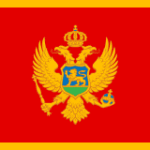 MontenegroScored on the same twelve pillars as Finland.62
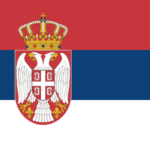 SerbiaScored on the same twelve pillars as Finland.58