Destinations › Europe · The Destination Index · universal template · every figure sourced
Switzerland.
Central Europe, east of France, north of Italy. 41,277 sq km and 9,092,436 people, landlocked, with no coastline at all, temperate, but varies with altitude; cold, cloudy, rainy/snowy winters; cool to warm, cloudy, humid summers with occasional showers.
Region · EuropePopulation · ~9,092,436Languages · German and Swiss German, French, Italian, Romansh. All four officialEco Index · 75/100 · Good
The Eco Index across 12 pillars · scored 0 to 5 · World Bank, OWID, WHO/UNICEF JMP, FiBL, Protected Planet, IUCN, UNESCO (2023-24)
Conservation
Wildlife
Water
Food & farming
Organic & clean
Climate & energy
Waste
Health
Heritage
Ownership
Governance
Future
The History of Switzerland.
Switzerland keeps an unusually vibrant living folk heritage for a wealthy, modern nation. Yodelling, sung by around 12,000 members of hundreds of yodelling clubs, joined UNESCO's Intangible Cultural Heritage list in 2025, while the alphorn and Ländler music are carried on Switzerland's own national List of Living Traditions, while Schwingen (Alpine wrestling) and Hornussen remain widely practised.
Where the name comes from
Schweiz, Suisse, Svizzera and Svizra in its four languages, all from Schwyz, one of the founding cantons of 1291. Source: UK Permanent Committee on Geographical Names toponymic factfile.
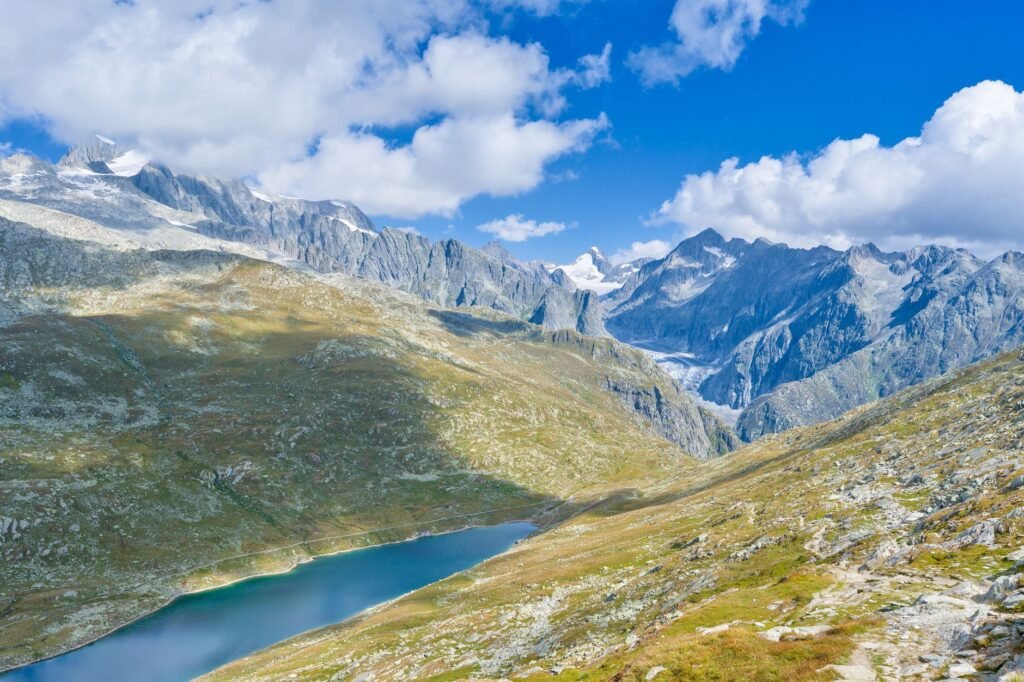
The land itself: mountainous for the most part, the Alps to the south and the Jura to the north west, with a central plateau of rolling hills, plains and large lakes. Its high point is Dufourspitze on Monte Rosa, 4,634 m. Source: Bundesamt für Landestopografie, the national mapping agency, with the UK Permanent Committee on Geographical Names.
Where it starts
Lakes that preserve wood
The cave of Kesslerloch near Thayngen, occupied around 15,000 to 12,000 BC, is among the most important late Ice Age sites in Europe, with engraved bone and antler. From about 5000 BC settlements were built on posts at the edges of lakes and wetlands, and 56 of the 111 UNESCO-listed pile dwelling sites are in Switzerland. Because waterlogged ground preserves wood and fibre, these sites produced the earliest wheels preserved anywhere in Europe, in use from around 3400 BC, along with exceptionally well preserved Stone Age textiles woven from bast and flax.
How it got here
Confederation to federal state
Iron Age Hallstatt and La Tene cultures spread across the plateau, with La Tene itself named after a site on Lake Neuchatel. The Helvetii were recorded by Rome from 58 BC and the plateau became Roman, giving the country its Latin name. An alliance between valley communities in 1291 began the Swiss Confederation, and a federal constitution created the modern state in 1848. The International Committee of the Red Cross was founded in Geneva in 1863. Women gained the federal vote in 1971.
The timeline
c. 15,000 to 12,000 BC
Kesslerloch.
A cave near Thayngen with engraved bone and antler, among the most important late Ice Age sites in Europe. ↗
c. 5000 to 500 BC
The pile dwellings.
Settlements built on posts at the edges of lakes and wetlands. Fifty-six of the 111 UNESCO-listed sites are in Switzerland. ↗
c. 3400 BC
Wheels and textiles.
Wooden wheels with axles from the lake settlements are the earliest preserved anywhere in Europe and were in use from around 3400 BC, and the same waterlogged ground preserved Stone Age textiles of bast and flax that rank among the finest surviving anywhere. ↗
c. 800 to 450 BC
Hallstatt and La Tene.
Iron Age cultures spread across the plateau, with La Tene itself named after a site on Lake Neuchatel. ↗
58 BC onward
Helvetii and Rome.
The Helvetii are recorded by Rome, and the plateau becomes Roman, giving the country its Latin name. ↗
1291
The confederation.
An alliance between valley communities begins the Swiss Confederation. ↗
1848
Federal state.
A federal constitution in 1848 creates the modern Swiss state, replacing a loose confederation with a federal government while leaving the cantons substantial power. ↗
1863
The Red Cross.
The International Committee of the Red Cross is founded in Geneva. ↗
1971
Votes for women, at last.
A federal referendum on 7 February 1971 approves votes for women, with 65.7% in favour. Support was not even: in Appenzell Innerrhoden only 28.7% of men voted yes, and women there did not get the cantonal vote until the Federal Supreme Court ruled in 1990. ↗
About 12.5% of Swiss land is protected (World Bank, 2025), anchored by the strictly protected Swiss National Park and a network of regional nature parks. Protection is well enforced but modest in extent for a wealthy Alpine country, and strictly protected wilderness is limited.
Is wild Switzerland protected? 12.5% of the land is, against a 30% target for 2030
How protected is nature in Switzerland?
Forest cover32.4%
Terrestrial protected area12.5%
44 (mammals, birds, fish & plants) listed as threatened.
Critically Endangered, the last IUCN category before Extinct in the Wild, and still recorded in Switzerland. GBIF holds 1 verified occurrence records.
Anguilla anguilla
Critically Endangered, the last IUCN category before Extinct in the Wild, and still recorded in Switzerland. GBIF holds 1 verified occurrence records.
Vanellus gregarius
Critically Endangered, the last IUCN category before Extinct in the Wild, and still recorded in Switzerland. GBIF holds 1 verified occurrence records.
Species named here are drawn from GBIF occurrence records for Switzerland filtered to the IUCN Red List threatened categories. Species are listed where GBIF holds occurrence records for them in this country. Record counts are not published here because the figure cannot be reproduced from a public GBIF query.
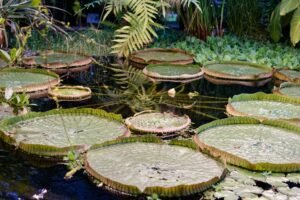
Botanical garden in Geneva, mapped and named in the open record for Switzerland. OpenStreetMap.
Water and Ocean in Switzerland.
Known as the water tower of Europe, Switzerland holds Alpine lakes, glaciers and the headwaters of the Rhine and Rhone, and draws roughly four-fifths of its drinking water from springs and groundwater. Safely managed supply reaches about 97% of people (World Bank, 2024) and tap water, including the countless public fountains, is famously drinkable everywhere.
Does Switzerland have enough fresh water? Yes, with headroom
96.7% of people here have safely managed drinking water at home (2024, WHO/UNICEF JMP). Tap water is safe for a visitor nearly everywhere.
Cleanest water: Alpine lakes and springs such as Lake Brienz and the Engadin.
How much fresh water does Switzerland have, per person?
4,603 m³
Switzerland
1,000 m³
the UN “water scarce” line
Switzerland withdraws about 1,704 million cubic metres of fresh water a year (2022). That is 6.5% of the fresh water actually available to it, which FAO counts as no water stress. Of what is taken, farming takes 9%, homes and towns 54%, industry 37%. Source: FAO AQUASTAT.
Which beaches in Switzerland are named on the open map?
Named on the open map: Hundemätteli / Plage des pauvres, Plage ONU, Plage de Corbières, Plage de Founex, Plage de La Dullive, Plage de Pont-la-Ville, Plage de Saint-Aubin, Plage de St-Saphorin. That is 14 named beaches in the public record for Switzerland, each one a place you can look up before you go. OpenStreetMap.
Where does the sewage go?
99.7%
of people have safely managed sanitation
99.7% of people here use a safely managed sanitation service, meaning waste is contained, emptied and treated rather than reaching the ground or the sea untreated (2024, World Bank / WHO-UNICEF JMP, SDG 6.2.1). That is close to universal coverage.
Is the tap water safe in Switzerland?
96.7% of people have safely managed drinking water at home (2024, WHO/UNICEF JMP). Renewable fresh water works out at about 4,603 cubic metres per person a year (World Bank).
How hard is the water supply being pushed?
Of every 10 buckets nature refills, 1 are already taken. Withdrawals run at 6.5% of what Switzerland renews internally each year (2022, World Bank / FAO AQUASTAT). That is inside the 25% mark generally treated as water stress, so the supply has headroom.
When is the best time to visit Switzerland? Tap your month.
Tap your month.
JanFebMarAprMayJunJulAugSepOctNovDec
.
How much fresh water does Switzerland actually have?
Nature renews about 4,603 cubic metres of fresh water per person per year here. That ranks Switzerland 134 of 208 countries measured, putting it in the wetter half of the world. The UN treats anything under 1,000 cubic metres as water scarce, and this is above that line. World Bank / FAO AQUASTAT.
Switzerland sustains a high-quality farm sector, especially dairy and cheese, supported by direct payments, but its mountainous terrain limits arable land and it imports around half of the food it consumes. No verified precise import figure was found. Local food culture and short supply chains are nonetheless strong.
Where does the food in Switzerland come from?
4.6% imported
about US$23,547m a year
On the plate: Potatoes (rosti), bread, seasonal vegetables and chocolate.
How often each food is on the plate
Share of people eating each one regularly. These overlap, so they do not add up to 100%.
Bread33%
Seasonal vegetables15%
1 of 10
bites are imported
The island buys in more food energy than it eats. About US$23,547m a year leaves the country to pay for it. The green slice is roughly what still grows here.
Food is 4.6% of everything Switzerland imports (2024, World Bank). Farming itself is 0.6% of the economy and 37.8% of the land is agricultural, of which 10% is arable. The green slice is roughly what still grows here.
What is killing people in Switzerland? The imported diet.
Cause of death, and the diet behind it.
Non-communicable diseases, all combined82.1%
Diabetes5.3%
Adults living with overweight or obesity. 40.6%.
Can Switzerland feed itself?
10.0%
Arable land
37.8%
Agricultural land
115,802
Farmers
979,576
Arable acres
0.6%
Agriculture, share of GDP
Harvest: Grape harvest September to October; alpine cheese made over the summer alpage.
Feeding itself
Switzerland sustains a high-quality farm sector, especially dairy and cheese, supported by direct payments, but its mountainous terrain limits arable land and it imports around half of the food it consumes. No verified precise import figure was found.
Certification
About 18% of agricultural land is farmed organically (Eurostat, 2024 data), among the highest shares in Europe, supported by strong domestic demand and retailer standards.
Water for crops
Known as the water tower of Europe, Switzerland holds Alpine lakes, glaciers and the headwaters of the Rhine and Rhone, and draws roughly four-fifths of its drinking water from springs and groundwater. Safely managed supply reaches about 97% of people (World Bank, 2024) and tap water, including the countless public fountains, is famously drinkable everywhere.
Why the organic number looks like that. Certified-organic farmland is not separately reported for Switzerland, and that is a certification gap rather than proof nothing is grown cleanly. What the official land record does show: 37.8% of the country is agricultural land and 10% is arable (2023, World Bank). Certification is paid for per farm per year by a foreign body, which prices out smallholders, so the organic number reads worse than the practice.
What actually grows here
Sugar beetsWheatPotatoesApplesBarleyMaizeGrapes
The food that already fits
The plant-based kitchen here is not an import. By tonnage, the largest crops grown in Switzerland are sugar beet, potatoes, wheat and apples (FAO, FAOSTAT crop production, 2024). That is what the land itself puts on a plate.
Switzerland runs one of the cleanest electricity systems in the world, with about 95% low-carbon generation: hydropower supplies roughly 57%, nuclear about 32%, and solar and other new renewables the rest, leaving fossil fuels at only around 2%. Territorial CO2 emissions are moderate at about 3.8 tonnes per person, though the country's consumption-based footprint is considerably higher because much of what it uses is manufactured abroad. Switzerland has enshrined a legally binding net-zero-by-2050 goal through its Climate and Innovation Act, approved by referendum in 2023. Renewable electricity in the 60 to 90% range and low-to-moderate emissions earn a high band, while nuclear dependence and a large imported carbon footprint keep it short of a 5.
What powers Switzerland?
Renewable 67.8%Fossil 2.3%
Climate pollution per person
The safe amount, what the planet can absorb
2 tonnes
One person here
3.75 tonnes
The world average, for comparison
4.7 tonnes
The worst it ever got
7.55 tonnes
The grid
Switzerland runs one of the cleanest electricity systems in the world, with about 95% low-carbon generation: hydropower supplies roughly 57%, nuclear about 32%, and solar and other new renewables the rest, leaving fossil fuels at only around 2%. Territorial CO2 emissions are moderate at about 3.8 tonnes per person, though the country's consumption-based footprint is considerably higher because much of what it uses is manufactured abroad.
Pollution
Air is very clean at about 8.7 micrograms of fine particles per cubic metre (AQLI, 2022) and litter is famously low, with near-zero landfill because non-recycled waste is incinerated for energy. Switzerland relies on charges, deposits and recycling rather than outright plastic bans.
Water stress
Known as the water tower of Europe, Switzerland holds Alpine lakes, glaciers and the headwaters of the Rhine and Rhone, and draws roughly four-fifths of its drinking water from springs and groundwater. Safely managed supply reaches about 97% of people (World Bank, 2024) and tap water, including the countless public fountains, is famously drinkable everywhere.
What pollutes most here
1The gridThe share of electricity still generated from fossil fuel.32.1%
2IndustryIntensive lowland dairy with nitrogen run-off, and heavy road freight transiting Alpine valleys..named
3AirModelled annual mean against a WHO guideline of 5 µg/m³.8.7
4On the recordAir is very clean at about 8.7 micrograms of fine particles per cubic metre (AQLI, 2022) and litter is famously low, with near-zero landfill because non-recycled waste is incinerated for energy.
What has Switzerland promised on climate?
Net zero, whole economy2050
Electricity renewable today67.9% (2021)
Land protected, against a 30% target12.5% by 2025
The net-zero target year on file with Climate Watch is 2050, status: in law; in policy document. Measured against it, 67.9% of electricity is already renewable (2021, World Bank), so 32.1% of the grid is still to be converted. The pledge on file is measured here against what has actually been delivered, not taken on its own (UNFCCC NDC Registry, CBD Kunming-Montreal Target 3).
The biggest line item
One return flight against a whole year of living.
A resident's entire year3.75 t CO2e
Safe-climate budget, per year2 t CO2e
Sydney return, economy3 t CO2e
Singapore return, economy1.87 t CO2e
Los Angeles return, economy1.72 t CO2e
Johannesburg return, economy1.51 t CO2e
New York return, economy1.13 t CO2e
How much CO2 does flying to Switzerland emit?
Tap where you would fly from. One return flight, economy.
Every prompt runs on a machine in a building on somebody’s grid. What that costs the planet depends less on the prompt than on what is burning to power it. Here is what would power one in Switzerland.
Data centres
78
Registered colocation and interconnection facilities, PeeringDB, 2026
Grid renewable
67.8 %
What a machine here runs on.
What powers a data centre in Switzerland?
A machine here runs mostly on renewables, but not entirely.
Renewable 67.8%Fossil 32.2%
Cooling water. Every one of those halls runs on the national grid, which is 67.9% renewable today (World Bank). A data centre is only as clean as the electricity behind it, so the same figure that decides this country's climate score also decides the footprint of the AI running inside it. Cooling water use is not separately published by facility, and no operator here reports it.
The rules. Switzerland has 78 colocation and interconnection facilities on the public PeeringDB register, concentrated in Zurich (8), Winterthur (5), Meyrin (3), alongside 15 internet exchanges (Equinix Zurich, CIXP, SwissIX, GE-CIX). Named sites include Digital Realty Zurich ZUR1, Equinix ZH2 - Zurich, LAN Services AG - Communication Center cc.ch, IWB Datacenter Basel.
43% residents to 57% visitors across a year. 11,818,000 international arrivals in 2019 against 9,092,436 people who live here (2025, World Bank / UN Tourism).
Where a visitor dollar goes in Switzerland
11,818k
Visitors a year
1.3
Visitors per resident
How deep in debt is Switzerland?· for every $100 Switzerland earns in a year, it owes…
Pay to the order of: the creditorsmemo · the 2004 peak
$ 57The worst year on the IMF record. Switzerland owed $57 for every $100 it earned.
IMF World Economic Outlook, 2004signed, the creditors
Pay to the order of: the creditorsmemo · today
$ 38What is owed now, for every $100 of national income (2026).
IMF World Economic Outlook, 2026signed, the creditors
Pay to the order of: the creditorsmemo · projected 2031
$ 34The IMF's own forecast has this falling to $34 by 2031.
IMF World Economic Outlook projection, 2031signed, the forecast
For every $100 Switzerland earns in a year, it owes $38 (2026, IMF World Economic Outlook). The interest on that is paid before schools, clinics or coastline get their turn.
Where does a tourist dollar actually go in Switzerland?
Play one tourist dollar around the board. Every square is a measured fact from this page.
START!
1
GO: a visitor lands
$100 goes on the table. 11,818,000 international arrivals in 2019 against 9,092,436 residents, 1.3 visitors for every resident (World Bank / UN Tourism).
$100 in play
2
The bed
Who owns the largest places to stay in Switzerland is not published in the records we can check, so this square is left open rather than guessed. Where a listing names its owner, it is shown in the ownership table below.
not published
3
The plate
Food is only 4.6% of everything Switzerland imports (2024, World Bank), so most of a meal is bought from producers inside the country. Eating what the land here actually grows, sugar beets, wheat, potatoes, apples, barley, maize, grapes, keeps that money with the grower.
mostly home-grown
4
The power
67.9% of the electricity is renewable (2021, World Bank), so the energy on the bill is mostly generated inside the country rather than shipped in.
made at home
5
What actually stays
Of the two parts of a visitor's bill that can be measured here, the plate and the power stay inside Switzerland. This is not an economy where a visitor's money drains away, and the board is shorter for it.
most of it
6
Pay the bank first
Switzerland owes $38 for every $100 it earns (IMF World Economic Outlook, 2026 projection). The interest is paid before anything else on this board.
$38 per $100
7
No plan B
30.2% of everything Switzerland sells abroad is pearls, gemstones and precious metals (2023, UN Comtrade). One market moving takes the whole board with it.
30.2% one export
8
Community chest
Tourism earns 2.1% of everything Switzerland makes from exports (2020, World Bank / UN Tourism). That is how much of the economy depends on the game continuing.
2.1% of exports
9
The flight
Getting here is usually the biggest single line on the bill. From Sydney a return economy seat is 3.00 t CO2, on the UK Government's published conversion factors. It is the one part of the trip this board cannot reduce.
3.00 t CO2
10
Back to GO
The economy turns over about US$1,147 billion a year (IMF World Economic Outlook, 2026 projection). Every lap of this board is a choice about how much of it stays.
US$1,147bn
GDPUS$1,043.5bn
Agriculture, share of GDP0.6%
Visitors a year11,818,000
Visitors per resident1.3
Residents~9,092,436
Agriculture
Farming is 0.6% of the economy. Switzerland sustains a high-quality farm sector, especially dairy and cheese, supported by direct payments, but its mountainous terrain limits arable land and it imports around half of the food it consumes.
Natural materials
Switzerland keeps heritage textile traditions, notably the world-renowned St Gallen embroidery still used in haute couture, along with wool loden and a historic silk industry around Zurich. These survive largely as specialist industry rather than everyday craft.
Energy
Switzerland runs one of the cleanest electricity systems in the world, with about 95% low-carbon generation: hydropower supplies roughly 57%, nuclear about 32%, and solar and other new renewables the rest, leaving fossil fuels at only around 2%. Territorial CO2 emissions are moderate at about 3.8 tonnes per person, though the country's consumption-based footprint is considerably higher because much of what it uses is manufactured abroad.
Who owns the biggest hotels in Switzerland?
By rooms · company records and press.
Walliserhof Grand-Hotel & Spa · ~74 roomsIndependentnot published
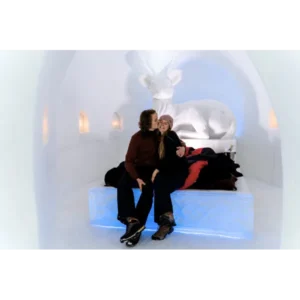
Igloo Village Gstaad · ~11 roomsCorporatenot published
Walliserhof Grand-Hotel & Spa · ~74 roomsIndependentnot published
Visitors, over time
20149,158k
20159,305k
201610,402k
201711,133k
201811,715k
201911,818k
International tourism receipts run at about US$9.99 billion in 2020 (World Bank / UN Tourism). That is 2.1% of everything the country earns from exports.
How much of your money actually stays here?
Tap the holiday you are planning.
All-inclusive resortForeign-owned hotel and tourist restaurantsLocally owned stay and local restaurantsGuesthouse, markets and public transport
Resort guest, villa renter, family, nomad or backpacker. The honest playbook for each, from the same sourced numbers.
Already booked a resort? · the rescue list
Five swaps that move your money back on-island
1. Eat where the country eats Choose kitchens cooking what the land here grows, sugar beets, wheat, potatoes, apples, barley, maize and grapes, over an imported menu. The checked list →
2. Book with a local operator Never the lobby desk. The margin on a tour is the part that stays. Eco tours →
3. Stay somewhere locally owned Ownership decides where the room rate books. Eco stays →
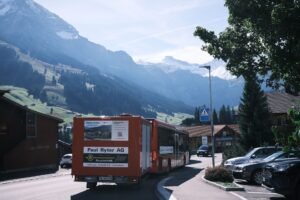
4. Use the transport residents use A world-class integrated network of trains, PostBuses, boats and cable cars, easiest with a Swiss Travel Pass.
5. Buy the craft, not the souvenir Natural-materials work made here pays the maker directly; imported gifts pay a shipping line.
swipe →
First time here
Switzerland leads on water, organic farming and recycling but imports about half its food and protects relatively little land.
Best time: Summer for hiking and lakes; winter for snow sports.
Getting around
A world-class integrated network of trains, PostBuses, boats and cable cars, easiest with a Swiss Travel Pass.
Transport is where the fare either stays or leaves.
Eating here
The everyday plate that actually grows here is sugar beets, wheat, potatoes, apples, barley, maize and grapes. Ordering those keeps the money with the grower and cuts the imported share of the meal.
Eating what the country grows is the cheapest way to cut the import bill.
Good to know
Cards everywhere; CHF. Punctuality is sacred; German, French and Italian are all spoken.
Rate my hotel. Tap yours for the honest verdict.
Ownership from company records and press.
Walliserhof Grand-Hotel & SpaIgloo Village GstaadWalliserhof Grand-Hotel & Spa
None of the 3 properties listed here publishes who ultimately owns it, so no claim is made either way. Ownership is what decides how much of a room rate stays in the country, which is why we show it when a listing states it.
Society and Governance in Switzerland.
How well is Switzerland actually run?
Governance, measured · World Bank WGI
Four measured answers, none of them opinion. Averaged across corruption control, delivery and accountability, Switzerland scores 87 out of 100 (2024, World Bank Worldwide Governance Indicators). That is a state that generally does what it says it will do, which is what makes a climate pledge worth reading.
How well is Switzerland run? · each scored out of 100, higher is better
Clean government, scored 89 of 100
Control of corruption scores 88.5 out of 100 (2024, World Bank Worldwide Governance Indicators). That puts it in the cleanest quarter of governments measured.
89
Freedom and rights, scored 86 of 100
Voice and accountability, which measures free expression, free media and the ability to choose a government, scores 85.6 out of 100 (2024, World Bank WGI). Citizens here can question their government openly.
86
Government effectiveness, scored 87 of 100
Government effectiveness, which measures the quality of public services and how well policy is actually delivered, scores 87.1 out of 100 (2024, World Bank WGI). Delivery is rated among the strongest measured.
87
Income equality, scored 34 of 100
The Gini index of income inequality reads 33.8 (2022, World Bank). Zero is perfect equality and 100 is one person holding everything. Below 40 is the level usually treated as manageable, and Switzerland sits inside it.
34
LGBTQ+ status: HighSolo female travel: EasyIndustry to avoid: Intensive lowland dairy with nitrogen run-off, and heavy road freight transiting Alpine valleys.
What is daily life in Switzerland really like? Measured
Getting around, breathing, throwing away, learning. The honest checklist.
TransportAirWaterWastePower
✓How you get around A world-class integrated network of trains, PostBuses, boats and cable cars, easiest with a Swiss Travel Pass.
✓Air quality, measured Modelled annual mean 8.7. The WHO guideline is 5 µg/m³.
✓Where the air is cleanest High Alpine valleys such as the Engadin and the Jungfrau region.
✓Tap water Varies
✓What to drink Municipal supplies are drinkable in cities and towns; mountain springs are widely bottled for taste.
✓Plastic rules No national ban; retailers charge for bags and rely on deposits and recycling.
✓Sockets and voltage Type C/F, 230V
Made in Switzerland.
Switzerland keeps heritage textile traditions, notably the world-renowned St Gallen embroidery still used in haute couture, along with wool loden and a historic silk industry around Zurich. These survive largely as specialist industry rather than everyday craft. Every step of processing done at home is value that stops leaving the country.
What Switzerland actually sells the world
The single biggest thing Switzerland sells the world is pearls, gemstones and precious metals, 30.2% of all exports in 2023 (about US$126.98 billion, UN Comtrade). The next four are pharmaceuticals at 23.6%, organic chemicals at 9.6%, clocks and watches at 7.1%, machinery and mechanical appliances at 6.2%.
Sells now · 30.2% of exports
Pearls, gemstones and precious metals
Pearls, gemstones and precious metals is 30.2% of everything Switzerland sold abroad in 2023, worth about US$126.98 billion. UN Comtrade.
Sells now · 23.6% of exports
Pharmaceuticals
Pharmaceuticals is 23.6% of everything Switzerland sold abroad in 2023, worth about US$99.01 billion. UN Comtrade.
Sells now · 9.6% of exports
Organic chemicals
Organic chemicals is 9.6% of everything Switzerland sold abroad in 2023, worth about US$40.30 billion. UN Comtrade.
Sells now · 7.1% of exports
Clocks and watches
Clocks and watches is 7.1% of everything Switzerland sold abroad in 2023, worth about US$29.76 billion. UN Comtrade.
Sells now · 6.2% of exports
Machinery and mechanical appliances
Machinery and mechanical appliances is 6.2% of everything Switzerland sold abroad in 2023, worth about US$25.84 billion. UN Comtrade.
Could make · grown here already
Cheese (raclette
Grown in Switzerland and mostly sold raw. Processing it here would keep the margin here.
Could make · grown here already
Fondue
Grown in Switzerland and mostly sold raw. Processing it here would keep the margin here.
Could make · grown here already
Potatoes (rosti)
Grown in Switzerland and mostly sold raw. Processing it here would keep the margin here.
The maths for an entrepreneur. Switzerland produces about US$1,044 billion a year, which is roughly US$114,769 per person (2025, World Bank). Farming is 0.6% of that, while food is 4.6% of everything the country imports. The country buys in more food than its own farms contribute to the economy, and every point of that gap is a business someone could build here rather than ship in. With 10% of the land arable, the raw material for that is already in the ground.
A living tradition of Switzerland, still practised rather than archived.
Alphorn
A living tradition of Switzerland, still practised rather than archived.
Ländler music
A living tradition of Switzerland, still practised rather than archived.
Schwingen (Alpine wrestling)
A living tradition of Switzerland, still practised rather than archived.
HornussenA living tradition of Switzerland, still practised rather than archived.
Alpine pasture seasonA living tradition of Switzerland, still practised rather than archived.
Does Switzerland protect its heritage by law?
Partly, and the gaps say as much as the protections.
What is kept alive. Switzerland keeps an unusually vibrant living folk heritage for a wealthy, modern nation. Yodelling, sung by around 12,000 members of hundreds of yodelling clubs, joined UNESCO's Intangible Cultural Heritage list in 2025, while the alphorn and Ländler music are carried on Switzerland's own national List of Living Traditions, while Schwingen (Alpine wrestling) and Hornussen remain widely practised. The Alpine pasture season, in which farmers still drive cattle to high summer pastures and back in the Alpabzug, is living pastoral practice recognised by UNESCO, and Basel's Fasnacht carnival and the Lötschental's Tschäggättä masked processions carry older seasonal traditions.
Who it belongs to. Living Alpine culture endures across four language regions, with working transhumance (alpage) dairy traditions, mountain festivals and strong local identity, and much mountain tourism supports rural communities through farms and huts. The top resorts such as Zermatt and St Moritz are high-end, so benefits are uneven.
Only here. The Swiss National Park, founded in 1914, the oldest national park in the Alps and a strict wilderness reserve where nature is left entirely alone..
Three futures for Switzerland, every one run forward from measured data.
Where the making actually happens
Named craft workshops on the open map: Abraxas Basel GmbH, Art'traction, Atelier MGK, Atelier Verrerie D'Art, Atelier de dessin de la Calabrr, Au Coeur du Patchwork.
Every measured trend on one line
Run forward at the pace already recorded.
+9%
Forest cover
1995: 29.7 % → 2023: 32.4 %
+20%
Renewable electricity
1995: 56.7 % → 2021: 67.9 %
-41%
CO2 per person
1995: 6.33 t → 2024: 3.75 t
+70%
Tourist arrivals
1995: 6946 k → 2019: 11818 k
-50%
Protected land
2013: 24.8 % → 2025: 12.5 %
-53%
Farm workforce
1995: 4.74 % → 2025: 2.24 %
-6%
Agricultural land
1995: 40 % → 2023: 37.8 %
+20%
Urban population
1995: 71.5 % → 2025: 85.7 %
-64%
Air pollution
1995: 23.1 µg/m³ → 2023: 8.3 µg/m³
-20%
Fresh water per person
1995: 5738.1 m³ → 2022: 4602.9 m³
+0%
Adult overweight
1995: 40.4 % → 2022: 40.6 %
+0%
Electricity access
1995: 100 % → 2024: 100 %
+126%
GDP per person
1995: 50869 → 2025: 114769
+29%
Population
1995: 7041 k → 2025: 9092 k
+57%
Renewable energy use
1995: 17.6 % → 2021: 27.7 %
-27%
Energy per person
1995: 3406 kg → 2024: 2492 kg
-50%
Protected area, total
2013: 24.8 % → 2025: 12.5 %
+8%
Life expectancy
1995: 78.4 yrs → 2024: 84.4 yrs
-6%
Cereal yield
1995: 6069 ha → 2023: 5706 ha
-55%
Fertiliser use
1995: 319.8 ha → 2023: 142.7 ha
-50%
Rural population
1995: 28.5 % → 2025: 14.3 %
+160%
Water productivity
1995: 185.3 $/m3 → 2022: 480.9 $/m3
+28%
Health spending
2000: 9.1 % → 2023: 11.7 %
+9%
Forest area
1995: 11748 km2 → 2023: 12794 km2
-2%
Electric power use
1995: 7283 kWh → 2024: 7117 kWh
-22%
Emissions: Agriculture
1990: 7.36 e → 2023: 5.72 e
-44%
Emissions: Building
1990: 16.8 e → 2023: 9.4 e
+24%
Emissions: Electricity/Heat
1990: 2.52 e → 2023: 3.12 e
-24%
Emissions: Energy
1990: 41.9 e → 2023: 31.8 e
+10%
Emissions: Industrial Processes
1990: 3.31 e → 2023: 3.64 e
-45%
Emissions: Manufacturing/Construction
1990: 6.71 e → 2023: 3.71 e
-0%
Emissions: Transportation
1990: 14.9 e → 2023: 14.9 e
World Bank open data, recorded series
How much forest is left?
Forest cover moved from 29.7% to 32.4% across 28 recorded years.
World Bank AG.LND.FRST.ZS
How clean is the grid?
Renewable electricity moved from 56.7% to 67.9% across 26 recorded years.
World Bank EG.ELC.RNEW.ZS
How much climate pollution per person?
CO2 per person moved from 6.3 t to 3.7 t across 29 recorded years.
World Bank EN.GHG.CO2.PC.CE.AR5
How many people visit?
Tourist arrivals moved from 6946k to 11818k across 24 recorded years.
World Bank ST.INT.ARVL
How much land is protected?
Protected land moved from 24.8% to 12.5% across 12 recorded years.
World Bank ER.LND.PTLD.ZS
How many people still farm?
Farm workforce moved from 4.7% to 2.2% across 30 recorded years.
World Bank SL.AGR.EMPL.ZS
How much land is farmed?
Agricultural land moved from 40.0% to 37.8% across 28 recorded years.
World Bank AG.LND.AGRI.ZS
How fast is it urbanising?
Urban population moved from 71.5% to 85.7% across 30 recorded years.
World Bank SP.URB.TOTL.IN.ZS
Is the air getting cleaner?
Air pollution moved from 23.1 µg/m³ to 8.3 µg/m³ across 28 recorded years.
World Bank EN.ATM.PM25.MC.M3
Is water getting scarcer?
Fresh water per person moved from 5738.1 m³ to 4602.9 m³ across 27 recorded years.
World Bank ER.H2O.INTR.PC
Is diet-related disease rising?
Adult overweight moved from 40.4% to 40.6% across 27 recorded years.
World Bank SH.STA.OWAD.ZS
Who has power?
Electricity access moved from 100.0% to 100.0% across 29 recorded years.
World Bank EG.ELC.ACCS.ZS
Is income rising?
GDP per person moved from 50869 to 114769 across 30 recorded years.
World Bank NY.GDP.PCAP.CD
How fast is it growing?
Population moved from 7041k to 9092k across 30 recorded years.
World Bank SP.POP.TOTL
What share of all energy is renewable?
Renewable energy use moved from 17.6% to 27.7% across 26 recorded years.
World Bank EG.FEC.RNEW.ZS
How much energy does one person use?
Energy per person moved from 3406 kg to 2492 kg across 29 recorded years.
World Bank EG.USE.PCAP.KG.OE
How much land and sea is protected together?
Protected area, total moved from 24.8% to 12.5% across 12 recorded years.
World Bank ER.PTD.TOTL.ZS
How long do people live?
Life expectancy moved from 78.42 yrs to 84.41 yrs across 29 recorded years.
World Bank SP.DYN.LE00.IN
How much does a hectare of cereal produce?
Cereal yield moved from 6069 kg/ha to 5706 kg/ha across 28 recorded years.
World Bank AG.YLD.CREL.KG
How much fertiliser goes on the land?
Fertiliser use moved from 319.79 kg/ha to 142.7 kg/ha across 28 recorded years.
World Bank AG.CON.FERT.ZS
How many people still live rurally?
Rural population moved from 28.47% to 14.27% across 30 recorded years.
World Bank SP.RUR.TOTL.ZS
How much value per cubic metre of water?
Water productivity moved from 185.3 $/m3 to 480.89 $/m3 across 27 recorded years.
World Bank ER.GDP.FWTL.M3.KD
How much goes on health?
Health spending moved from 9.13% to 11.69% across 23 recorded years.
World Bank SH.XPD.CHEX.GD.ZS
How much forest is there in total?
Forest area moved from 11748 km2 to 12794 km2 across 28 recorded years.
World Bank AG.LND.FRST.K2
How much electricity per person?
Electric power use moved from 7283 kWh to 7117 kWh across 29 recorded years.
World Bank EG.USE.ELEC.KH.PC
How have agriculture emissions moved?
Agriculture emissions moved from 7.36 to 5.72 MtCO2e across 33 recorded years.
Climate Watch (WRI), historical emissions
How have building emissions moved?
Building emissions moved from 16.76 to 9.41 MtCO2e across 33 recorded years.
Climate Watch (WRI), historical emissions
How have electricity/heat emissions moved?
Electricity/Heat emissions moved from 2.52 to 3.12 MtCO2e across 33 recorded years.
Climate Watch (WRI), historical emissions
How have energy emissions moved?
Energy emissions moved from 41.94 to 31.81 MtCO2e across 33 recorded years.
Climate Watch (WRI), historical emissions
How have industrial processes emissions moved?
Industrial Processes emissions moved from 3.31 to 3.64 MtCO2e across 33 recorded years.
Climate Watch (WRI), historical emissions
How have manufacturing/construction emissions moved?
Manufacturing/Construction emissions moved from 6.71 to 3.71 MtCO2e across 33 recorded years.
Climate Watch (WRI), historical emissions
How have transportation emissions moved?
Transportation emissions moved from 14.93 to 14.86 MtCO2e across 33 recorded years.
Climate Watch (WRI), historical emissions
Worst caseCurrent pathBest case
Worst case
Every measured decline continues at the pace already recorded. The weakest pillar, wildlife at 2/5, is the one that gives way first.
Computed from: recorded series extended with no policy change
Current path
Every line above is a recorded World Bank series for this country. The current path is simply those series continuing at the pace already measured.
Computed from: recorded series, no policy change assumed
Best case
The pledges are met on their own stated timetables and the weakest pillars are lifted to match the strongest. Switzerland already shows it can do this: water scores 5/5.
Computed from: each published target delivered on its own date
What the best case actually asks for
Lift wildlife
It scores 2 out of 5 today, among the weakest parts of Switzerland's record. The Alps hold iconic wildlife such as the ibex, chamois, marmot and golden eagle, and Switzerland has run successful reintroductions of the bearded vulture and Eurasian lynx, with wolves and the occasional bear now returning. Strict endemism is low because most species range across the wider Alps. Lifting it toward the 5/5 the strongest pillars already reach is what the best case turns on.
measured each year
Costs: spending and enforcement, not new technology
Lift conservation
It scores 3 out of 5 today, among the weakest parts of Switzerland's record. About 12.5% of Swiss land is protected (World Bank, 2025), anchored by the strictly protected Swiss National Park and a network of regional nature parks. Protection is well enforced but modest in extent for a wealthy Alpine country, and strictly protected wilderness is limited. Lifting it toward the 5/5 the strongest pillars already reach is what the best case turns on.
measured each year
Costs: spending and enforcement, not new technology
Lift food and farming
It scores 3 out of 5 today, among the weakest parts of Switzerland's record. Switzerland sustains a high-quality farm sector, especially dairy and cheese, supported by direct payments, but its mountainous terrain limits arable land and it imports around half of the food it consumes. No verified precise import figure was found. Local food culture and short supply chains are nonetheless strong. Lifting it toward the 5/5 the strongest pillars already reach is what the best case turns on.
measured each year
Costs: spending and enforcement, not new technology
Government and Goals in Switzerland.
Who is in charge of Switzerland now · Office-holders from the UN Protocol and Liaison Service public list of Heads of State and Heads of Government, 8 September 2026. Legislature and election dates from IFES ElectionGuide. Constitution dates from the Constitute Project. Governance scores from the World Bank Worldwide Governance Indicators 2024.
Guy Parmelin
President of the Swiss Confederation
Guy Parmelin is the head of government of Switzerland, in office since 1 January 2026. Every climate, protection and energy pledge on this page is delivered, or not, under this administration.
Public opinion, measured
Voice and accountability, the freedom to question government: 85.6 / 100. Among the strongest measured. World Bank WGI 2024
Control of corruption: 88.5 / 100. Among the strongest measured. World Bank WGI 2024
Political stability and absence of violence: 82.6 / 100. Among the strongest measured. World Bank WGI 2024
Rule of law: 87.3 / 100. Among the strongest measured. World Bank WGI 2024
Regulatory quality: 82.8 / 100. Among the strongest measured. World Bank WGI 2024
Guy ParmelinPresident of the Swiss Confederation
Federal Assembly (Bundesversammlung, Assemblée fédérale, Assemblea fLegislature, bicameral
Last election22 October 2023
Constitution1999, as revised to 2014
Government typefederal republic (formally a confederation)
Switzerland national goals: climate commitments on record · as recorded by Climate Watch, World Resources Institute
2050
Net zero
In Law<br>In Policy Document
Net-zero target as recorded by Climate Watch. Status: In Law (6/18/2023) In Policy Document (1/29/2025, 11/13/2024, 8/28/2019) ↗
The questions people actually type, answered in full sentences from the sourced data above.
swipe →
Is Switzerland sustainable?
Switzerland scores 75 out of 100 on the Throne Eco Index, across twelve equally weighted pillars. Switzerland leads on water, organic farming and recycling but imports about half its food and protects relatively little land.
Is the water in Switzerland safe and plentiful?
Known as the water tower of Europe, Switzerland holds Alpine lakes, glaciers and the headwaters of the Rhine and Rhone, and draws roughly four-fifths of its drinking water from springs and groundwater. Safely managed supply reaches about 97% of people (World Bank, 2024) and tap water, including the countless public fountains, is famously drinkable everywhere.
Can Switzerland feed itself?
Switzerland sustains a high-quality farm sector, especially dairy and cheese, supported by direct payments, but its mountainous terrain limits arable land and it imports around half of the food it consumes. No verified precise import figure was found. Local food culture and short supply chains are nonetheless strong.
Is it easy to eat plant-based in Switzerland?
Fresh produce is abundant and Switzerland has one of Europe's faster-growing vegan markets and product scenes. However traditional cuisine is centred on cheese, dairy and meat such as raclette and rosti, and local plant variety is limited by the Alpine climate and short growing season.
How much of Switzerland is actually protected?
About 12.5% of Swiss land is protected (World Bank, 2025), anchored by the strictly protected Swiss National Park and a network of regional nature parks. Protection is well enforced but modest in extent for a wealthy Alpine country, and strictly protected wilderness is limited.
What wildlife is left in Switzerland?
The Alps hold iconic wildlife such as the ibex, chamois, marmot and golden eagle, and Switzerland has run successful reintroductions of the bearded vulture and Eurasian lynx, with wolves and the occasional bear now returning. Strict endemism is low because most species range across the wider Alps.
Is Switzerland on clean energy?
Switzerland runs one of the cleanest electricity systems in the world, with about 95% low-carbon generation: hydropower supplies roughly 57%, nuclear about 32%, and solar and other new renewables the rest, leaving fossil fuels at only around 2%. Territorial CO2 emissions are moderate at about 3.8 tonnes per person, though the country's consumption-based footprint is considerably higher because much of what it uses is manufactured abroad. Switzerland has enshrined a legally binding net-zero-by-2050 goal through its Climate and Innovation Act, approved by referendum in 2023.
How polluted is Switzerland?
Air is very clean at about 8.7 micrograms of fine particles per cubic metre (AQLI, 2022) and litter is famously low, with near-zero landfill because non-recycled waste is incinerated for energy. Switzerland relies on charges, deposits and recycling rather than outright plastic bans.
Does recycling work in Switzerland?
Switzerland recycles or composts roughly half of its municipal waste, one of the highest rates in the world, with the remainder incinerated for energy and almost nothing sent to landfill. Deposit and separate-collection systems for glass, PET, paper and aluminium are dense and well used.
Is the farming in Switzerland organic?
About 18% of agricultural land is farmed organically (Eurostat, 2024 data), among the highest shares in Europe, supported by strong domestic demand and retailer standards.
Are there natural materials and craft in Switzerland?
Switzerland keeps heritage textile traditions, notably the world-renowned St Gallen embroidery still used in haute couture, along with wool loden and a historic silk industry around Zurich. These survive largely as specialist industry rather than everyday craft.
Is there living culture in Switzerland?
Living Alpine culture endures across four language regions, with working transhumance (alpage) dairy traditions, mountain festivals and strong local identity, and much mountain tourism supports rural communities through farms and huts. The top resorts such as Zermatt and St Moritz are high-end, so benefits are uneven.
What heritage does Switzerland keep alive?
Switzerland keeps an unusually vibrant living folk heritage for a wealthy, modern nation. Yodelling, sung by around 12,000 members of hundreds of yodelling clubs, joined UNESCO's Intangible Cultural Heritage list in 2025, while the alphorn and Ländler music are carried on Switzerland's own national List of Living Traditions, while Schwingen (Alpine wrestling) and Hornussen remain widely practised. The Alpine pasture season, in which farmers still drive cattle to high summer pastures and back in the Alpabzug, is living pastoral practice recognised by UNESCO, and Basel's Fasnacht carnival and the Lötschental's Tschäggättä masked processions carry older seasonal traditions.
So is Switzerland actually green? The measured answer
What is working: renewable electricity at 67.9%.
What is not: land protected at 12.5% against a 30% mark.
Switzerland sits 7 of 77 at 75/100. Every name links to its own destination page, built exactly like this one. The full ranking →
What is Switzerland particularly good at?
✓Organic farming, scored 5/5. About 18% of agricultural land is farmed organically (Eurostat, 2024 data), among the highest shares in Europe, supported by strong domestic demand and retailer standards.
✓Recycling, scored 5/5. Switzerland recycles or composts roughly half of its municipal waste, one of the highest rates in the world, with the remainder incinerated for energy and almost nothing sent to landfill. Deposit and separate-collection systems for glass, PET, paper and aluminium are dense and well used.
✓Water, scored 5/5. Known as the water tower of Europe, Switzerland holds Alpine lakes, glaciers and the headwaters of the Rhine and Rhone, and draws roughly four-fifths of its drinking water from springs and groundwater. Safely managed supply reaches about 97% of people (World Bank, 2024) and tap water, including the countless public fountains, is famously drinkable everywhere.
Where does Switzerland score worst?
✕Natural fibres, scored 3/5. Switzerland keeps heritage textile traditions, notably the world-renowned St Gallen embroidery still used in haute couture, along with wool loden and a historic silk industry around Zurich. These survive largely as specialist industry rather than everyday craft.
✕Plant-based eating, scored 3/5. Fresh produce is abundant and Switzerland has one of Europe's faster-growing vegan markets and product scenes. However traditional cuisine is centred on cheese, dairy and meat such as raclette and rosti, and local plant variety is limited by the Alpine climate and short growing season.
✕Wildlife, scored 2/5. The Alps hold iconic wildlife such as the ibex, chamois, marmot and golden eagle, and Switzerland has run successful reintroductions of the bearded vulture and Eurasian lynx, with wolves and the occasional bear now returning. Strict endemism is low because most species range across the wider Alps.
Similar countries doing it better and worse
FranceScored on the same twelve pillars as Switzerland.78
GermanyScored on the same twelve pillars as Switzerland.75
ItalyScored on the same twelve pillars as Switzerland.75
United KingdomScored on the same twelve pillars as Switzerland.65
MontenegroScored on the same twelve pillars as Switzerland.62
SerbiaScored on the same twelve pillars as Switzerland.58
A note from the lens of mother natureswipe →
Energy, 4/5
Switzerland runs one of the cleanest electricity systems in the world, with about 95% low-carbon generation: hydropower supplies roughly 57%, nuclear about 32%, and solar and other new renewables the rest, leaving fossil fuels at only around 2%. Territorial CO2 emissions are moderate at about 3.8 tonnes per person, though the country's consumption-based footprint is considerably higher because much of what it uses is manufactured abroad.
Food and farming, 3/5
Switzerland sustains a high-quality farm sector, especially dairy and cheese, supported by direct payments, but its mountainous terrain limits arable land and it imports around half of the food it consumes. No verified precise import figure was found.
Heritage, 4/5
Switzerland keeps an unusually vibrant living folk heritage for a wealthy, modern nation. Yodelling, sung by around 12,000 members of hundreds of yodelling clubs, joined UNESCO's Intangible Cultural Heritage list in 2025, while the alphorn and Ländler music are carried on Switzerland's own national List of Living Traditions, while Schwingen (Alpine wrestling) and Hornussen remain widely practised.
The Switzerland Directory.
Everything on Hold The Throne that sits in Switzerland, checked and listed.
World Bank Worldwide Governance Indicators, 2024. Percentile among all governments measured.
Government effectiveness
87.1 / 100
World Bank Worldwide Governance Indicators, 2024. Percentile among all governments measured.
Rule of law
87.3 / 100
World Bank Worldwide Governance Indicators, 2024. Percentile among all governments measured.
Political stability
82.6 / 100
World Bank Worldwide Governance Indicators, 2024. Percentile among all governments measured.
Voice and accountability
85.6 / 100
World Bank Worldwide Governance Indicators, 2024. Percentile among all governments measured.
Environmental Performance Index
67.8 / 100 · 9 of 180
Yale Environmental Performance Index 2024, ranked 9 of 180 countries assessed.
Ecosystem vitality
68.6 / 100 · 16 of 180
Yale Environmental Performance Index 2024, ranked 16 of 180 countries assessed.
Biodiversity and habitat
59.8 / 100 · 49 of 180
Yale Environmental Performance Index 2024, ranked 49 of 180 countries assessed.
Air pollution
92.5 / 100 · 17 of 180
Yale Environmental Performance Index 2024, ranked 17 of 180 countries assessed.
Terrestrial biomes protected
32.8 / 100 · 127 of 180
Yale Environmental Performance Index 2024, ranked 127 of 180 countries assessed.
How Switzerland Is Scored. The Throne Standard.
Every destination on the index is scored the same way, so a 4 in Barbados means exactly what a 4 means in Iceland. No self-declared data and no brochure claims are accepted. Every figure on this page carries its named source and year, and the history on each page names what empire took as plainly as it scores the present.
The 12 pillars every destination is scored on, equally weighted
01
Conservation
Land and sea actually protected, not pledged
02
Wildlife
What survives, what is endemic, what is lost
03
Water
Fresh water per person, and the ocean’s health
04
Food & farming
Whether the place can feed itself
05
Organic & clean
Certified land and pesticide reality
06
Climate & energy
Emissions per person, how the grid is powered
07
Waste
Where the rubbish goes, what comes back
08
Health
What people eat and die of
09
Heritage
Living culture, and what the law keeps standing
10
Ownership
Who owns the economy, how much of a dollar stays
11
Governance
Freedom, honesty, promises kept
12
Future
Measured trends run forward, pledges against pace
What each 0 to 5 pillar score means, in plain words
The institutions above are the ones cited on this page, ranked by how many of its figures they carry. This same sectioned page renders for all 77 scored destinations, each with its own researched history, comparison charts and three-way future. Read the full methodology
Every figure on this page, and where it came from: 88 sources across 29 institutions
World Bank16 FIGURES
Forest area (% of land area) AG.LND.FRST.ZS, 2023 check
Terrestrial protected areas (% of land) ER.LND.PTLD.ZS, 2025 check
Renewable electricity output (% of total) EG.ELC.RNEW.ZS, 2021 check
People using safely managed drinking water (% of population) SH.H2O.SMDW.ZS, 2024 check
CO2 emissions per capita EN.GHG.CO2.PC.CE.AR5, 2024 check
Threatened species (mammals EN.MAM.THRD.NO, birds EN.BIR.THRD.NO, fish EN.FSH.THRD.NO, higher plants EN.HPT.THRD.NO), 2022 check
Critically Endangered birds recorded in Switzerland, Critically Endangered on the IUCN Red List, and recorded in Switzerland in GBIF occurrence data (bird). check
Critically Endangered birds recorded in Switzerland corroboration check
Critically Endangered birds recorded in Switzerland corroboration check
Critically Endangered birds recorded in Switzerland corroboration check
Critically Endangered species recorded in Switzerland, Critically Endangered on the IUCN Red List, and recorded in Switzerland in GBIF occurrence data (species). check
Critically Endangered species recorded in Switzerland corroboration check
Critically Endangered species recorded in Switzerland corroboration check
Endangered species recorded in Switzerland, Endangered on the IUCN Red List, and recorded in Switzerland in GBIF occurrence data (species). check
Endangered species recorded in Switzerland corroboration check
Endangered birds recorded in Switzerland, Endangered on the IUCN Red List, and recorded in Switzerland in GBIF occurrence data (bird). check
Endangered birds recorded in Switzerland corroboration check
Endangered birds recorded in Switzerland corroboration check
Swiss Federal Office of Culture (BAK)10 FIGURES
'Das Jodeln in das immaterielle Kulturerbe der UNESCO aufgenommen', 9 December 2025, Yodelling, sung by more than 12,000 members of hundreds of yodelling clubs, joined UNESCO's Intangible Cultura check
'Das Jodeln in das immaterielle Kulturerbe der UNESCO aufgenommen', 9 December 2025 corroboration check
'Das Jodeln in das immaterielle Kulturerbe der UNESCO aufgenommen', 9 December 2025 corroboration check
'Das Jodeln in das immaterielle Kulturerbe der UNESCO aufgenommen', 9 December 2025 corroboration check
'Das Jodeln in das immaterielle Kulturerbe der UNESCO aufgenommen', 9 December 2025 corroboration check
'Das Jodeln in das immaterielle Kulturerbe der UNESCO aufgenommen', 9 December 2025 corroboration check
'Die Alpsaison wird immaterielles Kulturerbe der UNESCO', 5 December 2023, The Alpine pasture season, in which farmers still drive cattle to high summer pastures and back in the Alpabzu check
'Die Alpsaison wird immaterielles Kulturerbe der UNESCO', 5 December 2023 corroboration check
'Die Alpsaison wird immaterielles Kulturerbe der UNESCO', 5 December 2023 corroboration check
'Die Alpsaison wird immaterielles Kulturerbe der UNESCO', 5 December 2023 corroboration check
Eurostat6 FIGURES
SDG indicator sdg_02_40 'Area under organic farming', 2020, About 17% of agricultural land is farmed organically (FiBL, 2020 data), among the highest shares in Europe, su check
SDG indicator sdg_02_40 'Area under organic farming', 2020 corroboration check
SDG indicator sdg_02_40 'Area under organic farming', 2020 corroboration check
recycling rate of municipal waste (cei_wm011) check
municipal waste by treatment operation (env_wasmun) check
area under organic farming (sdg_02_40), 2024 check
Other published sources5 FIGURES
The Federal Office of Culture's own List of Living Traditions says 'rund 12'000 Mitglieder' (around 12,000) across the 780 club groups of the Eidgenoessischer Jodlerverband, so 'more than' is not supported check
Not Evaluated. This note is attached to two common European insects, Gwynne's Mining Bee (Andrena bicolor) and the hoverfly Merodon clavipes. Neither has any global IUCN assessment in Red List version 2026-1 (Andrena bicolor returns NOT_EVALUATED; Merodon clavipes returns NOT_EVALUATED at https://api.gbif.org/v1/species/1544369/iucnRedListCategory). Least Concern species such as Erithacus rubecula and Vertigo lilljeborgi are present in the same checklist, so absence means unassessed, not merely unlisted check
Not Evaluated. Apply to the Crested Vertigo (Vertigo pygmaea) row of nature_watchlist ONLY. The claim text after the numbering is a trailing substring of claim 10's text, which belongs to Anguilla anguilla and is correct, so a bare find-and-replace would corrupt the eel row into 'Critically Not assessed'. Vertigo pygmaea has no global IUCN assessment in Red List version 2026-1; the only IUCN checklist match is the subspecies synonym 'Vertigo pygmaea ssp. concinna' under a different taxon check
International and Swiss Coordination Group UNESCO Palafittes (c/o Archaeologie Schweiz, Basel), From about 5000 BC settlements were built on posts at the edges of lakes and wetlands, and 56 of the 111 UNESC check
International and Swiss Coordination Group UNESCO Palafittes (c/o Archaeologie Schweiz, Basel) corroboration check
Swiss Federal Office for the Environment (FOEN/BAFU)4 FIGURES
'Waste: the situation in Switzerland', Switzerland recycles or composts roughly half of its municipal waste, one of the highest rates in the world, w check
'Waste: the situation in Switzerland' corroboration check
'Waste: the situation in Switzerland' corroboration check
'Waste: the situation in Switzerland' corroboration check
Switzerland Tourism4 FIGURES
Leukerbad destination page, Leukerbad, the largest thermal-spa resort in the Alps, plus Bad Ragaz and Scuol. check
FAOSTAT Production: Crops and livestock products, Europe bulk file, 2024 data, By tonnage, the largest crops grown in Switzerland are sugar beet, potatoes, wheat and apples (FAO, FAOSTAT cr check
FAOSTAT Production: Crops and livestock products, Europe bulk file, 2024 data corroboration check
FAOSTAT Production: Crops and livestock products, Europe bulk file, 2024 data corroboration check
FAO, Global Forest Resources Assessment3 FIGURES
UN SDG Global Database, forest area (% of land area) AG_LND_FRST, Switzerland, 2025 (32.1%), country-reported check
UN SDG Global Database, forest area under a long-term management plan (%) AG_LND_FRSTMGT, Switzerland, 2025 (95.5%), country-reported check
UN SDG Global Database, forest area inside legally established protected areas (%) AG_LND_FRSTPRCT, Switzerland, 2025 (7.7%), country-reported check
UNESCO Institute for Statistics (UIS)3 FIGURES
public data API, Switzerland, Public spending on education runs at 4.9% of GDP and 15.4% of all government spending, and secondary enrolment check
BirdLife International, IUCN and UNEP-WCMC2 FIGURES
UN SDG Global Database, terrestrial Key Biodiversity Areas covered by protected areas (%) ER_PTD_TERR, Switzerland, 2025 (37.7%), country-reported check
UN SDG Global Database, freshwater Key Biodiversity Areas covered by protected areas (%) ER_PTD_FRHWTR, Switzerland, 2025 (60.0%), country-reported check
Swiss National Park (Schweizerischer Nationalpark)2 FIGURES
'The National Park', The Swiss National Park, founded in 1914, the oldest national park in the Alps and a strict wilderness reserve check
UN SDG Global Database, population using safely managed drinking water (%) SH_H2O_SAFE, Switzerland, 2024 (96.7%), modelled estimate check
UN SDG Global Database, population using safely managed sanitation (%) SH_SAN_SAFE, Switzerland, 2024 (99.7%), modelled estimate check
18.33% for 2024 (the series gives 16.98% for 20201 FIGURE
which is where the 17% came from); Switzerland is 4th in Europe behind Estonia, Portugal and Italy, so 'among the highest shares in Europe' still holds check
the wild pansy, a widespread common plant with no global IUCN assessment in Red List version 2026-1. The only near match in the IUCN checklist is the synonym 'Viola tricolor subsp. rothomagensis', which belongs to a different, genuinely threatened species, which is the likely source of the false status check
Schweizerische Vogelwarte Sempach1 FIGURE
Liste der Vogelarten der Schweiz (official Swiss bird list, version February 2026), Aythya baeri range check
SWI swissinfo.ch1 FIGURE
Ten Swiss traditions on UNESCO's Intangible Cultural Heritage list check
Swiss Federal Office for the Environment (FOEN)1 FIGUREcheck

 FranceScored on the same twelve pillars as Switzerland.78
 GermanyScored on the same twelve pillars as Switzerland.75
 ItalyScored on the same twelve pillars as Switzerland.75
 United KingdomScored on the same twelve pillars as Switzerland.65
 MontenegroScored on the same twelve pillars as Switzerland.62
 SerbiaScored on the same twelve pillars as Switzerland.58