Destinations › Europe · The Destination Index · universal template · every figure sourced
France.
metropolitan France: Western Europe, bordering the Bay of Biscay and English Channel, between Belgium and Spain, southeast of the UK; bordering the Mediterranean Sea, between Italy and Spain
French Guiana: Northern South America, bordering the North Atlantic Ocean, between Brazil and Suriname
Guadeloupe: Caribbean, islands between the Caribbean Sea and the North Atlantic Ocean, southeast of Puerto Rico
Martinique: Caribbean, island between the Caribbean Sea and North Atlantic Ocean, north of Trinidad and Tobago
Mayotte: Southern Indian Ocean, island in the Mozambique Channel, about halfway between northern Madagascar and northern Mozambique
Reunion: Southern Africa, island in the Indian Ocean, east of Madagascar. 643,801 sq km and 68,720,337 people, 4,853 km of coastline, metropolitan France: generally cool winters and mild summers, but mild winters and hot summers along the Mediterranean; occasional strong, cold, dry, north-to-northwesterly wind known as the mistral .
Region · EuropePopulation · ~68,720,337Languages · French, with Occitan, Alsatian, Breton, Corsican and Basque still spokenEco Index · 78/100 · Good
217,877,000 visitors a year · 68,720,337 residents
The Eco Index across 12 pillars · scored 0 to 5 · World Bank, OWID, WHO/UNICEF JMP, FiBL, Protected Planet, IUCN, UNESCO (2023-24)
Conservation
Wildlife
Water
Food & farming
Organic & clean
Climate & energy
Waste
Health
Heritage
Ownership
Governance
Future
The History of France.
France is a modern secular society that nonetheless keeps strong regional living traditions. The Breton fest-noz dance and music gathering is inscribed by UNESCO and is played on the biniou bagpipe and bombard.
Where the name comes from
From the Franks, the Germanic confederation that took over Roman Gaul. Source: national and regional toponymic records.
The land itself: flat plains and rolling hills across the north and west, mountainous elsewhere, with the Pyrenees in the south and the Alps in the east. Its high point is Mont Blanc, 4,806 m. Source: national mapping and survey records.
Where it starts
Chauvet, 37,000 years ago
The Chauvet cave in the Ardeche was occupied across two long periods between roughly 37,500 and 27,000 years ago, and holds over 300 images of animals across 13 different species, among the earliest and finest painting known anywhere on Earth. The galleries at Lascaux followed around 17,000 years ago. From about 4500 BC thousands of standing stones were raised at Carnac in Brittany, predating the Egyptian pyramids.
How it got here
Massalia to the Republic
Greek settlers founded Massalia around 600 BC, the port that became Marseille and France's oldest city. Gaulish peoples were conquered into the Roman world, and in 800 a Frankish king was crowned emperor. The monarchy was overthrown in 1789 and the Declaration of the Rights of Man adopted. Slavery was abolished in the colonies in 1848, women voted for the first time in 1945, and occupation from 1940 ended in liberation.
The timeline
c. 37,500 to 27,000 years ago
Chauvet.
The cave was occupied across two long periods and holds over 300 images of animals across 13 species, among the earliest and finest painting known anywhere. ↗
c. 17,000 years ago
Lascaux.
The painted galleries of Lascaux in the Dordogne, made around 17,000 years ago. The cave was closed to visitors in 1963 because breath and body heat were destroying the paintings, and what people visit now is a replica. ↗
c. 4500 BC onward
Carnac.
Thousands of standing stones are raised in Brittany, predating the Egyptian pyramids. ↗
c. 600 BC
Massalia.
Greek settlers found the port that becomes Marseille, France's oldest city. ↗
52 BC to AD 400s
Gaul.
Gaulish peoples are conquered and incorporated into the Roman world. ↗
800
Charlemagne.
A Frankish king is crowned emperor, and the shape of western Europe changes. ↗
1789
Revolution.
The monarchy is overthrown and the Declaration of the Rights of Man is adopted. ↗
1848 and 1946
Abolition and the vote.
Slavery is abolished in the colonies in 1848; women vote for the first time in 1945. ↗
1940 to 1944
Occupation and resistance.
France is occupied from 1940. Paris is liberated in August 1944 and the rest of the country follows, ending four years of occupation and collaboration. ↗
The World Bank reports 28.8% of French land and 49.2% of its seas as protected in 2025, but the marine figure is inflated by vast protected areas around overseas territories such as the French Southern and Antarctic Lands. Protection of metropolitan coastal waters is far lower and Natura 2000 marine sites are often lightly managed.
Is wild France protected? 28.8% of the land is, against a 30% target for 2030
How protected is nature in France?
Forest cover32.48%
Terrestrial protected area28.8%
Marine protected area49.2%
172 (mammals, birds, fish & plants) listed as threatened.
Critically Endangered, the last IUCN category before Extinct in the Wild, and still recorded in France. GBIF holds 8 verified occurrence records.
Myliobatis aquila
Critically Endangered, the last IUCN category before Extinct in the Wild, and still recorded in France. GBIF holds 3 verified occurrence records.
Rouen pansy (Viola hispida)
Critically Endangered, the last IUCN category before Extinct in the Wild, and still recorded in France. GBIF holds 10 verified occurrence records.
Species named here are drawn from GBIF occurrence records for France filtered to the IUCN Red List threatened categories. Species are listed where GBIF holds occurrence records for them in this country. Record counts are not published here because the figure cannot be reproduced from a public GBIF query.
National park in Guadeloupe, mapped and named in the open record for France. OpenStreetMap.
Water and Ocean in France.
France is well watered by major rivers including the Loire, Rhône, Seine and Garonne alongside extensive groundwater, and tap water is safe nationwide with 99.7% of people on safely managed supply in 2024 (JMP). A free carafe of tap water is standard in restaurants.
Does France have enough fresh water? Yes, with headroom
99.7% of people here have safely managed drinking water at home (2024, WHO/UNICEF JMP). Tap water is safe for a visitor nearly everywhere.
Cleanest water: Alpine and volcanic aquifers (Évian, Volvic)
How much fresh water does France have, per person?
2,933 m³
France
1,000 m³
the UN “water scarce” line
France withdraws about 24,428 million cubic metres of fresh water a year (2022). That is 21.4% of the fresh water actually available to it, which FAO counts as medium water stress. Of what is taken, farming takes 10%, homes and towns 22%, industry 68%. Source: FAO AQUASTAT.
What are the rules on France beaches?
✓Tap water: Drinkable.
✓Plastic rules: EU single-use-plastic ban since 2021 plus France's AGEC anti-waste law (loose fruit and veg plastic-packaging ban; end to single-use plastics targeted for 2040).
✓Solo travel: rated easy on the record for this destination.
✓Marine protection: 49.2% of the sea is protected. The 30x30 pledge is met.
Where does the sewage go?
90.0%
of people have safely managed sanitation
90.0% of people here use a safely managed sanitation service, meaning waste is contained, emptied and treated rather than reaching the ground or the sea untreated (2024, World Bank / WHO-UNICEF JMP, SDG 6.2.1). The rest is what the rivers and the coast receive.
How is the sea around France doing?
One cross-section, every answer measured.
Surface
What the coast carries
Mediterranean south, alpine east, oceanic west, a country of four climates.
Nearshore
Protected water
49.2% of territorial waters are protected, against the 30% pledged for 2030 under the Global Biodiversity Framework.
Cleanest
Where the water is cleanest
Alpine and volcanic aquifers (Évian, Volvic).
The record
Measured
France is well watered by major rivers including the Loire, Rhône, Seine and Garonne alongside extensive groundwater, and tap water is safe nationwide with 99.7% of people on safely managed supply in 2024 (JMP). A free carafe of tap water is standard in restaurants.
Sea protected
49.2%
Against the 30% pledged for 2030 under the Global Biodiversity Framework.
Threatened species
172 (mammals, birds, fish & plants)
Mammals, birds, fish and higher plants on the IUCN list.
Cleanest water
here
Alpine and volcanic aquifers (Évian, Volvic).
Is the tap water safe in France?
99.7% of people have safely managed drinking water at home (2024, WHO/UNICEF JMP). Renewable fresh water works out at about 2,933 cubic metres per person a year (World Bank).
How hard is the water supply being pushed?
Of every 10 buckets nature refills, 2 are already taken. Withdrawals run at 21.4% of what France renews internally each year (2022, World Bank / FAO AQUASTAT). That is inside the 25% mark generally treated as water stress, so the supply has headroom.
When is the best time to visit France? Tap your month.
Tap your month.
JanFebMarAprMayJunJulAugSepOctNovDec
.
How much fresh water does France actually have?
Nature renews about 2,933 cubic metres of fresh water per person per year here. That ranks France 103 of 208 countries measured, putting it in the drier half of the world. The UN treats anything under 1,000 cubic metres as water scarce, and this is above that line. World Bank / FAO AQUASTAT.
France is the European Union's leading agricultural producer and a long-established net agri-food exporter, notably of wheat, dairy, sugar-beet and wine, so its food-import dependence is low. Farming spans almost every temperate product from cereals to fruit and livestock.
Where does the food in France come from?
10.6% imported
about US$83,331m a year
On the plate: Bread (wheat), potatoes, Puy green lentils, dried beans, ratatouille vegetables (aubergine, courgette, tomato), chestnuts, and olives and olive oil in the south
How often each food is on the plate
Share of people eating each one regularly. These overlap, so they do not add up to 100%.
Potatoes51%
Puy green lentils42%
Dried beans33%
Chestnuts15%
1 of 10
bites are imported
The island buys in more food energy than it eats. About US$83,331m a year leaves the country to pay for it. The green slice is roughly what still grows here.
About 10.6% of everything France buys in from abroad is food, roughly 1 in every 10 imported items on the dock (2024, World Bank). Farming itself is 1.4% of the economy and 52.5% of the land is agricultural, of which 31.4% is arable. The green slice is roughly what still grows here.
What is killing people in France? The imported diet.
Cause of death, and the diet behind it.
Non-communicable diseases, all combined78.9%
Diabetes6.5%
Adults living with overweight or obesity. 34.3%.
Can France feed itself?
31.4%
Arable land
52.5%
Agricultural land
743,724
Farmers
41,758,882
Arable acres
1.4%
Agriculture, share of GDP
Harvest: Grape harvest (vendange) September to October; Provence lavender late June to July; chestnuts and walnuts in autumn
Feeding itself
France is the European Union's leading agricultural producer and a long-established net agri-food exporter, notably of wheat, dairy, sugar-beet and wine, so its food-import dependence is low. Farming spans almost every temperate product from cereals to fruit and livestock.
Certification
Eurostat estimates just under 10% of French farmland was organic in 2024 at 9.5%, broadly in line with Agence Bio's figures. Organic area has grown steadily over the past decade.
Water for crops
France is well watered by major rivers including the Loire, Rhône, Seine and Garonne alongside extensive groundwater, and tap water is safe nationwide with 99.7% of people on safely managed supply in 2024 (JMP). A free carafe of tap water is standard in restaurants.
Why the organic number looks like that. Certified-organic farmland is not separately reported for France, and that is a certification gap rather than proof nothing is grown cleanly. What the official land record does show: 52.5% of the country is agricultural land and 31.4% is arable (2023, World Bank). Certification is paid for per farm per year by a foreign body, which prices out smallholders, so the organic number reads worse than the practice.
The plant-based kitchen here is not an import. By tonnage, the largest crops grown in France are sugar beet, wheat, maize, barley and potatoes (FAO, FAOSTAT crop production, 2024). That is what the land itself puts on a plate.
Buy direct where residents buy: Marche Belgrand, Marché Amiral Linois, Marché Bio de Restalgon, Marché Comunal de Tadine, Marché Couvert, Marché Escudier-Jaurès. Each is a mapped, named marketplace, so the money stays with the seller rather than the importer. OpenStreetMap.
Is this grown in France?
Tap a food for the honest answer.
PotatoesPuy green lentilsDried beansCourgetteChestnuts
.
PotatoesPuy green lentilsDried beansCourgetteChestnuts
France runs one of the lowest-carbon electricity systems among large economies, with nuclear power supplying around 65 to 70 per cent of generation and hydropower, wind and solar taking most of the rest, giving a grid that is more than 90 per cent low-carbon. Fossil CO2 emissions are about 4.3 tonnes per person in 2023, well below most wealthy nations, although France's consumption-based carbon footprint is considerably higher at around 9.4 tonnes once imports are counted. France pursues its low-carbon strategy with a legislated net-zero target for 2050. The clean grid and firm policy secure a solid 4.
What powers France?
Renewable 26.1%Fossil 5.2%
Climate pollution per person
The safe amount, what the planet can absorb
2 tonnes
One person here
4 tonnes
The world average, for comparison
4.7 tonnes
The worst it ever got
10.03 tonnes
The grid
France runs one of the lowest-carbon electricity systems among large economies, with nuclear power supplying around 65 to 70 per cent of generation and hydropower, wind and solar taking most of the rest, giving a grid that is more than 90 per cent low-carbon. Fossil CO2 emissions are about 4.3 tonnes per person in 2023, well below most wealthy nations, although France's consumption-based carbon footprint is considerably higher at around 9.4 tonnes once imports are counted.
Pollution
France backs the EU single-use-plastics ban with its own AGEC anti-waste law, which targets an end to single-use plastic packaging by 2040, though the decree banning plastic packaging on loose fruit and vegetables was annulled by the Conseil d'Etat on 8 November 2024. Air quality is improving but population-weighted PM2.5 was still 10.4 µg/m³ in 2022 (World Bank), about double the WHO guideline.
Water stress
France is well watered by major rivers including the Loire, Rhône, Seine and Garonne alongside extensive groundwater, and tap water is safe nationwide with 99.7% of people on safely managed supply in 2024 (JMP). A free carafe of tap water is standard in restaurants.
What pollutes most here
1The gridThe share of electricity still generated from fossil fuel.72.8%
2IndustryIntensive pig and poultry farming in Brittany, driving nitrate runoff and green-tide algal blooms.named
3AirModelled annual mean against a WHO guideline of 5 µg/m³.10.38
4On the recordFrance backs the EU single-use-plastics ban with its own AGEC anti-waste law, which targets an end to single-use plastic packaging by 2040, though the decree banning plastic packaging on loose fruit and vegetables was annulled by the Conseil d'Etat on 8 November 2024.
What has France promised on climate?
Net zero, whole economy2050
Electricity renewable today22.8% (2021)
Land protected, against a 30% target28.8% by 2025
Sea protected, against a 30% target49.2% by 2025
The net-zero target year on file with Climate Watch is 2050, status: in law; in policy document. Measured against it, 22.8% of electricity is already renewable (2021, World Bank), so 77.2% of the grid is still to be converted. The pledge on file is measured here against what has actually been delivered, not taken on its own (UNFCCC NDC Registry, CBD Kunming-Montreal Target 3).
The biggest line item
One return flight against a whole year of living.
A resident's entire year4 t CO2e
Safe-climate budget, per year2 t CO2e
Sydney return, economy3.06 t CO2e
Singapore return, economy1.94 t CO2e
Los Angeles return, economy1.64 t CO2e
Johannesburg return, economy1.57 t CO2e
New York return, economy1.05 t CO2e
How much CO2 does flying to France emit?
Tap where you would fly from. One return flight, economy.
Every prompt runs on a machine in a building on somebody’s grid. What that costs the planet depends less on the prompt than on what is burning to power it. Here is what would power one in France.
Data centres
227
Operational facilities, Cloudscene, July 2026.
Grid renewable
26.1 %
What a machine here runs on.
What powers a data centre in France?
Most of the power behind a machine here is still burned.
Renewable 26.1%Fossil 73.9%
Cooling water. Every one of those halls runs on the national grid, which is 22.8% renewable today (World Bank). A data centre is only as clean as the electricity behind it, so the same figure that decides this country's climate score also decides the footprint of the AI running inside it. Cooling water use is not separately published by facility, and no operator here reports it.
The rules. France has 227 colocation and interconnection facilities on the public PeeringDB register, concentrated in Paris (37), Vélizy-Villacoublay (6), Marseille (5), alongside 27 internet exchanges (SFINX, France-IX AURA, Equinix Paris, France-IX Paris). Named sites include UltraEdge Velizy, Telehouse, Paris 2 (Voltaire, Léon Frot), Telehouse, Paris 1 (Jeûneurs), UltraEdge Paris, Courbevoie.
Where the cables land. 27 landing points · Ajaccio, Bastia, Bonifacio, Calvi
24% residents to 76% visitors across a year. 217,877,000 international arrivals in 2019 against 68,720,337 people who live here (2025, World Bank / UN Tourism).
Where a visitor dollar goes in France
117,109k
Visitors a year
1.7
Visitors per resident
How deep in debt is France?· for every $100 France earns in a year, it owes…
Pay to the order of: the creditorsmemo · today
$ 118What is owed now, for every $100 of national income (2026).
IMF World Economic Outlook, 2026signed, the creditors
Pay to the order of: the creditorsmemo · projected 2031
$ 121The IMF's own forecast has this rising to $121 by 2031.
IMF World Economic Outlook projection, 2031signed, the forecast
For every $100 France earns in a year, it owes $118 (2026, IMF World Economic Outlook). That is more than a full year of national income, and the interest is paid before anything else.
Where does a tourist dollar actually go in France?
Play one tourist dollar around the board. Every square is a measured fact from this page.
START!
1
GO: a visitor lands
$100 goes on the table. 217,877,000 international arrivals in 2019 against 68,720,337 residents, 3.2 visitors for every resident (World Bank / UN Tourism).
$100 in play
2
The bed
Who owns the largest places to stay in France is not published in the records we can check, so this square is left open rather than guessed. Where a listing names its owner, it is shown in the ownership table below.
not published
3
The plate
Food is only 10.6% of everything France imports (2024, World Bank), so most of a meal is bought from producers inside the country. Eating what the land here actually grows, wheat, sugar beets, maize, barley, potatoes, grapes, rapeseed, sunflower seeds, keeps that money with the grower.
mostly home-grown
4
The power
77.2% of the electricity is fossil (2021, World Bank). Lighting, cooling and hot water are paid for largely in imported fuel.
burns away
5
What actually stays
On the parts that can be measured, the power leaves and the plate stays. It is genuinely a coin toss, decided by what you book.
split
6
Pay the bank first
France owes $118 for every $100 it earns (IMF World Economic Outlook, 2026 projection). The interest is paid before anything else on this board.
$118 per $100
7
A spread hand
The largest single export, machinery and mechanical appliances, is 11.3% of the total (2023, UN Comtrade). No one shock can take the whole board.
top export 11.3%
8
Community chest
Tourism earns 4.8% of everything France makes from exports (2020, World Bank / UN Tourism). That is how much of the economy depends on the game continuing.
4.8% of exports
9
The flight
Getting here is usually the biggest single line on the bill. From Sydney a return economy seat is 3.06 t CO2, on the UK Government's published conversion factors. It is the one part of the trip this board cannot reduce.
3.06 t CO2
10
Back to GO
The economy turns over about US$3,596 billion a year (IMF World Economic Outlook, 2026 projection). Every lap of this board is a choice about how much of it stays.
US$3,596bn
GDPUS$3,366.3bn
Agriculture, share of GDP1.4%
Visitors a year117,109,000
Visitors per resident1.7
Residents~68,720,337
Agriculture
Farming is 1.4% of the economy. France is the European Union's leading agricultural producer and a long-established net agri-food exporter, notably of wheat, dairy, sugar-beet and wine, so its food-import dependence is low.
Natural materials
France is the world's largest producer of flax, supplying around 75% of global flax fibre in 2022, with Normandy one of the three main growing regions, and linen is a thriving modern industry. Wool and hemp traditions also persist.
Energy
France runs one of the lowest-carbon electricity systems among large economies, with nuclear power supplying around 65 to 70 per cent of generation and hydropower, wind and solar taking most of the rest, giving a grid that is more than 90 per cent low-carbon. Fossil CO2 emissions are about 4.3 tonnes per person in 2023, well below most wealthy nations, although France's consumption-based carbon footprint is considerably higher at around 9.4 tonnes once imports are counted.
Who owns the biggest hotels in France?
By rooms · company records and press.
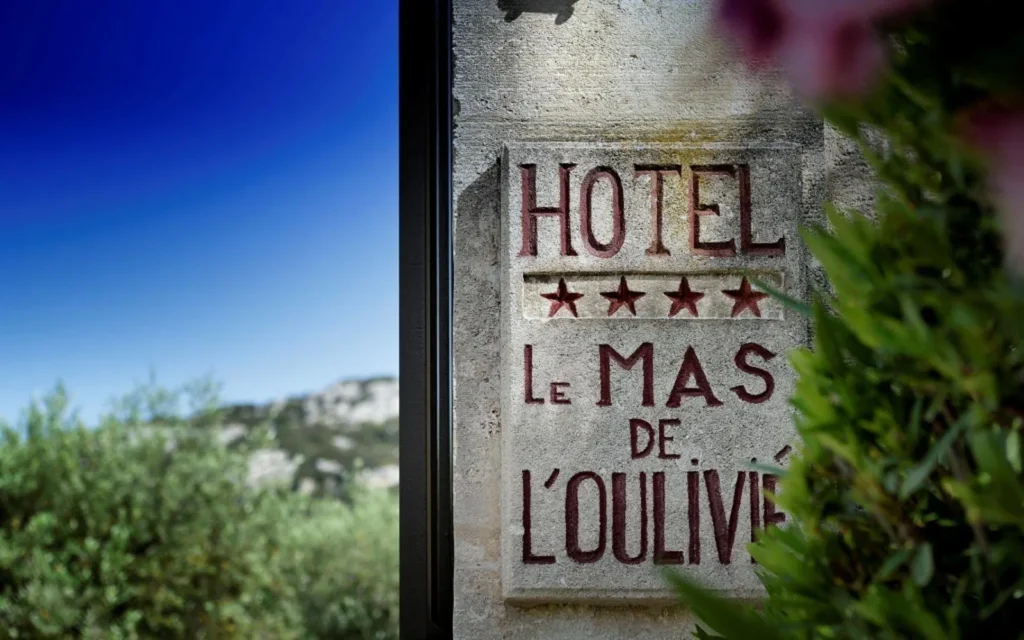
Hôtel Mas de l’Oulivié · ~27 roomsIndependentnot published
Visitors, over time
2015203,302k
2016203,042k
2017207,274k
2018211,998k
2019217,877k
2020117,109k
International tourism receipts run at about US$35.96 billion in 2020 (World Bank / UN Tourism). That is 4.8% of everything the country earns from exports.
How much of your money actually stays here?
Tap the holiday you are planning.
All-inclusive resortForeign-owned hotel and tourist restaurantsLocally owned stay and local restaurantsGuesthouse, markets and public transport
Resort guest, villa renter, family, nomad or backpacker. The honest playbook for each, from the same sourced numbers.
Already booked a resort? · the rescue list
Five swaps that move your money back on-island
1. Eat where the country eats Choose kitchens cooking bread (wheat), potatoes, puy green lentils, dried beans, ratatouille vegetables (aubergine, courgette, tomato), chestnuts, and olives and olive oil in the south over imported menus. The checked list →
2. Book with a local operator Never the lobby desk. The margin on a tour is the part that stays. Eco tours →
3. Stay somewhere locally owned Ownership decides where the room rate books. Eco stays →
4. Use the transport residents use Excellent SNCF rail with TGV high-speed trains (Paris to Lyon around two hours); book ahead for cheaper fares
5. Buy the craft, not the souvenir Natural-materials work made here pays the maker directly; imported gifts pay a shipping line.
swipe →
First time here
The EU's leading farm nation and the world's largest flax grower, with deep regional food cultures and returning Alpine and Pyrenean wildlife.
Best time: Late spring (May to June) and early autumn (September to October), warm and less crowded than peak summer
Getting around
Excellent SNCF rail with TGV high-speed trains (Paris to Lyon around two hours); book ahead for cheaper fares
Transport is where the fare either stays or leaves.
Eating here
The everyday plate is bread (wheat), potatoes, puy green lentils, dried beans, ratatouille vegetables (aubergine, courgette, tomato), chestnuts, and olives and olive oil in the south. Everyday plant foods include bread, potatoes, Puy green lentils, dried beans, ratatouille vegetables, chestnuts and, in the south, olives and olive oil.
Eating what the country grows is the cheapest way to cut the import bill.
Good to know
Cards everywhere; EUR. Lunch breaks and Sundays are sacred.
Rate my hotel. Tap yours for the honest verdict.
Ownership from company records and press.
Hôtel Mas de l’Oulivié
.
Who owns the place to stay
Hôtel Mas de l’OuliviéIndependent · 27 rooms
The one property listed here does not publish who ultimately owns it, so no claim is made either way. Ownership is what decides how much of a room rate stays in the country, which is why we show it when a listing states it.
Society and Governance in France.
How well is France actually run?
Governance, measured · World Bank WGI
Four measured answers, none of them opinion. Averaged across corruption control, delivery and accountability, France scores 75 out of 100 (2024, World Bank Worldwide Governance Indicators). That is a state that generally does what it says it will do, which is what makes a climate pledge worth reading.
How well is France run? · each scored out of 100, higher is better
Clean government, scored 73 of 100
Control of corruption scores 72.5 out of 100 (2024, World Bank Worldwide Governance Indicators). That is above the halfway mark of governments measured.
73
Freedom and rights, scored 77 of 100
Voice and accountability, which measures free expression, free media and the ability to choose a government, scores 77 out of 100 (2024, World Bank WGI). Citizens here can question their government openly.
77
Government effectiveness, scored 75 of 100
Government effectiveness, which measures the quality of public services and how well policy is actually delivered, scores 74.7 out of 100 (2024, World Bank WGI). Delivery is rated above average.
75
Income equality, scored 32 of 100
The Gini index of income inequality reads 31.8 (2023, World Bank). Zero is perfect equality and 100 is one person holding everything. Below 40 is the level usually treated as manageable, and France sits inside it.
32
LGBTQ+ status: HighSolo female travel: EasyIndustry to avoid: Intensive pig and poultry farming in Brittany, driving nitrate runoff and green-tide algal blooms
What is daily life in France really like? Measured
Getting around, breathing, throwing away, learning. The honest checklist.
TransportAirWaterWastePower
✓How you get around Excellent SNCF rail with TGV high-speed trains (Paris to Lyon around two hours); book ahead for cheaper fares
✓Air quality, measured Modelled annual mean 10.38. The WHO guideline is 5 µg/m³.
✓Where the air is cleanest Alps, Pyrenees and Massif Central interior, away from Paris and the industrial north
✓Tap water Drinkable
✓What to drink Tap water is safe; some rural villages still prefer bottled for taste.
✓Plastic rules EU single-use-plastic ban since 2021 plus France's AGEC anti-waste law (loose fruit and veg plastic-packaging ban; end to single-use plastics targeted for 2040)
✓Sockets and voltage Type C/F, 230V
Made in France.
France is the world's largest producer of flax, supplying around 75% of global flax fibre in 2022, with Normandy one of the three main growing regions, and linen is a thriving modern industry. Wool and hemp traditions also persist. Every step of processing done at home is value that stops leaving the country.
What France actually sells the world
The single biggest thing France sells the world is machinery and mechanical appliances, 11.3% of all exports in 2023 (about US$74.71 billion, UN Comtrade). The next four are vehicles at 9.2%, electrical machinery and electronics at 7.6%, aircraft and spacecraft at 6.1%, pharmaceuticals at 5.8%.
Sells now · 11.3% of exports
Machinery and mechanical appliances
Machinery and mechanical appliances is 11.3% of everything France sold abroad in 2023, worth about US$74.71 billion. UN Comtrade.
Sells now · 9.2% of exports
Vehicles
Vehicles is 9.2% of everything France sold abroad in 2023, worth about US$61.02 billion. UN Comtrade.
Sells now · 7.6% of exports
Electrical machinery and electronics
Electrical machinery and electronics is 7.6% of everything France sold abroad in 2023, worth about US$50.31 billion. UN Comtrade.
Sells now · 6.1% of exports
Aircraft and spacecraft
Aircraft and spacecraft is 6.1% of everything France sold abroad in 2023, worth about US$40.52 billion. UN Comtrade.
Sells now · 5.8% of exports
Pharmaceuticals
Pharmaceuticals is 5.8% of everything France sold abroad in 2023, worth about US$38.37 billion. UN Comtrade.
Could make · grown here already
Bread (wheat)
Grown in France and mostly sold raw. Processing it here would keep the margin here.
Could make · grown here already
Potatoes
Grown in France and mostly sold raw. Processing it here would keep the margin here.
Could make · grown here already
Puy green lentils
Grown in France and mostly sold raw. Processing it here would keep the margin here.
The maths for an entrepreneur. France produces about US$3,366 billion a year, which is roughly US$48,986 per person (2025, World Bank). Farming is 1.4% of that, while food is 10.6% of everything the country imports. The country buys in more food than its own farms contribute to the economy, and every point of that gap is a business someone could build here rather than ship in. With 31.4% of the land arable, the raw material for that is already in the ground.
A living tradition of France, still practised rather than archived.
Biniou
A living tradition of France, still practised rather than archived.
Bombard playing
A living tradition of France, still practised rather than archived.
Corsican polyphonic paghjella singing (UNESCO)A living tradition of France, still practised rather than archived.
BasqueA living tradition of France, still practised rather than archived.
Does France protect its heritage by law?
Partly, and the gaps say as much as the protections.
What is kept alive. France is a modern secular society that nonetheless keeps strong regional living traditions. The Breton fest-noz dance and music gathering is inscribed by UNESCO and is played on the biniou bagpipe and bombard. Corsican polyphonic paghjella singing, also UNESCO listed, continues, alongside Basque and Occitan music and dance and a calendar of regional festivals.
Who it belongs to. France channels tourism into rural areas through an extensive network of gîtes, farm stays and AOC wine and food regions, and rooted regional cultures from Brittany to the Basque Country and Corsica remain strong. Spending nonetheless concentrates heavily in Paris and on the Côte d'Azur.
Only here. Champagne, which may legally come only from the Champagne region under its protected designation of origin.
Three futures for France, every one run forward from measured data.
Where the making actually happens
Named craft workshops on the open map: Absolument créatif, Alex Jumilly, Ame d'art, Api Ways, Artcolore, Artichoke.
Every measured trend on one line
Run forward at the pace already recorded.
+18%
Forest cover
1995: 27.6 % → 2023: 32.5 %
+49%
Renewable electricity
1995: 15.3 % → 2021: 22.8 %
-38%
CO2 per person
1995: 6.41 t → 2024: 4 t
-21%
Tourist arrivals
1996: 148263 k → 2020: 117109 k
+13%
Protected land
2013: 25.4 % → 2025: 28.8 %
-50%
Farm workforce
1995: 4.64 % → 2025: 2.33 %
+141%
Protected sea
2013: 20.4 % → 2025: 49.2 %
-6%
Agricultural land
1995: 55.9 % → 2023: 52.5 %
+5%
Urban population
1995: 75.1 % → 2025: 78.8 %
-57%
Air pollution
1995: 19.2 µg/m³ → 2023: 8.2 µg/m³
-13%
Fresh water per person
1995: 3359 m³ → 2022: 2933.2 m³
-17%
Adult overweight
1995: 41.1 % → 2022: 34.3 %
+0%
Electricity access
1995: 100 % → 2024: 100 %
+83%
GDP per person
1995: 26792 → 2025: 48986
+15%
Population
1995: 59541 k → 2025: 68720 k
+51%
Renewable energy use
1995: 10.7 % → 2021: 16.2 %
-20%
Energy per person
1995: 3976 kg → 2024: 3185 kg
+56%
Protected area, total
2013: 23.5 % → 2025: 36.7 %
+7%
Life expectancy
1995: 77.8 yrs → 2024: 83 yrs
-3%
Cereal yield
1995: 6456 ha → 2024: 6281 ha
-51%
Fertiliser use
1995: 270.4 ha → 2023: 131.3 ha
-15%
Rural population
1995: 24.9 % → 2025: 21.2 %
+110%
Water productivity
1995: 51.6 $/m3 → 2022: 108.5 $/m3
+20%
Health spending
2000: 9.6 % → 2024: 11.5 %
+18%
Forest area
1995: 148620 km2 → 2023: 175032 km2
-3%
Electric power use
1995: 6622 kWh → 2024: 6447 kWh
-25%
Emissions: Agriculture
1990: 89.1 e → 2023: 67.1 e
-45%
Emissions: Building
1990: 89.6 e → 2023: 49.5 e
-41%
Emissions: Electricity/Heat
1990: 75.1 e → 2023: 44.4 e
-24%
Emissions: Energy
1990: 355.4 e → 2023: 271.1 e
-57%
Emissions: Industrial Processes
1990: 45.4 e → 2023: 19.7 e
-36%
Emissions: Manufacturing/Construction
1990: 60.9 e → 2023: 38.7 e
World Bank open data, recorded series
How much forest is left?
Forest cover moved from 27.6% to 32.5% across 28 recorded years.
World Bank AG.LND.FRST.ZS
How clean is the grid?
Renewable electricity moved from 15.3% to 22.8% across 26 recorded years.
World Bank EG.ELC.RNEW.ZS
How much climate pollution per person?
CO2 per person moved from 6.4 t to 4.0 t across 29 recorded years.
World Bank EN.GHG.CO2.PC.CE.AR5
How many people visit?
Tourist arrivals moved from 148263k to 117109k across 24 recorded years.
World Bank ST.INT.ARVL
How much land is protected?
Protected land moved from 25.4% to 28.8% across 12 recorded years.
World Bank ER.LND.PTLD.ZS
How many people still farm?
Farm workforce moved from 4.6% to 2.3% across 30 recorded years.
World Bank SL.AGR.EMPL.ZS
How much sea is protected?
Protected sea moved from 20.4% to 49.2% across 12 recorded years.
World Bank ER.MRN.PTMR.ZS
How much land is farmed?
Agricultural land moved from 55.9% to 52.5% across 28 recorded years.
World Bank AG.LND.AGRI.ZS
How fast is it urbanising?
Urban population moved from 75.1% to 78.8% across 30 recorded years.
World Bank SP.URB.TOTL.IN.ZS
Is the air getting cleaner?
Air pollution moved from 19.2 µg/m³ to 8.2 µg/m³ across 28 recorded years.
World Bank EN.ATM.PM25.MC.M3
Is water getting scarcer?
Fresh water per person moved from 3359.0 m³ to 2933.2 m³ across 27 recorded years.
World Bank ER.H2O.INTR.PC
Is diet-related disease rising?
Adult overweight moved from 41.1% to 34.3% across 27 recorded years.
World Bank SH.STA.OWAD.ZS
Who has power?
Electricity access moved from 100.0% to 100.0% across 29 recorded years.
World Bank EG.ELC.ACCS.ZS
Is income rising?
GDP per person moved from 26792 to 48986 across 30 recorded years.
World Bank NY.GDP.PCAP.CD
How fast is it growing?
Population moved from 59541k to 68720k across 30 recorded years.
World Bank SP.POP.TOTL
What share of all energy is renewable?
Renewable energy use moved from 10.7% to 16.2% across 26 recorded years.
World Bank EG.FEC.RNEW.ZS
How much energy does one person use?
Energy per person moved from 3976 kg to 3185 kg across 29 recorded years.
World Bank EG.USE.PCAP.KG.OE
How much land and sea is protected together?
Protected area, total moved from 23.5% to 36.7% across 12 recorded years.
World Bank ER.PTD.TOTL.ZS
How long do people live?
Life expectancy moved from 77.75 yrs to 82.98 yrs across 29 recorded years.
World Bank SP.DYN.LE00.IN
How much does a hectare of cereal produce?
Cereal yield moved from 6456 kg/ha to 6281 kg/ha across 29 recorded years.
World Bank AG.YLD.CREL.KG
How much fertiliser goes on the land?
Fertiliser use moved from 270.41 kg/ha to 131.32 kg/ha across 28 recorded years.
World Bank AG.CON.FERT.ZS
How many people still live rurally?
Rural population moved from 24.9% to 21.16% across 30 recorded years.
World Bank SP.RUR.TOTL.ZS
How much value per cubic metre of water?
Water productivity moved from 51.62 $/m3 to 108.49 $/m3 across 27 recorded years.
World Bank ER.GDP.FWTL.M3.KD
How much goes on health?
Health spending moved from 9.62% to 11.54% across 24 recorded years.
World Bank SH.XPD.CHEX.GD.ZS
How much forest is there in total?
Forest area moved from 148620 km2 to 175032 km2 across 28 recorded years.
World Bank AG.LND.FRST.K2
How much electricity per person?
Electric power use moved from 6622 kWh to 6447 kWh across 29 recorded years.
World Bank EG.USE.ELEC.KH.PC
How have agriculture emissions moved?
Agriculture emissions moved from 89.1 to 67.09 MtCO2e across 33 recorded years.
Climate Watch (WRI), historical emissions
How have building emissions moved?
Building emissions moved from 89.55 to 49.52 MtCO2e across 33 recorded years.
Climate Watch (WRI), historical emissions
How have electricity/heat emissions moved?
Electricity/Heat emissions moved from 75.14 to 44.41 MtCO2e across 33 recorded years.
Climate Watch (WRI), historical emissions
How have energy emissions moved?
Energy emissions moved from 355.38 to 271.13 MtCO2e across 33 recorded years.
Climate Watch (WRI), historical emissions
How have industrial processes emissions moved?
Industrial Processes emissions moved from 45.44 to 19.7 MtCO2e across 33 recorded years.
Climate Watch (WRI), historical emissions
How have manufacturing/construction emissions moved?
Manufacturing/Construction emissions moved from 60.87 to 38.74 MtCO2e across 33 recorded years.
Climate Watch (WRI), historical emissions
Worst caseCurrent pathBest case
Worst case
Every measured decline continues at the pace already recorded. The weakest pillar, heritage at 3/5, is the one that gives way first.
Computed from: recorded series extended with no policy change
Current path
Every line above is a recorded World Bank series for this country. The current path is simply those series continuing at the pace already measured.
Computed from: recorded series, no policy change assumed
Best case
The pledges are met on their own stated timetables and the weakest pillars are lifted to match the strongest. France already shows it can do this: water scores 5/5.
Computed from: each published target delivered on its own date
What the best case actually asks for
Lift heritage
It scores 3 out of 5 today, among the weakest parts of France's record. France is a modern secular society that nonetheless keeps strong regional living traditions. The Breton fest-noz dance and music gathering is inscribed by UNESCO and is played on the biniou bagpipe and bombard. Corsican polyphonic paghjella singing, also UNESCO listed, continues, alongside Basque and Occitan music and dance and a calendar of regional festivals. These living regional cultures place France in the middle band rather than higher. Lifting it toward the 5/5 the strongest pillars already reach is what the best case turns on.
measured each year
Costs: spending and enforcement, not new technology
Lift plant-based eating
It scores 3 out of 5 today, among the weakest parts of France's record. Everyday plant foods include bread, potatoes, Puy green lentils, dried beans, ratatouille vegetables, chestnuts and, in the south, olives and olive oil. Classic French cuisine is nonetheless built on meat, butter and cheese, and a strong wholefood or vegetarian tradition is recent and mainly urban. Lifting it toward the 5/5 the strongest pillars already reach is what the best case turns on.
measured each year
Costs: spending and enforcement, not new technology
Lift wildlife
It scores 3 out of 5 today, among the weakest parts of France's record. The Camargue delta is famous for flamingos, white horses and black bulls, and large carnivores are returning: wolves recolonised naturally from Italy from around 1992 and brown bears were reintroduced to the Pyrenees using Slovenian stock. Alpine wildlife includes ibex, chamois and marmots, though endemism in mainland France is modest. Lifting it toward the 5/5 the strongest pillars already reach is what the best case turns on.
measured each year
Costs: spending and enforcement, not new technology
Government and Goals in France.
Who is in charge of France now · Office-holders from the UN Protocol and Liaison Service public list of Heads of State and Heads of Government, 8 September 2026. Legislature and election dates from IFES ElectionGuide. Constitution dates from the Constitute Project. Governance scores from the World Bank Worldwide Governance Indicators 2024.
Sébastien Lecornu
Head of government
Sébastien Lecornu is the head of government of France, in office since 10 September 2025. Every climate, protection and energy pledge on this page is delivered, or not, under this administration.
Public opinion, measured
Voice and accountability, the freedom to question government: 77 / 100. Among the strongest measured. World Bank WGI 2024
Control of corruption: 72.5 / 100. Above the halfway mark of governments measured. World Bank WGI 2024
Political stability and absence of violence: 61.8 / 100. Above the halfway mark of governments measured. World Bank WGI 2024
Rule of law: 73.8 / 100. Above the halfway mark of governments measured. World Bank WGI 2024
Regulatory quality: 72.9 / 100. Above the halfway mark of governments measured. World Bank WGI 2024
Sébastien LecornuPrime Minister
Parliament (Parlement)Legislature, bicameral
Last election30 June 2024 to 7 July 2024
Constitution1958, as revised to 2024
Government typesemi-presidential republic
France national goals: climate commitments on record · as recorded by Climate Watch, World Resources Institute
2050
Net zero
In Law<br>In Policy Document
Net-zero target as recorded by Climate Watch. Status: In Law (4/30/2019) In Policy Document (2/8/2021) ↗
The questions people actually type, answered in full sentences from the sourced data above.
swipe →
Is France sustainable?
France scores 78 out of 100 on the Throne Eco Index, across twelve equally weighted pillars. The EU's leading farm nation and the world's largest flax grower, with deep regional food cultures and returning Alpine and Pyrenean wildlife.
Is the water in France safe and plentiful?
France is well watered by major rivers including the Loire, Rhône, Seine and Garonne alongside extensive groundwater, and tap water is safe nationwide with 99.7% of people on safely managed supply in 2024 (JMP). A free carafe of tap water is standard in restaurants.
Can France feed itself?
France is the European Union's leading agricultural producer and a long-established net agri-food exporter, notably of wheat, dairy, sugar-beet and wine, so its food-import dependence is low. Farming spans almost every temperate product from cereals to fruit and livestock.
Is it easy to eat plant-based in France?
Everyday plant foods include bread, potatoes, Puy green lentils, dried beans, ratatouille vegetables, chestnuts and, in the south, olives and olive oil. Classic French cuisine is nonetheless built on meat, butter and cheese, and a strong wholefood or vegetarian tradition is recent and mainly urban.
How much of France is actually protected?
The World Bank reports 28.8% of French land and 49.2% of its seas as protected in 2025, but the marine figure is inflated by vast protected areas around overseas territories such as the French Southern and Antarctic Lands. Protection of metropolitan coastal waters is far lower and Natura 2000 marine sites are often lightly managed.
What wildlife is left in France?
The Camargue delta is famous for flamingos, white horses and black bulls, and large carnivores are returning: wolves recolonised naturally from Italy from around 1992 and brown bears were reintroduced to the Pyrenees using Slovenian stock. Alpine wildlife includes ibex, chamois and marmots, though endemism in mainland France is modest.
Is France on clean energy?
France runs one of the lowest-carbon electricity systems among large economies, with nuclear power supplying around 65 to 70 per cent of generation and hydropower, wind and solar taking most of the rest, giving a grid that is more than 90 per cent low-carbon. Fossil CO2 emissions are about 4.3 tonnes per person in 2023, well below most wealthy nations, although France's consumption-based carbon footprint is considerably higher at around 9.4 tonnes once imports are counted. France pursues its low-carbon strategy with a legislated net-zero target for 2050.
How polluted is France?
France backs the EU single-use-plastics ban with its own AGEC anti-waste law, which targets an end to single-use plastic packaging by 2040, though the decree banning plastic packaging on loose fruit and vegetables was annulled by the Conseil d'Etat on 8 November 2024. Air quality is improving but population-weighted PM2.5 was still 10.4 µg/m³ in 2022 (World Bank), about double the WHO guideline.
Does recycling work in France?
Eurostat records a 40.9% municipal recycling rate for 2024, mid-table for the European Union and below leaders such as Germany.
Is the farming in France organic?
Eurostat estimates just under 10% of French farmland was organic in 2024 at 9.5%, broadly in line with Agence Bio's figures. Organic area has grown steadily over the past decade.
Are there natural materials and craft in France?
France is the world's largest producer of flax, supplying around 75% of global flax fibre in 2022, with Normandy one of the three main growing regions, and linen is a thriving modern industry. Wool and hemp traditions also persist.
Is there living culture in France?
France channels tourism into rural areas through an extensive network of gîtes, farm stays and AOC wine and food regions, and rooted regional cultures from Brittany to the Basque Country and Corsica remain strong. Spending nonetheless concentrates heavily in Paris and on the Côte d'Azur.
What heritage does France keep alive?
France is a modern secular society that nonetheless keeps strong regional living traditions. The Breton fest-noz dance and music gathering is inscribed by UNESCO and is played on the biniou bagpipe and bombard. Corsican polyphonic paghjella singing, also UNESCO listed, continues, alongside Basque and Occitan music and dance and a calendar of regional festivals.
So is France actually green? The measured answer
What is working: land protected at 28.8%, sea protected at 49.2%.
What is not: renewable electricity at 22.8% against a 100% mark.
France sits 2 of 77 at 78/100. Every name links to its own destination page, built exactly like this one. The full ranking →
What is France particularly good at?
✓Food and farming, scored 5/5. France is the European Union's leading agricultural producer and a long-established net agri-food exporter, notably of wheat, dairy, sugar-beet and wine, so its food-import dependence is low. Farming spans almost every temperate product from cereals to fruit and livestock.
✓Water, scored 5/5. France is well watered by major rivers including the Loire, Rhône, Seine and Garonne alongside extensive groundwater, and tap water is safe nationwide with 99.7% of people on safely managed supply in 2024 (JMP). A free carafe of tap water is standard in restaurants.
✓Conservation, scored 4/5. The World Bank reports 28.8% of French land and 49.2% of its seas as protected in 2025, but the marine figure is inflated by vast protected areas around overseas territories such as the French Southern and Antarctic Lands. Protection of metropolitan coastal waters is far lower and Natura 2000 marine sites are often lightly managed.
Where does France score worst?
✕Heritage, scored 3/5. France is a modern secular society that nonetheless keeps strong regional living traditions. The Breton fest-noz dance and music gathering is inscribed by UNESCO and is played on the biniou bagpipe and bombard. Corsican polyphonic paghjella singing, also UNESCO listed, continues, alongside Basque and Occitan music and dance and a calendar of regional festivals. These living regional cultures place France in the middle band rather than higher.
✕Plant-based eating, scored 3/5. Everyday plant foods include bread, potatoes, Puy green lentils, dried beans, ratatouille vegetables, chestnuts and, in the south, olives and olive oil. Classic French cuisine is nonetheless built on meat, butter and cheese, and a strong wholefood or vegetarian tradition is recent and mainly urban.
✕Wildlife, scored 3/5. The Camargue delta is famous for flamingos, white horses and black bulls, and large carnivores are returning: wolves recolonised naturally from Italy from around 1992 and brown bears were reintroduced to the Pyrenees using Slovenian stock. Alpine wildlife includes ibex, chamois and marmots, though endemism in mainland France is modest.
Similar countries doing it better and worse
SwitzerlandScored on the same twelve pillars as France.75
GermanyScored on the same twelve pillars as France.75
ItalyScored on the same twelve pillars as France.75
United KingdomScored on the same twelve pillars as France.65
MontenegroScored on the same twelve pillars as France.62
SerbiaScored on the same twelve pillars as France.58
A note from the lens of mother natureswipe →
Energy, 4/5
France runs one of the lowest-carbon electricity systems among large economies, with nuclear power supplying around 65 to 70 per cent of generation and hydropower, wind and solar taking most of the rest, giving a grid that is more than 90 per cent low-carbon. Fossil CO2 emissions are about 4.3 tonnes per person in 2023, well below most wealthy nations, although France's consumption-based carbon footprint is considerably higher at around 9.4 tonnes once imports are counted.
Food and farming, 5/5
France is the European Union's leading agricultural producer and a long-established net agri-food exporter, notably of wheat, dairy, sugar-beet and wine, so its food-import dependence is low. Farming spans almost every temperate product from cereals to fruit and livestock.
Heritage, 3/5
France is a modern secular society that nonetheless keeps strong regional living traditions. The Breton fest-noz dance and music gathering is inscribed by UNESCO and is played on the biniou bagpipe and bombard.
Consequence: It is among the lowest-scoring parts of France's record, level with plant-based food and wildlife at 3 out of 5, so it is where the score moves first.
The France Directory.
Everything on Hold The Throne that sits in France, checked and listed.
World Bank Worldwide Governance Indicators, 2024. Percentile among all governments measured.
Government effectiveness
74.7 / 100
World Bank Worldwide Governance Indicators, 2024. Percentile among all governments measured.
Rule of law
73.8 / 100
World Bank Worldwide Governance Indicators, 2024. Percentile among all governments measured.
Political stability
61.8 / 100
World Bank Worldwide Governance Indicators, 2024. Percentile among all governments measured.
Voice and accountability
77 / 100
World Bank Worldwide Governance Indicators, 2024. Percentile among all governments measured.
Environmental Performance Index
67.0 / 100 · 12 of 180
Yale Environmental Performance Index 2024, ranked 12 of 180 countries assessed.
Ecosystem vitality
67.8 / 100 · 21 of 180
Yale Environmental Performance Index 2024, ranked 21 of 180 countries assessed.
Biodiversity and habitat
61.5 / 100 · 42 of 180
Yale Environmental Performance Index 2024, ranked 42 of 180 countries assessed.
Air pollution
92.8 / 100 · 13 of 180
Yale Environmental Performance Index 2024, ranked 13 of 180 countries assessed.
Terrestrial biomes protected
83.0 / 100 · 39 of 180
Yale Environmental Performance Index 2024, ranked 39 of 180 countries assessed.
Marine protected areas
44.1 / 100 · 109 of 131
Yale Environmental Performance Index 2024, ranked 109 of 131 countries assessed.
How France Is Scored. The Throne Standard.
Every destination on the index is scored the same way, so a 4 in Barbados means exactly what a 4 means in Iceland. No self-declared data and no brochure claims are accepted. Every figure on this page carries its named source and year, and the history on each page names what empire took as plainly as it scores the present.
The 12 pillars every destination is scored on, equally weighted
01
Conservation
Land and sea actually protected, not pledged
02
Wildlife
What survives, what is endemic, what is lost
03
Water
Fresh water per person, and the ocean’s health
04
Food & farming
Whether the place can feed itself
05
Organic & clean
Certified land and pesticide reality
06
Climate & energy
Emissions per person, how the grid is powered
07
Waste
Where the rubbish goes, what comes back
08
Health
What people eat and die of
09
Heritage
Living culture, and what the law keeps standing
10
Ownership
Who owns the economy, how much of a dollar stays
11
Governance
Freedom, honesty, promises kept
12
Future
Measured trends run forward, pledges against pace
What each 0 to 5 pillar score means, in plain words
The institutions above are the ones cited on this page, ranked by how many of its figures they carry. This same sectioned page renders for all 77 scored destinations, each with its own researched history, comparison charts and three-way future. Read the full methodology
Every figure on this page, and where it came from: 85 sources across 29 institutions
World Bank15 FIGURES
Forest area (% of land area) AG.LND.FRST.ZS, 2023 check
Marine protected areas (% of territorial waters) ER.MRN.PTMR.ZS, 2025 check
PM2.5 mean annual exposure EN.ATM.PM25.MC.M3, 2022 check
CO2 emissions per capita EN.GHG.CO2.PC.CE.AR5, 2024 check
Threatened species (mammals EN.MAM.THRD.NO, birds EN.BIR.THRD.NO, fish EN.FSH.THRD.NO, higher plants EN.HPT.THRD.NO), 2022 check
Renewable electricity output (% of total) EG.ELC.RNEW.ZS, 2021 check
The implementing decree of 20 June 2023 was annulled by the Conseil d'Etat on 8 November 2024, so all fresh fruit and vegetables may again be sold in plastic; the AGEC article 7 target is specifically single-use plastic packaging by 2040 check
Andrena bicolor does not appear on the IUCN Red List at all in the IUCN snapshot published 28 July 2026; it is a common bee with 1,170 GBIF occurrence records in France check
No credible source supports a one-third world share; the flax industry body names Normandy as one of France's three main growing regions, and French regional sources place it nearer 40 to 50 per cent, so the specific figure is removed rather than replaced with a guess check
Fiche d'inventaire du patrimoine culturel immateriel: Le fest-noz (PCI.bzh, Bretagne Culture Diversite), The Breton fest-noz dance and music gathering is inscribed by UNESCO and is played on the biniou bagpipe and b check
Fiche d'inventaire du patrimoine culturel immateriel: Le fest-noz (PCI.bzh, Bretagne Culture Diversite) corroboration check
Fiche d'inventaire du patrimoine culturel immateriel: Le fest-noz (PCI.bzh, Bretagne Culture Diversite) corroboration check
Fiche d'inventaire du patrimoine culturel immateriel: Le fest-noz (PCI.bzh, Bretagne Culture Diversite) corroboration check
Cantu in paghjella: Patrimoine Culturel Immateriel et nouvelles technologies dans le projet i-Treasures (HAL, CNRS open archive), Corsican polyphonic paghjella singing, also UNESCO listed, continues, alongside Basque and Occitan music and d check
Cantu in paghjella: Patrimoine Culturel Immateriel et nouvelles technologies dans le projet i-Treasures (HAL, CNRS open archive) corroboration check
Cantu in paghjella: Patrimoine Culturel Immateriel et nouvelles technologies dans le projet i-Treasures (HAL, CNRS open archive) corroboration check
Cantu in paghjella: Patrimoine Culturel Immateriel et nouvelles technologies dans le projet i-Treasures (HAL, CNRS open archive) corroboration check
Recycling rate of municipal waste cei_wm011, 2024 check
UN SDG Global Database, electronic waste recycled (%) EN_EWT_RCYR, France, 2018 (74.2%), country-reported check
Statistics Explained: Performance of the agricultural sector, The EU's leading farm nation and the world's largest flax grower, with deep regional food cultures and returni check
Statistics Explained: Performance of the agricultural sector corroboration check
Statistics Explained: Performance of the agricultural sector corroboration check
Statistics Explained: Performance of the agricultural sector corroboration check
recycling rate of municipal waste (cei_wm011) check
municipal waste by treatment operation (env_wasmun) check
FishBase species summary5 FIGURES
Myliobatis aquila, Critically Endangered on the IUCN Red List, and recorded in France in GBIF occurrence data (shark or ray). check
Exposition du decret d'abolition de l'esclavage de 1848, Slavery was abolished in the colonies in 1848, women voted for the first time in 1945, and occupation from 194 check
Exposition du decret d'abolition de l'esclavage de 1848 corroboration check
Exposition du decret d'abolition de l'esclavage de 1848 corroboration check
Exposition du decret d'abolition de l'esclavage de 1848 corroboration check
UNESCO Institute for Statistics4 FIGURES
public data API, France, Public spending on education runs at 5.3% of GDP and 9.1% of all government spending, and secondary enrolment check
BirdLife International, IUCN and UNEP-WCMC3 FIGURES
UN SDG Global Database, terrestrial Key Biodiversity Areas covered by protected areas (%) ER_PTD_TERR, France, 2025 (81.1%), country-reported check
UN SDG Global Database, marine Key Biodiversity Areas covered by protected areas (%) ER_MRN_MPA, France, 2025 (80.9%), country-reported check
UN SDG Global Database, freshwater Key Biodiversity Areas covered by protected areas (%) ER_PTD_FRHWTR, France, 2025 (78.0%), country-reported check
FAO, Global Forest Resources Assessment3 FIGURES
UN SDG Global Database, forest area (% of land area) AG_LND_FRST, France, 2025 (33.0%), country-reported check
UN SDG Global Database, forest area under a long-term management plan (%) AG_LND_FRSTMGT, France, 2025 (48.0%), country-reported check
UN SDG Global Database, forest area inside legally established protected areas (%) AG_LND_FRSTPRCT, France, 2025 (24.3%), country-reported check
IUCN3 FIGURES
Red List Categories and Criteria, version 3.1, second edition (2012), Critically Endangered, the last IUCN category before Extinct in the Wild, and still recorded in France. check
Red List Categories and Criteria, version 3.1, second edition (2012) corroboration check
Red List Categories and Criteria, version 3.1, second edition (2012) corroboration check
Musee d'Histoire de Marseille3 FIGURES
Le Port antique (Musees de Marseille, Ville de Marseille), Greek settlers founded Massalia around 600 BC, the port that became Marseille and France's oldest city. check
Le Port antique (Musees de Marseille, Ville de Marseille) corroboration check
Le Port antique (Musees de Marseille, Ville de Marseille) corroboration check
FAOSTAT Crops and livestock products (QCL), Europe bulk file, edition 23 December 2025, By tonnage, the largest crops grown in France are sugar beet, wheat, maize, barley and potatoes (FAO, FAOSTAT check
GBIF occurrence search2 FIGURES
Vanellus gregarius in France, Critically Endangered on the IUCN Red List, and recorded in France in GBIF occurrence data (bird). check
Bilan electrique 2025, Synthese, France runs one of the lowest-carbon electricity systems among large economies, with nuclear power supplying a check
Bilan electrique 2025, Synthese corroboration check
UICN Comite francais2 FIGURES
MNHN, FCBN and AFB, La Liste rouge des especes menacees en France: Flore vasculaire de France metropolitaine, Critically Endangered on the IUCN Red List, and recorded in France in GBIF occurrence data (plant). check
MNHN, FCBN and AFB, La Liste rouge des especes menacees en France: Flore vasculaire de France metropolitaine corroboration check
UN Comtrade2 FIGURES
France (reporter 251) exports by HS chapter, 2023, The largest single export, machinery and mechanical appliances, is 11.3% of the total (2023, UN Comtrade). check
France (reporter 251) exports by HS chapter, 2023 corroboration check
WHO/UNICEF Joint Monitoring Programme2 FIGURES
UN SDG Global Database, population using safely managed drinking water (%) SH_H2O_SAFE, France, 2024 (99.7%), modelled estimate check
UN SDG Global Database, population using safely managed sanitation (%) SH_SAN_SAFE, France, 2024 (90.0%), modelled estimate check


 SwitzerlandScored on the same twelve pillars as France.75
 GermanyScored on the same twelve pillars as France.75
 ItalyScored on the same twelve pillars as France.75
 United KingdomScored on the same twelve pillars as France.65
 MontenegroScored on the same twelve pillars as France.62
 SerbiaScored on the same twelve pillars as France.58