Best Eco Stays in Guadeloupe
Where to stay in Guadeloupe
The best areas to stay in Guadeloupe range from a family run eco lodge of tree cabins and Creole cases spread across a 10,000 square metre domain above Deshaies Bay, to an owner built rainforest lodge of duplexes, villas and a treehouse on a Basse-Terre slope, and a locally run rainforest retreat of eight lodgings tucked into lush exotic gardens above Pointe-Noire. Options are spread from Deshaies to Pointe-Noire. Every stay we recommend below is genuinely sustainable and chosen so your money stays on the island.
Where to stay in Guadeloupe by area, at a glance
Deshaies is best for couples and nature lovers who want rainforest, the Jardin Botanique and Grande Anse beach on the doorstep
Deshaies sits at the wild north-west tip of Basse-Terre, the green wing of Guadeloupe, a fishing village strung between forested slopes and golden beaches. It suits couples and nature lovers above all, the kind of traveller who wants rainforest trails, the 7 hectare Jardin Botanique (once the comedian Coluche’s estate) and the golden sweep of Grande Anse beach within easy reach. The pace is gentle, the hills are dotted with ecolodges such as Au Jardin des Colibris and Tendacayou, and a hire car is the sensible way to reach and explore this hilly corner once you have flown into Pointe-a-Pitre on Grande-Terre and crossed onto Basse-Terre.
The difference between Deshaies and other popular beach towns in Guadeloupe like Sainte-Anne and Le Gosier is that those Grande-Terre resort towns are flatter, busier and built around long calm lagoon beaches and a livelier seafront, whereas Deshaies is a quieter, greener village wrapped in rainforest and national park, where the draw is wildlife, botanical gardens and dramatic west-coast scenery rather than a wide resort strip.
Where to stay in Deshaies: Top Pick

Au Jardin des Colibris Ecolodge & Spa is the best place to stay in Deshaies, Guadeloupe
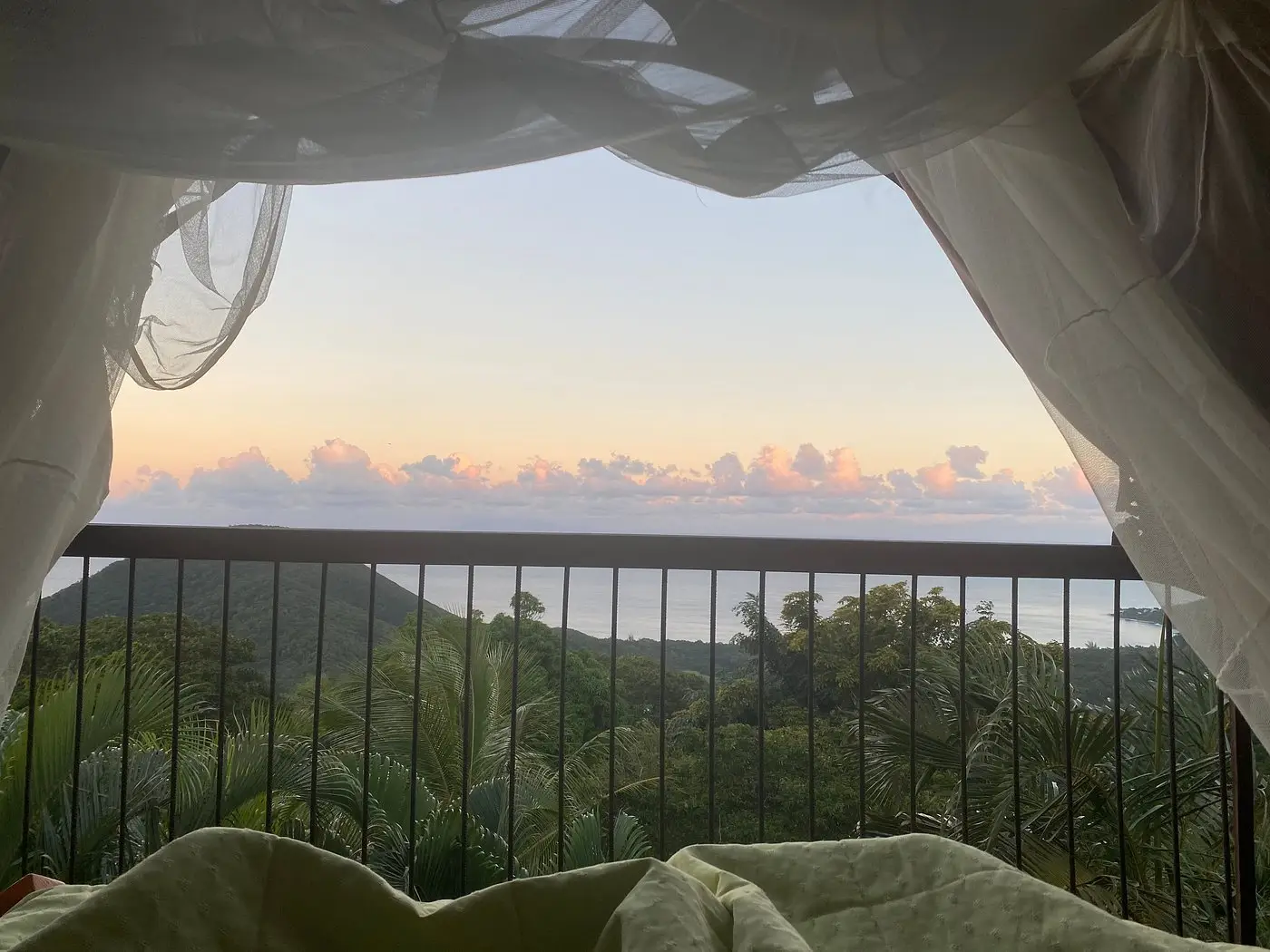
Au Jardin des Colibris Ecolodge & Spa is a tranquil hillside retreat set among lush gardens above Deshaies, where wooden lodges and bungalows are tucked into the greenery with sweeping views over the bay and the Caribbean Sea beyond. Everything about the place speaks to a genuine love of the land and its wildlife, from the hummingbirds that give the garden its name to planting careful enough to earn it status as a recognised bird refuge.
Who owns Au Jardin des Colibris Ecolodge & Spa?
Au Jardin des Colibris Ecolodge & Spa is privately owned and locally run, with a warm, family feel that runs through every detail. That care shows in the way the bungalows are woven into the hillside and in the conservation work built into the stay. The owners’ commitment to the surrounding habitat has earned the garden recognition as a bird refuge by the Ligue pour la Protection des Oiseaux, a reflection of how closely the property is tied to the land it looks after.
About the rooms in Au Jardin des Colibris Ecolodge & Spa
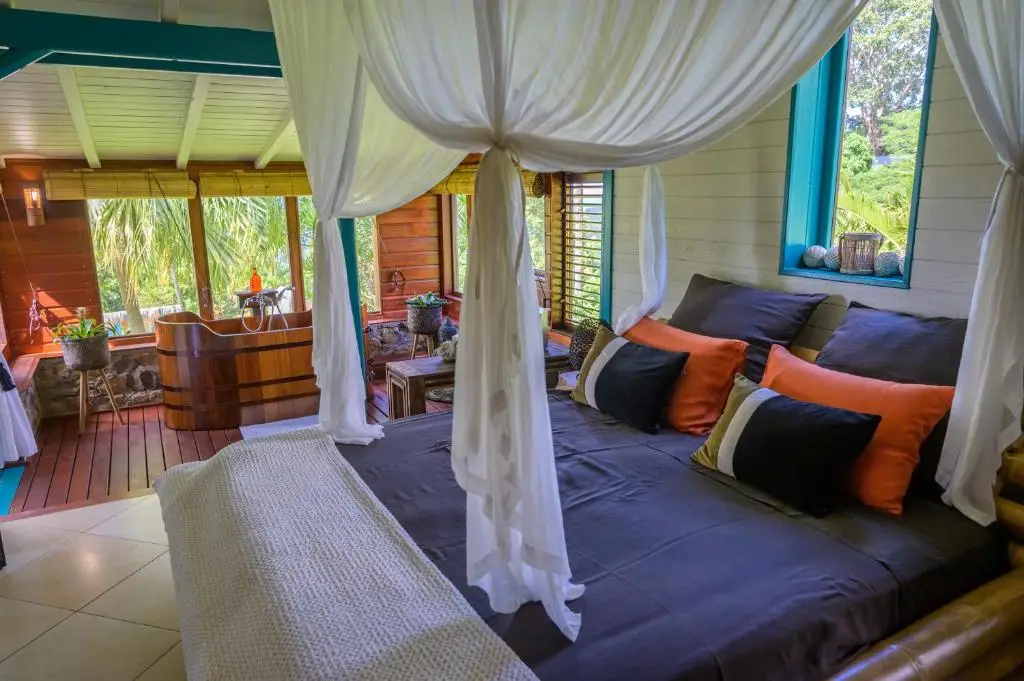
There are seventeen rooms at Au Jardin des Colibris Ecolodge & Spa, including independent, fully equipped lodges spread across a 10,000 square metre hillside above the bay of Deshaies, so the place reads as a scatter of private cabins in the rainforest rather than a hotel with a corridor of rooms. The categories are real and varied. Colourful bungalows sit alongside the Secret Lodge, which has a queen bed, air conditioning and a secluded terrace looking over the bay for two adults. There are charming Creole cottages that sleep four to five and suit families, wooden Creole cases with outdoor showers, and a set of unusual cabins including the Jungle Lodge, the Star Cabin and the Hummingbirds’ Nest, the last of which is a cosy two person space with a large suspended net “star bed” slung above the forest.
At the top end sit the villas, the Garden Side Villa, Villa Nature Bay and Villa Indigo, plus three luxury treehouses, several of which come with their own private pool, a water garden and an open air stone bathtub, and views over Deshaies Bay. Most units have their own terrace and a full kitchen for self catering, since the lodges are built for independence rather than full board. The scale is deliberately small and the setup leans towards couples and small families. The headline bungalows and lodges typically cap at two adults, while the larger cottages and villas take families. Guests share a secluded swimming pool, lit and open around the clock, and the on site spa.
What food is available at Au Jardin des Colibris Ecolodge & Spa?
The kitchen leans on the flavours of Guadeloupe, with fresh local produce and creole cooking served in a relaxed garden setting. Meals here make the most of the island’s fruit, fish and spices, and the unhurried, open air atmosphere of the dining room suits the lodge’s quiet rhythm. For a wider choice of fresh creole dining, the village of Deshaies and its harbour are a short drive down the hill.
Sustainability features of Au Jardin des Colibris Ecolodge & Spa
Au Jardin des Colibris Ecolodge & Spa runs on real eco substance rather than a pretty backdrop, having won the Palme Verte du Tourisme and carrying the national park’s Esprit Parc label, marks of a property woven into the protection of its surroundings. Its commitment reaches into the sea as well as the garden through a one night, one coral programme run with Ocean Quest France, which plants a coral in Deshaies Bay for every booked stay, working towards a goal of 1,000 corals a year. Combined with the recognised bird refuge status, it is a place where a night’s rest quietly gives something back to the reef and the birdsong all around you.
Who is Au Jardin des Colibris Ecolodge & Spa for?
Au Jardin des Colibris Ecolodge & Spa is perfect for nature lovers and couples who want a peaceful, beautiful base on Basse-Terre with conservation built into the experience. Solo travellers drawn to a slow pace and a small spa will feel at home too, as will anyone who would rather wake to hummingbirds and rainforest views than a busy resort strip.
How to get to Au Jardin des Colibris Ecolodge & Spa from the airport
The closest airport to Au Jardin des Colibris Ecolodge & Spa is Pointe-a-Pitre International Airport, also known as Guadeloupe Pole Caraibes (PTP), which sits on Grande-Terre to the east. From there it is roughly a 60 to 75 minute drive of about 50 kilometres up the leeward coast of Basse-Terre to Deshaies, following the Route de la Traversee or the coastal road through Sainte-Rose.
Private transfer or taxi to Au Jardin des Colibris Ecolodge & Spa
A pre arranged private transfer is the easiest option to get to Au Jardin des Colibris Ecolodge & Spa, and the lodge or a local operator can usually organise this for you. A metered taxi from outside the PTP arrivals hall is the alternative, though fares for the cross island run are high and worth agreeing before you set off. Either way you arrive without having to tackle the winding hillside roads above the village yourself, while a hire car remains a strong choice if you want the freedom to explore Basse-Terre at your own pace once you are settled in.
Public transport to Au Jardin des Colibris Ecolodge & Spa
Public transport to Au Jardin des Colibris Ecolodge & Spa is possible with multiple changes. Guadeloupe’s network of route taxis and local buses, run through the islandwide Karu’lis service, links Pointe-a-Pitre with the leeward coast towns, so you would travel by bus from the Pointe-a-Pitre bus station towards Sainte-Rose and on to Deshaies. Services are infrequent, geared to islanders rather than visitors, and do not climb the lodge’s hillside road, so you would finish with a short taxi from Deshaies village. For practical purposes a hire car or a pre booked private transfer is by far the easier way to reach the lodge and to get the most out of Deshaies and the wider west coast.
Things to do while staying at Au Jardin des Colibris Ecolodge & Spa
Things to do around Au Jardin des Colibris Ecolodge & Spa range from a slow morning spotting hummingbirds and tropical birdlife on the property itself, which is classified as a bird refuge, to a full day exploring the wild north of the island. Within easy reach you have the golden sands of Grande Anse beach for swimming and sunsets, and the celebrated Jardin Botanique de Deshaies, with its lily ponds and aviaries, just down the road.
Further afield, Basse-Terre rewards the curious. The trails and waterfalls of the Guadeloupe National Park lead to the Carbet Falls and the brooding La Soufriere volcano, the Route de la Traversee cuts through dense rainforest, and the colourful fishing village of Deshaies itself offers fresh creole dining, a quiet harbour and local rum to sample. Snorkelling and boat trips along the leeward coast round out the options.
The mix suits a wide range of travellers. Nature lovers and hikers will be in their element on the rainforest paths, families will enjoy the calm beaches and the botanical garden, solo travellers will appreciate the gentle pace and the small spa, and those drawn to culture can wander the village, taste creole cooking and learn the story of Guadeloupean rum.
Pointe-Noire is best for divers, snorkellers, hikers and slow travellers wanting an authentic, low-key west-coast base near the Cousteau reserve
Pointe-Noire is an unhurried working town on the leeward coast of Basse-Terre, backed by dense rainforest and known for its woodcraft heritage, sheltered snorkelling and easy access to the Cousteau marine reserve. It suits divers, snorkellers, keen walkers and slow travellers who want a green, owner-run base rather than a resort strip, with intimate ecolodges like TropicAngel set between the hills and the sea. From Pointe-a-Pitre airport (PTP) it is roughly an hour and a quarter to an hour and a half down the west coast, and as buses are sparse you will want your own car to reach the village and the dive sites.
The difference between Pointe-Noire and other popular beach towns in Guadeloupe like Sainte-Anne and Le Gosier on Grande-Terre is that those eastern resort hubs are built around long white-sand bays, busy beach clubs and a livelier nightlife, whereas Pointe-Noire is wild, quiet and rainforest-backed, with dark volcanic sand, a working fishing harbour and nature on the doorstep rather than tourist crowds.
Where to stay in Pointe-Noire: Top Pick

TropicAngel is the best place to stay in Pointe-Noire, Guadeloupe
TropicAngel is a locally run rainforest eco lodge of just a handful of lodgings, set in lush exotic gardens on the hillside above Pointe-Noire on Basse-Terre, the wild green half of Guadeloupe. The lodgings sit among the foliage with the calls of birds and tree frogs for a soundtrack, close enough to the coast for diving and snorkelling yet tucked into the forest for real peace and quiet.
Who owns TropicAngel?
TropicAngel is owned by Magali and François, the couple who built the place from sustainable materials and run it themselves with the warmth and detail of hosts who clearly adore their patch of forest. The small scale means the welcome never feels anything but personal, and they fold their guests into the rhythm of the place rather than keeping them at arm’s length.
About the rooms in TropicAngel
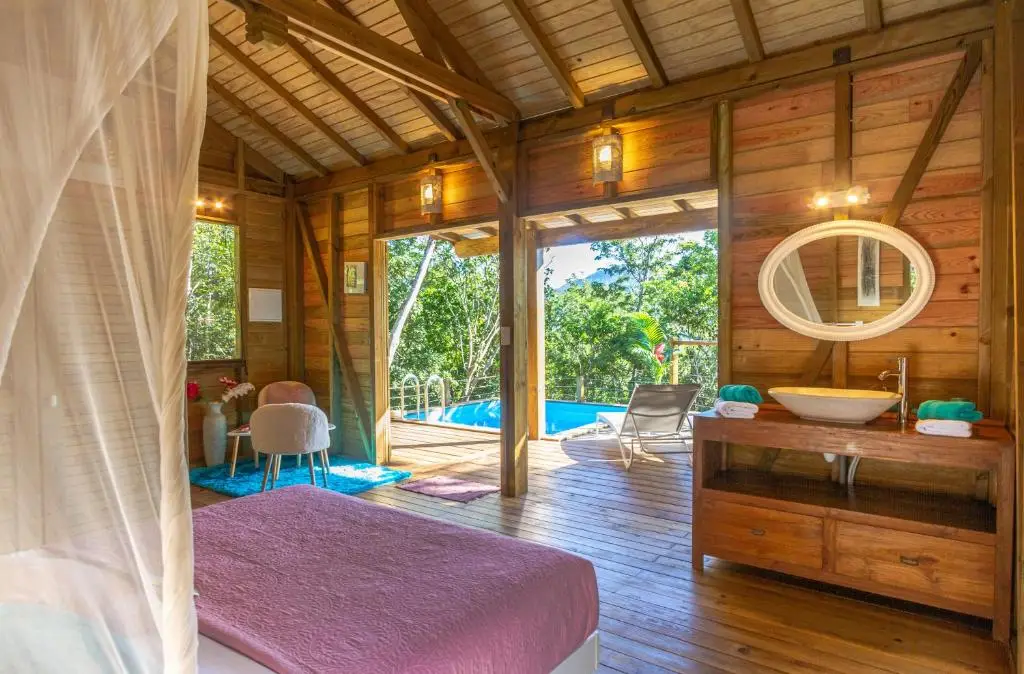
There are just six lodgings at TropicAngel, including four exotic wooden lodges and two luxury guest rooms, all scattered through the tropical garden above Pointe-Noire so each one feels private. The owners name the units individually rather than grading them by star or floor, with cabins such as Kazamour, Kazamoi and the ROC Lodge, and most sleep two to four people, so they suit couples and small families equally. Several have a full equipped kitchen for self-catering, every unit opens onto its own large terrace, and the views split between the Caribbean Sea on one side and the Basse-Terre rainforest mountains on the other.
The rooms lean into the eco-lodge setting rather than hotel uniformity. Expect a king-size bed at 180×200, or twin 90×200 beds that pair into a double, with linen bedding, bathrobes and a private shower room. The standout feature is water with a view, as several lodges have a private whirlpool or jacuzzi, including a wooden tub set on the terrace at Kazamour and a private jacuzzi at the ROC Lodge, positioned for sunset over the sea. This is a back-to-nature stay, so do not expect wall-to-wall air conditioning across every unit. The build, the gardens and the hillside breeze do much of the cooling, which is the whole point of an off-grid solar lodge.
What food is available at TropicAngel?
An onsite kitchen serves honest Creole cooking on a farm to table basis, leaning on fresh, organic and locally sourced produce, much of it grown or gathered close by. Meals here lean towards island staples turned out with the personal touch that comes from hosts who cook for a tiny number of guests at a time, so dishes taste of Guadeloupe rather than of any standard hotel menu.
Sustainability features of TropicAngel
The lodge runs on solar power, harvests rainwater and uses water saving systems throughout, and works towards zero waste with comprehensive recycling and composting. Together with the sustainable build and the farm to table kitchen, these eco credentials are the foundation of the whole stay rather than an afterthought, adding up to one of the most genuinely low impact stays on the island.
Who is TropicAngel for?
TropicAngel is perfect for nature lovers and conscious travellers who want a quiet, green, owner run base for exploring the rainforest and west coast of Basse-Terre. It suits divers and snorkellers drawn to the Cousteau reserve, walkers heading for the national park trails, and couples or solo travellers happy to swap a big resort for somewhere intimate and authentic.
How to get to TropicAngel from the airport
The closest airport to TropicAngel is Pointe-à-Pitre International Airport (PTP) on Grande-Terre, roughly an hour and a quarter to an hour and a half away by road, around 50 kilometres, depending on traffic across the bridge onto Basse-Terre. The final leg climbs the green west coast road up to Pointe-Noire and then onto the lane above the town.
Private transfer or taxi to TropicAngel
A pre arranged private transfer is the easiest option to get to TropicAngel, and the hosts can help point you in the right direction. Taxis in Guadeloupe are metered but not cheap over this distance, so a pre booked transfer is usually the more relaxed choice after a long flight, especially for the winding final stretch above the town.
Public transport to TropicAngel
Public transport to TropicAngel is possible with multiple changes. The island network coaches, run under the regional Karu’lis brand out of Pointe-à-Pitre, link the main towns, and you can pick up the leeward coast service down Basse-Terre towards Pointe-Noire, but services are sparse, slow and stop running early, and they will not take you up the lane to the lodge. You would finish at Pointe-Noire town and need a short taxi or a lift from the hosts for the final climb, so for reaching the dive sites, the national park trailheads and the scattered beaches, a hire car collected at the airport or a private transfer is by far the more practical choice.
Things to do while staying at TropicAngel
Things to do around TropicAngel range from hiking in the Guadeloupe National Park, where the trails to the Carbet Falls and up towards La Soufrière volcano reward you with cascades and cloud forest, to gentler days by the water on the dark sand and snorkelling beaches of Grande Anse and Plage de Malendure.
Closer still you have the protected reefs of the Cousteau marine reserve off Bouillante for diving and glass bottom boat trips, the Maison du Cacao cocoa house, and the laid back fishing town of Pointe-Noire itself with its woodwork heritage, Creole restaurants and village markets. The hillside gardens of the lodge are a draw in their own right, alive with birds and tree frogs.
Nature lovers and families will be in their element among the falls and beaches, solo travellers find the diving and hiking easy to join, and anyone drawn to culture has the cocoa, the woodwork museums and the markets close at hand. It is an especially good fit for conscious travellers who want their days outdoors to match the low impact ethos of where they sleep.
When is the best time to visit Guadeloupe?
The dry, cooler season runs roughly December to April and is the most reliable for sunshine; January to March is the sweet spot and the busiest, most expensive period, with school holidays at Christmas, February and Easter pushing prices and demand highest. The wetter low season runs May to November, bringing lush green landscapes, quieter beaches and lower prices, but also frequent showers and the Atlantic hurricane season, which officially spans 1 June to 30 November and peaks around August and September (the riskiest weeks to avoid). Shoulder months such as late April, May, June and November can offer good value with still-decent weather, though brief tropical downpours are possible year round. Note: 2026 is a Route du Rhum year, with the transatlantic race finishing in Pointe-a-Pitre in late autumn, so expect higher demand and book early if visiting around then (confirm exact dates).
Is Guadeloupe safe, and how do you get around?
Guadeloupe is generally a safe destination with a low rate of violent crime against tourists, though petty crime such as bag snatching and car break-ins occurs, especially in Pointe-a-Pitre’s old town, at popular beaches and the cruise port, so do not leave valuables in parked hire cars. Driving is on the RIGHT (as in mainland France), and because public transport is limited and the best beaches, gardens and rainforest trails are spread out, a hire car is effectively essential for the Basse-Terre areas above; expect roughly 45 to 65 euros a day, and note mountain and rural roads are narrow, winding and best avoided after dark. As an overseas region of France, Guadeloupe uses the EURO, not pounds or US dollars, so bring euros and a card; cards are widely accepted and ATMs are common in towns. A UK driving licence is accepted for short visits, though an International Driving Permit is sometimes recommended as a backup (verify current requirements before you travel). On tipping: a service charge is usually included in restaurant and hotel bills, so tipping is not expected, but rounding up or leaving small change for good service is appreciated.
Why we only list sustainable stays in Guadeloupe
Every stay in this guide was hand picked and checked for how it actually runs, and most are locally rooted so your money stays on the island. For the full breakdown see our guide to the best sustainable hotels in Guadeloupe, or zoom out to the best sustainable hotels across the Caribbean.
More Caribbean Sustainable Stays
Book Your Next Stay Consciously
Travel is a wonderful opportunity to connect with Mother Earth.
However, it is also frequently undermined by reckless development and disrespectful tourism practices.
This directory is a curated, verified list of hotels, lodges, and resorts that honour our planet and are led by visionary stewards of the environment.
From farm-to-table culinary experiences to dedicated ocean conservation efforts, such as marine protection and coral restoration, these establishments are redefining hospitality.

12% Off Sustainable Swimwear
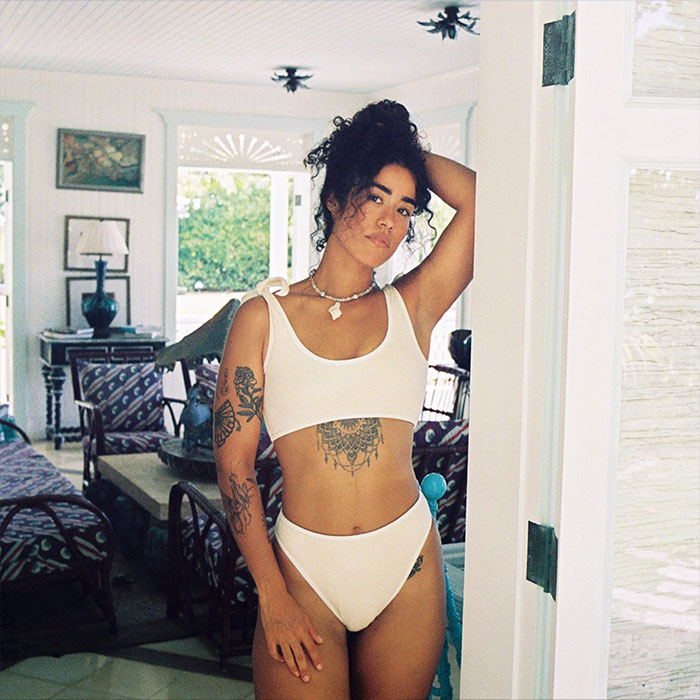
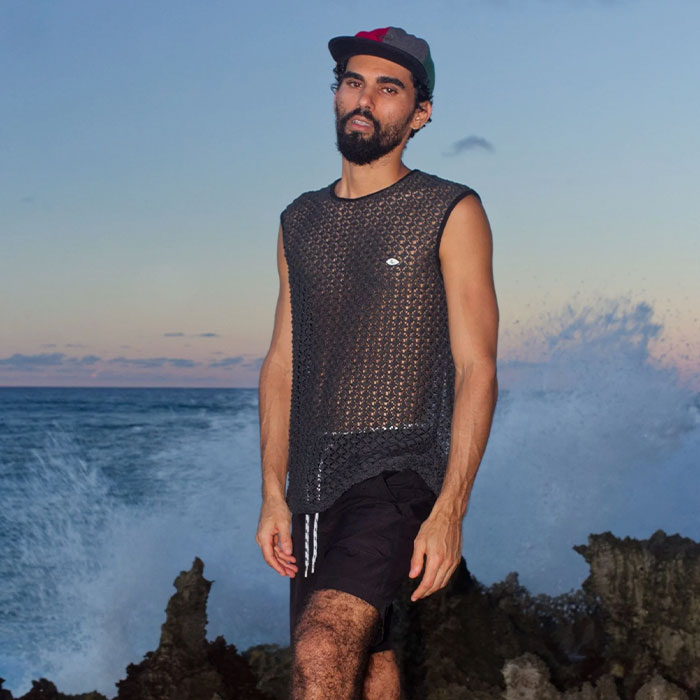
Freedom Ecowear is offering our readers 12% off their eco-friendly swimwear, perfect for your next eco getaway. Use the link and your discount is added automatically.