
Where to Stay in Saint Barthelemy: Best Areas and Sustainable Hotels
Where to stay in Saint Barthelemy
The best areas to stay in Saint Barthelemy range from a Green Globe certified clifftop hotel overlooking Anse de Lorient, to the island’s first eco luxury resort set alone on the sand at Anse des Cayes, a female founded boutique hotel on the lagoon at Grand Cul de Sac, and a collection of hillside bungalows on the heights of Colombier above the Bay of Flamands. Options are spread from Grand Cul de Sac, Pointe Milou and Lorient, Anse des Cayes to Saint-Jean and Colombier. Every stay we recommend below is genuinely sustainable and chosen so your money stays on the island.
Where to stay in Saint Barthelemy by area, at a glance
Grand Cul de Sac is best for couples and families wanting calm shallow water, watersports and a self-contained beach resort
Grand Cul de Sac is the island’s most easy-going luxury enclave, an east-coast bay that wraps around a reef-sheltered lagoon with flat, shallow water. It suits couples and families who want safe swimming close to shore, kitesurfers and windsurfers drawn by the steady trade winds, and anyone after a self-contained beach resort where the spa, the dining and the watersports all sit within a few steps of the sand. You reach the island by a roughly ten minute light-aircraft hop into Gustaf III airport (SBH) from St Maarten (SXM), or by ferry from Marigot, Simpson Bay or Philipsburg, then it is a short transfer of around fifteen minutes across to the bay, and a small hire car is well worth having to explore the other beaches.
The difference between Grand Cul de Sac and other popular beach areas like Saint Jean and Gustavia is that the lagoon here is protected by a reef, so the water stays calm and shallow rather than open and lively. Saint Jean is the busy surf, sunset and people-watching strip, and Gustavia is the chic harbour town built for boutique shopping and yacht-side dining, while Grand Cul de Sac keeps things low-key, barefoot and family-friendly without losing the polish.
Where to stay in Grand Cul de Sac: Top Pick
Le Barthélemy Hotel & Spa is the best place to stay in Grand Cul de Sac, Saint Barthelemy
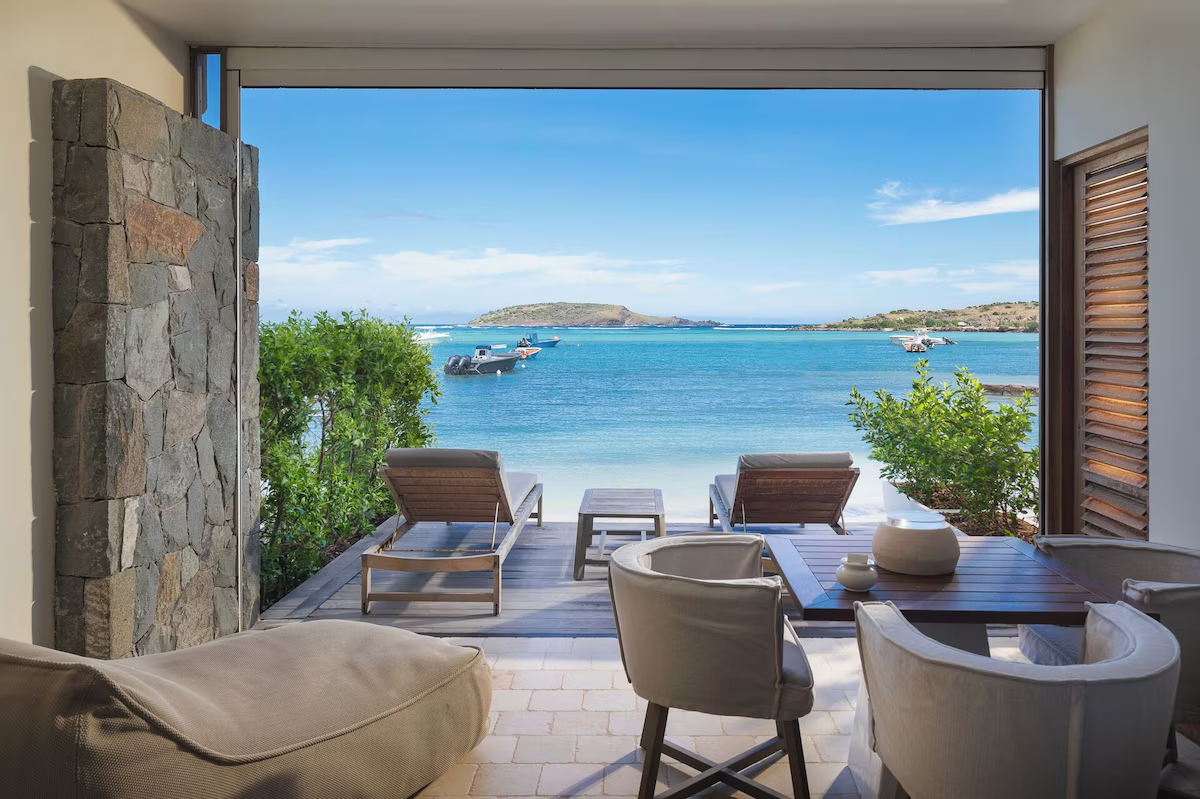
Set right on the calm lagoon at Grand Cul de Sac, Le Barthélemy Hotel & Spa is a female founded boutique retreat that makes the most of one of Saint Barthelemy’s most sheltered shorelines. Open air architecture lets sea breezes and natural light pour through the property, while the Green Globe certification signals an approach to hospitality that treats the surrounding lagoon and reef as something to protect rather than simply enjoy. It is a polished, intimate base for anyone who wants barefoot luxury without losing sight of the island’s fragile environment.
Who owns Le Barthélemy Hotel & Spa?
The hotel was built by Denise Dupré of Champagne Hospitality, which makes it one of the island’s notable female founded properties. Her vision shaped both the design and the green ethos, and that founder led attention to detail runs through everything from the open air layout to the kitchen. Ownership by a hospitality group with a clear sustainability commitment is part of why the property carries Green Globe certification rather than treating eco credentials as an afterthought.
About the rooms in Le Barthélemy Hotel & Spa
There are airy, light filled rooms and suites at Le Barthélemy Hotel & Spa, including lagoon facing options that open onto the water and quieter garden settings tucked into the grounds. Each space leans on the open air architecture that defines the hotel, drawing in natural light and sea breeze so the rooms feel connected to the Grand Cul de Sac setting. The result is a calm, contemporary style that suits couples and small groups looking for comfort close to the lagoon.
What food is available at Le Barthélemy Hotel & Spa?
Dining here is built around a zero waste kitchen, where every ingredient is used from bone to peel, turned into stocks, butter and other components rather than thrown away. That discipline shapes a menu that feels both refined and resourceful, making the most of fresh produce and the flavours of the Caribbean. Guests can eat well by the lagoon knowing the kitchen wastes as little as possible, which is rare even among the island’s upmarket tables.
Sustainability features of Le Barthélemy Hotel & Spa
Green Globe certification underpins a genuinely practical set of measures rather than vague green claims. Solar energy powers a large share of the property, with 100 per cent of the hot water solar heated, and an on site desalination station gives the hotel autonomous drinking water without leaning on scarce island supplies. A dedicated wastewater treatment plant deals with what flows out, the zero waste kitchen tackles food, and the open air design cuts the need for artificial light and heavy cooling. Together these features make it one of the more self sufficient stays in Saint Barthelemy.
Who is Le Barthélemy Hotel & Spa for?
This is a hotel for travellers who want boutique luxury and a quiet lagoon setting, yet care that their stay treads lightly. Couples after a romantic Grand Cul de Sac escape, spa lovers and anyone drawn to a female founded, Green Globe certified property will feel at home here. It suits the conscious British eco traveller in particular, offering the comfort of a high end Saint Barthelemy hotel alongside solar power, water autonomy and a kitchen that genuinely refuses to waste.
How to get to Le Barthélemy Hotel & Spa from the airport
The closest airport to Le Barthélemy Hotel & Spa is Gustaf III Airport (SBH) in Saint Jean, roughly a fifteen to twenty minute drive of around eight kilometres across the island to Grand Cul de Sac. Saint Barthelemy has no large international runway of its own, so most visitors first fly into Princess Juliana International Airport (SXM) on neighbouring Sint Maarten, then connect on a short scenic hop to SBH or take the ferry across to Gustavia.
Private transfer or taxi to Le Barthélemy Hotel & Spa
A pre arranged private transfer is the easiest option to get to Le Barthélemy Hotel & Spa, taking about fifteen to twenty minutes from Gustaf III Airport to Grand Cul de Sac. The hotel can organise the transfer in advance so a driver meets you, which is the smoothest option after the flight or ferry. Taxis do wait at the airport and in Gustavia, but they are not always plentiful, so booking your ride ahead is wise.
Public transport to Le Barthélemy Hotel & Spa
Public transport to Le Barthélemy Hotel & Spa is possible with multiple changes, but only just. Saint Barthelemy has no public bus or coach network at all, so there is no scheduled service from the airport or Gustavia to Grand Cul de Sac, and the island runs entirely on taxis, private transfers and hire cars. Because public transport genuinely does not reach this area, the honest recommendation is a pre booked transfer or taxi on arrival, then a small hire car once you are settled so you can explore the beaches at your own pace.
Things to do while staying at Le Barthélemy Hotel & Spa
Things to do around Le Barthélemy Hotel & Spa range from kitesurfing and paddleboarding straight off the calm, shallow lagoon at Grand Cul de Sac, where the protected water and steady trade winds make it a favourite for beginners and pros alike, to lazy days on the sand and treatments at the resort spa.
Within easy reach you have the chic harbour town of Gustavia for boutique shopping and waterfront dining, the lively surf and sunset scene at Saint Jean beach, the quieter sands and coastal trails out at Grand Fond and Toiny, and snorkelling around the island’s sheltered coves. The weekly markets and Gustavia’s Swedish colonial heritage add a cultural thread to days otherwise spent on the water.
It suits families with the safe lagoon swimming, solo travellers and couples with the spa and fine dining, nature lovers with the reef and coastal walks, and anyone curious about island culture with Gustavia’s heritage and markets. The mix of gentle water and easy access to livelier spots makes it work for relaxed and active travellers alike.
Pointe Milou and Lorient is best for style-conscious couples, sunset chasers, surfers and nature lovers who want clifftop views with quick access to Gustavia
Pointe Milou and Lorient sit along the central north coast of Saint Barthelemy, a ten to fifteen minute drive east of Gustaf III airport and Gustavia. Pointe Milou is a tranquil residential headland known for dramatic clifftop sunsets and the famous Le Ti St Barth, where the ocean light at the end of the day is the main event. Just along the coast, Lorient offers a low-key surf beach, a calm family-friendly arc of sand and a real village feel. It suits style-conscious couples after clifftop romance, surfers and beach lovers, nature enthusiasts drawn to the reefs, and independent travellers who want a quiet base with the harbour shops and restaurants only a short drive away.
The difference between Pointe Milou and Lorient and other popular areas like Gustavia and St Jean is that this stretch of coast trades the buzz of the harbour and the airport beach for headland calm and ocean views. Gustavia is the island’s polished port for boutiques, galleries and yacht-watching, and St Jean has the busy beach scene and shopping arcades, while Pointe Milou and Lorient keep the pace slower, the lanes steeper and residential, and the sunsets the headline draw, all within easy reach of both.
Where to stay in Pointe Milou and Lorient: Top Pick
Hotel Christopher St.Barth is the best place to stay in Pointe Milou and Lorient, Saint Barthelemy
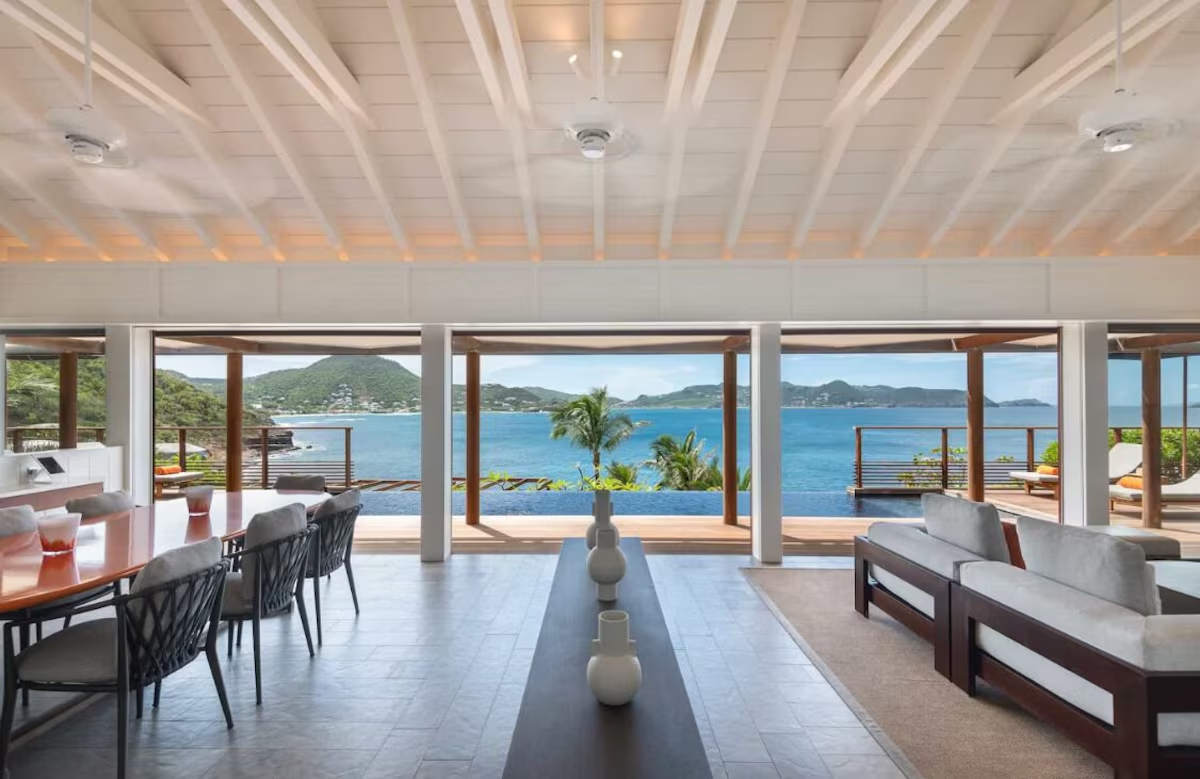
Perched on the cliffs of the island’s western flank, Hotel Christopher St.Barth looks out across the bay of Anse de Lorient, where the rugged headland of Pointe Milou drops away into the Caribbean. The setting pairs a calm, residential pocket of Saint Barthelemy with sweeping sea views, and the property carries a green credential no rival on the island can match: it is the only hotel here to hold Green Globe certification, earned every single year from 2021 through to 2024.
Who owns Hotel Christopher St.Barth?
Operating as part of the French Sibuet hospitality group, the hotel sits within a portfolio known for refined retreats that lean into their natural surroundings rather than overpowering them. That ownership ethos shows in how the property has been managed: sustained year after year as the island’s sole Green Globe certified address, a standard that demands continuous reinvestment rather than a one-off badge.
About the rooms in Hotel Christopher St.Barth
There are 42 rooms and suites at Hotel Christopher St.Barth, including sea-facing rooms, junior suites and larger suites stepped down the clifftop so that each opens to the water and the horizon beyond. Designed in a pared-back contemporary style, the accommodation favours light, space and uninterrupted views over Anse de Lorient, with private terraces making the most of the western aspect and the long Caribbean sunsets.
What food is available at Hotel Christopher St.Barth?
Dining leans on French technique married to fresh Caribbean produce, with seafood featuring strongly given the clifftop position above the bay. Guests can eat across the day from a relaxed poolside setting through to a more considered evening table, and the kitchen’s emphasis on local sourcing sits comfortably alongside the property’s wider environmental commitments.
Sustainability features of Hotel Christopher St.Barth
Green Globe certification, held continuously from 2021 to 2024, anchors a genuinely substantial programme. Solar panels cut the hotel’s energy load, while an on-site treatment and desalination plant keeps the property fully self-sufficient for water, a meaningful achievement on a dry island where fresh water is scarce. Most striking of all, the hotel funds the ARTIREEF coral project at Pointe Milou, which uses the Biorock process to regrow 38 species of coral on electrified metal reef structures, turning a luxury stay into active marine restoration.
Who is Hotel Christopher St.Barth for?
Travellers who want the polish of a high-end Saint Barthelemy address without sacrificing their conscience will feel at home here. It suits couples and quieter guests drawn to the calm of the Pointe Milou and Lorient side of the island, and it rewards anyone who likes to know that their clifftop view comes with solar power, self-sufficient water and a coral reef being rebuilt just offshore.
How to get to Hotel Christopher St.Barth from the airport
The closest airport to Hotel Christopher St.Barth is Gustaf III Airport (SBH) in St Jean, the island’s only airstrip and one of the most striking approaches in the Caribbean, with planes dropping over a hilltop road before touching down by the bay. From there it is a short drive of roughly ten to fifteen minutes east along the coast to Pointe Milou, a distance of only a few kilometres on the island’s narrow, steep lanes.
Private transfer or taxi to Hotel Christopher St.Barth
A pre arranged private transfer is the easiest option to get to Hotel Christopher St.Barth, organised through the hotel and taking around fifteen minutes from the terminal. A taxi from the rank outside Gustaf III is just as quick if you prefer to arrange the last leg on arrival. A hire car is well worth having if you want the freedom to explore the island’s beaches at your own pace, though the lanes are steep and winding so a smaller vehicle is easiest. Many guests flying in from St Maarten arrive on the small inter-island flight into Gustaf III, while others come by ferry into Gustavia, and either way the onward road journey to the property is brief.
Public transport to Hotel Christopher St.Barth
Public transport to Hotel Christopher St.Barth is possible with multiple changes. In practice, though, Saint Barthelemy has no scheduled public bus or coach network, so there is no fixed route line serving Pointe Milou or the wider island. The realistic choices are a taxi, a hotel-arranged private transfer or a hire car, and given the short distances and the steep terrain most guests find a car or a pre-booked transfer is by far the easiest way to reach Pointe Milou and to get around the island.
Things to do while staying at Hotel Christopher St.Barth
Things to do around Hotel Christopher St.Barth range from gentle swimming and snorkelling at the calm, family-friendly arc of Anse de Lorient just below the clifftop, where the reef and shallows make it easy for younger children and beginners, to watching the coral restoration work of the ARTIREEF project taking shape on the reef structures just offshore.
Within easy reach you also have the surf breakers and laid-back beach scene at Lorient itself, the chic boutiques, galleries and harbour restaurants of Gustavia, the wild protected sands of Anse de Grande Saline for a quieter day by the sea, and the colourful fishing village of Corossol for a taste of the island’s older Norman heritage and traditional straw weaving. Sunset drinks at the famous Le Ti St Barth on the same Pointe Milou headland are a local institution and an easy evening out.
It suits families wanting safe water and space, couples after clifftop romance and good food, solo travellers drawn to quiet coastal walks, nature lovers interested in the reefs and marine conservation, and culture seekers exploring Gustavia and Corossol. With the harbour, the surf beach and the protected nature sites all a short drive away, the area works equally well for relaxed pool days and for getting out across the island.
Anse des Cayes is best for design lovers, honeymooners and conscious luxury travellers wanting a boutique beach hideaway minutes from the airport and town
Anse des Cayes is a quietly fashionable cove that blends a relaxed, surf tinged beach with polished boutique style. It sits just a few minutes from Gustaf III airport (SBH), so the light aircraft connection from St Maarten lands you almost on the doorstep, though a small hire car is still useful for exploring and ferries from St Maarten are the alternative arrival. Home to the design led Hotel Manapany, the bay suits couples on honeymoon, design conscious travellers and anyone who wants a calm, low key base a short drive from both Saint Jean and Gustavia.
The difference between Anse des Cayes and other popular bays like Saint Jean and Flamands is that it stays low key and residential rather than busy, trading the lively beach club scene of Saint Jean and the grand frontage of Flamands for a sheltered, almost private feel, while keeping you only minutes from the airport, the shops and the harbour.
Where to stay in Anse des Cayes: Top Pick
Hotel Manapany is the best place to stay in Anse des Cayes, Saint Barthelemy
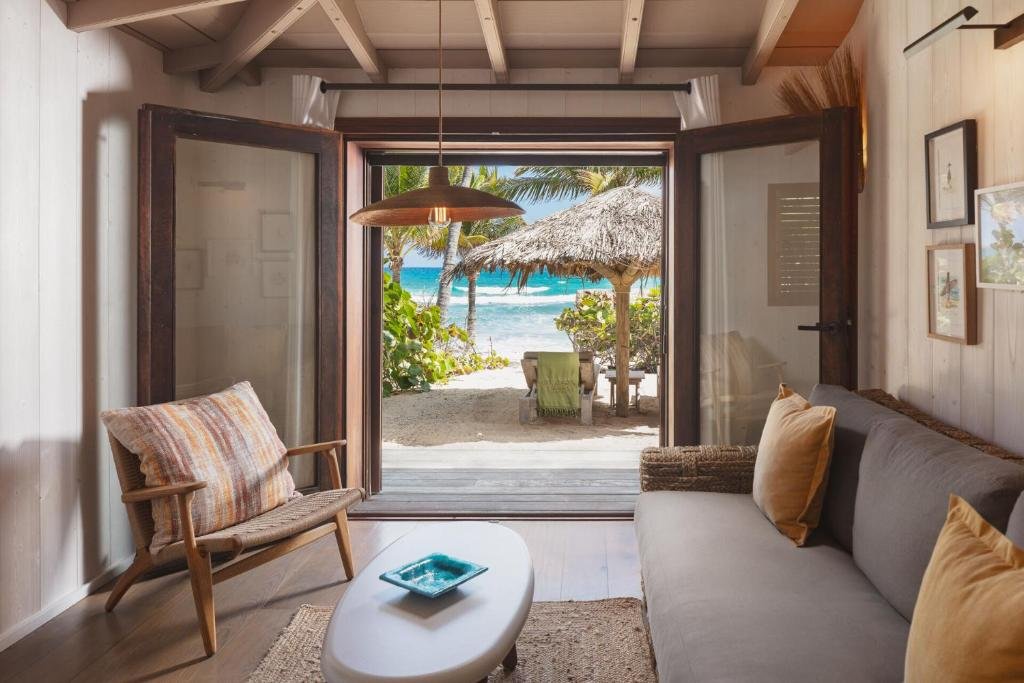
Tucked into the quiet cove of Anse des Cayes on the northern coast of Saint Barthelemy, Hotel Manapany is an intimate beachfront retreat that sits right where the hillside meets a calm, sheltered bay. The setting trades the bustle of Gustavia for something slower, with the rooms and suites stepping down the slope towards the water and the Caribbean filling every view. It is the sort of address that feels tucked away yet keeps you within easy reach of the island’s coves and the capital.
Who owns Hotel Manapany?
Operated as part of the boutique luxury sphere on Saint Barthelemy, Hotel Manapany is run by a dedicated hospitality team rather than a sprawling chain, which is what gives the place its personal, small-scale feel. Decisions about the guest experience and the property’s environmental commitments are made on the island itself, so the people looking after the hotel are the same ones invested in the cove around it.
About the rooms in Hotel Manapany
There are 43 rooms and suites at Hotel Manapany, including beachfront rooms that open almost directly onto the sand, hillside rooms that climb the slope for elevated sea views, and larger suites and villa-style accommodation for guests who want more space. Each one leans on natural materials and a pared-back, breezy design, and many come with their own terrace or plunge pool so the outdoors stays part of the room.
What food is available at Hotel Manapany?
Dining leans on the meeting of French technique and Mediterranean ingredients, with fresh fish and seasonal produce at the heart of the menus. Guests can eat with their feet near the sand at the beachfront restaurant or settle in for something more refined in the evening, and the bar pours cocktails as the sun drops behind the bay. Lighter plates and breakfasts round out the day for those who would rather not leave the cove.
Sustainability features of Hotel Manapany
The hotel pays close attention to its footprint on a small island where fresh water and intact reefs are precious, weaving water-conscious operations and a respect for the surrounding marine environment into how it runs. By keeping the property boutique in scale and rooted in its cove rather than overbuilt, Hotel Manapany aims to tread lightly on Anse des Cayes and protect the very setting that draws guests to it.
Who is Hotel Manapany for?
Couples and design-minded travellers who want a calm, barefoot-luxury base will feel most at home here, as will anyone keen to swap the showier corners of Saint Barthelemy for a tucked-away beach and a slower rhythm. It suits guests who value privacy, good food and an easy connection to the sea over a big resort buzz, while still wanting Gustavia and the island’s other coves within a short drive.
How to get to Hotel Manapany from the airport
The closest airport to Hotel Manapany is Gustaf III Airport (SBH) in Saint Jean, a short drive of roughly ten to fifteen minutes from Anse des Cayes. Most arrivals reach Saint Barthelemy on a small internal flight from Saint Martin’s Princess Juliana Airport (SXM), a hop of around fifteen minutes, or by ferry across to Gustavia.
Private transfer or taxi to Hotel Manapany
A pre arranged private transfer is the easiest option to get to Hotel Manapany, booked through the hotel ahead of arrival so a driver is waiting after the flight from Saint Martin. A taxi from the rank at Gustaf III Airport is the alternative and takes only ten to fifteen minutes, though cars can be in short supply at busy times, which is why booking ahead is the most reliable choice. Many guests keep a small hire car for the duration so they can explore the island’s coves at their own pace, as distances everywhere on Saint Barthelemy are short.
Public transport to Hotel Manapany
Public transport to Hotel Manapany is possible with multiple changes, but in practice the island has no regular public bus or coach network, so there is no scheduled service that reaches Anse des Cayes directly. Saint Barthelemy is served instead by taxis and route taxis based at the airport and in Gustavia, which act as the main shared transport, leaving you with a short taxi hop to the property from either point. Given how limited and informal this is, a hire car, taxi or pre arranged private transfer is by far the best way to reach the hotel and to get around afterwards.
Things to do while staying at Hotel Manapany
Things to do around Hotel Manapany range from a quiet morning on the sheltered sand of Anse des Cayes itself, where calm water and a laid back local feel make it easy to settle in, to a string of nearby highlights worth a day each. The chic capital of Gustavia, with its harbour, boutiques and waterfront restaurants, sits a short drive away.
Further afield, the golden sweep of Saint Jean beach and the surf at Lorient draw swimmers and watersports fans, while the wide bay at Flamands offers a more open stretch of sand. Nature lovers can walk the coastal trails and snorkel the clear reefs, and dining runs from casual beach shacks to refined French tables, so evenings are as varied as the days.
The area suits a wide mix of travellers. Families appreciate the gentle bays and easy beach days, solo travellers find the island compact and welcoming, nature lovers have the trails and reefs to explore, and anyone drawn to culture can browse Gustavia’s galleries and Creole heritage. Honeymooners and couples, meanwhile, have the calm and privacy of Anse des Cayes right on the doorstep.
Saint-Jean and Colombier is best for first-timers, beach lovers, couples and active travellers wanting a central base with shops, restaurants and quiet coastline within reach
Saint-Jean sits right beside Gustaf III airport (SBH), the natural landing point for the thrilling short-runway flight from Sint Maarten, and it is also handy for ferry arrivals via a brief taxi or hire-car transfer. This is the island’s busiest beach and shopping strip, backed by restaurants, beach clubs and small guesthouses, so it suits first-timers and active travellers who want everything close at hand. Neighbouring Colombier, to the west, turns quieter and more rural, climbing onto green heights above the Bay of Flamands and ending at a secluded beach reached on foot or by boat, which makes the pairing ideal for couples and nature lovers who want calm without giving up convenience.
The difference between Saint-Jean and Colombier and other popular beach areas like Gustavia and Grand Cul-de-Sac is that Gustavia is the harbour town built around yachts, luxury boutiques and waterside dining, while Grand Cul-de-Sac is a sheltered lagoon geared to watersports and family bathing. Saint-Jean and Colombier instead blend the island’s liveliest social beach with a genuinely rural, residential hillside next door, so you get buzz and seclusion in a single, very short stretch of road.
Where to stay in Saint-Jean and Colombier: Top Pick
Gyp Sea Saint-Barth is the best place to stay in Saint-Jean and Colombier, Saint Barthelemy
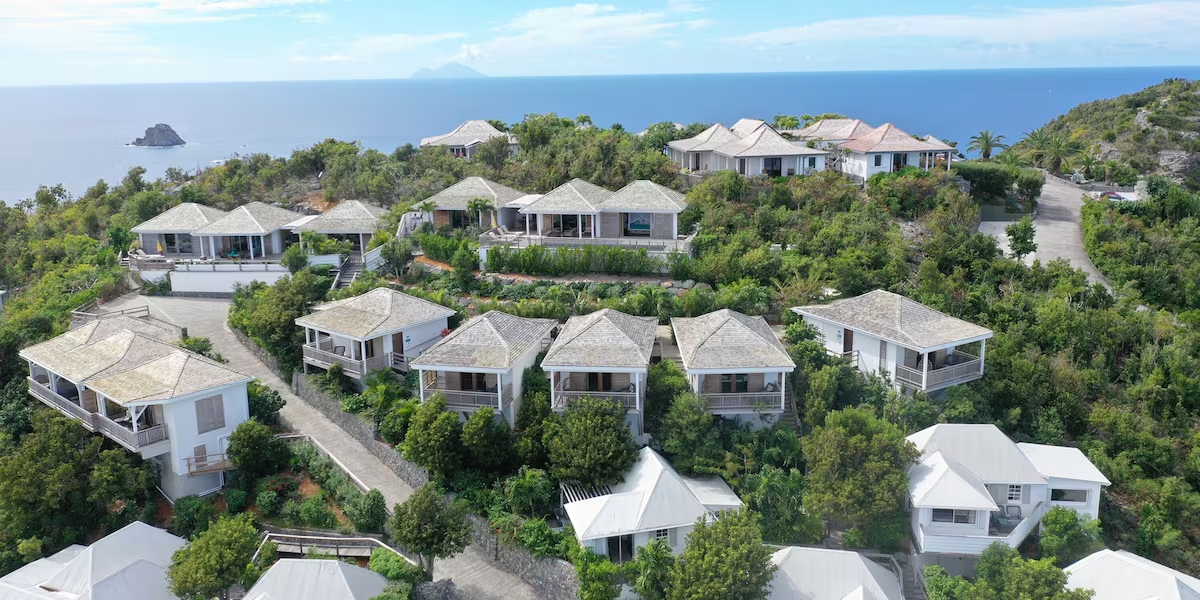
Set on the heights of Colombier above the Bay of Flamands, Gyp Sea Saint-Barth is a collection of 22 bungalows that look out across one of the most beautiful stretches of Saint Barthelemy. The elevated position gives the property sweeping views over the bay, while its gardens are planted with endemic species of the Lesser Antilles. For travellers exploring the Saint-Jean and Colombier area, it offers a quiet, garden wrapped retreat with the island’s celebrated beaches close at hand.
Who owns Gyp Sea Saint-Barth?
The property is run by Maisons et Hôtels Sibuet, a family owned hospitality group. Its name carries a personal story: it honours the founders’ daughter Marie, who set her heart on the island and inspired the venture. That family stewardship shapes the character of the place, lending it a warmth and attention to detail that feels closer to a private home than a corporate resort.
About the rooms in Gyp Sea Saint-Barth
There are 22 rooms at Gyp Sea Saint-Barth, including individual bungalows spread across the hillside of Colombier. Each one is positioned to make the most of the setting above the Bay of Flamands, with the surrounding gardens giving guests a sense of seclusion. The bungalow layout suits anyone who values privacy and an unhurried pace during their stay.
What food is available at Gyp Sea Saint-Barth?
Dining leans towards organic and eco certified produce, with the same care for sourcing that runs through the rest of the property. Catering at the hotel favours certified ingredients, reflecting the wider commitment to responsible choices. Guests can expect a menu that respects both the island’s surroundings and the standards that earned the property its green credentials.
Sustainability features of Gyp Sea Saint-Barth
Green Globe certification, backed by annual independent audits, sits at the heart of the hotel’s environmental work. Organic and eco certified products are used across both cleaning and catering, reducing the property’s everyday impact. The gardens go a step further, cultivating endemic plants of the Lesser Antilles to help safeguard local biodiversity and keep native species thriving.
Who is Gyp Sea Saint-Barth for?
This is a retreat for travellers who want the polish of Saint Barthelemy without losing sight of the environment that makes the island special. Couples and quiet seekers will appreciate the privacy of the bungalows and the calm of the gardens, while anyone drawn to genuine eco credentials will value the Green Globe certification and biodiversity focus. In short, it suits guests who want beauty, seclusion and a conscience, all in one place.
How to get to Gyp Sea Saint-Barth from the airport
The closest airport to Gyp Sea Saint-Barth is Gustaf III Airport (SBH) in Saint-Jean, the island’s only airport and one of the most dramatic short runways in the Caribbean. From there the property sits roughly ten to fifteen minutes away by road, climbing onto the heights of Colombier above the Bay of Flamands, a distance of only a few kilometres, so the last leg is short and scenic.
Private transfer or taxi to Gyp Sea Saint-Barth
A pre arranged private transfer is the easiest option to get to Gyp Sea Saint-Barth, arranged through the hotel and met on arrival before being driven straight up to Colombier. A taxi from the airport rank works equally well given the compact size of the island, and a small hire car is popular too, since it gives you the freedom to reach Flamands, Saint-Jean and Gustavia at your own pace on the narrow hill roads. Many guests fly in on the brief hop from Princess Juliana Airport on Sint Maarten, while some arrive by sea, taking a boat or ferry crossing into Gustavia followed by a quick drive up to Colombier.
Public transport to Gyp Sea Saint-Barth
Public transport to Gyp Sea Saint-Barth is possible with multiple changes. In truth, though, Saint Barthelemy has no public bus or coach network, so there is no scheduled service to Colombier and no route taxi line that runs to the door. The realistic choices are a hotel transfer, a taxi from the airport rank or a hire car, and given the short distances and the hilly back roads up to the property, a private transfer or your own car is comfortably the best way to arrive and to get around during your stay.
Things to do while staying at Gyp Sea Saint-Barth
Things to do around Gyp Sea Saint-Barth range from a barefoot morning on the long pale sweep of Flamands beach just below the property, where the water is calm enough for a gentle swim and the sunsets are some of the best on the island, to a walk along the coastal path to the wild, secluded cove of Colombier beach, reachable only on foot or by boat and a favourite of nature lovers and snorkellers.
Further afield, the little harbour town of Gustavia, with its boutiques, waterside restaurants and red roofed warehouses, is a short drive away for culture and dining, while the lively sands and surf school at Saint-Jean draw anyone who wants to be in the thick of island life. Add in island hopping by boat, a long lunch at one of the celebrated beach clubs, and quiet exploring of the back roads, and there is plenty to fill a week without straying far.
This mix suits a wide range of travellers. Families gravitate to the gentle surf and surf school at Saint-Jean, solo wanderers enjoy the easy social scene of the beach clubs, nature lovers and snorkellers head for the secluded cove at Colombier, and those drawn to culture and good food make for Gustavia. Couples, meanwhile, can simply stay close to the bungalow, the pool and the unspoilt coastline below.
When is the best time to visit Saint Barthelemy?
The dry season runs roughly December to April, with the lowest rainfall in February and March, and this is also the chic peak season: lower humidity, warm seas and the island’s busiest dining and yachting scene, with Christmas and New Year the most coveted dates (book months ahead and expect top rates). Atlantic hurricane season officially spans 1 June to 30 November, with the highest storm risk from August to October and September the statistically most likely month; June, and the shoulder weeks of late April to early June, offer warmer water, far thinner crowds and noticeably better value, though some hotels and restaurants close for parts of late summer and early autumn. The June to November stretch is the wetter season but rain typically comes in short bursts rather than washouts.
Is Saint Barthelemy safe, and how do you get around?
St Barthelemy is consistently rated one of the safest islands in the Caribbean, with very little violent crime; normal precautions apply but Brits will generally feel relaxed. As a French overseas territory the island drives on the RIGHT in left-hand-drive cars, so take care if you are used to UK roads; the lanes are narrow, steep and winding, so a small hire car (ideally a Mini Moke or compact) is effectively essential as taxis are scarce and there is no real public transport. Any valid UK driving licence is accepted. The currency is the euro: bring cards and some euro cash, and while US dollars are often accepted you will usually get a poorer rate. Tipping skews North American: many restaurants add a service charge of around 10 to 15 per cent (check the bill before adding more), and around 10 per cent is normal for taxi drivers.
Why we only list sustainable stays in Saint Barthelemy
Every stay in this guide was hand picked and checked for how it actually runs, and most are locally rooted so your money stays on the island. For the full breakdown see our guide to the best sustainable hotels in Saint Barthelemy, or zoom out to the best sustainable hotels across the Caribbean.
More Caribbean Sustainable Stays
Book Your Next Stay Consciously
Travel is a wonderful opportunity to connect with Mother Earth.
However, it is also frequently undermined by reckless development and disrespectful tourism practices.
This directory is a curated, verified list of hotels, lodges, and resorts that honour our planet and are led by visionary stewards of the environment.
From farm-to-table culinary experiences to dedicated ocean conservation efforts, such as marine protection and coral restoration, these establishments are redefining hospitality.

12% Off Sustainable Swimwear
Freedom Ecowear is offering our readers 12% off their eco-friendly swimwear, perfect for your next eco getaway. Use the link and your discount is added automatically.