

Oil Paint Is the Most Toxic Thing I Touch
Is oil paint toxic? Yes, parts of it are, and the most honest person I have heard say so paints with it every day. Most artists will not talk about what is actually in their studio. Angie did, without me pushing. I was in her corner studio, watching the black Dominican painter mix, when she held up the oil and called it what it is. The rest is her.
“I think this is the most toxic product in terms of the ones that I use,” she said, holding up the oil. “It’s my favourite material because of how glossy it is. But I’m one hundred percent sure that we will be able to have paintings like this without sacrificing so much of the environment.”
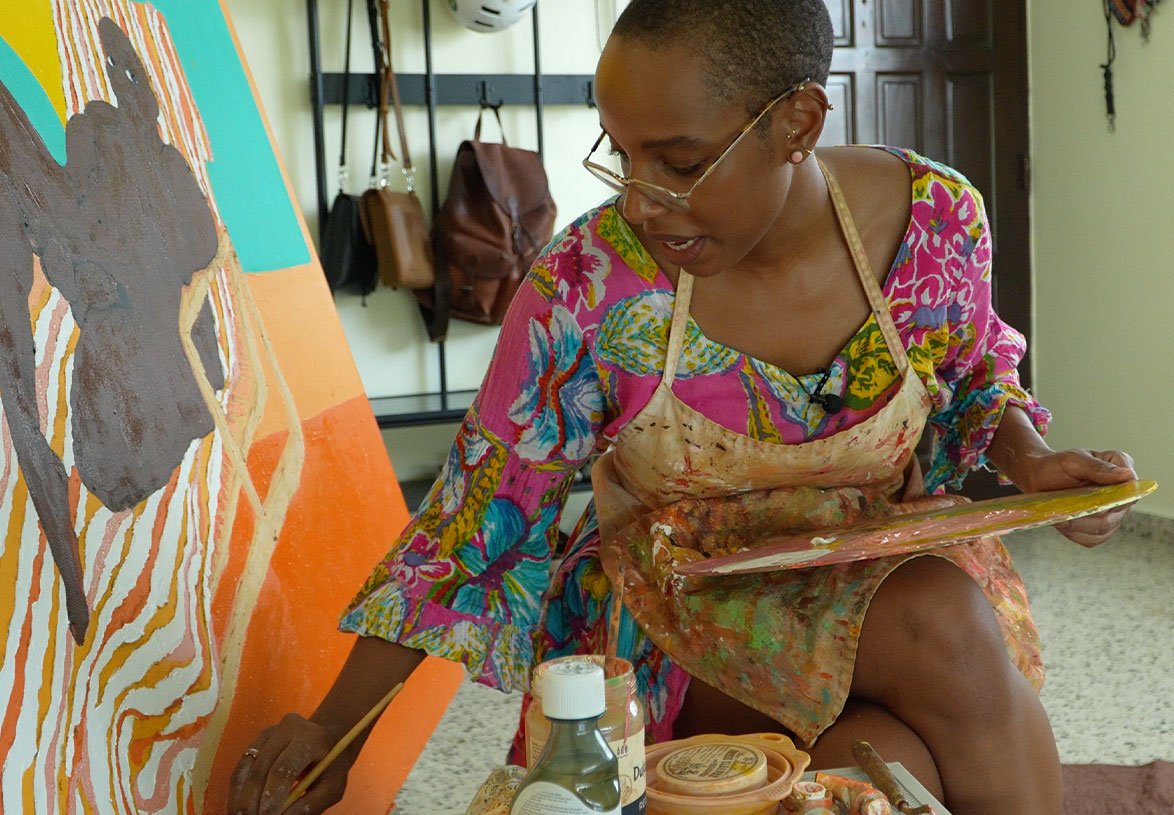

Is oil paint toxic, and which part actually harms you
Oil paint itself is largely non toxic on the canvas, but oil painting becomes toxic through three things, the solvents you thin and clean with, a few heavy metal pigments, and dust and fumes over years. A tube of titanium white or yellow ochre is low risk, while turpentine, cadmium and ingesting paint off your hands are where real exposure lives. So the honest answer to “is oil paint toxic” is that the paint is usually fine, the solvents and a handful of pigments are the danger.
Knowing that difference is the whole game, and it is the difference between an artist who paints for forty years and one who gets sick doing it. Someone will always tell me everything is technically a chemical, even water, so why single out paint. It is never about whether something is a chemical, it is about the type, the volume, the exposure and the purpose.
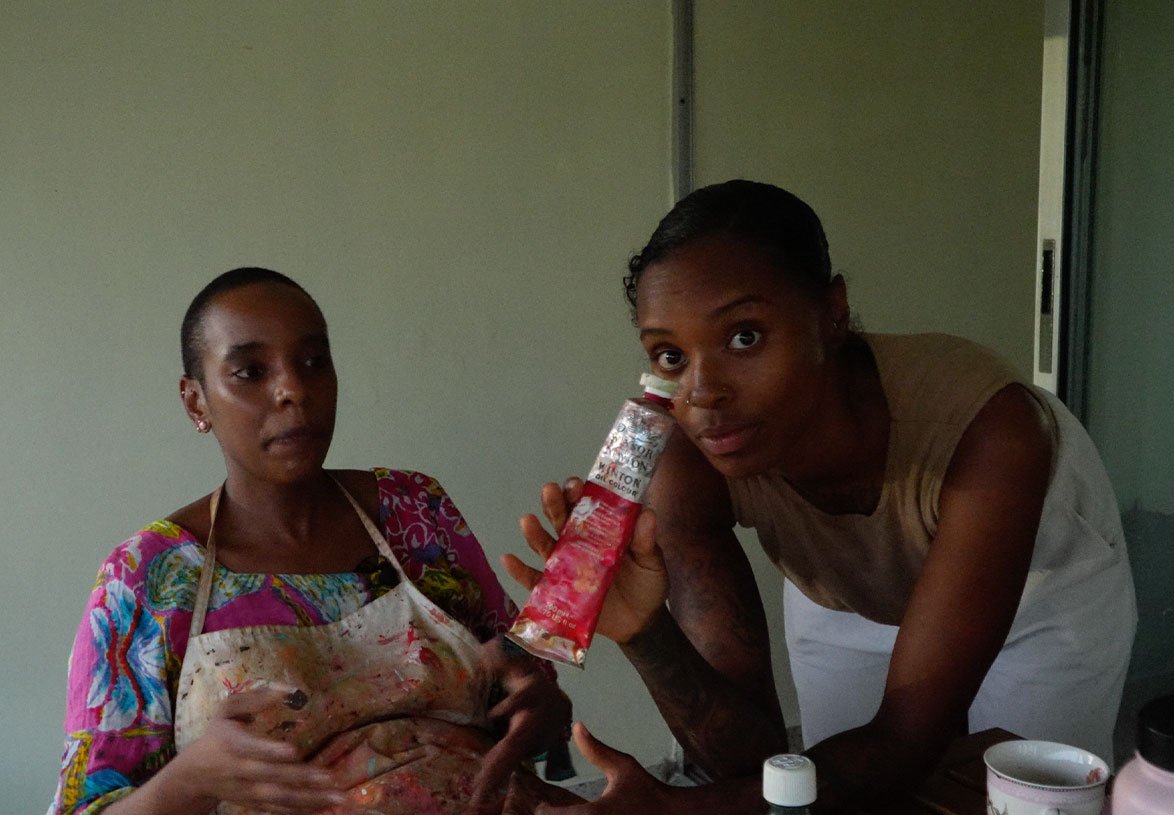
Oil paint fumes, solvents and VOCs, the biggest risk
The biggest risk in oil painting is not the paint, it is the fumes from solvents. Turpentine and mineral spirits release volatile organic compounds, VOCs, that irritate the lungs, eyes and throat, and with chronic exposure can affect the liver, kidneys and nervous system. The single most protective change an oil painter can make is to retire turpentine for a low odour or solvent free routine and always ventilate.
Angie feels it on her own body, the smell is the clue. Oil is the slowest paint to dry and, as she put it, the smelliest in the room, three or four days to cure. The fix is to thin and clean with walnut or linseed oil and brush soap instead of solvent, and to work with a window open and cross ventilation, never in a sealed bedroom (the EPA on VOCs and indoor air quality).
Toxic oil paint pigments, cadmium, cobalt and lead
The toxic pigments in oil paint are heavy metals, cadmium in reds, oranges and yellows, cobalt in blues, and lead in flake and Naples yellow. In a sealed tube mixed wet they are low risk through the skin, the danger is dust and ingestion. Never sand, spray or eat near heavy metal paint, and choose cadmium free and cobalt free hues to get the colour without the metal.
Angie keeps a tight palette, no more than eight colours, but the metal is in the colour, not the quantity. Never point a brush with your lips, and check the hazard and lightfastness label on the tube, reputable brands print it right there.
How to paint safely, ventilation and non toxic swaps
To paint safely with oils, ventilate every session, retire turpentine, wear gloves or barrier cream, keep food out of the studio, and store oily rags flat or in a sealed metal tin because they can self heat. These habits remove almost all the real risk without dimming the work. Safe oil painting is about the routine around the paint, not giving up the paint.
You do not need a chemistry degree, you need habits. None of this dims the work, it just means the work does not cost you your lungs.
The honest guilt of toxic art materials
What made the conversation rare was that Angie did not perform sustainability. She sat in the discomfort and asked me a real question back. “There’s this guilt about it,” she told me. “I don’t know if I should take the fault out of me and still use it, or go to the farthest I can go to look at something, even if it’s super expensive, so I can change it.” She caught her own contradiction before I could. “How would you like to talk so much about the countryside, when you are not doing things that actually help you preserve it, in terms of this consumption, which is the thing I spend most money on?”
Non toxic oil paint and natural pigments are coming
Non toxic alternatives to traditional oil paint already exist, water mixable oils that thin and clean with water instead of solvent, earth and ochre palettes with no heavy metals, and plant based natural pigments. They are not yet a full replacement for glossy oil, but the gap is closing fast, and natural pigment makers in the Dominican Republic are part of that shift.
“Especially here, a lot of people are trying to make natural pigments, extracts of plants,” Angie told me. “They are working to dye fabric, which for me is like a huge step.” I told her where I stand, because she asked. I am extreme, I do not compromise, and I feel good for missing out. She did not flinch from her own pace. “Baby steps of extreme,” she said. Try it with one piece. Assess.
What we can take from an artist sitting in the guilt
Angie models something most sustainability talk skips. You are allowed to not be there yet, as long as you are honest about it. She still buys the toxic oil, but she names it, she watches the alternatives, and she lets the guilt do its proper job, which is to move her, not crush her. The first step is never the swap, it is consciousness, and the next steps are decisions, decisions, decisions. An artist who makes one sacrifice and produces something beautiful inspires the next person, and that is a network. It is worth it, even from a small apartment in the Caribbean.
If this resonated, our sustainable clothing guide covers the natural dyes Angie is hopeful about, and the black Barbie factory piece shows what she makes with that toxic, glorious oil. When you travel, our Dominican Republic eco stays keep you close to the people doing this work on the ground. See you in the next one, my loves.
Thanks for reading. @queenofvitality
- Facts to confirm with Angie: the name of the natural pigment makers she references, her oil brand (she says Winsor and Newton), and her full name (flag below).
- Photos needed: her palette and the eight tubes (hero), a close up of the glossy oil surface, her brushes. Alt text “is oil paint toxic, oil paint, Dominican artist Angie”.
- Keyword gaps: “oil paint fumes”, “oil paint VOCs”, “non toxic oil paint”, “cadmium cobalt lead” now placed in H2s and answer paragraphs.
- Lived detail to add: which local maker she has seen working with plant pigments, to turn the hope into a named example.
-12% Off Exclusive Discount On Sustainable Swimwear
Freedom Ecowear have given us a discount of -12% off to share with our website visitors. Use the link to claim your discount.