
Where to Stay in the US Virgin Islands: Best Areas and Sustainable Hotels
Where to stay in the US Virgin Islands
The best areas to stay in the US Virgin Islands range from a 100% solar powered eco inn set on a restored 1760 sugar plantation estate, to an off grid cluster of soft sided eco tents built into a 51 acre hillside above Salt Pond, a 100 acre farm with a gravity fed water system and structures built from on farm bamboo, and a female co owned, solar powered guesthouse tucked into a lush garden just above Cruz Bay. Options are spread from Frederiksted and the West End, St Croix, Cruz Bay, St John to Coral Bay and the East End, St John. Every stay we recommend below is genuinely sustainable and chosen so your money stays on the island.
Where to stay in the US Virgin Islands by area, at a glance
Frederiksted and the West End, St Croix is best for eco-minded travellers, farm-stay and slow-travel types, couples and solo visitors who want quiet over resort buzz
This is the green, rural end of St Croix, where the island slows right down. Fly into Henry E. Rohlsen Airport (STX) and it is roughly a 30 to 45 minute drive west to the Frederiksted area, with a hire car the sensible choice as taxis are scarce out here and public transport is limited. You will find the certified organic Ridge to Reef Farm tucked into the rainforest hills, the restored 1760 sugar estate Feather Leaf Inn nearby, calm west coast beaches and the famously good sunsets that the west end is known for. It suits couples, solo visitors and anyone who would rather hear birdsong and the rustle of an orchard than a poolside DJ.
The difference between Frederiksted and the West End, St Croix and other popular Virgin Islands beach towns like Christiansted on the same island and Cruz Bay on St John is that this corner trades shops, bars and busy waterfronts for working farmland, rainforest drives and genuine quiet, so you come here to unwind and learn rather than to be entertained.
Where to stay in Frederiksted and the West End, St Croix: Top Pick
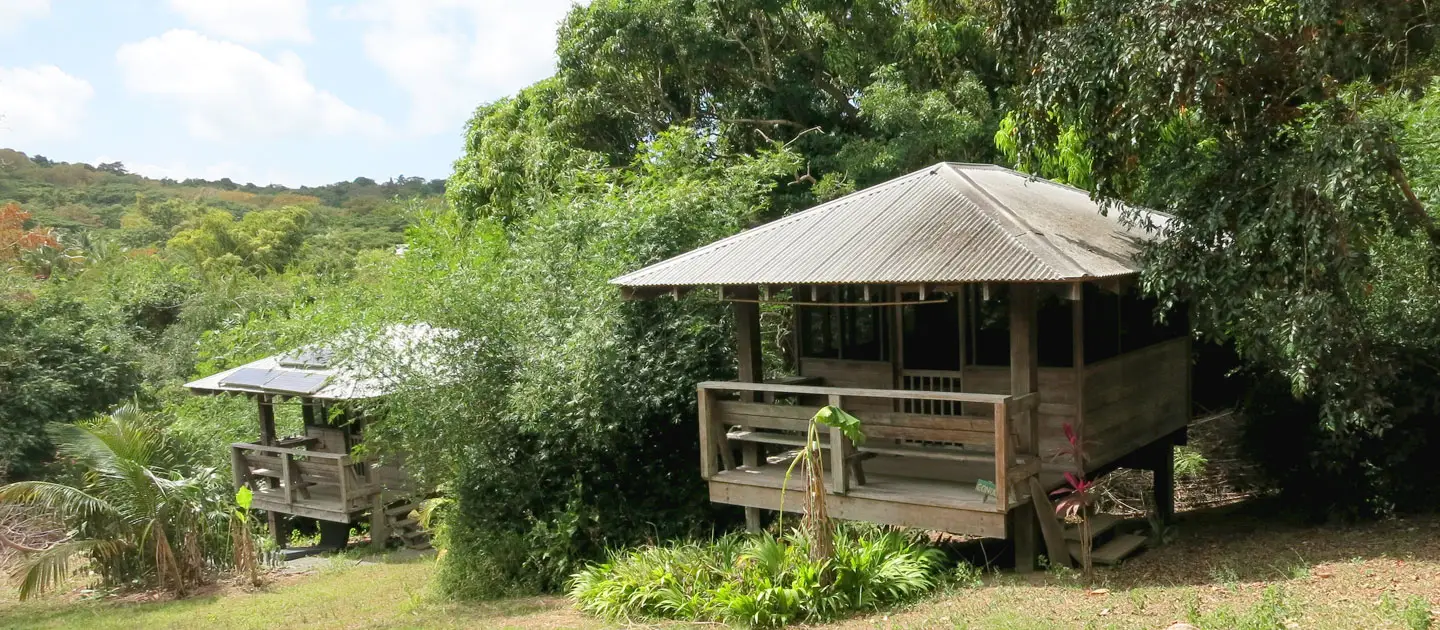
Ridge to Reef Farm is the best place to stay in Frederiksted and the West End, St Croix, the US Virgin Islands
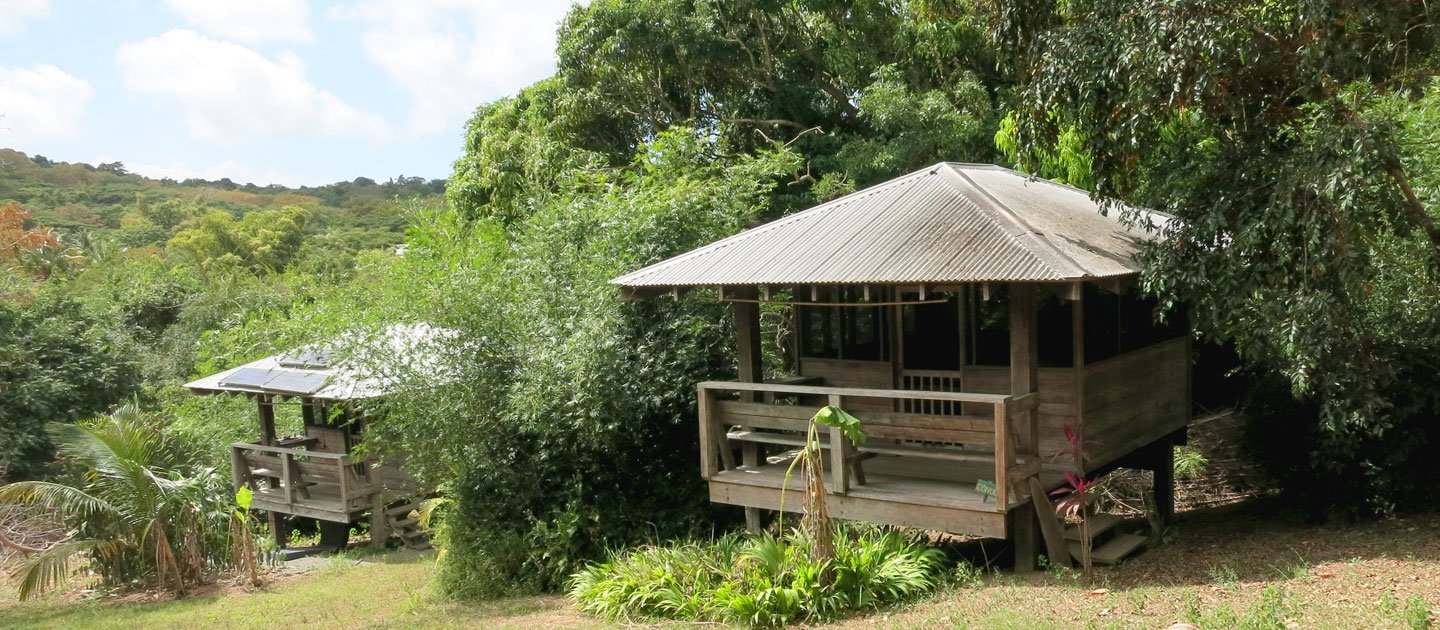
Set in the green hills of St Croix’s West End, above the historic town of Frederiksted, Ridge to Reef Farm is an immersive agritourism retreat rather than a conventional hotel. Spread across a 100 acre site, this is a working organic farm where guests stay among acres of vegetables, orchard and pasture, with simple structures built from on farm bamboo and a gravity fed water system threading through the property. It is the sort of place that swaps minibars and marble lobbies for soil, shade and the rhythm of a real growing operation, which makes it a memorable base for anyone exploring the quieter, leafier reaches of the island.
Who owns Ridge to Reef Farm?
The farm was founded by Dr Nate Olive, who shaped the 100 acre site into the working retreat it is today. Beyond the hospitality side, the property hosts the nonprofit Virgin Islands Sustainable Farm Institute, which runs hands on agricultural education on the land. That pairing of a founder led farm with a nonprofit teaching arm gives the place its character: ownership here is rooted in agriculture and learning rather than in a hotel group, and visitors feel the difference the moment they arrive.
About the rooms in Ridge to Reef Farm
There are rustic accommodations at Ridge to Reef Farm, including simple cabins and shelters built from on farm bamboo and set into the surrounding hills, vegetable plots and orchard. Lodging is deliberately back to basics and in keeping with the off grid, farm immersed ethos, with the gravity fed water system serving the structures rather than the trappings of a resort. Guests should expect a stay shaped by nature and the working land around them, where the views of pasture and treetops do far more than any standard fit out ever could.
What food is available at Ridge to Reef Farm?
Food is genuinely the heart of the experience here. The farm grows acres of vegetables alongside its orchard and pasture, and much of that produce goes straight onto the plate through farm to table dinners served on site. A community supported agriculture (CSA) scheme also runs from the property, sharing the harvest with members across the island. Eating at Ridge to Reef Farm means tasting ingredients that were picked just yards away, which is about as direct a soil to fork connection as a stay in St Croix can offer.
Sustainability features of Ridge to Reef Farm
Sustainability is not a marketing layer at this property, it is the entire premise. The site runs on a gravity fed water system, and its structures are built from bamboo grown on the farm itself, keeping materials hyper local. Organic growing across the vegetable plots, orchard and pasture feeds both the farm to table dinners and the CSA, closing the loop between land and table. With the Virgin Islands Sustainable Farm Institute teaching regenerative methods on the same ground, the whole operation doubles as a living model of low impact, self reliant island farming.
Who is Ridge to Reef Farm for?
This retreat suits travellers who want to live the farm rather than simply look at it from a sun lounger. It will appeal to eco minded visitors, families curious about where food comes from, and anyone keen to roll up their sleeves through the hands on agricultural education on offer. Comfort seekers after polished resort amenities should look elsewhere, but for those drawn to organic food, rustic surroundings and a genuine sense of place in St Croix’s West End, Ridge to Reef Farm is a rare and rewarding choice.
How to get to Ridge to Reef Farm from the airport
The closest airport to Ridge to Reef Farm is Henry E. Rohlsen Airport (STX) on St Croix, roughly a 25 to 35 minute drive away depending on which part of the West End you are heading to, with the final stretch winding up through the lush hills above Frederiksted.
Private transfer or taxi to Ridge to Reef Farm
A pre arranged private transfer is the easiest option to get to Ridge to Reef Farm, especially if you would rather not drive after a long journey, and the property can point you in the right direction for a pickup. A taxi from the airport works just as well, though taxis on St Croix typically run to set zone fares rather than meters, so agree the price before you set off. Either way, give the driver clear directions for the rural hill roads above Frederiksted, as the final stretch is well off the main routes.
Public transport to Ridge to Reef Farm
Public transport to Ridge to Reef Farm is possible with multiple changes. St Croix is served by the VITRAN public bus, which mainly links Frederiksted and Christiansted along the main road, and shared route taxis cover similar corridors, so you could ride into Frederiksted and then take a short taxi up to the farm. The buses do not reach the rural hill roads to the property and run an infrequent schedule, so for real freedom a hire car is the practical choice, with a taxi or private transfer the next best option.
Things to do while staying at Ridge to Reef Farm
Things to do around Ridge to Reef Farm range from joining a hands on session at the farm itself, where you can wander the orchard and pasture and learn how the gravity fed water system keeps the place running, to exploring the wider West End of St Croix and its quiet beaches.
Nearby you have the historic waterfront town of Frederiksted with its colourful Danish colonial architecture, old fort and pier, the scenic rainforest drive of Mahogany Road, and the calm swimming and snorkelling at Rainbow Beach and Sandy Point. A little further afield on the island’s north coast, the bioluminescent kayak tours at Salt River Bay make a magical night out, while Frederiksted’s local eateries are a fine spot to round off a day.
Nature lovers and solo travellers will be drawn to the trails, birdlife and quiet beaches, families will appreciate the gentle farm encounters and shallow swimming spots, and anyone curious about culture can lose an afternoon among Frederiksted’s old fort, Danish streets and local restaurants.
Cruz Bay, St John is best for first-time St John visitors, walkers who want dining and the ferry on their doorstep, beach day-trippers and national park nature lovers
Cruz Bay is St John’s compact, walkable hub of restaurants, bars, galleries and shops, the island’s natural front door and the easiest base for anyone arriving for the first time. There is no airport on St John, so you fly into Cyril E. King Airport (STT) on St Thomas, then take a taxi to Red Hook (about 35 minutes) for the frequent 15 to 20 minute ferry to Cruz Bay, or use the slower Charlotte Amalie ferry just 10 minutes from the airport. From town you are within easy reach of the Virgin Islands National Park beaches such as Trunk Bay and Cinnamon Bay, with guesthouses like Garden by the Sea a short stroll or quick taxi from the harbour. It suits travellers who want to leave the car behind, wander to dinner on foot and hop a boat to a beach by day.
The difference between Cruz Bay, St John and other popular Virgin Islands beach towns like Red Hook on St Thomas and Cruz Bay’s quieter neighbour Coral Bay is that Cruz Bay pairs a genuine walkable village with immediate access to a protected national park that covers most of the island. Red Hook leans busier and more boat-oriented as the ferry and marina gateway, while Coral Bay is sleepy and far more remote, so Cruz Bay sits in the middle: lively enough for easy dining and nightlife, yet calm and green the moment you climb the hill above town.
Where to stay in Cruz Bay, St John: Top Pick
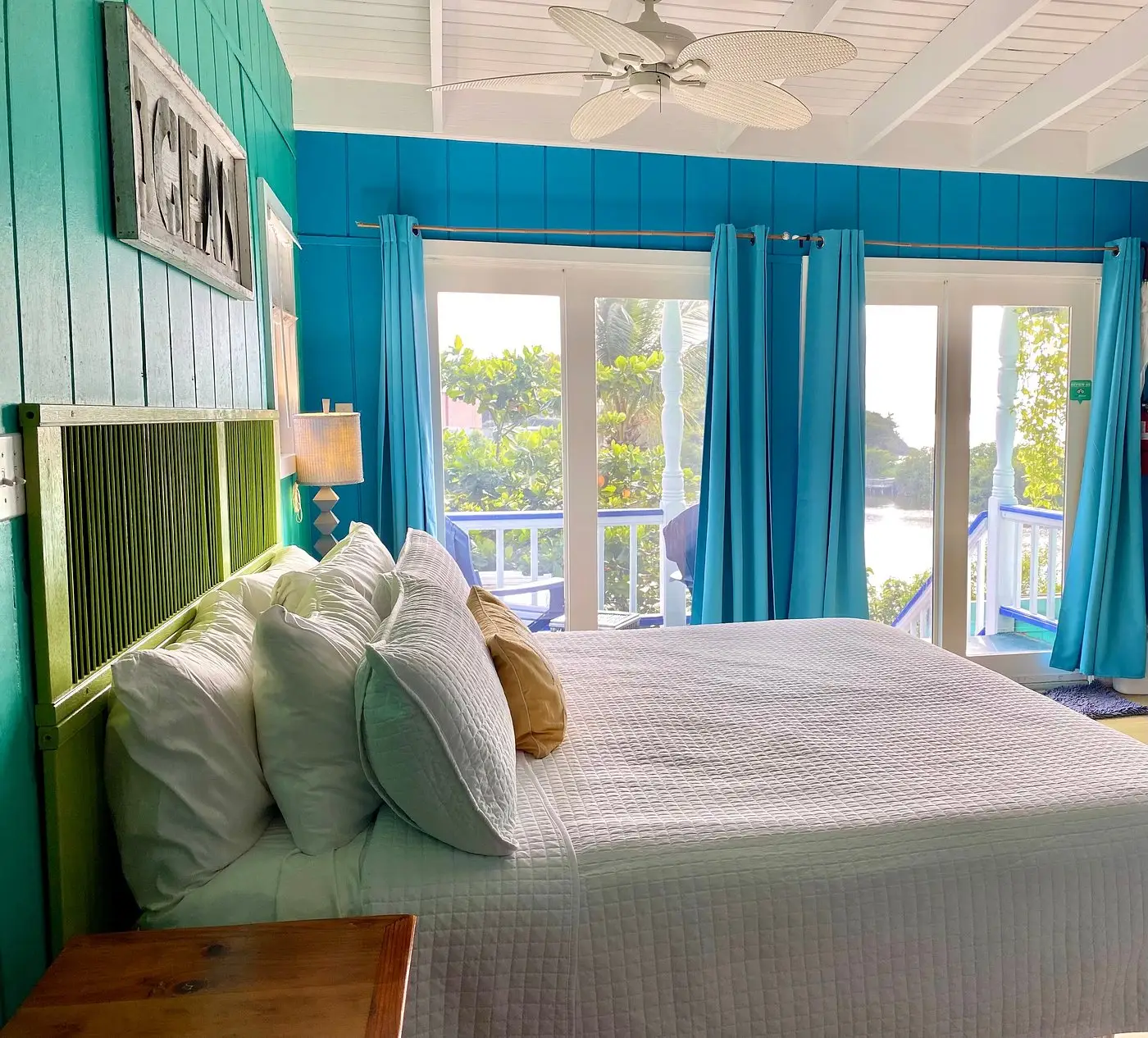
Garden by the Sea Bed & Breakfast is the best place to stay in Cruz Bay, St John, the US Virgin Islands
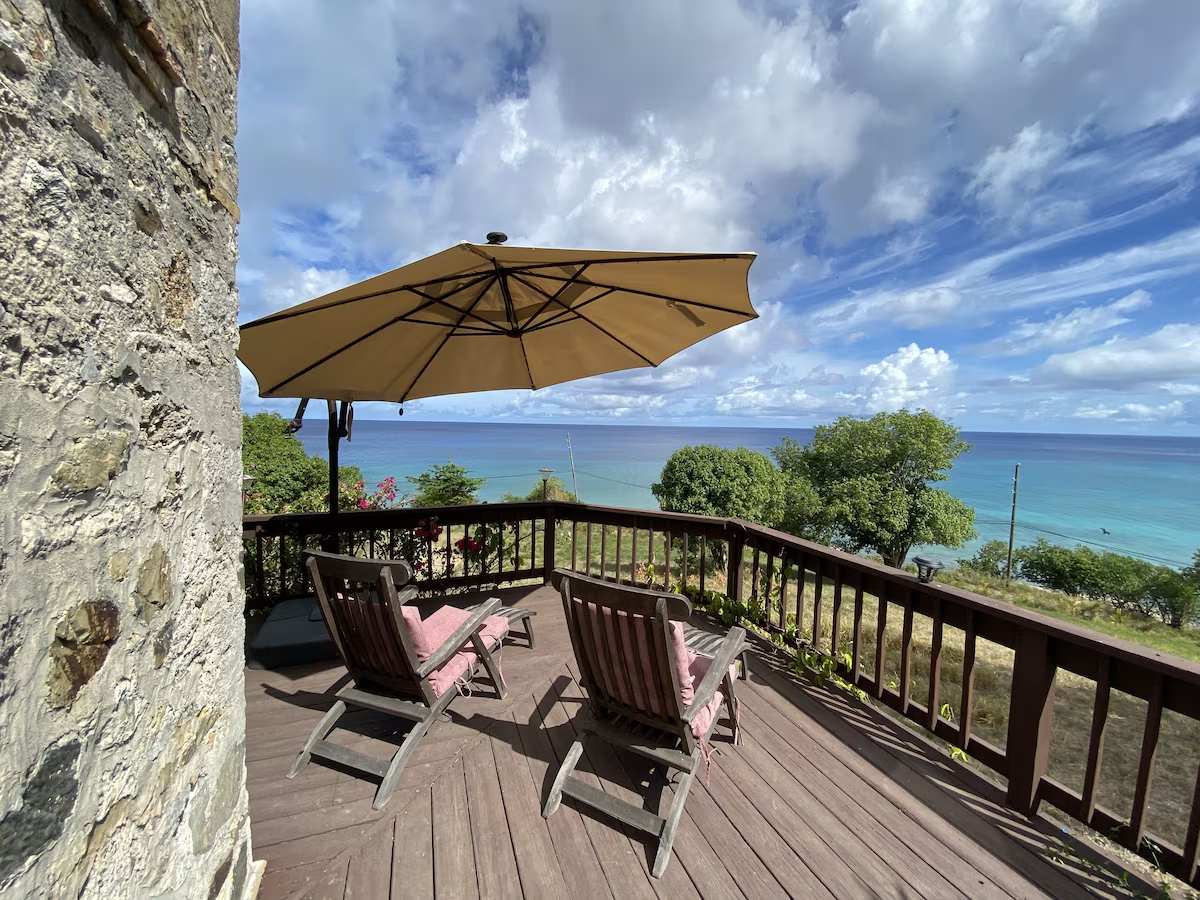
Tucked into a lush garden in Estate Contant, just above the harbour town of Cruz Bay, Garden by the Sea Bed & Breakfast is a solar powered guesthouse billed as St. John’s only true bed and breakfast. The setting is unapologetically green, with the property folded into thick tropical planting that buffers it from the bustle of town while keeping the ferry dock, restaurants and beaches of Cruz Bay within easy reach. Mornings here begin slowly, with a hot homemade breakfast carried out to a terrace surrounded by greenery, and the whole place runs on power and water it largely makes for itself.
Who owns Garden by the Sea Bed & Breakfast?
This is a female co owned guesthouse, run as a small independent operation rather than part of any chain. That ownership shapes the experience, giving the property the personal, hands on feel of a home where the hosts know the island intimately and look after a handful of guests at a time. Because it is owner run, decisions about how the place is powered, watered and fed are made on principle rather than dictated by a corporate playbook, which is why its sustainability credentials run deeper than most.
About the rooms in Garden by the Sea Bed & Breakfast
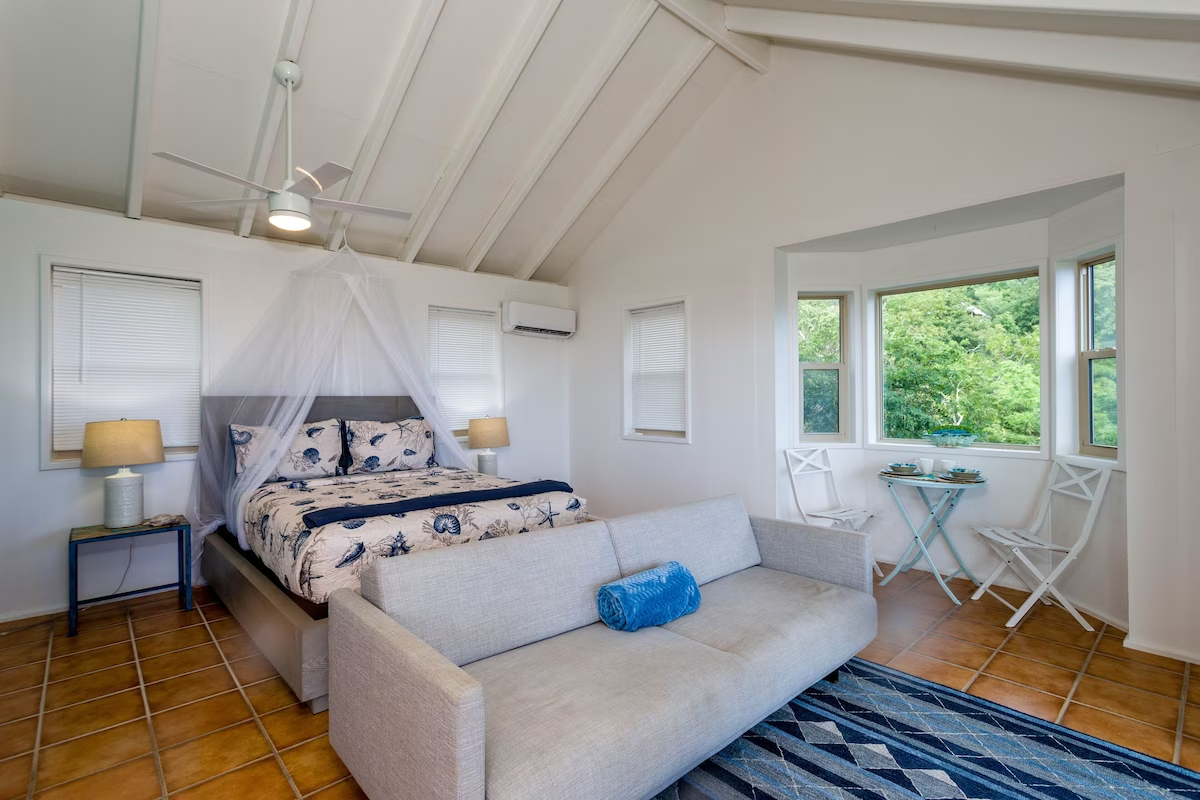
There are a small number of guest rooms at Garden by the Sea Bed & Breakfast, including comfortable doubles set within the garden so that the planting and birdsong are never far from the window. Keeping the room count low is deliberate, as it lets the hosts give each guest proper attention and keeps the demand on the property’s solar power and harvested water within what the site can sustainably provide. Each room shares in the quiet, leafy atmosphere of the guesthouse, with the terrace and garden acting as the shared heart of a stay.
What food is available at Garden by the Sea Bed & Breakfast?
Breakfast is the centrepiece, served hot and homemade each morning on the terrace amid the greenery, which is exactly what you would hope for from a place that calls itself a genuine bed and breakfast. Eating outdoors among the plants makes the most of the garden setting, and the cooked spread sets guests up for a day on the trails or beaches before the heat builds. For other meals, the restaurants, cafes and provisioning of Cruz Bay sit just down the hill, an easy walk or short drive away.
Sustainability features of Garden by the Sea Bed & Breakfast
Sustainability is built into the fabric of the guesthouse rather than added as an afterthought. More than 70 roof panels generate the power and heat the hot water, with any surplus fed back into the island grid so the property contributes clean energy beyond its own needs. Water is handled with the same care, as rainwater is harvested into an underground cistern and then purified through a three stage ultraviolet system before it reaches the taps. Together the solar array and the rainwater cistern let the place tread remarkably lightly on St John, an island where both electricity and fresh water are precious.
Who is Garden by the Sea Bed & Breakfast for?
Anyone who wants a low impact, personal base on St John will feel at home here, particularly travellers who would rather stay in an owner run garden retreat than a large resort. It suits couples and independent visitors drawn to peace, greenery and a proper homemade breakfast, and it rewards guests who care that their power and water come from the sun and the rain rather than the mains. With Cruz Bay’s ferries, shops and beaches close by, it works well for those exploring the Virgin Islands by foot and boat while wanting somewhere quiet and genuinely sustainable to return to each evening.
How to get to Garden by the Sea Bed & Breakfast from the airport
The closest airport to Garden by the Sea Bed & Breakfast is Cyril E. King Airport (STT) on neighbouring St Thomas, as St John has no airport of its own. From the terminal you travel roughly thirty to thirty five minutes by taxi across St Thomas, around twelve miles, to the ferry dock at Red Hook, where the passenger ferry crosses to Cruz Bay in about twenty minutes. The guesthouse then sits just above town in Estate Contant and Enighed, a short stroll or quick taxi ride from the Cruz Bay waterfront.
Private transfer or taxi to Garden by the Sea Bed & Breakfast
A pre arranged private transfer is the easiest option to get to Garden by the Sea Bed & Breakfast, handling the airport, the cross island drive, the ferry and the final hillside leg in one smooth chain so you never juggle luggage on the dock. St Thomas and St John use open air safari taxis and licensed taxi vans with set island rates rather than meters, so agree the fare before you set off, and let your host know your ferry time so a car can meet you at Cruz Bay.
Public transport to Garden by the Sea Bed & Breakfast
Public transport to Garden by the Sea Bed & Breakfast is possible with multiple changes. The territory runs the inexpensive VITRAN public bus, which on St John follows the main route between Cruz Bay and Coral Bay, and on St Thomas links the Charlotte Amalie area towards the east, but it does not serve Cyril E. King Airport directly and is infrequent, so it is not a reliable way to arrive. Most visitors also rely on shared safari route taxis between the airport and Red Hook, then the public passenger ferry to Cruz Bay, and finally a short taxi or walk uphill to the guesthouse. Given the changes and the irregular timetable, a single pre booked transfer for the whole journey is the practical choice on arrival.
Things to do while staying at Garden by the Sea Bed & Breakfast
Things to do around Garden by the Sea Bed & Breakfast range from snorkelling the calm turquoise shallows at Trunk Bay, where an underwater trail marked with plaques guides you over the reef just along the North Shore Road, to spreading out across some of the Caribbean’s finest beaches, with Cinnamon Bay and Hawksnest Bay both within easy reach.
Closer to base you can wander the shops, galleries and waterfront restaurants of Cruz Bay itself, then lace up your boots for the Reef Bay or Lind Point trails inside Virgin Islands National Park, which blankets much of the island. The Reef Bay trail leads down to historic sugar mill ruins and petroglyphs, while the gentler Lind Point path links town to quiet beaches, and the park’s protected reefs make for some of the clearest snorkelling and kayaking in the islands.
The national park ruins and petroglyphs reward culture seekers, the gentle, shallow beaches suit families with younger children, the hiking and reef life draw nature lovers, and Cruz Bay’s compact, walkable buzz with its easy dining and ferry links makes it friendly for solo travellers finding their feet. Couples after a slow, green base for swimming and quiet evenings are equally well served.
Coral Bay and the East End, St John is best for nature lovers, snorkellers and hikers, and anyone after seclusion and off-grid eco-stays
This is the wild side of St John, a tiny sailing community ringed by national park, where eco-tenting and off-grid lodges like Concordia Eco Resort perch above Salt Pond Bay and its excellent snorkelling. You reach St John via Cyril E. King Airport on St Thomas and the Cruz Bay ferry, then drive 30 to 45 minutes over the hilly interior to Coral Bay, where a hire car, ideally a Jeep or 4×4, is essentially essential given the steep, winding roads and the distance from town. It suits nature lovers, snorkellers and hikers, low impact travellers and quiet seeking couples or solo adventurers who want the island at its most undeveloped, with dark skies, empty trails and reefs right on the doorstep.
The difference between Coral Bay and the East End, St John and other popular Virgin Islands bases like Cruz Bay on St John and Charlotte Amalie on St Thomas is that those are busier hubs of shops, restaurants and cruise day-trippers, whereas Coral Bay stays a slow, off-grid backwater wrapped in protected parkland, where the appeal is seclusion and self-sufficiency rather than nightlife and convenience.
Where to stay in Coral Bay and the East End, St John: Top Pick
Concordia Eco Resort is the best place to stay in Coral Bay and the East End, St John, the US Virgin Islands
Set into a 51 acre hillside above Salt Pond Bay on the rugged southeast coast of St John, Concordia Eco Resort is a pioneering, light on the land cluster of soft sided eco tents and studios. The accommodation sits high enough to catch the trade winds and the sweep of the Caribbean below, and the whole place was built to tread gently on the surrounding habitat rather than dominate it. Working steadily towards running fully off grid, this is a property that wears its low impact ethos in every detail, from the recycled materials in its frames to the cisterns on each tent.
Who owns Concordia Eco Resort?
Concordia Eco Resort grew out of the same low impact vision that shaped its sibling sites on St John, and it has long been run as an independent eco hospitality project rather than a faceless chain. The people behind it built the resort with conservation as the starting point, choosing a remote hillside and recycled materials precisely so the development would protect the land it sits on. That founding philosophy, putting the habitat first and the guest experience second only to it, still runs through how the place is operated today.
About the rooms in Concordia Eco Resort
There are two broad styles of accommodation at Concordia Eco Resort, including the signature soft sided eco tents and a selection of more enclosed studios. The eco tents are the heart of the place, built up on platforms so guests sleep among the treetops and sea breezes, while the studios offer a little more solidity for those who want it. Each tent comes with its own cistern, a solar heated shower and a hybrid composting toilet, so even the most basic unit carries the resort’s off grid thinking inside it. Fans and lights run quietly through the night, drawn from the sun rather than the grid.
What food is available at Concordia Eco Resort?
Dining at Concordia Eco Resort leans into the relaxed, self sufficient rhythm of the place, with on site catering and the option to prepare your own meals in the studios. Guests tend to start the day slowly and graze through it, making the most of the open air setting and the views across Salt Pond Bay. Because the resort sits within easy reach of Coral Bay, plenty of visitors also pair their stay with the small restaurants and bars of that nearby community, which keeps the food side flexible without breaking the low key feel of a hillside eco retreat.
Sustainability features of Concordia Eco Resort
Sustainability is not a bolt on at Concordia Eco Resort, it is the reason the resort exists. Photovoltaic arrays power the fans and lights, and the resort is working steadily towards running fully off grid rather than leaning on outside supply. Water is handled tent by tent, with each unit fed by its own cistern and warmed by a solar heated shower, while hybrid composting toilets keep waste on site and out of the wider environment. Built from recycled materials, the whole cluster was designed to minimise impact and shelter the surrounding habitat instead of clearing it.
Who is Concordia Eco Resort for?
This is a resort for travellers who want their footprint to be as light as the structures they sleep in. Anyone drawn to off grid living, hillside views and the sound of the trade winds rather than air conditioning will feel at home here, as will hikers, snorkellers and beach lovers keen to explore Salt Pond Bay and the wilder southeast coast. Those expecting a polished, fully serviced resort may find it too pared back, but for guests who measure a holiday by how gently it sits on the land, Concordia Eco Resort is hard to beat.
How to get to Concordia Eco Resort from the airport
The closest airport to Concordia Eco Resort is Cyril E. King Airport (STT) on neighbouring St Thomas, as St John has no airport of its own. The journey runs in two stages: a taxi or hire car across St Thomas to either the Red Hook or Charlotte Amalie ferry dock, then the passenger ferry over to Cruz Bay on St John, and finally a drive of roughly 12 miles east and south over the hills to Coral Bay and the resort. Allow around 30 to 40 minutes of driving on St Thomas plus the 20 to 45 minute crossing.
Private transfer or taxi to Concordia Eco Resort
A pre arranged private transfer is the easiest option to get to Concordia Eco Resort, as the steep southeast roads are best tackled with a sturdy vehicle, ideally a Jeep or 4×4, and the property sits well off the main settlement. Open air safari taxis wait at both the St Thomas ferry docks and at Cruz Bay, and drivers will run you out to Coral Bay for a set island rate, so arranging the pickup in advance is sensible given how far the resort lies from town. A hire car for that last leg works just as well if you are happy on island roads.
Public transport to Concordia Eco Resort
Public transport to Concordia Eco Resort is possible with multiple changes. St John runs the inexpensive VITRAN public bus along the main road between Cruz Bay and Coral Bay, and from St Thomas the same VITRAN service plus shared route taxis link the airport to the ferry docks at Red Hook or Charlotte Amalie. Services are infrequent, however, and the bus does not climb the resort’s hillside itself, so you would end at Coral Bay and still need a short taxi or a long uphill walk to finish the trip. For a stay this remote, a hire car or a pre arranged transfer is by far the most reliable way to come and go.
Things to do while staying at Concordia Eco Resort
Things to do around Concordia Eco Resort range from a barefoot morning at Salt Pond Bay, the calm horseshoe cove just below the hillside, to the easy walk out to Drunk Bay and the Ram Head trail, which rewards you with dramatic cliff top views over the Caribbean. Snorkelling straight off the beach is superb, and the protected waters teem with reef fish, rays and turtles.
Within easy reach you have Virgin Islands National Park, which blankets much of the island with hiking trails and snorkelling reefs, the laid back village of Coral Bay with its waterside bars and local eateries, and the famous turquoise sweep of Trunk Bay over on the north shore. History buffs can explore the old Danish sugar mill ruins scattered across the island, while sailors and day-trippers can catch boats out to the British Virgin Islands or quieter offshore cays.
There is something here for everyone: nature lovers will live for the trails and reefs, solo travellers find the quiet and the easy island sociability, families enjoy the gentle bays and ranger led park activities, and anyone drawn to culture can dig into the Danish colonial heritage and St John’s deep seafaring history.
When is the best time to visit the US Virgin Islands?
Peak season is the dry winter, roughly mid December to mid April, when rainfall is low, trade winds keep things comfortable and the sea is clearest; this is also the busiest and most expensive time, so book accommodation and St John hire cars well ahead. For better value with still reliable weather, aim for the shoulder months of mid April to early June. Atlantic hurricane season runs 1 June to 30 November, with September and October the wettest and statistically most active months; a direct hit in any given year is unlikely, but rates drop sharply, so late summer and autumn trips can be cheap if you stay flexible and carry travel insurance. (Exact 2026 storm activity cannot be predicted; treat hurricane risk as a probability, not a certainty.)
Is the US Virgin Islands safe, and how do you get around?
The US Virgin Islands are a US territory using the US dollar, and Britons need a passport plus, in most cases, an ESTA or US visa even though American citizens do not. The islands are generally welcoming to visitors, but exercise normal caution: St Croix’s Frederiksted and St Thomas’s Charlotte Amalie have some areas best avoided after dark, while St John is very low key and feels safe, though you should still lock cars and not leave valuables on beaches. Crucially, you drive on the LEFT here, the only place under US jurisdiction to do so, yet most cars are left hand drive US imports, an unusual combination that takes adjustment; roads are narrow, steep and winding, especially on St John, where a hire car (a Jeep or 4×4 for Coral Bay and the East End) is effectively essential. A UK licence is accepted for short visits. Tipping follows US custom, which will feel high to Britons: about 15 to 20 percent in restaurants and bars, 2 to 5 dollars per day for housekeeping, 10 to 15 percent for taxis, and a few dollars per bag for porters; check restaurant bills, as some already add a service charge. Cards are widely accepted but carry some cash for taxis, ferries and small vendors.
Why we only list sustainable stays in the US Virgin Islands
Every stay in this guide was hand picked and checked for how it actually runs, and most are locally rooted so your money stays on the island. For the full breakdown see our guide to the best sustainable hotels in the US Virgin Islands, or zoom out to the best sustainable hotels across the Caribbean.
More Caribbean Sustainable Stays

Book Your Next Stay Consciously
Travel is a wonderful opportunity to connect with Mother Earth.
However, it is also frequently undermined by reckless development and disrespectful tourism practices.
This directory is a curated, verified list of hotels, lodges, and resorts that honour our planet and are led by visionary stewards of the environment.
From farm-to-table culinary experiences to dedicated ocean conservation efforts, such as marine protection and coral restoration, these establishments are redefining hospitality.

12% Off Sustainable Swimwear
Freedom Ecowear is offering our readers 12% off their eco-friendly swimwear, perfect for your next eco getaway. Use the link and your discount is added automatically.