Bamboo Is The Biggest Red Flag In Sustainable Fashion, And Freedom Ecowear Will Tell You Why

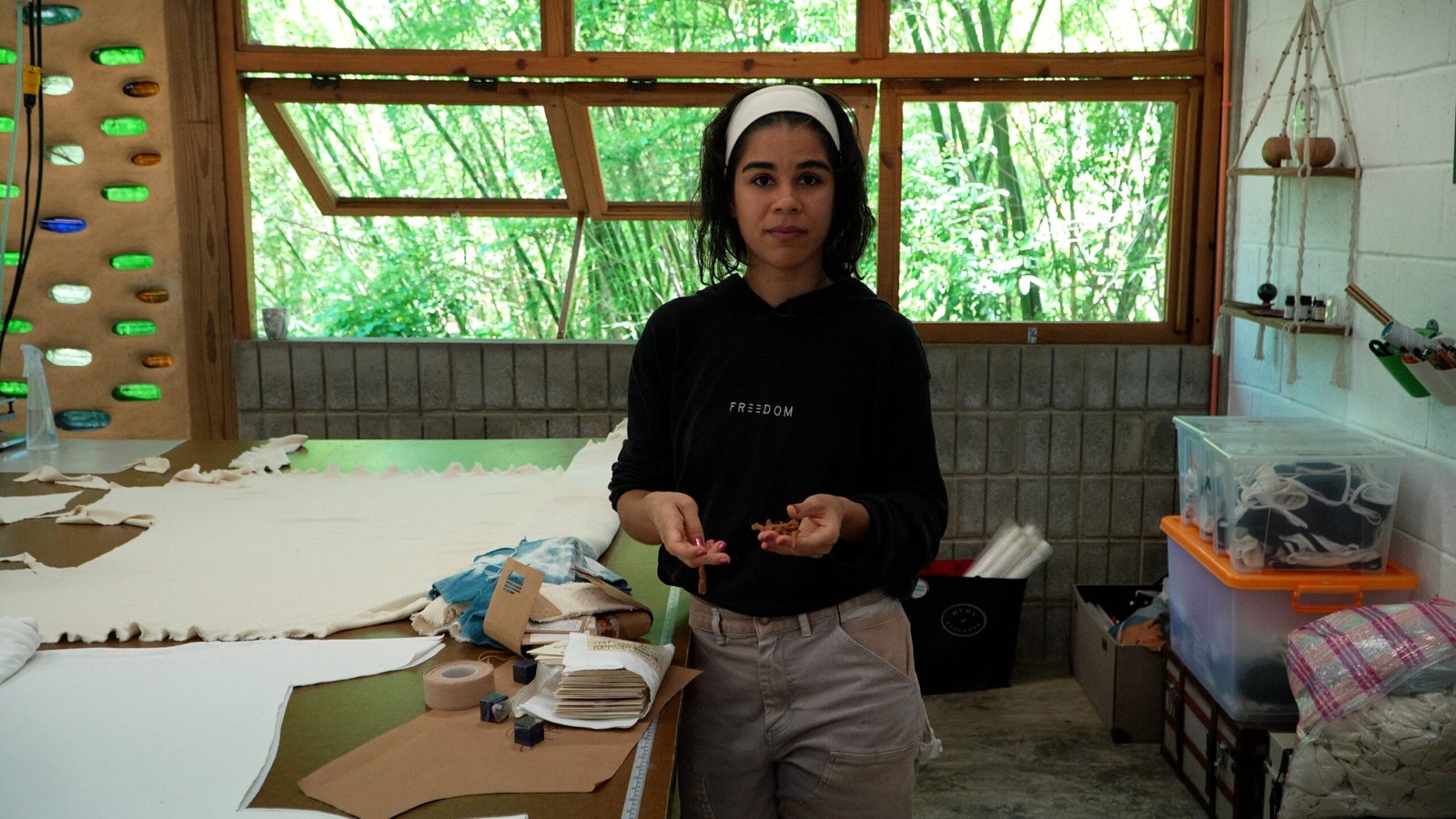
Bamboo is the biggest red flag in sustainable fashion, and a natural swimwear maker will tell you why. Bamboo is woody and tough, the stuff of mats and scaffolding, not thread. To turn it soft it has to be dissolved in carbon disulfide and rebuilt as viscose rayon, so bamboo viscose is not a natural fibre and not a natural process. Sitting in the workshop with Vivi Rufino and David, the couple who run Freedom Ecowear, Vivi names it as her number one greenwashing trap, plus the other red flags the two of them watch for.

Why Bamboo Fabric Is The Biggest Red Flag In Sustainable Fashion

The biggest greenwashing trap in clothing is not polyester. We were in the workshop, going through the red flags shoppers should learn to spot, when I asked Vivi for the first one that came to mind. She did not pause. “The first one that comes to mind is bamboo. For me, that’s the biggest red flag. There’s been such a hype about bamboo fibres, and people don’t get all the chemicals it takes to make bamboo.”

Why Soft Bamboo Viscose Cannot Be Sustainable On Its Own

Bamboo, for anyone who has not handled it, is woody and tough. That is why you see it as mats, scaffolding poles and whole houses, not as thread. It is a hard, lignified grass. It cannot be spun into a soft fibre the way cotton or linen can, where you strip the fibres out of the plant mechanically and they are already spinnable. Vivi makes the same point with a simple test. “So many people don’t really like linen or hemp because they’re tough to the touch, they’re not as soft as cotton,” she said. “So then think, how can bamboo be so soft? All the chemical process it has to go through to make it actually work.”

That is the gap the marketing hides. A tough, woody plant does not become a silky t shirt by being combed and spun. It becomes soft only by being chemically broken down and rebuilt. Compare it to the fibres Vivi actually uses. Cotton and linen are natural fibres because the soft thread you wear is the plant’s own fibre, separated out and spun, nothing dissolved. Bamboo viscose is not in that category, and saying it is, is the trick.

What Actually Happens To The Bamboo Plant To Make Bamboo Fabric

Here is the real mechanism, plainly. To turn woody bamboo into something soft, the cellulose is dissolved in sodium hydroxide and then carbon disulfide, a toxic solvent, into a thick orange goo. That goo is forced through fine holes into an acid bath, where it hardens into filaments of rayon. The fibre that comes out is regenerated cellulose, a chemically reconstructed material. As the FTC puts it, no trace of the original bamboo plant remains in the finished textile.
The Other Sustainable Fashion Red Flags Freedom Ecowear Watch For

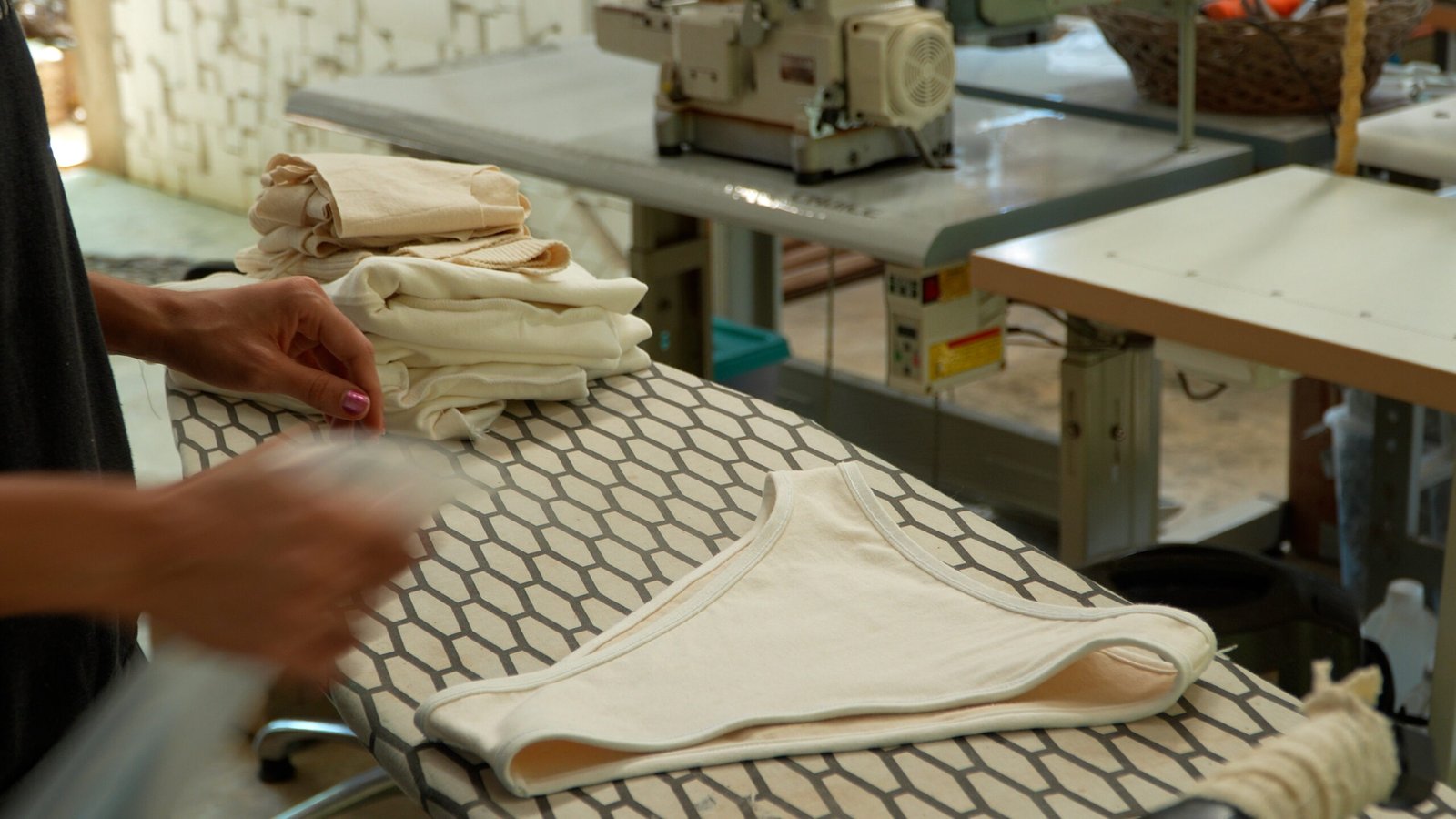
Bamboo is the headline, but Vivi and David named more. David’s first is lack of transparency. “What do you have to hide?” he said. “Why don’t you break down your garment? What is it made of? What’s the percentage? Why don’t you show us where the pieces are being made, the faces of the people? These are things that as consumers we should be asking the brands we give our money to.”

Vivi’s other big one is scale itself. “Mass producing garments for me is another big red flag, because we don’t need more, we need better.” And the performance of green on social media. “Using social media to portray yourself as taking care of the planet, when actually if you go to the factory it’s nothing like what they’re doing.” Those are the same red flags that put Zara, Shein and Gymshark on her list.
The Sustainable Shopping Habit Worth Keeping When You Read A Fabric Label

Bamboo is the perfect trap because it sounds so obviously green. A fast growing grass, no pesticides, what could be wrong. Everything is in the one word the label keeps quiet, rayon. The plant is real. The fabric is a heavily processed chemical product wearing the plant’s name.

So the takeaway is a reflex, not a boycott. When a fabric feels too soft for the plant it claims to come from, ask what it was dissolved in to get there. Look for “rayon” or “viscose” hiding behind “bamboo”. Ask for the breakdown, the percentages, the faces. The brands with nothing to hide will show you all of it, the way Vivi does. Our sustainable clothing guide lists the fibres that actually hold up.

-12% Off Exclusive Discount On Sustainable Swimwear

Freedom Ecowear have given us a discount of -12% off to share with our website visitors. Use the link to claim your discount. 
-15% off Eco Friendly Washing | Kind Laundry

You switched to plant-fibre clothing, now wash it in something just as clean. Kind Laundry’s plastic-free, plant-based strips skip the synthetic detergents and plastic jugs, and you get 15% off.

More Sustainable Fashion, Ethical Brands and Insights

Bamboo is the biggest red flag in sustainable fashion, and a natural swimwear maker will tell you why. Bamboo is woody and tough, the stuff of mats and scaffolding, not thread. To turn it soft it has to be dissolved in carbon disulfide and rebuilt as viscose rayon, so bamboo viscose is not a natural fibre and not a natural process. Sitting in the workshop with Vivi Rufino and David, the couple who run Freedom Ecowear, Vivi names it as her number one greenwashing trap, plus the other red flags the two of them watch for.
Zara, Shein and Gymshark can’t call themselves sustainable while running the same system that is destroying everything. Sitting in the workshop with Vivi Rufino and David, the couple who run Freedom Ecowear together, Vivi, who left mass production herself, explains why a green side line on top of fast fashion is hypocrisy, why Gymshark sells the experience not the product, and why people are finally waking up.
Switching to sustainable clothing comes down to one question: can the garment return to the soil. This five step guide shows how to switch to natural fibre clothing without greenwash, how to read a fabric label, what GOTS organic certification really promises from an official interview, why lists like Vogue, Good On You and The Good Trade fail a non toxic fibre test, and the sustainable clothing brands doing it right in underwear, linen and hemp.
The Good Trade names ten sustainable underwear brands, but eight of them sell synthetics. Hold The Throne read every fabric label and found that brands like Pact, Quince and Organic Basics blend elastane, micromodal, TENCEL or recycled nylon into the underwear, while only KENT and Oddobody pass as 100% non toxic, natural materials. This is the honest sustainable underwear list: which of The Good Trade’s organic cotton and ethical lingerie picks are GOTS certified plant fibre, and which are plastic against the skin.
Ethical Consumer’s A to Z of ethical fashion brands gets the ethics right and the fibre wrong. Out of 29 picks, only Earthmonk and Where Does It Come From? are actually 100% plant fibre. The other 27 carry bamboo viscose, TENCEL, wool, elastane or mixed secondhand fibre.
I burned my whole swimwear business down to start again. At its peak doing five figures a month, Vivi Rufino and her partner David stopped producing entirely and spent seven years rebuilding Freedom Ecowear from polyester to natural fibres like hemp and organic cotton. Standing in the workshop the two of them built, Vivi explains why even recycled polyester failed, and why destruction was the only way forward.

Latest Clothing Brands Product Data Report Results

More Great Articles From Hold The Throne

Are hair relaxers dangerous? Yes. There is nothing relaxing about lye that burns the scalp, says Angie, a black Dominican artist, and the Dominican Republic is where this story lives, because almost every woman here straightens or relaxes her hair. Over two days I sat with the painter on the cancer study, the lawsuits, the school afro bans, the Dando Pelo documentary La Sirena backed, and where it all came from, and this is her in her own words.
Colorism in the Dominican Republic compliments a black woman, then quietly asks her to be lighter. Angie, a black Dominican artist, on mejorar la raza, why Dominicans deny being black, and the Eurocentric beauty standard, with the historian behind Afro Historia on where the wound was engineered. I was there in her apartment for two days, and this is what she told me, in her own words.
Yes, you pick your own breakfast at this Antigua vacation rental. Lamblion is a black owned, Green Globe self catering stay in St John’s where Lionel, who is losing his sight and finds his fruit by feel, grew a food garden guests are free to eat from. I went ten days barely touching a shop. This is the place in his own words.
Mr Lionel grows most of what he eats at Lamblion in Antigua and finds his fruit by feel as his sight fades. A morning in his garden on food self sufficiency, food sovereignty and patience, in his own plain words, on a black owned self catering eco stay you can visit.
How did a Jamaican farmer accidentally build one of Negril’s best loved hotels? Daniel Grizzle was growing food long before he was a hotelier, and his black owned, family run Charela Inn feels like a home because it grew out of a real life, not a brand deck. This is why the owner is the whole reason we stay, in his own words.
The farm to table food at a Negril hotel starts an hour up in the hills, on a working Jamaican farm I had to myself for a morning. A farmer named Muffy walked me through the cabbage, the saved seed and a cedar tree he will never sit under, and taught me more about real food and patience than the whole rest of the week on the beach.
4 certified eco hotels in Chicago near Grant Park for Lollapalooza, each verified green, from LEED and Green Key stays to carbon neutral operations, all close to the action.
4 certified eco hotels in Chicago near Grant Park for Lollapalooza and the city, each verified green, from LEED and Green Key stays to carbon neutral operations, all close to the action.
The best eco friendly stays in Bahamas, hand picked from certified retreats to off grid hideaways.
The best eco friendly stays in Barbuda, hand picked from off grid solar lodges and Barbudan owned cottages to timber built beach hotels on empty pink sand. Find and book your sustainable stay.

Freedom Ecowear Special Offer

12% Off

Code: vitality

Share this page: Bamboo Is The Biggest Red Flag In Sustainable Fashion, And Freedom Ecowear Will Tell You Why

Facebook
X
LinkedIn
Reddit
Threads
Email
WhatsApp