Destinations › Asia · The Destination Index · universal template · every figure sourced
Thailand.
Southeastern Asia, bordering the Andaman Sea and the Gulf of Thailand, southeast of Burma. 513,120 sq km and 71,619,863 people, 3,219 km of coastline, tropical; rainy, warm, cloudy southwest monsoon (mid-May to September); dry, cool northeast monsoon (November to mid-March); southern isthmus always hot and humid.
Region · AsiaPopulation · ~71,619,863Languages · Thai (official), Isan, Northern Thai, Southern Thai, Malay in the far southEco Index · 67/100 · Passable
The Eco Index across 12 pillars · scored 0 to 5 · World Bank, OWID, WHO/UNICEF JMP, FiBL, Protected Planet, IUCN, UNESCO (2023-24)
Conservation
Wildlife
Water
Food & farming
Organic & clean
Climate & energy
Waste
Health
Heritage
Ownership
Governance
Future
The History of Thailand.
Thailand keeps a deep, living court and folk heritage. Classical Khon masked dance drama and Lakhon sit alongside regional forms such as the northern Fon and the Isan Mor Lam and Luk Thung song traditions, carried by Piphat ensembles.
Where the name comes from
Prathet Thai, 'land of the free'. Neighbours knew it as Siam, and that exonym was how Europe first knew it; the country took the name Thailand in 1939. Source: UK Permanent Committee on Geographical Names toponymic factfile.
The land itself: a central plain, the Khorat plateau to the east, and mountains around the rest. Its high point is Doi Inthanon, 2,565 m. Source: UK Permanent Committee on Geographical Names toponymic factfile.
Where it starts
Sundaland
A rock shelter at Lang Rongrien in Krabi holds pebble tools dated to more than 37,000 years ago, among the earliest evidence of people in the region. Tham Lod in Mae Hong Son was used for burial and tool-making across more than twenty thousand years. A burial at Moh Khiew is around 25,800 years old, from a time when this land was part of Sundaland, joined by dry ground to what are now islands. Ban Chiang, from about 2100 BC, was farming, making painted pottery and working bronze.
How it got here
Sukhothai to constitution
Mon-speaking Dvaravati polities spread Buddhism and Indian-influenced art across the central plain. The kingdom of Sukhothai was established in 1238 and the Thai script developed there. Ayutthaya, founded in 1350 to 1351 by King Ramathibodi I, grew into one of the major economic and trading centres of Asia and lasted 417 years, under 34 kings, until 1767. The capital was founded at Bangkok in 1782 under the Chakri dynasty. Absolute monarchy ended in 1932. Thailand was never formally colonised.
The timeline
more than 37,000 years ago
Lang Rongrien.
A rock shelter in Krabi holds pebble tools from deep in the Pleistocene, among the earliest evidence of people in the region. ↗
c. 34,000 to 12,000 years ago
Tham Lod.
A rock shelter in Mae Hong Son used for burial and tool-making across more than twenty thousand years. ↗
c. 25,800 years ago
Moh Khiew.
A burial in southern Thailand from a time when this land was part of Sundaland, joined to the islands. ↗
c. 2100 BC to AD 200
Ban Chiang.
A farming and metalworking settlement in the northeast with distinctive painted pottery, bronze and later iron. ↗
c. 500 BC to AD 1000
Dvaravati and the Mon.
Mon-speaking polities spread Buddhism and Indian-influenced art across the central plain. ↗
1238 to 1438
Sukhothai.
Sukhothai is the period Thai national historiography treats as the founding of the Thai state, and its historic town, with Si Satchanalai and Kamphaeng Phet, is inscribed as a UNESCO World Heritage Site. The 1238 to 1438 span is a conventional dating rather than a settled one. ↗
1351 to 1767
Ayutthaya.
One of the major economic and trading centres of Asia at its height. ↗
1782
Bangkok.
The capital is founded at Bangkok in 1782 under the Chakri dynasty, after the destruction of the earlier capital at Ayutthaya. The dynasty founded then still reigns. ↗
1932
Constitutional monarchy.
Absolute monarchy ends. Thailand was never formally colonised. ↗
About 18% of Thailand's land is protected (World Bank, 2025), including national parks such as Khao Yai and the Western Forest Complex, but marine protection is limited at around 5%. Enforcement is undercut by wildlife trafficking and tourism pressure, illustrated by the multi-year closure of Maya Bay to let reefs recover.
Is wild Thailand protected? 18.4% of the land is, against a 30% target for 2030
How protected is nature in Thailand?
Forest cover38.7%
Terrestrial protected area18.4%
Marine protected area5%
515 (mammals, birds, fish & plants) listed as threatened.
Found only here. Limestone-karst species and endemic freshwater fish, plus the critically endangered Siamese crocodile. Gurney's pitta, also critically endangered, is treated as functionally extinct in Thailand, with the last known birds recorded in 2013 to 2014.
The watchlist
ThreatenedTsaine (Bos javanicus)Critically Endangered on the IUCN Red List, and recorded in Thailand in GBIF occurrence data (mammal).
ThreatenedSpoonbill Sandpiper (Calidris pygmaea)Critically Endangered on the IUCN Red List, and recorded in Thailand in GBIF occurrence data (bird).
ThreatenedYellow-headed Temple Turtle (Heosemys annandalii)Critically Endangered on the IUCN Red List, and recorded in Thailand in GBIF occurrence data (turtle).
ThreatenedRhynchobatus australiaeCritically Endangered on the IUCN Red List, and recorded in Thailand in GBIF occurrence data (shark or ray).
ThreatenedSiamese Crocodile (Crocodylus siamensis)Critically Endangered on the IUCN Red List, and recorded in Thailand in GBIF occurrence data (species).
ThreatenedPangasianodon gigasCritically Endangered on the IUCN Red List, and recorded in Thailand in GBIF occurrence data (species).
ThreatenedEmberiza aureolaCritically Endangered on the IUCN Red List, and recorded in Thailand in GBIF occurrence data (bird).
ThreatenedYellow Tortoise (Indotestudo elongata)Critically Endangered on the IUCN Red List, and recorded in Thailand in GBIF occurrence data (turtle).
Critically Endangered, the last IUCN category before Extinct in the Wild, and still recorded in Thailand. GBIF holds 52 verified occurrence records.
Spoonbill Sandpiper (Calidris pygmaea)
Critically Endangered, the last IUCN category before Extinct in the Wild, and still recorded in Thailand. GBIF holds 84 verified occurrence records.
Yellow-headed Temple Turtle (Heosemys annandalii)
Critically Endangered, the last IUCN category before Extinct in the Wild, and still recorded in Thailand. GBIF holds 180 verified occurrence records.
Rhynchobatus australiae
Critically Endangered, the last IUCN category before Extinct in the Wild, and still recorded in Thailand. GBIF holds 5 verified occurrence records.
Species named here are drawn from GBIF occurrence records for Thailand filtered to the IUCN Red List threatened categories. Species are listed where GBIF holds occurrence records for them in this country. Record counts are not published here because the figure cannot be reproduced from a public GBIF query.
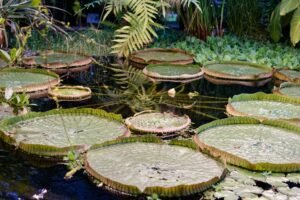
Botanical garden, mapped and named in the open record for Thailand. OpenStreetMap.
Water and Ocean in Thailand.
Thailand is watered by the monsoon and by rivers such as the Chao Phraya and Mekong tributaries, so overall supply is generally ample. However the pronounced wet and dry seasons bring both major flooding, as in 2011, and dry-season drought and saltwater intrusion, and tap water is not recommended for drinking even though basic access is near universal.
Does Thailand have enough fresh water? Under pressure
Bottled water; vendor ice is factory-made and safe.
Cleanest water: The Similan and Surin islands and Khao Sok.
How much fresh water does Thailand have, per person?
3,130 m³
Thailand
1,000 m³
the UN “water scarce” line
Thailand withdraws about 57,307 million cubic metres of fresh water a year (2022). That is 23.0% of the fresh water actually available to it, which FAO counts as medium water stress. Of what is taken, farming takes 90%, homes and towns 5%, industry 5%. Source: FAO AQUASTAT.
What are the rules on Thailand beaches?
✕Tap water: Not drinkable.
✓Plastic rules: Partial: a 2020 major-retailer plastic-bag ban and a roadmap to phase out single-use plastics by 2027..
✓Solo travel: rated easy on the record for this destination.
✕Marine protection: 5% of the sea is protected. The 30x30 pledge for 2030 is not met yet.
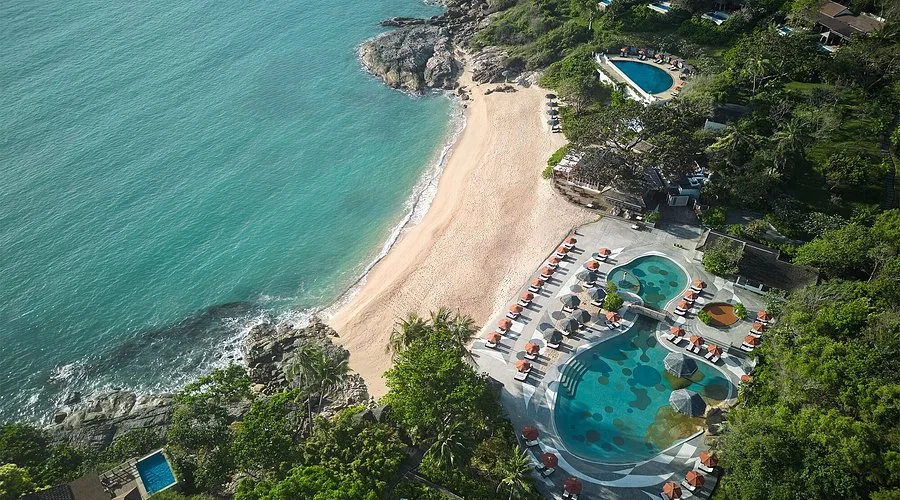
Named on the open map: Ao Sai Beach, Ao Thungsang Beach, Ban Sang Beach, Cocoa Beach, Coral Beach, Golden Buddha Beach, Half Moon Beach, Jamson Bay Beach. That is 13 named beaches in the public record for Thailand, each one a place you can look up before you go. OpenStreetMap.
Where does the sewage go?
26.7%
of people have safely managed sanitation
26.7% of people here use a safely managed sanitation service, meaning waste is contained, emptied and treated rather than reaching the ground or the sea untreated (2024, World Bank / WHO-UNICEF JMP, SDG 6.2.1). The rest is what the rivers and the coast receive.
How is the sea around Thailand doing?
One cross-section, every answer measured.
Surface
What the coast carries
Cool-dry Nov–Feb, hot Mar–May, monsoon May–Oct, the islands vary coast to coast.
Nearshore
Protected water
5% of territorial waters are protected, against the 30% pledged for 2030 under the Global Biodiversity Framework.
Cleanest
Where the water is cleanest
The Similan and Surin islands and Khao Sok..
The record
Measured
Thailand is watered by the monsoon and by rivers such as the Chao Phraya and Mekong tributaries, so overall supply is generally ample. However the pronounced wet and dry seasons bring both major flooding, as in 2011, and dry-season drought and saltwater intrusion, and tap water is not recommended for drinking even though basic access is near universal.
Sea protected
5%
Against the 30% pledged for 2030 under the Global Biodiversity Framework.
Threatened species
515 (mammals, birds, fish & plants)
Mammals, birds, fish and higher plants on the IUCN list.
Cleanest water
here
The Similan and Surin islands and Khao Sok..
How hard is the water supply being pushed?
Of every 10 buckets nature refills, 2 are already taken. Withdrawals run at 23% of what Thailand renews internally each year (2022, World Bank / FAO AQUASTAT). That is inside the 25% mark generally treated as water stress, so the supply has headroom.
When is the best time to visit Thailand? Tap your month.
Tap your month.
JanFebMarAprMayJunJulAugSepOctNovDec
.
How much fresh water does Thailand actually have?
Nature renews about 3,130 cubic metres of fresh water per person per year here. That ranks Thailand 110 of 208 countries measured, putting it in the wetter half of the world. The UN treats anything under 1,000 cubic metres as water scarce, and this is above that line. World Bank / FAO AQUASTAT.
Thailand is one of the world's largest food exporters, shipping rice, cassava, sugar, tropical fruit and seafood, and is highly self-sufficient. Food import dependency is therefore low, so no import figure was needed to place it high.
Where does the food in Thailand come from?
6.6% imported
about US$22,726m a year
On the plate: Rice, tofu, vegetables, chillies, herbs, tropical fruit and coconut.
How often each food is on the plate
Share of people eating each one regularly. These overlap, so they do not add up to 100%.
Rice60%
Tofu51%
Vegetables42%
Chillies33%
Herbs24%
Tropical fruit15%
1 of 10
bites are imported
The island buys in more food energy than it eats. About US$22,726m a year leaves the country to pay for it. The green slice is roughly what still grows here.
Food is 6.6% of everything Thailand imports (2024, World Bank). Farming itself is 8.7% of the economy and 43.8% of the land is agricultural, of which 31% is arable. The green slice is roughly what still grows here.
What is killing people in Thailand? The imported diet.
Cause of death, and the diet behind it.
Non-communicable diseases, all combined67.8%
Diabetes10.2%
Adults living with overweight or obesity. 45.7%.
Can Thailand feed itself?
31.0%
Arable land
43.8%
Agricultural land
11,671,483
Farmers
39,129,571
Arable acres
8.8%
Agriculture, share of GDP
Harvest: Main rice harvest around November to December; tropical fruit such as durian and mangosteen April to June.
Feeding itself
Thailand is one of the world's largest food exporters, shipping rice, cassava, sugar, tropical fruit and seafood, and is highly self-sufficient. Food import dependency is therefore low, so no import figure was needed to place it high.
Certification
About 0.7% of agricultural land is certified organic (FiBL, 2020 data), though the country actively promotes organic jasmine rice for export.
Water for crops
Thailand is watered by the monsoon and by rivers such as the Chao Phraya and Mekong tributaries, so overall supply is generally ample. However the pronounced wet and dry seasons bring both major flooding, as in 2011, and dry-season drought and saltwater intrusion, and tap water is not recommended for drinking even though basic access is near universal.
Why the organic number looks like that. Certified-organic farmland is not separately reported for Thailand, and that is a certification gap rather than proof nothing is grown cleanly. What the official land record does show: 43.8% of the country is agricultural land and 31% is arable (2023, World Bank). Certification is paid for per farm per year by a foreign body, which prices out smallholders, so the organic number reads worse than the practice.
The plant-based kitchen here is not an import. By tonnage, the largest crops grown in Thailand are sugarcane, rice, cassava and oil palm fruit (FAO, FAOSTAT crop production, 2024). That is what the land itself puts on a plate.
Buy direct where residents buy: Banzaan Fresh Market (Night), Bon Marché Market Park, Diamond Market, Doi Mae Salong Morning Market, Doi Saket Market, Kim Yong Market. Each is a mapped, named marketplace, so the money stays with the seller rather than the importer. OpenStreetMap.
Thailand's power system leans heavily on natural gas, which supplies roughly 60% of generation, while low-carbon sources such as hydro, solar, biomass and wind provided only about 15% in 2024. Territorial CO2 emissions sit at a moderate 3.74 tonnes per person (2024), below the world average. At COP30 in November 2025 Thailand brought its net-zero greenhouse gas target forward to 2050 from the previous 2065, alongside a pledge to cut emissions 47% by 2035 conditional on international support. The direction of travel is credible, but the fossil-heavy grid and modest renewables keep the country mid-table for now.
What powers Thailand?
Renewable 16.6%Fossil 83.4%
Climate pollution per person
The safe amount, what the planet can absorb
2 tonnes
One person here
3.96 tonnes
The world average, for comparison
4.7 tonnes
The worst it ever got
3.96 tonnes
The grid
Thailand's power system leans heavily on natural gas, which supplies roughly 60% of generation, while low-carbon sources such as hydro, solar, biomass and wind provided only about 15% in 2024. Territorial CO2 emissions sit at a moderate 3.74 tonnes per person (2024), below the world average.
Pollution
Thailand introduced a major-retailer plastic-bag ban in 2020 and a roadmap to phase out single-use plastics by 2027, but it remains among the larger contributors of ocean plastic, and the north suffers severe seasonal crop-burning smog that pushes Chiang Mai to hazardous air for weeks. National average fine particles sit at about 21 micrograms per cubic metre (AQLI, 2022).
Water stress
Thailand is watered by the monsoon and by rivers such as the Chao Phraya and Mekong tributaries, so overall supply is generally ample. However the pronounced wet and dry seasons bring both major flooding, as in 2011, and dry-season drought and saltwater intrusion, and tap water is not recommended for drinking even though basic access is near universal.
What pollutes most here
1The gridThe share of electricity still generated from fossil fuel.80.1%
2IndustryMangrove-clearing shrimp farms and seasonal crop burning of sugarcane and maize in the north..named
3AirModelled annual mean against a WHO guideline of 5 µg/m³.21.2
4On the recordThailand introduced a major-retailer plastic-bag ban in 2020 and a roadmap to phase out single-use plastics by 2027, but it remains among the larger contributors of ocean plastic, and the north suffers severe seasonal crop-burning smog that pushes Chiang Mai to hazardous air for weeks.
What has Thailand promised on climate?
Net zero, whole economy"Carbon neutrality by 2050 and net-zero emissions by 2065"
Electricity renewable today19.9% (2021)
Land protected, against a 30% target18.4% by 2025
Sea protected, against a 30% target5% by 2025
The net-zero target year on file with Climate Watch is "Carbon neutrality by 2050 and net-zero emissions by 2065", status: in policy document. Measured against it, 19.9% of electricity is already renewable (2021, World Bank), so 80.1% of the grid is still to be converted. The pledge on file is measured here against what has actually been delivered, not taken on its own (UNFCCC NDC Registry, CBD Kunming-Montreal Target 3).
The biggest line item
One return flight against a whole year of living.
A resident's entire year3.96 t CO2e
Safe-climate budget, per year2 t CO2e
New York return, economy2.51 t CO2e
Los Angeles return, economy2.4 t CO2e
London return, economy1.72 t CO2e
Paris return, economy1.7 t CO2e
Johannesburg return, economy1.62 t CO2e
How much CO2 does flying to Thailand emit?
Tap where you would fly from. One return flight, economy.
Every prompt runs on a machine in a building on somebody’s grid. What that costs the planet depends less on the prompt than on what is burning to power it. Here is what would power one in Thailand.
Data centres
41
Registered colocation and interconnection facilities, PeeringDB, 2026
Grid renewable
16.6 %
What a machine here runs on.
What powers a data centre in Thailand?
Almost everything a machine here consumes is burned fossil fuel.
Renewable 16.6%Fossil 83.4%
Cooling water. Every one of those halls runs on the national grid, which is 19.9% renewable today (World Bank). A data centre is only as clean as the electricity behind it, so the same figure that decides this country's climate score also decides the footprint of the AI running inside it. Cooling water use is not separately published by facility, and no operator here reports it.
The rules. Thailand has 41 colocation and interconnection facilities on the public PeeringDB register, concentrated in Bangkok (21), Chon Buri (4), Pakkret (3), alongside 12 internet exchanges (THAILAND IX (TH-IX), BKNIX (Thailand), SYMPHONY THAI - IX BANGKOK - 1, CSL Thai-IX Malaysia). Named sites include TCC Technology Data Center, Bangkok,Thailand (TCC ETDC, TCCtech), CS LoxInfo Data Center, CW Tower, UIH BCH4 IDC - Bangkok, Thailand, TCIF Building.
Where the cables land. 7 landing points · Chumphon, Koh Samui, Phetchaburi, Rayong
64% residents to 36% visitors across a year. 39,916,000 international arrivals in 2019 against 71,619,863 people who live here (2025, World Bank / UN Tourism).
Where a visitor dollar goes in Thailand
39,916k
Visitors a year
0.6
Visitors per resident
How deep in debt is Thailand?· for every $100 Thailand earns in a year, it owes…
Pay to the order of: the creditorsmemo · today
$ 67What is owed now, for every $100 of national income (2026).
IMF World Economic Outlook, 2026signed, the creditors
Pay to the order of: the creditorsmemo · projected 2031
$ 70The IMF's own forecast has this rising to $70 by 2031.
IMF World Economic Outlook projection, 2031signed, the forecast
For every $100 Thailand earns in a year, it owes $67 (2026, IMF World Economic Outlook). The interest on that is paid before schools, clinics or coastline get their turn.
Where does a tourist dollar actually go in Thailand?
Play one tourist dollar around the board. Every square is a measured fact from this page.
START!
1
GO: a visitor lands
$100 goes on the table. 39,916,000 international arrivals in 2019 against 71,619,863 residents, 0.6 visitors for every resident (World Bank / UN Tourism).
$100 in play
2
The bed
Who owns the largest places to stay in Thailand is not published in the records we can check, so this square is left open rather than guessed. Where a listing names its owner, it is shown in the ownership table below.
not published
3
The plate
Food is only 6.6% of everything Thailand imports (2024, World Bank), so most of a meal is bought from producers inside the country. Eating what the land here actually grows, sugarcane, rice, cassava, oil palm fruit, maize, rubber, tropical fruits, mangoes/guavas, fruits, keeps that money with the grower.
mostly home-grown
4
The power
80.1% of the electricity is fossil (2021, World Bank). Lighting, cooling and hot water are paid for largely in imported fuel.
burns away
5
What actually stays
On the parts that can be measured, the power leaves and the plate stays. It is genuinely a coin toss, decided by what you book.
split
6
Pay the bank first
Thailand owes $67 for every $100 it earns (IMF World Economic Outlook, 2026 projection). The interest is paid before anything else on this board.
$67 per $100
7
A spread hand
The largest single export, electrical machinery and electronics, is 18.6% of the total (2025, UN Comtrade). No one shock can take the whole board.
top export 17.5%
8
Community chest
Tourism earns 6% of everything Thailand makes from exports (2020, World Bank / UN Tourism). That is how much of the economy depends on the game continuing.
6% of exports
9
The flight
Getting here is usually the biggest single line on the bill. From New York a return economy seat is 2.51 t CO2, on the UK Government's published conversion factors. It is the one part of the trip this board cannot reduce.
2.51 t CO2
10
Back to GO
The economy turns over about US$580 billion a year (IMF World Economic Outlook, 2026 projection). Every lap of this board is a choice about how much of it stays.
US$580bn
GDPUS$577.0bn
Agriculture, share of GDP8.8%
Visitors a year39,916,000
Visitors per resident0.6
Residents~71,619,863
Agriculture
Farming is 8.8% of the economy. Thailand is one of the world's largest food exporters, shipping rice, cassava, sugar, tropical fruit and seafood, and is highly self-sufficient.
Natural materials
Living textile traditions are strong, from Isaan mudmee silk, a distinctive tie-dye ikat, to handwoven cotton, hill-tribe hemp among the Hmong and Karen, and widespread basketry and water-hyacinth weaving. These remain everyday crafts and cottage industries.
Energy
Thailand's power system leans heavily on natural gas, which supplies roughly 60% of generation, while low-carbon sources such as hydro, solar, biomass and wind provided only about 15% in 2024. Territorial CO2 emissions sit at a moderate 3.74 tonnes per person (2024), below the world average.
Who owns the biggest hotels in Thailand?
By rooms · company records and press.
Garrya Tongsai Bay Samui · ~83 roomsCorporatenot published
Elephant Nature Park · ~30 roomsIndependentnot published
Faasai Resort and Spa · ~14 roomsIndependentnot published
Visitors, over time
201424,810k
201529,923k
201632,530k
201735,592k
201838,178k
201939,916k
International tourism receipts run at about US$15.36 billion in 2020 (World Bank / UN Tourism). That is 6% of everything the country earns from exports.
How much of your money actually stays here?
Tap the holiday you are planning.
All-inclusive resortForeign-owned hotel and tourist restaurantsLocally owned stay and local restaurantsGuesthouse, markets and public transport
Resort guest, villa renter, family, nomad or backpacker. The honest playbook for each, from the same sourced numbers.
Already booked a resort? · the rescue list
Five swaps that move your money back on-island
1. Eat where the country eats Choose kitchens cooking what the land here grows, sugarcane, rice, cassava, oil palm fruit, maize, rubber, tropical fruits, mangoes/guavas and fruits, over an imported menu. The checked list →
2. Book with a local operator Never the lobby desk. The margin on a tour is the part that stays. Eco tours →
3. Stay somewhere locally owned Ownership decides where the room rate books. Eco stays →
4. Use the transport residents use Trains, cheap domestic flights, buses and ferries between islands, with tuk-tuks and songthaews locally.
5. Buy the craft, not the souvenir Natural-materials work made here pays the maker directly; imported gifts pay a shipping line.
swipe →
First time here
Thailand is a self-sufficient food exporter with living craft traditions and national parks, offset by ocean plastic and seasonal smog.
Best time: The cool, dry season, avoiding the June to October monsoon and the northern burning season.
Getting around
Trains, cheap domestic flights, buses and ferries between islands, with tuk-tuks and songthaews locally.
Transport is where the fare either stays or leaves.
Eating here
The everyday plate that actually grows here is sugarcane, rice, cassava, oil palm fruit, maize, rubber, tropical fruits, mangoes/guavas and fruits. Ordering those keeps the money with the grower and cuts the imported share of the meal.
Eating what the country grows is the cheapest way to cut the import bill.
Good to know
Cash everywhere, cards in malls; THB. Remove shoes at temples; the monarchy is deeply revered.
Rate my hotel. Tap yours for the honest verdict.
Ownership from company records and press.
Garrya Tongsai Bay SamuiElephant Nature ParkFaasai Resort and Spa
.
Who owns the big hotels
Garrya Tongsai Bay SamuiCorporate · 83 rooms
Elephant Nature ParkIndependent · 30 rooms
Faasai Resort and SpaIndependent · 14 rooms
None of the 3 properties listed here publishes who ultimately owns it, so no claim is made either way. Ownership is what decides how much of a room rate stays in the country, which is why we show it when a listing states it.
Society and Governance in Thailand.
How well is Thailand actually run?
Governance, measured · World Bank WGI
Four measured answers, none of them opinion. Averaged across corruption control, delivery and accountability, Thailand scores 47 out of 100 (2024, World Bank Worldwide Governance Indicators). That matters here because every pledge on this page is only as good as the machinery meant to deliver it.
How well is Thailand run? · each scored out of 100, higher is better
Clean government, scored 37 of 100
Control of corruption scores 37.2 out of 100 (2024, World Bank Worldwide Governance Indicators). That is below the halfway mark of governments measured.
37
Freedom and rights, scored 47 of 100
Voice and accountability, which measures free expression, free media and the ability to choose a government, scores 47.1 out of 100 (2024, World Bank WGI). Citizens have some room to question their government.
47
Government effectiveness, scored 56 of 100
Government effectiveness, which measures the quality of public services and how well policy is actually delivered, scores 56.3 out of 100 (2024, World Bank WGI). Delivery is rated above average.
56
Income equality, scored 33 of 100
The Gini index of income inequality reads 33.3 (2024, World Bank). Zero is perfect equality and 100 is one person holding everything. Below 40 is the level usually treated as manageable, and Thailand sits inside it.
33
LGBTQ+ status: HighSolo female travel: Easy91.1% adult literacyIndustry to avoid: Mangrove-clearing shrimp farms and seasonal crop burning of sugarcane and maize in the north.
What is daily life in Thailand really like? Measured
Getting around, breathing, throwing away, learning. The honest checklist.
TransportAirWaterWastePower
✓How you get around Trains, cheap domestic flights, buses and ferries between islands, with tuk-tuks and songthaews locally.
✓Air quality, measured Modelled annual mean 21.2. The WHO guideline is 5 µg/m³.
✓Where the air is cleanest The southern Andaman and Gulf islands, away from the northern burning season.
·Tap water Not drinkable
✓What to drink Bottled water; vendor ice is factory-made and safe.
✓Plastic rules Partial: a 2020 major-retailer plastic-bag ban and a roadmap to phase out single-use plastics by 2027.
✓Sockets and voltage Type A/B/C, 220V (varies)
91.1%
literacy. Public spending on education runs at 2.5% of GDP and 12.6% of all government spending, and secondary enrolment stands at 92.1% gross (UNESCO Institute for Statistics, 2023 to 2025).
Made in Thailand.
Living textile traditions are strong, from Isaan mudmee silk, a distinctive tie-dye ikat, to handwoven cotton, hill-tribe hemp among the Hmong and Karen, and widespread basketry and water-hyacinth weaving. These remain everyday crafts and cottage industries. Every step of processing done at home is value that stops leaving the country.
What Thailand actually sells the world
The single biggest thing Thailand sells the world is electrical machinery and electronics, 17.5% of all exports in 2023 (about US$49.99 billion, UN Comtrade). The next four are machinery and mechanical appliances at 14.3%, vehicles at 12.6%, rubber at 5.9%, pearls, gemstones and precious metals at 5.2%.
Made now · natural materials
Distinctive tie-dye ikat
Worked in Thailand from local material, and still a working craft rather than a museum piece.
Made now · natural materials
Hill-tribe hemp among the Hmong
Worked in Thailand from local material, and still a working craft rather than a museum piece.
Made now · natural materials
Karen
Worked in Thailand from local material, and still a working craft rather than a museum piece.
Could make · grown here already
Rice
Grown in Thailand and mostly sold raw. Processing it here would keep the margin here.
Could make · grown here already
Tofu
Grown in Thailand and mostly sold raw. Processing it here would keep the margin here.
Could make · grown here already
Vegetables
Grown in Thailand and mostly sold raw. Processing it here would keep the margin here.
The maths for an entrepreneur. Thailand produces about US$577 billion a year, which is roughly US$8,057 per person (2025, World Bank). Farming is 8.7% of that, while food is 6.6% of everything the country imports. With 31% of the land arable, the raw material for that is already in the ground.
A living tradition of Thailand, still practised rather than archived.
Lakhon classical dance
A living tradition of Thailand, still practised rather than archived.
Northern Fon
A living tradition of Thailand, still practised rather than archived.
Isan Mor Lam
A living tradition of Thailand, still practised rather than archived.
Luk Thung musicA living tradition of Thailand, still practised rather than archived.
Piphat ensemblesA living tradition of Thailand, still practised rather than archived.
Does Thailand protect its heritage by law?
Partly, and the gaps say as much as the protections.
What is kept alive. Thailand keeps a deep, living court and folk heritage. Classical Khon masked dance drama and Lakhon sit alongside regional forms such as the northern Fon and the Isan Mor Lam and Luk Thung song traditions, carried by Piphat ensembles. Theravada Buddhism is practised in close weave with older ancestral traditions, seen in the spirit houses (san phra phum) outside almost every home and in festivals like Songkran and Loy Krathong.
Who it belongs to. Living Thai, northern Lanna, northeastern Isaan and hill-tribe cultures such as the Karen, Hmong and Akha sustain rich craft and festival traditions, and a well-developed community-based tourism network channels income to villages. This sits against very extractive mass tourism and some exploitative hill-tribe village attractions.
Only here. Thai Hom Mali jasmine rice, a fragrant long-grain variety with protected geographical status unique to Thailand..
Three futures for Thailand, every one run forward from measured data.
Where the making actually happens
Named cultural and craft sites on the open map: Craft Centre Kao Tao (Hua Hin City Municipality), Northeastern Craft Centre (Mueang Khon Kaen District), Arts and Craft centre (Mae Hong Son). OpenStreetMap. Named craft workshops on the open map: 15.28Studio, B. J Sport, BKK GRAFF, Baan Kang Wat, Kaewta Art Supplies, PaChaNa.
Every measured trend on one line
Run forward at the pace already recorded.
+3%
Forest cover
1995: 37.5 % → 2023: 38.7 %
+128%
Renewable electricity
1995: 8.7 % → 2021: 19.9 %
+43%
CO2 per person
1995: 2.77 t → 2024: 3.96 t
+474%
Tourist arrivals
1995: 6952 k → 2019: 39916 k
-3%
Protected land
2013: 18.9 % → 2025: 18.4 %
-40%
Farm workforce
1995: 47.5 % → 2025: 28.6 %
+178%
Protected sea
2013: 1.8 % → 2025: 5 %
+4%
Agricultural land
1995: 41.9 % → 2023: 43.8 %
+160%
Urban population
1995: 24.1 % → 2025: 62.8 %
-33%
Air pollution
1995: 34.8 µg/m³ → 2023: 23.5 µg/m³
-18%
Fresh water per person
1995: 3798.9 m³ → 2022: 3129.7 m³
+107%
Adult overweight
1995: 22.1 % → 2022: 45.7 %
+22%
Electricity access
2000: 82.1 % → 2024: 100 %
+181%
GDP per person
1995: 2864 → 2025: 8057
+21%
Population
1995: 59098 k → 2025: 71620 k
-16%
Renewable energy use
1995: 22.6 % → 2021: 19 %
+76%
Energy per person
1995: 1052 kg → 2023: 1851 kg
+7%
Protected area, total
2013: 12.5 % → 2025: 13.4 %
+10%
Life expectancy
1995: 69.8 yrs → 2024: 76.6 yrs
+23%
Cereal yield
1995: 2507 ha → 2023: 3072 ha
+225%
Fertiliser use
1995: 88.3 ha → 2023: 287.3 ha
-51%
Rural population
1995: 75.9 % → 2025: 37.2 %
+41%
Water productivity
2007: 5.57 $/m3 → 2022: 7.86 $/m3
+46%
Health spending
2000: 3.1 % → 2023: 4.54 %
+3%
Forest area
1995: 191795 km2 → 2023: 197650 km2
+136%
Electric power use
1995: 1256 kWh → 2023: 2965 kWh
+21%
Emissions: Agriculture
1990: 68.1 e → 2023: 82.6 e
+28%
Emissions: Building
1990: 6.44 e → 2023: 8.23 e
+229%
Emissions: Electricity/Heat
1990: 30.8 e → 2023: 101.4 e
+197%
Emissions: Energy
1990: 89.2 e → 2023: 264.5 e
+555%
Emissions: Industrial Processes
1990: 7 e → 2023: 45.8 e
+234%
Emissions: Manufacturing/Construction
1990: 15 e → 2023: 50.3 e
World Bank open data, recorded series
How much forest is left?
Forest cover moved from 37.5% to 38.7% across 28 recorded years.
World Bank AG.LND.FRST.ZS
How clean is the grid?
Renewable electricity moved from 8.7% to 19.9% across 26 recorded years.
World Bank EG.ELC.RNEW.ZS
How much climate pollution per person?
CO2 per person moved from 2.8 t to 4.0 t across 29 recorded years.
World Bank EN.GHG.CO2.PC.CE.AR5
How many people visit?
Tourist arrivals moved from 6952k to 39916k across 24 recorded years.
World Bank ST.INT.ARVL
How much land is protected?
Protected land moved from 18.9% to 18.4% across 12 recorded years.
World Bank ER.LND.PTLD.ZS
How many people still farm?
Farm workforce moved from 47.5% to 28.6% across 30 recorded years.
World Bank SL.AGR.EMPL.ZS
How much sea is protected?
Protected sea moved from 1.8% to 5.0% across 12 recorded years.
World Bank ER.MRN.PTMR.ZS
How much land is farmed?
Agricultural land moved from 41.9% to 43.8% across 28 recorded years.
World Bank AG.LND.AGRI.ZS
How fast is it urbanising?
Urban population moved from 24.1% to 62.8% across 30 recorded years.
World Bank SP.URB.TOTL.IN.ZS
Is the air getting cleaner?
Air pollution moved from 34.8 µg/m³ to 23.5 µg/m³ across 28 recorded years.
World Bank EN.ATM.PM25.MC.M3
Is water getting scarcer?
Fresh water per person moved from 3798.9 m³ to 3129.7 m³ across 27 recorded years.
World Bank ER.H2O.INTR.PC
Is diet-related disease rising?
Adult overweight moved from 22.1% to 45.7% across 27 recorded years.
World Bank SH.STA.OWAD.ZS
Who has power?
Electricity access moved from 82.1% to 100.0% across 24 recorded years.
World Bank EG.ELC.ACCS.ZS
Is income rising?
GDP per person moved from 2864 to 8057 across 30 recorded years.
World Bank NY.GDP.PCAP.CD
How fast is it growing?
Population moved from 59098k to 71620k across 30 recorded years.
World Bank SP.POP.TOTL
What share of all energy is renewable?
Renewable energy use moved from 22.6% to 19% across 26 recorded years.
World Bank EG.FEC.RNEW.ZS
How much energy does one person use?
Energy per person moved from 1052 kg to 1851 kg across 28 recorded years.
World Bank EG.USE.PCAP.KG.OE
How much land and sea is protected together?
Protected area, total moved from 12.5% to 13.4% across 12 recorded years.
World Bank ER.PTD.TOTL.ZS
How long do people live?
Life expectancy moved from 69.76 yrs to 76.56 yrs across 29 recorded years.
World Bank SP.DYN.LE00.IN
How much does a hectare of cereal produce?
Cereal yield moved from 2507 kg/ha to 3072 kg/ha across 28 recorded years.
World Bank AG.YLD.CREL.KG
How much fertiliser goes on the land?
Fertiliser use moved from 88.34 kg/ha to 287.33 kg/ha across 28 recorded years.
World Bank AG.CON.FERT.ZS
How many people still live rurally?
Rural population moved from 75.89% to 37.2% across 30 recorded years.
World Bank SP.RUR.TOTL.ZS
How much value per cubic metre of water?
Water productivity moved from 5.57 $/m3 to 7.86 $/m3 across 15 recorded years.
World Bank ER.GDP.FWTL.M3.KD
How much goes on health?
Health spending moved from 3.1% to 4.54% across 23 recorded years.
World Bank SH.XPD.CHEX.GD.ZS
How much forest is there in total?
Forest area moved from 191795 km2 to 197650 km2 across 28 recorded years.
World Bank AG.LND.FRST.K2
How much electricity per person?
Electric power use moved from 1256 kWh to 2965 kWh across 28 recorded years.
World Bank EG.USE.ELEC.KH.PC
How have agriculture emissions moved?
Agriculture emissions moved from 68.08 to 82.6 MtCO2e across 33 recorded years.
Climate Watch (WRI), historical emissions
How have building emissions moved?
Building emissions moved from 6.44 to 8.23 MtCO2e across 33 recorded years.
Climate Watch (WRI), historical emissions
How have electricity/heat emissions moved?
Electricity/Heat emissions moved from 30.83 to 101.4 MtCO2e across 33 recorded years.
Climate Watch (WRI), historical emissions
How have energy emissions moved?
Energy emissions moved from 89.17 to 264.52 MtCO2e across 33 recorded years.
Climate Watch (WRI), historical emissions
How have industrial processes emissions moved?
Industrial Processes emissions moved from 6.99 to 45.76 MtCO2e across 33 recorded years.
Climate Watch (WRI), historical emissions
How have manufacturing/construction emissions moved?
Manufacturing/Construction emissions moved from 15.04 to 50.25 MtCO2e across 33 recorded years.
Climate Watch (WRI), historical emissions
Worst caseCurrent pathBest case
Worst case
Every measured decline continues at the pace already recorded. The weakest pillar, organic farming at 2/5, is the one that gives way first.
Computed from: recorded series extended with no policy change
Current path
Every line above is a recorded World Bank series for this country. The current path is simply those series continuing at the pace already measured.
Computed from: recorded series, no policy change assumed
Best case
The pledges are met on their own stated timetables and the weakest pillars are lifted to match the strongest. Thailand already shows it can do this: heritage scores 5/5.
Computed from: each published target delivered on its own date
What the best case actually asks for
Lift organic farming
It scores 2 out of 5 today, among the weakest parts of Thailand's record. About 0.7% of agricultural land is certified organic (FiBL, 2020 data), though the country actively promotes organic jasmine rice for export. Lifting it toward the 5/5 the strongest pillars already reach is what the best case turns on.
measured each year
Costs: spending and enforcement, not new technology
Lift pollution
It scores 2 out of 5 today, among the weakest parts of Thailand's record. Thailand introduced a major-retailer plastic-bag ban in 2020 and a roadmap to phase out single-use plastics by 2027, but it remains among the larger contributors of ocean plastic, and the north suffers severe seasonal crop-burning smog that pushes Chiang Mai to hazardous air for weeks. National average fine particles sit at about 21 micrograms per cubic metre (AQLI, 2022). Lifting it toward the 5/5 the strongest pillars already reach is what the best case turns on.
measured each year
Costs: spending and enforcement, not new technology
Lift conservation
It scores 3 out of 5 today, among the weakest parts of Thailand's record. About 18% of Thailand's land is protected (World Bank, 2025), including national parks such as Khao Yai and the Western Forest Complex, but marine protection is limited at around 5%. Enforcement is undercut by wildlife trafficking and tourism pressure, illustrated by the multi-year closure of Maya Bay to let reefs recover. Lifting it toward the 5/5 the strongest pillars already reach is what the best case turns on.
measured each year
Costs: spending and enforcement, not new technology
Government and Goals in Thailand.
Who is in charge of Thailand now · Office-holders from the UN Protocol and Liaison Service public list of Heads of State and Heads of Government, 8 September 2026. Legislature and election dates from IFES ElectionGuide. Constitution dates from the Constitute Project. Governance scores from the World Bank Worldwide Governance Indicators 2024.
Anutin Charnvirakul
Prime Minister
Anutin Charnvirakul is the head of government of Thailand, in office since 5 Sep 2025. Every climate, protection and energy pledge on this page is delivered, or not, under this administration.
Public opinion, measured
Voice and accountability, the freedom to question government: 47.1 / 100. Below the halfway mark of governments measured. World Bank WGI 2024
Control of corruption: 37.2 / 100. Below the halfway mark of governments measured. World Bank WGI 2024
Political stability and absence of violence: 54.2 / 100. Above the halfway mark of governments measured. World Bank WGI 2024
Rule of law: 53.3 / 100. Above the halfway mark of governments measured. World Bank WGI 2024
Regulatory quality: 56.5 / 100. Above the halfway mark of governments measured. World Bank WGI 2024
Anutin CharnvirakulPrime Minister
National Assembly (Rathhasapha)Legislature, bicameral
Last election8 February 2026
Constitution2017
Government typeconstitutional monarchy
Thailand national goals: climate commitments on record · as recorded by Climate Watch, World Resources Institute
2050
Net zero
In Policy Document
Net-zero target as recorded by Climate Watch. Status: In Policy Document (11/7/22, 10/31/21) ↗
The questions people actually type, answered in full sentences from the sourced data above.
swipe →
Is Thailand sustainable?
Thailand scores 68 out of 100 on the Throne Eco Index, across twelve equally weighted pillars. Thailand is a self-sufficient food exporter with living craft traditions and national parks, offset by ocean plastic and seasonal smog.
Is the water in Thailand safe and plentiful?
Thailand is watered by the monsoon and by rivers such as the Chao Phraya and Mekong tributaries, so overall supply is generally ample. However the pronounced wet and dry seasons bring both major flooding, as in 2011, and dry-season drought and saltwater intrusion, and tap water is not recommended for drinking even though basic access is near universal.
Can Thailand feed itself?
Thailand is one of the world's largest food exporters, shipping rice, cassava, sugar, tropical fruit and seafood, and is highly self-sufficient. Food import dependency is therefore low, so no import figure was needed to place it high.
Is it easy to eat plant-based in Thailand?
Markets overflow with vegetables, tofu, rice, herbs and tropical fruit, and a strong Buddhist vegetarian tradition peaks in the nine-day Vegetarian (Jay) Festival, so plant eating is easy and vegan options are growing. Default cooking does lean on fish sauce and shrimp paste, so care is needed for strict plant-based diets.
How much of Thailand is actually protected?
About 18% of Thailand's land is protected (World Bank, 2025), including national parks such as Khao Yai and the Western Forest Complex, but marine protection is limited at around 5%. Enforcement is undercut by wildlife trafficking and tourism pressure, illustrated by the multi-year closure of Maya Bay to let reefs recover.
What wildlife is left in Thailand?
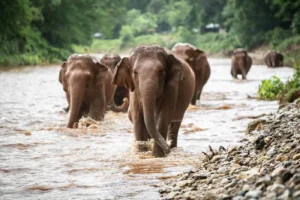
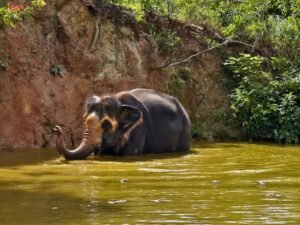
Thailand holds rich Indomalayan wildlife, including wild Asian elephants, hornbills, gibbons and one of Southeast Asia's most important tiger populations in the Huai Kha Khaeng and Western Forest Complex, where tiger numbers have recovered. Populations remain under trafficking and habitat pressure and endemism is moderate.
Is Thailand on clean energy?
Thailand's power system leans heavily on natural gas, which supplies roughly 60% of generation, while low-carbon sources such as hydro, solar, biomass and wind provided only about 15% in 2024. Territorial CO2 emissions sit at a moderate 3.74 tonnes per person (2024), below the world average. At COP30 in November 2025 Thailand brought its net-zero greenhouse gas target forward to 2050 from the previous 2065, alongside a pledge to cut emissions 47% by 2035 conditional on international support.
How polluted is Thailand?
Thailand introduced a major-retailer plastic-bag ban in 2020 and a roadmap to phase out single-use plastics by 2027, but it remains among the larger contributors of ocean plastic, and the north suffers severe seasonal crop-burning smog that pushes Chiang Mai to hazardous air for weeks. National average fine particles sit at about 21 micrograms per cubic metre (AQLI, 2022).
Does recycling work in Thailand?
Thailand has a sizeable plastics-recycling industry and an informal buy-back sector that recover a meaningful share of materials, but municipal separation is inconsistent and much waste is still open-dumped or mismanaged.
Is the farming in Thailand organic?
About 0.7% of agricultural land is certified organic (FiBL, 2020 data), though the country actively promotes organic jasmine rice for export.
Are there natural materials and craft in Thailand?
Living textile traditions are strong, from Isaan mudmee silk, a distinctive tie-dye ikat, to handwoven cotton, hill-tribe hemp among the Hmong and Karen, and widespread basketry and water-hyacinth weaving. These remain everyday crafts and cottage industries.
Is there living culture in Thailand?
Living Thai, northern Lanna, northeastern Isaan and hill-tribe cultures such as the Karen, Hmong and Akha sustain rich craft and festival traditions, and a well-developed community-based tourism network channels income to villages. This sits against very extractive mass tourism and some exploitative hill-tribe village attractions.
What heritage does Thailand keep alive?
Thailand keeps a deep, living court and folk heritage. Classical Khon masked dance drama and Lakhon sit alongside regional forms such as the northern Fon and the Isan Mor Lam and Luk Thung song traditions, carried by Piphat ensembles. Theravada Buddhism is practised in close weave with older ancestral traditions, seen in the spirit houses (san phra phum) outside almost every home and in festivals like Songkran and Loy Krathong.
So is Thailand actually green? The measured answer
What is working: the record is thin on the headline measures, and the sourced numbers below say why.
What is not: sea protected at 5% against a 30% mark, renewable electricity at 19.9% against a 100% mark.
Thailand sits 41 of 77 at 67/100. Every name links to its own destination page, built exactly like this one. The full ranking →
What is Thailand particularly good at?
✓Food and farming, scored 5/5. Thailand is one of the world's largest food exporters, shipping rice, cassava, sugar, tropical fruit and seafood, and is highly self-sufficient. Food import dependency is therefore low, so no import figure was needed to place it high.
✓Heritage, scored 5/5. Thailand keeps a deep, living court and folk heritage. Classical Khon masked dance drama and Lakhon sit alongside regional forms such as the northern Fon and the Isan Mor Lam and Luk Thung song traditions, carried by Piphat ensembles. Theravada Buddhism is practised in close weave with older ancestral traditions, seen in the spirit houses (san phra phum) outside almost every home and in festivals like Songkran and Loy Krathong. Ancestral knowledge also survives in Nuad Thai traditional massage and in the living cultures of the Karen, Hmong, Akha and Lisu peoples of the north.
✓Culture, scored 4/5. Living Thai, northern Lanna, northeastern Isaan and hill-tribe cultures such as the Karen, Hmong and Akha sustain rich craft and festival traditions, and a well-developed community-based tourism network channels income to villages. This sits against very extractive mass tourism and some exploitative hill-tribe village attractions.
Where does Thailand score worst?
✕Wildlife, scored 3/5. Thailand holds rich Indomalayan wildlife, including wild Asian elephants, hornbills, gibbons and one of Southeast Asia's most important tiger populations in the Huai Kha Khaeng and Western Forest Complex, where tiger numbers have recovered. Populations remain under trafficking and habitat pressure and endemism is moderate.
✕Organic farming, scored 2/5. About 0.7% of agricultural land is certified organic (FiBL, 2020 data), though the country actively promotes organic jasmine rice for export.
✕Pollution, scored 2/5. Thailand introduced a major-retailer plastic-bag ban in 2020 and a roadmap to phase out single-use plastics by 2027, but it remains among the larger contributors of ocean plastic, and the north suffers severe seasonal crop-burning smog that pushes Chiang Mai to hazardous air for weeks. National average fine particles sit at about 21 micrograms per cubic metre (AQLI, 2022).
Similar countries doing it better and worse
Sri LankaScored on the same twelve pillars as Thailand.75
IndiaScored on the same twelve pillars as Thailand.72
LaosScored on the same twelve pillars as Thailand.67
MongoliaScored on the same twelve pillars as Thailand.58
JordanScored on the same twelve pillars as Thailand.50
MaldivesScored on the same twelve pillars as Thailand.42
A note from the lens of mother natureswipe →
Energy, 3/5
Thailand's power system leans heavily on natural gas, which supplies roughly 60% of generation, while low-carbon sources such as hydro, solar, biomass and wind provided only about 15% in 2024. Territorial CO2 emissions sit at a moderate 3.74 tonnes per person (2024), below the world average.
Food and farming, 5/5
Thailand is one of the world's largest food exporters, shipping rice, cassava, sugar, tropical fruit and seafood, and is highly self-sufficient. Food import dependency is therefore low, so no import figure was needed to place it high.
Heritage, 5/5
Thailand keeps a deep, living court and folk heritage. Classical Khon masked dance drama and Lakhon sit alongside regional forms such as the northern Fon and the Isan Mor Lam and Luk Thung song traditions, carried by Piphat ensembles.
The Thailand Directory.
Everything on Hold The Throne that sits in Thailand, checked and listed.
World Bank Worldwide Governance Indicators, 2024. Percentile among all governments measured.
Government effectiveness
56.3 / 100
World Bank Worldwide Governance Indicators, 2024. Percentile among all governments measured.
Rule of law
53.3 / 100
World Bank Worldwide Governance Indicators, 2024. Percentile among all governments measured.
Political stability
54.2 / 100
World Bank Worldwide Governance Indicators, 2024. Percentile among all governments measured.
Voice and accountability
47.1 / 100
World Bank Worldwide Governance Indicators, 2024. Percentile among all governments measured.
Environmental Performance Index
45.7 / 100 · 90 of 180
Yale Environmental Performance Index 2024, ranked 90 of 180 countries assessed.
Ecosystem vitality
51.3 / 100 · 81 of 180
Yale Environmental Performance Index 2024, ranked 81 of 180 countries assessed.
Biodiversity and habitat
45.9 / 100 · 101 of 180
Yale Environmental Performance Index 2024, ranked 101 of 180 countries assessed.
Air pollution
75.8 / 100 · 75 of 180
Yale Environmental Performance Index 2024, ranked 75 of 180 countries assessed.
Terrestrial biomes protected
60.6 / 100 · 70 of 180
Yale Environmental Performance Index 2024, ranked 70 of 180 countries assessed.
Marine protected areas
33.0 / 100 · 120 of 131
Yale Environmental Performance Index 2024, ranked 120 of 131 countries assessed.
How Thailand Is Scored. The Throne Standard.
Every destination on the index is scored the same way, so a 4 in Barbados means exactly what a 4 means in Iceland. No self-declared data and no brochure claims are accepted. Every figure on this page carries its named source and year, and the history on each page names what empire took as plainly as it scores the present.
The 12 pillars every destination is scored on, equally weighted
01
Conservation
Land and sea actually protected, not pledged
02
Wildlife
What survives, what is endemic, what is lost
03
Water
Fresh water per person, and the ocean’s health
04
Food & farming
Whether the place can feed itself
05
Organic & clean
Certified land and pesticide reality
06
Climate & energy
Emissions per person, how the grid is powered
07
Waste
Where the rubbish goes, what comes back
08
Health
What people eat and die of
09
Heritage
Living culture, and what the law keeps standing
10
Ownership
Who owns the economy, how much of a dollar stays
11
Governance
Freedom, honesty, promises kept
12
Future
Measured trends run forward, pledges against pace
What each 0 to 5 pillar score means, in plain words
The institutions above are the ones cited on this page, ranked by how many of its figures they carry. This same sectioned page renders for all 77 scored destinations, each with its own researched history, comparison charts and three-way future. Read the full methodology
Every figure on this page, and where it came from: 70 sources across 25 institutions
World Bank18 FIGURES
Forest area (% of land area) AG.LND.FRST.ZS, 2023 check
Terrestrial protected areas (% of land) ER.LND.PTLD.ZS, 2025 check
Marine protected areas (% of territorial waters) ER.MRN.PTMR.ZS, 2025 check
Renewable electricity output (% of total) EG.ELC.RNEW.ZS, 2021 check
Threatened species (mammals EN.MAM.THRD.NO, birds EN.BIR.THRD.NO, fish EN.FSH.THRD.NO, higher plants EN.HPT.THRD.NO), 2022 check
CO2 emissions per capita EN.GHG.CO2.PC.CE.AR5, 2024 check
Thailand, IUCN category Critically Endangered, Bos javanicus, Critically Endangered on the IUCN Red List, and recorded in Thailand in GBIF occurrence data (mammal). check
Thailand, IUCN category Critically Endangered, Calidris pygmaea, Critically Endangered on the IUCN Red List, and recorded in Thailand in GBIF occurrence data (bird). check
Thailand, IUCN category Critically Endangered, Heosemys annandalii, Critically Endangered on the IUCN Red List, and recorded in Thailand in GBIF occurrence data (turtle). check
Thailand, IUCN category Critically Endangered, Rhynchobatus australiae, Critically Endangered on the IUCN Red List, and recorded in Thailand in GBIF occurrence data (shark or ray). check
Thailand, IUCN category Critically Endangered, Crocodylus siamensis, Critically Endangered on the IUCN Red List, and recorded in Thailand in GBIF occurrence data (species). check
Commission Implementing Regulation (EU) No 120/2013 of 11 February 2013 registering Khao Hom Mali Thung Kula Rong-Hai as a protected geographical indication, OJ L 41, 12.2.2013, pp. 3-8, Thai Hom Mali jasmine rice, a fragrant long-grain variety with protected geographical status unique to Thailan check
Commission Implementing Regulation (EU) No 120/2013 of 11 February 2013 registering Khao Hom Mali Thung Kula Rong-Hai as a protected geographical indication, OJ L 41, 12.2.2013, pp. 3-8 corroboration check
Designated Areas for Sustainable Tourism Administration (DASTA), Thailand, English site, Designated Areas listing, DASTA runs the national CBT Thailand platform listing community-run homestays and community-tourism enterprise check
Designated Areas for Sustainable Tourism Administration (DASTA), Thailand, English site, Designated Areas listing corroboration check
UNESCO Institute for Statistics4 FIGURES
public data API, indicator XGDP.FSGOV, Thailand, Public spending on education runs at 2.5% of GDP and 12.6% of all government spending, and secondary enrolment check
public data API, indicator XGDP.FSGOV, Thailand corroboration check
public data API, indicator XGDP.FSGOV, Thailand corroboration check
public data API, indicator XGDP.FSGOV, Thailand corroboration check
BirdLife International, IUCN and UNEP-WCMC3 FIGURES
UN SDG Global Database, terrestrial Key Biodiversity Areas covered by protected areas (%) ER_PTD_TERR, Thailand, 2025 (68.2%), country-reported check
UN SDG Global Database, marine Key Biodiversity Areas covered by protected areas (%) ER_MRN_MPA, Thailand, 2025 (44.0%), country-reported check
UN SDG Global Database, freshwater Key Biodiversity Areas covered by protected areas (%) ER_PTD_FRHWTR, Thailand, 2025 (36.3%), country-reported check
FAO3 FIGURES
FAOSTAT Trade: Crops and Livestock Products, normalised bulk dataset, 2023 values, Thailand is one of the world's largest food exporters, shipping rice, cassava, sugar, tropical fruit and seafo check

 Sri LankaScored on the same twelve pillars as Thailand.75
 IndiaScored on the same twelve pillars as Thailand.72
 LaosScored on the same twelve pillars as Thailand.67
 MongoliaScored on the same twelve pillars as Thailand.58
 JordanScored on the same twelve pillars as Thailand.50
 MaldivesScored on the same twelve pillars as Thailand.42