
The Good Trade vs Hold The Throne, Which Non Toxic Underwear List Is More Honest
Which Of The Good Trade's Sustainable Underwear Brands Are Actually Non Toxic
The Good Trade’s sustainable underwear list names ten brands, and once you read the fabric labels, eight of those ten are synthetic. Four of The Good Trade’s brands blend in elastane or spandex, three are built on semi synthetic micromodal or TENCEL, and two carry recycled nylon or recycled polyester, all of it plastic spun from petrochemicals.
The Good Trade lists brands like Pact, but Pact’s briefs are 95% organic cotton and 5% elastane, so Pact is a plastic blend.
This is the same with Quince, since Quince’s hero underwear is micromodal, a semi synthetic regenerated cellulose, so Quince is not natural.
It is the same again with Organic Basics, which runs on 82% recycled nylon and 18% elastane, so Organic Basics is plastic on the skin.
The Good Trade even lists MATE the Label, Embrace, TomboyX and PROCLAIM, and every one of them carries elastane, micromodal, TENCEL or recycled polyester.
Only KENT is fully 100% natural fibre and compostable, and only Oddobody comes close at 99%. The full breakdown is below, brand by brand, with the fibre composition behind every verdict.
Which Brands Sell 100% Non Toxic Underwear?
The brands that sell 100% non toxic underwear are KENT, Eco Aya, Cottonique and Hemptees, and none of them appear on The Good Trade’s list.
KENT sells GOTS certified organic cotton underwear with a plant based bio elastic instead of spandex, so a KENT brief is compostable in 90 days rather than shedding microplastic for centuries.
Eco Aya sells regenerative organic Pima cotton underwear stitched with cotton thread down to the labels, so no Eco Aya garment carries any plastic at all.
Cottonique sells hypoallergenic organic cotton underwear built for eczema and chemical sensitivity, with the dyes, resins and synthetic elastic stripped out entirely.
Hemptees sells 100% hemp underwear, or hemp blended with organic cotton, naturally antibacterial so it needs no chemical finish.
Every one of these four brands passes a pure plant fibre test that the elastane and micromodal brands on The Good Trade’s list cannot, and you can read the composition behind each verdict in the clothing data reports.
Across these four brands you can find organic cotton underwear in every cut, briefs, boxers and hipsters, breathable plant based base layers, wireless and maternity bras, and gender-inclusive styles, all biodegradable and free of lyocell, TENCEL, spandex and recycled nylon. Most of the range is vegan, and none of it sheds microplastic against the skin.
1. Pact
Pact’s core underwear is 95% organic cotton and 5% elastane, and Pact’s organic cotton is genuinely good. The 5% elastane is the catch, because elastane, also sold as spandex, is a polyurethane plastic, and at 5% it cannot be separated back out, so the whole Pact brief is locked into being part organic and part petrochemical and impossible to compost. Pact does sell a 100% organic cotton Heirloom line, but Pact made that loungewear, not the underwear that earned the listing, so the product The Good Trade is actually recommending is the blend. Put a Pact 95/5 brief next to a 100% organic cotton brief and only one of them returns to the soil.
See the full composition in our clothing data reports. See the full Pact data report.
2. Organic Basics
Organic Basics promises one thing in the name and the label says another, because a large share of Organic Basics underwear is 82% recycled nylon and 18% elastane, with some ECONYL styles at 78% recycled nylon and 22% elastane. Recycled nylon is a better input than virgin nylon, but Organic Basics is still putting plastic against the skin, still shedding microplastics in the wash and still selling a garment that cannot return to the earth. Organic Basics does offer a 95% organic cotton, 5% elastane option, but even that Organic Basics style carries plastic, and the brand’s own impact report shows synthetics as the main material across the range. The name sells organic, the volume product is recycled plastic.
See the full composition in our clothing data reports.
3. Quince
Quince’s hero underwear is micromodal, and Quince leans on the plant based story because modal starts as beech tree pulp. Quince’s modal is a regenerated cellulose fibre, chemically dissolved and reconstituted, which makes it semi synthetic and not a natural fibre in the way 100% organic cotton is. Quince does sell silk and organic cotton styles, but the volume product, the cheap six packs that built Quince, is processed modal. Quince’s underwear is soft, and soft is not the same as natural or non toxic.
See the full composition in our clothing data reports.
4. MATE the Label
MATE the Label is closer to honest than most of The Good Trade’s list, and it is worth saying so. MATE’s intimates are 92% organic cotton and 8% spandex, with one brief at 95% organic cotton, and MATE sources its cotton from Maharashtra and is transparent about it. That 8% spandex is still 8% plastic blended into a fibre that can never be unblended, which is why MATE sits with the blends and not with the genuinely clean brands. MATE is doing the right thing on cotton and the wrong thing on stretch.
See the full composition in our clothing data reports. See the full MATE the Label data report.
5. Embrace
Embrace builds its underwear and nursing range on US Supima cotton and Austrian micromodal, and Embrace’s Supima cotton is excellent. Embrace’s micromodal is the same semi synthetic regenerated cellulose problem as Quince, dissolved wood pulp dressed up as plant based. Embrace’s founder spent a year developing the fabric and clearly cares, but care does not turn modal into a natural fibre, so Embrace is a refined product rather than a pure one.
See the full composition in our clothing data reports.
6. Araks
Araks is the most genuinely natural brand on The Good Trade’s list and Araks deserves the credit, because much of the Araks range is 100% organic cotton, GOTS and OEKO-TEX certified, with organic linen and upcycled Refibra cotton. The Araks silk and lace pieces break that run, because there you will find compositions like 92% silk and 8% elastane, plus recycled nylon in some Araks styles. So the Araks cotton line is clean and the Araks lingerie line is blended, which means buy carefully and Araks can be a 100% natural purchase, which is more than the rest of this list can say.
See the full composition in our clothing data reports.
7. TomboyX
TomboyX runs on blends from end to end. TomboyX’s cotton styles are 95% OEKO-TEX cotton and 5% spandex, the modal styles are 95% TENCEL modal and 5% spandex, and some TomboyX pieces split 50/50 cotton and modal. Every TomboyX version carries spandex, and the modal versions carry a semi synthetic fibre on top of it. TomboyX is inclusive and well made, but on the only test that decides this list, the fabric, TomboyX is plastic blended throughout.
See the full composition in our clothing data reports.
8. Oddobody
Oddobody is one of the good ones, with a caveat worth understanding. Oddobody’s main fabric is 100% GOTS organic cotton with no elastane and no spandex in the body, and Oddobody is upfront that the waistband and leg openings use a nylon elastic core stitched over with organic pima cotton so that no plastic touches the skin, with no latex anywhere. So Oddobody is a 99% solution rather than a 100% one, and Oddobody tells you that plainly, which is exactly the transparency the rest of The Good Trade’s list lacks.
See the full composition in our clothing data reports.
9. KENT
KENT is the standard the whole list should be measured against. KENT is 100% GOTS certified organic Supima cotton, fully plastic free, with no spandex, nylon, elastane or polyester anywhere in the garment and no microplastics, BPAs or added toxins. KENT is compostable and designed to return to the soil in about 90 days, and KENT is made with 87% less water and 45% less CO2 than conventional cotton. No blends, no asterisks and no loungewear loophole, KENT is what non toxic underwear actually looks like.
See the full composition in our clothing data reports.
10. PROCLAIM
PROCLAIM is made ethically in Los Angeles and that matters. PROCLAIM’s fabric is TENCEL, a regenerated cellulose fibre in the same semi synthetic category as modal, and in some PROCLAIM styles it is REPREVE recycled polyester spun from plastic bottles. Recycled polyester keeps bottles out of landfill, which is a genuine good upstream, but downstream PROCLAIM is still plastic on the skin that sheds microfibre every wash. PROCLAIM is responsibly made and still not natural and not non toxic.
See the full composition in our clothing data reports.
The Best Non Toxic Underwear Brands To Switch To



Best compostable sustainable underwear
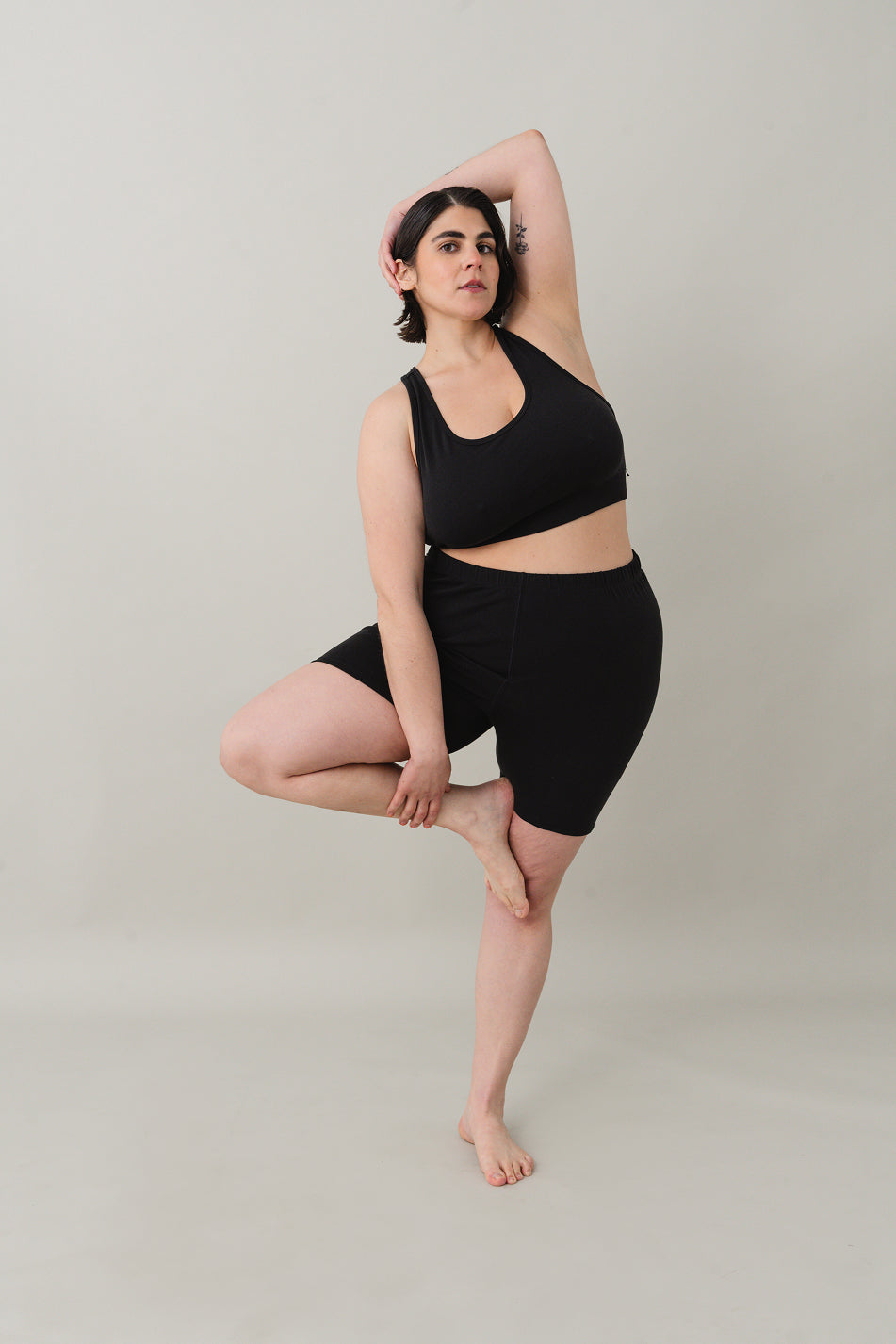
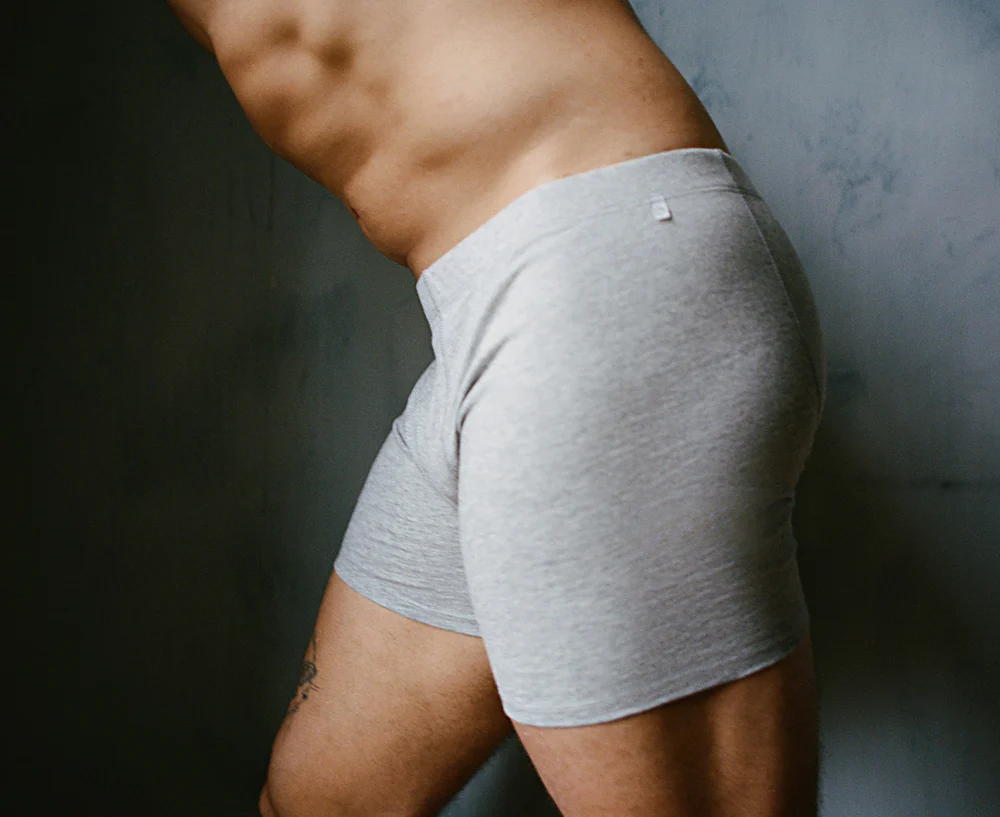
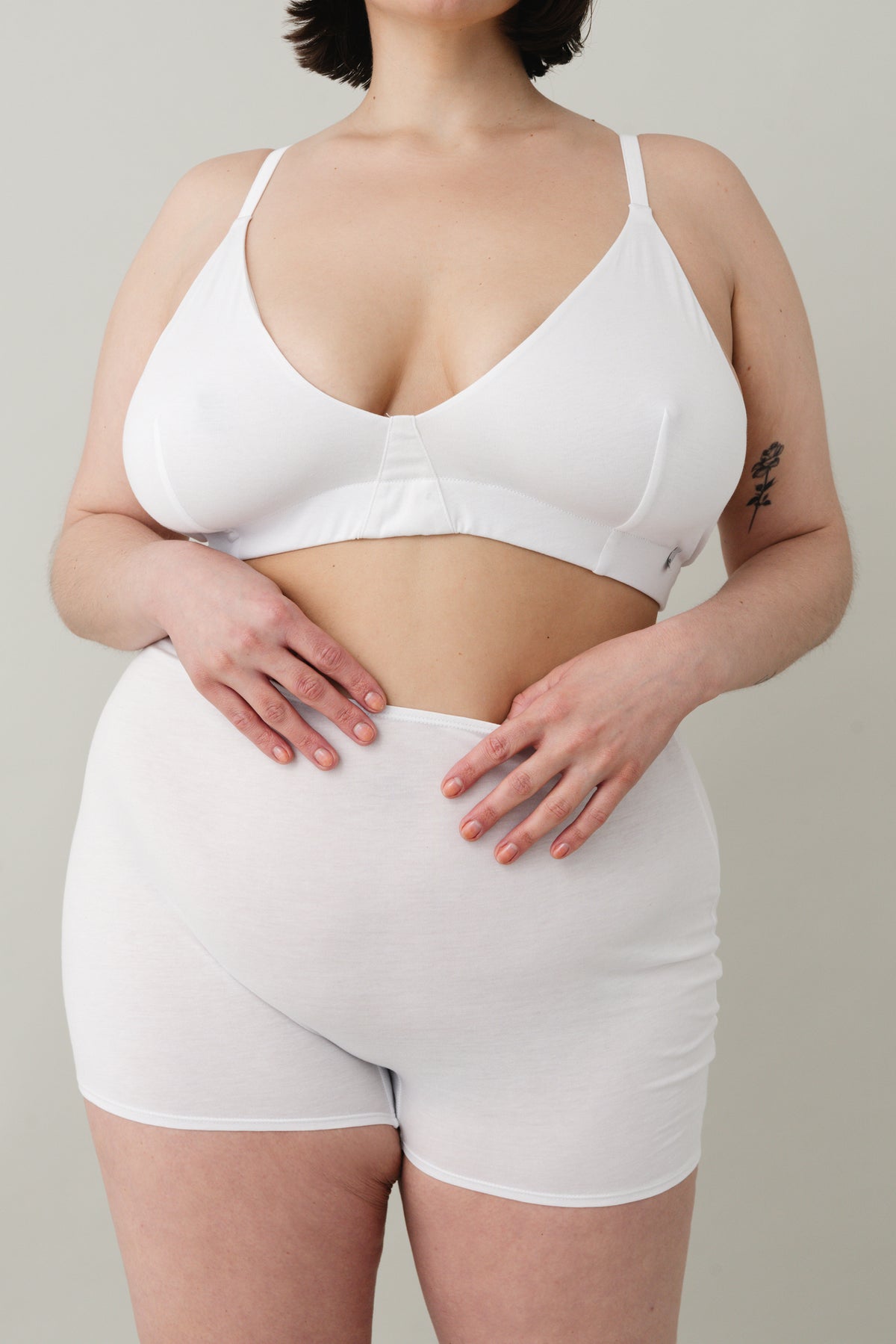
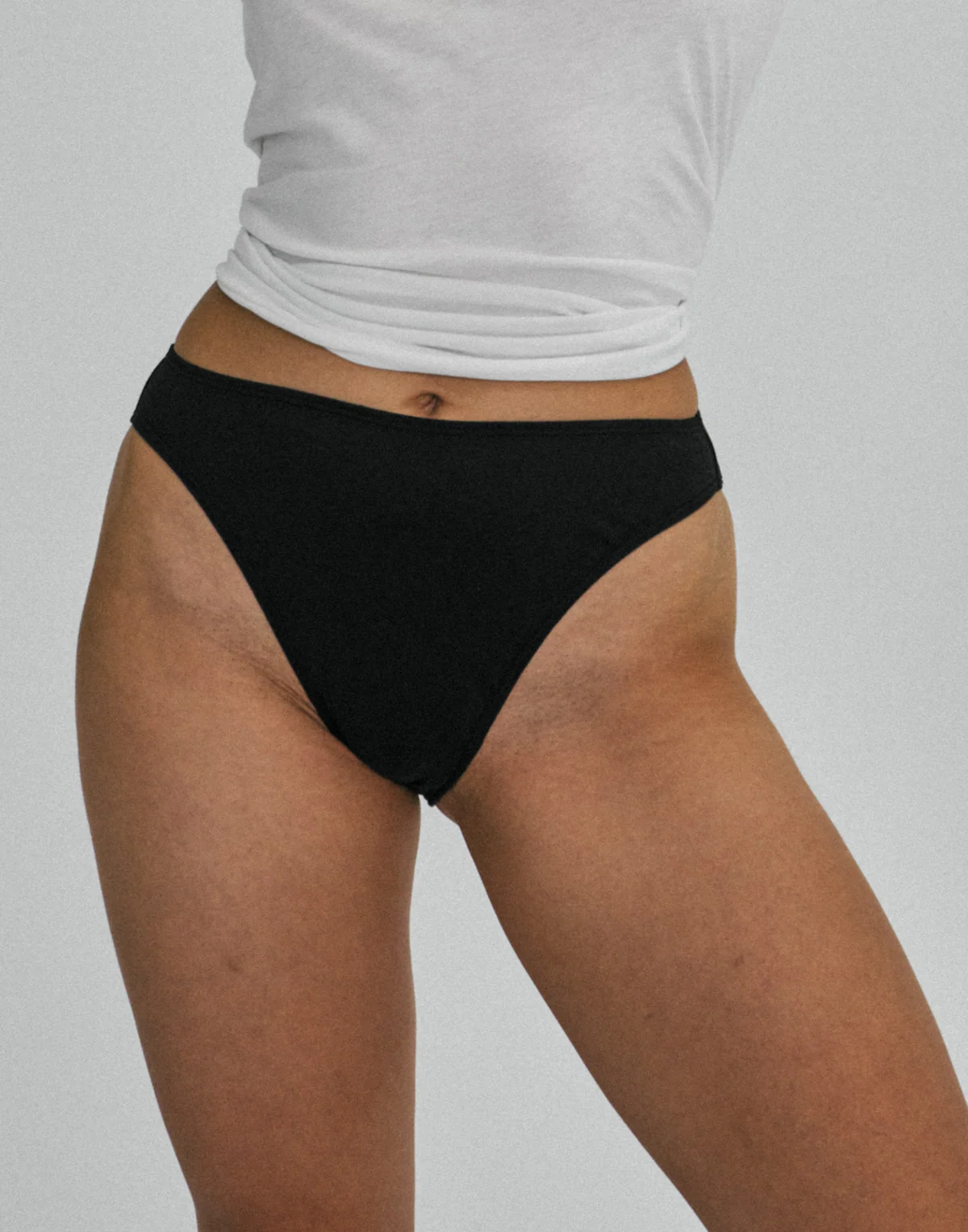
KENT
The world’s first verified compostable underwear.
100% GOTS-certified organic pima cotton with no spandex, nylon, elastane or polyester, designed to return to the earth in 90 days. Free of plastics, pesticides, PFAS and petrochemicals, right down to the packaging.
Best organic cotton basics and underwear
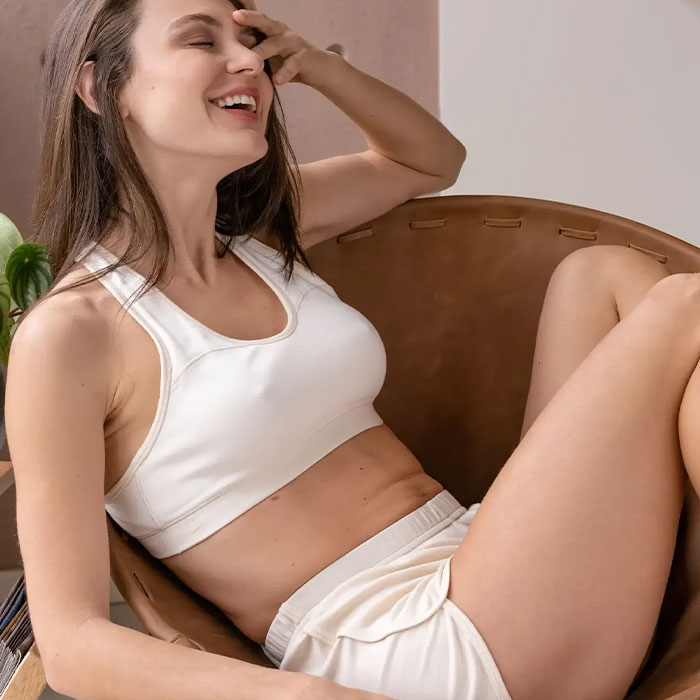
Oddobody
Oddobody makes organic cotton basics and underwear, ribbed and seamless, in a focused range of everyday essentials. Oddobody sells soft organic cotton briefs and bralettes with no synthetic stretch fibre.
The Throne Standard scan found every live style 100% organic cotton, no synthetics and nothing to read past.

Best sustainable activewear
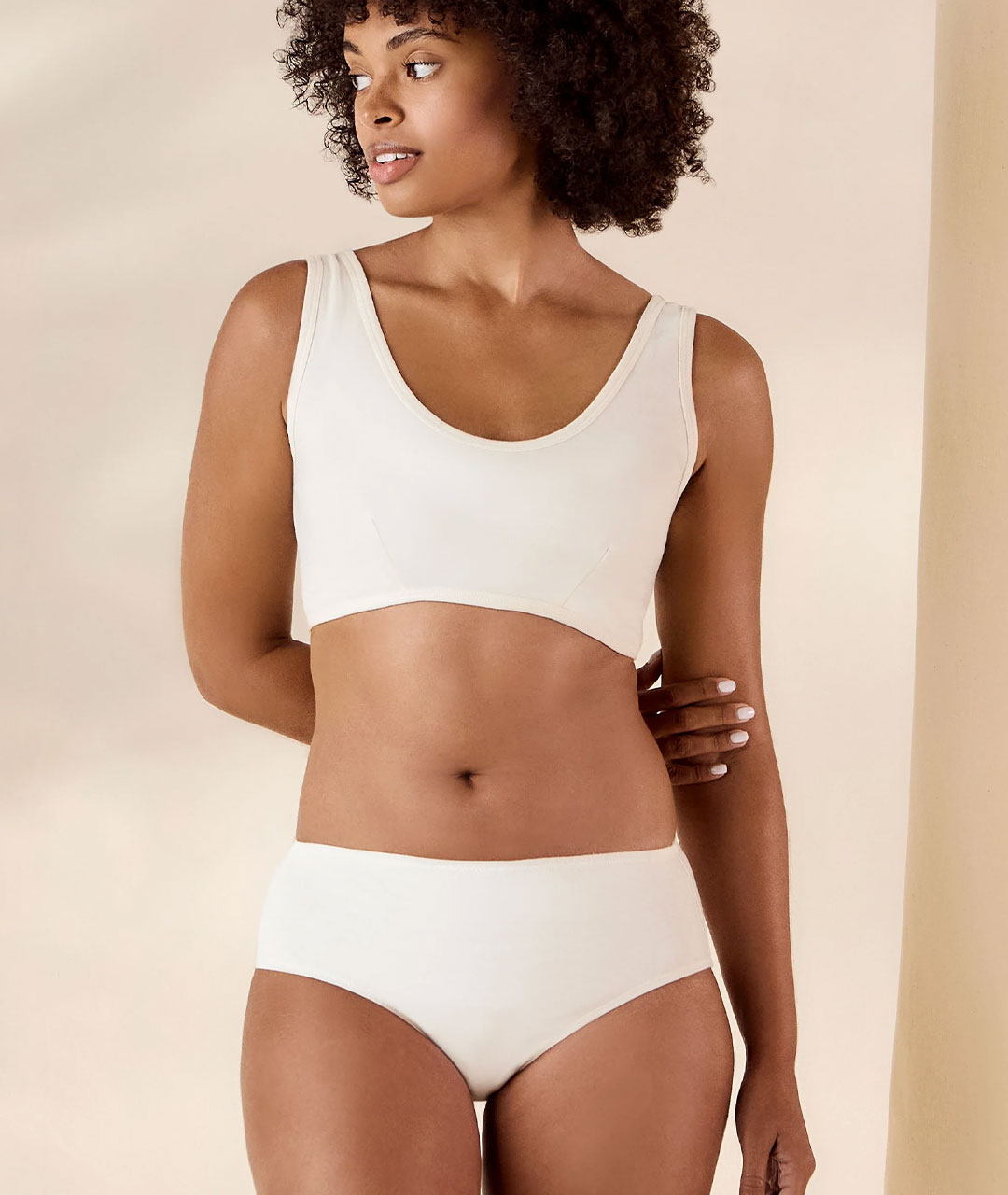
Eco Aya
100% plastic-free clothing made from regenerative organic Pima cotton, with the entire supply chain based in a single origin: Peru.
No polyester, nylon, acrylic or elastane, so the fabric sheds zero micro- or nano-fibers.
Best hypoallergenic non toxic underwear
Cottonique
Cottonique sells 100% organic cotton hypoallergenic underwear with no latex, no spandex and no synthetic fibre, designed for eczema and Multiple Chemical Sensitivity. Cottonique wraps any elastic fully in organic cotton or uses drawstrings, so no plastic touches the skin, and it strips out the dyes, resins and finishes too.

Best for hemp basics
Hemptees
Plant-fibre purists: tees and basics in 100% hemp, one of the lowest-water, no-pesticide crops there is.
The scan read every live style as pure hemp, so it sheds no microplastic and composts at the end of its life.
There Is A Bigger Problem With Sustainable Underwear Lists
The Good Trade’s sustainable underwear list faces a harder problem than a sustainable coat list, because underwear sits against the most absorbent skin on your body, overnight, with nothing washed between you and the fabric.
In that spot a 5% elastane brief is not a rounding error. Elastane is polyurethane held against the body for sixteen hours, warm and damp, which is the exact condition under which elastane and other plastics leach and shed microplastics into the skin.
That is why The Good Trade’s sustainable underwear has to be judged on fibre, not on feel. The Good Trade scores comfort, and comfort is blind to whether a brief is GOTS certified organic cotton or recycled nylon and spandex.
The Issue With The Good Trade's Criteria
The Good Trade ranks its best sustainable underwear on how each pair feels to wear, which is the one criterion that cannot catch a plastic blend.
The Good Trade wears each brand to dinner, to the gym and onto a plane, then scores it on no wedgies, no visible lines and that buttery soft, barely there comfort.
A 95% organic cotton, 5% elastane brief passes every one of The Good Trade’s comfort checks, because the elastane is what makes it feel that way. So The Good Trade’s comfort test quietly rewards the synthetic it is supposed to flag.
Hold The Throne judges nontoxic underwear the opposite way. Hold The Throne asks whether the fibre is GOTS certified organic cotton that composts, or a recycled nylon and spandex blend that sheds microplastic. Feel is what brands optimise, and fibre is what they hope you never read.
How Hold The Throne Judged The Good Trade's List
Hold The Throne did not wear these brands for a week. Hold The Throne read them.
The Good Trade’s Grace Abbott describes getting intimate with dozens of ethical lingerie brands and naming her favourite organic cotton picks. Hold The Throne took that same list and analysed the actual product data, the fibre percentage printed on every brief, bralette and boxer, read style by style against the label.
That is how Quince, which markets itself as plant based, ends up filed as semi synthetic here. The number on the Quince micromodal six pack does not match the story on the Quince homepage.
Hold The Throne pulled every composition in the cards above from each brand’s own listings, and Hold The Throne keeps the full breakdown in the clothing data reports.
Most sustainable underwear lists fall apart the moment you read the fabric label
Underwear is the one garment you wear against the most absorbent skin on your body, for sixteen hours a day, every day, and yet it is the part of the wardrobe nobody checks the label on. The Good Trade’s sustainable underwear list is meant to be the shortcut, the place you trust so you do not have to read fibre percentages yourself. So Hold The Throne read them for you, every label on The Good Trade’s list, because when the fabric is elastane or modal it sits against you while you sleep, sheds microplastic into the wash and never returns to the soil, and that is a lot of consequence for a garment most people buy on comfort alone.
The Good Trade is not the only sustainable clothing list that fails a fibre test. Hold The Throne found the same plastic blends on Vogue’s best sustainable clothing list and on Ethical Consumer’s ethical clothing list.