Destinations › Caribbean · The Destination Index · universal template · every figure sourced
Barbados.
Barbados scores 57/100 on the Eco Index. A 281,000-person island that imports more than 100% of its dietary energy, keeps about 1% of its land protected, and lives at roughly a 2,130% ecological deficit. Coral cover is down about 48%, non-communicable disease is 79.2% of deaths, debt has fallen from 157% to about 89.5% of GDP, and its governance is rated the cleanest in the region.
Region · CaribbeanPopulation · ~281,000Languages · Bajan Creole, English (official)Eco Index · 57/100 · Weak
The Eco Index across 12 pillars · scored 0 to 5 · World Bank, OWID, WHO/UNICEF JMP, FiBL, Protected Planet, IUCN, UNESCO (2023-24)
Conservation
Wildlife
Water
Food & farming
Organic & clean
Climate & energy
Waste
Health
Heritage
Ownership
Governance
Future
The History of Barbados.
1,200 years, then 400 of extraction. Amerindian peoples farmed a forested island for over a millennium; colonisation turned all of it into a slave-worked sugar estate, and the island has been recovering ground ever since, slowly.
Where the name comes from
The Arawak and Kalinago called the island Ichirouganaim. The Portuguese Os Barbados, 'the bearded ones', is usually read as a reference to the island's bearded fig trees. Source: national and regional toponymic records.
The land itself: largely flat coral limestone, rising gently to a central highland. Its high point is Mount Hillaby, 336 m. Source: national mapping and survey records.
Where it starts
Ichirouganaim
People were living on this island long before it had a European name. Excavation has verified a pre-ceramic Archaic Age presence, and Saladoid communities related to the Arawak were settled here from around 500 BC, arriving from north-eastern South America through the island chain. At Holetown a village stood through the transition from late Saladoid to early Troumassoid, roughly AD 500 to 800. Cassava griddles, ground stone axes and shell ornaments survive from Heywoods, Chancery Lane, Port St Charles and Spring Garden. The people who lived here called the island Ichirouganaim.
How it got here
Emptied, then settled
The island the English landed on in 1627 was empty, but it had not always been. Spanish slave raiding through the early sixteenth century took the island's people to work plantations on the larger islands, and those who escaped left for mountainous islands they could defend. By 1541 a Spanish writer was describing Barbados as uninhabited. The sugar economy that followed was built on enslaved African labour, abolished in 1834. Independence came in 1966 and the republic in 2021.
What was Barbados called before?Ichirouganaim, the Arawak (Lokono) name, often read as “red land with white teeth” for its reef-ringed coast. The name “Barbados” came from Portuguese sailors’ os barbados, “the bearded ones”, after the island’s bearded fig trees.
The Lokono are not gone. The Eagle Clan Lokono-Arawak, a hereditary clan of the Lokono (Arawak) nation with its tribal territory at Pakuri in Guyana, keeps a living presence in Barbados: its Barbados-born hereditary leadership founded the Caribbean Amerindian Development Organization (1995) and advocates for Indigenous Caribbean peoples internationally, including at the UN.
The timeline
c. 1630 BC
People before pottery.
A chipped shell adze from Heywoods on the north west coast is radiocarbon dated to around 1630 BC, verifying a pre-ceramic occupation of the island. Later dates from the same site extend the record further. ↗
c. 1630 BC to 500 BC
Living without pottery.
The Heywoods record covers food remains and shell tools across more than a thousand years, an island occupied long before ceramics arrive. ↗
c. 500 BC
Saladoid settlement begins.
Ceramic-using Saladoid communities, related to Arawak peoples, reach the island from north-eastern South America by way of the Lesser Antilles. De Waal, Hofman and others, Pre-Colonial and Post-Contact Archaeology in Barbados, Taboui 05, 2019. ↗
c. AD 500 to 800
The village at Holetown.
Weaver and Smith, Proceedings of the 22nd Congress of the International Association for Caribbean Archaeology. ↗
AD 500 to 1500
Ichirouganaim.
Arawak and later Kalinago people lived here for a thousand years and called the island Ichirouganaim. Griddles for processing cassava, ground stone axes and mortars survive from settlements at Heywoods, Chancery Lane, Port St Charles and Spring Garden. ↗
1536
A Portuguese ship names it.
Pedro a Campos passes the island and the name Os Barbados, the bearded ones, enters European use. The name refers to the island's bearded fig trees. ↗
Early 1500s
Emptied by slave raiding.
Repeated Spanish slave raids through the early sixteenth century removed the island's people to labour on plantations on the larger islands. Those who escaped left for more defensible, mountainous islands. ↗
1541
Recorded as empty.
A Spanish writer describes Barbados as uninhabited. The island was not found empty. It had been emptied within a single lifetime. ↗
1627
English settlement.
The ship William and John lands settlers, two years after an English expedition assessed the island. ↗
1640s
The sugar revolution.
Sugar cane replaces tobacco and cotton, and the plantation economy is built on enslaved African labour. ↗
1834
Abolition.
Slavery is abolished, followed by a four-year apprenticeship period. ↗
1937
Riots and reform.
Unrest over pay and conditions leads to the Moyne Commission and the beginnings of organised labour and political representation. ↗
1966
Independence.
Barbados becomes independent on 30 November 1966 and a republic in 2021. Government has alternated between the Barbados Labour Party and the Democratic Labour Party ever since, and in 2018 the BLP took every one of the 30 seats. ↗
2021
A republic.
Barbados removes the British monarch as head of state and becomes a republic on 30 November, with Sandra Mason as first President. ↗
De Waal, Hofman and others, Pre-Colonial and Post-Contact Archaeology in Barbados (Taboui 05, 2019) · International Association for Caribbean Archaeology, Congress Proceedings · Fitzpatrick and others, Verification of an Archaic Age Occupation on Barbados · Barbados Museum and Historical Society · Journal of Caribbean Archaeology, Verification of an Archaic Age Occupation on Barbados
Nature and Biodiversity in Barbados.
The original forest was felled for sugar in a single generation, 1640s to 1660s. What stands today is 14.65% forest cover, 1.1% of the land and 0.05% of the sea are protected, and the world's smallest snake, found nowhere else, was rediscovered in March 2025. Barbados would need about 16 islands its own size to sustain how it lives, a deficit of roughly 2,130%.
Is wild Barbados still there? Almost none of it. What survived the cane
How protected is nature in Barbados?
Forest cover14.65%
Biodiversity Intactness Index35%
Terrestrial protected area1.1%
Marine protected area0%
Tree-cover loss since 20007.6%
58 (mammals, birds, fish & plants) listed as threatened.
4.49 gha footprint, the land it uses0.28 gha biocapacity, the land it has
Found only here. Barbados threadsnake, the smallest snake on earth
The watchlist
Protected realGreen monkeyThriving, and often raiding gardens. See them mid-morning at Welchman Hall Gully.
ThreatenedHawksbill turtleCritically endangered but nesting on the west coast. The Sea Turtle Project runs patrols you can join.
ThreatenedThreadsnakeThe world’s smallest snake lives only here, and it has been seen only a handful of times since 1889.
ThreatenedHumpback whaleHumpbacks pass offshore between January and April. There is no whaling here, and no watching industry yet.
GoneBarbados parrotEaten to extinction within a century of colonisation.
GoneBarbados raccoonThe last one was killed on a road in 1964, and historical, biogeographic, genetic and morphological evidence since shows it was an introduced North American raccoon rather than a Barbados endemic.
GoneCaribbean monk sealHunted out of the region entirely; declared extinct in 2008.
What is still here, and what is gone?
Tap a species for the honest status.
Green monkeyHawksbill turtleThreadsnakeHumpback whaleBarbados parrotBarbados raccoonCaribbean monk seal
.
What was lost
Barbados giant rice rat
The only native land mammal, gone soon after European arrival, its habitat turned to cane and its numbers finished by rats and mongoose.
Barbados raccoon
An endemic subspecies. The last one was killed on a road in 1964.
Original mesophytic forest
Felled for cane in the 1640s to 1660s. Only the roughly 46-acre Turner’s Hall Wood survives.
Caribbean monk seal
Hunted out of the region entirely and declared extinct in 2008.
Species named here are drawn from GBIF occurrence records for Barbados filtered to the IUCN Red List threatened categories. Species are listed where GBIF holds occurrence records for them in this country. Record counts are not published here because the figure cannot be reproduced from a public GBIF query.
53 acres of the Scotland District being replanted as a regenerative food forest of coconut, cacao, turmeric and bamboo under restored canopy, funded by hikes and tours.
A 300-acre sand quarry in conversion to the island’s largest regenerative reserve, replanted since 2011 with hundreds of thousands of trees across 134 plant species by WIRRED and volunteers.
Water and Ocean in Barbados.
Barbados ranks among the most water-scarce countries on earth, with no rivers, a limestone aquifer refilled only by rain, and demand pressing the limit. Yet the tap is safe nearly everywhere, 98% have basic sanitation, and a desalination plant supplies about 1 in 6 people.
Does Barbados have enough fresh water? No. A dry island that drinks safely
Tap water is desalinated and safe to drink. About 1 in 6 people already drink desalinated sea water, and the desalination plant runs on the same 91%-oil grid.
Cleanest water: Carlisle Bay Marine Park
How much fresh water does Barbados have, per person?
283 m³
Barbados
1,000 m³
the UN “water scarce” line
Nature refills less than a third of what the UN already calls “water scarce”. That places Barbados among the 20 driest countries on Earth per person, and nearly all of its water is pumped up from underground.
What are the rules on Barbados beaches?
✓Every beach is public by law. No resort can own the sand, because access up to the high-water mark is a legal right, unusual in the Caribbean.
✓West and south coasts are calm and swimmable most of the year; the wilder Atlantic east coast is for walking and surfing, not swimming.
✕No au naturel beaches. Public nudity is illegal in Barbados, with no official clothing-optional beach; the island is conservative on this and it is enforced.
✕Clean-beach certifications have come and gone as nearshore water quality slipped; after heavy rain, skip swimming near gullies and outfalls.
Named on the open map: Bayshore Beach, Brandons Beach, Brighton Beach, Drill Hall Beach, Lakes Beach, Morgan Lewis Beach, Pebbles Beach, Pier Head Beach. That is 9 named beaches in the public record for Barbados, each one a place you can look up before you go. OpenStreetMap.
Where does the sewage go?
6.0%
of homes connect to a sewer
Only 6% of properties connect to a central sewer. The rest use septic tanks, soakaways or pit latrines, and their leakage is the biggest island-based polluter of the sea. Overall sanitation access is close to universal at 99%, but almost none of it is centrally treated. In 2017 to 2018 a treatment plant failed and raw sewage flooded the tourist coast. GEF CReW+ (Caribbean Regional Fund for Wastewater Management).
Coral cover
now 10%was 50%
The sea is losing its coral, its fish and its clean-beach awards, even though its overall health score is still about average. Caribbean coral cover fell from about 50% of the seabed to about 10% over 44 years, and each bleaching year (1998, 2005, 2023) cut about 17% at once.
How is the sea around Barbados doing?
One cross-section, every answer measured.
Surface
Sargassum
Seasonal mats peak May–July on the east and south coasts; already trialled as fertiliser.
0–5 m
Reef flats
Elkhorn and staghorn once dominated the shelf-edge; now the most degraded zone.
5–15 m
Fringing reef
Brain and star coral hold the remaining ~10% live cover that guards the beach from waves.
15–40 m
Flying fish grounds
The pelagic zone where landings have halved since 2011 as seas warm.
40 m+
Sand and seagrass
Turtle-grazing meadows and the sand banks the beaches are made of.
Ocean Health Index 71/100, about world average, ranked 128th of 220 regions.
Sewage
6% on sewers
Septic-tank leakage is the sea's biggest island-based polluter. GEF CReW+.
Ocean Health Index
71/100
About world average, ranked 128th of 220 regions.
Seaweed tides
every year since 2011
The 2023 Atlantic seaweed belt stretched about 8,000 km; it rots on the beaches and drives fish away.
Blue Flag beaches
0
Clean-beach certifications have come and gone as nearshore water quality slipped.
Flying fish catch
52% down
The national fish, halved since 2011.
Coral
48% lost since 1980
Solid is still alive; faded is already gone.
Is the tap water safe in Barbados?
Yes. Piped drinking water reaches nearly every home and 98% of people have at least basic sanitation. A desalination plant, which turns salty water fresh, supplies about 1 in 6 people.
How hard is the water supply being pushed?
Of every 10 buckets nature refills, 9 are already taken. Withdrawals run at 87.5% of what Barbados renews internally each year (2022, World Bank / FAO AQUASTAT). That is past the 25% mark generally treated as water stress, so the supply is being pushed towards its limit.
Seaweed on the beaches. Mass strandings arrive from the Great Atlantic Sargassum Belt, which spanned roughly 8,000 km in the record 2023 season. The rotting weed smothers beaches, releases hydrogen sulphide and forces costly clean-ups across the tourism belt. It also coincides with the 52% collapse in flying fish landings. Barbados treats it as a recurring climate-driven crisis, not a one-off event.
Will seaweed hit my trip? Tap your month.
Tap your month.
JanFebMarAprMayJunJulAugSepOctNovDec
.
How much fresh water does Barbados actually have?
Nature renews about 283 cubic metres of fresh water per person per year here. That ranks Barbados 22 of 208 countries measured, placing it among the 30 driest countries on Earth per person. The UN treats anything under 1,000 cubic metres as water scarce, and this is below that line. World Bank / FAO AQUASTAT.
On paper Barbados is fertile, but it barely feeds itself. Because the whole island was given to sugar for 300 years, no diverse farming survived: about 30,000 acres stay arable, the farm workforce fell from 4% of all workers to 1.3%, and the island imports over 100% of its dietary energy. What still grows: sugar cane, some vegetables and Blackbelly sheep.
Where does the food in Barbados come from?
22.7% imported
about US$321m a year
On the plate: Ground provisions (yam, sweet potato, eddoe, cassava) and breadfruit are the starch staples, plus tomatoes, cucumber, pumpkin, okra, peppers, and fruit (banana, mango, golden apple, guava).
How often each food is on the plate
Share of people eating each one regularly. These overlap, so they do not add up to 100%.
Imported food energy90%
Ultra-processed share of calories40.5%
Still grown on the island10%
2 of 10
bites are imported
The island buys in more food energy than it eats. About US$321m a year leaves the country to pay for it. The green slice is roughly what still grows here.
4 of 10
calories are ultra-processed
Packaged products high in sugar, fat and salt supply 40.5% of the average adult's daily energy. Health experts tie this directly to the disease chart.
Two plates give two measured answers. One shows where the food comes from, the other what kind of food it is. Nine of ten bites are imported: the island buys in more food energy than it eats, about US$321m a year, and the green slice is roughly what still grows here. Four of ten calories are ultra-processed, packaged products high in sugar, fat and salt supplying 40.5% of the average adult’s daily energy.
What is killing people in Barbados? The imported diet.
Cause of death, and the diet behind it.
Non-communicable diseases, all combined79.2%
Stroke (cerebrovascular)13.6%
Coronary heart disease12.7%
Cancers, combined13%
Diabetes13.2%
Diabetes drives one of the world’s highest amputation rates. About 379 per 100,000 people with diabetes lose a limb.
Adults living with overweight or obesity. 67.2%.
Can Barbados feed itself?
16.3%
Arable land
23.3%
Agricultural land
1,500
Farmers
17,297
Arable acres
1.6%
Agriculture, share of GDP
Harvest: Sugar cane harvest, celebrated by Crop Over (June to early August)
Three centuries of monoculture
Sugar-only farming left no diverse food system, so cheap imported packaged food fills the gap.
Ital, the tradition that already fits
The Rastafari kitchen is naturally plant-based and unprocessed, built on exactly the crops Barbados grows well: sweet potatoes, cassava, okra, breadfruit and hot peppers.
Green monkeys and crop loss
Introduced green monkeys take a real share of smallholder crops, one reason growers give up on vegetables.
Why the organic number looks like that. Certified-organic farmland is effectively zero, and that is not proof nothing is grown cleanly, it is a certification gap. Barbados has no local organic certifier, so a farm must pay a US or EU body an annual fee to carry the label, which prices out smallholders. Without the label nothing can be sold or counted as organic, so the number reads worse than the practice.
What actually grows here
Sweet potatoesYams and cassavaBreadfruitOkraCucumbers and tomatoesHot peppersBananas papaya and guava
The food that already fits
The plant-based kitchen here is not an import, but the island grows very little of it. Sugarcane is the only crop FAO records at scale, at about 64,900 tonnes, alongside small vegetable and fruit production (FAO, FAOSTAT crop production, 2024). Almost everything else on a Barbadian plate arrives by ship.
Buy direct where residents buy: Fresh Meadows Farm, PEG Farm and Nature Reserve, The Farm House, Vegco Farm Shop, Fig Tree Farm & Cafe, The Mah-ah Walk. Every one is a farm shop we have checked and listed ourselves, so the money goes to the grower rather than the importer. The checked list
Checked kitchens from the directory: Ital Cafe, a Rastafari ital kitchen whose menu changes day to day; Vegan Cottage, a tiny fully vegan kitchen where Augustina asks what you like then cooks it; Focus Ital Shop, home-made vegan dishes at local prices; ECO Restaurant on the Atlantic cliff; and the Farm House Cafe at PEG Farm. Every kitchen listed here is checked for how plant-based the menu really is before it earns its place.
Barbados still generates most of its electricity from imported fossil fuel, with renewables at only about 8 per cent in 2023, yet it stands out for one of the most ambitious plans in the region, a target of 100 per cent renewable electricity and carbon neutrality by 2030. Per-person emissions are moderate at roughly 4.7 tonnes of CO2. The island is a global leader in solar water heating per head and is now scaling solar photovoltaics and battery storage. Current delivery lags the vision, so it sits in the middle band, lifted above a plain diesel grid by the strength of its policy and solar leadership.
What powers Barbados?
Renewable 9%Fossil 91%
Target: 100% renewable by 2030.
The island’s only electric utility, Barbados Light & Power (about 131,000 customers), is owned by the Canadian energy company Emera through Emera Caribbean. Solar capacity stands at about 109 MW live, with 230+ MW approved against a 625 MW target, and new solar connections are currently paused.
Climate pollution per person
The safe amount, what the planet can absorb
2 tonnes
One person here
2.5 tonnes
The world average, for comparison
4.7 tonnes
The worst it ever got
3.09 tonnes
Sea level, by decade
1993 to 200334 mm
2004 to 201961.5 mm
projected 2020s70 mm
A 9% grid carrying a 100% pledge
The grid runs 9.1% renewable today against a national pledge of 100% by 2030. The sun arrives daily; the build-out has not. Meanwhile the island pays fossil prices for power.
Sea-level rise
The sea is rising about 6.15 mm a year here, nearly double the 1993 rate and 67% faster than the world average, eroding the beaches the tourism economy is built on.
Hurricanes
No direct hit since Janet in 1955, but Elsa (2021) and Beryl (2024) both caused damage. Readiness is rated in the top third globally, ND-GAIN about 61.
Flights
The biggest single line item for most visitors, and the one least affected by anything else on this page.
What pollutes most here
1The power plantNinety-one per cent of the electricity comes from imported diesel and heavy fuel oil, burnt on the island.91%
2Cruise shipsDay-trippers a year, arriving on ships that run their engines in port and leave most of the spending on board.816,400
3The hotel stripAir-conditioned concrete on a tropical coast, drawing from that same oil-fired grid around the clock.sealed
4TrafficAn island planned around the car, with almost no cycle network and street trees cleared for parking.car-first
What has Barbados promised on climate?
Economy-wide emissions, against 2008-45% by 2035
Electricity-sector emissions-95% by 2035
Net-zero, whole economy2050
Renewable electricity100% by 2030
NDC 3.0, submitted August 2025. Economy-wide emissions down 45% by 2035 against 2008; electricity-sector emissions down 95% by 2035; net zero across the whole economy by 2050. The third NDC adds sector pathways for transport and cooling, a loss-and-damage section, and gender-responsive adaptation for coasts, agriculture and water. Measured against it, the grid is at 9.1% renewable today, so nearly all of the electricity promise is still to be delivered in ten years.
The biggest line item
One return flight against a whole year of living.
A resident's entire year2.5 t CO2e
Safe-climate budget, per year2 t CO2e
London return, economy2.2 t CO2e
Frankfurt return, economy2.4 t CO2e
Toronto return, economy1.6 t CO2e
New York return, economy1.3 t CO2e
Miami return, economy0.8 t CO2e
How much CO2 does flying to Barbados emit?
Tap where you would fly from. One return flight, economy.
LondonFrankfurtTorontoNew YorkMiami
.
Firsts on climate finance. The Bridgetown Initiative rewired how small states borrow for climate. The 2024 debt-for-climate swap was a world first, freeing savings to fund water and sewage resilience. The 2022 US$150m blue bond refinanced debt against a legal pledge to protect 30% of the sea by 2030, and a pre-arranged World Bank disaster credit line pays out the moment a hurricane hits, instead of after. Barbados pledged 100% renewable and carbon-neutral by 2030, which would make it the world’s first carbon-neutral small-island state if delivered.
Every prompt runs on a machine in a building on somebody’s grid. What that costs the planet depends less on the prompt than on what is burning to power it. Here is what would power one in Barbados.
Grid renewable
9.0 %
What a machine here runs on.
What powers a data centre in Barbados?
Almost everything a machine here consumes is burned fossil fuel.
Renewable 9%Fossil 91%
Where the cables land. 3 landing points · Bridgetown, Needham’s Point, Pegwell
A third of all jobs hang on tourism, about 70 cents of every visitor dollar leaves through foreign owners and imports, the Caribbean regional average, and of the ten biggest resorts only three are Bajan-owned. Counting stopover visitors alone that is 2.6 visitors per resident; add the 816,400 cruise day-trippers and it becomes 85% visitors to 15% residents, or 5.4 visitors for every local. The national debt that peaked at $157 owed per $100 earned is down to $103 and falling.
Does tourism pay Barbados’ bills? Yes, at a price. An economy that answers abroad
30.0%
Tourism, share of the economy
70%
Of every dollar, this much leaves
727k
Visitors a year
2.6
Visitors per resident
How deep in debt is Barbados?· for every $100 Barbados earns in a year, it owes…
Pay to the order of: the creditorsmemo · the 2018 crisis
$ 157One hundred and fifty-seven for every $100 the country earned. At that point Barbados carried one of the heaviest debt burdens in the world.
the country couldn’t pay and had to be rescuedsigned, the IMF
Pay to the order of: the creditorsmemo · today
$ 90Just under ninety for every $100 the country earns, and still falling. The IMF projects $85 next year.
the rescue deal wiped out about a quarter of what was owedsigned, the Central Bank
Pay to the order of: the creditorsmemo · the goal
$ 60Sixty is the official safe level. Barbados has pledged to reach it by 2035.
the one national target moving at the promised pacesigned, Barbados
In plain words, the country nearly went broke in 2018 and was given a rescue deal. It is now steadily paying its way back down, but it still owes more than a whole year’s earnings.
Where does a tourist dollar actually go in Barbados?
Play one tourist dollar around the board. Every square is a measured fact from this page.
START!
1
GO: a tourist lands
$100 hits the table. A record 727,310 arrivals a year, 2.6 tourists per resident.
$100 in play
2
The hotel bill
Most resorts and the $2 to 15m Platinum Coast villas are foreign-owned. The profit books abroad before breakfast.
sails out
3
Dinner
Over 100% of the island’s food energy is imported, so the restaurant pays overseas suppliers.
to the ship
4
The air conditioning
The grid is 90.9% imported diesel. 91c of every energy dollar leaves with the fuel tanker.
burns away
5
Chance: cruise day
816,400 cruise passengers a year, and most of their spending never leaves the ship.
skip your turn
6
What actually stays
After the hotel, the dinner and the diesel, about 30 cents in every dollar remains on the island.
~30c
7
Pay the bank first
The country owes $90 for every $100 it earns. Do not pass GO, pay the interest.
debt first
8
No plan B
One major storm could level an economy that is 88.7% services. There is no plan-B crop.
88.7% services
9
Community chest
A third of all jobs depend on the game continuing.
33% of jobs
10
Back to GO
GDP grows, but the reef that sells the holiday is down 48%. The board shrinks every lap.
~US$7.2bn GDP
Services, share of the economy88.7%
Industry9.8%
Agriculture1.5%
GDP, 1980 to 2024US$1.0bn → ~$7.2bn
GDP per person~US$25 to 27.5k
Remittances1.14% of GDP
Cruise passengers a year816,400
Rum, the signature export
Mount Gay dates its Barbados operation to a property deed of February 1703 and its owner Remy Cointreau calls it the oldest running rum distillery in the world, and the biggest brands are now foreign owned, Mount Gay by France's Remy Cointreau and the West Indies Rum Distillery by France's Maison Ferrand.
Sea Island cotton
A tiny Bajan crop that sells as one of the most expensive fibres on earth, because the value is added before it leaves.
Financial and business services
The second pillar after tourism and the one least exposed to a hurricane season. The economy is 88.7% services, so one major storm could level it. There is no plan-B crop.
Divi Southwinds · ~160 roomsDivi Resorts, United Statesforeign
O2 Beach Club · ~130 roomsLocally ownedlocally owned
Sea Breeze · ~123 roomsLocally ownedlocally owned
Sandy Lane · ~113 roomsIrish consortiumforeign
Visitors, over time
1995442k
2019712k
2020 (COVID)134k
2025, all-time record727k
Tourism is about 30% of GDP and about 33% of all jobs. That is 1 resident to 2.6 stopover tourists a year, or 5.4 once cruise passengers are counted. In plain words, on any given year the island hosts several times its own population.
How much of your money actually stays here?
Tap the holiday you are planning.
All-inclusive resortForeign hotel + tourist restaurantsBajan-owned stay + local restaurantsGuesthouse + markets + the bus
Resort guest, villa renter, family, nomad or backpacker. The honest playbook for each, from the same sourced numbers.
Already booked a resort? · the rescue list
Five swaps that move your money back on-island
1. Eat Bajan three nights at Bajan-owned kitchens, or order a veg box straight from a local farmer if you self-cater. The verified list →
2. Book the island tour with a local operator, never the lobby desk. Eco tours →
3. Buy gifts at Pelican Craft Village or Chalky Mount, not the hotel shop.
4. Ride the blue bus once. Flat fare, goes everywhere, and the fare stays here.
5. Guard the green. Spend an afternoon at Coco Hill Forest or the Graeme Hall sanctuary; the entry fee funds the conservation.
swipe →
Villa and five-star money
You are the one reader who can move a number on this page by yourself. What money buys here is provenance: a private session at a 300-year-old Chalky Mount pottery studio, a day on a Bajan-owned charter. Walkers Reserve and Coco Hill Forest both run on funding that a single villa week could double.
Patronage with your name on it beats another infinity pool.
Families
Supervised hawksbill turtle releases, the tram through Harrison’s Cave, the calm west coast all year, and buses that carry school children free. Build the week once in the free planner and every stop links back to a verified listing.
Seven days a child will remember, already mapped.
Digital nomads · the Welcome Stamp
Barbados was among the first countries to offer a remote-work visa: the 12-month Welcome Stamp began processing applications on 18 July 2020, under the Remote Employment Act 2020. The honest cost note: supermarket groceries run high because nearly everything in them is imported. Shop the farmers markets, take a weekly veg box, cook what the island grows.
Living like a local fixes the import premium.
Backpackers
Mostly yes: the blue bus network is cheap, flat-fare and reaches every parish; every beach is public by law and free; a cutter sandwich or ital plate feeds you well. The gap is beds, hostels are few, so guesthouses and small Bajan-owned stays fill the role, and they keep your money on the island anyway.
Cheapest way in is also the highest-retention way.
Rate my hotel. Tap yours for the honest verdict.
Ownership from company records and press.
Sandals & Sandals Royal BarbadosElegant Hotels collectionWyndham Sam Lord’s CastleHilton BarbadosThe CraneAccra BeachDivi SouthwindsO2 Beach ClubSea BreezeSandy Lane
Elegant Hotels collectionMarriott International, United States · 588 rooms
Wyndham Sam Lord’s CastleBuilt and owned by the Government of Barbados; US Wyndham paid to run it · 422 rooms
Hilton BarbadosGovernment-owned, operated by Hilton, United States · 350 rooms
The CraneLocally owned · 250 rooms
Accra BeachLocally owned · 224 rooms
Divi SouthwindsDivi Resorts, United States · 160 rooms
O2 Beach ClubLocally owned · 130 rooms
Sea BreezeLocally owned · 123 rooms
Sandy LaneIrish consortium · 113 rooms
The count: of the ten biggest, three are Barbadian-owned. That is the ownership behind the roughly 70 cents that leaves, the Caribbean regional average. Sleep where the money stays.
Society and Governance in Barbados.
Is Barbados well run? Mostly, yes.
A small state that scores big
Freedom House scores Barbados 94/100, government is cleaner than most of the hemisphere at 68, literacy sits at 99.6% with school free through university, and one flat BDS$3.50 bus fare goes anywhere. The honest gaps: government effectiveness 64, income equality 66, and 11.1% still in poverty.
How well is Barbados run? · each scored out of 100, higher is better
Clean government, scored 73 of 100
ranked 24th of 180 countries, the cleanest in the region
73
Freedom and rights, scored 74 of 100
rated "Free", with free media, free elections and civil liberties
74
Government effectiveness, scored 63 of 100
better than 64% of the world's governments
63
Income equality, scored 34 of 100
how evenly money is shared; among the best in the Caribbean
34
11.1% live in poverty, and falling30-40% of the economy is informal, off the booksNo pre-colonial Amerindian community survived on-island; the Eagle Clan Lokono-Arawak keep a living Lokono presence todayCertified-organic farmland is negligible, despite fertile soil
What is daily life in Barbados really like? Measured
Getting around, breathing, throwing away, learning. The honest checklist.
TransportAirWasteEducation
✓One flat fare, BDS$3.50 (~US$1.75), any distance. One price takes you anywhere on the island, on any of the three systems.
✓Three fleets, same fare Blue government buses, yellow minibuses, and the white-and-maroon ZR route vans that go everywhere.
✓The Caribbean’s largest electric bus fleet Over 100 e-buses and growing, on a grid pledged to go solar.
✓Free for school children and seniors On the government buses.
·No trains, and no real cycle lanes The sugar railway closed in 1937 and nothing replaced it.
·Carry exact change Government buses need it, and taxis are unmetered, so agree the fare before you get in.
✓Ocean-scrubbed and generally clean The main spikes are seasonal Sahara dust plumes that drift across the Atlantic, worth knowing if you have asthma.
·One landfill serves the whole island The returnable-bottle deposit genuinely works and single-use plastic is banned, but kerbside recycling is limited.
✓Free from primary through university 99.6% literacy, schooling compulsory 5 to 16, on a British-style system with CXC exams at UWI Cave Hill.
99.3%
literacy. Among the highest anywhere and the region’s benchmark. Schooling is compulsory 5 to 16 and free from primary through university at UWI Cave Hill, on a British-style system with CXC exams. The long-running argument: the 11+ Common Entrance exam still sorts children into secondary schools at age 11, and every government promises to reform it.
Made in Barbados.
What the island already makes with its own hands, and what it could make tomorrow. Every dollar of value added at home is a dollar that stops leaking. This list is written for the Bajan entrepreneur as much as for the visitor. And if you are a Bajan abroad thinking of coming home, read it as a business plan; the island is holding these shelves empty for you.
What Barbados actually sells the world
The single biggest thing Barbados sells the world is mineral fuels and oils, 39.1% of all exports in 2023 (about US$0.19 billion, UN Comtrade). The next four are beverages, spirits and vinegar at 13.8%, pharmaceuticals at 6.2%, paper and paperboard at 3.6%, animal and vegetable fats and oils at 3.6%.
Sells now · 39.1% of exports
Mineral fuels and oils
Mineral fuels and oils is 39.1% of everything Barbados sold abroad in 2023, worth about US$0.19 billion. UN Comtrade.
Sells now · 13.8% of exports
Beverages, spirits and vinegar
Beverages, spirits and vinegar is 13.8% of everything Barbados sold abroad in 2023, worth about US$0.07 billion. UN Comtrade.
Sells now · 6.2% of exports
Pharmaceuticals
Pharmaceuticals is 6.2% of everything Barbados sold abroad in 2023, worth about US$0.03 billion. UN Comtrade.
Sells now · 3.6% of exports
Paper and paperboard
Paper and paperboard is 3.6% of everything Barbados sold abroad in 2023, worth about US$0.02 billion. UN Comtrade.
Sells now · 3.6% of exports
Animal and vegetable fats and oils
Animal and vegetable fats and oils is 3.6% of everything Barbados sold abroad in 2023, worth about US$0.02 billion. UN Comtrade.
Buys in · 9.7% of imports
Machinery and mechanical appliances
Barbados imported US$0.21 billion of machinery and mechanical appliances in 2023, 9.7% of everything it bought abroad, and sells none of it back. Every point of that is a business that could be built at home rather than shipped in. UN Comtrade.
Buys in · 6.3% of imports
Electrical machinery and electronics
Barbados imported US$0.13 billion of electrical machinery and electronics in 2023, 6.3% of everything it bought abroad, and sells none of it back. Every point of that is a business that could be built at home rather than shipped in. UN Comtrade.
Buys in · 6.0% of imports
Vehicles
Barbados imported US$0.13 billion of vehicles in 2023, 6.0% of everything it bought abroad, and sells none of it back. Every point of that is a business that could be built at home rather than shipped in. UN Comtrade.
Buys in · 3.2% of imports
Plastics
Barbados imported US$0.07 billion of plastics in 2023, 3.2% of everything it bought abroad, and sells none of it back. Every point of that is a business that could be built at home rather than shipped in. UN Comtrade.
The maths for an entrepreneur. Sea Island cotton already proves the model: a tiny Bajan crop sells as one of the most expensive fibres on earth because the value is added before it leaves. Aloe, grapefruit, bamboo and sea moss are the same play. Grow it here, process it here, put the island’s name on it, and the leakage runs in reverse.
Six weeks of calypso, soca and costume, ending in the Kadooment Day parade (first Monday of August).
UNESCO 2025
The Landship & tuk bands
Community “ships” telling Bajan stories in naval uniform to fife-and-drum tuk rhythm, inscribed by UNESCO for urgent safeguarding.
since 1967Easter
Oistins Fish Festival
Fish-boning and boat races in the south-coast fishing town, honouring the industry.
1960s
Spouge, Bajan & folk spirit
Jackie Opel’s home-grown genre, Bajan Creole, Anansi storytelling, Mother Sally and the Shaggy Bear in the streets.
Feb · since 1977Holetown FestivalA week of street fairs, music, history and community events commemorating the first English settlement at Holetown in February 1627. The festival began on the landing’s 350th anniversary in 1977.
30 NovIndependence DayBarbados gained independence from Britain on 30 November 1966, the same date on which it became a republic in 2021. The day is marked with parades, ceremonies and a month of national pride.
Does Barbados protect its heritage by law?
Partly, and the gaps say as much as the protections.
What is protected. Historic Bridgetown and its Garrison has been a UNESCO World Heritage Site since 2011, and the Barbados National Trust keeps a list of protected historic buildings, from plantation great houses to signal stations.
What is not. Unlike Mexico’s Pueblos Mágicos or the European towns that cap buildings at two storeys, Barbados has no national law protecting its true vernacular, the wooden chattel house. They disappear plot by plot while the great houses that oversaw them are preserved.
The plantation model, still visible. Whose heritage gets protected follows the old estate map. Land ownership, the golf-course conversions of former plantations, and even the tenantry villages at their edges all descend directly from the plantation layout. Naming that is part of scoring it honestly.
Three futures for Barbados, every one run forward from measured data.
Where the making actually happens
Named cultural and craft sites on the open map: Pelican Village Craft Centre (Bridgetown), Pelican Village Craft Centre Dre's Bar (Bridgetown), The Nidhe Israel Synagogue and Museum (Bridgetown), Barbados Museum (Bridgetown), Nidhe Israel Museum (Bridgetown). OpenStreetMap. Named craft workshops on the open map: A Framing Place, Caribbean Label Crafts Ltd., The Art Hub.
Every measured trend on one line
Run forward at the pace already recorded.
+64%
Tourist arrivals
442k: 442 k → 727k a year: 727 k
-80%
Coral cover
~50% of seabed: 50 seabed → 10%: 10 seabed
-52%
Flying-fish catch
2011 full catch: 100 catch → 2023 landings: 48 catch
+81%
Sea-level rise
3.4 mm a year: 3.4 year → 6.15 mm a year: 6.15 year
-68%
Farm workforce
1995: 4.03 % → 2024: 1.3 %
-70c
Of every dollar, the share that leaves
$1 → ~30c stays
+0%
Forest cover
1995: 14.7 % → 2023: 14.7 %
+22%
CO2 per person
1995: 2.07 t → 2024: 2.52 t
+1000%
Protected land
2013: 0.1 % → 2025: 1.1 %
-47%
Agricultural land
1995: 44.2 % → 2023: 23.3 %
-6%
Urban population
1995: 63.2 % → 2025: 59.7 %
-11%
Air pollution
1995: 12.3 µg/m³ → 2023: 10.9 µg/m³
-7%
Fresh water per person
1995: 305.3 m³ → 2022: 283.4 m³
+32%
Adult overweight
1995: 51 % → 2022: 67.2 %
+0%
Electricity access
1995: 100 % → 2024: 100 %
+235%
GDP per person
1995: 8460 → 2025: 28365
+8%
Population
1995: 262 k → 2025: 283 k
-62%
Renewable energy use
1995: 14.4 % → 2022: 5.5 %
+3%
Life expectancy
1995: 73.9 yrs → 2024: 76.3 yrs
+2%
Cereal yield
1995: 2750 ha → 2024: 2793 ha
-84%
Fertiliser use
1995: 200 ha → 2023: 32.4 ha
+10%
Rural population
1995: 36.8 % → 2025: 40.3 %
+39%
Water productivity
1995: 61.7 $/m3 → 2022: 86 $/m3
+10%
Health spending
2000: 4.93 % → 2023: 5.4 %
+0%
Forest area
1995: 63 km2 → 2023: 63 km2
-40%
Emissions: Agriculture
1990: 0.1 e → 2023: 0.06 e
+67%
Emissions: Building
1990: 0.06 e → 2023: 0.1 e
+10%
Emissions: Electricity/Heat
1990: 0.48 e → 2023: 0.53 e
+21%
Emissions: Energy
1990: 1.03 e → 2023: 1.25 e
+290%
Emissions: Industrial Processes
1990: 0.1 e → 2023: 0.39 e
+28%
Emissions: Manufacturing/Construction
1990: 0.18 e → 2023: 0.23 e
+37%
Emissions: Transportation
1990: 0.27 e → 2023: 0.37 e
GCRMN · FAO · World Bank · BTMI · UWI CERMES · IPCC AR6
How many people visit Barbados?
Arrivals have climbed 64% while everything visitors come for has fallen.
BTMI
How much coral is left on Barbados reefs?
Caribbean cover fell from about 50% to 10% over 44 years. Same pace and the reef is functionally gone by about 2035.
GCRMN / AGRRA 2024
What happened to the Barbados flying fish catch?
Landings halved in 12 years. Warming seas, sargassum and overfishing all worsened over the same period; same pace and the fishery collapses by about 2035.
UWI CERMES / FAO
How fast is the sea rising around Barbados?
The rise nearly doubled between the two recorded periods. IPCC AR6 puts coastal-flood damage up to 14 times higher by 2100 without adaptation.
IPCC AR6
How many people in Barbados still farm the land?
Employment in agriculture fell from 4% of all workers to 1.3% across 29 recorded years.
World Bank SL.AGR.EMPL.ZS
How much of a tourist dollar stays?
About 30 cents in every dollar stays on the island today.
IMF / Central Bank
How much forest is left?
Forest cover moved from 14.7% to 14.7% across 28 recorded years.
World Bank AG.LND.FRST.ZS
How much climate pollution per person?
CO2 per person moved from 2.1 t to 2.5 t across 29 recorded years.
World Bank EN.GHG.CO2.PC.CE.AR5
How much land is protected?
Protected land moved from 0.1% to 1.1% across 12 recorded years.
World Bank ER.LND.PTLD.ZS
How much land is farmed?
Agricultural land moved from 44.2% to 23.3% across 28 recorded years.
World Bank AG.LND.AGRI.ZS
How fast is it urbanising?
Urban population moved from 63.2% to 59.7% across 30 recorded years.
World Bank SP.URB.TOTL.IN.ZS
Is the air getting cleaner?
Air pollution moved from 12.3 µg/m³ to 10.9 µg/m³ across 28 recorded years.
World Bank EN.ATM.PM25.MC.M3
Is water getting scarcer?
Fresh water per person moved from 305.3 m³ to 283.4 m³ across 27 recorded years.
World Bank ER.H2O.INTR.PC
Is diet-related disease rising?
Adult overweight moved from 51.0% to 67.2% across 27 recorded years.
World Bank SH.STA.OWAD.ZS
Who has power?
Electricity access moved from 100.0% to 100.0% across 29 recorded years.
World Bank EG.ELC.ACCS.ZS
Is income rising?
GDP per person moved from 8460 to 28365 across 30 recorded years.
World Bank NY.GDP.PCAP.CD
How fast is it growing?
Population moved from 262k to 283k across 30 recorded years.
World Bank SP.POP.TOTL
What share of all energy is renewable?
Renewable energy use moved from 14.4% to 5.5% across 27 recorded years.
World Bank EG.FEC.RNEW.ZS
How long do people live?
Life expectancy moved from 73.88 yrs to 76.33 yrs across 29 recorded years.
World Bank SP.DYN.LE00.IN
How much does a hectare of cereal produce?
Cereal yield moved from 2750 kg/ha to 2793 kg/ha across 29 recorded years.
World Bank AG.YLD.CREL.KG
How much fertiliser goes on the land?
Fertiliser use moved from 200 kg/ha to 32.43 kg/ha across 28 recorded years.
World Bank AG.CON.FERT.ZS
How many people still live rurally?
Rural population moved from 36.76% to 40.3% across 30 recorded years.
World Bank SP.RUR.TOTL.ZS
How much value per cubic metre of water?
Water productivity moved from 61.73 $/m3 to 85.97 $/m3 across 27 recorded years.
World Bank ER.GDP.FWTL.M3.KD
How much goes on health?
Health spending moved from 4.93% to 5.4% across 23 recorded years.
World Bank SH.XPD.CHEX.GD.ZS
How much forest is there in total?
Forest area moved from 63 km2 to 63 km2 across 28 recorded years.
World Bank AG.LND.FRST.K2
How have agriculture emissions moved?
Agriculture emissions moved from 0.1 to 0.06 MtCO2e across 33 recorded years.
Climate Watch (WRI), historical emissions
How have building emissions moved?
Building emissions moved from 0.06 to 0.1 MtCO2e across 33 recorded years.
Climate Watch (WRI), historical emissions
How have electricity/heat emissions moved?
Electricity/Heat emissions moved from 0.48 to 0.53 MtCO2e across 33 recorded years.
Climate Watch (WRI), historical emissions
How have energy emissions moved?
Energy emissions moved from 1.03 to 1.25 MtCO2e across 33 recorded years.
Climate Watch (WRI), historical emissions
How have industrial processes emissions moved?
Industrial Processes emissions moved from 0.1 to 0.39 MtCO2e across 33 recorded years.
Climate Watch (WRI), historical emissions
How have manufacturing/construction emissions moved?
Manufacturing/Construction emissions moved from 0.18 to 0.23 MtCO2e across 33 recorded years.
Climate Watch (WRI), historical emissions
How have transportation emissions moved?
Transportation emissions moved from 0.27 to 0.37 MtCO2e across 33 recorded years.
Climate Watch (WRI), historical emissions
Worst caseCurrent pathBest case
Worst case
Every measured decline continues at the pace already recorded. The weakest pillar, conservation at 1/5, is the one that gives way first.
Computed from: the recorded rate of change in each series, extended forward with no policy change
Current path
Pledges exist and some are delivering. Debt is genuinely falling toward the $60 target, the Bridgetown Initiative is moving global finance, and marine protection is funded. But the grid is 9.1% renewable against a 100%-by-2030 promise, and protection on the ground is still about 1% of land.
Computed from: delivery to date measured against each published pledge
Best case
The pledges are met on their own stated timetables and the weakest pillars are lifted to match the strongest. Barbados already shows it can do this: plant-based eating scores 4/5.
Computed from: each published national target, delivered on its own stated date
What the best case actually asks for
Lift conservation
It scores 1 out of 5 today, among the weakest parts of Barbados's record. This is the weakest conservation record in our Caribbean coverage and it is not close. Terrestrial protected areas cover 1.1 per cent of the land, down from 1.3 per cent, and marine protected areas record 0.0 per cent of territorial waters in every year from 2018 to 2024.
For scale, that is about one thirty first of the Bahamas' land coverage, and a marine figure that rounds to zero. We could not establish whether that zero reflects a genuine absence of marine protected areas or a reporting gap in the world database, and we would want that resolved before anyone claims otherwise.
It sits oddly against an island whose reefs and turtles are central to its tourism, and it is the single clearest thing Barbados could fix. Lifting it toward the 4/5 the strongest pillars already reach is what the best case turns on.
2030 pledge
Costs: capital up front, and land for arrays
Lift food and farming
It scores 2 out of 5 today, among the weakest parts of Barbados's record. Food was 22.7 per cent of merchandise imports in 2024, agriculture is 1.55 per cent of GDP, and about half of Barbados' imports of consumer oriented agricultural products come from the United States. The food import bill was put at upwards of $700 million by the Minister of Agriculture in April 2021, having been reported at around $500 million just a year earlier.
The widely repeated line that Barbados imports 90 per cent of its food is one we could not verify at source, so we are not printing it.
What is grown: sugar cane historically, and West Indian Sea Island cotton, which is the thing worth seeking out. See natural materials below. Lifting it toward the 4/5 the strongest pillars already reach is what the best case turns on.
by 2030
Costs: limits on where boats and hotels can operate
Lift organic farming
It scores 2 out of 5 today, among the weakest parts of Barbados's record. The growing story here is regenerative rather than certified. PEG Farm and Nature Reserve at Easy Hall is a working regenerative farm on the edge of Hackleton's Cliff, building soil on an island that was cane for four hundred years, with its own farm cafe. Coco Hill Forest is fifty three acres of regenerating land planted as food forest rather than ornamental garden. Walkers Reserve is a former sand quarry being rewilded.
Those are serious projects and none of them is presented to us as certified organic, so we are not going to claim it. What Barbados does have is an unusually strong link between growing and eating: you can eat at the farm you just walked round, which is rarer here than it should be. Lifting it toward the 4/5 the strongest pillars already reach is what the best case turns on.
a decade
Costs: land back into food, away from cane and golf
Lift water
It scores 2 out of 5 today, among the weakest parts of Barbados's record. Barbados is a water scarce country, and that is a formal designation rather than a figure of speech. The UN's water stress indicator, SDG 6.4.2, compiled by FAO, puts Barbados at 87.5 per cent, far above Saint Kitts and Nevis at 32 per cent and Antigua and Barbuda at 3 per cent.
There are no real rivers. Water comes from wells in the coral limestone aquifers, and the karst rock acts as a natural filter, which is why the tap water has such a good reputation. A desalination plant at Brighton in St Michael processes brackish water from ten wells and supplies up to about a fifth of the population.
So the reputation is deserved and the supply is finite at the same time. Conserve as a matter of course. Lifting it toward the 4/5 the strongest pillars already reach is what the best case turns on.
ongoing
Costs: slower resort growth
Government and Goals in Barbados.
Who is in charge of Barbados now · Office-holders from the UN Protocol and Liaison Service public list of Heads of State and Heads of Government, 8 September 2026. Legislature and election dates from IFES ElectionGuide. Constitution dates from the Constitute Project. Governance scores from the World Bank Worldwide Governance Indicators 2024.
Mia Amor Mottley
Prime Minister
First woman to lead Barbados, architect of the republic transition and the Bridgetown Initiative, and the region’s loudest voice on climate finance. Trained at the LSE, leader of the Barbados Labour Party.
Public opinion, measured
The ballot box: two consecutive 30 to 0 clean sweeps of every seat (2018, 2022), unmatched in the democratic world. Electoral & Boundaries Commission
The polls since: still the island’s most popular leader, but CADRES tracking shows approval slipping as the cost of living bites. CADRES
Abroad: UN Champion of the Earth 2021 and TIME 100. The street version: praised for global stature, needled at home over prices and potholes. UNEP · TIME
Mia Amor MottleyPrime Minister
Santia BradshawDeputy Prime Minister · Environment, National Beautification & Fisheries
Ian Gooding-EdghillTourism & International Transport
Kerrie SymmondsEnergy, Business Development & Commerce
Chris GibbsHousing, Lands & Maintenance
ParliamentLegislature, bicameral
Last election11 February 2026
Constitution1966, as revised to 2026
Government typeparliamentary republic within the Commonwealth
Barbados national goals: climate, ocean, tourism and the republic · every named pledge on one timeline, measured against delivery
2021
Republic
✓ delivered
Queen removed as head of state; Dame Sandra Mason first President
2030
Roofs to Reefs
! underway
Barbados' national resilience plan, launched in 2021 as the country's development model for the decade, retrofitting homes, water and food security and cutting marine pollution. Backed by an Inter-American Development Bank loan of US$80 million over 20 years. ↗
2030
Bridgetown Initiative
✓ gaining ground
Set out by Prime Minister Mia Mottley in July 2022 and pressed hard at COP27 that November, it aims to reform the international financial architecture so climate-vulnerable economies can borrow for resilience and recover from disaster without wrecking their public finances. A third version followed in 2024. ↗
2030
30x30 & blue bond
! funded, sea still ~0% protected
Up to 30% of the EEZ pledged; the 2022 US$150m blue bond generated ~US$50m for conservation
2030
Tourism 3.0
! too early to judge
Raise spend and Barbadian ownership, ~1,800 new rooms by 2030
2030
Fossil-fuel-free
✕ far behind
100% renewable energy target under the National Energy Policy; delivery currently at 9.1%
Plain Answers About Barbados.
The questions people actually type, answered in full sentences from the sourced data above.
swipe →
Is Barbados green?
Barbados looks green and feels lush, with gardens, gullies and roadside fruit trees everywhere. Measured, it is not green yet: the island scores 57/100 (Poor) on the Eco Index, runs its grid 91% on imported fossil fuel, and protects 1.1% of its land. See how all 74 destinations score →
Is there nature in Barbados?
Yes, but it is small and precious rather than wild. Turner’s Hall Wood is the last 46 acres of original forest, Welchman Hall Gully and the island’s cave systems shelter green monkeys, and hawksbill turtles nest on the west coast beaches. Nothing survives at landscape scale, which is exactly why the working conservation projects above matter, led by the replanted food forest at Coco Hill. Coco Hill Forest → Plan the nature stops with the free itinerary tool →
Is Barbados good for kids who love nature?
Genuinely, yes. Children can watch supervised hawksbill turtle releases with the Sea Turtle Project, walk the Coco Hill Forest trails, ride the tram through Harrison’s Cave, and swim the calm west coast all year. Government buses are free for school children, so getting there costs nothing. Family-ready verified eco stays →
How does recycling work in Barbados?
The returnable-bottle deposit genuinely works and single-use plastic is banned, so refuse, return and refill covers most of a visit. Beyond that, one landfill serves the whole island and kerbside collection is patchy, so recyclables go to private drop-off centres. Ask your stay where theirs go before you sort.
Where can you volunteer and give back in Barbados?
Three of the projects on this page take real help: Coco Hill Forest runs planting days in the food forest, Walkers Reserve takes volunteers through WIRRED for dune replanting, and the Barbados Sea Turtle Project runs nest patrols and a 24-hour turtle hotline. Visiting and paying the entry fee is itself the funding model. Coco Hill → · Walkers Reserve → · Sea Turtle Project →
Is Barbados innovating on climate?
On finance, Barbados leads the world: the Bridgetown Initiative rewired how small states borrow for climate, the 2024 debt-for-climate swap was a world first, and the 2022 blue bond funds marine protection. On the ground it lags its own paperwork, with the grid still 9.1% renewable against a 100% pledge.
Is Barbados safe to visit?
Yes, by official measures it is one of the safest islands in the Caribbean. The honest caveats: petty theft happens on beaches and in nightlife areas, taxis are unmetered so agree the fare first, and wearing camouflage is illegal for civilians. UK FCDO
Where does the food in Barbados come from?
Mostly from ships. Barbados imports more than 100% of its dietary energy, about US$321m a year, much of it processed food from the US. The fresh produce that is regional often comes from neighbouring islands, above all St Vincent and the Grenadines, whose volcanic soil grows what Barbados’ cane-worn coral soil no longer does. FAO · Central Bank St Vincent on the index →
Is the food in Barbados natural and organic?
Less than the island could manage. Certified-organic farmland is effectively zero because there is no local certifier and little state push behind farmers, and the green monkeys make it worse: they raid fruit and vegetable plots at a scale that discourages planting them at all. The workaround is buying direct, where growing clean is the point. Farmers markets → · Caribbean farms →
Does Barbados have local natural crafts and sustainable brands?
Yes, and they are old. Chalky Mount pottery has been thrown from local clay for 300 years, khus-khus and palm basketry and mahogany carving survive in working workshops. The standout Bajan-owned brands are Foursquare rum and the Ocean Hotels family firms. Handwoven clothing, verified →
Is shopping in Barbados natural fibre or synthetic?
Mostly synthetic, spelled out plainly: the clothing in the malls and beach shops is imported polyester, nylon and acrylic, which are plastics spun into thread, and they shed microplastics into the same sea the island depends on. The island that once grew some of the finest cotton on earth now sells plastic on its high street. Natural fibre here means seeking out the small workshops and verified brands. Sustainable clothing brands, verified →
Is there traditional spirituality in Barbados?
Not an unbroken indigenous one: colonisation erased the island’s pre-colonial spiritual life, and the living Lokono tradition is kept from Pakuri in Guyana by the Eagle Clan. What Barbados has instead is one of the world’s densest church landscapes, the home-grown Spiritual Baptist faith, Rastafari ital culture, and a growing circuit of wellness and retreat centres. Verified stays with wellness →
Barbados is planned concrete first, and green survives at the edges
The country is built around the car. Bridgetown, the capital, is low-rise concrete and asphalt with almost no street trees; its real green spaces sit at the edges, in Queen’s Park, the Garrison Savannah (a UNESCO World Heritage site) and the coastal boardwalk. The towns follow the same pattern: Speightstown, Holetown and Oistins grew along one coastal highway, ribboned with car parks and strip development. There is no national greening or green-corridor plan, and no cycle network anywhere on the island.
The villages still hold the older, better-suited pattern. Inland parishes like St Joseph and St Andrew keep small wooden chattel-house villages under real tree cover, with kitchen gardens and walking distances, the layout the tropics actually rewards. The green planning that exists is young: the Caribbean’s largest electric bus fleet, Roofs to Reefs retrofits, and a national million-tree drive announced in 2020. Urban forestry, planting the built-up coast into a connected canopy, remains the clearest open opportunity in the country.
Barbados sits 72 of 77 at 57/100. Every name links to its own destination page, built exactly like this one. The full ranking →
What is Barbados particularly good at?
✓Heritage, scored 4/5. Barbados keeps a distinctive living folk culture led by Crop Over, the harvest festival revived in the 1970s that culminates in Grand Kadooment. The tuk band, a fife-and-drum tradition born of West African rhythm and British military music, accompanies the unique Landship, a community institution that stages naval manoeuvres as dance. Spouge, created by Jackie Opel in the 1960s, is a home-grown music genre alongside calypso and soca. Ancestral characters such as the Mother Sally and the Shaggy Bear keep African-Barbadian roots alive in the streets.
✓Natural fibres, scored 4/5. Barbados has the most complete everyday materials story in the eastern Caribbean, across three traditions.
West Indian Sea Island cotton is grown here, and you can buy it where it is ginned: Exclusive Cottons of Barbados at Groves in St George runs a ginnery tour with a showroom at the end. The Minister of Agriculture described about a hundred acres prepared with a target of a minimum 500 acres, and a harvest expected between February and March. Carry one uncomfortable figure with it: the fibre sells at around thirty dollars a pound while picking pay is around two or three dollars a pound.
Basketry is alive and the fibres are all island grown. Master weaver Ireka Jelani of Roots and Grasses works khus khus vetiver, rock balsam, pandanus, cabbage palm, wild cane and bread and cheese vine into bags, baskets, hats and tableware, and sells from building 3 at Pelican Craft Centre, open Monday to Saturday nine to six. She frames it as Rastafari self reliance: developing your natural resources sustainably to make a living.
Calabash is the swap and it is nearly gone. It was traditionally a practical vessel for storage and serving food in the home, and the National Cultural Foundation made a three part documentary series precisely because the knowledge now rests with two surviving practitioners, Adrian Compton and Ras Isage Burnette. Clay is steadier: John Springer at Chalky Mount is the fifth generation of his family working the Scotland District's red clay, and visitors can watch and buy.
✓Plant-based eating, scored 4/5. Barbados is easy for local fresh food. Cheapside Market in Bridgetown is the biggest, open Monday to Saturday from around 7am, busiest on Saturday morning, selling fruit, vegetables, herbs and ground provisions from local farmers, with Fairchild Street Market a second produce market nearby and Oistins trading fish daily.
The Ital tradition is real: the Rastafari Ital Cafe in St Philip, Focus Ital Shop and Vegan Cottage all serve home made plant based Bajan food, and the staples are naturally plant based, cou cou, breadfruit, sweet potato, yam, cassava, eddoes and green banana. The honest caveat is that Barbados still imports a large share of its food, around 22 per cent of merchandise imports, so the markets mix local produce with imported goods rather than being fully local.
Where does Barbados score worst?
✕Organic farming, scored 2/5. The growing story here is regenerative rather than certified. PEG Farm and Nature Reserve at Easy Hall is a working regenerative farm on the edge of Hackleton's Cliff, building soil on an island that was cane for four hundred years, with its own farm cafe. Coco Hill Forest is fifty three acres of regenerating land planted as food forest rather than ornamental garden. Walkers Reserve is a former sand quarry being rewilded.
Those are serious projects and none of them is presented to us as certified organic, so we are not going to claim it. What Barbados does have is an unusually strong link between growing and eating: you can eat at the farm you just walked round, which is rarer here than it should be.
✕Water, scored 2/5. Barbados is a water scarce country, and that is a formal designation rather than a figure of speech. The UN's water stress indicator, SDG 6.4.2, compiled by FAO, puts Barbados at 87.5 per cent, far above Saint Kitts and Nevis at 32 per cent and Antigua and Barbuda at 3 per cent.
There are no real rivers. Water comes from wells in the coral limestone aquifers, and the karst rock acts as a natural filter, which is why the tap water has such a good reputation. A desalination plant at Brighton in St Michael processes brackish water from ten wells and supplies up to about a fifth of the population.
So the reputation is deserved and the supply is finite at the same time. Conserve as a matter of course.
✕Conservation, scored 1/5. This is the weakest conservation record in our Caribbean coverage and it is not close. Terrestrial protected areas cover 1.1 per cent of the land, down from 1.3 per cent, and marine protected areas record 0.0 per cent of territorial waters in every year from 2018 to 2024.
For scale, that is about one thirty first of the Bahamas' land coverage, and a marine figure that rounds to zero. We could not establish whether that zero reflects a genuine absence of marine protected areas or a reporting gap in the world database, and we would want that resolved before anyone claims otherwise.
It sits oddly against an island whose reefs and turtles are central to its tourism, and it is the single clearest thing Barbados could fix.
Similar countries doing it better and worse
Costa RicaIt regrew its forest to over half the country and runs a ~98% renewable grid. Preservation is the product.72
New ZealandVisitors pay a conservation levy and a third of the country is protected. Growth and guardianship are one policy.80
DominicaIt chose trails over towers, and its national energy policy targets 100 per cent renewable energy and a carbon neutral island state by 2030.72
ThailandOvertourism forced Maya Bay to close for four years so its reef could survive its own visitors.67
BahamasCruise lines dredge private islands for their own ports while the country imports nearly all of its food.60
MaldivesAtolls are poured into concrete resorts, waste ships to a rubbish island, and nearly all food is imported.42
A note from the lens of mother natureswipe →
Concrete, on a tropical island
Barbados builds sealed concrete resorts on a tropical island because it copied a temperate, American model of development, not because anything about it suits 13 degrees north.
Consequence: sealed buildings lean on a 91% imported-oil grid with some of the world’s most expensive power, and car parks stand where shade trees stood.
Imports 100%+ of its food, US$321m a year
300 years of sugar-only farming left no food system.
Consequence: NCDs cause 82.8% of all deaths here, with world-leading diabetes amputation rates. Guests eat the same processed, pesticide-grown food as everyone else, and every shipment’s packaging ends in the island’s one landfill.
Coral cover, 1980 to today: 50% → 10%
Coral fell from 50% to 10% because the coast was over-developed hotel by hotel while sewage and runoff went under-invested.
Consequence: the 2017–18 sewage failures ran along the hotel strip itself, clean-beach certifications lapsed, and beaches erode into a sea rising 6.15 mm a year.
Brain drain
Barbados-born residents leave because there is little work outside tourism, which carries ~33% of jobs and ~30% of GDP. A graduate in medicine, engineering or research usually finds no industry at home to hire them.
Consequence: one shock stops the whole economy, and graduates educated free through UWI leave. The island pays for the degree; another country gets the doctor.
Fresh water per person, per year: 280 m³
The UN calls anything under 1,000 m³ “water scarce”. Barbados is water scarce because it has no rivers and only rain refills its aquifer, yet it built water-hungry resorts.
Consequence: the limestone aquifer is pressed to its limit, 1 in 6 people already drink desalinated sea water, and the desal plant runs on the same 91%-oil grid.
Owned abroad
Money leaves Barbados because its biggest businesses answer abroad. The rum is French-owned, the beer Brazilian, the banks and the power grid Canadian, and 7 of the 10 biggest hotels are foreign.
Consequence: about 70¢ of every visitor dollar leaves the island.
The Barbados Directory.
Everything on Hold The Throne that sits in Barbados, checked and listed.
the world’s most committed country to UN-based multilateralism, ahead of every larger nation
ND-GAIN readiness
~61
climate-adaptation readiness in the top third globally, unusual for a small island state
Press freedom & democracy
Free
rated Free by Freedom House with the region’s cleanest governance scores, as measured in Society above
Control of corruption
72.7 / 100
World Bank Worldwide Governance Indicators, 2024. Percentile among all governments measured.
Government effectiveness
63.1 / 100
World Bank Worldwide Governance Indicators, 2024. Percentile among all governments measured.
Rule of law
69.5 / 100
World Bank Worldwide Governance Indicators, 2024. Percentile among all governments measured.
Political stability
87.6 / 100
World Bank Worldwide Governance Indicators, 2024. Percentile among all governments measured.
Voice and accountability
74.2 / 100
World Bank Worldwide Governance Indicators, 2024. Percentile among all governments measured.
Environmental Performance Index
53.1 / 100 · 46 of 180
Yale Environmental Performance Index 2024, ranked 46 of 180 countries assessed.
Ecosystem vitality
34.4 / 100 · 161 of 180
Yale Environmental Performance Index 2024, ranked 161 of 180 countries assessed.
Biodiversity and habitat
12.2 / 100 · 176 of 180
Yale Environmental Performance Index 2024, ranked 176 of 180 countries assessed.
Air pollution
70.0 / 100 · 100 of 180
Yale Environmental Performance Index 2024, ranked 100 of 180 countries assessed.
Terrestrial biomes protected
1.6 / 100 · 176 of 180
Yale Environmental Performance Index 2024, ranked 176 of 180 countries assessed.
Marine protected areas
100.0 / 100 · 2 of 131
Yale Environmental Performance Index 2024, ranked 2 of 131 countries assessed.
How Barbados Is Scored. The Throne Standard.
Every destination on the index is scored the same way, so a 4 in Barbados means exactly what a 4 means in Iceland. No self-declared data and no brochure claims are accepted. Every figure on this page carries its named source and year, and the history on each page names what empire took as plainly as it scores the present.
The 12 pillars every destination is scored on, equally weighted
01
Conservation
Land and sea actually protected, not pledged
02
Wildlife
What survives, what is endemic, what is lost
03
Water
Fresh water per person, and the ocean’s health
04
Food & farming
Whether the place can feed itself
05
Organic & clean
Certified land and pesticide reality
06
Climate & energy
Emissions per person, how the grid is powered
07
Waste
Where the rubbish goes, what comes back
08
Health
What people eat and die of
09
Heritage
Living culture, and what the law keeps standing
10
Ownership
Who owns the economy, how much of a dollar stays
11
Governance
Freedom, honesty, promises kept
12
Future
Measured trends run forward, pledges against pace
What each 0 to 5 pillar score means, in plain words
The institutions above are the ones cited on this page, ranked by how many of its figures they carry. This same sectioned page renders for all 77 scored destinations, each with its own researched history, comparison charts and three-way future. Read the full methodology
Every figure on this page, and where it came from: 97 sources across 50 institutions
World Bank17 FIGURES
forest cover 14.7%, 2023
Threatened species (mammals EN.MAM.THRD.NO, birds EN.BIR.THRD.NO, fish EN.FSH.THRD.NO, higher plants EN.HPT.THRD.NO), 2022 check
Forest area (% of land area) AG.LND.FRST.ZS, 2023 check
Terrestrial protected areas (% of land) ER.LND.PTLD.ZS, 2025 check
Marine protected areas (% of territorial waters) ER.MRN.PTMR.ZS, 2025 check
Renewable electricity output (% of total) EG.ELC.RNEW.ZS, 2021 check
CO2 emissions per capita EN.GHG.CO2.PC.CE.AR5, 2024 check
with the Barbados Ministry of the Environment and National Beautification corroboration check
with the Barbados Ministry of the Environment and National Beautification corroboration check
with the Barbados Ministry of the Environment and National Beautification corroboration check
with the Barbados Ministry of the Environment and National Beautification corroboration check
with the Barbados Ministry of the Environment and National Beautification corroboration check
Other published sources5 FIGURES
No source states that goal; the published national target is 100% renewable energy and carbon neutrality by 2030 check
IUCN Red List assessment for Neomonachus tropicalis (Lowry 2015), read through GBIF's mirror of the Red List checklist, Hunted out of the region entirely; declared extinct in 2008. check
IUCN Red List assessment for Neomonachus tropicalis (Lowry 2015), read through GBIF's mirror of the Red List checklist corroboration check
IUCN Red List assessment for Neomonachus tropicalis (Lowry 2015), read through GBIF's mirror of the Red List checklist corroboration check
IUCN Red List assessment for Neomonachus tropicalis (Lowry 2015), read through GBIF's mirror of the Red List checklist corroboration check
Barbados Government Information Service corroboration4 FIGUREScheck
'Barriers to diabetic foot care in a developing country with a high incidence of diabetes related amputations', BMC Health Services Research 2015, authors at the Chronic Disease Research Centre, University of the West Indies, Cave Hill, Diabetes drives one of the world’s highest amputation rates. check
'Barriers to diabetic foot care in a developing country with a high incidence of diabetes related amputations', BMC Health Services Research 2015, authors at the Chronic Disease Research Centre, University of the West Indies, Cave Hill corroboration check
'Barriers to diabetic foot care in a developing country with a high incidence of diabetes related amputations', BMC Health Services Research 2015, authors at the Chronic Disease Research Centre, University of the West Indies, Cave Hill corroboration check
Project Management Coordination Unit, The returnable-bottle deposit genuinely works and single-use plastic is banned, so refuse, return and refill c check
Project Management Coordination Unit, The returnable-bottle deposit genuinely works and single-use plastic is banned, but kerbside recycling is limi check
Barbados Statistical Service2 FIGURES
Central Bank of Barbados, stopover arrivals (the basis used on this page; the World Bank ST.INT.ARVL series counts arrivals differently) check
BirdLife International, IUCN and UNEP-WCMC2 FIGURES
UN SDG Global Database, terrestrial Key Biodiversity Areas covered by protected areas (%) ER_PTD_TERR, Barbados, 2025 (1.8%), country-reported check
UN SDG Global Database, marine Key Biodiversity Areas covered by protected areas (%) ER_MRN_MPA, Barbados, 2025 (2.9%), country-reported check
FAO, Global Forest Resources Assessment2 FIGURES
UN SDG Global Database, forest area (% of land area) AG_LND_FRST, Barbados, 2025 (14.7%), country-reported check
UN SDG Global Database, forest area inside legally established protected areas (%) AG_LND_FRSTPRCT, Barbados, 2025 (4.8%), country-reported check
IUCN Red List assessment for Tetracheilostoma carlae (Daltry2 FIGURES
Powell and Henderson 2016), read through GBIF's mirror of the Red List checklist, It was described as a separate species only in 2008, is listed Critically Endangered, was declared lost to sci check
Powell and Henderson 2016), read through GBIF's mirror of the Red List checklist corroboration check
UNESCO2 FIGURES
UN World Water Development Report 2023, Caribbean water stress check
FAOSTAT Crops and Livestock Products, Americas bulk file, Sugarcane is the only crop FAO records at scale, at about 64,900 tonnes, alongside small vegetable and fruit p check
PM2.5 annual mean 2.6 ug/m3 (meets WHO guideline), 2025
Kumamoto et al.1 FIGURE
Mystery of the forbidden fruit, Economic Botany check
Last recorded 19641 FIGURE
declared extinct later; Helgen and Wilson (Journal of Zoology, 2003) show West Indian raccoons were human introductions from the eastern USA, not endemic losses check
Ministry of Agriculture1 FIGURE
Food and Nutritional Security, Government of Barbados check
World Database on Protected Areas, UNEP-WCMC and IUCN, And know before you go that Barbados records the lowest protected area coverage in our Caribbean coverage, at check

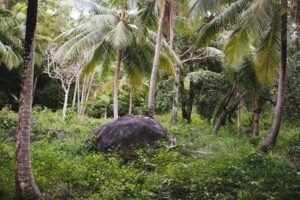
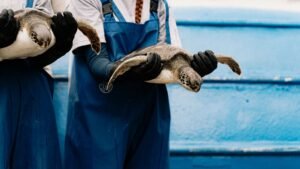
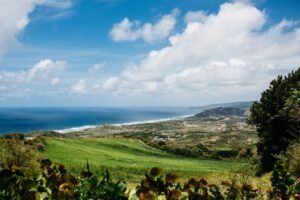
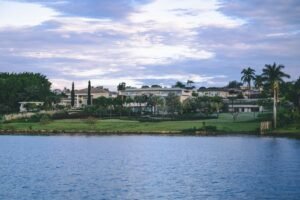
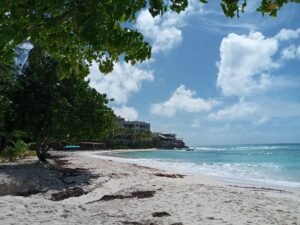
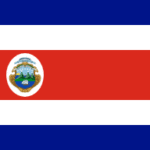 Costa RicaIt regrew its forest to over half the country and runs a ~98% renewable grid. Preservation is the product.72
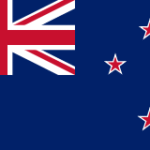 New ZealandVisitors pay a conservation levy and a third of the country is protected. Growth and guardianship are one policy.80
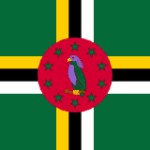 DominicaIt chose trails over towers, and its national energy policy targets 100 per cent renewable energy and a carbon neutral island state by 2030.72
 ThailandOvertourism forced Maya Bay to close for four years so its reef could survive its own visitors.67
 BahamasCruise lines dredge private islands for their own ports while the country imports nearly all of its food.60
 MaldivesAtolls are poured into concrete resorts, waste ships to a rubbish island, and nearly all food is imported.42