Destinations › Caribbean · The Destination Index · universal template · every figure sourced
Jamaica.
Caribbean, island in the Caribbean Sea, south of Cuba. 10,991 sq km and 2,837,077 people, 1,022 km of coastline, tropical; hot, humid; temperate interior.
Region · CaribbeanPopulation · ~2,837,077Languages · Jamaican Patois, English (official)Eco Index · 73/100 · Passable
The Eco Index across 12 pillars · scored 0 to 5 · World Bank, OWID, WHO/UNICEF JMP, FiBL, Protected Planet, IUCN, UNESCO (2023-24)
Conservation
Wildlife
Water
Food & farming
Organic & clean
Climate & energy
Waste
Health
Heritage
Ownership
Governance
Future
The History of Jamaica.
Jamaica carries a globally influential living culture. Reggae, added to UNESCO's list of intangible heritage, sits alongside ska, mento and dancehall as music still made and danced every day.
Where the name comes from
From the Taíno Xaymaca, widely read as 'land of wood and water' or 'land of springs'. Source: national and regional toponymic records.
The land itself: mountainous, with a narrow and broken coastal plain. Its high point is Blue Mountain Peak, 2,256 m. Source: national mapping and survey records.
Where it starts
Xaymaca
Radiocarbon dates from Bottom Bay and Paradise Park place the island's first settlers here between AD 645 and 898, arriving from South America through the island chain. What followed was six centuries of Taino settlement, the White Marl period, AD 950 to 1545. Rescue excavation at White Marl in St Catherine produced three burials radiocarbon dated to cal. AD 1221 to 1641, one of them possibly from the Spanish colonial period, alongside a tentatively identified Theobroma cacao starch grain, the first finding of pre-colonial cocoa in the Caribbean islands. The Taino name for the island is the origin of Jamaica.
How it got here
Refuge, resistance, treaty
Spanish rule from 1494 drove Taino people into the mountainous interior. When England took the island in 1655, Taino and African people freed in the fighting went to the same interior and built their own settlements. Maroon communities including Nanny Town and Accompong held territory against British forces for decades and won treaties recognising their land and self-government. Slavery was abolished in 1834, the Morant Bay rebellion was crushed in 1865, and island-wide labour unrest in 1938 produced the unions and parties that carried Jamaica to independence in 1962.
The timeline
AD 645 to 898
The first dated settlement.
Radiocarbon dates from Bottom Bay and Paradise Park place the island's first inhabitants here, arriving from South America through the island chain. Pre-Columbian Jamaica, University of Alabama Press. ↗
AD 950 to 1545
The White Marl period.
Six centuries of Taino settlement, named after the White Marl site in St Catherine, regarded as the best radiocarbon-dated site in the West Indies. Jamaica National Heritage Trust. ↗
AD 1221 to 1398
Burials at White Marl.
Three primary burials were excavated with grave goods including ceramic vessels, and a tentatively identified Theobroma cacao starch grain, the first finding of pre-colonial cocoa in the Caribbean islands. International Journal of Osteoarchaeology, Wiley. ↗
Before 1494
Xaymaca.
The Taino lived across the island in settled villages, farming cassava and maize and fishing the coast. Their name for the island is the origin of Jamaica. ↗
1494
Spanish arrival.
Columbus reaches the island and two centuries of Spanish rule follow. Taino people take refuge in the mountainous interior from enslavement. ↗
1655
English capture, and the Maroons.
England takes the island from Spain. Taino and African people freed in the confusion move into the remote interior and establish their own settlements. Royal Geographical Society, The Maroons of Jamaica. ↗
1700s
Nanny Town and Accompong.
Maroon communities hold territory against British forces for decades under leaders including Nanny, and win treaties recognising their land and self-government. Moore Town Maroons. ↗
1834 to 1838
Abolition and apprenticeship.
Slavery is abolished, followed by an apprenticeship period that ends in 1838. ↗
1865
Morant Bay.
The Morant Bay rebellion is suppressed and Jamaica becomes a Crown Colony. ↗
1938
Labour rebellion.
Island-wide strikes and unrest lead to the first trade unions and modern political parties. ↗
1962
Independence.
Jamaica becomes independent on 6 August, the first English-speaking country in the West Indies to do so. National Library of Jamaica. ↗
19.9 per cent of Jamaica's land was protected in 2024, across 173 protected areas. Marine protection is 0.7 per cent of territorial waters, and that is the weakness. The flagship is exceptional, and not only ecologically.
Is wild Jamaica protected? 19.9% of the land is, against a 30% target for 2030
Found only here. Doctor bird, Jamaican iguana, Homerus swallowtail and 21 frogs found only here
The watchlist
ThreatenedPhyllonycteris aphyllaCritically Endangered on the IUCN Red List, and recorded in Jamaica in GBIF occurrence data (mammal).
ThreatenedYellow-naped Amazon (Amazona auropalliata)Critically Endangered on the IUCN Red List, and recorded in Jamaica in GBIF occurrence data (bird).
ThreatenedHawksbill (Eretmochelys imbricata)Critically Endangered on the IUCN Red List, and recorded in Jamaica in GBIF occurrence data (turtle).
ThreatenedReef starlet coral (Siderastrea siderea)Critically Endangered on the IUCN Red List, and recorded in Jamaica in GBIF occurrence data (coral).
ThreatenedErithalis orbiculataCritically Endangered on the IUCN Red List, and recorded in Jamaica in GBIF occurrence data (plant).
ThreatenedFire coral (Millepora complanata)Critically Endangered on the IUCN Red List, and recorded in Jamaica in GBIF occurrence data (coral).
ThreatenedHamlet (Epinephelus striatus)Critically Endangered on the IUCN Red List, and recorded in Jamaica in GBIF occurrence data (species).
ThreatenedBrain coral (Pseudodiploria strigosa)Critically Endangered on the IUCN Red List, and recorded in Jamaica in GBIF occurrence data (coral).
Critically Endangered, the last IUCN category before Extinct in the Wild, and still recorded in Jamaica. GBIF holds 4 verified occurrence records.
Yellow-naped Amazon (Amazona auropalliata)
Critically Endangered, the last IUCN category before Extinct in the Wild, and still recorded in Jamaica. GBIF holds 165 verified occurrence records.
Hawksbill (Eretmochelys imbricata)
Critically Endangered, the last IUCN category before Extinct in the Wild, and still recorded in Jamaica. GBIF holds 227 verified occurrence records.
Reef starlet coral (Siderastrea siderea)
Critically Endangered, the last IUCN category before Extinct in the Wild, and still recorded in Jamaica. GBIF holds 32 verified occurrence records.
Species named here are drawn from GBIF occurrence records for Jamaica filtered to the IUCN Red List threatened categories. Species are listed where GBIF holds occurrence records for them in this country. Record counts are not published here because the figure cannot be reproduced from a public GBIF query.
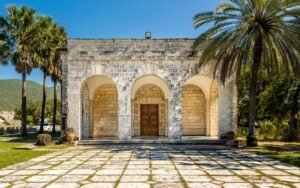
Botanical garden in Saint Thomas, mapped and named in the open record for Jamaica. OpenStreetMap.
Water and Ocean in Jamaica.
Jamaica earned the name land of wood and water honestly. Supply is overwhelmingly rainfall, expressed as rivers, streams, wells and springs, and desalination arrived only in 2016 as a single private project, so unlike most of this region Jamaica is not structurally dependent on making water from the sea. Two caveats matter.
Does Jamaica have enough fresh water? Yes, with headroom
Rainfall as rivers, streams, wells and springs; desalination only since 2016
Cleanest water: Montego Bay Marine Park
How much fresh water does Jamaica have, per person?
3,812 m³
Jamaica
1,000 m³
the UN “water scarce” line
Jamaica withdraws about 1,340 million cubic metres of fresh water a year (2022). That is 12.4% of the fresh water actually available to it, which FAO counts as low water stress. Of what is taken, farming takes 17%, homes and towns 73%, industry 10%. Source: FAO AQUASTAT.
What are the rules on Jamaica beaches?
·Tap water: Varies.
✓Plastic rules: Bags, straws and polystyrene from 2019; food containers 2024; microbeads 2025.
✕Solo travel: rated take care on the record for this destination.
✕Marine protection: 1% of the sea is protected. The 30x30 pledge for 2030 is not met yet.
Named on the open map: Coral Garden Community Beach, Crab Key Beach, Old Harbour Bay Fishing Beach, Small Lonely Beach, Waves Beach, Wicki Wacki beach. That is 6 named beaches in the public record for Jamaica, each one a place you can look up before you go. OpenStreetMap.
Where does the sewage go?
73.6%
of people have safely managed sanitation
73.6% of people here use a safely managed sanitation service, meaning waste is contained, emptied and treated rather than reaching the ground or the sea untreated (2024, World Bank / WHO-UNICEF JMP, SDG 6.2.1). The rest is what the rivers and the coast receive.
How is the sea around Jamaica doing?
One cross-section, every answer measured.
Surface
What the coast carries
Hawksbill turtle nesting late April–August, hatchlings June–December. Luminous Lagoon at Falmouth is a year-round bioluminescent bay, one of only four in the world.
Nearshore
Protected water
0.7% of territorial waters are protected, against the 30% pledged for 2030 under the Global Biodiversity Framework.
Cleanest
Where the water is cleanest
Montego Bay Marine Park.
The record
Measured
Jamaica earned the name land of wood and water honestly. Supply is overwhelmingly rainfall, expressed as rivers, streams, wells and springs, and desalination arrived only in 2016 as a single private project, so unlike most of this region Jamaica is not structurally dependent on making water from the sea.
Sea protected
1%
Against the 30% pledged for 2030 under the Global Biodiversity Framework.
Threatened species
313
Mammals, birds, fish and higher plants on the IUCN list.
Cleanest water
here
Montego Bay Marine Park.
How hard is the water supply being pushed?
Of every 10 buckets nature refills, 1 are already taken. Withdrawals run at 12.4% of what Jamaica renews internally each year (2022, World Bank / FAO AQUASTAT). That is inside the 25% mark generally treated as water stress, so the supply has headroom.
When is the best time to visit Jamaica? Tap your month.
Tap your month.
JanFebMarAprMayJunJulAugSepOctNovDec
.
How much fresh water does Jamaica actually have?
Nature renews about 3,812 cubic metres of fresh water per person per year here. That ranks Jamaica 123 of 208 countries measured, putting it in the wetter half of the world. The UN treats anything under 1,000 cubic metres as water scarce, and this is above that line. World Bank / FAO AQUASTAT.
Jamaica is by far the most agriculturally real island in this region. Agriculture is 7.97 per cent of GDP, against 1.55 per cent in Barbados and 0.51 per cent in the Bahamas, and 38.5 per cent of the land is agricultural land, against 1.3 per cent in the Bahamas. It genuinely feeds itself in fresh produce.
Where does the food in Jamaica come from?
20.5% imported
about US$1,576m a year
On the plate: Ground provisions, yam, breadfruit, cassava, plantain, green banana, ackee (national fruit), callaloo, dasheen, coco, cho cho, pumpkin, sweet potato, gungo peas, coconut. Export staples: sugarcane, banana, coffee, cocoa.
How often each food is on the plate
Share of people eating each one regularly. These overlap, so they do not add up to 100%.
Ground provisions, yam60%
Breadfruit51%
Cassava42%
Plantain33%
Green banana24%
2 of 10
bites are imported
The island buys in more food energy than it eats. About US$1,576m a year leaves the country to pay for it. The green slice is roughly what still grows here.
About 20.5% of everything Jamaica buys in from abroad is food, roughly 2 in every 10 imported items on the dock (2023, World Bank). Farming itself is 8.7% of the economy and 38.5% of the land is agricultural, of which 11.1% is arable. The green slice is roughly what still grows here.
What is killing people in Jamaica? The imported diet.
Cause of death, and the diet behind it.
Non-communicable diseases, all combined68.7%
Diabetes12.5%
Adults living with overweight or obesity. 61.1%.
Can Jamaica feed itself?
11.1%
Arable land
38.5%
Agricultural land
224,831
Farmers
296,526
Arable acres
8.7%
Agriculture, share of GDP
Harvest: Blue Mountain Coffee (signature crop)
Feeding itself
Jamaica is by far the most agriculturally real island in this region. Agriculture is 7.97 per cent of GDP, against 1.55 per cent in Barbados and 0.51 per cent in the Bahamas, and 38.5 per cent of the land is agricultural land, against 1.3 per cent in the Bahamas.
Certification
This is the clearest case in the Caribbean of plant based and organic being two different things, which is exactly why we split them. Jamaica has one of the deepest plant based traditions anywhere: Ital is unprocessed, unsalted and plant based as a matter of faith, and it predates the word vegan.
Water for crops
Jamaica earned the name land of wood and water honestly. Supply is overwhelmingly rainfall, expressed as rivers, streams, wells and springs, and desalination arrived only in 2016 as a single private project, so unlike most of this region Jamaica is not structurally dependent on making water from the sea.
Why the organic number looks like that. Certified-organic farmland is not separately reported for Jamaica, and that is a certification gap rather than proof nothing is grown cleanly. What the official land record does show: 38.5% of the country is agricultural land and 11.1% is arable (2023, World Bank). Certification is paid for per farm per year by a foreign body, which prices out smallholders, so the organic number reads worse than the practice.
The plant-based kitchen here is not an import. By tonnage, the largest crops grown in Jamaica are sugarcane, yams, coconuts, oranges and bananas (FAO, FAOSTAT crop production, 2024). That is what the land itself puts on a plate.
Buy direct where residents buy: KET'S ORGANIC GOURMET FARM, Bluefields Organic Farm, The Source Farm Foundation, Kezmar Organic Farm, Tafara Farm Jamaica, Fitzroy's Organic Farm. Every one is a farm shop we have checked and listed ourselves, so the money goes to the grower rather than the importer. The checked list
Checked kitchens from the directory: Rasta Ade Refreshments → Rasta Ade Refreshments is a restaurant in Jamaica. See its verified sustainability rating and review to help y; Life Yard → Life Yard is a 100% plant based restaurant in Kingston, Jamaica. See its verified sustainability rating and re; The Cheffing Don → The Cheffing Don is a 100% plant based restaurant in Kingston, Jamaica. See its verified sustainability rating; Ibo Spice Portal → Ibo Spice Portal is a 100% plant based restaurant in Kingston, Jamaica. See its verified sustainability rating; Mi Hungry → Mi Hungry is a 100% plant based restaurant in Kingston, Jamaica. See its verified sustainability rating and re. Every kitchen listed here is checked for how plant-based the menu really is before it earns its place.
Jamaica's electricity is still dominated by imported oil and diesel, with renewables supplying only about 10 per cent of generation in 2023, split across wind, solar and a little hydro. Emissions sit at roughly 2.8 tonnes of CO2 per person (World Bank, 2024), low by rich world standards but tied to fossil fuel imports rather than clean supply. The updated climate pledge and a 50 per cent renewable electricity target for 2030 are credible on paper but far from delivered. A dependence on shipped fossil fuel and a slow grid transition keep the island in the fossil reliant band.
What powers Jamaica?
Renewable 12.6%Fossil 87.4%
Climate pollution per person
The safe amount, what the planet can absorb
2 tonnes
One person here
2.84 tonnes
The world average, for comparison
4.7 tonnes
The worst it ever got
4.56 tonnes
The grid
Jamaica's electricity is still dominated by imported oil and diesel, with renewables supplying only about 10 per cent of generation in 2023, split across wind, solar and a little hydro. Emissions sit at roughly 2.84 tonnes of CO2 per person, low by rich world standards but tied to fossil fuel imports rather than clean supply.
Pollution
Jamaica has the most comprehensive plastics regime of any island we cover. The Natural Resources Conservation Authority (Plastic Packaging Materials Prohibition) Order 2018 banned, from 1 January 2019, single use plastic bags below a stated thickness, expanded polystyrene foam packaging and single use plastic drinking straws, with the bag thickness threshold raised in 2021 and polystyrene food containers losing their exemption on 1 January 2020.
Water stress
Jamaica earned the name land of wood and water honestly. Supply is overwhelmingly rainfall, expressed as rivers, streams, wells and springs, and desalination arrived only in 2016 as a single private project, so unlike most of this region Jamaica is not structurally dependent on making water from the sea.
What pollutes most here
1The gridThe share of electricity still generated from fossil fuel.87.3%
2IndustryBauxite/alumina mining.named
3AirModelled annual mean against a WHO guideline of 5 µg/m³.7.1
4On the recordJamaica has the most comprehensive plastics regime of any island we cover.
What has Jamaica promised on climate?
Net zero, whole economy2060 or earlier
Electricity renewable today12.8% (2021)
Land protected, against a 30% target19.9% by 2025
Sea protected, against a 30% target0.7% by 2025
The net-zero target year on file with Climate Watch is 2060 or earlier, status: in policy document; in political pledge. Measured against it, 12.8% of electricity is already renewable (2021, World Bank), so 87.2% of the grid is still to be converted. The pledge on file is measured here against what has actually been delivered, not taken on its own (UNFCCC NDC Registry, CBD Kunming-Montreal Target 3).
The biggest line item
One return flight against a whole year of living.
A resident's entire year2.84 t CO2e
Safe-climate budget, per year2 t CO2e
Singapore return, economy3.22 t CO2e
Sydney return, economy2.69 t CO2e
Dubai return, economy2.33 t CO2e
Johannesburg return, economy2.22 t CO2e
Frankfurt return, economy1.47 t CO2e
How much CO2 does flying to Jamaica emit?
Tap where you would fly from. One return flight, economy.
Every prompt runs on a machine in a building on somebody’s grid. What that costs the planet depends less on the prompt than on what is burning to power it. Here is what would power one in Jamaica.
Data centres
0
Registered colocation and interconnection facilities, PeeringDB, 2026
Grid renewable
12.6 %
What a machine here runs on.
What powers a data centre in Jamaica?
Almost everything a machine here consumes is burned fossil fuel.
Renewable 12.6%Fossil 87.4%
Cooling water. Every one of those halls runs on the national grid, which is 12.8% renewable today (World Bank). A data centre is only as clean as the electricity behind it, so the same figure that decides this country's climate score also decides the footprint of the AI running inside it. Cooling water use is not separately published by facility, and no operator here reports it.
The rules. Jamaica has 0 colocation and interconnection facilities on the public PeeringDB register, alongside 1 internet exchange (Jamaica Internet Exchange Point).
Where the cables land. 9 landing points · Black River, Bull Bay, Copa Club, Harbour View
40% residents to 60% visitors across a year. 4,233,000 international arrivals in 2019 against 2,837,077 people who live here (2025, World Bank / UN Tourism).
Where a visitor dollar goes in Jamaica
1,330k
Visitors a year
0.5
Visitors per resident
How deep in debt is Jamaica?· for every $100 Jamaica earns in a year, it owes…
Pay to the order of: the creditorsmemo · the 2012 peak
$ 140The worst year on the IMF record. Jamaica owed $140 for every $100 it earned.
IMF World Economic Outlook, 2012signed, the creditors
Pay to the order of: the creditorsmemo · today
$ 66What is owed now, for every $100 of national income (2026).
IMF World Economic Outlook, 2026signed, the creditors
Pay to the order of: the creditorsmemo · projected 2031
$ 60The IMF's own forecast has this falling to $60 by 2031.
IMF World Economic Outlook projection, 2031signed, the forecast
For every $100 Jamaica earns in a year, it owes $66 (2026, IMF World Economic Outlook). The interest on that is paid before schools, clinics or coastline get their turn.
Where does a tourist dollar actually go in Jamaica?
Play one tourist dollar around the board. Every square is a measured fact from this page.
START!
1
GO: a visitor lands
$100 goes on the table. 4,233,000 international arrivals in 2019 against 2,837,077 residents, 1.5 visitors for every resident (World Bank / UN Tourism).
$100 in play
2
The bed
Who owns the largest places to stay in Jamaica is not published in the records we can check, so this square is left open rather than guessed. Where a listing names its owner, it is shown in the ownership table below.
not published
3
The plate
Food is 20.5% of everything Jamaica imports (2023, World Bank), so a large part of every restaurant bill is paid to a supplier abroad. Eating what the land here actually grows, sugarcane, yams, oranges, coconuts, bananas, plantains, pumpkins/squash, pineapples, keeps that money with the grower.
sails in
4
The power
87.2% of the electricity is fossil (2021, World Bank). Lighting, cooling and hot water are paid for largely in imported fuel.
burns away
5
What actually stays
Of the two parts of a visitor's bill that can be measured here, the plate and the power mostly leave Jamaica. Choosing locally grown food is the part of that a visitor can actually control.
less than you think
6
Pay the bank first
Jamaica owes $66 for every $100 it earns (IMF World Economic Outlook, 2026 projection). The interest is paid before anything else on this board.
$66 per $100
7
Community chest
Tourism earns 48.1% of everything Jamaica makes from exports (2011, World Bank / UN Tourism). That is how much of the economy depends on the game continuing.
48.1% of exports
8
The flight
Getting here is usually the biggest single line on the bill. From Singapore a return economy seat is 3.22 t CO2, on the UK Government's published conversion factors. It is the one part of the trip this board cannot reduce.
3.22 t CO2
9
Back to GO
The economy turns over about US$23 billion a year (IMF World Economic Outlook, 2026 projection). Every lap of this board is a choice about how much of it stays.
US$23bn
GDPUS$22.7bn
Agriculture, share of GDP8.7%
Visitors a year1,329,700
Visitors per resident0.5
Residents~2,837,077
Agriculture
Farming is 8.7% of the economy. Jamaica is by far the most agriculturally real island in this region.
Natural materials
Jamaica does have this, and it is one of the best everyday swaps in the Caribbean: you can sit down and eat a meal out of a calabash. The packie is a hard shelled gourd.
Energy
Jamaica's electricity is still dominated by imported oil and diesel, with renewables supplying only about 10 per cent of generation in 2023, split across wind, solar and a little hydro. Emissions sit at roughly 2.84 tonnes of CO2 per person, low by rich world standards but tied to fossil fuel imports rather than clean supply.
Who owns the biggest hotels in Jamaica?
By rooms · company records and press.
Le Mirage · ~12 roomsOwnership not publishednot published
Camp Cabarita · ~5 roomsIndependentnot published
Charela Inn · ~59 roomsIndependentnot published
Geejam Hotel · ~19 roomsIndependentnot published
Visitors, over time
20153,692k
20163,837k
20174,276k
20184,319k
20194,233k
20201,330k
How much of your money actually stays here?
Tap the holiday you are planning.
All-inclusive resortForeign-owned hotel and tourist restaurantsLocally owned stay and local restaurantsGuesthouse, markets and public transport
Resort guest, villa renter, family, nomad or backpacker. The honest playbook for each, from the same sourced numbers.
Already booked a resort? · the rescue list
Five swaps that move your money back on-island
1. Eat where the country eats Choose kitchens cooking ground provisions, yam, breadfruit, cassava, plantain, green banana, ackee (national fruit), callaloo, dasheen, coco, cho cho, pumpkin, sweet potato, gungo peas, coconut. export staples: sugarcane, banana, coffee, cocoa. over imported menus. The checked list →
2. Book with a local operator Never the lobby desk. The margin on a tour is the part that stays. Eco tours →
3. Stay somewhere locally owned Ownership decides where the room rate books. Eco stays →
4. Use the transport residents use Route taxis and local drivers; a guide driver reaches the Blue Mountains far better than a hire car
5. Buy the craft, not the souvenir Natural-materials work made here pays the maker directly; imported gifts pay a shipping line.
swipe →
First time here
Jamaica is where sustainable travel feels effortless...
Best time: November to mid-December is the sweet spot: dry, warm and quieter than the January to March peak. Blue Mountain coffee is harvested roughly September to January. Hurricane season runs June to November, wettest in September and October.
Getting around
Route taxis and local drivers; a guide driver reaches the Blue Mountains far better than a hire car
Transport is where the fare either stays or leaves.
Eating here
The everyday plate is ground provisions, yam, breadfruit, cassava, plantain, green banana, ackee (national fruit), callaloo, dasheen, coco, cho cho, pumpkin, sweet potato, gungo peas, coconut. export staples: sugarcane, banana, coffee, cocoa.. Ital is the real thing: not a menu category but the food practice of a living faith, unprocessed, unsalted and plant based long before the word vegan reached the Caribbean.
Eating what the country grows is the cheapest way to cut the import bill.
Good to know
Rural water is the practical thing to plan for. Just over half of rural households were on an improved drinking water source in 2019, so ask where you are staying rather than assuming.
Buy fresh and buy local, because Jamaica actually grows it. The thing to skip is the imported processed middle, which is where the food bill really goes.
Eat from the calabash. Ital kitchens serve in gourd bowls, and a straw bankra basket does the job of a plastic bag, so this is one of the easier places to travel without single use plastic. Buy from the person who wove or carved it, because cheap imports have been pushing the real thing out since the 1990s.
Book Maroon and Rastafari visits with the communities themselves rather than through resellers. The Rastafari Indigenous Village is reservation only and limits numbers on purpose, which is a good sign rather than an inconvenience.
Rate my hotel. Tap yours for the honest verdict.
Ownership from company records and press.
Le MirageCamp CabaritaCharela InnGeejam Hotel
.
Who owns the big hotels
Le MirageOwnership not published · 12 rooms
Camp CabaritaIndependent · 5 rooms
Charela InnIndependent · 59 rooms
Geejam HotelIndependent · 19 rooms
None of the 4 properties listed here publishes who ultimately owns it, so no claim is made either way. Ownership is what decides how much of a room rate stays in the country, which is why we show it when a listing states it.
Society and Governance in Jamaica.
How well is Jamaica actually run?
Governance, measured · World Bank WGI
Four measured answers, none of them opinion. Averaged across corruption control, delivery and accountability, Jamaica scores 55 out of 100 (2024, World Bank Worldwide Governance Indicators). That matters here because every pledge on this page is only as good as the machinery meant to deliver it.
How well is Jamaica run? · each scored out of 100, higher is better
Clean government, scored 46 of 100
Control of corruption scores 45.9 out of 100 (2024, World Bank Worldwide Governance Indicators). That is below the halfway mark of governments measured.
46
Freedom and rights, scored 65 of 100
Voice and accountability, which measures free expression, free media and the ability to choose a government, scores 65.3 out of 100 (2024, World Bank WGI). Citizens have some room to question their government.
65
Government effectiveness, scored 55 of 100
Government effectiveness, which measures the quality of public services and how well policy is actually delivered, scores 54.7 out of 100 (2024, World Bank WGI). Delivery is rated above average.
55
Income equality, scored 40 of 100
The Gini index of income inequality reads 39.9 (2021, World Bank). Zero is perfect equality and 100 is one person holding everything. Below 40 is the level usually treated as manageable, and Jamaica sits inside it.
40
LGBTQ+ status: IllegalSolo female travel: Take care79.9% adult literacyIndustry to avoid: Bauxite/alumina mining
What is daily life in Jamaica really like? Measured
Getting around, breathing, throwing away, learning. The honest checklist.
TransportAirWaterWastePower
✓How you get around Route taxis and local drivers; a guide driver reaches the Blue Mountains far better than a hire car
✓Air quality, measured Modelled annual mean 7.1. The WHO guideline is 5 µg/m³.
✓Where the air is cleanest Blue Mountains
✓Tap water Varies
✓What to drink Rainfall as rivers, streams, wells and springs; desalination only since 2016
✓Plastic rules Bags, straws and polystyrene from 2019; food containers 2024; microbeads 2025
✓Sockets and voltage Type A/B, 110V
79.9%
literacy. Public spending on education runs at 5.5% of GDP and 17.9% of all government spending, and secondary enrolment stands at 84.5% gross (UNESCO Institute for Statistics, 2024).
Made in Jamaica.
Jamaica does have this, and it is one of the best everyday swaps in the Caribbean: you can sit down and eat a meal out of a calabash. The packie is a hard shelled gourd. Every step of processing done at home is value that stops leaving the country.
Made now · natural materials
Jamaica does have this
Worked in Jamaica from local material, and still a working craft rather than a museum piece.
Made now · natural materials
Calabash plates and bowls
Worked in Jamaica from local material, and still a working craft rather than a museum piece.
Made now · natural materials
Bowls
Worked in Jamaica from local material, and still a working craft rather than a museum piece.
Made now · natural materials
Cups
Worked in Jamaica from local material, and still a working craft rather than a museum piece.
Could make · grown here already
Ground provisions, yam
Grown in Jamaica and mostly sold raw. Processing it here would keep the margin here.
Could make · grown here already
Breadfruit
Grown in Jamaica and mostly sold raw. Processing it here would keep the margin here.
Could make · grown here already
Cassava
Grown in Jamaica and mostly sold raw. Processing it here would keep the margin here.
The maths for an entrepreneur. Jamaica produces about US$23 billion a year, which is roughly US$8,003 per person (2025, World Bank). Farming is 8.7% of that, while food is 20.5% of everything the country imports. The country buys in more food than its own farms contribute to the economy, and every point of that gap is a business someone could build here rather than ship in. With 11.1% of the land arable, the raw material for that is already in the ground.
A living tradition of Jamaica, still practised rather than archived.
Mento
A living tradition of Jamaica, still practised rather than archived.
Dancehall
A living tradition of Jamaica, still practised rather than archived.
Kumina
A living tradition of Jamaica, still practised rather than archived.
Nyabinghi drummingA living tradition of Jamaica, still practised rather than archived.
Rastafari livityA living tradition of Jamaica, still practised rather than archived.
Does Jamaica protect its heritage by law?
Partly, and the gaps say as much as the protections.
What is kept alive. Jamaica carries a globally influential living culture. Reggae, added to UNESCO's list of intangible heritage, sits alongside ska, mento and dancehall as music still made and danced every day. Rastafari livity, Kumina and Nyabinghi drumming, and Revival Zion keep African rooted spiritual and ancestral traditions alive.
Who it belongs to. The Maroons are the reason Jamaica scores top here. These are communities descended from Africans who freed themselves, held territory against the British and kept their own governance and language. There are three main Windward Maroon communities, Moore Town in the Rio Grande Valley, Charles Town in the Buff Bay Valley and Scotts Hall in the Wag Water Valley, with Accompong the Leeward town in St Elizabeth.
Only here. Jamaica Blue Mountain Coffee is protected as a registered certification mark, and only coffee grown between 3,000 and 5,500 feet in St Andrew, St Thomas, Portland and St Mary may carry the name. It sold at around fourteen times the price of standard retail roasted coffee. The Homerus swallowtail, found only here, is the largest butterfly in the Western Hemisphere..
Three futures for Jamaica, every one run forward from measured data.
Where the making actually happens
Named cultural and craft sites on the open map: Bob Marley museum (Kingston), White Marl Taino Midden and Museum (Saint Catherine), Natural History Museum of Jamaica (Kingston), Liberty Hall (Kingston), Trench Town Culture Yard Museum (Richmond Park). OpenStreetMap.
Every measured trend on one line
Run forward at the pace already recorded.
+17%
Forest cover
1995: 48.1 % → 2023: 56.2 %
+125%
Renewable electricity
1995: 5.7 % → 2021: 12.8 %
-19%
CO2 per person
1995: 3.52 t → 2024: 2.84 t
-24%
Tourist arrivals
1995: 1752 k → 2020: 1330 k
+25%
Protected land
2013: 15.9 % → 2025: 19.9 %
-43%
Farm workforce
1995: 24.5 % → 2025: 13.9 %
-13%
Protected sea
2013: 0.8 % → 2025: 0.7 %
-16%
Agricultural land
1995: 45.9 % → 2023: 38.5 %
+18%
Urban population
1995: 50.6 % → 2025: 59.4 %
+18%
Air pollution
1995: 18.4 µg/m³ → 2023: 21.7 µg/m³
-12%
Fresh water per person
1995: 4328.9 m³ → 2022: 3812.1 m³
+64%
Adult overweight
1995: 37.3 % → 2022: 61.1 %
+21%
Electricity access
1995: 80.4 % → 2024: 97.7 %
+204%
GDP per person
1995: 2631 → 2025: 8003
+13%
Population
1995: 2500 k → 2025: 2837 k
-23%
Renewable energy use
1995: 13.7 % → 2021: 10.5 %
-22%
Energy per person
1995: 1204 kg → 2023: 934.9 kg
+14%
Protected area, total
2013: 1.4 % → 2025: 1.6 %
+0%
Life expectancy
1995: 71.5 yrs → 2024: 71.6 yrs
-16%
Cereal yield
1995: 1362 ha → 2023: 1140 ha
-65%
Fertiliser use
1995: 167.8 ha → 2023: 59.2 ha
-18%
Rural population
1995: 49.4 % → 2025: 40.6 %
-10%
Water productivity
1995: 14 $/m3 → 2022: 12.6 $/m3
+27%
Health spending
2000: 5.98 % → 2023: 7.6 %
+17%
Forest area
1995: 5211 km2 → 2023: 6085 km2
-39%
Electric power use
1995: 1960 kWh → 2023: 1205 kWh
-42%
Emissions: Agriculture
1990: 1.04 e → 2023: 0.6 e
+121%
Emissions: Building
1990: 0.34 e → 2023: 0.75 e
+26%
Emissions: Electricity/Heat
1990: 2.06 e → 2023: 2.59 e
+28%
Emissions: Energy
1990: 7.41 e → 2023: 9.45 e
+128%
Emissions: Industrial Processes
1990: 0.25 e → 2023: 0.57 e
-81%
Emissions: Manufacturing/Construction
1990: 3.76 e → 2023: 0.72 e
+151%
Emissions: Transportation
1990: 1.12 e → 2023: 2.81 e
World Bank open data, recorded series
How much forest is left?
Forest cover moved from 48.1% to 56.2% across 28 recorded years.
World Bank AG.LND.FRST.ZS
How clean is the grid?
Renewable electricity moved from 5.7% to 12.8% across 26 recorded years.
World Bank EG.ELC.RNEW.ZS
How much climate pollution per person?
CO2 per person moved from 3.5 t to 2.8 t across 29 recorded years.
World Bank EN.GHG.CO2.PC.CE.AR5
How many people visit?
Tourist arrivals moved from 1752k to 1330k across 25 recorded years.
World Bank ST.INT.ARVL
How much land is protected?
Protected land moved from 15.9% to 19.9% across 12 recorded years.
World Bank ER.LND.PTLD.ZS
How many people still farm?
Farm workforce moved from 24.5% to 13.9% across 30 recorded years.
World Bank SL.AGR.EMPL.ZS
How much sea is protected?
Protected sea moved from 0.8% to 0.7% across 12 recorded years.
World Bank ER.MRN.PTMR.ZS
How much land is farmed?
Agricultural land moved from 45.9% to 38.5% across 28 recorded years.
World Bank AG.LND.AGRI.ZS
How fast is it urbanising?
Urban population moved from 50.6% to 59.4% across 30 recorded years.
World Bank SP.URB.TOTL.IN.ZS
Is the air getting cleaner?
Air pollution moved from 18.4 µg/m³ to 21.7 µg/m³ across 28 recorded years.
World Bank EN.ATM.PM25.MC.M3
Is water getting scarcer?
Fresh water per person moved from 4328.9 m³ to 3812.1 m³ across 27 recorded years.
World Bank ER.H2O.INTR.PC
Is diet-related disease rising?
Adult overweight moved from 37.3% to 61.1% across 27 recorded years.
World Bank SH.STA.OWAD.ZS
Who has power?
Electricity access moved from 80.4% to 97.7% across 29 recorded years.
World Bank EG.ELC.ACCS.ZS
Is income rising?
GDP per person moved from 2631 to 8003 across 30 recorded years.
World Bank NY.GDP.PCAP.CD
How fast is it growing?
Population moved from 2500k to 2837k across 30 recorded years.
World Bank SP.POP.TOTL
What share of all energy is renewable?
Renewable energy use moved from 13.7% to 10.5% across 26 recorded years.
World Bank EG.FEC.RNEW.ZS
How much energy does one person use?
Energy per person moved from 1204 kg to 934.89 kg across 28 recorded years.
World Bank EG.USE.PCAP.KG.OE
How much land and sea is protected together?
Protected area, total moved from 1.4% to 1.6% across 12 recorded years.
World Bank ER.PTD.TOTL.ZS
How long do people live?
Life expectancy moved from 71.49 yrs to 71.61 yrs across 29 recorded years.
World Bank SP.DYN.LE00.IN
How much does a hectare of cereal produce?
Cereal yield moved from 1362 kg/ha to 1140 kg/ha across 28 recorded years.
World Bank AG.YLD.CREL.KG
How much fertiliser goes on the land?
Fertiliser use moved from 167.84 kg/ha to 59.19 kg/ha across 28 recorded years.
World Bank AG.CON.FERT.ZS
How many people still live rurally?
Rural population moved from 49.43% to 40.57% across 30 recorded years.
World Bank SP.RUR.TOTL.ZS
How much value per cubic metre of water?
Water productivity moved from 13.97 $/m3 to 12.64 $/m3 across 27 recorded years.
World Bank ER.GDP.FWTL.M3.KD
How much goes on health?
Health spending moved from 5.98% to 7.6% across 23 recorded years.
World Bank SH.XPD.CHEX.GD.ZS
How much forest is there in total?
Forest area moved from 5211 km2 to 6085 km2 across 28 recorded years.
World Bank AG.LND.FRST.K2
How much electricity per person?
Electric power use moved from 1960 kWh to 1205 kWh across 28 recorded years.
World Bank EG.USE.ELEC.KH.PC
How have agriculture emissions moved?
Agriculture emissions moved from 1.04 to 0.6 MtCO2e across 33 recorded years.
Climate Watch (WRI), historical emissions
How have building emissions moved?
Building emissions moved from 0.34 to 0.75 MtCO2e across 33 recorded years.
Climate Watch (WRI), historical emissions
How have electricity/heat emissions moved?
Electricity/Heat emissions moved from 2.06 to 2.59 MtCO2e across 33 recorded years.
Climate Watch (WRI), historical emissions
How have energy emissions moved?
Energy emissions moved from 7.41 to 9.45 MtCO2e across 33 recorded years.
Climate Watch (WRI), historical emissions
How have industrial processes emissions moved?
Industrial Processes emissions moved from 0.25 to 0.57 MtCO2e across 33 recorded years.
Climate Watch (WRI), historical emissions
How have manufacturing/construction emissions moved?
Manufacturing/Construction emissions moved from 3.76 to 0.72 MtCO2e across 33 recorded years.
Climate Watch (WRI), historical emissions
How have transportation emissions moved?
Transportation emissions moved from 1.12 to 2.81 MtCO2e across 33 recorded years.
Climate Watch (WRI), historical emissions
Worst caseCurrent pathBest case
Worst case
Every measured decline continues at the pace already recorded. The weakest pillar, energy at 2/5, is the one that gives way first.
Computed from: recorded series extended with no policy change
Current path
Every line above is a recorded World Bank series for this country. The current path is simply those series continuing at the pace already measured.
Computed from: recorded series, no policy change assumed
Best case
The pledges are met on their own stated timetables and the weakest pillars are lifted to match the strongest. Jamaica already shows it can do this: wildlife scores 5/5.
Computed from: each published target delivered on its own date
What the best case actually asks for
Lift energy
It scores 2 out of 5 today, among the weakest parts of Jamaica's record. Jamaica's electricity is still dominated by imported oil and diesel, with renewables supplying only about 10 per cent of generation in 2023, split across wind, solar and a little hydro. Emissions sit at roughly 2.3 tonnes of CO2 per person, low by rich world standards but tied to fossil fuel imports rather than clean supply. The updated climate pledge and a 50 per cent renewable electricity target for 2030 are credible on paper but far from delivered. A dependence on shipped fossil fuel and a slow grid transition keep the island in the fossil reliant band. Lifting it toward the 5/5 the strongest pillars already reach is what the best case turns on.
measured each year
Costs: spending and enforcement, not new technology
Lift organic farming
It scores 2 out of 5 today, among the weakest parts of Jamaica's record. This is the clearest case in the Caribbean of plant based and organic being two different things, which is exactly why we split them.
Jamaica has one of the deepest plant based traditions anywhere: Ital is unprocessed, unsalted and plant based as a matter of faith, and it predates the word vegan. What it does not have is certification. Jamaica Blue Mountain Coffee is protected as a registered certification mark, but that protects origin and altitude, not growing method.
So you can eat superbly here without ever meeting a certified organic label. Buy at the market and ask the grower, because the information exists in conversation rather than on packaging. Lifting it toward the 5/5 the strongest pillars already reach is what the best case turns on.
measured each year
Costs: spending and enforcement, not new technology
Lift recycling
It scores 2 out of 5 today, among the weakest parts of Jamaica's record. Riverton City landfill in Kingston is reported to take over 60 per cent of nationally collected solid waste, at more than 1,000 tonnes a day, and we could not verify a national recycling rate from any source we trust.
What Jamaica has done well is the front end rather than the back end: the plastics regime is the most comprehensive in the region and now reaches microbeads. What happens after collection is much less clear, so take what you can home. Lifting it toward the 5/5 the strongest pillars already reach is what the best case turns on.
measured each year
Costs: spending and enforcement, not new technology
Government and Goals in Jamaica.
Who is in charge of Jamaica now · Office-holders from the UN Protocol and Liaison Service public list of Heads of State and Heads of Government, 8 September 2026. Legislature and election dates from IFES ElectionGuide. Constitution dates from the Constitute Project. Governance scores from the World Bank Worldwide Governance Indicators 2024.
Andrew Holness
Prime Minister
Andrew Holness is the head of government of Jamaica, in office since 3 March 2016. Every climate, protection and energy pledge on this page is delivered, or not, under this administration.
Public opinion, measured
Voice and accountability, the freedom to question government: 65.3 / 100. Above the halfway mark of governments measured. World Bank WGI 2024
Control of corruption: 45.9 / 100. Below the halfway mark of governments measured. World Bank WGI 2024
Political stability and absence of violence: 74 / 100. Above the halfway mark of governments measured. World Bank WGI 2024
Rule of law: 55.6 / 100. Above the halfway mark of governments measured. World Bank WGI 2024
Regulatory quality: 56.3 / 100. Above the halfway mark of governments measured. World Bank WGI 2024
Andrew HolnessPrime Minister
ParliamentLegislature, bicameral
Last election3 September 2025
Constitution1962, as revised to 2023
Government typeparliamentary democracy under a constitutional monarchy; a Commonwealth realm
Jamaica national goals: climate commitments on record · as recorded by Climate Watch, World Resources Institute
2060
Net zero
In Policy Document<br>In Political Pledge
Net-zero target as recorded by Climate Watch. Status: In Policy Document (8/29/2025) In Political Pledge (12/12/2020) ↗
The questions people actually type, answered in full sentences from the sourced data above.
swipe →
Is Jamaica sustainable?
Jamaica scores 73 out of 100 on the Throne Eco Index, across twelve equally weighted pillars. Jamaica is where sustainable travel feels effortless...
Is the water in Jamaica safe and plentiful?
Jamaica earned the name land of wood and water honestly. Supply is overwhelmingly rainfall, expressed as rivers, streams, wells and springs, and desalination arrived only in 2016 as a single private project, so unlike most of this region Jamaica is not structurally dependent on making water from the sea. Two caveats matter.
Can Jamaica feed itself?
Jamaica is by far the most agriculturally real island in this region. Agriculture is 7.97 per cent of GDP, against 1.55 per cent in Barbados and 0.51 per cent in the Bahamas, and 38.5 per cent of the land is agricultural land, against 1.3 per cent in the Bahamas. It genuinely feeds itself in fresh produce.
Is it easy to eat plant-based in Jamaica?
Ital is the real thing: not a menu category but the food practice of a living faith, unprocessed, unsalted and plant based long before the word vegan reached the Caribbean. The Rastafari Indigenous Village outside Montego Bay is community led, has been running for over 19 years, is reservation only and deliberately limits guest numbers, offering an introduction to Rastafari history, herbal healing, Ital food and traditional craft. Coronation Market in downtown Kingston is the main produce market.
How much of Jamaica is actually protected?
19.9 per cent of Jamaica's land was protected in 2024, across 173 protected areas. Marine protection is 0.7 per cent of territorial waters, and that is the weakness. The flagship is exceptional, and not only ecologically.
What wildlife is left in Jamaica?
Jamaica's endemism is the richest in the region. Depending on the taxonomy you follow there are 28 to 30 endemic bird species, and the national bird, the red billed streamertail or doctor bird, is one of them. Jamaica is the only place on earth where the hummingbird genus Trochilus occurs.
Is Jamaica on clean energy?
Jamaica's electricity is still dominated by imported oil and diesel, with renewables supplying only about 10 per cent of generation in 2023, split across wind, solar and a little hydro. Emissions sit at roughly 2.84 tonnes of CO2 per person, low by rich world standards but tied to fossil fuel imports rather than clean supply. The updated climate pledge and a 50 per cent renewable electricity target for 2030 are credible on paper but far from delivered.
How polluted is Jamaica?
Jamaica has the most comprehensive plastics regime of any island we cover. The Natural Resources Conservation Authority (Plastic Packaging Materials Prohibition) Order 2018 banned, from 1 January 2019, single use plastic bags below a stated thickness, expanded polystyrene foam packaging and single use plastic drinking straws, with the bag thickness threshold raised in 2021 and polystyrene food containers losing their exemption on 1 January 2020. Straws for people with disabilities remain exempt, which is the right carve out.
Does recycling work in Jamaica?
Riverton City landfill in Kingston is reported to take over 60 per cent of nationally collected solid waste, at more than 1,000 tonnes a day, and we could not verify a national recycling rate from any source we trust. What Jamaica has done well is the front end rather than the back end: the plastics regime is the most comprehensive in the region and now reaches microbeads. What happens after collection is much less clear, so take what you can home.
Is the farming in Jamaica organic?
This is the clearest case in the Caribbean of plant based and organic being two different things, which is exactly why we split them. Jamaica has one of the deepest plant based traditions anywhere: Ital is unprocessed, unsalted and plant based as a matter of faith, and it predates the word vegan. What it does not have is certification.
Are there natural materials and craft in Jamaica?
Jamaica does have this, and it is one of the best everyday swaps in the Caribbean: you can sit down and eat a meal out of a calabash. The packie is a hard shelled gourd. Dried, it becomes calabash, and it is turned into plates, bowls, cups, instruments and boxes.
Is there living culture in Jamaica?
The Maroons are the reason Jamaica scores top here. These are communities descended from Africans who freed themselves, held territory against the British and kept their own governance and language. There are three main Windward Maroon communities, Moore Town in the Rio Grande Valley, Charles Town in the Buff Bay Valley and Scotts Hall in the Wag Water Valley, with Accompong the Leeward town in St Elizabeth.
What heritage does Jamaica keep alive?
Jamaica carries a globally influential living culture. Reggae, added to UNESCO's list of intangible heritage, sits alongside ska, mento and dancehall as music still made and danced every day. Rastafari livity, Kumina and Nyabinghi drumming, and Revival Zion keep African rooted spiritual and ancestral traditions alive.
So is Jamaica actually green? The measured answer
What is working: the record is thin on the headline measures, and the sourced numbers below say why.
What is not: sea protected at 0.7% against a 30% mark, renewable electricity at 12.8% against a 100% mark.
Jamaica sits 17 of 77 at 73/100. Every name links to its own destination page, built exactly like this one. The full ranking →
What is Jamaica particularly good at?
✓Culture, scored 5/5. The Maroons are the reason Jamaica scores top here. These are communities descended from Africans who freed themselves, held territory against the British and kept their own governance and language.
There are three main Windward Maroon communities, Moore Town in the Rio Grande Valley, Charles Town in the Buff Bay Valley and Scotts Hall in the Wag Water Valley, with Accompong the Leeward town in St Elizabeth. The Maroon heritage of Moore Town is inscribed on the UNESCO Representative List of the Intangible Cultural Heritage of Humanity, for Kromanti ceremonies, the dances, songs and drumming styles that invoke ancestral spirits, a language of African derivation also called Kromanti, and rare medicinal preparations.
Accompong marks the 1739 peace treaty between Cudjoe and the British with an annual observance on 6 January, centred on a march to the Kindah Tree. Our sources disagree on the treaty date and on the acreage granted, so we quote neither.
One thing to watch. Several Maroon village tours we found were sold by third party resellers rather than by the communities. Book with the community where you can. The Rastafari Indigenous Village is explicitly community led and reservation only.
✓Heritage, scored 5/5. Jamaica carries a globally influential living culture. Reggae, added to UNESCO's list of intangible heritage, sits alongside ska, mento and dancehall as music still made and danced every day. Rastafari livity, Kumina and Nyabinghi drumming, and Revival Zion keep African rooted spiritual and ancestral traditions alive. The Maroon communities of Accompong and Moore Town maintain Kromanti language, drumming and ancestral practice, and Jonkonnu masquerade still parades at Christmas.
✓Plant-based eating, scored 5/5. Ital is the real thing: not a menu category but the food practice of a living faith, unprocessed, unsalted and plant based long before the word vegan reached the Caribbean. The Rastafari Indigenous Village outside Montego Bay is community led, has been running for over 19 years, is reservation only and deliberately limits guest numbers, offering an introduction to Rastafari history, herbal healing, Ital food and traditional craft.
Coronation Market in downtown Kingston is the main produce market. Be clear eyed about how it works: the government's own food policy describes a system with no dedicated wholesale market, where traders buy in Kingston for resale in their own parishes, which adds cost. The produce is genuinely Jamaican, but it reaches you through a resale chain rather than farmer direct.
For a plate of it, Rasta Ade Refreshments sits right on Seven Mile Beach at Negril, a fully plant based Ital kitchen and juice bar run by Michael Vita and head chef Audley Anderson, who is a farmer, so some of what you eat is grown by the kitchen. Jerk hummus, callaloo, ackee, pumpkin and red peas stew, and the Rasta lemonade the place is named for. Cash only, and the food often sells out by mid afternoon, which is the sign of a kitchen cooking what it has rather than what it can reheat.
Where does Jamaica score worst?
✕Energy, scored 2/5. Jamaica's electricity is still dominated by imported oil and diesel, with renewables supplying only about 10 per cent of generation in 2023, split across wind, solar and a little hydro. Emissions sit at roughly 2.3 tonnes of CO2 per person, low by rich world standards but tied to fossil fuel imports rather than clean supply. The updated climate pledge and a 50 per cent renewable electricity target for 2030 are credible on paper but far from delivered. A dependence on shipped fossil fuel and a slow grid transition keep the island in the fossil reliant band.
✕Organic farming, scored 2/5. This is the clearest case in the Caribbean of plant based and organic being two different things, which is exactly why we split them.
Jamaica has one of the deepest plant based traditions anywhere: Ital is unprocessed, unsalted and plant based as a matter of faith, and it predates the word vegan. What it does not have is certification. Jamaica Blue Mountain Coffee is protected as a registered certification mark, but that protects origin and altitude, not growing method.
So you can eat superbly here without ever meeting a certified organic label. Buy at the market and ask the grower, because the information exists in conversation rather than on packaging.
✕Recycling, scored 2/5. Riverton City landfill in Kingston is reported to take over 60 per cent of nationally collected solid waste, at more than 1,000 tonnes a day, and we could not verify a national recycling rate from any source we trust.
What Jamaica has done well is the front end rather than the back end: the plastics regime is the most comprehensive in the region and now reaches microbeads. What happens after collection is much less clear, so take what you can home.
Similar countries doing it better and worse
BelizeScored on the same twelve pillars as Jamaica.78
St Vincent and the GrenadinesScored on the same twelve pillars as Jamaica.75
DominicaScored on the same twelve pillars as Jamaica.72
Turks & CaicosScored on the same twelve pillars as Jamaica.52
British Virgin IslandsScored on the same twelve pillars as Jamaica.48
St BarthsScored on the same twelve pillars as Jamaica.47
A note from the lens of mother natureswipe →
Energy, 2/5
Jamaica's electricity is still dominated by imported oil and diesel, with renewables supplying only about 10 per cent of generation in 2023, split across wind, solar and a little hydro. Emissions sit at roughly 2.84 tonnes of CO2 per person, low by rich world standards but tied to fossil fuel imports rather than clean supply.
Consequence: It is the lowest-scoring part of Jamaica's record, so it is where the score moves first.
Food and farming, 4/5
Jamaica is by far the most agriculturally real island in this region. Agriculture is 7.97 per cent of GDP, against 1.55 per cent in Barbados and 0.51 per cent in the Bahamas, and 38.5 per cent of the land is agricultural land, against 1.3 per cent in the Bahamas.
Heritage, 5/5
Jamaica carries a globally influential living culture. Reggae, added to UNESCO's list of intangible heritage, sits alongside ska, mento and dancehall as music still made and danced every day.
The Jamaica Directory.
Everything on Hold The Throne that sits in Jamaica, checked and listed.
World Bank Worldwide Governance Indicators, 2024. Percentile among all governments measured.
Government effectiveness
54.7 / 100
World Bank Worldwide Governance Indicators, 2024. Percentile among all governments measured.
Rule of law
55.6 / 100
World Bank Worldwide Governance Indicators, 2024. Percentile among all governments measured.
Political stability
74 / 100
World Bank Worldwide Governance Indicators, 2024. Percentile among all governments measured.
Voice and accountability
65.3 / 100
World Bank Worldwide Governance Indicators, 2024. Percentile among all governments measured.
Environmental Performance Index
48.5 / 100 · 68 of 180
Yale Environmental Performance Index 2024, ranked 68 of 180 countries assessed.
Ecosystem vitality
49.5 / 100 · 92 of 180
Yale Environmental Performance Index 2024, ranked 92 of 180 countries assessed.
Biodiversity and habitat
38.2 / 100 · 126 of 180
Yale Environmental Performance Index 2024, ranked 126 of 180 countries assessed.
Air pollution
77.4 / 100 · 69 of 180
Yale Environmental Performance Index 2024, ranked 69 of 180 countries assessed.
Terrestrial biomes protected
63.4 / 100 · 66 of 180
Yale Environmental Performance Index 2024, ranked 66 of 180 countries assessed.
Marine protected areas
50.0 / 100 · 96 of 131
Yale Environmental Performance Index 2024, ranked 96 of 131 countries assessed.
How Jamaica Is Scored. The Throne Standard.
Every destination on the index is scored the same way, so a 4 in Barbados means exactly what a 4 means in Iceland. No self-declared data and no brochure claims are accepted. Every figure on this page carries its named source and year, and the history on each page names what empire took as plainly as it scores the present.
The 12 pillars every destination is scored on, equally weighted
01
Conservation
Land and sea actually protected, not pledged
02
Wildlife
What survives, what is endemic, what is lost
03
Water
Fresh water per person, and the ocean’s health
04
Food & farming
Whether the place can feed itself
05
Organic & clean
Certified land and pesticide reality
06
Climate & energy
Emissions per person, how the grid is powered
07
Waste
Where the rubbish goes, what comes back
08
Health
What people eat and die of
09
Heritage
Living culture, and what the law keeps standing
10
Ownership
Who owns the economy, how much of a dollar stays
11
Governance
Freedom, honesty, promises kept
12
Future
Measured trends run forward, pledges against pace
What each 0 to 5 pillar score means, in plain words
The institutions above are the ones cited on this page, ranked by how many of its figures they carry. This same sectioned page renders for all 77 scored destinations, each with its own researched history, comparison charts and three-way future. Read the full methodology
Every figure on this page, and where it came from: 110 sources across 50 institutions
World Bank18 FIGURES
Forest area (% of land area), forest cover 56.2%, 2023
Forest area (% of land area) AG.LND.FRST.ZS, 2023 check
Terrestrial protected areas (% of land) ER.LND.PTLD.ZS, 2025 check
Marine protected areas (% of territorial waters) ER.MRN.PTMR.ZS, 2025 check
Renewable electricity output (% of total) EG.ELC.RNEW.ZS, 2021 check
CO2 emissions per capita EN.GHG.CO2.PC.CE.AR5, 2024 check
Jamaica on track to meeting renewable energy target (2023) check
Get the Facts: The Jamaican Iguana, The Jamaican iguana is endemic, Critically Endangered, the largest native land animal, and was considered exti check
Get the Facts: The Jamaican Iguana corroboration check
Get the Facts: The Jamaican Iguana corroboration check
Minister Grange Leads Successful Inscription of Reggae on Intangible Cultural Heritage of Humanity List, Reggae, added to UNESCO's list of intangible heritage, sits alongside ska, mento and dancehall as music still check
Minister Grange Leads Successful Inscription of Reggae on Intangible Cultural Heritage of Humanity List corroboration check
The History of Jamaica, Island-wide strikes and unrest lead to the first trade unions and modern political parties. check
Phyllonycteris aphylla, IUCN Red List category CRITICALLY_ENDANGERED (IUCN taxon id 17173), Critically Endangered on the IUCN Red List, and recorded in Jamaica in GBIF occurrence data (mammal). check
Phyllonycteris aphylla, IUCN Red List category CRITICALLY_ENDANGERED (IUCN taxon id 17173) corroboration check
Pterodroma caribbaea, IUCN Red List category CRITICALLY_ENDANGERED (IUCN taxon id 22698097), Critically Endangered on the IUCN Red List, and recorded in Jamaica in GBIF occurrence data (bird). check
Eretmochelys imbricata, IUCN Red List category CRITICALLY_ENDANGERED (IUCN taxon id 8005), Critically Endangered on the IUCN Red List, and recorded in Jamaica in GBIF occurrence data (turtle). check
Eretmochelys imbricata, IUCN Red List category CRITICALLY_ENDANGERED (IUCN taxon id 8005) corroboration check
Acropora palmata, IUCN Red List category CRITICALLY_ENDANGERED (IUCN taxon id 133006), Critically Endangered on the IUCN Red List, and recorded in Jamaica in GBIF occurrence data (coral). check
Acropora palmata, IUCN Red List category CRITICALLY_ENDANGERED (IUCN taxon id 133006) corroboration check
Podocarpus urbanii, IUCN Red List category CRITICALLY_ENDANGERED (IUCN taxon id 34106), Critically Endangered on the IUCN Red List, and recorded in Jamaica in GBIF occurrence data (plant). check
Other published sources6 FIGURES
Published range for the three burials is cal. AD 1221 to 1641; the cocoa starch grain is a tentative identification; the best-dated-site superlative traces to a 1972 report and could not be confirmed from an openable current source check
Speciation and hybridization in Jamaican-endemic Streamertail Hummingbirds (Trochilus polytmus and T. scitulus), LSU doctoral dissertation, Jamaica is the only place on earth where the hummingbird genus Trochilus occurs. check
Speciation and hybridization in Jamaican-endemic Streamertail Hummingbirds (Trochilus polytmus and T. scitulus), LSU doctoral dissertation corroboration check
Speciation and hybridization in Jamaican-endemic Streamertail Hummingbirds (Trochilus polytmus and T. scitulus), LSU doctoral dissertation corroboration check
Ministry of Economic Growth and Infrastructure Development (Jamaica), 4th Phase of Single-Use Plastic Ban to Take Effect July 1, From 1 July 2024 single use plastic food containers made of polyethylene, polypropylene or PLA are banned, and check
Ministry of Economic Growth and Infrastructure Development (Jamaica), 4th Phase of Single-Use Plastic Ban to Take Effect July 1 corroboration check
IUCN World Heritage Outlook4 FIGURES
Blue and John Crow Mountains site assessment, The Blue and John Crow Mountains were inscribed by UNESCO in July 2015 as a mixed natural and cultural site, 2 check
Blue and John Crow Mountains site assessment corroboration check
Blue and John Crow Mountains site assessment corroboration check
Blue and John Crow Mountains site assessment corroboration check
UNESCO Institute for Statistics public data API4 FIGURES
indicator XGDP.FSGOV (government expenditure on education as % of GDP), Jamaica 2024, Public spending on education runs at 5.5% of GDP and 17.9% of all government spending, and secondary enrolment check
indicator XGDP.FSGOV (government expenditure on education as % of GDP), Jamaica 2024 corroboration check
indicator XGDP.FSGOV (government expenditure on education as % of GDP), Jamaica 2024 corroboration check
indicator XGDP.FSGOV (government expenditure on education as % of GDP), Jamaica 2024 corroboration check
Wild Life Protection Act (Jamaica)4 FIGURES
text hosted by the National Environment and Planning Agency, Sea turtles are fully protected under the Wild Life Protection Act and Endangered Species Act with NGO-run nes check
text hosted by the National Environment and Planning Agency corroboration check
text hosted by the National Environment and Planning Agency corroboration check
text hosted by the National Environment and Planning Agency corroboration check
BirdLife International, IUCN and UNEP-WCMC3 FIGURES
UN SDG Global Database, terrestrial Key Biodiversity Areas covered by protected areas (%) ER_PTD_TERR, Jamaica, 2025 (20.1%), country-reported check
UN SDG Global Database, marine Key Biodiversity Areas covered by protected areas (%) ER_MRN_MPA, Jamaica, 2025 (31.6%), country-reported check
UN SDG Global Database, freshwater Key Biodiversity Areas covered by protected areas (%) ER_PTD_FRHWTR, Jamaica, 2025 (61.7%), country-reported check
FAO, Global Forest Resources Assessment3 FIGURES
UN SDG Global Database, forest area (% of land area) AG_LND_FRST, Jamaica, 2025 (63.4%), country-reported check
UN SDG Global Database, forest area under a long-term management plan (%) AG_LND_FRSTMGT, Jamaica, 2025 (18.8%), country-reported check
UN SDG Global Database, forest area inside legally established protected areas (%) AG_LND_FRSTPRCT, Jamaica, 2025 (22.9%), country-reported check
Jamaica Observer3 FIGURES
Caribbean countries among the most water stressed globally check
Kunming-Montreal Global Biodiversity Framework, Target 3, The 30x30 target is 30% by 2030, so 29.3 percentage points are still to be designated. check
Kunming-Montreal Global Biodiversity Framework, Target 3 corroboration check
FAOSTAT2 FIGURES
Production: Crops and livestock products (QCL), Americas bulk file, release 23 December 2025, By tonnage, the largest crops grown in Jamaica are sugarcane, yams, coconuts, oranges and bananas (FAO, FAOSTA check
Production: Crops and livestock products (QCL), Americas bulk file, release 23 December 2025 corroboration check
Jamaica's critically endangered butterfly, the Homerus swallowtail check
'Jamaica's Critically Endangered Butterfly: A Review of the Biology and Conservation Status of the Homerus Swallowtail', Insects 8(3):68, 2017, The Homerus swallowtail, found only here, is the largest butterfly in the Western Hemisphere. check

 BelizeScored on the same twelve pillars as Jamaica.78
 St Vincent and the GrenadinesScored on the same twelve pillars as Jamaica.75
 DominicaScored on the same twelve pillars as Jamaica.72
 Turks & CaicosScored on the same twelve pillars as Jamaica.52
 British Virgin IslandsScored on the same twelve pillars as Jamaica.48
 St BarthsScored on the same twelve pillars as Jamaica.47