Destinations › Africa · The Destination Index · universal template · every figure sourced
Ethiopia.
Eastern Africa, west of Somalia. 1,104,300 sq km and 135,472,051 people, landlocked, with no coastline at all, tropical monsoon with wide topographic-induced variation.
Region · AfricaPopulation · ~135,472,051Languages · Oromo, Amharic (working language), Somali, Tigrinya, SidamoEco Index · 72/100 · Passable
The Eco Index across 12 pillars · scored 0 to 5 · World Bank, OWID, WHO/UNICEF JMP, FiBL, Protected Planet, IUCN, UNESCO (2023-24)
Conservation
Wildlife
Water
Food & farming
Organic & clean
Climate & energy
Waste
Health
Heritage
Ownership
Governance
Future
The History of Ethiopia.
Ethiopia carries exceptionally deep and widely alive heritage. The eskista shoulder dance and music on the masinko, krar and washint remain central to daily and festival life.
Where the name comes from
From the Greek Aithiopia, 'land of the burnt faces', a name applied from outside. Its own historic name is Abyssinia, from Ḥabaśāt. Source: UK Permanent Committee on Geographical Names toponymic factfile.
The land itself: a high plateau split by the Great Rift Valley, with a central mountain range. Its high point is Ras Dashen, 4,550 m. Source: UK Permanent Committee on Geographical Names toponymic factfile.
Where it starts
Where our species begins
Lucy, a partial Australopithecus afarensis skeleton 3.2 million years old, was found in the Afar region in 1974 and is known in Amharic as Dinkinesh. Her species lived across what is now Ethiopia, Kenya and Tanzania between 3.9 and 2.9 million years ago. The oldest known Homo sapiens remains in eastern Africa come from Omo Kibish in the lower Omo valley. This is not a country with a long history. It is one of the places where human history starts.
How it got here
Aksum, Lalibela, Adwa
The Kingdom of Aksum minted its own coinage in gold, silver and bronze, traded across the Red Sea to Rome and India, and raised carved obelisks that still stand. It adopted Christianity in the 330s, among the earliest states anywhere. Eleven churches were cut downward out of solid rock at Lalibela in the twelfth and thirteenth centuries and are still in use. In 1896 Ethiopian forces defeated an invading Italian army at Adwa, and Ethiopia remained uncolonised.
The timeline
3.2 million years ago
Lucy.
The partial skeleton of an Australopithecus afarensis was found in the Afar region on 24 November 1974, at the time the oldest and most complete human ancestor ever recovered. She is known in Amharic as Dinkinesh. ↗
3.9 to 2.9 million years ago
Australopithecus afarensis.
The species lived across what is now Ethiopia, Kenya and Tanzania. Sites include Hadar and Dikika in Ethiopia. ↗
c. 233,000 years ago
The oldest Homo sapiens.
Fossils from Omo Kibish in the lower Omo valley are the oldest known Homo sapiens remains in eastern Africa. Our species begins here. ↗
c. 160,000 years ago
Herto.
Further early Homo sapiens remains are recovered at Herto in the Afar region. ↗
c. 100 BC to AD 940
The Kingdom of Aksum.
Aksum minted its own coinage in gold, silver and bronze, traded across the Red Sea to Rome and India, and raised carved stone obelisks that still stand. ↗
AD 330s
Christianity adopted.
Aksum adopts Christianity, among the earliest states anywhere to do so. ↗
12th to 13th century
Lalibela.
Eleven churches are cut downward out of solid rock at Lalibela, still in use as places of worship today. ↗
1270 to 1974
The Solomonic line.
A dynasty claiming descent from Solomon rules, with interruptions, for seven centuries. ↗
1896
Adwa.
Ethiopian forces defeat an invading Italian army at Adwa, and Ethiopia remains uncolonised. Ethiopian forces defeated an invading Italian army at Adwa in 1896 and Ethiopia kept its independence through the European partition of Africa, which the historian Hakim Adi describes as the only case of an African country defending its independence by defeating a European army. ↗
1936 to 1941
Italian occupation.
A five-year occupation follows an invasion using aerial bombing and chemical weapons, and ends in 1941. ↗
About 17 percent of Ethiopia's land carries protected-area designation (World Bank, 2023), spanning national parks such as Simien, Bale and the Omo. Enforcement is uneven, with settlement, livestock grazing and cultivation inside park boundaries, and Simien Mountains National Park sat on UNESCO's World Heritage in Danger list from 1996 until 2017. The paper coverage is therefore stronger than the protection on the ground.
Is wild Ethiopia protected? 17% of the land is, against a 30% target for 2030
Critically Endangered, the last IUCN category before Extinct in the Wild, and still recorded in Ethiopia. GBIF holds 380 verified occurrence records.
Gyps africanus
Critically Endangered, the last IUCN category before Extinct in the Wild, and still recorded in Ethiopia. GBIF holds 93 verified occurrence records.
Ruppell's griffon (Gyps rueppellii)
Critically Endangered, the last IUCN category before Extinct in the Wild, and still recorded in Ethiopia. GBIF holds 89 verified occurrence records.
Species named here are drawn from GBIF occurrence records for Ethiopia filtered to the IUCN Red List threatened categories. Species are listed where GBIF holds occurrence records for them in this country. Record counts are not published here because the figure cannot be reproduced from a public GBIF query.
Listed and checked on Hold The Throne. Visiting it is the most direct way a visitor funds work on the ground in Ethiopia.
Water and Ocean in Ethiopia.
Ethiopia is the source of the Blue Nile, which rises from Lake Tana, and the new Grand Ethiopian Renaissance Dam on that river is Africa's largest hydro plant at 5,150 MW. Despite this surface-water wealth, only about 13.5 percent of the population used a safely managed drinking-water source in 2024 (World Bank, drawing on the WHO/UNICEF JMP). Rural households often collect from unprotected wells, rivers and ponds, and waterborne disease remains common.
Does Ethiopia have enough fresh water? Yes, with headroom
13.5% of people here have safely managed drinking water at home (2024, WHO/UNICEF JMP). Coverage is well short of universal, so a visitor should not assume the tap is safe.
Cleanest water: Highland spring sources and the headwaters around Lake Tana and the Bale plateau.
How much fresh water does Ethiopia have, per person?
973 m³
Ethiopia
1,000 m³
the UN “water scarce” line
Ethiopia withdraws about 10,548 million cubic metres of fresh water a year (2022). That is 32.3% of the fresh water actually available to it, which FAO counts as medium water stress. Of what is taken, farming takes 92%, homes and towns 8%, industry 0%. Source: FAO AQUASTAT.
Where does the sewage go?
8.1%
of people have safely managed sanitation
8.1% of people here use a safely managed sanitation service, meaning waste is contained, emptied and treated rather than reaching the ground or the sea untreated (2024, World Bank / WHO-UNICEF JMP, SDG 6.2.1). The rest is what the rivers and the coast receive.
Is the tap water safe in Ethiopia?
13.5% of people have safely managed drinking water at home (2024, WHO/UNICEF JMP). Renewable fresh water works out at about 973 cubic metres per person a year (World Bank).
How hard is the water supply being pushed?
Of every 10 buckets nature refills, 3 are already taken. Withdrawals run at 32.3% of what Ethiopia renews internally each year (2022, World Bank / FAO AQUASTAT). That is past the 25% mark generally treated as water stress, so the supply is being pushed towards its limit.
When is the best time to visit Ethiopia? Tap your month.
Tap your month.
JanFebMarAprMayJunJulAugSepOctNovDec
.
How much fresh water does Ethiopia actually have?
Nature renews about 973 cubic metres of fresh water per person per year here. That ranks Ethiopia 55 of 208 countries measured, putting it in the drier half of the world. The UN treats anything under 1,000 cubic metres as water scarce, and this is below that line. World Bank / FAO AQUASTAT.
Food made up about 13.8 percent of merchandise imports in 2023 (World Bank), though the share is volatile and reached roughly 28 percent in 2021. Agriculture employs most of the workforce and covers about 34 percent of the land, with staples such as teff, maize, sorghum and enset grown domestically. Recurrent drought still drives food insecurity and reliance on imported wheat and food aid.
Where does the food in Ethiopia come from?
13.8% imported
about US$3,185m a year
On the plate: Injera (fermented teff flatbread), shiro and misir (chickpea and lentil stews), berbere spice, collard greens (gomen), and enset (kocho) in the south.
How often each food is on the plate
Share of people eating each one regularly. These overlap, so they do not add up to 100%.
Shiro51%
Berbere spice24%
1 of 10
bites are imported
The island buys in more food energy than it eats. About US$3,185m a year leaves the country to pay for it. The green slice is roughly what still grows here.
About 13.8% of everything Ethiopia buys in from abroad is food, roughly 1 in every 10 imported items on the dock (2023, World Bank). Farming itself is 32.8% of the economy and 34.1% of the land is agricultural, of which 14.5% is arable. The green slice is roughly what still grows here.
What is killing people in Ethiopia? The imported diet.
Cause of death, and the diet behind it.
Non-communicable diseases, all combined38.3%
Diabetes4.4%
Adults living with overweight or obesity. 10.9%.
Can Ethiopia feed itself?
14.5%
Arable land
34.1%
Agricultural land
34,148,768
Farmers
40,525,151
Arable acres
32.8%
Agriculture, share of GDP
Harvest: The main Meher harvest runs roughly October to December after the mid-year rains, and coffee is picked around October to January.
Feeding itself
Food made up about 13.8 percent of merchandise imports in 2023 (World Bank), though the share is volatile and reached roughly 28 percent in 2021. Agriculture employs most of the workforce and covers about 34 percent of the land, with staples such as teff, maize, sorghum and enset grown domestically.
Certification
Certified organic farmland is about 0.6 percent of Ethiopia's agricultural area, roughly 234,648 hectares (FiBL, 2020). In practice much smallholder farming is low-input, and a large part of the country's coffee is forest and shade grown, often organic by default, and Ethiopia is one of Africa's largest organic producers by number of farmers.
Water for crops
Ethiopia is the source of the Blue Nile, which rises from Lake Tana, and the new Grand Ethiopian Renaissance Dam on that river is Africa's largest hydro plant at 5,150 MW. Despite this surface-water wealth, only about 13.5 percent of the population used a safely managed drinking-water source in 2024 (World Bank, drawing on the WHO/UNICEF JMP).
Why the organic number looks like that. Certified-organic farmland is not separately reported for Ethiopia, and that is a certification gap rather than proof nothing is grown cleanly. What the official land record does show: 34.1% of the country is agricultural land and 14.5% is arable (2023, World Bank). Certification is paid for per farm per year by a foreign body, which prices out smallholders, so the organic number reads worse than the practice.
The plant-based kitchen here is not an import. By tonnage, the largest crops grown in Ethiopia are maize, wheat, sorghum, potatoes and barley (FAO, FAOSTAT crop production, 2024). That is what the land itself puts on a plate.
Buy direct where residents buy: Chencha Market, Danbal Woreda Livestocke Market, Debaso Market, Goat Market, Hammer Market, Hawassa Open Market. Each is a mapped, named marketplace, so the money stays with the seller rather than the importer. OpenStreetMap.
Ethiopia generates almost all of its electricity from renewables, with hydropower supplying around 96 per cent of a near fully renewable grid in 2023 and wind adding most of the balance. Fossil CO2 emissions are among the lowest in the world at about 0.15 tonnes per person in 2024. The Grand Ethiopian Renaissance Dam has sharply increased clean generation, and the country pursues its Climate Resilient Green Economy strategy aimed at low-carbon development. Very low emissions combined with a clean grid and a real policy framework place it at the top of this pillar.
What powers Ethiopia?
Renewable 100%Fossil 0%
Climate pollution per person
The safe amount, what the planet can absorb
2 tonnes
One person here
0.15 tonnes
The world average, for comparison
4.7 tonnes
The worst it ever got
0.15 tonnes
The grid
Ethiopia generates almost all of its electricity from renewables, with hydropower supplying around 96 per cent of a near fully renewable grid in 2023 and wind adding most of the balance. Fossil CO2 emissions are among the lowest in the world at about 0.15 tonnes per person in 2024.
Pollution
Ethiopia brought in a nationwide ban on thin single-use plastic bags under its Solid Waste Management Law, enforced from early 2026, with fines and possible prison terms; plastic bags had made up about 46 percent of the country's plastic waste. Enforcement is new and unproven, and open dumping and litter remain widespread.
Water stress
Ethiopia is the source of the Blue Nile, which rises from Lake Tana, and the new Grand Ethiopian Renaissance Dam on that river is Africa's largest hydro plant at 5,150 MW. Despite this surface-water wealth, only about 13.5 percent of the population used a safely managed drinking-water source in 2024 (World Bank, drawing on the WHO/UNICEF JMP).
What pollutes most here
1IndustryExploitative pay-per-photo village tourism in the Omo Valley, which reduces indigenous peoples to staged photo stops..named
2AirModelled annual mean against a WHO guideline of 5 µg/m³.23.8
3On the recordEthiopia brought in a nationwide ban on thin single-use plastic bags under its Solid Waste Management Law, enforced from early 2026, with fines and possible prison terms; plastic bags had made up about 46 percent of the country's plastic waste.
What has Ethiopia promised on climate?
Net zero, whole economy2050
Electricity renewable today95.4% (2020)
Land protected, against a 30% target17% by 2025
The net-zero target year on file with Climate Watch is 2050, status: in policy document. Measured against it, 95.4% of electricity is already renewable (2020, World Bank), so 4.6% of the grid is still to be converted. The pledge on file is measured here against what has actually been delivered, not taken on its own (UNFCCC NDC Registry, CBD Kunming-Montreal Target 3).
The biggest line item
One return flight against a whole year of living.
A resident's entire year0.15 t CO2e
Safe-climate budget, per year2 t CO2e
Los Angeles return, economy2.64 t CO2e
Sydney return, economy2.28 t CO2e
New York return, economy2.02 t CO2e
Singapore return, economy1.31 t CO2e
London return, economy1.06 t CO2e
How much CO2 does flying to Ethiopia emit?
Tap where you would fly from. One return flight, economy.
Every prompt runs on a machine in a building on somebody’s grid. What that costs the planet depends less on the prompt than on what is burning to power it. Here is what would power one in Ethiopia.
Data centres
2
Registered colocation and interconnection facilities, PeeringDB, 2026
Grid renewable
100.0 %
What a machine here runs on.
What powers a data centre in Ethiopia?
Running AI here is about as clean as it currently gets.
Renewable 100%Fossil 0%
Cooling water. Every one of those halls runs on the national grid, which is 95.4% renewable today (World Bank). A data centre is only as clean as the electricity behind it, so the same figure that decides this country's climate score also decides the footprint of the AI running inside it. Cooling water use is not separately published by facility, and no operator here reports it.
The rules. Ethiopia has 2 colocation and interconnection facilities on the public PeeringDB register, concentrated in Addis Ababa (2), alongside 1 internet exchange (Addix). Named sites include Raxio, ET1, Addis Ababa, Ethiopia, Wingu Addis Ababa.
99% residents to 1% visitors across a year. 812,000 international arrivals in 2019 against 135,472,051 people who live here (2025, World Bank / UN Tourism).
Where a visitor dollar goes in Ethiopia
518k
Visitors a year
0.0
Visitors per resident
How deep in debt is Ethiopia?· for every $100 Ethiopia earns in a year, it owes…
Pay to the order of: the creditorsmemo · the 1994 peak
$ 155The worst year on the IMF record. Ethiopia owed $155 for every $100 it earned.
IMF World Economic Outlook, 1994signed, the creditors
Pay to the order of: the creditorsmemo · today
$ 40What is owed now, for every $100 of national income (2026).
IMF World Economic Outlook, 2026signed, the creditors
Pay to the order of: the creditorsmemo · projected 2031
$ 27The IMF's own forecast has this falling to $27 by 2031.
IMF World Economic Outlook projection, 2031signed, the forecast
For every $100 Ethiopia earns in a year, it owes $40 (2026, IMF World Economic Outlook). The interest on that is paid before schools, clinics or coastline get their turn.
Where does a tourist dollar actually go in Ethiopia?
Play one tourist dollar around the board. Every square is a measured fact from this page.
START!
1
GO: a visitor lands
$100 goes on the table. 812,000 international arrivals in 2019 against 135,472,051 residents, one visitor a year for every 167 residents (World Bank / UN Tourism).
$100 in play
2
The bed
Who owns the largest places to stay in Ethiopia is not published in the records we can check, so this square is left open rather than guessed. Where a listing names its owner, it is shown in the ownership table below.
not published
3
The plate
Food is only 13.8% of everything Ethiopia imports (2023, World Bank), so most of a meal is bought from producers inside the country. Eating what the land here actually grows, maize, cereals, wheat, sorghum, barley, taro, beans, sweet potatoes, potatoes, keeps that money with the grower.
mostly home-grown
4
The power
95.4% of the electricity is renewable (2020, World Bank), so the energy on the bill is mostly generated inside the country rather than shipped in.
made at home
5
What actually stays
Of the two parts of a visitor's bill that can be measured here, the plate and the power stay inside Ethiopia. This is not an economy where a visitor's money drains away, and the board is shorter for it.
most of it
6
Pay the bank first
Ethiopia owes $40 for every $100 it earns (IMF World Economic Outlook, 2026 projection). The interest is paid before anything else on this board.
$40 per $100
7
No plan B
43.2% of everything Ethiopia sells abroad is coffee, tea and spices (2023, UN Comtrade). One market moving takes the whole board with it.
43.2% one export
8
Community chest
Tourism earns 29.6% of everything Ethiopia makes from exports (2020, World Bank / UN Tourism). That is how much of the economy depends on the game continuing.
29.6% of exports
9
The flight
Getting here is usually the biggest single line on the bill. From Los Angeles a return economy seat is 2.64 t CO2, on the UK Government's published conversion factors. It is the one part of the trip this board cannot reduce.
2.64 t CO2
10
Back to GO
The economy turns over about US$122 billion a year (IMF World Economic Outlook, 2026 projection). Every lap of this board is a choice about how much of it stays.
US$122bn
GDPUS$126.4bn
Agriculture, share of GDP32.8%
Visitors a year518,000
Visitors per resident0
Residents~135,472,051
Agriculture
Farming is 32.8% of the economy. Food made up about 13.8 percent of merchandise imports in 2023 (World Bank), though the share is volatile and reached roughly 28 percent in 2021.
Natural materials
Handweaving is a living craft. Cotton is spun and woven on pit looms into shemma cloth, made in long strips about 90 centimetres wide and sewn together, with enough fabric for one garment taking two to three weeks.
Energy
Ethiopia generates almost all of its electricity from renewables, with hydropower supplying around 96 per cent of a near fully renewable grid in 2023 and wind adding most of the balance. Fossil CO2 emissions are among the lowest in the world at about 0.15 tonnes per person in 2024.
Who owns the biggest hotels in Ethiopia?
By rooms · company records and press.
Limalimo Lodge · ~14 roomsIndependentnot published
Visitors, over time
2015864k
2016871k
2017933k
2018849k
2019812k
2020518k
International tourism receipts run at about US$2.28 billion in 2020 (World Bank / UN Tourism). That is 29.6% of everything the country earns from exports.
How much of your money actually stays here?
Tap the holiday you are planning.
All-inclusive resortForeign-owned hotel and tourist restaurantsLocally owned stay and local restaurantsGuesthouse, markets and public transport
Resort guest, villa renter, family, nomad or backpacker. The honest playbook for each, from the same sourced numbers.
Already booked a resort? · the rescue list
Five swaps that move your money back on-island
1. Eat where the country eats Choose kitchens cooking injera (fermented teff flatbread), shiro and misir (chickpea and lentil stews), berbere spice, collard greens (gomen), and enset (kocho) in the south. over imported menus. The checked list →
2. Book with a local operator Never the lobby desk. The margin on a tour is the part that stays. Eco tours →
3. Stay somewhere locally owned Ownership decides where the room rate books. Eco stays →
4. Use the transport residents use Ethiopian Airlines domestic flights link the northern historic circuit (Addis Ababa, Bahir Dar, Gondar, Lalibela, Axum), while long-distance buses and 4x4 vehicles cover the rest and Addis has a light-rail metro; highland roads are rough.
5. Buy the craft, not the souvenir Natural-materials work made here pays the maker directly; imported gifts pay a shipping line.
swipe →
First time here
Ethiopia is a landlocked highland nation, the wild birthplace of arabica coffee and home to wildlife found nowhere else, with a deep plant-based Orthodox fasting culture, yet safe drinking water reaches barely one person in seven.
Best time: October to March, the main dry season.
Getting around
Ethiopian Airlines domestic flights link the northern historic circuit (Addis Ababa, Bahir Dar, Gondar, Lalibela, Axum), while long-distance buses and 4x4 vehicles cover the rest and Addis has a light-rail metro; highland roads are rough.
Transport is where the fare either stays or leaves.
Eating here
The everyday plate that actually grows here is maize, cereals, wheat, sorghum, barley, taro, beans, sweet potatoes and potatoes. Ordering those keeps the money with the grower and cuts the imported share of the meal.
Eating what the country grows is the cheapest way to cut the import bill.
Good to know
Cash-heavy; ETB. Cards only in Addis hotels. Hand and spoon etiquette matters.
Rate my hotel. Tap yours for the honest verdict.
Ownership from company records and press.
Limalimo Lodge
.
Who owns the place to stay
Limalimo LodgeIndependent · 14 rooms
The one property listed here does not publish who ultimately owns it, so no claim is made either way. Ownership is what decides how much of a room rate stays in the country, which is why we show it when a listing states it.
Society and Governance in Ethiopia.
How well is Ethiopia actually run?
Governance, measured · World Bank WGI
Four measured answers, none of them opinion. Averaged across corruption control, delivery and accountability, Ethiopia scores 38 out of 100 (2024, World Bank Worldwide Governance Indicators). That matters here because every pledge on this page is only as good as the machinery meant to deliver it.
How well is Ethiopia run? · each scored out of 100, higher is better
Clean government, scored 39 of 100
Control of corruption scores 39 out of 100 (2024, World Bank Worldwide Governance Indicators). That is below the halfway mark of governments measured.
39
Freedom and rights, scored 35 of 100
Voice and accountability, which measures free expression, free media and the ability to choose a government, scores 35.1 out of 100 (2024, World Bank WGI). Room to question the government publicly is limited.
35
Government effectiveness, scored 39 of 100
Government effectiveness, which measures the quality of public services and how well policy is actually delivered, scores 38.8 out of 100 (2024, World Bank WGI). Delivery is rated below average, so a pledge on paper is not the same as a pledge kept.
39
Income equality, scored 31 of 100
The Gini index of income inequality reads 31.1 (2021, World Bank). Zero is perfect equality and 100 is one person holding everything. Below 40 is the level usually treated as manageable, and Ethiopia sits inside it.
31
LGBTQ+ status: IllegalSolo female travel: Take care60.5% adult literacyIndustry to avoid: Exploitative pay-per-photo village tourism in the Omo Valley, which reduces indigenous peoples to staged photo stops.
What is daily life in Ethiopia really like? Measured
Getting around, breathing, throwing away, learning. The honest checklist.
TransportAirWaterWastePower
✓How you get around Ethiopian Airlines domestic flights link the northern historic circuit (Addis Ababa, Bahir Dar, Gondar, Lalibela, Axum), while long-distance buses and 4x4 vehicles cover the rest and Addis has a light-rail metro; highland roads are rough.
✓Air quality, measured Modelled annual mean 23.8. The WHO guideline is 5 µg/m³.
✓Where the air is cleanest The high mountain national parks such as Simien and Bale, away from Addis Ababa's traffic.
·Tap water Not drinkable
✓What to drink Bottled water; Addis altitude and pollution mean filter or bottle.
✓Plastic rules Yes, a nationwide single-use plastic-bag ban applies from early 2026 under the Solid Waste Management Law, though enforcement is new.
✓Sockets and voltage Type C/D/M, 230V
60.5%
literacy. Public spending on education runs at 2.3% of GDP and 16.7% of all government spending, and secondary enrolment stands at 33.9% gross (UNESCO Institute for Statistics, 2015 to 2024).
Made in Ethiopia.
Handweaving is a living craft. Cotton is spun and woven on pit looms into shemma cloth, made in long strips about 90 centimetres wide and sewn together, with enough fabric for one garment taking two to three weeks. Every step of processing done at home is value that stops leaving the country.
What Ethiopia actually sells the world
The single biggest thing Ethiopia sells the world is coffee, tea and spices, 43.2% of all exports in 2023 (about US$1.24 billion, UN Comtrade). The next four are vegetables at 17.5%, oil seeds and oleaginous fruit at 14.8%, live trees, plants and cut flowers at 9.2%, meat at 2.2%.
Made now · natural materials
Woven on pit looms into shemma cloth
Worked in Ethiopia from local material, and still a working craft rather than a museum piece.
Made now · natural materials
Made in long strips about 90 centimetres wide
Worked in Ethiopia from local material, and still a working craft rather than a museum piece.
Made now · natural materials
Sewn together
Worked in Ethiopia from local material, and still a working craft rather than a museum piece.
Made now · natural materials
Habesha kemis dress
Worked in Ethiopia from local material, and still a working craft rather than a museum piece.
Made now · natural materials
Often edged with woven tibeb borders
Worked in Ethiopia from local material, and still a working craft rather than a museum piece.
Buys in · 15.5% of imports
Mineral fuels and oils
Ethiopia imported US$2.65 billion of mineral fuels and oils in 2023, 15.5% of everything it bought abroad, and sells none of it back. Every point of that is a business that could be built at home rather than shipped in. UN Comtrade.
Buys in · 11.3% of imports
Machinery and mechanical appliances
Ethiopia imported US$1.93 billion of machinery and mechanical appliances in 2023, 11.3% of everything it bought abroad, and sells none of it back. Every point of that is a business that could be built at home rather than shipped in. UN Comtrade.
Buys in · 7.8% of imports
Electrical machinery and electronics
Ethiopia imported US$1.33 billion of electrical machinery and electronics in 2023, 7.8% of everything it bought abroad, and sells none of it back. Every point of that is a business that could be built at home rather than shipped in. UN Comtrade.
Buys in · 7.7% of imports
Vehicles
Ethiopia imported US$1.31 billion of vehicles in 2023, 7.7% of everything it bought abroad, and sells none of it back. Every point of that is a business that could be built at home rather than shipped in. UN Comtrade.
The maths for an entrepreneur. Ethiopia produces about US$126 billion a year, which is roughly US$933 per person (2025, World Bank). Farming is 32.8% of that, while food is 13.8% of everything the country imports. With 14.5% of the land arable, the raw material for that is already in the ground.
A living tradition of Ethiopia, still practised rather than archived.
Masinko
A living tradition of Ethiopia, still practised rather than archived.
Krar
A living tradition of Ethiopia, still practised rather than archived.
Washint music
A living tradition of Ethiopia, still practised rather than archived.
Ethiopian Orthodox Tewahedo traditions of TimkatA living tradition of Ethiopia, still practised rather than archived.
MeskelA living tradition of Ethiopia, still practised rather than archived.
Does Ethiopia protect its heritage by law?
Partly, and the gaps say as much as the protections.
What is kept alive. Ethiopia carries exceptionally deep and widely alive heritage. The eskista shoulder dance and music on the masinko, krar and washint remain central to daily and festival life. Ethiopian Orthodox Tewahedo traditions such as Timkat and Meskel continue as living ancestral and spiritual practice, and the Oromo Gada governance system is inscribed by UNESCO.
Who it belongs to. Ethiopia was never colonised, defeating Italy at the Battle of Adwa in 1896 and enduring only a brief occupation from 1936 to 1941, and it has kept its own Ge'ez script, calendar and Orthodox Christianity for well over a millennium. Living heritage includes the eleven rock-hewn churches of Lalibela (UNESCO, 1978), still an active pilgrimage site for festivals such as Genna and Timkat, and the ritual coffee ceremony served in three rounds (awol, tona and baraka). The Omo Valley in the south is home to many distinct indigenous peoples.
Only here. The wild birthplace of Coffea arabica: the arabica coffee plant originates in Ethiopia's Kaffa highlands, where it still grows wild in the forest understorey..
Three futures for Ethiopia, every one run forward from measured data.
Where the making actually happens
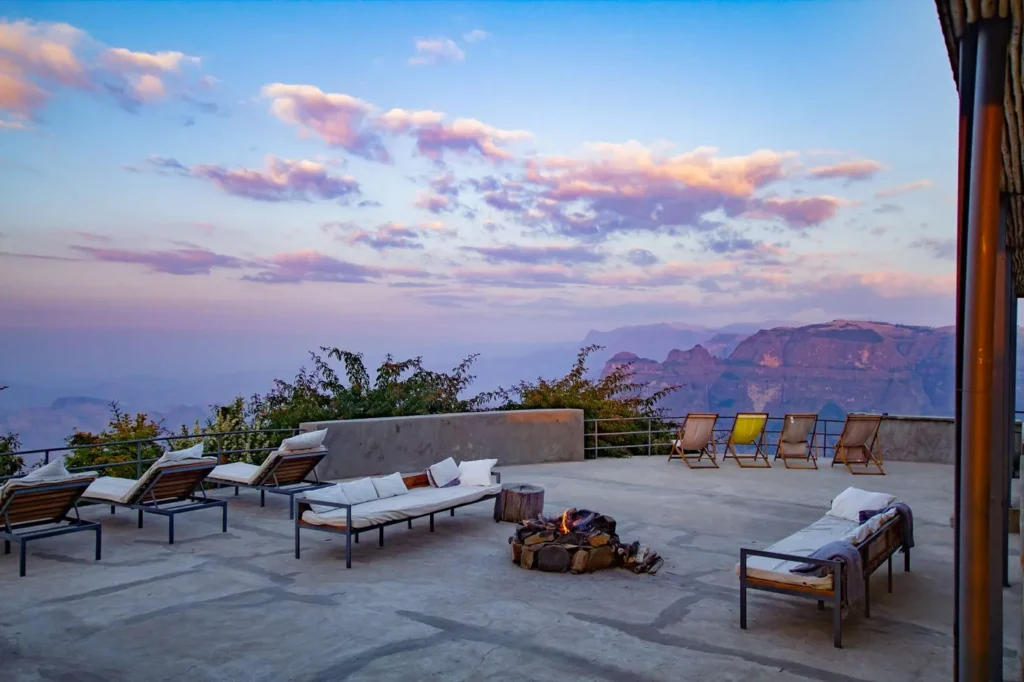
Named cultural and craft sites on the open map: National Museum of Ethiopia (Addis Ababa), Red Terror Martyrs' Memorial Museum (Addis Ababa), Ethiopia Museum of Art and Science (Addis Ababa), Institute of Ethiopian Studies (Addis Ababa), Konso Korebta Lodge and Konso Museum (Karati). OpenStreetMap.
Every measured trend on one line
Run forward at the pace already recorded.
-21%
Forest cover
1995: 18.9 % → 2023: 14.9 %
+2%
Renewable electricity
1995: 93.5 % → 2020: 95.4 %
+200%
CO2 per person
1995: 0.049 t → 2024: 0.147 t
+403%
Tourist arrivals
1995: 103 k → 2020: 518 k
-8%
Protected land
2013: 18.5 % → 2025: 17 %
-22%
Farm workforce
1995: 77 % → 2025: 60.1 %
+12%
Agricultural land
1995: 30.5 % → 2023: 34.1 %
+74%
Urban population
1995: 13.9 % → 2025: 24.1 %
+29%
Air pollution
1995: 18.4 µg/m³ → 2023: 23.8 µg/m³
-54%
Fresh water per person
1995: 2120.4 m³ → 2022: 973 m³
+158%
Adult overweight
1995: 4.2 % → 2022: 10.9 %
+346%
Electricity access
2000: 12.7 % → 2024: 56.6 %
+581%
GDP per person
1995: 137 → 2025: 933
+135%
Population
1995: 57537 k → 2025: 135472 k
-6%
Renewable energy use
1995: 96.2 % → 2021: 90.6 %
+5%
Energy per person
1995: 364.9 kg → 2023: 382.2 kg
-8%
Protected area, total
2013: 18.5 % → 2025: 17 %
+40%
Life expectancy
1995: 48.2 yrs → 2024: 67.6 yrs
+155%
Cereal yield
1995: 1033 ha → 2024: 2632 ha
+235%
Fertiliser use
1995: 13.5 ha → 2023: 45.3 ha
-12%
Rural population
1995: 86.1 % → 2025: 75.9 %
+192%
Water productivity
2002: 3.3 $/m3 → 2022: 9.64 $/m3
-36%
Health spending
2000: 4.37 % → 2023: 2.8 %
-11%
Forest area
1995: 188935 km2 → 2023: 168495 km2
+371%
Electric power use
1995: 23.9 kWh → 2023: 112.6 kWh
+136%
Emissions: Agriculture
1990: 57.6 e → 2023: 136.1 e
+151%
Emissions: Building
1990: 13.6 e → 2023: 34.2 e
-100%
Emissions: Electricity/Heat
1990: 0.3 e → 2023: 0 e
+208%
Emissions: Energy
1990: 15.7 e → 2023: 48.3 e
+2080%
Emissions: Industrial Processes
1990: 0.15 e → 2023: 3.27 e
+995%
Emissions: Manufacturing/Construction
1990: 0.55 e → 2023: 6.02 e
+646%
Emissions: Transportation
1990: 0.95 e → 2023: 7.09 e
World Bank open data, recorded series
How much forest is left?
Forest cover moved from 18.9% to 14.9% across 28 recorded years.
World Bank AG.LND.FRST.ZS
How clean is the grid?
Renewable electricity moved from 93.5% to 95.4% across 25 recorded years.
World Bank EG.ELC.RNEW.ZS
How much climate pollution per person?
CO2 per person moved from 0.0 t to 0.1 t across 29 recorded years.
World Bank EN.GHG.CO2.PC.CE.AR5
How many people visit?
Tourist arrivals moved from 103k to 518k across 25 recorded years.
World Bank ST.INT.ARVL
How much land is protected?
Protected land moved from 18.5% to 17.0% across 12 recorded years.
World Bank ER.LND.PTLD.ZS
How many people still farm?
Farm workforce moved from 77.0% to 60.1% across 30 recorded years.
World Bank SL.AGR.EMPL.ZS
How much land is farmed?
Agricultural land moved from 30.5% to 34.1% across 28 recorded years.
World Bank AG.LND.AGRI.ZS
How fast is it urbanising?
Urban population moved from 13.9% to 24.1% across 30 recorded years.
World Bank SP.URB.TOTL.IN.ZS
Is the air getting cleaner?
Air pollution moved from 18.4 µg/m³ to 23.8 µg/m³ across 28 recorded years.
World Bank EN.ATM.PM25.MC.M3
Is water getting scarcer?
Fresh water per person moved from 2120.4 m³ to 973.0 m³ across 27 recorded years.
World Bank ER.H2O.INTR.PC
Is diet-related disease rising?
Adult overweight moved from 4.2% to 10.9% across 27 recorded years.
World Bank SH.STA.OWAD.ZS
Who has power?
Electricity access moved from 12.7% to 56.6% across 24 recorded years.
World Bank EG.ELC.ACCS.ZS
Is income rising?
GDP per person moved from 137 to 933 across 30 recorded years.
World Bank NY.GDP.PCAP.CD
How fast is it growing?
Population moved from 57537k to 135472k across 30 recorded years.
World Bank SP.POP.TOTL
What share of all energy is renewable?
Renewable energy use moved from 96.2% to 90.6% across 26 recorded years.
World Bank EG.FEC.RNEW.ZS
How much energy does one person use?
Energy per person moved from 364.89 kg to 382.18 kg across 28 recorded years.
World Bank EG.USE.PCAP.KG.OE
How much land and sea is protected together?
Protected area, total moved from 18.5% to 17% across 12 recorded years.
World Bank ER.PTD.TOTL.ZS
How long do people live?
Life expectancy moved from 48.16 yrs to 67.6 yrs across 29 recorded years.
World Bank SP.DYN.LE00.IN
How much does a hectare of cereal produce?
Cereal yield moved from 1033 kg/ha to 2632 kg/ha across 29 recorded years.
World Bank AG.YLD.CREL.KG
How much fertiliser goes on the land?
Fertiliser use moved from 13.51 kg/ha to 45.32 kg/ha across 28 recorded years.
World Bank AG.CON.FERT.ZS
How many people still live rurally?
Rural population moved from 86.12% to 75.89% across 30 recorded years.
World Bank SP.RUR.TOTL.ZS
How much value per cubic metre of water?
Water productivity moved from 3.3 $/m3 to 9.64 $/m3 across 20 recorded years.
World Bank ER.GDP.FWTL.M3.KD
How much goes on health?
Health spending moved from 4.37% to 2.8% across 23 recorded years.
World Bank SH.XPD.CHEX.GD.ZS
How much forest is there in total?
Forest area moved from 188935 km2 to 168495 km2 across 28 recorded years.
World Bank AG.LND.FRST.K2
How much electricity per person?
Electric power use moved from 23.88 kWh to 112.56 kWh across 28 recorded years.
World Bank EG.USE.ELEC.KH.PC
How have agriculture emissions moved?
Agriculture emissions moved from 57.62 to 136.13 MtCO2e across 33 recorded years.
Climate Watch (WRI), historical emissions
How have building emissions moved?
Building emissions moved from 13.61 to 34.18 MtCO2e across 33 recorded years.
Climate Watch (WRI), historical emissions
How have electricity/heat emissions moved?
Electricity/Heat emissions moved from 0.3 to 0.0 MtCO2e across 33 recorded years.
Climate Watch (WRI), historical emissions
How have energy emissions moved?
Energy emissions moved from 15.69 to 48.33 MtCO2e across 33 recorded years.
Climate Watch (WRI), historical emissions
How have industrial processes emissions moved?
Industrial Processes emissions moved from 0.15 to 3.27 MtCO2e across 33 recorded years.
Climate Watch (WRI), historical emissions
How have manufacturing/construction emissions moved?
Manufacturing/Construction emissions moved from 0.55 to 6.02 MtCO2e across 33 recorded years.
Climate Watch (WRI), historical emissions
How have transportation emissions moved?
Transportation emissions moved from 0.95 to 7.09 MtCO2e across 33 recorded years.
Climate Watch (WRI), historical emissions
Worst caseCurrent pathBest case
Worst case
Every measured decline continues at the pace already recorded. The weakest pillar, recycling at 1/5, is the one that gives way first.
Computed from: recorded series extended with no policy change
Current path
Every line above is a recorded World Bank series for this country. The current path is simply those series continuing at the pace already measured.
Computed from: recorded series, no policy change assumed
Best case
The pledges are met on their own stated timetables and the weakest pillars are lifted to match the strongest. Ethiopia already shows it can do this: plant-based eating scores 5/5.
Computed from: each published target delivered on its own date
What the best case actually asks for
Lift recycling
It scores 1 out of 5 today, among the weakest parts of Ethiopia's record. Formal municipal recycling is minimal. Addis Ababa generates more than 3,000 tonnes of solid waste a day, most of which goes to the Koshe open dump; the adjacent Reppie waste-to-energy plant, opened in 2018 to incinerate about 1,400 tonnes a day, has underperformed against its targets. Most material recovery is carried out informally by waste pickers. Lifting it toward the 5/5 the strongest pillars already reach is what the best case turns on.
measured each year
Costs: spending and enforcement, not new technology
Lift water
It scores 1 out of 5 today, among the weakest parts of Ethiopia's record. Ethiopia is the source of the Blue Nile, which rises from Lake Tana, and the new Grand Ethiopian Renaissance Dam on that river is Africa's largest hydro plant at 5,150 MW. Despite this surface-water wealth, only about 13.5 percent of the population used a safely managed drinking-water source in 2024 (World Bank, drawing on the WHO/UNICEF JMP). Rural households often collect from unprotected wells, rivers and ponds, and waterborne disease remains common. Lifting it toward the 5/5 the strongest pillars already reach is what the best case turns on.
measured each year
Costs: spending and enforcement, not new technology
Lift organic farming
It scores 2 out of 5 today, among the weakest parts of Ethiopia's record. Certified organic farmland is about 0.6 percent of Ethiopia's agricultural area, roughly 234,648 hectares (FiBL, 2020). In practice much smallholder farming is low-input, and a large part of the country's coffee is forest and shade grown, often organic by default, and Ethiopia is one of Africa's largest organic producers by number of farmers. Formal certification, however, remains a small share of the land. Lifting it toward the 5/5 the strongest pillars already reach is what the best case turns on.
measured each year
Costs: spending and enforcement, not new technology
Government and Goals in Ethiopia.
Who is in charge of Ethiopia now · Office-holders from the UN Protocol and Liaison Service public list of Heads of State and Heads of Government, 8 September 2026. Legislature and election dates from IFES ElectionGuide. Constitution dates from the Constitute Project. Governance scores from the World Bank Worldwide Governance Indicators 2024.
Abiy Ahmed
Prime Minister
Abiy Ahmed is the head of government of Ethiopia, in office since April 2018. Every climate, protection and energy pledge on this page is delivered, or not, under this administration.
Public opinion, measured
Voice and accountability, the freedom to question government: 35.1 / 100. Below the halfway mark of governments measured. World Bank WGI 2024
Control of corruption: 39 / 100. Below the halfway mark of governments measured. World Bank WGI 2024
Political stability and absence of violence: 33.7 / 100. Below the halfway mark of governments measured. World Bank WGI 2024
Rule of law: 38.9 / 100. Below the halfway mark of governments measured. World Bank WGI 2024
Regulatory quality: 41.7 / 100. Below the halfway mark of governments measured. World Bank WGI 2024
Abiy AhmedPrime Minister
Federal Parliamentary AssemblyLegislature, bicameral
Last election1 June 2026
Constitution1994
Government typefederal parliamentary republic
Ethiopia national goals: climate commitments on record · as recorded by Climate Watch, World Resources Institute
2050
Net zero
In Policy Document
Net-zero target as recorded by Climate Watch. Status: In Policy Document (6/21/2023) ↗
The questions people actually type, answered in full sentences from the sourced data above.
swipe →
Is Ethiopia sustainable?
Ethiopia scores 72 out of 100 on the Throne Eco Index, across twelve equally weighted pillars. Ethiopia is a landlocked highland nation, the wild birthplace of arabica coffee and home to wildlife found nowhere else, with a deep plant-based Orthodox fasting culture, yet safe drinking water reaches barely one person in seven.
Is the water in Ethiopia safe and plentiful?
Ethiopia is the source of the Blue Nile, which rises from Lake Tana, and the new Grand Ethiopian Renaissance Dam on that river is Africa's largest hydro plant at 5,150 MW. Despite this surface-water wealth, only about 13.5 percent of the population used a safely managed drinking-water source in 2024 (World Bank, drawing on the WHO/UNICEF JMP). Rural households often collect from unprotected wells, rivers and ponds, and waterborne disease remains common.
Can Ethiopia feed itself?
Food made up about 13.8 percent of merchandise imports in 2023 (World Bank), though the share is volatile and reached roughly 28 percent in 2021. Agriculture employs most of the workforce and covers about 34 percent of the land, with staples such as teff, maize, sorghum and enset grown domestically. Recurrent drought still drives food insecurity and reliance on imported wheat and food aid.
Is it easy to eat plant-based in Ethiopia?
Ethiopian Orthodox Christians keep roughly 200 or more fasting days a year on which no animal products, including dairy and eggs, are eaten, so vegan cooking is everyday and abundant. The national dish is injera, a fermented sourdough flatbread of teff, eaten with lentil and split-pea stews such as shiro and misir, plus collard greens and vegetables. Nug (niger) seed oil and enset provide plant fats and starch.
How much of Ethiopia is actually protected?
About 17 percent of Ethiopia's land carries protected-area designation (World Bank, 2023), spanning national parks such as Simien, Bale and the Omo. Enforcement is uneven, with settlement, livestock grazing and cultivation inside park boundaries, and Simien Mountains National Park sat on UNESCO's World Heritage in Danger list from 1996 until 2017. The paper coverage is therefore stronger than the protection on the ground.
What wildlife is left in Ethiopia?
Ethiopia's highlands are an island of endemism. The Ethiopian wolf, Africa's most endangered carnivore and the world's rarest canid, numbers fewer than 500 adults across six surviving mountain populations, from Bale and Arsi to Simien, Wollo and Guassa-Menz, the Walia ibex is found nowhere else on Earth, and the grass-grazing gelada, mountain nyala and Menelik's bushbuck are all endemic. Simien Mountains National Park (UNESCO, 1978) holds these alongside more than 200 bird species.
Is Ethiopia on clean energy?
Ethiopia generates almost all of its electricity from renewables, with hydropower supplying around 96 per cent of a near fully renewable grid in 2023 and wind adding most of the balance. Fossil CO2 emissions are among the lowest in the world at about 0.15 tonnes per person in 2024. The Grand Ethiopian Renaissance Dam has sharply increased clean generation, and the country pursues its Climate Resilient Green Economy strategy aimed at low-carbon development.
How polluted is Ethiopia?
Ethiopia brought in a nationwide ban on thin single-use plastic bags under its Solid Waste Management Law, enforced from early 2026, with fines and possible prison terms; plastic bags had made up about 46 percent of the country's plastic waste. Enforcement is new and unproven, and open dumping and litter remain widespread. Ambient PM2.5 averaged about 23.8 micrograms per cubic metre in 2023 (World Bank), moderate but still well above the WHO guideline.
Does recycling work in Ethiopia?
Formal municipal recycling is minimal. Addis Ababa generates more than 3,000 tonnes of solid waste a day, most of which goes to the Koshe open dump; the adjacent Reppie waste-to-energy plant, opened in 2018 to incinerate about 1,400 tonnes a day, has underperformed against its targets. Most material recovery is carried out informally by waste pickers.
Is the farming in Ethiopia organic?
Certified organic farmland is about 0.6 percent of Ethiopia's agricultural area, roughly 234,648 hectares (FiBL, 2020). In practice much smallholder farming is low-input, and a large part of the country's coffee is forest and shade grown, often organic by default, and Ethiopia is one of Africa's largest organic producers by number of farmers. Formal certification, however, remains a small share of the land.
Are there natural materials and craft in Ethiopia?
Handweaving is a living craft. Cotton is spun and woven on pit looms into shemma cloth, made in long strips about 90 centimetres wide and sewn together, with enough fabric for one garment taking two to three weeks. The netela shawl and the habesha kemis dress, often edged with woven tibeb borders, are worn daily and at festivals.
Is there living culture in Ethiopia?
Ethiopia was never colonised, defeating Italy at the Battle of Adwa in 1896 and enduring only a brief occupation from 1936 to 1941, and it has kept its own Ge'ez script, calendar and Orthodox Christianity for well over a millennium. Living heritage includes the eleven rock-hewn churches of Lalibela (UNESCO, 1978), still an active pilgrimage site for festivals such as Genna and Timkat, and the ritual coffee ceremony served in three rounds (awol, tona and baraka). The Omo Valley in the south is home to many distinct indigenous peoples.
What heritage does Ethiopia keep alive?
Ethiopia carries exceptionally deep and widely alive heritage. The eskista shoulder dance and music on the masinko, krar and washint remain central to daily and festival life. Ethiopian Orthodox Tewahedo traditions such as Timkat and Meskel continue as living ancestral and spiritual practice, and the Oromo Gada governance system is inscribed by UNESCO.
So is Ethiopia actually green? The measured answer
What is working: renewable electricity at 95.4%.
What is not: the gaps are narrower here than in most of the directory, and each remaining one is named below.
Ethiopia sits 18 of 77 at 72/100. Every name links to its own destination page, built exactly like this one. The full ranking →
What is Ethiopia particularly good at?
✓Culture, scored 5/5. Ethiopia was never colonised, defeating Italy at the Battle of Adwa in 1896 and enduring only a brief occupation from 1936 to 1941, and it has kept its own Ge'ez script, calendar and Orthodox Christianity for well over a millennium. Living heritage includes the eleven rock-hewn churches of Lalibela (UNESCO, 1978), still an active pilgrimage site for festivals such as Genna and Timkat, and the ritual coffee ceremony served in three rounds (awol, tona and baraka). The Omo Valley in the south is home to many distinct indigenous peoples.
✓Energy, scored 5/5. Ethiopia generates almost all of its electricity from renewables, with hydropower supplying around 96 per cent of a near fully renewable grid in 2023 and wind adding most of the balance. Fossil CO2 emissions are among the lowest in the world at about 0.15 tonnes per person in 2024. The Grand Ethiopian Renaissance Dam has sharply increased clean generation, and the country pursues its Climate Resilient Green Economy strategy aimed at low-carbon development. Very low emissions combined with a clean grid and a real policy framework place it at the top of this pillar.
✓Heritage, scored 5/5. Ethiopia carries exceptionally deep and widely alive heritage. The eskista shoulder dance and music on the masinko, krar and washint remain central to daily and festival life. Ethiopian Orthodox Tewahedo traditions such as Timkat and Meskel continue as living ancestral and spiritual practice, and the Oromo Gada governance system is inscribed by UNESCO. The coffee ceremony and the distinct ancestral traditions of the Omo Valley peoples remain strongly practised.
Where does Ethiopia score worst?
✕Organic farming, scored 2/5. Certified organic farmland is about 0.6 percent of Ethiopia's agricultural area, roughly 234,648 hectares (FiBL, 2020). In practice much smallholder farming is low-input, and a large part of the country's coffee is forest and shade grown, often organic by default, and Ethiopia is one of Africa's largest organic producers by number of farmers. Formal certification, however, remains a small share of the land.
✕Recycling, scored 1/5. Formal municipal recycling is minimal. Addis Ababa generates more than 3,000 tonnes of solid waste a day, most of which goes to the Koshe open dump; the adjacent Reppie waste-to-energy plant, opened in 2018 to incinerate about 1,400 tonnes a day, has underperformed against its targets. Most material recovery is carried out informally by waste pickers.
✕Water, scored 1/5. Ethiopia is the source of the Blue Nile, which rises from Lake Tana, and the new Grand Ethiopian Renaissance Dam on that river is Africa's largest hydro plant at 5,150 MW. Despite this surface-water wealth, only about 13.5 percent of the population used a safely managed drinking-water source in 2024 (World Bank, drawing on the WHO/UNICEF JMP). Rural households often collect from unprotected wells, rivers and ponds, and waterborne disease remains common.
Similar countries doing it better and worse
TanzaniaScored on the same twelve pillars as Ethiopia.73
UgandaScored on the same twelve pillars as Ethiopia.68
KenyaScored on the same twelve pillars as Ethiopia.68
EgyptScored on the same twelve pillars as Ethiopia.60
BotswanaScored on the same twelve pillars as Ethiopia.57
SeychellesScored on the same twelve pillars as Ethiopia.57
A note from the lens of mother natureswipe →
Energy, 5/5
Ethiopia generates almost all of its electricity from renewables, with hydropower supplying around 96 per cent of a near fully renewable grid in 2023 and wind adding most of the balance. Fossil CO2 emissions are among the lowest in the world at about 0.15 tonnes per person in 2024.
Food and farming, 4/5
Food made up about 13.8 percent of merchandise imports in 2023 (World Bank), though the share is volatile and reached roughly 28 percent in 2021. Agriculture employs most of the workforce and covers about 34 percent of the land, with staples such as teff, maize, sorghum and enset grown domestically.
Heritage, 5/5
Ethiopia carries exceptionally deep and widely alive heritage. The eskista shoulder dance and music on the masinko, krar and washint remain central to daily and festival life.
The Ethiopia Directory.
Everything on Hold The Throne that sits in Ethiopia, checked and listed.
World Bank Worldwide Governance Indicators, 2024. Percentile among all governments measured.
Government effectiveness
38.8 / 100
World Bank Worldwide Governance Indicators, 2024. Percentile among all governments measured.
Rule of law
38.9 / 100
World Bank Worldwide Governance Indicators, 2024. Percentile among all governments measured.
Political stability
33.7 / 100
World Bank Worldwide Governance Indicators, 2024. Percentile among all governments measured.
Voice and accountability
35.1 / 100
World Bank Worldwide Governance Indicators, 2024. Percentile among all governments measured.
Environmental Performance Index
36.3 / 100 · 151 of 180
Yale Environmental Performance Index 2024, ranked 151 of 180 countries assessed.
Ecosystem vitality
47.0 / 100 · 114 of 180
Yale Environmental Performance Index 2024, ranked 114 of 180 countries assessed.
Biodiversity and habitat
45.8 / 100 · 103 of 180
Yale Environmental Performance Index 2024, ranked 103 of 180 countries assessed.
Air pollution
53.9 / 100 · 134 of 180
Yale Environmental Performance Index 2024, ranked 134 of 180 countries assessed.
Terrestrial biomes protected
56.5 / 100 · 81 of 180
Yale Environmental Performance Index 2024, ranked 81 of 180 countries assessed.
How Ethiopia Is Scored. The Throne Standard.
Every destination on the index is scored the same way, so a 4 in Barbados means exactly what a 4 means in Iceland. No self-declared data and no brochure claims are accepted. Every figure on this page carries its named source and year, and the history on each page names what empire took as plainly as it scores the present.
The 12 pillars every destination is scored on, equally weighted
01
Conservation
Land and sea actually protected, not pledged
02
Wildlife
What survives, what is endemic, what is lost
03
Water
Fresh water per person, and the ocean’s health
04
Food & farming
Whether the place can feed itself
05
Organic & clean
Certified land and pesticide reality
06
Climate & energy
Emissions per person, how the grid is powered
07
Waste
Where the rubbish goes, what comes back
08
Health
What people eat and die of
09
Heritage
Living culture, and what the law keeps standing
10
Ownership
Who owns the economy, how much of a dollar stays
11
Governance
Freedom, honesty, promises kept
12
Future
Measured trends run forward, pledges against pace
What each 0 to 5 pillar score means, in plain words
The institutions above are the ones cited on this page, ranked by how many of its figures they carry. This same sectioned page renders for all 77 scored destinations, each with its own researched history, comparison charts and three-way future. Read the full methodology
Every figure on this page, and where it came from: 88 sources across 31 institutions
World Bank22 FIGURES
Forest area (% of land area), Ethiopia, 2023 (14.9%) check
Terrestrial protected areas (% of total land area), Ethiopia, 2023 (17.0%) check
Renewable electricity output (% of total), Ethiopia, 2020 (95.4%) check
Food imports (% of merchandise imports), Ethiopia, 2023 (13.8%) check
PM2.5 air pollution mean annual exposure (micrograms per cubic metre), Ethiopia, 2023 (23.8) check
Agricultural land (% of land area), Ethiopia, 2022 (34.1%) check
CO2 emissions per capita EN.GHG.CO2.PC.CE.AR5, 2024 check
Forest area (% of land area) AG.LND.FRST.ZS, 2023 check
Terrestrial protected areas (% of land) ER.LND.PTLD.ZS, 2025 check
Renewable electricity output (% of total) EG.ELC.RNEW.ZS, 2020 check
"GERD Continental Inspiration of Energy and Light: Project Manager", 19 December 2025, Ethiopia is the source of the Blue Nile, which rises from Lake Tana, and the new Grand Ethiopian Renaissance D check
"GERD Continental Inspiration of Energy and Light: Project Manager", 19 December 2025 corroboration check
"GERD Continental Inspiration of Energy and Light: Project Manager", 19 December 2025 corroboration check
"GERD Continental Inspiration of Energy and Light: Project Manager", 19 December 2025 corroboration check
"GERD Continental Inspiration of Energy and Light: Project Manager", 19 December 2025 corroboration check
"Lucy's Discovery Groundbreaking Event that Captivated Scientific Community, World", The partial skeleton of an Australopithecus afarensis was found in the Afar region on 24 November 1974, at the check
GBIF Global Biodiversity Information Facility9 FIGURES
IUCN Red List Category service (IUCN Red List of Threatened Species data), Critically Endangered on the IUCN Red List, and recorded in Ethiopia in GBIF occurrence data (bird). check
IUCN Red List Category service (IUCN Red List of Threatened Species data) corroboration check
IUCN Red List Category service (IUCN Red List of Threatened Species data) corroboration check
IUCN Red List Category service (IUCN Red List of Threatened Species data) corroboration check
IUCN Red List Category service (IUCN Red List of Threatened Species data) corroboration check
IUCN Red List Category service (IUCN Red List of Threatened Species data), Endangered on the IUCN Red List, and recorded in Ethiopia in GBIF occurrence data (bird). check
IUCN Red List Category service (IUCN Red List of Threatened Species data) corroboration check
IUCN Red List Category service (IUCN Red List of Threatened Species data) corroboration check
IUCN Red List Category service (IUCN Red List of Threatened Species data) corroboration check
UNESCO World Heritage Centre6 FIGURES
Simien National Park (Ethiopia), World Heritage List no. 9, Enforcement is uneven, with settlement, livestock grazing and cultivation inside park boundaries, and Simien M check
Simien National Park (Ethiopia), World Heritage List no. 9 corroboration check
Rock-Hewn Churches, Lalibela (Ethiopia), World Heritage List no. 18, Living heritage includes the eleven rock-hewn churches of Lalibela (UNESCO, 1978), still an active pilgrimage check
Rock-Hewn Churches, Lalibela (Ethiopia), World Heritage List no. 18 corroboration check
Rock-Hewn Churches, Lalibela (Ethiopia), World Heritage List no. 18 corroboration check
Rock-Hewn Churches, Lalibela (Ethiopia), World Heritage List no. 18 corroboration check
Other published sources5 FIGURES
0.148 t in 2023 and 0.147 t in 2024 (World Bank/EDGAR); 0.16 was last true around 2019. The Global Carbon Budget series is lower still, 0.137 t in 2023 check
No assessment exists for Gouania longispicata in the IUCN Red List (checklist snapshot published 28 July 2026, zero matches); the Critically Endangered assessment belongs to Gouania ulugurica, a Tanzanian Uluguru endemic that GBIF's backbone folds in as a synonym check
Solid Waste Management and Disposal Proclamation No. 1383/2025, Federal Negarit Gazette 31st Year No. 58, 31 July 2025, published by the Environmental Protection Authority of Ethiopia, Ethiopia brought in a nationwide ban on thin single-use plastic bags under its Solid Waste Management Law, enf check
Solid Waste Management and Disposal Proclamation No. 1383/2025, Federal Negarit Gazette 31st Year No. 58, 31 July 2025, published by the Environmental Protection Authority of Ethiopia corroboration check
Solid Waste Management and Disposal Proclamation No. 1383/2025, Federal Negarit Gazette 31st Year No. 58, 31 July 2025, published by the Environmental Protection Authority of Ethiopia corroboration check
UNESCO Intangible Cultural Heritage3 FIGURES
Gada system, an indigenous democratic socio-political system of the Oromo (Ethiopia), Representative List 2016, Ethiopian Orthodox Tewahedo traditions such as Timkat and Meskel continue as living ancestral and spiritual pr check
Gada system, an indigenous democratic socio-political system of the Oromo (Ethiopia), Representative List 2016 corroboration check
Gada system, an indigenous democratic socio-political system of the Oromo (Ethiopia), Representative List 2016 corroboration check
Willer3 FIGURES
Travnicek and Schlatter (eds), The World of Organic Agriculture: Statistics and Emerging Trends 2026, FiBL and IFOAM Organics International, In practice much smallholder farming is low-input, and a large part of the country's coffee is forest and shad check
Travnicek and Schlatter (eds), The World of Organic Agriculture: Statistics and Emerging Trends 2026, FiBL and IFOAM Organics International corroboration check
Travnicek and Schlatter (eds), The World of Organic Agriculture: Statistics and Emerging Trends 2026, FiBL and IFOAM Organics International corroboration check
BirdLife International, IUCN and UNEP-WCMC2 FIGURES
UN SDG Global Database, terrestrial Key Biodiversity Areas covered by protected areas (%) ER_PTD_TERR, Ethiopia, 2025 (16.9%), country-reported check
UN SDG Global Database, freshwater Key Biodiversity Areas covered by protected areas (%) ER_PTD_FRHWTR, Ethiopia, 2025 (16.3%), country-reported check
FAO2 FIGURES
FAOSTAT, Crops and livestock products (QCL), Ethiopia, Production, 2024, By tonnage, the largest crops grown in Ethiopia are maize, wheat, sorghum, potatoes and barley (FAO, FAOSTAT c check
UN SDG Global Database, forest area (% of land area) AG_LND_FRST, Ethiopia, 2025 (23.7%), country-reported check
UN SDG Global Database, forest area inside legally established protected areas (%) AG_LND_FRSTPRCT, Ethiopia, 2025 (17.7%), country-reported check
IUCN2 FIGURES
IUCN Red List Categories and Criteria, version 3.1, second edition (IUCN Library System), Critically Endangered, the last IUCN category before Extinct in the Wild, and still recorded in Ethiopia. check
IUCN Red List Categories and Criteria, version 3.1, second edition (IUCN Library System) corroboration check
UNESCO Institute for Statistics2 FIGURES
UIS public data API, Ethiopia, Public spending on education runs at 2.3% of GDP and 16.7% of all government spending, and secondary enrolment check
Lane, Asrat et al., "Age of the oldest known Homo sapiens from eastern Africa", Nature, 12 January 2022, The oldest known Homo sapiens remains in eastern Africa come from Omo Kibish in the lower Omo valley. check
Lane, Asrat et al., "Age of the oldest known Homo sapiens from eastern Africa", Nature, 12 January 2022 corroboration check
WHO/UNICEF Joint Monitoring Programme2 FIGURES
UN SDG Global Database, population using safely managed drinking water (%) SH_H2O_SAFE, Ethiopia, 2024 (13.5%), modelled estimate check
UN SDG Global Database, population using safely managed sanitation (%) SH_SAN_SAFE, Ethiopia, 2024 (8.1%), modelled estimate check
Over 200 species recorded (IUCN World Heritage Outlook1 FIGURE
2025 assessment); UNESCO's own statement of value says over 130 check
Sustainability MEA / GAIA1 FIGURE
Reppie waste-to-energy plant Addis Ababa (opened 2018, designed about 1,400 tonnes/day, underperforming; Addis over 3,000 tonnes waste/day) check
UN Protocol and Liaison Service1 FIGURE
Heads of State, Heads of Government and Ministers for Foreign Affairs, public list dated 8 September 2026 check
WHO/UNICEF JMP1 FIGURE
World Bank, People using safely managed drinking water services (% of population), Ethiopia, 2024 (13.5%) check
WHO/UNICEF Joint Monitoring Programme for Water Supply1 FIGURE
Sanitation and Hygiene, 2025 Ethiopia country file (JMP_2025_ETH_Ethiopia.xlsx), Ethiopia is a landlocked highland nation, the wild birthplace of arabica coffee and home to wildlife found now check


 TanzaniaScored on the same twelve pillars as Ethiopia.73
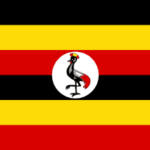 UgandaScored on the same twelve pillars as Ethiopia.68
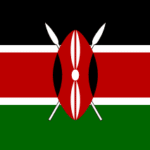 KenyaScored on the same twelve pillars as Ethiopia.68
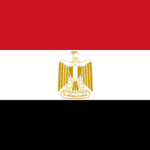 EgyptScored on the same twelve pillars as Ethiopia.60
 BotswanaScored on the same twelve pillars as Ethiopia.57
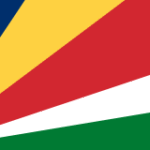 SeychellesScored on the same twelve pillars as Ethiopia.57