Destinations › Asia · The Destination Index · universal template · every figure sourced
Vietnam.
Southeastern Asia, bordering the Gulf of Thailand, Gulf of Tonkin, and South China Sea, as well as China, Laos, and Cambodia. 331,210 sq km and 101,598,527 people, 3,444 km of coastline, tropical in south; monsoonal in north with hot, rainy season (May to September) and warm, dry season (October to March).
Region · AsiaPopulation · ~101,598,527Languages · Vietnamese (official), Tay, Muong, Khmer, Hmong, and 50 other languagesEco Index · 67/100 · Passable
18,009,000 visitors a year · 101,598,527 residents
The Eco Index across 12 pillars · scored 0 to 5 · World Bank, OWID, WHO/UNICEF JMP, FiBL, Protected Planet, IUCN, UNESCO (2023-24)
Conservation
Wildlife
Water
Food & farming
Organic & clean
Climate & energy
Waste
Health
Heritage
Ownership
Governance
Future
The History of Vietnam.
Vietnam sustains an unusually rich living heritage. Water puppetry and lion and dragon dance sit alongside a remarkable set of UNESCO-listed music forms, including Nha nhac Hue royal court music, Ca tru sung poetry, Quan ho love duets and southern Don ca tai tu chamber music.
Where the name comes from
Việt Nam, from Việt, the people, and Nam, south. The order and the form have shifted over the centuries; the modern usage dates from the nineteenth. Source: UK Permanent Committee on Geographical Names toponymic factfile.
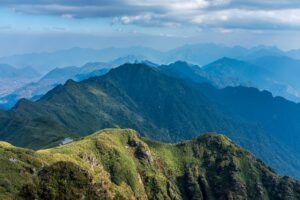
The land itself: low, flat delta in the north and south, central highlands between them, and hilly, mountainous country through the far north west. Its high point is Fansipan, 3,147 m. Source: UK Permanent Committee on Geographical Names toponymic factfile.
Where it starts
Drums a metre high
Stone tool industries in the northern uplands mark long Pleistocene occupation, and Con Moong cave holds one of the thickest cultural sequences in Vietnam, spanning the shift from foraging to farming. Bronze working and rice farming began in the Red River delta around 2000 BC. From about 600 BC the Dong Son culture cast bronze drums up to a metre high by the lost-wax method, decorated with boats, houses, music and daily life. Vietnam had a civilisation of its own long before it had a coloniser.
How it got here
A thousand years, then another
Northern Vietnam was governed from China for roughly a millennium, from 111 BC until the victory at the Bach Dang river in 938. Cham states held the centre and south for centuries, leaving brick towers and inscriptions in Sanskrit and Cham. Vietnam was unified under the Nguyen in 1802 with the capital at Hue. France colonised the country from 1858, extracting rubber, coal and rice, until Dien Bien Phu in 1954. Vietnam was reunified in 1975 after three decades of war.
The timeline
c. 40,000 years ago
Son Vi and the northern caves.
Stone tool industries in the northern uplands mark long Pleistocene occupation. ↗
c. 12,000 to 4,000 BC
The Hoabinhian.
Con Moong cave holds one of the thickest cultural sequences in Vietnam, spanning the shift from foraging to farming. ↗
c. 2000 BC
Phung Nguyen.
Bronze working and rice farming begin in the Red River delta. ↗
c. 600 BC to AD 200s
Dong Son.
Bronze drums up to a metre high are cast by the lost-wax method, with scenes of boats, houses, music and daily life. ↗
111 BC to AD 938
A thousand years of Chinese rule.
Northern Vietnam is governed from China for roughly a millennium, ending at the Bach Dang river. ↗
c. 192 to 1832
Champa.
Cham states hold the centre and south, leaving brick towers and Sanskrit and Cham inscriptions. ↗
1802
Nguyen dynasty.
Vietnam is unified under the Nguyen and the capital moves to Hue. ↗
1858 to 1954
French rule.
France colonises Vietnam, with rubber, coal and rice extraction, ending at Dien Bien Phu. ↗
1975
Reunification.
Vietnam is reunified in 1975 with the end of the Republic of Vietnam, after three decades of war against France and then the United States. ↗
Only about 7.6% of land and 0.5% of seas are protected (World Bank, 2025), and enforcement is weak. Industrial scale snaring and the wildlife trade have hollowed out even protected forests, a problem conservationists call empty forest syndrome.
Is wild Vietnam protected? 7.6% of the land is, against a 30% target for 2030
Found only here. The saola, grey shanked douc, Cat Ba langur and Delacour's langur
The watchlist
ThreatenedDove Langur (Pygathrix nemaeus)Critically Endangered on the IUCN Red List, and recorded in Vietnam in GBIF occurrence data (mammal).
ThreatenedCrested Argus (Rheinardia ocellata)Critically Endangered on the IUCN Red List, and recorded in Vietnam in GBIF occurrence data (bird).
ThreatenedCommon thread turtle (Mauremys sinensis)Critically Endangered on the IUCN Red List, and recorded in Vietnam in GBIF occurrence data (turtle).
ThreatenedSiamese Crocodile (Crocodylus siamensis)Critically Endangered on the IUCN Red List, and recorded in Vietnam in GBIF occurrence data (species).
ThreatenedBlack-shanked Douc (Pygathrix nigripes)Critically Endangered on the IUCN Red List, and recorded in Vietnam in GBIF occurrence data (mammal).
ThreatenedDelacour s Langur (Trachypithecus delacouri)Critically Endangered on the IUCN Red List, and recorded in Vietnam in GBIF occurrence data (mammal).
ThreatenedGray-shanked Douc (Pygathrix cinerea)Critically Endangered on the IUCN Red List, and recorded in Vietnam in GBIF occurrence data (mammal).
ThreatenedJavan Pangolin (Manis javanica)Critically Endangered on the IUCN Red List, and recorded in Vietnam in GBIF occurrence data (mammal).
Critically Endangered, the last IUCN category before Extinct in the Wild, and still recorded in Vietnam. GBIF holds 203 verified occurrence records.
Crested Argus (Rheinardia ocellata)
Critically Endangered, the last IUCN category before Extinct in the Wild, and still recorded in Vietnam. GBIF holds 5 verified occurrence records.
Common thread turtle (Mauremys sinensis)
Critically Endangered, the last IUCN category before Extinct in the Wild, and still recorded in Vietnam. GBIF holds 24 verified occurrence records.
Siamese Crocodile (Crocodylus siamensis)
Critically Endangered, the last IUCN category before Extinct in the Wild, and still recorded in Vietnam. GBIF holds 64 verified occurrence records.
Species named here are drawn from GBIF occurrence records for Vietnam filtered to the IUCN Red List threatened categories. Species are listed where GBIF holds occurrence records for them in this country. Record counts are not published here because the figure cannot be reproduced from a public GBIF query.
National park in Lào Cai Province, mapped and named in the open record for Vietnam. OpenStreetMap.
Water and Ocean in Vietnam.
Vietnam has abundant surface water from the Mekong and Red River deltas and heavy monsoon rainfall, but safe access lags: only about 59% of people have safely managed drinking water (World Bank and JMP, 2024) and tap water is not safe to drink. The Mekong Delta, the country's rice bowl, faces worsening saltwater intrusion, land subsidence and reduced flows from upstream dams.
Does Vietnam have enough fresh water? Yes, with headroom
58.6% of people here have safely managed drinking water at home (2024, WHO/UNICEF JMP). Coverage is well short of universal, so a visitor should not assume the tap is safe.
Cleanest water: The Phong Nha rivers and the Con Dao islands
How much fresh water does Vietnam have, per person?
3,606 m³
Vietnam
1,000 m³
the UN “water scarce” line
Vietnam withdraws about 81,862 million cubic metres of fresh water a year (2022). That is 18.1% of the fresh water actually available to it, which FAO counts as low water stress. Of what is taken, farming takes 95%, homes and towns 1%, industry 4%. Source: FAO AQUASTAT.
What are the rules on Vietnam beaches?
✕Tap water: Not drinkable.
✕Plastic rules: National plastic waste action plan with reduction targets; no comprehensive ban yet.
✓Solo travel: rated easy on the record for this destination.
✕Marine protection: 0.5% of the sea is protected. The 30x30 pledge for 2030 is not met yet.
Where does the sewage go?
45.4%
of people have safely managed sanitation
45.4% of people here use a safely managed sanitation service, meaning waste is contained, emptied and treated rather than reaching the ground or the sea untreated (2024, World Bank / WHO-UNICEF JMP, SDG 6.2.1). The rest is what the rivers and the coast receive.
How is the sea around Vietnam doing?
One cross-section, every answer measured.
Surface
What the coast carries
North has four seasons; the centre has a distinct storm window Sep–Nov; the south is wet May–Oct.
Nearshore
Protected water
0.5% of territorial waters are protected, against the 30% pledged for 2030 under the Global Biodiversity Framework.
Cleanest
Where the water is cleanest
The Phong Nha rivers and the Con Dao islands.
The record
Measured
Vietnam has abundant surface water from the Mekong and Red River deltas and heavy monsoon rainfall, but safe access lags: only about 59% of people have safely managed drinking water (World Bank and JMP, 2024) and tap water is not safe to drink. The Mekong Delta, the country's rice bowl, faces worsening saltwater intrusion, land subsidence and reduced flows from upstream dams.
Sea protected
0.5%
Against the 30% pledged for 2030 under the Global Biodiversity Framework.
Threatened species
1053
Mammals, birds, fish and higher plants on the IUCN list.
Cleanest water
here
The Phong Nha rivers and the Con Dao islands.
Is the tap water safe in Vietnam?
58.6% of people have safely managed drinking water at home (2024, WHO/UNICEF JMP). Renewable fresh water works out at about 3,606 cubic metres per person a year (World Bank).
How hard is the water supply being pushed?
Of every 10 buckets nature refills, 2 are already taken. Withdrawals run at 18.1% of what Vietnam renews internally each year (2022, World Bank / FAO AQUASTAT). That is inside the 25% mark generally treated as water stress, so the supply has headroom.
When is the best time to visit Vietnam? Tap your month.
Tap your month.
JanFebMarAprMayJunJulAugSepOctNovDec
.
How much fresh water does Vietnam actually have?
Nature renews about 3,606 cubic metres of fresh water per person per year here. That ranks Vietnam 119 of 208 countries measured, putting it in the wetter half of the world. The UN treats anything under 1,000 cubic metres as water scarce, and this is above that line. World Bank / FAO AQUASTAT.
Vietnam is one of the world's top three rice exporters and an agricultural powerhouse, with intensive smallholder farming of rice, vegetables, coffee, fruit and aquaculture. It is strongly self sufficient in staples and food import dependence is low.
Where does the food in Vietnam come from?
8.8% imported
about US$39,928m a year
On the plate: Rice, fresh herbs and greens, tofu, morning glory, noodles and tropical fruit
How often each food is on the plate
Share of people eating each one regularly. These overlap, so they do not add up to 100%.
Rice60%
Fresh herbs51%
Greens42%
Tofu33%
Morning glory24%
Noodles15%
1 of 10
bites are imported
The island buys in more food energy than it eats. About US$39,928m a year leaves the country to pay for it. The green slice is roughly what still grows here.
Food is 8.8% of everything Vietnam imports (2023, World Bank). Farming itself is 11.6% of the economy and 39.2% of the land is agricultural, of which 21.5% is arable. The green slice is roughly what still grows here.
What is killing people in Vietnam? The imported diet.
Cause of death, and the diet behind it.
Non-communicable diseases, all combined78.2%
Diabetes3.4%
Adults living with overweight or obesity. 18.2%.
Can Vietnam feed itself?
21.5%
Arable land
39.2%
Agricultural land
14,285,083
Farmers
16,626,411
Arable acres
11.6%
Agriculture, share of GDP
Harvest: Two to three rice harvests a year; the northern terraces turn gold in September to October
Feeding itself
Vietnam is one of the world's top three rice exporters and an agricultural powerhouse, with intensive smallholder farming of rice, vegetables, coffee, fruit and aquaculture. It is strongly self sufficient in staples and food import dependence is low.
Certification
Certified organic farmland is about 0.5% of agricultural land (FiBL, 2020). A participatory guarantee system for organic produce is growing around the cities, but certified area remains small.
Water for crops
Vietnam has abundant surface water from the Mekong and Red River deltas and heavy monsoon rainfall, but safe access lags: only about 59% of people have safely managed drinking water (World Bank and JMP, 2024) and tap water is not safe to drink. The Mekong Delta, the country's rice bowl, faces worsening saltwater intrusion, land subsidence and reduced flows from upstream dams.
Why the organic number looks like that. Certified-organic farmland is not separately reported for Vietnam, and that is a certification gap rather than proof nothing is grown cleanly. What the official land record does show: 39.2% of the country is agricultural land and 21.5% is arable (2023, World Bank). Certification is paid for per farm per year by a foreign body, which prices out smallholders, so the organic number reads worse than the practice.
The plant-based kitchen here is not an import. By tonnage, the largest crops grown in Vietnam are rice, sugarcane, cassava and maize (FAO, FAOSTAT crop production, 2024). That is what the land itself puts on a plate.
Is this grown in Vietnam?
Tap a food for the honest answer.
RiceFresh herbsGreensTofuMorning gloryNoodlesTropical fruit
.
RiceFresh herbsGreensTofuMorning gloryNoodlesTropical fruit
Vietnam's low emissions belie a coal-heavy grid: coal supplies close to half of electricity, though a rapid solar boom (over 18 GW installed) and large hydropower push low-carbon sources to more than a third of generation. Territorial CO2 emissions are about 3.67 tonnes per person (2024), below the world average. The country has pledged net zero by 2050 and signed a Just Energy Transition Partnership mobilising an initial 15.5 billion US dollars to move away from coal and cap coal capacity. Genuine ambition and strong renewables potential are offset by continued coal reliance, keeping the score in the moderate band.
What powers Vietnam?
Renewable 45.4%Fossil 54.6%
Climate pollution per person
The safe amount, what the planet can absorb
2 tonnes
One person here
4.27 tonnes
The world average, for comparison
4.7 tonnes
The worst it ever got
4.27 tonnes
The grid
Vietnam's low emissions belie a coal-heavy grid: coal supplies close to half of electricity, though a rapid solar boom (over 18 GW installed) and large hydropower push low-carbon sources to more than a third of generation. Territorial CO2 emissions are about 3.67 tonnes per person (2024), below the world average.
Pollution
Air pollution is a real problem, with a PM2.5 annual mean around 25 micrograms per cubic metre nationally and far higher in Hanoi during winter (World Bank, 2023). Vietnam is also among the largest emitters of ocean plastic; it has a national plastic action plan with reduction targets, but enforcement is limited and single use plastic is pervasive.
Water stress
Vietnam has abundant surface water from the Mekong and Red River deltas and heavy monsoon rainfall, but safe access lags: only about 59% of people have safely managed drinking water (World Bank and JMP, 2024) and tap water is not safe to drink. The Mekong Delta, the country's rice bowl, faces worsening saltwater intrusion, land subsidence and reduced flows from upstream dams.
What pollutes most here
1The gridThe share of electricity still generated from fossil fuel.58.8%
2IndustryUrban traffic smog in Hanoi and coastal industrial zones.named
3AirModelled annual mean against a WHO guideline of 5 µg/m³.24.8
4On the recordAir pollution is a real problem, with a PM2.5 annual mean around 25 micrograms per cubic metre nationally and far higher in Hanoi during winter (World Bank, 2023).
What has Vietnam promised on climate?
Net zero, whole economy2050
Electricity renewable today41.2% (2021)
Land protected, against a 30% target7.6% by 2025
Sea protected, against a 30% target0.5% by 2025
The net-zero target year on file with Climate Watch is 2050, status: in policy document; in political pledge. Measured against it, 41.2% of electricity is already renewable (2021, World Bank), so 58.8% of the grid is still to be converted. The pledge on file is measured here against what has actually been delivered, not taken on its own (UNFCCC NDC Registry, CBD Kunming-Montreal Target 3).
The biggest line item
One return flight against a whole year of living.
A resident's entire year4.27 t CO2e
Safe-climate budget, per year2 t CO2e
New York return, economy2.37 t CO2e
Los Angeles return, economy2.22 t CO2e
Johannesburg return, economy1.78 t CO2e
London return, economy1.67 t CO2e
Paris return, economy1.65 t CO2e
How much CO2 does flying to Vietnam emit?
Tap where you would fly from. One return flight, economy.
Every prompt runs on a machine in a building on somebody’s grid. What that costs the planet depends less on the prompt than on what is burning to power it. Here is what would power one in Vietnam.
Data centres
15
Registered colocation and interconnection facilities, PeeringDB, 2026
Grid renewable
45.4 %
What a machine here runs on.
What powers a data centre in Vietnam?
Most of the power behind a machine here is still burned.
Renewable 45.4%Fossil 54.6%
Cooling water. Every one of those halls runs on the national grid, which is 41.2% renewable today (World Bank). A data centre is only as clean as the electricity behind it, so the same figure that decides this country's climate score also decides the footprint of the AI running inside it. Cooling water use is not separately published by facility, and no operator here reports it.
The rules. Vietnam has 15 colocation and interconnection facilities on the public PeeringDB register, concentrated in Hanoi (7), Ho Chi Minh (4), Ho Chi Minh City (3), alongside 4 internet exchanges (VNIX-HCM, VNIX-HN, VNIX-DN, NobiDev IX). Named sites include Telehouse, Hanoi, VNIX-HN, VNIX-HCM, VNIX-DN.
Where the cables land. 3 landing points · Danang, Quy Nhon, Vung Tau
85% residents to 15% visitors across a year. 18,009,000 international arrivals in 2019 against 101,598,527 people who live here (2025, World Bank / UN Tourism).
Where a visitor dollar goes in Vietnam
3,837k
Visitors a year
0.0
Visitors per resident
How deep in debt is Vietnam?· for every $100 Vietnam earns in a year, it owes…
Pay to the order of: the creditorsmemo · the 2016 peak
$ 48The worst year on the IMF record. Vietnam owed $48 for every $100 it earned.
IMF World Economic Outlook, 2016signed, the creditors
Pay to the order of: the creditorsmemo · today
$ 30What is owed now, for every $100 of national income (2026).
IMF World Economic Outlook, 2026signed, the creditors
Pay to the order of: the creditorsmemo · projected 2031
$ 27The IMF's own forecast has this falling to $27 by 2031.
IMF World Economic Outlook projection, 2031signed, the forecast
For every $100 Vietnam earns in a year, it owes $30 (2026, IMF World Economic Outlook). The interest on that is paid before schools, clinics or coastline get their turn.
Where does a tourist dollar actually go in Vietnam?
Play one tourist dollar around the board. Every square is a measured fact from this page.
START!
1
GO: a visitor lands
$100 goes on the table. 18,009,000 international arrivals in 2019 against 101,598,527 residents, one visitor a year for every 6 residents (World Bank / UN Tourism).
$100 in play
2
The bed
Who owns the largest places to stay in Vietnam is not published in the records we can check, so this square is left open rather than guessed. Where a listing names its owner, it is shown in the ownership table below.
not published
3
The plate
Food is only 8.8% of everything Vietnam imports (2023, World Bank), so most of a meal is bought from producers inside the country. Eating what the land here actually grows, rice, vegetables, sugarcane, cassava, maize, fruits, bananas, coconuts, coffee, keeps that money with the grower.
mostly home-grown
4
The power
41.2% of the electricity is renewable (2021, World Bank), so the energy on the bill is mostly generated inside the country rather than shipped in.
made at home
5
What actually stays
Of the two parts of a visitor's bill that can be measured here, the plate and the power stay inside Vietnam. This is not an economy where a visitor's money drains away, and the board is shorter for it.
most of it
6
Pay the bank first
Vietnam owes $30 for every $100 it earns (IMF World Economic Outlook, 2026 projection). The interest is paid before anything else on this board.
$30 per $100
7
No plan B
37.6% of everything Vietnam sells abroad is electrical machinery and electronics (2023, UN Comtrade). One market moving takes the whole board with it.
37.6% one export
8
Community chest
Tourism earns 1.1% of everything Vietnam makes from exports (2020, World Bank / UN Tourism). That is how much of the economy depends on the game continuing.
1.1% of exports
9
The flight
Getting here is usually the biggest single line on the bill. From New York a return economy seat is 2.37 t CO2, on the UK Government's published conversion factors. It is the one part of the trip this board cannot reduce.
2.37 t CO2
10
Back to GO
The economy turns over about US$527 billion a year (IMF World Economic Outlook, 2026 projection). Every lap of this board is a choice about how much of it stays.
US$527bn
GDPUS$514.7bn
Agriculture, share of GDP11.6%
Visitors a year3,837,000
Visitors per resident0
Residents~101,598,527
Agriculture
Farming is 11.6% of the economy. Vietnam is one of the world's top three rice exporters and an agricultural powerhouse, with intensive smallholder farming of rice, vegetables, coffee, fruit and aquaculture.
Natural materials
Vietnam has a rich living natural fibre culture: mulberry silk weaving, bamboo and rattan, water hyacinth and seagrass basketry, the palm leaf conical hat and Hmong hemp dyed with indigo. These crafts remain in everyday production, not just for tourists.
Energy
Vietnam's low emissions belie a coal-heavy grid: coal supplies close to half of electricity, though a rapid solar boom (over 18 GW installed) and large hydropower push low-carbon sources to more than a third of generation. Territorial CO2 emissions are about 3.67 tonnes per person (2024), below the world average.
Who owns the biggest hotels in Vietnam?
By rooms · company records and press.
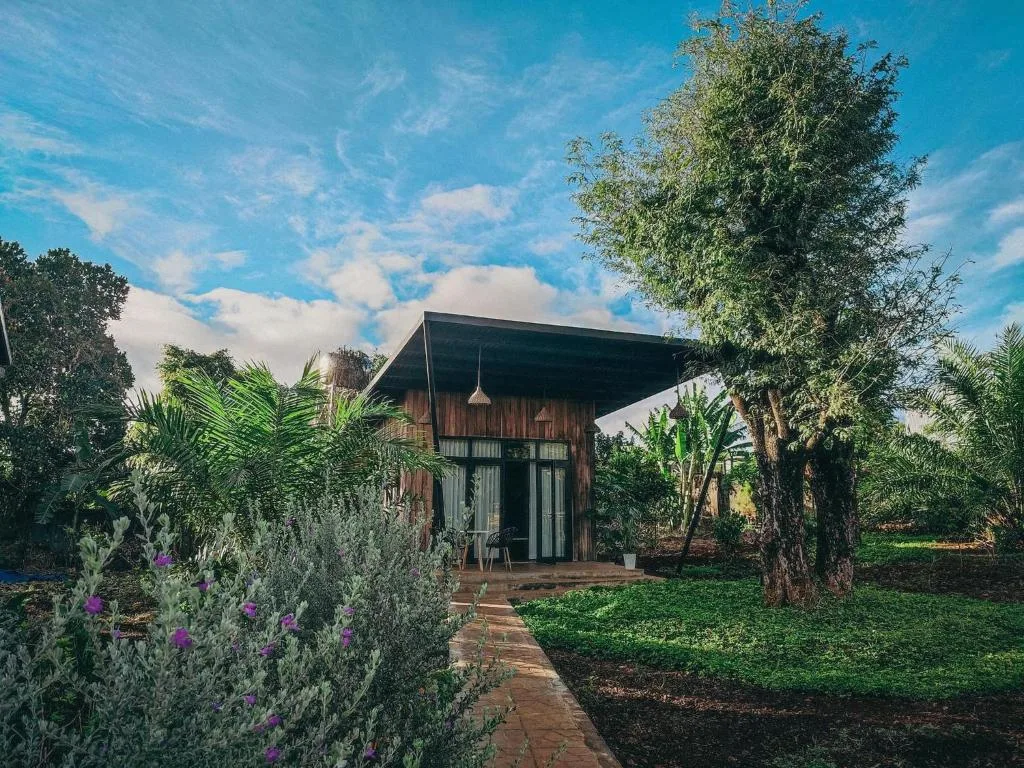
Paksong Farmstay · ~4 roomsIndependentnot published
Visitors, over time
20157,944k
201610,013k
201712,922k
201815,498k
201918,009k
20203,837k
International tourism receipts run at about US$3.23 billion in 2020 (World Bank / UN Tourism). That is 1.1% of everything the country earns from exports.
How much of your money actually stays here?
Tap the holiday you are planning.
All-inclusive resortForeign-owned hotel and tourist restaurantsLocally owned stay and local restaurantsGuesthouse, markets and public transport
Resort guest, villa renter, family, nomad or backpacker. The honest playbook for each, from the same sourced numbers.
Already booked a resort? · the rescue list
Five swaps that move your money back on-island
1. Eat where the country eats Choose kitchens cooking rice, fresh herbs and greens, tofu, morning glory, noodles and tropical fruit over imported menus. The checked list →
2. Book with a local operator Never the lobby desk. The margin on a tour is the part that stays. Eco tours →
3. Stay somewhere locally owned Ownership decides where the room rate books. Eco stays →
4. Use the transport residents use Cheap domestic flights, the reunification railway, sleeper buses and Grab motorbikes and taxis
5. Buy the craft, not the souvenir Natural-materials work made here pays the maker directly; imported gifts pay a shipping line.
swipe →
First time here
A forested Southeast Asian hotspot of endemic species and Buddhist plant based cooking, undercut by weak protected areas, unsafe tap water and heavy plastic pollution.
Best time: The dry season, but the climate splits sharply north, central and south
Getting around
Cheap domestic flights, the reunification railway, sleeper buses and Grab motorbikes and taxis
Transport is where the fare either stays or leaves.
Eating here
The everyday plate is rice, fresh herbs and greens, tofu, morning glory, noodles and tropical fruit. Vietnam has one of Asia's easiest plant based food cultures.
Eating what the country grows is the cheapest way to cut the import bill.
Good to know
Cash in the provinces, cards in cities; VND. Crossing streets is an art.
Rate my hotel. Tap yours for the honest verdict.
Ownership from company records and press.
Paksong Farmstay
.
Who owns the place to stay
Paksong FarmstayIndependent · 4 rooms
The one property listed here does not publish who ultimately owns it, so no claim is made either way. Ownership is what decides how much of a room rate stays in the country, which is why we show it when a listing states it.
Society and Governance in Vietnam.
How well is Vietnam actually run?
Governance, measured · World Bank WGI
Four measured answers, none of them opinion. Averaged across corruption control, delivery and accountability, Vietnam scores 43 out of 100 (2024, World Bank Worldwide Governance Indicators). That matters here because every pledge on this page is only as good as the machinery meant to deliver it.
How well is Vietnam run? · each scored out of 100, higher is better
Clean government, scored 43 of 100
Control of corruption scores 42.8 out of 100 (2024, World Bank Worldwide Governance Indicators). That is below the halfway mark of governments measured.
43
Freedom and rights, scored 38 of 100
Voice and accountability, which measures free expression, free media and the ability to choose a government, scores 37.6 out of 100 (2024, World Bank WGI). Room to question the government publicly is limited.
38
Government effectiveness, scored 50 of 100
Government effectiveness, which measures the quality of public services and how well policy is actually delivered, scores 49.5 out of 100 (2024, World Bank WGI). Delivery is rated below average, so a pledge on paper is not the same as a pledge kept.
50
Income equality, scored 36 of 100
The Gini index of income inequality reads 36.1 (2022, World Bank). Zero is perfect equality and 100 is one person holding everything. Below 40 is the level usually treated as manageable, and Vietnam sits inside it.
36
LGBTQ+ status: MixedSolo female travel: Easy96.1% adult literacyIndustry to avoid: Urban traffic smog in Hanoi and coastal industrial zones
What is daily life in Vietnam really like? Measured
Getting around, breathing, throwing away, learning. The honest checklist.
TransportAirWaterWastePower
✓How you get around Cheap domestic flights, the reunification railway, sleeper buses and Grab motorbikes and taxis
✓Air quality, measured Modelled annual mean 24.8. The WHO guideline is 5 µg/m³.
✓Where the air is cleanest The northern highlands and central coast national parks
·Tap water Not drinkable
✓What to drink Bottled water; ice in cafes is factory-made and generally safe.
✓Plastic rules National plastic waste action plan with reduction targets; no comprehensive ban yet
✓Sockets and voltage Type A/B/C, 220V (varies)
96.1%
literacy. Public spending on education runs at 2.9% of GDP and 15.4% of all government spending, and secondary enrolment stands at 93.4% gross (UNESCO Institute for Statistics, 2022).
Made in Vietnam.
Vietnam has a rich living natural fibre culture: mulberry silk weaving, bamboo and rattan, water hyacinth and seagrass basketry, the palm leaf conical hat and Hmong hemp dyed with indigo. These crafts remain in everyday production, not just for tourists. Every step of processing done at home is value that stops leaving the country.
What Vietnam actually sells the world
The single biggest thing Vietnam sells the world is electrical machinery and electronics, 37.6% of all exports in 2023 (about US$132.72 billion, UN Comtrade). The next four are machinery and mechanical appliances at 9.1%, footwear at 5.9%, woven clothing at 4.3%, knitted clothing at 4.2%.
Made now · natural materials
Bamboo
Worked in Vietnam from local material, and still a working craft rather than a museum piece.
Made now · natural materials
Rattan
Worked in Vietnam from local material, and still a working craft rather than a museum piece.
Made now · natural materials
Water hyacinth
Worked in Vietnam from local material, and still a working craft rather than a museum piece.
Made now · natural materials
Seagrass basketry
Worked in Vietnam from local material, and still a working craft rather than a museum piece.
Made now · natural materials
Palm leaf conical hat
Worked in Vietnam from local material, and still a working craft rather than a museum piece.
Buys in · 7.9% of imports
Mineral fuels and oils
Vietnam imported US$25.69 billion of mineral fuels and oils in 2023, 7.9% of everything it bought abroad, and sells none of it back. Every point of that is a business that could be built at home rather than shipped in. UN Comtrade.
Buys in · 5.4% of imports
Plastics
Vietnam imported US$17.50 billion of plastics in 2023, 5.4% of everything it bought abroad, and sells none of it back. Every point of that is a business that could be built at home rather than shipped in. UN Comtrade.
Buys in · 3.8% of imports
Iron and steel
Vietnam imported US$12.43 billion of iron and steel in 2023, 3.8% of everything it bought abroad, and sells none of it back. Every point of that is a business that could be built at home rather than shipped in. UN Comtrade.
Buys in · 2.3% of imports
Optical, medical and precision instruments
Vietnam imported US$7.39 billion of optical, medical and precision instruments in 2023, 2.3% of everything it bought abroad, and sells none of it back. Every point of that is a business that could be built at home rather than shipped in. UN Comtrade.
The maths for an entrepreneur. Vietnam produces about US$515 billion a year, which is roughly US$5,066 per person (2025, World Bank). Farming is 11.6% of that, while food is 8.8% of everything the country imports. With 21.5% of the land arable, the raw material for that is already in the ground.
A living tradition of Vietnam, still practised rather than archived.
Lion
A living tradition of Vietnam, still practised rather than archived.
Dragon dance
A living tradition of Vietnam, still practised rather than archived.
UNESCO-listed Nha nhac Hue court music
A living tradition of Vietnam, still practised rather than archived.
Ca tru sung poetryA living tradition of Vietnam, still practised rather than archived.
Quan ho love duetsA living tradition of Vietnam, still practised rather than archived.
Does Vietnam protect its heritage by law?
Partly, and the gaps say as much as the protections.
What is kept alive. Vietnam sustains an unusually rich living heritage. Water puppetry and lion and dragon dance sit alongside a remarkable set of UNESCO-listed music forms, including Nha nhac Hue royal court music, Ca tru sung poetry, Quan ho love duets and southern Don ca tai tu chamber music. Ancestral traditions are central to daily life, from ancestor veneration in every home to Dao Mau Mother Goddess worship with its len dong spirit mediumship and the Hung Kings commemoration.
Who it belongs to. Vietnam recognises 54 ethnic groups, and living hill communities such as the Hmong, Tay and Dao anchor genuine community based tourism and homestays in Sapa, Mai Chau and Ha Giang. Some hill tribe tourism is commodified and unevenly rewarded, which keeps this just short of the top band.
Only here. Hang Son Doong, the largest cave passage on Earth, in Phong Nha-Ke Bang National Park.
Three futures for Vietnam, every one run forward from measured data.
Where the making actually happens
Named cultural and craft sites on the open map: Vietnam Military History Museum (Hà Nội), Ho Chi Minh Museum (Hà Nội), Vietnam Fine Arts Museum (Hà Nội), National Museum of Vietnamese History (Hà Nội), Hanoi Museum (Hà Nội). OpenStreetMap. Named craft workshops on the open map: Hoi An Art Craft Manufacturing Workshop, Huy Ép Biển số.
Every measured trend on one line
Run forward at the pace already recorded.
+46%
Forest cover
1995: 32.5 % → 2023: 47.4 %
-43%
Renewable electricity
1995: 72.2 % → 2021: 41.2 %
+794%
CO2 per person
1995: 0.48 t → 2024: 4.27 t
+184%
Tourist arrivals
1995: 1351 k → 2020: 3837 k
+17%
Protected land
2013: 6.5 % → 2025: 7.6 %
-64%
Farm workforce
1995: 69.9 % → 2025: 25 %
-63%
Renewable energy use
1995: 64.9 % → 2021: 24.2 %
+235%
Energy per person
1995: 304.1 kg → 2023: 1018 kg
+12%
Protected area, total
2013: 2.6 % → 2025: 2.9 %
+5%
Life expectancy
1995: 70.9 yrs → 2024: 74.7 yrs
+68%
Cereal yield
1995: 3570 ha → 2023: 5995 ha
+85%
Fertiliser use
1995: 226.5 ha → 2023: 420 ha
-22%
Rural population
1995: 78.6 % → 2025: 61.2 %
+308%
Water productivity
1995: 1.08 $/m3 → 2022: 4.41 $/m3
+11%
Health spending
2000: 4.11 % → 2023: 4.56 %
+41%
Forest area
1995: 105800 km2 → 2023: 148708 km2
+1524%
Electric power use
1995: 159.2 kWh → 2023: 2585 kWh
+49%
Emissions: Agriculture
1990: 49.4 e → 2023: 73.5 e
-35%
Emissions: Building
1990: 11.7 e → 2023: 7.6 e
+3037%
Emissions: Electricity/Heat
1990: 4.9 e → 2023: 153.7 e
+931%
Emissions: Energy
1990: 30.9 e → 2023: 318.4 e
+4415%
Emissions: Industrial Processes
1990: 1.2 e → 2023: 55.5 e
+1272%
Emissions: Manufacturing/Construction
1990: 5.9 e → 2023: 81.3 e
World Bank open data, recorded series
How much forest is left?
Forest cover moved from 32.5% to 47.4% across 28 recorded years.
World Bank AG.LND.FRST.ZS
How clean is the grid?
Renewable electricity moved from 72.2% to 41.2% across 26 recorded years.
World Bank EG.ELC.RNEW.ZS
How much climate pollution per person?
CO2 per person moved from 0.5 t to 4.3 t across 29 recorded years.
World Bank EN.GHG.CO2.PC.CE.AR5
How many people visit?
Tourist arrivals moved from 1351k to 3837k across 25 recorded years.
World Bank ST.INT.ARVL
How much land is protected?
Protected land moved from 6.5% to 7.6% across 12 recorded years.
World Bank ER.LND.PTLD.ZS
How many people still farm?
Farm workforce moved from 69.9% to 25.0% across 30 recorded years.
World Bank SL.AGR.EMPL.ZS
What share of all energy is renewable?
Renewable energy use moved from 64.9% to 24.2% across 26 recorded years.
World Bank EG.FEC.RNEW.ZS
How much energy does one person use?
Energy per person moved from 304.06 kg to 1018 kg across 28 recorded years.
World Bank EG.USE.PCAP.KG.OE
How much land and sea is protected together?
Protected area, total moved from 2.6% to 2.9% across 12 recorded years.
World Bank ER.PTD.TOTL.ZS
How long do people live?
Life expectancy moved from 70.87 yrs to 74.74 yrs across 29 recorded years.
World Bank SP.DYN.LE00.IN
How much does a hectare of cereal produce?
Cereal yield moved from 3570 kg/ha to 5995 kg/ha across 28 recorded years.
World Bank AG.YLD.CREL.KG
How much fertiliser goes on the land?
Fertiliser use moved from 226.49 kg/ha to 419.95 kg/ha across 28 recorded years.
World Bank AG.CON.FERT.ZS
How many people still live rurally?
Rural population moved from 78.55% to 61.17% across 30 recorded years.
World Bank SP.RUR.TOTL.ZS
How much value per cubic metre of water?
Water productivity moved from 1.08 $/m3 to 4.41 $/m3 across 27 recorded years.
World Bank ER.GDP.FWTL.M3.KD
How much goes on health?
Health spending moved from 4.11% to 4.56% across 23 recorded years.
World Bank SH.XPD.CHEX.GD.ZS
How much forest is there in total?
Forest area moved from 105800 km2 to 148708 km2 across 28 recorded years.
World Bank AG.LND.FRST.K2
How much electricity per person?
Electric power use moved from 159.18 kWh to 2585 kWh across 28 recorded years.
World Bank EG.USE.ELEC.KH.PC
How have agriculture emissions moved?
Agriculture emissions moved from 49.44 to 73.52 MtCO2e across 33 recorded years.
Climate Watch (WRI), historical emissions
How have building emissions moved?
Building emissions moved from 11.72 to 7.61 MtCO2e across 33 recorded years.
Climate Watch (WRI), historical emissions
How have electricity/heat emissions moved?
Electricity/Heat emissions moved from 4.9 to 153.73 MtCO2e across 33 recorded years.
Climate Watch (WRI), historical emissions
How have energy emissions moved?
Energy emissions moved from 30.88 to 318.43 MtCO2e across 33 recorded years.
Climate Watch (WRI), historical emissions
How have industrial processes emissions moved?
Industrial Processes emissions moved from 1.23 to 55.54 MtCO2e across 33 recorded years.
Climate Watch (WRI), historical emissions
How have manufacturing/construction emissions moved?
Manufacturing/Construction emissions moved from 5.92 to 81.25 MtCO2e across 33 recorded years.
Climate Watch (WRI), historical emissions
Worst caseCurrent pathBest case
Worst case
Every measured decline continues at the pace already recorded. The weakest pillar, conservation at 2/5, is the one that gives way first.
Computed from: recorded series extended with no policy change
Current path
Every line above is a recorded World Bank series for this country. The current path is simply those series continuing at the pace already measured.
Computed from: recorded series, no policy change assumed
Best case
The pledges are met on their own stated timetables and the weakest pillars are lifted to match the strongest. Vietnam already shows it can do this: plant-based eating scores 5/5.
Computed from: each published target delivered on its own date
What the best case actually asks for
Lift conservation
It scores 2 out of 5 today, among the weakest parts of Vietnam's record. Only about 7.6% of land and 0.5% of seas are protected (World Bank, 2025), and enforcement is weak. Industrial scale snaring and the wildlife trade have hollowed out even protected forests, a problem conservationists call empty forest syndrome. Lifting it toward the 5/5 the strongest pillars already reach is what the best case turns on.
measured each year
Costs: spending and enforcement, not new technology
Lift organic farming
It scores 2 out of 5 today, among the weakest parts of Vietnam's record. Certified organic farmland is about 0.5% of agricultural land (FiBL, 2020). A participatory guarantee system for organic produce is growing around the cities, but certified area remains small. Lifting it toward the 5/5 the strongest pillars already reach is what the best case turns on.
measured each year
Costs: spending and enforcement, not new technology
Lift pollution
It scores 2 out of 5 today, among the weakest parts of Vietnam's record. Air pollution is a real problem, with a PM2.5 annual mean around 25 micrograms per cubic metre nationally and far higher in Hanoi during winter (World Bank, 2023). Vietnam is also among the largest emitters of ocean plastic; it has a national plastic action plan with reduction targets, but enforcement is limited and single use plastic is pervasive. Lifting it toward the 5/5 the strongest pillars already reach is what the best case turns on.
measured each year
Costs: spending and enforcement, not new technology
Government and Goals in Vietnam.
Who is in charge of Vietnam now · Office-holders from the UN Protocol and Liaison Service public list of Heads of State and Heads of Government, 8 September 2026. Legislature and election dates from IFES ElectionGuide. Constitution dates from the Constitute Project. Governance scores from the World Bank Worldwide Governance Indicators 2024.
Le Minh Hung
Prime Minister
Le Minh Hung is the head of government of Vietnam, in office since 7 April 2026. Every climate, protection and energy pledge on this page is delivered, or not, under this administration.
Public opinion, measured
Voice and accountability, the freedom to question government: 37.6 / 100. Below the halfway mark of governments measured. World Bank WGI 2024
Control of corruption: 42.8 / 100. Below the halfway mark of governments measured. World Bank WGI 2024
Political stability and absence of violence: 66 / 100. Above the halfway mark of governments measured. World Bank WGI 2024
Rule of law: 51.6 / 100. Above the halfway mark of governments measured. World Bank WGI 2024
Regulatory quality: 50.7 / 100. Above the halfway mark of governments measured. World Bank WGI 2024
Le Minh HungPrime Minister
National Assembly (Quoc-Hoi)Legislature, unicameral
Last election15 March 2026
Constitution1992, as revised to 2013
Government typecommunist party-led state
Vietnam national goals: climate commitments on record · as recorded by Climate Watch, World Resources Institute
2050
Net zero
In Policy Document<br>In Political Pledge
Net-zero target as recorded by Climate Watch. Status: In Policy Document (11/8/2022) In Political Pledge (11/1/2021) ↗
The questions people actually type, answered in full sentences from the sourced data above.
swipe →
Is Vietnam sustainable?
Vietnam scores 65 out of 100 on the Throne Eco Index, across twelve equally weighted pillars. A forested Southeast Asian hotspot of endemic species and Buddhist plant based cooking, undercut by weak protected areas, unsafe tap water and heavy plastic pollution.
Is the water in Vietnam safe and plentiful?
Vietnam has abundant surface water from the Mekong and Red River deltas and heavy monsoon rainfall, but safe access lags: only about 59% of people have safely managed drinking water (World Bank and JMP, 2024) and tap water is not safe to drink. The Mekong Delta, the country's rice bowl, faces worsening saltwater intrusion, land subsidence and reduced flows from upstream dams.
Can Vietnam feed itself?
Vietnam is one of the world's top three rice exporters and an agricultural powerhouse, with intensive smallholder farming of rice, vegetables, coffee, fruit and aquaculture. It is strongly self sufficient in staples and food import dependence is low.
Is it easy to eat plant-based in Vietnam?
Vietnam has one of Asia's easiest plant based food cultures. A deep Buddhist vegetarian tradition, com chay, means dedicated vegetarian eateries are common, especially near temples and on lunar days, and everyday cooking is rich in fresh herbs, greens, tofu and rice. Unprocessed plant food is cheap and everywhere.
How much of Vietnam is actually protected?
Only about 7.6% of land and 0.5% of seas are protected (World Bank, 2025), and enforcement is weak. Industrial scale snaring and the wildlife trade have hollowed out even protected forests, a problem conservationists call empty forest syndrome.
What wildlife is left in Vietnam?
Vietnam lies in the Indo-Burma biodiversity hotspot and holds remarkable endemics, including the saola, the Cat Ba and Delacour's langurs and the grey shanked douc, with 1,053 IUCN threatened species (2023). The tragedy is that these populations are collapsing under snaring and trafficking, and the Javan rhino was declared extinct in the country in 2011, after the last individual was found shot in Cat Tien National Park in April 2010.
Is Vietnam on clean energy?
Vietnam's low emissions belie a coal-heavy grid: coal supplies close to half of electricity, though a rapid solar boom (over 18 GW installed) and large hydropower push low-carbon sources to more than a third of generation. Territorial CO2 emissions are about 3.67 tonnes per person (2024), below the world average. The country has pledged net zero by 2050 and signed a Just Energy Transition Partnership mobilising an initial 15.5 billion US dollars to move away from coal and cap coal capacity.
How polluted is Vietnam?
Air pollution is a real problem, with a PM2.5 annual mean around 25 micrograms per cubic metre nationally and far higher in Hanoi during winter (World Bank, 2023). Vietnam is also among the largest emitters of ocean plastic; it has a national plastic action plan with reduction targets, but enforcement is limited and single use plastic is pervasive.
Does recycling work in Vietnam?
There is no reliable municipal recycling rate. Recycling is dominated by the informal sector, including waste pickers and specialised craft villages that reprocess plastics, metal and paper, often in polluting conditions.
Is the farming in Vietnam organic?
Certified organic farmland is about 0.5% of agricultural land (FiBL, 2020). A participatory guarantee system for organic produce is growing around the cities, but certified area remains small.
Are there natural materials and craft in Vietnam?
Vietnam has a rich living natural fibre culture: mulberry silk weaving, bamboo and rattan, water hyacinth and seagrass basketry, the palm leaf conical hat and Hmong hemp dyed with indigo. These crafts remain in everyday production, not just for tourists.
Is there living culture in Vietnam?
Vietnam recognises 54 ethnic groups, and living hill communities such as the Hmong, Tay and Dao anchor genuine community based tourism and homestays in Sapa, Mai Chau and Ha Giang. Some hill tribe tourism is commodified and unevenly rewarded, which keeps this just short of the top band.
What heritage does Vietnam keep alive?
Vietnam sustains an unusually rich living heritage. Water puppetry and lion and dragon dance sit alongside a remarkable set of UNESCO-listed music forms, including Nha nhac Hue royal court music, Ca tru sung poetry, Quan ho love duets and southern Don ca tai tu chamber music. Ancestral traditions are central to daily life, from ancestor veneration in every home to Dao Mau Mother Goddess worship with its len dong spirit mediumship and the Hung Kings commemoration.
So is Vietnam actually green? The measured answer
What is working: the record is thin on the headline measures, and the sourced numbers below say why.
What is not: land protected at 7.6% against a 30% mark, sea protected at 0.5% against a 30% mark, renewable electricity at 41.2% against a 100% mark.
Vietnam sits 42 of 77 at 67/100. Every name links to its own destination page, built exactly like this one. The full ranking →
What is Vietnam particularly good at?
✓Food and farming, scored 5/5. Vietnam is one of the world's top three rice exporters and an agricultural powerhouse, with intensive smallholder farming of rice, vegetables, coffee, fruit and aquaculture. It is strongly self sufficient in staples and food import dependence is low.
✓Heritage, scored 5/5. Vietnam sustains an unusually rich living heritage. Water puppetry and lion and dragon dance sit alongside a remarkable set of UNESCO-listed music forms, including Nha nhac Hue royal court music, Ca tru sung poetry, Quan ho love duets and southern Don ca tai tu chamber music. Ancestral traditions are central to daily life, from ancestor veneration in every home to Dao Mau Mother Goddess worship with its len dong spirit mediumship and the Hung Kings commemoration. The Space of Gong Culture of the Central Highlands and the living practices of 54 ethnic groups round out a deep and continuous tradition.
✓Plant-based eating, scored 5/5. Vietnam has one of Asia's easiest plant based food cultures. A deep Buddhist vegetarian tradition, com chay, means dedicated vegetarian eateries are common, especially near temples and on lunar days, and everyday cooking is rich in fresh herbs, greens, tofu and rice. Unprocessed plant food is cheap and everywhere.
Where does Vietnam score worst?
✕Pollution, scored 2/5. Air pollution is a real problem, with a PM2.5 annual mean around 25 micrograms per cubic metre nationally and far higher in Hanoi during winter (World Bank, 2023). Vietnam is also among the largest emitters of ocean plastic; it has a national plastic action plan with reduction targets, but enforcement is limited and single use plastic is pervasive.
✕Recycling, scored 2/5. There is no reliable municipal recycling rate. Recycling is dominated by the informal sector, including waste pickers and specialised craft villages that reprocess plastics, metal and paper, often in polluting conditions.
✕Water, scored 2/5. Vietnam has abundant surface water from the Mekong and Red River deltas and heavy monsoon rainfall, but safe access lags: only about 59% of people have safely managed drinking water (World Bank and JMP, 2024) and tap water is not safe to drink. The Mekong Delta, the country's rice bowl, faces worsening saltwater intrusion, land subsidence and reduced flows from upstream dams.
Similar countries doing it better and worse
Sri LankaScored on the same twelve pillars as Vietnam.75
IndiaScored on the same twelve pillars as Vietnam.72
ThailandScored on the same twelve pillars as Vietnam.67
MongoliaScored on the same twelve pillars as Vietnam.58
JordanScored on the same twelve pillars as Vietnam.50
MaldivesScored on the same twelve pillars as Vietnam.42
A note from the lens of mother natureswipe →
Energy, 3/5
Vietnam's low emissions belie a coal-heavy grid: coal supplies close to half of electricity, though a rapid solar boom (over 18 GW installed) and large hydropower push low-carbon sources to more than a third of generation. Territorial CO2 emissions are about 3.67 tonnes per person (2024), below the world average.
Food and farming, 5/5
Vietnam is one of the world's top three rice exporters and an agricultural powerhouse, with intensive smallholder farming of rice, vegetables, coffee, fruit and aquaculture. It is strongly self sufficient in staples and food import dependence is low.
Heritage, 5/5
Vietnam sustains an unusually rich living heritage. Water puppetry and lion and dragon dance sit alongside a remarkable set of UNESCO-listed music forms, including Nha nhac Hue royal court music, Ca tru sung poetry, Quan ho love duets and southern Don ca tai tu chamber music.
The Vietnam Directory.
Everything on Hold The Throne that sits in Vietnam, checked and listed.
World Bank Worldwide Governance Indicators, 2024. Percentile among all governments measured.
Government effectiveness
49.5 / 100
World Bank Worldwide Governance Indicators, 2024. Percentile among all governments measured.
Rule of law
51.6 / 100
World Bank Worldwide Governance Indicators, 2024. Percentile among all governments measured.
Political stability
66 / 100
World Bank Worldwide Governance Indicators, 2024. Percentile among all governments measured.
Voice and accountability
37.6 / 100
World Bank Worldwide Governance Indicators, 2024. Percentile among all governments measured.
Environmental Performance Index
24.6 / 100 · 180 of 180
Yale Environmental Performance Index 2024, ranked 180 of 180 countries assessed.
Ecosystem vitality
27.8 / 100 · 175 of 180
Yale Environmental Performance Index 2024, ranked 175 of 180 countries assessed.
Biodiversity and habitat
24.8 / 100 · 159 of 180
Yale Environmental Performance Index 2024, ranked 159 of 180 countries assessed.
Air pollution
7.5 / 100 · 180 of 180
Yale Environmental Performance Index 2024, ranked 180 of 180 countries assessed.
Terrestrial biomes protected
24.9 / 100 · 142 of 180
Yale Environmental Performance Index 2024, ranked 142 of 180 countries assessed.
Marine protected areas
40.0 / 100 · 113 of 131
Yale Environmental Performance Index 2024, ranked 113 of 131 countries assessed.
How Vietnam Is Scored. The Throne Standard.
Every destination on the index is scored the same way, so a 4 in Barbados means exactly what a 4 means in Iceland. No self-declared data and no brochure claims are accepted. Every figure on this page carries its named source and year, and the history on each page names what empire took as plainly as it scores the present.
The 12 pillars every destination is scored on, equally weighted
01
Conservation
Land and sea actually protected, not pledged
02
Wildlife
What survives, what is endemic, what is lost
03
Water
Fresh water per person, and the ocean’s health
04
Food & farming
Whether the place can feed itself
05
Organic & clean
Certified land and pesticide reality
06
Climate & energy
Emissions per person, how the grid is powered
07
Waste
Where the rubbish goes, what comes back
08
Health
What people eat and die of
09
Heritage
Living culture, and what the law keeps standing
10
Ownership
Who owns the economy, how much of a dollar stays
11
Governance
Freedom, honesty, promises kept
12
Future
Measured trends run forward, pledges against pace
What each 0 to 5 pillar score means, in plain words
The institutions above are the ones cited on this page, ranked by how many of its figures they carry. This same sectioned page renders for all 77 scored destinations, each with its own researched history, comparison charts and three-way future. Read the full methodology
Every figure on this page, and where it came from: 76 sources across 27 institutions
World Bank20 FIGURES
Forest area (% of land area) AG.LND.FRST.ZS, 2023 check
Terrestrial protected areas (% of land) ER.LND.PTLD.ZS, 2025 check
Marine protected areas (% of territorial waters) ER.MRN.PTMR.ZS, 2025 check
Renewable electricity output (% of total) EG.ELC.RNEW.ZS, 2021 check
PM2.5 mean annual exposure (micrograms per cubic metre) EN.ATM.PM25.MC.M3, 2023 check
CO2 emissions per capita EN.GHG.CO2.PC.CE.AR5, 2024 check
Vietnam: Plastic Pollution Diagnostics (East Asia and Pacific Marine Plastics Series), June 2022, Vietnam is also among the largest emitters of ocean plastic; it has a national plastic action plan with reduct check
Vietnam: Plastic Pollution Diagnostics (East Asia and Pacific Marine Plastics Series), June 2022 corroboration check
Vietnam: Plastic Pollution Diagnostics (East Asia and Pacific Marine Plastics Series), June 2022 corroboration check
Viet Nam, IUCN Red List category Critically Endangered, class Mammalia, Critically Endangered on the IUCN Red List, and recorded in Vietnam in GBIF occurrence data (mammal). check
Viet Nam, IUCN Red List category Critically Endangered, class Mammalia corroboration check
Viet Nam, IUCN Red List category Critically Endangered, class Mammalia corroboration check
Viet Nam, IUCN Red List category Critically Endangered, class Mammalia corroboration check
Viet Nam, IUCN Red List category Critically Endangered, class Mammalia corroboration check
Viet Nam, IUCN Red List category Critically Endangered, class Mammalia corroboration check
Viet Nam, IUCN Red List category Critically Endangered, class Aves, Critically Endangered on the IUCN Red List, and recorded in Vietnam in GBIF occurrence data (bird). check
Viet Nam, IUCN Red List category Critically Endangered, class Aves corroboration check
Viet Nam, IUCN Red List category Critically Endangered, class Aves corroboration check
Viet Nam, IUCN Red List category Critically Endangered, order Testudines, Critically Endangered on the IUCN Red List, and recorded in Vietnam in GBIF occurrence data (turtle). check
Viet Nam, IUCN Red List category Critically Endangered, order Testudines corroboration check
Viet Nam, IUCN Red List category Critically Endangered, all taxa, Critically Endangered on the IUCN Red List, and recorded in Vietnam in GBIF occurrence data (species). check
Viet Nam, IUCN Red List category Critically Endangered, all taxa corroboration check
FAO5 FIGURES
FAOSTAT, Trade: Crops and livestock products (rice export quantity by country), Vietnam is one of the world's top three rice exporters and an agricultural powerhouse, with intensive smallhol check
FAOSTAT, Trade: Crops and livestock products (rice export quantity by country) corroboration check
FAOSTAT, Trade: Crops and livestock products (rice export quantity by country) corroboration check
FAOSTAT, Trade: Crops and livestock products (rice export quantity by country) corroboration check
FAOSTAT, Crops and livestock products (production quantity, Viet Nam, 2024), By tonnage, the largest crops grown in Vietnam are rice, sugarcane, cassava and maize (FAO, FAOSTAT crop produ check
UNESCO Institute for Statistics4 FIGURES
UIS public data API, Viet Nam 2022, Public spending on education runs at 2.9% of GDP and 15.4% of all government spending, and secondary enrolment check
UIS public data API, Viet Nam 2022 corroboration check
UIS public data API, Viet Nam 2022 corroboration check
UIS public data API, Viet Nam 2022 corroboration check
BirdLife International, IUCN and UNEP-WCMC3 FIGURES
UN SDG Global Database, terrestrial Key Biodiversity Areas covered by protected areas (%) ER_PTD_TERR, Vietnam, 2025 (40.1%), country-reported check
UN SDG Global Database, marine Key Biodiversity Areas covered by protected areas (%) ER_MRN_MPA, Vietnam, 2025 (24.5%), country-reported check
UN SDG Global Database, freshwater Key Biodiversity Areas covered by protected areas (%) ER_PTD_FRHWTR, Vietnam, 2025 (38.2%), country-reported check
Convention on Biological Diversity3 FIGURES
Kunming-Montreal Global Biodiversity Framework, Target 3, The 30x30 target is 30% by 2030, so 29.5 percentage points are still to be designated. check
Kunming-Montreal Global Biodiversity Framework, Target 3 corroboration check
Kunming-Montreal Global Biodiversity Framework, Target 3 corroboration check
Department of Cultural Heritage3 FIGURES
Ministry of Culture, Sports and Tourism of Viet Nam, official list of Vietnamese elements on the UNESCO Representative List of the Intangible Cultural Heritage of Humanity, Water puppetry and lion and dragon dance sit alongside a remarkable set of UNESCO-listed music forms, includin check
Ministry of Culture, Sports and Tourism of Viet Nam, official list of Vietnamese elements on the UNESCO Representative List of the Intangible Cultural Heritage of Humanity corroboration check
Ministry of Culture, Sports and Tourism of Viet Nam, official list of Vietnamese elements on the UNESCO Representative List of the Intangible Cultural Heritage of Humanity corroboration check
FAO, Global Forest Resources Assessment3 FIGURES
UN SDG Global Database, forest area (% of land area) AG_LND_FRST, Vietnam, 2025 (47.2%), country-reported check
UN SDG Global Database, forest area under a long-term management plan (%) AG_LND_FRSTMGT, Vietnam, 2025 (100.0%), country-reported check
UN SDG Global Database, forest area inside legally established protected areas (%) AG_LND_FRSTPRCT, Vietnam, 2025 (15.6%), country-reported check
IUCN2 FIGURES
IUCN Red List Categories and Criteria, version 3.1, second edition (2012), Critically Endangered, the last IUCN category before Extinct in the Wild, and still recorded in Vietnam. check
IUCN Red List Categories and Criteria, version 3.1, second edition (2012) corroboration check
Phong Nha-Ke Bang National Park Management Board2 FIGURES
Ket qua khao sat hang dong khu vuc Phong Nha - Ke Bang (Results of cave surveys in the Phong Nha-Ke Bang area), Hang Son Doong, the largest cave passage on Earth, in Phong Nha-Ke Bang National Park check
Ket qua khao sat hang dong khu vuc Phong Nha - Ke Bang (Results of cave surveys in the Phong Nha-Ke Bang area) corroboration check
WHO/UNICEF Joint Monitoring Programme2 FIGURES
UN SDG Global Database, population using safely managed drinking water (%) SH_H2O_SAFE, Vietnam, 2024 (58.6%), modelled estimate check
UN SDG Global Database, population using safely managed sanitation (%) SH_SAN_SAFE, Vietnam, 2024 (45.4%), modelled estimate check


 Sri LankaScored on the same twelve pillars as Vietnam.75
 IndiaScored on the same twelve pillars as Vietnam.72
 ThailandScored on the same twelve pillars as Vietnam.67
 MongoliaScored on the same twelve pillars as Vietnam.58
 JordanScored on the same twelve pillars as Vietnam.50
 MaldivesScored on the same twelve pillars as Vietnam.42