
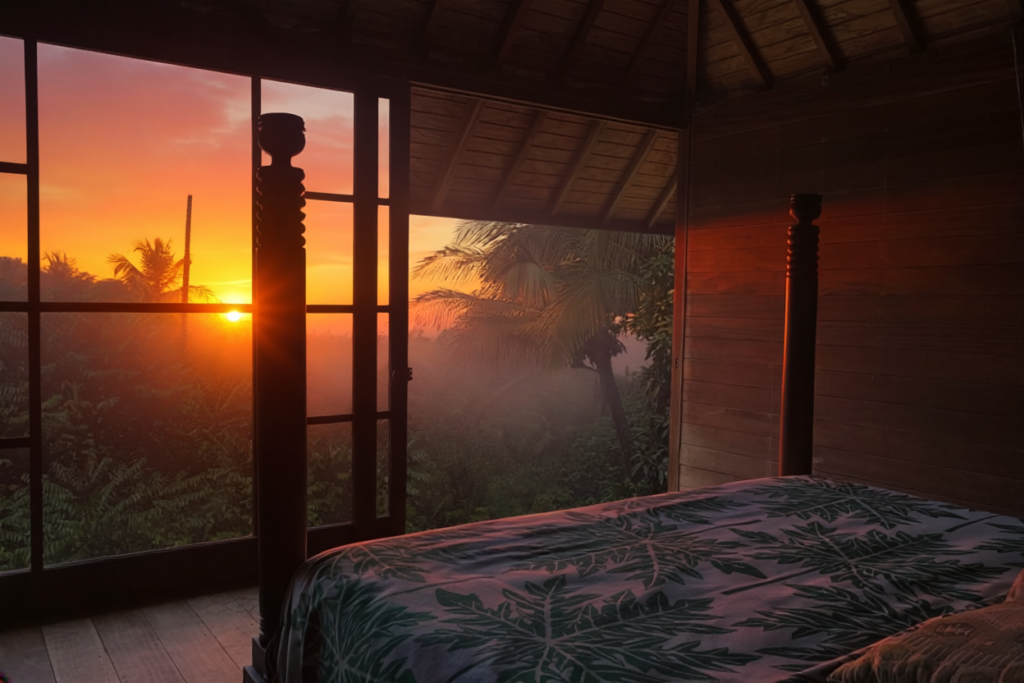
Four Days on the Wild Side of Barbados
Your Barbados Itinerary at a Glance
- Day 1 Day 1: Into the Scotland District
- Day 2 Day 2: Water, and where it actually comes from
- Day 3 Day 3: Birds and the last of the forest
- Day 4 Day 4: Ital, cotton and the reef
Where to Stay in Barbados
Coco Hill Forest (camping)
Sleep in the forest you just walked.
What to Do in Barbados
PEG Farm and Nature Reserve guided ecotour
Start where the food comes from.
Coco Hill Forest guided agroforestry hike
Fifty three acres of regenerating forest at Melvin Hill, planted as food forest rather than ornamental garden.
Pot House Spring
A genuine community tended public spring on the east side, in the Hackleton's area of St John.
Bathsheba tide pools and the Soap Hole
The east coast has no swimmable waterfalls, because it has no rivers.
Andromeda Botanic Gardens (Ethnobotanical tour)
The ethnobotanical tour is the one to take, because it tells you what each plant was used for rather than just what it is called.
Turner's Hall Wood
The last remaining fragment of the mature forest that once covered Barbados, in St Andrew.
Graeme Hall Nature Sanctuary
The island's only Ramsar listed wetland, reopened on 31 May 2025 after sixteen years closed.
Woodbourne Shorebird Refuge
A former shooting swamp converted to a refuge in the south east.
Folkestone Marine Park inshore snorkel trail
Shore snorkelling at Holetown, free and self guided.
Barbados Sea Turtle Project hatchling releases
If the season is right, this is the ethical way to see a turtle in Barbados.
Where to Eat in Barbados
Farm House Cafe at PEG Farm
Eat on the farm, from the farm.
ECO Restaurant at ECO Lifestyle + Lodge
Tent Bay, on the Atlantic.
Ital Cafe
Rastafari Ital cooking at Gully Road in St Philip.
Your Day by Day Barbados Itinerary
Day 1: Into the Scotland District
Skip the west coast entirely. The Scotland District is where the limestone gives out and the island turns green, steep and strange, and it is where almost everything worth eating is grown.
PEG Farm and Nature Reserve guided ecotour
Start where the food comes from. PEG at Easy Hall in St Joseph is a working regenerative farm on the edge of Hackleton's Cliff, and the guided ecotour walks you through how they build soil on an island that has been cane for four hundred years.
Farm House Cafe at PEG Farm
Eat on the farm, from the farm. This is as short as a food chain gets in Barbados, on an island importing most of what it eats.
Coco Hill Forest guided agroforestry hike
Fifty three acres of regenerating forest at Melvin Hill, planted as food forest rather than ornamental garden. The guided hike explains what is edible and why it is there.
Coco Hill Forest (camping)
Sleep in the forest you just walked. There are few places in Barbados where you can do this at all.
Day 2: Water, and where it actually comes from
Barbados has no rivers to speak of. Everything filters down through coral limestone, which is why the tap water is famous and why the springs matter.
See the full day-by-day itinerary.
This is your only free pass. A free account gives you 3.
Day 3: Birds and the last of the forest
Barbados cleared almost all of its original forest for cane. What survives is small, and worth the detour.
Day 4: Ital, cotton and the reef
Finish on the things Barbados makes rather than imports.
Filmed and written by Celina for Hold the Throne.