Destinations › South America · The Destination Index · universal template · every figure sourced
Colombia.
Northern South America, bordering the Caribbean Sea, between Panama and Venezuela, and bordering the North Pacific Ocean, between Ecuador and Panama. 1,138,910 sq km and 53,425,635 people, 3,208 km of coastline, tropical along coast and eastern plains; cooler in highlands.
Region · South AmericaPopulation · ~53,425,635Languages · Spanish, plus 65 Indigenous languages, Palenquero and San Andres CreoleEco Index · 72/100 · Passable
The Eco Index across 12 pillars · scored 0 to 5 · World Bank, OWID, WHO/UNICEF JMP, FiBL, Protected Planet, IUCN, UNESCO (2023-24)
Conservation
Wildlife
Water
Food & farming
Organic & clean
Climate & energy
Waste
Health
Heritage
Ownership
Governance
Future
The History of Colombia.
Colombia carries one of the richest living heritages in the Americas. Coastal cumbia, vallenato and porro sit beside the joropo of the eastern plains and the Afro-Pacific currulao played on the marimba de chonta.
Where the name comes from
Named in the nineteenth century after Christopher Columbus, who never reached the territory that carries his name. Source: national and regional toponymic records.
The land itself: flat coastal lowlands, central highlands, the high Andes, and the eastern Llanos plains. Its high point is Pico Cristóbal Colón, 5,730 m. Source: national mapping and survey records.
Where it starts
Seventy-five thousand paintings
Rock shelters on the Bogotá savanna hold occupation from around 12,500 years ago. In the Amazon, the tepuis of Chiribiquete carry roughly 75,000 paintings across some 60 rock shelters, a body of rock art among the largest anywhere in the world, with the oldest layers thought to reach back some 20,000 years and painting still continuing. San Agustín later produced hundreds of carved stone figures in the upper Magdalena valley.
How it got here
Muisca gold, then Cartagena
Muisca confederations on the high plateau worked gold, mined salt and traded emeralds, and their raft ceremony became the El Dorado story that drew Europeans inland. Tayrona communities built the stone terraces and paths of Ciudad Perdida, still cared for by descendant peoples. Spanish colonisation from 1499 brought three centuries of rule from Bogotá and Cartagena, a major slave port. Independence was won at Boyacá in 1819. More than fifty years of armed conflict displaced millions before the 2016 peace accord.
The timeline
c. 20,000 years ago onward
Chiribiquete.
Around 75,000 paintings across some 60 rock shelters in the Amazon, still being added to, one of the largest bodies of rock art in the world. ↗
c. 12,500 years ago
El Abra and Tequendama.
Rock shelters on the Bogotá savanna hold some of the earliest dated occupation in northern South America. ↗
c. 1st to 8th century AD
San Agustín.
Hundreds of carved stone figures and burial mounds in the upper Magdalena valley. ↗
c. AD 600 to 1600
The Muisca.
Confederations on the high plateau with goldwork, salt mining and emerald trade, and the raft ceremony that became the El Dorado story. ↗
c. AD 800 to 1600
Tayrona.
Stone terraces and paths at Ciudad Perdida in the Sierra Nevada, still cared for by descendant communities. ↗
1499 to 1810
Spanish rule.
Spanish colonisation and three centuries of rule from Bogotá and Cartagena, a major slave port. ↗
1819
Independence at Boyaca.
The Battle of Boyaca on 7 August 1819 breaks Spanish control of New Granada and opens the road to Bogota. ↗
1964 to 2016
Armed conflict.
More than fifty years of armed conflict displace millions of people. ↗
2016
Peace accord.
A peace accord with the FARC ends a conflict that had run since 1964. A first version was rejected by referendum in October 2016, and a revised text was passed through Congress instead. ↗
Colombia protects about 17.2% of its land and 41.1% of its territorial waters (World Bank, 2025) through a large national park system that includes the vast Serrania de Chiribiquete, the largest tropical rainforest national park in the world, and expanded marine reserves in the Pacific and around the Seaflower Biosphere Reserve. Enforcement is the weak point: Amazon deforestation surged after the 2016 peace agreement as armed groups, cattle ranching, coca and land grabbing pushed into former no-go areas, and several parks are effectively difficult to police. Coverage is solid on paper but undercut on the ground.
Is wild Colombia protected? 17.2% of the land is, against a 30% target for 2030
Found only here. The critically endangered cotton-top tamarin, the yellow-eared parrot, now listed as Vulnerable, and a cluster of birds found only in the Sierra Nevada de Santa Marta such as the Santa Marta parakeet; more bird species than any other country, 1,873 on BirdLife's count, of which 95 are endemic.
The watchlist
ThreatenedBrown Spider Monkey (Ateles hybridus)Critically Endangered on the IUCN Red List, and recorded in Colombia in GBIF occurrence data (mammal).
ThreatenedUrrao Antpitta (Grallaria fenwickorum)Critically Endangered on the IUCN Red List, and recorded in Colombia in GBIF occurrence data (bird).
ThreatenedHawksbill (Eretmochelys imbricata)Critically Endangered on the IUCN Red List, and recorded in Colombia in GBIF occurrence data (turtle).
ThreatenedHammerhead Shark (Sphyrna lewini)Critically Endangered on the IUCN Red List, and recorded in Colombia in GBIF occurrence data (shark or ray).
ThreatenedUribe Robber Frog (Pristimantis molybrignus)Critically Endangered on the IUCN Red List, and recorded in Colombia in GBIF occurrence data (amphibian).
ThreatenedWax palm (Ceroxylon quindiuense)Critically Endangered on the IUCN Red List, and recorded in Colombia in GBIF occurrence data (plant).
ThreatenedPimelodus grosskopfiiCritically Endangered on the IUCN Red List, and recorded in Colombia in GBIF occurrence data (species).
ThreatenedCrocodylus intermediusCritically Endangered on the IUCN Red List, and recorded in Colombia in GBIF occurrence data (species).
Critically Endangered, the last IUCN category before Extinct in the Wild, and still recorded in Colombia. GBIF holds 20 verified occurrence records.
Urrao Antpitta (Grallaria fenwickorum)
Critically Endangered, the last IUCN category before Extinct in the Wild, and still recorded in Colombia. GBIF holds 45 verified occurrence records.
Hawksbill (Eretmochelys imbricata)
Critically Endangered, the last IUCN category before Extinct in the Wild, and still recorded in Colombia. GBIF holds 25 verified occurrence records.
Hammerhead Shark (Sphyrna lewini)
Critically Endangered, the last IUCN category before Extinct in the Wild, and still recorded in Colombia. GBIF holds 44 verified occurrence records.
Species named here are drawn from GBIF occurrence records for Colombia filtered to the IUCN Red List threatened categories. Species are listed where GBIF holds occurrence records for them in this country. Record counts are not published here because the figure cannot be reproduced from a public GBIF query.
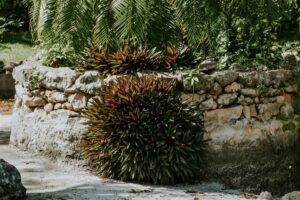
Botanical garden in Bolívar, mapped and named in the open record for Colombia. OpenStreetMap.
Water and Ocean in Colombia.
Colombia is one of the most water-abundant countries on Earth, fed by heavy rainfall, the high-altitude paramos that act as natural water factories, the Andean river network and the vast Amazon and Orinoco basins, with the Pacific Choco among the wettest places on the planet. Supply is not the problem, but access and safety are uneven: WHO/UNICEF JMP data put safely managed drinking water at only about 73.9% of the population in 2022 (World Bank), reflecting gaps in rural, Pacific and conflict-affected regions. Tap water is treated and generally safe in major cities such as Bogota and Medellin but should be treated with caution in rural and coastal areas.
Does Colombia have enough fresh water? Yes, with headroom
74.3% of people here have safely managed drinking water at home (2024, WHO/UNICEF JMP). Coverage is well short of universal, so a visitor should not assume the tap is safe.
Cleanest water: The paramo headwaters and remote Amazon, Orinoco and Choco rivers.
How much fresh water does Colombia have, per person?
41,459 m³
Colombia
1,000 m³
the UN “water scarce” line
Colombia withdraws about 24,264 million cubic metres of fresh water a year (2022). That is 3.6% of the fresh water actually available to it, which FAO counts as no water stress. Of what is taken, farming takes 82%, homes and towns 14%, industry 4%. Source: FAO AQUASTAT.
What are the rules on Colombia beaches?
✕Tap water: Not drinkable.
✓Plastic rules: Partial. Law 2232 of 2022 phases out single-use plastics nationally by 2030, with the first banned items from 2024, plus long-standing plastic-bag taxes..
✕Solo travel: rated take care on the record for this destination.
✕Marine protection: 17.1% of the sea is protected. The 30x30 pledge for 2030 is not met yet.
Where does the sewage go?
18.7%
of people have safely managed sanitation
18.7% of people here use a safely managed sanitation service, meaning waste is contained, emptied and treated rather than reaching the ground or the sea untreated (2024, World Bank / WHO-UNICEF JMP, SDG 6.2.1). The rest is what the rivers and the coast receive.
How is the sea around Colombia doing?
One cross-section, every answer measured.
Surface
What the coast carries
No true seasons by temperature, regional rains instead; the Amazon and Pacific are always wet.
Nearshore
Protected water
41.1% of territorial waters are protected, against the 30% pledged for 2030 under the Global Biodiversity Framework.
Cleanest
Where the water is cleanest
The paramo headwaters and remote Amazon, Orinoco and Choco rivers..
The record
Measured
Colombia is one of the most water-abundant countries on Earth, fed by heavy rainfall, the high-altitude paramos that act as natural water factories, the Andean river network and the vast Amazon and Orinoco basins, with the Pacific Choco among the wettest places on the planet. Supply is not the problem, but access and safety are uneven: WHO/UNICEF JMP data put safely managed drinking water at only about 73.9% of the population in 2022 (World Bank), reflecting gaps in rural, Pacific and conflict-affected regions.
Sea protected
17.1%
Against the 30% pledged for 2030 under the Global Biodiversity Framework.
Threatened species
1266
Mammals, birds, fish and higher plants on the IUCN list.
Cleanest water
here
The paramo headwaters and remote Amazon, Orinoco and Choco rivers..
Is the tap water safe in Colombia?
74.3% of people have safely managed drinking water at home (2024, WHO/UNICEF JMP). Renewable fresh water works out at about 41,459 cubic metres per person a year (World Bank).
How hard is the water supply being pushed?
Of every 10 buckets nature refills, 0 are already taken. Withdrawals run at 3.6% of what Colombia renews internally each year (2022, World Bank / FAO AQUASTAT). That is inside the 25% mark generally treated as water stress, so the supply has headroom.
When is the best time to visit Colombia? Tap your month.
Tap your month.
JanFebMarAprMayJunJulAugSepOctNovDec
.
How much fresh water does Colombia actually have?
Nature renews about 41,459 cubic metres of fresh water per person per year here. That ranks Colombia 196 of 208 countries measured, placing it among the 20 best-watered countries measured. The UN treats anything under 1,000 cubic metres as water scarce, and this is above that line. World Bank / FAO AQUASTAT.
Colombia is strongly agricultural, the world's third-largest coffee producer and a major exporter of bananas, cut flowers, sugar, palm oil and tropical fruit, alongside big domestic crops of plantain, potato, cassava and maize. It does import cereals, notably maize and wheat for feed and milling, so it is not fully self-sufficient in staples. A reliable single share-of-food-imported figure could not be verified, so that stat is left blank and the pillar is scored from documented facts.
Where does the food in Colombia come from?
13.8% imported
about US$9,692m a year
On the plate: Arepas and other maize dishes, rice, beans, plantain, cassava (yuca), potato, panela (unrefined cane sugar), and an exceptional range of tropical fruit, coffee.
How often each food is on the plate
Share of people eating each one regularly. These overlap, so they do not add up to 100%.
Arepas60%
Rice51%
Beans42%
Plantain33%
Potato15%
1 of 10
bites are imported
The island buys in more food energy than it eats. About US$9,692m a year leaves the country to pay for it. The green slice is roughly what still grows here.
About 13.7% of everything Colombia buys in from abroad is food, roughly 1 in every 10 imported items on the dock (2024, World Bank). Farming itself is 9.9% of the economy and 36.5% of the land is agricultural, of which 2.3% is arable. The green slice is roughly what still grows here.
What is killing people in Colombia? The imported diet.
Cause of death, and the diet behind it.
Non-communicable diseases, all combined57.7%
Diabetes8.4%
Adults living with overweight or obesity. 59.7%.
Can Colombia feed itself?
2.3%
Arable land
36.5%
Agricultural land
3,836,567
Farmers
6,299,448
Arable acres
10.0%
Agriculture, share of GDP
Harvest: Coffee has two harvests, a main crop around September to December and a smaller mitaca around April to June; fruit and vegetables crop year-round across the altitude zones.
Feeding itself
Colombia is strongly agricultural, the world's third-largest coffee producer and a major exporter of bananas, cut flowers, sugar, palm oil and tropical fruit, alongside big domestic crops of plantain, potato, cassava and maize. It does import cereals, notably maize and wheat for feed and milling, so it is not fully self-sufficient in staples.
Certification
Certified organic farmland is very low, around 0.1% of agricultural land (about 50,533 hectares) in the FiBL 2020 data, one of the smaller shares in Latin America. Colombia does have established organic export niches in coffee, cacao and bananas, and a growing domestic interest, but formal certified area remains marginal.
Water for crops
Colombia is one of the most water-abundant countries on Earth, fed by heavy rainfall, the high-altitude paramos that act as natural water factories, the Andean river network and the vast Amazon and Orinoco basins, with the Pacific Choco among the wettest places on the planet. Supply is not the problem, but access and safety are uneven: WHO/UNICEF JMP data put safely managed drinking water at only about 73.9% of the population in 2022 (World Bank), reflecting gaps in rural, Pacific and conflict-affected regions.
Why the organic number looks like that. Certified-organic farmland is not separately reported for Colombia, and that is a certification gap rather than proof nothing is grown cleanly. What the official land record does show: 36.5% of the country is agricultural land and 2.3% is arable (2023, World Bank). Certification is paid for per farm per year by a foreign body, which prices out smallholders, so the organic number reads worse than the practice.
The plant-based kitchen here is not an import. By tonnage, the largest crops grown in Colombia are sugarcane, oil palm fruit, rice, plantains and cooking bananas and bananas (FAO, FAOSTAT crop production, 2024). That is what the land itself puts on a plate.
Buy direct where residents buy: Mercado Ambulante, Mercado Principal Chinácota, Mercado Publico de Sincelejo, Mercado municipal, Mercado viejo. Each is a mapped, named marketplace, so the money stays with the seller rather than the importer. OpenStreetMap.
Colombia draws about 80% of its electricity from low-carbon sources, led by hydropower at roughly 73%, with solar and wind growing steadily (Low Carbon Power, 2025). Emissions are among the lowest in Latin America at about 1.75 tonnes of CO2 per person in 2024 (Our World in Data). The government has submitted a 2050 net-zero target and, since 2022, has halted new oil and gas exploration contracts, suspended fracking pilots and set coal-fired power to close by 2036 (Climate Action Tracker). The main caveat is that Colombia remains a major coal exporter, shipping about 61 million tonnes in 2024, so its own clean grid sits alongside a large fossil export economy.
What powers Colombia?
Renewable 77%Fossil 23%
Climate pollution per person
The safe amount, what the planet can absorb
2 tonnes
One person here
1.8 tonnes
The world average, for comparison
4.7 tonnes
The worst it ever got
1.87 tonnes
The grid
Colombia draws about 80% of its electricity from low-carbon sources, led by hydropower at roughly 73%, with solar and wind growing steadily (Low Carbon Power, 2025). Emissions are among the lowest in Latin America at about 1.75 tonnes of CO2 per person in 2024 (Our World in Data).
Pollution
Colombia passed a national law in 2022 (Law 2232) to phase out single-use plastics by 2030, with the first tranche of banned items taking effect from 2024, and a national tax on plastic carrier bags has applied since 1 July 2017. Air quality is moderate, with a national mean PM2.5 of about 18.4 micrograms per cubic metre in 2023 (World Bank), though the Aburra Valley around Medellin and Bogota suffer periodic pollution episodes trapped by the surrounding mountains.
Water stress
Colombia is one of the most water-abundant countries on Earth, fed by heavy rainfall, the high-altitude paramos that act as natural water factories, the Andean river network and the vast Amazon and Orinoco basins, with the Pacific Choco among the wettest places on the planet. Supply is not the problem, but access and safety are uneven: WHO/UNICEF JMP data put safely managed drinking water at only about 73.9% of the population in 2022 (World Bank), reflecting gaps in rural, Pacific and conflict-affected regions.
What pollutes most here
1The gridThe share of electricity still generated from fossil fuel.24.9%
2IndustryIllegal alluvial gold mining that releases mercury into rivers, cattle ranching and coca-driven Amazon deforestation, and oil-palm expansion..named
3AirModelled annual mean against a WHO guideline of 5 µg/m³.18.4
4On the recordColombia passed a national law in 2022 (Law 2232) to phase out single-use plastics by 2030, with the first tranche of banned items taking effect from 2024, and a national tax on plastic carrier bags has applied since 1 July 2017.
What has Colombia promised on climate?
Net zero, whole economy2050
Electricity renewable today75.1% (2021)
Land protected, against a 30% target17.2% by 2025
Sea protected, against a 30% target41.1% by 2025
The net-zero target year on file with Climate Watch is 2050, status: in law; in policy document; in political pledge. Measured against it, 75.1% of electricity is already renewable (2021, World Bank), so 24.9% of the grid is still to be converted. The pledge on file is measured here against what has actually been delivered, not taken on its own (UNFCCC NDC Registry, CBD Kunming-Montreal Target 3).
The biggest line item
One return flight against a whole year of living.
A resident's entire year1.8 t CO2e
Safe-climate budget, per year2 t CO2e
Singapore return, economy3.48 t CO2e
Sydney return, economy2.58 t CO2e
Dubai return, economy2.46 t CO2e
Johannesburg return, economy2.07 t CO2e
Frankfurt return, economy1.64 t CO2e
How much CO2 does flying to Colombia emit?
Tap where you would fly from. One return flight, economy.
Every prompt runs on a machine in a building on somebody’s grid. What that costs the planet depends less on the prompt than on what is burning to power it. Here is what would power one in Colombia.
Data centres
24
Registered colocation and interconnection facilities, PeeringDB, 2026
Grid renewable
77.0 %
What a machine here runs on.
What powers a data centre in Colombia?
A machine here runs mostly on renewables, but not entirely.
Renewable 77%Fossil 23%
Cooling water. Every one of those halls runs on the national grid, which is 75.1% renewable today (World Bank). A data centre is only as clean as the electricity behind it, so the same figure that decides this country's climate score also decides the footprint of the AI running inside it. Cooling water use is not separately published by facility, and no operator here reports it.
The rules. Colombia has 24 colocation and interconnection facilities on the public PeeringDB register, concentrated in Bogota (14), Barranquilla (3), Medellin (2), alongside 9 internet exchanges (NAP Colombia, Equinix Bogota, PIT - Colombia, Medellin, PIT - Colombia, Bogota). Named sites include Equinix BG1 - Bogota, Internexa Medellin Colombia, Internexa Cartagena Chambacu, Internexa Bogota World Business Port.
Where the cables land. 10 landing points · Barranquilla, Buenaventura, Cartagena, Parque Isla de Salamanca
92% residents to 8% visitors across a year. 4,531,000 international arrivals in 2019 against 53,425,635 people who live here (2025, World Bank / UN Tourism).
Where a visitor dollar goes in Colombia
1,396k
Visitors a year
0.0
Visitors per resident
How deep in debt is Colombia?· for every $100 Colombia earns in a year, it owes…
Pay to the order of: the creditorsmemo · the 2020 peak
$ 65The worst year on the IMF record. Colombia owed $65 for every $100 it earned.
IMF World Economic Outlook, 2020signed, the creditors
Pay to the order of: the creditorsmemo · today
$ 61What is owed now, for every $100 of national income (2026).
IMF World Economic Outlook, 2026signed, the creditors
Pay to the order of: the creditorsmemo · projected 2031
$ 59The IMF's own forecast has this falling to $59 by 2031.
IMF World Economic Outlook projection, 2031signed, the forecast
For every $100 Colombia earns in a year, it owes $61 (2026, IMF World Economic Outlook). The interest on that is paid before schools, clinics or coastline get their turn.
Where does a tourist dollar actually go in Colombia?
Play one tourist dollar around the board. Every square is a measured fact from this page.
START!
1
GO: a visitor lands
$100 goes on the table. 4,531,000 international arrivals in 2019 against 53,425,635 residents, one visitor a year for every 12 residents (World Bank / UN Tourism).
$100 in play
2
The bed
Who owns the largest places to stay in Colombia is not published in the records we can check, so this square is left open rather than guessed. Where a listing names its owner, it is shown in the ownership table below.
not published
3
The plate
Food is only 13.7% of everything Colombia imports (2024, World Bank), so most of a meal is bought from producers inside the country. Eating what the land here actually grows, sugarcane, oil palm fruit, rice, plantains, potatoes, bananas, maize, avocados, keeps that money with the grower.
mostly home-grown
4
The power
75.1% of the electricity is renewable (2021, World Bank), so the energy on the bill is mostly generated inside the country rather than shipped in.
made at home
5
What actually stays
Of the two parts of a visitor's bill that can be measured here, the plate and the power stay inside Colombia. This is not an economy where a visitor's money drains away, and the board is shorter for it.
most of it
6
Pay the bank first
Colombia owes $61 for every $100 it earns (IMF World Economic Outlook, 2026 projection). The interest is paid before anything else on this board.
$61 per $100
7
No plan B
50.7% of everything Colombia sells abroad is mineral fuels and oils (2023, UN Comtrade). One market moving takes the whole board with it.
50.7% one export
8
Community chest
Tourism earns 5.1% of everything Colombia makes from exports (2020, World Bank / UN Tourism). That is how much of the economy depends on the game continuing.
5.1% of exports
9
The flight
Getting here is usually the biggest single line on the bill. From Singapore a return economy seat is 3.48 t CO2, on the UK Government's published conversion factors. It is the one part of the trip this board cannot reduce.
3.48 t CO2
10
Back to GO
The economy turns over about US$540 billion a year (IMF World Economic Outlook, 2026 projection). Every lap of this board is a choice about how much of it stays.
US$540bn
GDPUS$457.4bn
Agriculture, share of GDP10%
Visitors a year1,396,000
Visitors per resident0
Residents~53,425,635
Agriculture
Farming is 10% of the economy. Colombia is strongly agricultural, the world's third-largest coffee producer and a major exporter of bananas, cut flowers, sugar, palm oil and tropical fruit, alongside big domestic crops of plantain, potato, cassava and maize.
Natural materials
Colombia has strong living natural-fibre traditions. The sombrero vueltiao, woven from caña flecha fibre, is a national symbol still hand-made on the Caribbean savanna, while the Wayuu people weave their brightly patterned mochila bags and the Arhuaco make theirs from hand-spun sheep and agave (fique) wool.
Energy
Colombia draws about 80% of its electricity from low-carbon sources, led by hydropower at roughly 73%, with solar and wind growing steadily (Low Carbon Power, 2025). Emissions are among the lowest in Latin America at about 1.75 tonnes of CO2 per person in 2024 (Our World in Data).
Who owns the biggest hotels in Colombia?
By rooms · company records and press.
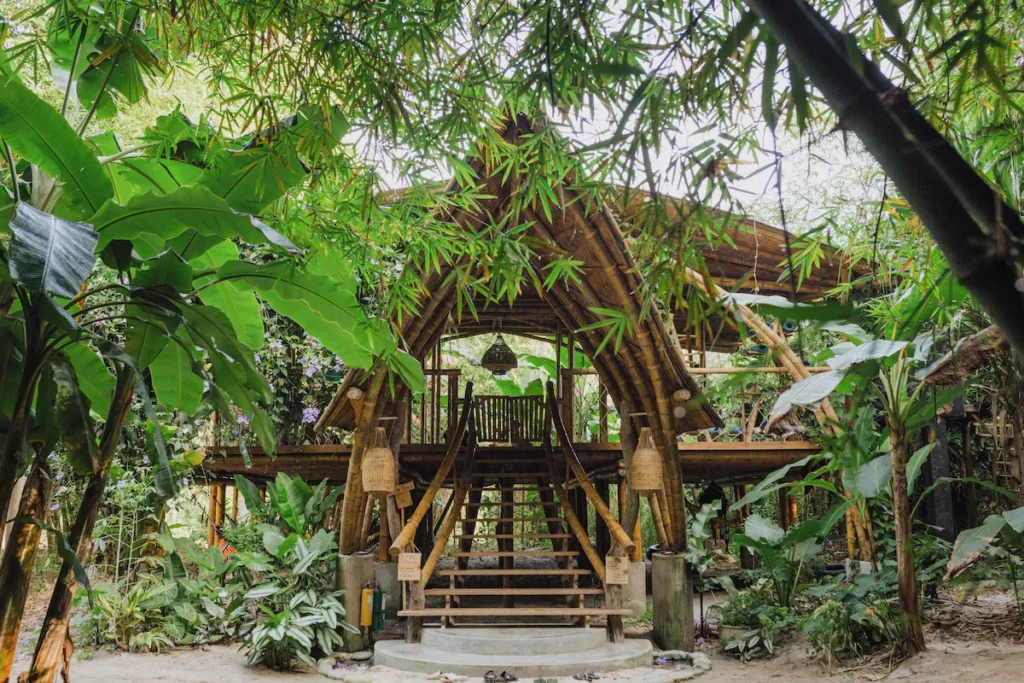
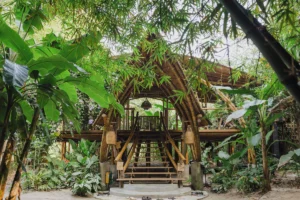
YAY Sustainable Restaurant Lodge · ~8 roomsIndependentnot published
Finca Cuipo · ~4 roomsIndependentnot published
Visitors, over time
20153,371k
20163,675k
20174,056k
20184,397k
20194,531k
20201,396k
International tourism receipts run at about US$1.96 billion in 2020 (World Bank / UN Tourism). That is 5.1% of everything the country earns from exports.
How much of your money actually stays here?
Tap the holiday you are planning.
All-inclusive resortForeign-owned hotel and tourist restaurantsLocally owned stay and local restaurantsGuesthouse, markets and public transport
Resort guest, villa renter, family, nomad or backpacker. The honest playbook for each, from the same sourced numbers.
Already booked a resort? · the rescue list
Five swaps that move your money back on-island
1. Eat where the country eats Choose kitchens cooking arepas and other maize dishes, rice, beans, plantain, cassava (yuca), potato, panela (unrefined cane sugar), and an exceptional range of tropical fruit; coffee. over imported menus. The checked list →
2. Book with a local operator Never the lobby desk. The margin on a tour is the part that stays. Eco tours →
3. Stay somewhere locally owned Ownership decides where the room rate books. Eco stays →
4. Use the transport residents use The mountainous terrain makes domestic flights the practical way to cover distance; long-distance buses are extensive but slow, and Bogota (TransMilenio) and Medellin (metro and cable cars) have good urban transit.
5. Buy the craft, not the souvenir Natural-materials work made here pays the maker directly; imported gifts pay a shipping line.
swipe →
First time here
The world's second-most biodiverse country pairs an Andes-to-Amazon spread of forests, paramos and two oceans with a largely hydro-powered grid, though rural water gaps, low organic uptake and Amazon deforestation temper the picture.
Best time: The drier months.
Getting around
The mountainous terrain makes domestic flights the practical way to cover distance; long-distance buses are extensive but slow, and Bogota (TransMilenio) and Medellin (metro and cable cars) have good urban transit.
Transport is where the fare either stays or leaves.
Eating here
The everyday plate is arepas and other maize dishes, rice, beans, plantain, cassava (yuca), potato, panela (unrefined cane sugar), and an exceptional range of tropical fruit; coffee.. Colombia offers one of the widest ranges of fruit and vegetables anywhere, from lulo, guanabana and granadilla to plantain, cassava, maize and beans, and staples such as the arepa, the bandeja base of rice and beans, and endless fresh juices are naturally plant-forward.
Eating what the country grows is the cheapest way to cut the import bill.
Good to know
Cards in cities; COP. Altitude and coffee rules the rhythm.
Rate my hotel. Tap yours for the honest verdict.
Ownership from company records and press.
YAY Sustainable Restaurant LodgeFinca Cuipo
.
Who owns the places to stay
YAY Sustainable Restaurant LodgeIndependent · 8 rooms
Finca CuipoIndependent · 4 rooms
None of the 2 properties listed here publishes who ultimately owns it, so no claim is made either way. Ownership is what decides how much of a room rate stays in the country, which is why we show it when a listing states it.
Society and Governance in Colombia.
How well is Colombia actually run?
Governance, measured · World Bank WGI
Four measured answers, none of them opinion. Averaged across corruption control, delivery and accountability, Colombia scores 50 out of 100 (2024, World Bank Worldwide Governance Indicators). That matters here because every pledge on this page is only as good as the machinery meant to deliver it.
How well is Colombia run? · each scored out of 100, higher is better
Clean government, scored 42 of 100
Control of corruption scores 41.9 out of 100 (2024, World Bank Worldwide Governance Indicators). That is below the halfway mark of governments measured.
42
Freedom and rights, scored 58 of 100
Voice and accountability, which measures free expression, free media and the ability to choose a government, scores 57.5 out of 100 (2024, World Bank WGI). Citizens have some room to question their government.
58
Government effectiveness, scored 49 of 100
Government effectiveness, which measures the quality of public services and how well policy is actually delivered, scores 49.2 out of 100 (2024, World Bank WGI). Delivery is rated below average, so a pledge on paper is not the same as a pledge kept.
49
Income equality, scored 54 of 100
The Gini index of income inequality reads 54.4 (2024, World Bank). Zero is perfect equality and 100 is one person holding everything. Above 40 is the level usually treated as socially strained, and Colombia sits above it.
54
LGBTQ+ status: MixedSolo female travel: Take care95.3% adult literacyIndustry to avoid: Illegal alluvial gold mining that releases mercury into rivers, cattle ranching and coca-driven Amazon deforestation, and oil-palm expansion.
What is daily life in Colombia really like? Measured
Getting around, breathing, throwing away, learning. The honest checklist.
TransportAirWaterWastePower
✓How you get around The mountainous terrain makes domestic flights the practical way to cover distance; long-distance buses are extensive but slow, and Bogota (TransMilenio) and Medellin (metro and cable cars) have good urban transit.
✓Air quality, measured Modelled annual mean 18.4. The WHO guideline is 5 µg/m³.
✓Where the air is cleanest The Amazon and Orinoco lowlands, the Pacific Choco rainforest and the high paramos, far from the trapped valley air of the big cities.
·Tap water Not drinkable
✓What to drink Bottled water in most cities and all rural areas; Bogotá altitude is the real challenge.
✓Plastic rules Partial. Law 2232 of 2022 phases out single-use plastics nationally by 2030, with the first banned items from 2024, plus long-standing plastic-bag taxes.
✓Sockets and voltage Type A/B/C, 220V (Brazil 127/220V)
95.3%
literacy. Public spending on education ran at 5.3% of GDP in 2020, the latest year UNESCO reports, and secondary enrolment stood at 101.6% gross in 2022 (UNESCO Institute for Statistics).
Made in Colombia.
Colombia has strong living natural-fibre traditions. The sombrero vueltiao, woven from caña flecha fibre, is a national symbol still hand-made on the Caribbean savanna, while the Wayuu people weave their brightly patterned mochila bags and the Arhuaco make theirs from hand-spun sheep and agave (fique) wool. Every step of processing done at home is value that stops leaving the country.
What Colombia actually sells the world
The single biggest thing Colombia sells the world is mineral fuels and oils, 50.7% of all exports in 2023 (about US$25.25 billion, UN Comtrade). The next four are pearls, gemstones and precious metals at 7.3%, coffee, tea and spices at 5.9%, live trees, plants and cut flowers at 4.2%, plastics at 3.1%.
Made now · natural materials
Woven from caña flecha fibre
Worked in Colombia from local material, and still a working craft rather than a museum piece.
Made now · natural materials
Arhuaco make theirs from hand-spun sheep
Worked in Colombia from local material, and still a working craft rather than a museum piece.
Made now · natural materials
Agave (fique) wool. Fique fibre
Worked in Colombia from local material, and still a working craft rather than a museum piece.
Made now · natural materials
Panama-hat-style toquilla straw
Worked in Colombia from local material, and still a working craft rather than a museum piece.
Buys in · 10.3% of imports
Machinery and mechanical appliances
Colombia imported US$6.44 billion of machinery and mechanical appliances in 2023, 10.3% of everything it bought abroad, and sells none of it back. Every point of that is a business that could be built at home rather than shipped in. UN Comtrade.
Buys in · 9.6% of imports
Electrical machinery and electronics
Colombia imported US$6.04 billion of electrical machinery and electronics in 2023, 9.6% of everything it bought abroad, and sells none of it back. Every point of that is a business that could be built at home rather than shipped in. UN Comtrade.
Buys in · 7.6% of imports
Vehicles
Colombia imported US$4.80 billion of vehicles in 2023, 7.6% of everything it bought abroad, and sells none of it back. Every point of that is a business that could be built at home rather than shipped in. UN Comtrade.
Buys in · 5.8% of imports
Pharmaceuticals
Colombia imported US$3.66 billion of pharmaceuticals in 2023, 5.8% of everything it bought abroad, and sells none of it back. Every point of that is a business that could be built at home rather than shipped in. UN Comtrade.
The maths for an entrepreneur. Colombia produces about US$457 billion a year, which is roughly US$8,562 per person (2025, World Bank). Farming is 9.9% of that, while food is 13.7% of everything the country imports. The country buys in more food than its own farms contribute to the economy, and every point of that gap is a business someone could build here rather than ship in.
A living tradition of Colombia, still practised rather than archived.
Vallenato
A living tradition of Colombia, still practised rather than archived.
Porro
A living tradition of Colombia, still practised rather than archived.
Joropo of the Llanos
A living tradition of Colombia, still practised rather than archived.
CurrulaoA living tradition of Colombia, still practised rather than archived.
Marimba de chonta of the PacificA living tradition of Colombia, still practised rather than archived.
Does Colombia protect its heritage by law?
Partly, and the gaps say as much as the protections.
What is kept alive. Colombia carries one of the richest living heritages in the Americas. Coastal cumbia, vallenato and porro sit beside the joropo of the eastern plains and the Afro-Pacific currulao played on the marimba de chonta. Ancestral knowledge remains alive among the Kogi and Arhuaco of the Sierra Nevada de Santa Marta, whose cosmology guides daily practice, and among the Wayuu of La Guajira.
Who it belongs to. Colombia has deep living Indigenous and Afro-descendant cultures, from the Wayuu of La Guajira and the Arhuaco, Kogi and Wiwa of the Sierra Nevada de Santa Marta to more than a hundred recognised peoples across the Amazon and Pacific. San Basilio de Palenque, founded by escaped enslaved Africans, was the first free town in the Americas, and its cultural space is inscribed on UNESCO's Representative List of the Intangible Cultural Heritage of Humanity. Community-based and Indigenous-led tourism is growing, with communities guiding visitors in the Sierra Nevada, the Amazon and the coffee region, though large-scale tourism in Cartagena and elsewhere remains mostly operator-led.
Only here. Cano Cristales in the Serrania de la Macarena, the liquid rainbow river whose bed blazes red, yellow and green from an aquatic plant found only in Colombia..
Three futures for Colombia, every one run forward from measured data.
Where the making actually happens
Named cultural and craft sites on the open map: Gold Museum (Bogota), National Museum of Colombia (Bogota), Modern Art Museum of Bogota (Bogota), Botero Museum (Bogota), Bolivarian Museum (Soledad). OpenStreetMap. Named craft workshops on the open map: 21 Vueltas, ARTESANÍAS EL MAMAR, Acuavelez, Agrumaruc, Almacén El Cabuyal, Arreglo de Maletas.
Every measured trend on one line
Run forward at the pace already recorded.
-8%
Forest cover
1995: 57.5 % → 2023: 52.8 %
-2%
Renewable electricity
1995: 76.4 % → 2021: 75.1 %
+1%
CO2 per person
1995: 1.79 t → 2024: 1.8 t
-3%
Tourist arrivals
1995: 1433 k → 2020: 1396 k
-26%
Protected land
2013: 23.1 % → 2025: 17.2 %
-26%
Farm workforce
1995: 19 % → 2025: 14.2 %
+303%
Protected sea
2013: 10.2 % → 2025: 41.1 %
-9%
Agricultural land
1995: 40.1 % → 2023: 36.5 %
+10%
Urban population
1995: 71.8 % → 2025: 78.8 %
-39%
Air pollution
1995: 29.9 µg/m³ → 2023: 18.4 µg/m³
-31%
Fresh water per person
1995: 59908.4 m³ → 2022: 41458.9 m³
+52%
Adult overweight
1995: 39.2 % → 2022: 59.7 %
+8%
Electricity access
1995: 91.2 % → 2024: 98.9 %
+231%
GDP per person
1995: 2584 → 2025: 8562
+49%
Population
1995: 35805 k → 2025: 53426 k
-11%
Renewable energy use
1995: 33.5 % → 2021: 29.7 %
+6%
Energy per person
1995: 795 kg → 2024: 840.6 kg
+46%
Protected area, total
2013: 18.1 % → 2025: 26.5 %
+12%
Life expectancy
1995: 69.8 yrs → 2024: 77.9 yrs
+67%
Cereal yield
1995: 2644 ha → 2024: 4422 ha
+84%
Fertiliser use
1995: 202.7 ha → 2023: 372.9 ha
-25%
Rural population
1995: 28.2 % → 2025: 21.2 %
-28%
Water productivity
2000: 20.3 $/m3 → 2022: 14.6 $/m3
+44%
Health spending
2000: 5.64 % → 2024: 8.14 %
-8%
Forest area
1995: 638468 km2 → 2023: 585441 km2
+66%
Electric power use
1995: 936.3 kWh → 2024: 1551 kWh
+21%
Emissions: Agriculture
1990: 61.2 e → 2023: 74.2 e
+43%
Emissions: Building
1990: 5.12 e → 2023: 7.32 e
+91%
Emissions: Electricity/Heat
1990: 12.5 e → 2023: 23.8 e
+84%
Emissions: Energy
1990: 62 e → 2023: 113.8 e
+199%
Emissions: Industrial Processes
1990: 3.27 e → 2023: 9.78 e
+14%
Emissions: Manufacturing/Construction
1990: 13 e → 2023: 14.7 e
World Bank open data, recorded series
How much forest is left?
Forest cover moved from 57.5% to 52.8% across 28 recorded years.
World Bank AG.LND.FRST.ZS
How clean is the grid?
Renewable electricity moved from 76.4% to 75.1% across 26 recorded years.
World Bank EG.ELC.RNEW.ZS
How much climate pollution per person?
CO2 per person moved from 1.8 t to 1.8 t across 29 recorded years.
World Bank EN.GHG.CO2.PC.CE.AR5
How many people visit?
Tourist arrivals moved from 1433k to 1396k across 25 recorded years.
World Bank ST.INT.ARVL
How much land is protected?
Protected land moved from 23.1% to 17.2% across 12 recorded years.
World Bank ER.LND.PTLD.ZS
How many people still farm?
Farm workforce moved from 19.0% to 14.2% across 30 recorded years.
World Bank SL.AGR.EMPL.ZS
How much sea is protected?
Protected sea moved from 10.2% to 41.1% across 12 recorded years.
World Bank ER.MRN.PTMR.ZS
How much land is farmed?
Agricultural land moved from 40.1% to 36.5% across 28 recorded years.
World Bank AG.LND.AGRI.ZS
How fast is it urbanising?
Urban population moved from 71.8% to 78.8% across 30 recorded years.
World Bank SP.URB.TOTL.IN.ZS
Is the air getting cleaner?
Air pollution moved from 29.9 µg/m³ to 18.4 µg/m³ across 28 recorded years.
World Bank EN.ATM.PM25.MC.M3
Is water getting scarcer?
Fresh water per person moved from 59908.4 m³ to 41458.9 m³ across 27 recorded years.
World Bank ER.H2O.INTR.PC
Is diet-related disease rising?
Adult overweight moved from 39.2% to 59.7% across 27 recorded years.
World Bank SH.STA.OWAD.ZS
Who has power?
Electricity access moved from 91.2% to 98.9% across 29 recorded years.
World Bank EG.ELC.ACCS.ZS
Is income rising?
GDP per person moved from 2584 to 8562 across 30 recorded years.
World Bank NY.GDP.PCAP.CD
How fast is it growing?
Population moved from 35805k to 53426k across 30 recorded years.
World Bank SP.POP.TOTL
What share of all energy is renewable?
Renewable energy use moved from 33.5% to 29.7% across 26 recorded years.
World Bank EG.FEC.RNEW.ZS
How much energy does one person use?
Energy per person moved from 794.97 kg to 840.64 kg across 29 recorded years.
World Bank EG.USE.PCAP.KG.OE
How much land and sea is protected together?
Protected area, total moved from 18.1% to 26.5% across 12 recorded years.
World Bank ER.PTD.TOTL.ZS
How long do people live?
Life expectancy moved from 69.81 yrs to 77.91 yrs across 29 recorded years.
World Bank SP.DYN.LE00.IN
How much does a hectare of cereal produce?
Cereal yield moved from 2644 kg/ha to 4422 kg/ha across 29 recorded years.
World Bank AG.YLD.CREL.KG
How much fertiliser goes on the land?
Fertiliser use moved from 202.67 kg/ha to 372.91 kg/ha across 28 recorded years.
World Bank AG.CON.FERT.ZS
How many people still live rurally?
Rural population moved from 28.18% to 21.22% across 30 recorded years.
World Bank SP.RUR.TOTL.ZS
How much value per cubic metre of water?
Water productivity moved from 20.27 $/m3 to 14.62 $/m3 across 22 recorded years.
World Bank ER.GDP.FWTL.M3.KD
How much goes on health?
Health spending moved from 5.64% to 8.14% across 24 recorded years.
World Bank SH.XPD.CHEX.GD.ZS
How much forest is there in total?
Forest area moved from 638468 km2 to 585441 km2 across 28 recorded years.
World Bank AG.LND.FRST.K2
How much electricity per person?
Electric power use moved from 936.33 kWh to 1551 kWh across 29 recorded years.
World Bank EG.USE.ELEC.KH.PC
How have agriculture emissions moved?
Agriculture emissions moved from 61.21 to 74.18 MtCO2e across 33 recorded years.
Climate Watch (WRI), historical emissions
How have building emissions moved?
Building emissions moved from 5.12 to 7.32 MtCO2e across 33 recorded years.
Climate Watch (WRI), historical emissions
How have electricity/heat emissions moved?
Electricity/Heat emissions moved from 12.48 to 23.8 MtCO2e across 33 recorded years.
Climate Watch (WRI), historical emissions
How have energy emissions moved?
Energy emissions moved from 61.97 to 113.78 MtCO2e across 33 recorded years.
Climate Watch (WRI), historical emissions
How have industrial processes emissions moved?
Industrial Processes emissions moved from 3.27 to 9.78 MtCO2e across 33 recorded years.
Climate Watch (WRI), historical emissions
How have manufacturing/construction emissions moved?
Manufacturing/Construction emissions moved from 12.95 to 14.72 MtCO2e across 33 recorded years.
Climate Watch (WRI), historical emissions
Worst caseCurrent pathBest case
Worst case
Every measured decline continues at the pace already recorded. The weakest pillar, organic farming at 2/5, is the one that gives way first.
Computed from: recorded series extended with no policy change
Current path
Every line above is a recorded World Bank series for this country. The current path is simply those series continuing at the pace already measured.
Computed from: recorded series, no policy change assumed
Best case
The pledges are met on their own stated timetables and the weakest pillars are lifted to match the strongest. Colombia already shows it can do this: wildlife scores 5/5.
Computed from: each published target delivered on its own date
What the best case actually asks for
Lift organic farming
It scores 2 out of 5 today, among the weakest parts of Colombia's record. Certified organic farmland is very low, around 0.1% of agricultural land (about 50,533 hectares) in the FiBL 2020 data, one of the smaller shares in Latin America. Colombia does have established organic export niches in coffee, cacao and bananas, and a growing domestic interest, but formal certified area remains marginal. Much smallholder farming is low-input without being certified. Lifting it toward the 5/5 the strongest pillars already reach is what the best case turns on.
measured each year
Costs: spending and enforcement, not new technology
Lift recycling
It scores 2 out of 5 today, among the weakest parts of Colombia's record. Colombia recovers only a modest share of its municipal waste, with most rubbish still going to landfill and national recycling rates commonly reported in the mid to high teens. A large informal workforce of recicladores collects and sorts much of what is recovered, and a 2016 Constitutional Court framework and later decrees have begun to formalise and pay them for the service. Kerbside separation is patchy and infrastructure is still developing. Lifting it toward the 5/5 the strongest pillars already reach is what the best case turns on.
measured each year
Costs: spending and enforcement, not new technology
Lift conservation
It scores 3 out of 5 today, among the weakest parts of Colombia's record. Colombia protects about 17.2% of its land and 41.1% of its territorial waters (World Bank, 2025) through a large national park system that includes the vast Serrania de Chiribiquete, the largest tropical rainforest national park in the world, and expanded marine reserves in the Pacific and around the Seaflower Biosphere Reserve. Enforcement is the weak point: Amazon deforestation surged after the 2016 peace agreement as armed groups, cattle ranching, coca and land grabbing pushed into former no-go areas, and several parks are effectively difficult to police. Coverage is solid on paper but undercut on the ground. Lifting it toward the 5/5 the strongest pillars already reach is what the best case turns on.
measured each year
Costs: spending and enforcement, not new technology
Government and Goals in Colombia.
Who is in charge of Colombia now · Office-holders from the UN Protocol and Liaison Service public list of Heads of State and Heads of Government, 8 September 2026. Legislature and election dates from IFES ElectionGuide. Constitution dates from the Constitute Project. Governance scores from the World Bank Worldwide Governance Indicators 2024.
Abelardo de la Espriella
President
Abelardo de la Espriella is the head of government of Colombia, in office since 7 August 2026. Every climate, protection and energy pledge on this page is delivered, or not, under this administration.
Public opinion, measured
Voice and accountability, the freedom to question government: 57.5 / 100. Above the halfway mark of governments measured. World Bank WGI 2024
Control of corruption: 41.9 / 100. Below the halfway mark of governments measured. World Bank WGI 2024
Political stability and absence of violence: 49.3 / 100. Below the halfway mark of governments measured. World Bank WGI 2024
Rule of law: 47.3 / 100. Below the halfway mark of governments measured. World Bank WGI 2024
Regulatory quality: 55.1 / 100. Above the halfway mark of governments measured. World Bank WGI 2024
Abelardo de la EspriellaPresident
Congress (Congreso)Legislature, bicameral
Last election8 March 2026
Constitution1991, as revised to 2015
Government typepresidential republic
Colombia national goals: climate commitments on record · as recorded by Climate Watch, World Resources Institute
2050
Net zero
In Law<br>In Policy Document<br>In Political Pledge
Net-zero target as recorded by Climate Watch. Status: In Law (12/22/2021) In Policy Document (11/12/2021) In Political Pledge (11/2/2021) ↗
The questions people actually type, answered in full sentences from the sourced data above.
swipe →
Is Colombia sustainable?
Colombia scores 72 out of 100 on the Throne Eco Index, across twelve equally weighted pillars. The world's second-most biodiverse country pairs an Andes-to-Amazon spread of forests, paramos and two oceans with a largely hydro-powered grid, though rural water gaps, low organic uptake and Amazon deforestation temper the picture.
Is the water in Colombia safe and plentiful?
Colombia is one of the most water-abundant countries on Earth, fed by heavy rainfall, the high-altitude paramos that act as natural water factories, the Andean river network and the vast Amazon and Orinoco basins, with the Pacific Choco among the wettest places on the planet. Supply is not the problem, but access and safety are uneven: WHO/UNICEF JMP data put safely managed drinking water at only about 73.9% of the population in 2022 (World Bank), reflecting gaps in rural, Pacific and conflict-affected regions. Tap water is treated and generally safe in major cities such as Bogota and Medellin but should be treated with caution in rural and coastal areas.
Can Colombia feed itself?
Colombia is strongly agricultural, the world's third-largest coffee producer and a major exporter of bananas, cut flowers, sugar, palm oil and tropical fruit, alongside big domestic crops of plantain, potato, cassava and maize. It does import cereals, notably maize and wheat for feed and milling, so it is not fully self-sufficient in staples. A reliable single share-of-food-imported figure could not be verified, so that stat is left blank and the pillar is scored from documented facts.
Is it easy to eat plant-based in Colombia?
Colombia offers one of the widest ranges of fruit and vegetables anywhere, from lulo, guanabana and granadilla to plantain, cassava, maize and beans, and staples such as the arepa, the bandeja base of rice and beans, and endless fresh juices are naturally plant-forward. Meat features heavily in the national diet, but unprocessed plant food is abundant, cheap and central to everyday eating. Bogota, Medellin and other cities have a fast-growing vegetarian and vegan scene.
How much of Colombia is actually protected?
Colombia protects about 17.2% of its land and 41.1% of its territorial waters (World Bank, 2025) through a large national park system that includes the vast Serrania de Chiribiquete, the largest tropical rainforest national park in the world, and expanded marine reserves in the Pacific and around the Seaflower Biosphere Reserve. Enforcement is the weak point: Amazon deforestation surged after the 2016 peace agreement as armed groups, cattle ranching, coca and land grabbing pushed into former no-go areas, and several parks are effectively difficult to police. Coverage is solid on paper but undercut on the ground.
What wildlife is left in Colombia?
Colombia is the second-most biodiverse country on Earth and the single richest for birds, with more than 1,900 recorded species, as well as world-leading numbers of amphibians, orchids and butterflies. Endemism is exceptional, from the critically endangered cotton-top tamarin and the yellow-eared parrot, downlisted to Vulnerable in 2020 after its recovery, to a cluster of species found only in the isolated Sierra Nevada de Santa Marta. The range of habitats, Amazon, Andes, paramo, Pacific and Caribbean coasts, Orinoco plains and cloud forest, is almost unmatched.
Is Colombia on clean energy?
Colombia draws about 80% of its electricity from low-carbon sources, led by hydropower at roughly 73%, with solar and wind growing steadily (Low Carbon Power, 2025). Emissions are among the lowest in Latin America at about 1.75 tonnes of CO2 per person in 2024 (Our World in Data). The government has submitted a 2050 net-zero target and, since 2022, has halted new oil and gas exploration contracts, suspended fracking pilots and set coal-fired power to close by 2036 (Climate Action Tracker).
How polluted is Colombia?
Colombia passed a national law in 2022 (Law 2232) to phase out single-use plastics by 2030, with the first tranche of banned items taking effect from 2024, and a national tax on plastic carrier bags has applied since 1 July 2017. Air quality is moderate, with a national mean PM2.5 of about 18.4 micrograms per cubic metre in 2023 (World Bank), though the Aburra Valley around Medellin and Bogota suffer periodic pollution episodes trapped by the surrounding mountains. Litter and untreated waste remain problems in many areas.
Does recycling work in Colombia?
Colombia recovers only a modest share of its municipal waste, with most rubbish still going to landfill and national recycling rates commonly reported in the mid to high teens. A large informal workforce of recicladores collects and sorts much of what is recovered, and a 2016 Constitutional Court framework and later decrees have begun to formalise and pay them for the service. Kerbside separation is patchy and infrastructure is still developing.
Is the farming in Colombia organic?
Certified organic farmland is very low, around 0.1% of agricultural land (about 50,533 hectares) in the FiBL 2020 data, one of the smaller shares in Latin America. Colombia does have established organic export niches in coffee, cacao and bananas, and a growing domestic interest, but formal certified area remains marginal. Much smallholder farming is low-input without being certified.
Are there natural materials and craft in Colombia?
Colombia has strong living natural-fibre traditions. The sombrero vueltiao, woven from caña flecha fibre, is a national symbol still hand-made on the Caribbean savanna, while the Wayuu people weave their brightly patterned mochila bags and the Arhuaco make theirs from hand-spun sheep and agave (fique) wool. Fique fibre, Panama-hat-style toquilla straw and basketry remain everyday crafts.
Is there living culture in Colombia?
Colombia has deep living Indigenous and Afro-descendant cultures, from the Wayuu of La Guajira and the Arhuaco, Kogi and Wiwa of the Sierra Nevada de Santa Marta to more than a hundred recognised peoples across the Amazon and Pacific. San Basilio de Palenque, founded by escaped enslaved Africans, was the first free town in the Americas, and its cultural space is inscribed on UNESCO's Representative List of the Intangible Cultural Heritage of Humanity. Community-based and Indigenous-led tourism is growing, with communities guiding visitors in the Sierra Nevada, the Amazon and the coffee region, though large-scale tourism in Cartagena and elsewhere remains mostly operator-led.
What heritage does Colombia keep alive?
Colombia carries one of the richest living heritages in the Americas. Coastal cumbia, vallenato and porro sit beside the joropo of the eastern plains and the Afro-Pacific currulao played on the marimba de chonta. Ancestral knowledge remains alive among the Kogi and Arhuaco of the Sierra Nevada de Santa Marta, whose cosmology guides daily practice, and among the Wayuu of La Guajira.
So is Colombia actually green? The measured answer
What is working: sea protected at 41.1%, renewable electricity at 75.1%.
What is not: the gaps are narrower here than in most of the directory, and each remaining one is named below.
Colombia sits 21 of 77 at 72/100. Every name links to its own destination page, built exactly like this one. The full ranking →
What is Colombia particularly good at?
✓Culture, scored 5/5. Colombia has deep living Indigenous and Afro-descendant cultures, from the Wayuu of La Guajira and the Arhuaco, Kogi and Wiwa of the Sierra Nevada de Santa Marta to more than a hundred recognised peoples across the Amazon and Pacific. San Basilio de Palenque, founded by escaped enslaved Africans, was the first free town in the Americas, and its cultural space is inscribed on UNESCO's Representative List of the Intangible Cultural Heritage of Humanity. Community-based and Indigenous-led tourism is growing, with communities guiding visitors in the Sierra Nevada, the Amazon and the coffee region, though large-scale tourism in Cartagena and elsewhere remains mostly operator-led.
✓Heritage, scored 5/5. Colombia carries one of the richest living heritages in the Americas. Coastal cumbia, vallenato and porro sit beside the joropo of the eastern plains and the Afro-Pacific currulao played on the marimba de chonta. Ancestral knowledge remains alive among the Kogi and Arhuaco of the Sierra Nevada de Santa Marta, whose cosmology guides daily practice, and among the Wayuu of La Guajira. Afro-Colombian and Amazonian indigenous communities keep their own music, dance and spiritual traditions in continuous practice.
✓Wildlife, scored 5/5. Colombia is the second-most biodiverse country on Earth and the single richest for birds, with more than 1,900 recorded species, as well as world-leading numbers of amphibians, orchids and butterflies. Endemism is exceptional, from the critically endangered cotton-top tamarin and the yellow-eared parrot, downlisted to Vulnerable in 2020 after its recovery, to a cluster of species found only in the isolated Sierra Nevada de Santa Marta. The range of habitats, Amazon, Andes, paramo, Pacific and Caribbean coasts, Orinoco plains and cloud forest, is almost unmatched. This is a genuine global biodiversity hotspot.
Where does Colombia score worst?
✕Water, scored 3/5. Colombia is one of the most water-abundant countries on Earth, fed by heavy rainfall, the high-altitude paramos that act as natural water factories, the Andean river network and the vast Amazon and Orinoco basins, with the Pacific Choco among the wettest places on the planet. Supply is not the problem, but access and safety are uneven: WHO/UNICEF JMP data put safely managed drinking water at only about 73.9% of the population in 2022 (World Bank), reflecting gaps in rural, Pacific and conflict-affected regions. Tap water is treated and generally safe in major cities such as Bogota and Medellin but should be treated with caution in rural and coastal areas. Abundant freshwater is undercut by patchy delivery.
✕Organic farming, scored 2/5. Certified organic farmland is very low, around 0.1% of agricultural land (about 50,533 hectares) in the FiBL 2020 data, one of the smaller shares in Latin America. Colombia does have established organic export niches in coffee, cacao and bananas, and a growing domestic interest, but formal certified area remains marginal. Much smallholder farming is low-input without being certified.
✕Recycling, scored 2/5. Colombia recovers only a modest share of its municipal waste, with most rubbish still going to landfill and national recycling rates commonly reported in the mid to high teens. A large informal workforce of recicladores collects and sorts much of what is recovered, and a 2016 Constitutional Court framework and later decrees have begun to formalise and pay them for the service. Kerbside separation is patchy and infrastructure is still developing.
Similar countries doing it better and worse
PeruScored on the same twelve pillars as Colombia.78
BrazilScored on the same twelve pillars as Colombia.73
EcuadorScored on the same twelve pillars as Colombia.73
ChileScored on the same twelve pillars as Colombia.65
A note from the lens of mother natureswipe →
Energy, 4/5
Colombia draws about 80% of its electricity from low-carbon sources, led by hydropower at roughly 73%, with solar and wind growing steadily (Low Carbon Power, 2025). Emissions are among the lowest in Latin America at about 1.75 tonnes of CO2 per person in 2024 (Our World in Data).
Food and farming, 4/5
Colombia is strongly agricultural, the world's third-largest coffee producer and a major exporter of bananas, cut flowers, sugar, palm oil and tropical fruit, alongside big domestic crops of plantain, potato, cassava and maize. It does import cereals, notably maize and wheat for feed and milling, so it is not fully self-sufficient in staples.
Heritage, 5/5
Colombia carries one of the richest living heritages in the Americas. Coastal cumbia, vallenato and porro sit beside the joropo of the eastern plains and the Afro-Pacific currulao played on the marimba de chonta.
The Colombia Directory.
Everything on Hold The Throne that sits in Colombia, checked and listed.
World Bank Worldwide Governance Indicators, 2024. Percentile among all governments measured.
Government effectiveness
49.2 / 100
World Bank Worldwide Governance Indicators, 2024. Percentile among all governments measured.
Rule of law
47.3 / 100
World Bank Worldwide Governance Indicators, 2024. Percentile among all governments measured.
Political stability
49.3 / 100
World Bank Worldwide Governance Indicators, 2024. Percentile among all governments measured.
Voice and accountability
57.5 / 100
World Bank Worldwide Governance Indicators, 2024. Percentile among all governments measured.
Environmental Performance Index
49.7 / 100 · 63 of 180
Yale Environmental Performance Index 2024, ranked 63 of 180 countries assessed.
Ecosystem vitality
57.0 / 100 · 60 of 180
Yale Environmental Performance Index 2024, ranked 60 of 180 countries assessed.
Biodiversity and habitat
55.5 / 100 · 63 of 180
Yale Environmental Performance Index 2024, ranked 63 of 180 countries assessed.
Air pollution
84.9 / 100 · 48 of 180
Yale Environmental Performance Index 2024, ranked 48 of 180 countries assessed.
Terrestrial biomes protected
53.5 / 100 · 89 of 180
Yale Environmental Performance Index 2024, ranked 89 of 180 countries assessed.
Marine protected areas
75.6 / 100 · 60 of 131
Yale Environmental Performance Index 2024, ranked 60 of 131 countries assessed.
How Colombia Is Scored. The Throne Standard.
Every destination on the index is scored the same way, so a 4 in Barbados means exactly what a 4 means in Iceland. No self-declared data and no brochure claims are accepted. Every figure on this page carries its named source and year, and the history on each page names what empire took as plainly as it scores the present.
The 12 pillars every destination is scored on, equally weighted
01
Conservation
Land and sea actually protected, not pledged
02
Wildlife
What survives, what is endemic, what is lost
03
Water
Fresh water per person, and the ocean’s health
04
Food & farming
Whether the place can feed itself
05
Organic & clean
Certified land and pesticide reality
06
Climate & energy
Emissions per person, how the grid is powered
07
Waste
Where the rubbish goes, what comes back
08
Health
What people eat and die of
09
Heritage
Living culture, and what the law keeps standing
10
Ownership
Who owns the economy, how much of a dollar stays
11
Governance
Freedom, honesty, promises kept
12
Future
Measured trends run forward, pledges against pace
What each 0 to 5 pillar score means, in plain words
The institutions above are the ones cited on this page, ranked by how many of its figures they carry. This same sectioned page renders for all 77 scored destinations, each with its own researched history, comparison charts and three-way future. Read the full methodology
Every figure on this page, and where it came from: 87 sources across 37 institutions
World Bank17 FIGURES
Forest area (% of land area) AG.LND.FRST.ZS, Colombia, 2023 (52.8%) check
Terrestrial protected areas (% of total land area) ER.LND.PTLD.ZS, Colombia, 2025 (17.2%) check
Marine protected areas (% of territorial waters) ER.MRN.PTMR.ZS, Colombia, 2025 (41.1%) check
Renewable electricity output (% of total electricity output) EG.ELC.RNEW.ZS, Colombia, 2021 (75.1%) check
CO2 emissions per capita EN.GHG.CO2.PC.CE.AR5, 2024 check
Colombia, IUCN category Critically Endangered, class Mammalia, Critically Endangered on the IUCN Red List, and recorded in Colombia in GBIF occurrence data (mammal). check
Colombia, IUCN category Critically Endangered, class Mammalia corroboration check
Colombia, IUCN category Critically Endangered, class Mammalia corroboration check
Colombia, IUCN category Critically Endangered, class Aves, Critically Endangered on the IUCN Red List, and recorded in Colombia in GBIF occurrence data (bird). check
Colombia, IUCN category Critically Endangered, class Aves corroboration check
Colombia, IUCN category Critically Endangered, order Testudines, Critically Endangered on the IUCN Red List, and recorded in Colombia in GBIF occurrence data (turtle). check
Colombia, IUCN category Critically Endangered, class Elasmobranchii, Critically Endangered on the IUCN Red List, and recorded in Colombia in GBIF occurrence data (shark or ray). check
Colombia, IUCN category Critically Endangered, class Amphibia, Critically Endangered on the IUCN Red List, and recorded in Colombia in GBIF occurrence data (amphibian). check
Colombia, IUCN category Critically Endangered, kingdom Plantae, Critically Endangered on the IUCN Red List, and recorded in Colombia in GBIF occurrence data (plant). check
Colombia, IUCN category Critically Endangered, all taxa, Critically Endangered on the IUCN Red List, and recorded in Colombia in GBIF occurrence data (species). check
Ministerio de Ambiente y Desarrollo Sostenible6 FIGURES
official text of Ley 2232 de 7 de julio de 2022, Law 2232 of 2022 phases out single-use plastics nationally by 2030, with the first banned items from 2024, plu check
official text of Ley 2232 de 7 de julio de 2022 corroboration check
official text of Ley 2232 de 7 de julio de 2022 corroboration check
Colombia, el segundo pais mas biodiverso del mundo, The world's second-most biodiverse country pairs an Andes-to-Amazon spread of forests, paramos and two oceans check
Colombia, el segundo pais mas biodiverso del mundo corroboration check
Colombia, el segundo pais mas biodiverso del mundo corroboration check
FAO5 FIGURES
FAOSTAT Crops and Livestock Products (QCL), bulk data file for the Americas, Colombia is strongly agricultural, the world's third-largest coffee producer and a major exporter of bananas check
FAOSTAT Crops and Livestock Products (QCL), bulk data file for the Americas corroboration check
FAOSTAT Crops and Livestock Products (QCL), bulk data file for the Americas corroboration check
FAOSTAT Crops and Livestock Products (QCL), bulk data file for the Americas corroboration check
FAOSTAT Crops and Livestock Products (QCL), bulk data file for the Americas corroboration check
Parques Nacionales Naturales de Colombia4 FIGURES
press release on Cano Cristales, Cano Cristales in the Serrania de la Macarena, the liquid rainbow river whose bed blazes red, yellow and green check
press release on Cano Cristales corroboration check
press release on Cano Cristales corroboration check
press release on Cano Cristales corroboration check
BirdLife International, IUCN and UNEP-WCMC3 FIGURES
UN SDG Global Database, terrestrial Key Biodiversity Areas covered by protected areas (%) ER_PTD_TERR, Colombia, 2025 (61.6%), country-reported check
UN SDG Global Database, marine Key Biodiversity Areas covered by protected areas (%) ER_MRN_MPA, Colombia, 2025 (59.3%), country-reported check
UN SDG Global Database, freshwater Key Biodiversity Areas covered by protected areas (%) ER_PTD_FRHWTR, Colombia, 2025 (54.8%), country-reported check
FAO, Global Forest Resources Assessment3 FIGURES
UN SDG Global Database, forest area (% of land area) AG_LND_FRST, Colombia, 2025 (53.6%), country-reported check
UN SDG Global Database, forest area under a long-term management plan (%) AG_LND_FRSTMGT, Colombia, 2025 (40.0%), country-reported check
UN SDG Global Database, forest area inside legally established protected areas (%) AG_LND_FRSTPRCT, Colombia, 2025 (21.0%), country-reported check
Fundacion Starlight3 FIGURES
official list of certified Starlight Tourist Destinations, No Colombian site is IDA-certified; certified dark-sky destinations instead come from the Fundacion Starlight check
official list of certified Starlight Tourist Destinations corroboration check
official list of certified Starlight Tourist Destinations corroboration check
Ministerio de Cultura de Colombia3 FIGURES
Patrimonio Cultural Inmaterial, Espacio cultural de San Basilio de Palenque, San Basilio de Palenque, founded by escaped enslaved Africans, was the first free town in the Americas, and it check
Patrimonio Cultural Inmaterial, Espacio cultural de San Basilio de Palenque corroboration check
Patrimonio Cultural Inmaterial, Espacio cultural de San Basilio de Palenque corroboration check
WHO/UNICEF Joint Monitoring Programme3 FIGURES
World Bank, People using safely managed drinking water services SH.H2O.SMDW.ZS, Colombia, 2022 (73.9%) check
UN SDG Global Database, population using safely managed drinking water (%) SH_H2O_SAFE, Colombia, 2024 (74.3%), modelled estimate check
UN SDG Global Database, population using safely managed sanitation (%) SH_SAN_SAFE, Colombia, 2024 (18.7%), modelled estimate check
IUCN2 FIGURES
IUCN Red List Categories and Criteria, version 3.1, second edition (2012), Critically Endangered, the last IUCN category before Extinct in the Wild, and still recorded in Colombia. check
IUCN Red List Categories and Criteria, version 3.1, second edition (2012) corroboration check
CO2 emissions per capita, full data download, Emissions are among the lowest in Latin America at about 1.75 tonnes of CO2 per person in 2024 (Our World in D check
UNESCO World Heritage Centre2 FIGURES
Chiribiquete National Park, The Maloca of the Jaguar, In the Amazon, the tepuis of Chiribiquete carry roughly 75,000 paintings across some 60 rock shelters, a body check
Chiribiquete National Park, The Maloca of the Jaguar corroboration check
1.75 tonnes per person in 20241 FIGURE
matching the figure used elsewhere on the page check
111 GBIF records1 FIGURE
all in Colombia, but spread across Meta, Guaviare and Guainia, not only the Macarena check
60.7 Mt in 20241 FIGURE
roughly seventh, behind Indonesia, Australia, Russia, the USA, Mongolia and South Africa check
A national consumption tax on carrier bags1 FIGURE
Estatuto Tributario art. 512-15, added by Ley 1819 de 2016, in force from 1 July 2017 check

 PeruScored on the same twelve pillars as Colombia.78
 BrazilScored on the same twelve pillars as Colombia.73
 EcuadorScored on the same twelve pillars as Colombia.73
 ChileScored on the same twelve pillars as Colombia.65