Destinations › South America · The Destination Index · universal template · every figure sourced
Ecuador.
Western South America, bordering the Pacific Ocean at the Equator, between Colombia and Peru. 283,561 sq km and 18,289,896 people, 2,237 km of coastline, tropical along coast, becoming cooler inland at higher elevations; tropical in Amazonian jungle lowlands.
Region · South AmericaPopulation · ~18,289,896Languages · Spanish, Kichwa, Shuar. All three recognised in the constitutionEco Index · 73/100 · Passable
The Eco Index across 12 pillars · scored 0 to 5 · World Bank, OWID, WHO/UNICEF JMP, FiBL, Protected Planet, IUCN, UNESCO (2023-24)
Conservation
Wildlife
Water
Food & farming
Organic & clean
Climate & energy
Waste
Health
Heritage
Ownership
Governance
Future
The History of Ecuador.
Ecuador holds deep living Andean and Amazonian indigenous heritage. Kichwa, Shuar and Waorani peoples maintain ancestral knowledge, while Andean music such as the sanjuanito and the pasillo is still widely played on panpipes and the pingullo.
Where the name comes from
Spanish for 'equator', for the line that runs through the country. Source: national and regional toponymic records.
The land itself: a coastal plain, the inter-Andean sierra, and the Amazon lowland to the east. Its high point is Chimborazo, 6,263 m. Source: national mapping and survey records.
Where it starts
Pottery, and shell traded across a continent
Coastal sites on the Santa Elena peninsula hold burials from 10,800 to 6,600 years ago, including the pair known as the Lovers of Sumpa. From around 3800 BC the Valdivia culture produced one of the earliest pottery traditions in the Americas, with small carved and modelled figures. Coastal communities traded spondylus shell inland and along the Pacific for thousands of kilometres, a network running long before any state controlled it.
How it got here
Inca late, and rights of nature
Manteno, Cañari and other peoples held the coast and highlands with rafts, metalwork and long-distance trade. Inca expansion reached Ecuador late, and Quito became a northern capital. Spanish colonisation from 1534 lasted nearly three centuries until independence at Pichincha in 1822. Observations in the Galapagos in 1835 fed into the theory of evolution by natural selection. In 2008 Ecuador became the first country in the world to write the rights of nature into its constitution.
The timeline
c. 10,800 to 6,600 years ago
Las Vegas.
Coastal sites on the Santa Elena peninsula hold early burials, including the pair known as the Lovers of Sumpa. ↗
c. 3800 to 1500 BC
Valdivia.
One of the earliest pottery traditions in the Americas, with small carved and modelled figures. ↗
c. 1500 BC onward
Trade across the Andes.
Coastal communities trade spondylus shell inland and along the Pacific coast for thousands of kilometres. ↗
c. AD 500 to 1500
Regional states.
Manteno, Cañari and other peoples hold the coast and highlands with rafts, metalwork and long-distance trade. ↗
c. 1463 to 1533
Inca expansion.
The Inca state reaches Ecuador late, and Quito becomes a northern capital. ↗
1534 to 1822
Spanish rule.
Spanish rule runs from 1534 to 1822. The Audiencia of Quito governed the highlands, where the encomienda and the obraje textile workshops shaped the economy. ↗
1822
Independence at Pichincha.
The Battle of Pichincha on 24 May 1822 is fought on the slopes above Quito. The Spanish surrender the city, and the territory of present-day Ecuador leaves the empire. ↗
1835
Darwin at the Galapagos.
Observations in the islands feed into the theory of evolution by natural selection. ↗
2008
Rights of nature.
Ecuador becomes the first country in the world to write the rights of nature into its constitution. ↗
Instituto Nacional de Patrimonio Cultural del Ecuador · Museo Nacional del Ecuador, Quito · Constitution of the Republic of Ecuador, 2008, Chapter 7
Nature and Biodiversity in Ecuador.
Terrestrial protected areas cover about 23.8% of land (World Bank, 2025), and Ecuador runs one of the world's most significant marine estates around the Galapagos, where the 133,000 square kilometre Galapagos Marine Reserve was enlarged in 2022 by the 60,000 square kilometre Hermandad Reserve. In August 2023 a national referendum voted to halt oil drilling in Block 43 inside Yasuni National Park. Mainland enforcement is weaker, with ongoing Amazon deforestation, oil activity and illegal gold mining.
Is wild Ecuador protected? 23.8% of the land is, against a 30% target for 2030
Found only here. Galapagos giant tortoise, marine iguana, flightless cormorant, Galapagos penguin and Darwin's finches
The watchlist
ThreatenedEcuadorian Capuchin (Cebus aequatorialis)Critically Endangered on the IUCN Red List, and recorded in Ecuador in GBIF occurrence data (mammal).
ThreatenedWaved Albatross (Phoebastria irrorata)Critically Endangered on the IUCN Red List, and recorded in Ecuador in GBIF occurrence data (bird).
ThreatenedHawksbill (Eretmochelys imbricata)Critically Endangered on the IUCN Red List, and recorded in Ecuador in GBIF occurrence data (turtle).
ThreatenedHammerhead Shark (Sphyrna lewini)Critically Endangered on the IUCN Red List, and recorded in Ecuador in GBIF occurrence data (shark or ray).
ThreatenedCentrolobium ochroxylumCritically Endangered on the IUCN Red List, and recorded in Ecuador in GBIF occurrence data (plant).
ThreatenedMagnolia chiguilaCritically Endangered on the IUCN Red List, and recorded in Ecuador in GBIF occurrence data (plant).
ThreatenedMonopyle paniculataCritically Endangered on the IUCN Red List, and recorded in Ecuador in GBIF occurrence data (plant).
Critically Endangered, the last IUCN category before Extinct in the Wild, and still recorded in Ecuador. GBIF holds 22 verified occurrence records.
Waved Albatross (Phoebastria irrorata)
Critically Endangered, the last IUCN category before Extinct in the Wild, and still recorded in Ecuador. GBIF holds 207 verified occurrence records.
Hawksbill (Eretmochelys imbricata)
Critically Endangered, the last IUCN category before Extinct in the Wild, and still recorded in Ecuador. GBIF holds 31 verified occurrence records.
Hammerhead Shark (Sphyrna lewini)
Critically Endangered, the last IUCN category before Extinct in the Wild, and still recorded in Ecuador. GBIF holds 68 verified occurrence records.
Species named here are drawn from GBIF occurrence records for Ecuador filtered to the IUCN Red List threatened categories. Species are listed where GBIF holds occurrence records for them in this country. Record counts are not published here because the figure cannot be reproduced from a public GBIF query.
Listed and checked on Hold The Throne. Visiting it is the most direct way a visitor funds work on the ground in Ecuador.
Water and Ocean in Ecuador.
Ecuador holds abundant freshwater from Andean paramo, glacial melt and heavy Amazon rainfall, so physical supply is secure rather than scarce. However, only about 70% of people use safely managed drinking water, though 92% have at least basic access (World Bank and WHO/UNICEF JMP, 2024). Treatment and rural coverage gaps, not scarcity, are the weak point.
Does Ecuador have enough fresh water? Yes, with headroom
69.9% of people here have safely managed drinking water at home (2024, WHO/UNICEF JMP). Coverage is well short of universal, so a visitor should not assume the tap is safe.
Cleanest water: Andean paramo springs and Amazon headwater rivers
How much fresh water does Ecuador have, per person?
24,821 m³
Ecuador
1,000 m³
the UN “water scarce” line
Ecuador withdraws about 9,916 million cubic metres of fresh water a year (2022). That is 6.8% of the fresh water actually available to it, which FAO counts as no water stress. Of what is taken, farming takes 81%, homes and towns 13%, industry 6%. Source: FAO AQUASTAT.
What are the rules on Ecuador beaches?
✕Tap water: Not drinkable.
✓Plastic rules: Nationwide plastic bag charge since May 2020; plastic bags banned in the Galapagos.
✕Solo travel: rated take care on the record for this destination.
✕Marine protection: 19.3% of the sea is protected. The 30x30 pledge for 2030 is not met yet.
Named on the open map: Ingreso a Playa San Gregorio, Mirador San Jose Private Beach, Playa Escondida, Playa Guaymea, Playa La Unión, Playa Negra, Playa San Mateo, Playa de Súa. That is 13 named beaches in the public record for Ecuador, each one a place you can look up before you go. OpenStreetMap.
Where does the sewage go?
49.3%
of people have safely managed sanitation
49.3% of people here use a safely managed sanitation service, meaning waste is contained, emptied and treated rather than reaching the ground or the sea untreated (2024, World Bank / WHO-UNICEF JMP, SDG 6.2.1). The rest is what the rivers and the coast receive.
How is the sea around Ecuador doing?
One cross-section, every answer measured.
Surface
What the coast carries
Two seasons by altitude: dry Jun–Sep in the Andes; the Amazon is wet year-round.
Nearshore
Protected water
19.3% of territorial waters are protected, against the 30% pledged for 2030 under the Global Biodiversity Framework.
Cleanest
Where the water is cleanest
Andean paramo springs and Amazon headwater rivers.
The record
Measured
Ecuador holds abundant freshwater from Andean paramo, glacial melt and heavy Amazon rainfall, so physical supply is secure rather than scarce. However, only about 70% of people use safely managed drinking water, though 92% have at least basic access (World Bank and WHO/UNICEF JMP, 2024).
Sea protected
19.3%
Against the 30% pledged for 2030 under the Global Biodiversity Framework.
Threatened species
2263
Mammals, birds, fish and higher plants on the IUCN list.
Cleanest water
here
Andean paramo springs and Amazon headwater rivers.
Is the tap water safe in Ecuador?
69.9% of people have safely managed drinking water at home (2024, WHO/UNICEF JMP). Renewable fresh water works out at about 24,821 cubic metres per person a year (World Bank).
How hard is the water supply being pushed?
Of every 10 buckets nature refills, 1 are already taken. Withdrawals run at 6.8% of what Ecuador renews internally each year (2022, World Bank / FAO AQUASTAT). That is inside the 25% mark generally treated as water stress, so the supply has headroom.
When is the best time to visit Ecuador? Tap your month.
Tap your month.
JanFebMarAprMayJunJulAugSepOctNovDec
.
How much fresh water does Ecuador actually have?
Nature renews about 24,821 cubic metres of fresh water per person per year here. That ranks Ecuador 182 of 208 countries measured, placing it among the 30 best-watered countries measured. The UN treats anything under 1,000 cubic metres as water scarce, and this is above that line. World Bank / FAO AQUASTAT.
Ecuador is a major agricultural exporter and net food producer, leading the world in banana exports and shipping large volumes of cacao, shrimp, flowers and coffee. Food makes up only about 12% of merchandise imports (World Bank, 2024), and agriculture is around 9 to 10% of GDP. Staples such as plantain, rice, potatoes and maize are grown domestically.
Where does the food in Ecuador come from?
12.2% imported
about US$3,992m a year
On the plate: Plantain, yuca, potatoes, quinoa, maize, beans, rice and tropical fruit
How often each food is on the plate
Share of people eating each one regularly. These overlap, so they do not add up to 100%.
Plantain60%
Yuca51%
Potatoes42%
Quinoa33%
Maize24%
Beans15%
1 of 10
bites are imported
The island buys in more food energy than it eats. About US$3,992m a year leaves the country to pay for it. The green slice is roughly what still grows here.
About 12.2% of everything Ecuador buys in from abroad is food, roughly 1 in every 10 imported items on the dock (2024, World Bank). Farming itself is 9.7% of the economy and 21.5% of the land is agricultural, of which 4.1% is arable. The green slice is roughly what still grows here.
What is killing people in Ecuador? The imported diet.
Cause of death, and the diet behind it.
Non-communicable diseases, all combined62.2%
Diabetes4.9%
Adults living with overweight or obesity. 66.8%.
Can Ecuador feed itself?
4.1%
Arable land
21.5%
Agricultural land
2,915,907
Farmers
2,540,239
Arable acres
9.7%
Agriculture, share of GDP
Harvest: Bananas, cacao and coffee are harvested across the year; Andean grain and potato harvests fall mainly around June to August
Feeding itself
Ecuador is a major agricultural exporter and net food producer, leading the world in banana exports and shipping large volumes of cacao, shrimp, flowers and coffee. Food makes up only about 12% of merchandise imports (World Bank, 2024), and agriculture is around 9 to 10% of GDP.
Certification
Certified organic covers about 0.8% of Ecuador's farmland, roughly 41,500 hectares (FiBL, The World of Organic Agriculture 2022, using 2020 data). The country has a strong organic export niche in banana and cacao, but the overall certified share stays low.
Water for crops
Ecuador holds abundant freshwater from Andean paramo, glacial melt and heavy Amazon rainfall, so physical supply is secure rather than scarce. However, only about 70% of people use safely managed drinking water, though 92% have at least basic access (World Bank and WHO/UNICEF JMP, 2024).
Why the organic number looks like that. Certified-organic farmland is not separately reported for Ecuador, and that is a certification gap rather than proof nothing is grown cleanly. What the official land record does show: 21.5% of the country is agricultural land and 4.1% is arable (2023, World Bank). Certification is paid for per farm per year by a foreign body, which prices out smallholders, so the organic number reads worse than the practice.
The plant-based kitchen here is not an import. By tonnage, the largest crops grown in Ecuador are bananas, sugarcane, oil palm fruit, rice, maize and plantains and cooking bananas (FAO, FAOSTAT crop production, 2024). That is what the land itself puts on a plate.
Is this grown in Ecuador?
Tap a food for the honest answer.
PlantainYucaPotatoesQuinoaMaizeBeansRiceTropical fruit
.
PlantainYucaPotatoesQuinoaMaizeBeansRiceTropical fruit
Ecuador draws the large majority of its electricity from hydropower, which supplied roughly three quarters of generation in recent years (about 79 per cent in 2021 and near 73 per cent in 2022) from stations such as Coca Codo Sinclair. Fossil CO2 emissions are low at about 2.5 tonnes per person in 2023. However crude oil remains the country's leading export, and severe droughts in 2023 and 2024 forced a heavy fall-back onto thermal plants and prolonged blackouts, exposing the grid's vulnerability. Climate commitments exist under its Paris pledge, but wider decarbonisation of transport and industry is limited.
What powers Ecuador?
Renewable 79.4%Fossil 20.6%
Climate pollution per person
The safe amount, what the planet can absorb
2 tonnes
One person here
2.64 tonnes
The world average, for comparison
4.7 tonnes
The worst it ever got
2.71 tonnes
The grid
Ecuador draws the large majority of its electricity from hydropower, which supplied roughly three quarters of generation in recent years (about 79 per cent in 2021 and near 73 per cent in 2022) from stations such as Coca Codo Sinclair. Fossil CO2 emissions are low at about 2.5 tonnes per person in 2023.
Pollution
Ecuador introduced a nationwide charge on plastic bags in May 2020 and the Galapagos ban plastic bags, but there is no full national single use plastic ban, and urban litter and waste collection remain weak. Ambient air is moderate, with a national mean PM2.5 of about 18.7 micrograms per cubic metre (World Bank, 2020), well above the WHO guideline.
Water stress
Ecuador holds abundant freshwater from Andean paramo, glacial melt and heavy Amazon rainfall, so physical supply is secure rather than scarce. However, only about 70% of people use safely managed drinking water, though 92% have at least basic access (World Bank and WHO/UNICEF JMP, 2024).
What pollutes most here
1The gridThe share of electricity still generated from fossil fuel.28%
2IndustryAmazon crude oil extraction in the Oriente and illegal gold mining; mangrove clearing shrimp farms.named
3AirModelled annual mean against a WHO guideline of 5 µg/m³.18.7
4On the recordEcuador introduced a nationwide charge on plastic bags in May 2020 and the Galapagos ban plastic bags, but there is no full national single use plastic ban, and urban litter and waste collection remain weak.
What has Ecuador promised on climate?
Electricity renewable today80.9% (2021)
Land protected, against a 30% target23.8% by 2025
Sea protected, against a 30% target19.3% by 2025
Measured on delivery, 80.9% of electricity is already renewable (2021, World Bank), so 19.1% of the grid is still to be converted. The pledge on file is measured here against what has actually been delivered, not taken on its own (UNFCCC NDC Registry, CBD Kunming-Montreal Target 3).
The biggest line item
One return flight against a whole year of living.
A resident's entire year2.64 t CO2e
Safe-climate budget, per year2 t CO2e
Singapore return, economy3.55 t CO2e
Dubai return, economy2.58 t CO2e
Sydney return, economy2.45 t CO2e
Johannesburg return, economy2.1 t CO2e
Frankfurt return, economy1.77 t CO2e
How much CO2 does flying to Ecuador emit?
Tap where you would fly from. One return flight, economy.
Every prompt runs on a machine in a building on somebody’s grid. What that costs the planet depends less on the prompt than on what is burning to power it. Here is what would power one in Ecuador.
Data centres
15
Registered colocation and interconnection facilities, PeeringDB, 2026
Grid renewable
79.4 %
What a machine here runs on.
What powers a data centre in Ecuador?
A machine here runs mostly on renewables, but not entirely.
Renewable 79.4%Fossil 20.6%
Cooling water. Every one of those halls runs on the national grid, which is 80.9% renewable today (World Bank). A data centre is only as clean as the electricity behind it, so the same figure that decides this country's climate score also decides the footprint of the AI running inside it. Cooling water use is not separately published by facility, and no operator here reports it.
The rules. Ecuador has 15 colocation and interconnection facilities on the public PeeringDB register, concentrated in Quito (9), Guayaquil (2), Manta (1), alongside 10 internet exchanges (NAP.EC - UIO, NAP.EC - GYE, IXP Ecuador, STD, IXP Ecuador, MEC). Named sites include Telconet Cloudcenter Guayaquil, Telconet Cloudcenter Quito, Edificio Transeletric, Edificio Transeletric Quito.
Where the cables land. 4 landing points · Ancon, Manta, Punta Carnero, Salinas
90% residents to 10% visitors across a year. 2,108,000 international arrivals in 2019 against 18,289,896 people who live here (2025, World Bank / UN Tourism).
Where a visitor dollar goes in Ecuador
2,108k
Visitors a year
0.1
Visitors per resident
How deep in debt is Ecuador?· for every $100 Ecuador earns in a year, it owes…
Pay to the order of: the creditorsmemo · the 2001 peak
$ 64The worst year on the IMF record. Ecuador owed $64 for every $100 it earned.
IMF World Economic Outlook, 2001signed, the creditors
Pay to the order of: the creditorsmemo · today
$ 54What is owed now, for every $100 of national income (2025).
IMF World Economic Outlook, 2025signed, the creditors
For every $100 Ecuador earns in a year, it owes $54 (2025, IMF World Economic Outlook). The interest on that is paid before schools, clinics or coastline get their turn.
Where does a tourist dollar actually go in Ecuador?
Play one tourist dollar around the board. Every square is a measured fact from this page.
START!
1
GO: a visitor lands
$100 goes on the table. 2,108,000 international arrivals in 2019 against 18,289,896 residents, one visitor a year for every 9 residents (World Bank / UN Tourism).
$100 in play
2
The bed
Who owns the largest places to stay in Ecuador is not published in the records we can check, so this square is left open rather than guessed. Where a listing names its owner, it is shown in the ownership table below.
not published
3
The plate
Food is only 12.2% of everything Ecuador imports (2024, World Bank), so most of a meal is bought from producers inside the country. Eating what the land here actually grows, bananas, sugarcane, oil palm fruit, maize, rice, plantains, pineapples, cocoa beans, keeps that money with the grower.
mostly home-grown
4
The power
80.9% of the electricity is renewable (2021, World Bank), so the energy on the bill is mostly generated inside the country rather than shipped in.
made at home
5
What actually stays
Of the two parts of a visitor's bill that can be measured here, the plate and the power stay inside Ecuador. This is not an economy where a visitor's money drains away, and the board is shorter for it.
most of it
6
Pay the bank first
Ecuador owes $54 for every $100 it earns (2025, IMF World Economic Outlook). The interest is paid before anything else on this board.
$54 per $100
7
No plan B
28.9% of everything Ecuador sells abroad is mineral fuels and oils (2023, UN Comtrade). One market moving takes the whole board with it.
28.9% one export
8
Community chest
Tourism earns 3.1% of everything Ecuador makes from exports (2020, World Bank / UN Tourism). That is how much of the economy depends on the game continuing.
3.1% of exports
9
The flight
Getting here is usually the biggest single line on the bill. From Singapore a return economy seat is 3.55 t CO2, on the UK Government's published conversion factors. It is the one part of the trip this board cannot reduce.
3.55 t CO2
10
Back to GO
The economy turns over about US$138 billion a year (IMF World Economic Outlook, 2026 projection). Every lap of this board is a choice about how much of it stays.
US$138bn
GDPUS$130.3bn
Agriculture, share of GDP9.7%
Visitors a year2,108,000
Visitors per resident0.1
Residents~18,289,896
Agriculture
Farming is 9.7% of the economy. Ecuador is a major agricultural exporter and net food producer, leading the world in banana exports and shipping large volumes of cacao, shrimp, flowers and coffee.
Natural materials
The weaving of the traditional toquilla straw hat, the genuine Panama hat, is a living craft inscribed on the UNESCO Representative List of Intangible Cultural Heritage in 2012 and still made in coastal communities such as Pile and Montecristi and in Cuenca. The Andean highlands keep a strong handloom tradition in wool and cotton, with Otavalo one of the best known craft markets in South America.
Energy
Ecuador draws the large majority of its electricity from hydropower, which supplied roughly three quarters of generation in recent years (about 79 per cent in 2021 and near 73 per cent in 2022) from stations such as Coca Codo Sinclair. Fossil CO2 emissions are low at about 2.5 tonnes per person in 2023.
Who owns the biggest hotels in Ecuador?
By rooms · company records and press.
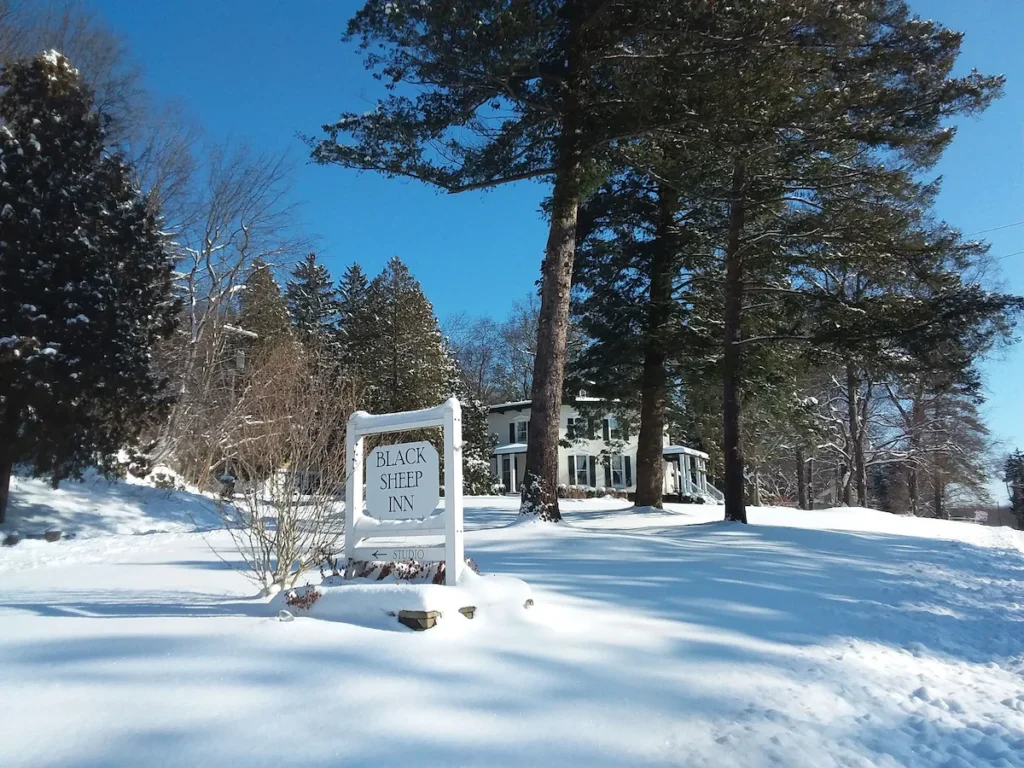
Black Sheep Inn · ~8 roomsIndependentnot published
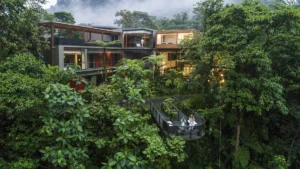
Mashpi Lodge · ~24 roomsIndependentnot published
Sacha Lodge · ~26 roomsIndependentnot published
Visitors, over time
20141,695k
20151,676k
20161,569k
20171,806k
20182,535k
20192,108k
International tourism receipts run at about US$0.70 billion in 2020 (World Bank / UN Tourism). That is 3.1% of everything the country earns from exports.
How much of your money actually stays here?
Tap the holiday you are planning.
All-inclusive resortForeign-owned hotel and tourist restaurantsLocally owned stay and local restaurantsGuesthouse, markets and public transport
Resort guest, villa renter, family, nomad or backpacker. The honest playbook for each, from the same sourced numbers.
Already booked a resort? · the rescue list
Five swaps that move your money back on-island
1. Eat where the country eats Choose kitchens cooking plantain, yuca, potatoes, quinoa, maize, beans, rice and tropical fruit over imported menus. The checked list →
2. Book with a local operator Never the lobby desk. The margin on a tour is the part that stays. Eco tours →
3. Stay somewhere locally owned Ownership decides where the room rate books. Eco stays →
4. Use the transport residents use Cheap long distance buses link the mainland; fly to the Galapagos (Baltra or San Cristobal) and the Amazon; taxis and ride apps in cities
5. Buy the craft, not the souvenir Natural-materials work made here pays the maker directly; imported gifts pay a shipping line.
swipe →
First time here
Ecuador packs the Galapagos, the Andes and the western Amazon into one small equatorial country, making it one of the world's 17 megadiverse nations.
Best time: Year round; highlands are driest June to September and the Galapagos has calm, warm seas December to May
Getting around
Cheap long distance buses link the mainland; fly to the Galapagos (Baltra or San Cristobal) and the Amazon; taxis and ride apps in cities
Transport is where the fare either stays or leaves.
Eating here
The everyday plate is plantain, yuca, potatoes, quinoa, maize, beans, rice and tropical fruit. Markets overflow with plantain, yuca, potatoes, quinoa, beans, maize and tropical fruit, so plant based eating is easy on ingredients.
Eating what the country grows is the cheapest way to cut the import bill.
Good to know
USD is the currency; cards in cities.
Rate my hotel. Tap yours for the honest verdict.
Ownership from company records and press.
Black Sheep InnMashpi LodgeSacha Lodge
.
Who owns the big hotels
Black Sheep InnIndependent · 8 rooms
Mashpi LodgeIndependent · 24 rooms
Sacha LodgeIndependent · 26 rooms
None of the 3 properties listed here publishes who ultimately owns it, so no claim is made either way. Ownership is what decides how much of a room rate stays in the country, which is why we show it when a listing states it.
Society and Governance in Ecuador.
How well is Ecuador actually run?
Governance, measured · World Bank WGI
Four measured answers, none of them opinion. Averaged across corruption control, delivery and accountability, Ecuador scores 45 out of 100 (2024, World Bank Worldwide Governance Indicators). That matters here because every pledge on this page is only as good as the machinery meant to deliver it.
How well is Ecuador run? · each scored out of 100, higher is better
Clean government, scored 32 of 100
Control of corruption scores 32.2 out of 100 (2024, World Bank Worldwide Governance Indicators). That is below the halfway mark of governments measured.
32
Freedom and rights, scored 55 of 100
Voice and accountability, which measures free expression, free media and the ability to choose a government, scores 55 out of 100 (2024, World Bank WGI). Citizens have some room to question their government.
55
Government effectiveness, scored 47 of 100
Government effectiveness, which measures the quality of public services and how well policy is actually delivered, scores 47.1 out of 100 (2024, World Bank WGI). Delivery is rated below average, so a pledge on paper is not the same as a pledge kept.
47
Income equality, scored 46 of 100
The Gini index of income inequality reads 45.9 (2025, World Bank). Zero is perfect equality and 100 is one person holding everything. Above 40 is the level usually treated as socially strained, and Ecuador sits above it.
46
LGBTQ+ status: MixedSolo female travel: Take care93.5% adult literacyIndustry to avoid: Amazon crude oil extraction in the Oriente and illegal gold mining; mangrove clearing shrimp farms
What is daily life in Ecuador really like? Measured
Getting around, breathing, throwing away, learning. The honest checklist.
TransportAirWaterWastePower
✓How you get around Cheap long distance buses link the mainland; fly to the Galapagos (Baltra or San Cristobal) and the Amazon; taxis and ride apps in cities
✓Air quality, measured Modelled annual mean 18.7. The WHO guideline is 5 µg/m³.
✓Where the air is cleanest The Galapagos and the Andean paramo and Amazon, away from Quito and Guayaquil traffic
·Tap water Not drinkable
✓What to drink Bottled water on the coast and Amazon; Quito tap is variable.
✓Plastic rules Nationwide plastic bag charge since May 2020; plastic bags banned in the Galapagos
✓Sockets and voltage Type A/B/C, 220V (Brazil 127/220V)
93.5%
literacy. Public spending on education runs at 3.7% of GDP and 15.5% of all government spending, and secondary enrolment stands at 92.8% gross (UNESCO Institute for Statistics, 2023 to 2025).
Made in Ecuador.
The weaving of the traditional toquilla straw hat, the genuine Panama hat, is a living craft inscribed on the UNESCO Representative List of Intangible Cultural Heritage in 2012 and still made in coastal communities such as Pile and Montecristi and in Cuenca. The Andean highlands keep a strong handloom tradition in wool and cotton, with Otavalo one of the best known craft markets in South America. Every step of processing done at home is value that stops leaving the country.
What Ecuador actually sells the world
The single biggest thing Ecuador sells the world is mineral fuels and oils, 28.9% of all exports in 2023 (about US$8.98 billion, UN Comtrade). The next four are fish and seafood at 24.2%, fruit and nuts at 13.2%, ores, slag and ash at 6.2%, pearls, gemstones and precious metals at 4.6%.
Sells now · 28.9% of exports
Mineral fuels and oils
Mineral fuels and oils is 28.9% of everything Ecuador sold abroad in 2023, worth about US$8.98 billion. UN Comtrade.
Sells now · 24.2% of exports
Fish and seafood
Fish and seafood is 24.2% of everything Ecuador sold abroad in 2023, worth about US$7.53 billion. UN Comtrade.
Sells now · 13.2% of exports
Fruit and nuts
Fruit and nuts is 13.2% of everything Ecuador sold abroad in 2023, worth about US$4.11 billion. UN Comtrade.
Sells now · 6.2% of exports
Ores, slag and ash
Ores, slag and ash is 6.2% of everything Ecuador sold abroad in 2023, worth about US$1.93 billion. UN Comtrade.
Sells now · 4.6% of exports
Pearls, gemstones and precious metals
Pearls, gemstones and precious metals is 4.6% of everything Ecuador sold abroad in 2023, worth about US$1.42 billion. UN Comtrade.
Buys in · 10.0% of imports
Machinery and mechanical appliances
Ecuador imported US$3.10 billion of machinery and mechanical appliances in 2023, 10.0% of everything it bought abroad, and sells none of it back. Every point of that is a business that could be built at home rather than shipped in. UN Comtrade.
Buys in · 9.0% of imports
Vehicles
Ecuador imported US$2.79 billion of vehicles in 2023, 9.0% of everything it bought abroad, and sells none of it back. Every point of that is a business that could be built at home rather than shipped in. UN Comtrade.
Buys in · 6.7% of imports
Electrical machinery and electronics
Ecuador imported US$2.07 billion of electrical machinery and electronics in 2023, 6.7% of everything it bought abroad, and sells none of it back. Every point of that is a business that could be built at home rather than shipped in. UN Comtrade.
Buys in · 5.2% of imports
Animal feed residues
Ecuador imported US$1.61 billion of animal feed residues in 2023, 5.2% of everything it bought abroad, and sells none of it back. Every point of that is a business that could be built at home rather than shipped in. UN Comtrade.
The maths for an entrepreneur. Ecuador produces about US$130 billion a year, which is roughly US$7,125 per person (2025, World Bank). Farming is 9.7% of that, while food is 12.2% of everything the country imports. The country buys in more food than its own farms contribute to the economy, and every point of that gap is a business someone could build here rather than ship in.
A living tradition of Ecuador, still practised rather than archived.
Pasillo music
A living tradition of Ecuador, still practised rather than archived.
Andean panpipe
A living tradition of Ecuador, still practised rather than archived.
Pingullo playing
A living tradition of Ecuador, still practised rather than archived.
Inti Raymi solstice celebrationA living tradition of Ecuador, still practised rather than archived.
Diablada de Píllaro danceA living tradition of Ecuador, still practised rather than archived.
Does Ecuador protect its heritage by law?
Partly, and the gaps say as much as the protections.
What is kept alive. Ecuador holds deep living Andean and Amazonian indigenous heritage. Kichwa, Shuar and Waorani peoples maintain ancestral knowledge, while Andean music such as the sanjuanito and the pasillo is still widely played on panpipes and the pingullo. Living ancestral and spiritual traditions endure, including the Inti Raymi solstice celebration and the ceremonial plant-medicine practice of Amazonian nations.
Who it belongs to. Ecuador has deeply rooted living indigenous cultures, including Kichwa, Waorani and Shuar communities, and its 2008 constitution enshrined the rights of nature (Pachamama). Community and eco tourism are well established, from Otavalo craft markets to Amazon Kichwa lodges, and the 2023 Yasuni referendum showed strong public backing for indigenous and environmental protection. Andean festivals and highland markets remain part of everyday life.
Only here. The Galapagos marine iguana, the only sea going lizard on Earth, found nowhere else.
Three futures for Ecuador, every one run forward from measured data.
Where the making actually happens
Named craft workshops on the open map: Almacén de Lanas, Arte Y Barro Shop, Artesalinas, Artesanías Maky Awashka, Casa útil Maderas, Espacio artístico cultural.
Every measured trend on one line
Run forward at the pace already recorded.
-3%
Forest cover
1995: 51.2 % → 2023: 49.5 %
+32%
Renewable electricity
1995: 61.2 % → 2021: 80.9 %
+47%
CO2 per person
1995: 1.8 t → 2024: 2.65 t
+379%
Tourist arrivals
1995: 440 k → 2019: 2108 k
-7%
Protected land
2013: 25.6 % → 2025: 23.8 %
+25%
Farm workforce
1995: 26 % → 2025: 32.5 %
+48%
Protected sea
2013: 13 % → 2025: 19.3 %
-26%
Agricultural land
1995: 29.3 % → 2023: 21.5 %
+9%
Urban population
1995: 58.2 % → 2025: 63.4 %
-53%
Air pollution
1995: 39.6 µg/m³ → 2023: 18.6 µg/m³
-35%
Fresh water per person
1995: 38169.1 m³ → 2022: 24820.6 m³
+43%
Adult overweight
1995: 46.8 % → 2022: 66.8 %
+10%
Electricity access
1995: 89.8 % → 2024: 98.5 %
+238%
GDP per person
1995: 2108 → 2025: 7125
+58%
Population
1995: 11591 k → 2025: 18290 k
-7%
Renewable energy use
1995: 20.4 % → 2021: 18.9 %
+40%
Energy per person
1995: 679.1 kg → 2023: 949.3 kg
+31%
Protected area, total
2013: 15.4 % → 2025: 20.2 %
+9%
Life expectancy
1995: 71.4 yrs → 2024: 77.6 yrs
+102%
Cereal yield
1995: 1984 ha → 2024: 4007 ha
+238%
Fertiliser use
1995: 64.2 ha → 2023: 216.9 ha
-12%
Rural population
1995: 41.8 % → 2025: 36.6 %
+105%
Water productivity
2000: 5.4 $/m3 → 2022: 11 $/m3
+112%
Health spending
2000: 3.57 % → 2023: 7.56 %
-13%
Forest area
1995: 141814 km2 → 2023: 123050 km2
+207%
Electric power use
1995: 545.7 kWh → 2023: 1676 kWh
-7%
Emissions: Agriculture
1990: 12.7 e → 2023: 11.8 e
+77%
Emissions: Building
1990: 2 e → 2023: 3.55 e
+417%
Emissions: Electricity/Heat
1990: 1.61 e → 2023: 8.32 e
+152%
Emissions: Energy
1990: 21.8 e → 2023: 54.9 e
+271%
Emissions: Industrial Processes
1990: 1.12 e → 2023: 4.16 e
+48%
Emissions: Manufacturing/Construction
1990: 2.44 e → 2023: 3.62 e
World Bank open data, recorded series
How much forest is left?
Forest cover moved from 51.2% to 49.5% across 28 recorded years.
World Bank AG.LND.FRST.ZS
How clean is the grid?
Renewable electricity moved from 61.2% to 80.9% across 26 recorded years.
World Bank EG.ELC.RNEW.ZS
How much climate pollution per person?
CO2 per person moved from 1.8 t to 2.6 t across 29 recorded years.
World Bank EN.GHG.CO2.PC.CE.AR5
How many people visit?
Tourist arrivals moved from 440k to 2108k across 24 recorded years.
World Bank ST.INT.ARVL
How much land is protected?
Protected land moved from 25.6% to 23.8% across 12 recorded years.
World Bank ER.LND.PTLD.ZS
How many people still farm?
Farm workforce moved from 26.0% to 32.5% across 30 recorded years.
World Bank SL.AGR.EMPL.ZS
How much sea is protected?
Protected sea moved from 13.0% to 19.3% across 12 recorded years.
World Bank ER.MRN.PTMR.ZS
How much land is farmed?
Agricultural land moved from 29.3% to 21.5% across 28 recorded years.
World Bank AG.LND.AGRI.ZS
How fast is it urbanising?
Urban population moved from 58.2% to 63.4% across 30 recorded years.
World Bank SP.URB.TOTL.IN.ZS
Is the air getting cleaner?
Air pollution moved from 39.6 µg/m³ to 18.6 µg/m³ across 28 recorded years.
World Bank EN.ATM.PM25.MC.M3
Is water getting scarcer?
Fresh water per person moved from 38169.1 m³ to 24820.6 m³ across 27 recorded years.
World Bank ER.H2O.INTR.PC
Is diet-related disease rising?
Adult overweight moved from 46.8% to 66.8% across 27 recorded years.
World Bank SH.STA.OWAD.ZS
Who has power?
Electricity access moved from 89.8% to 98.5% across 29 recorded years.
World Bank EG.ELC.ACCS.ZS
Is income rising?
GDP per person moved from 2108 to 7125 across 30 recorded years.
World Bank NY.GDP.PCAP.CD
How fast is it growing?
Population moved from 11591k to 18290k across 30 recorded years.
World Bank SP.POP.TOTL
What share of all energy is renewable?
Renewable energy use moved from 20.4% to 18.9% across 26 recorded years.
World Bank EG.FEC.RNEW.ZS
How much energy does one person use?
Energy per person moved from 679.11 kg to 949.27 kg across 28 recorded years.
World Bank EG.USE.PCAP.KG.OE
How much land and sea is protected together?
Protected area, total moved from 15.4% to 20.2% across 12 recorded years.
World Bank ER.PTD.TOTL.ZS
How long do people live?
Life expectancy moved from 71.35 yrs to 77.58 yrs across 29 recorded years.
World Bank SP.DYN.LE00.IN
How much does a hectare of cereal produce?
Cereal yield moved from 1984 kg/ha to 4007 kg/ha across 29 recorded years.
World Bank AG.YLD.CREL.KG
How much fertiliser goes on the land?
Fertiliser use moved from 64.17 kg/ha to 216.91 kg/ha across 28 recorded years.
World Bank AG.CON.FERT.ZS
How many people still live rurally?
Rural population moved from 41.78% to 36.61% across 30 recorded years.
World Bank SP.RUR.TOTL.ZS
How much value per cubic metre of water?
Water productivity moved from 5.36 $/m3 to 10.98 $/m3 across 22 recorded years.
World Bank ER.GDP.FWTL.M3.KD
How much goes on health?
Health spending moved from 3.57% to 7.56% across 23 recorded years.
World Bank SH.XPD.CHEX.GD.ZS
How much forest is there in total?
Forest area moved from 141814 km2 to 123050 km2 across 28 recorded years.
World Bank AG.LND.FRST.K2
How much electricity per person?
Electric power use moved from 545.7 kWh to 1676 kWh across 28 recorded years.
World Bank EG.USE.ELEC.KH.PC
How have agriculture emissions moved?
Agriculture emissions moved from 12.69 to 11.76 MtCO2e across 33 recorded years.
Climate Watch (WRI), historical emissions
How have building emissions moved?
Building emissions moved from 2.0 to 3.55 MtCO2e across 33 recorded years.
Climate Watch (WRI), historical emissions
How have electricity/heat emissions moved?
Electricity/Heat emissions moved from 1.61 to 8.32 MtCO2e across 33 recorded years.
Climate Watch (WRI), historical emissions
How have energy emissions moved?
Energy emissions moved from 21.84 to 54.94 MtCO2e across 33 recorded years.
Climate Watch (WRI), historical emissions
How have industrial processes emissions moved?
Industrial Processes emissions moved from 1.12 to 4.16 MtCO2e across 33 recorded years.
Climate Watch (WRI), historical emissions
How have manufacturing/construction emissions moved?
Manufacturing/Construction emissions moved from 2.44 to 3.62 MtCO2e across 33 recorded years.
Climate Watch (WRI), historical emissions
Worst caseCurrent pathBest case
Worst case
Every measured decline continues at the pace already recorded. The weakest pillar, organic farming at 2/5, is the one that gives way first.
Computed from: recorded series extended with no policy change
Current path
Every line above is a recorded World Bank series for this country. The current path is simply those series continuing at the pace already measured.
Computed from: recorded series, no policy change assumed
Best case
The pledges are met on their own stated timetables and the weakest pillars are lifted to match the strongest. Ecuador already shows it can do this: wildlife scores 5/5.
Computed from: each published target delivered on its own date
What the best case actually asks for
Lift organic farming
It scores 2 out of 5 today, among the weakest parts of Ecuador's record. Certified organic covers about 0.8% of Ecuador's farmland, roughly 41,500 hectares (FiBL, The World of Organic Agriculture 2022, using 2020 data). The country has a strong organic export niche in banana and cacao, but the overall certified share stays low. Lifting it toward the 5/5 the strongest pillars already reach is what the best case turns on.
measured each year
Costs: spending and enforcement, not new technology
Lift pollution
It scores 2 out of 5 today, among the weakest parts of Ecuador's record. Ecuador introduced a nationwide charge on plastic bags in May 2020 and the Galapagos ban plastic bags, but there is no full national single use plastic ban, and urban litter and waste collection remain weak. Ambient air is moderate, with a national mean PM2.5 of about 18.7 micrograms per cubic metre (World Bank, 2020), well above the WHO guideline. The Amazon Oriente also carries a heavy legacy of oil related contamination. Lifting it toward the 5/5 the strongest pillars already reach is what the best case turns on.
measured each year
Costs: spending and enforcement, not new technology
Lift recycling
It scores 2 out of 5 today, among the weakest parts of Ecuador's record. Formal municipal recycling in Ecuador is limited, and much material recovery is carried out informally by waste pickers rather than through kerbside collection. Coverage varies widely between cities and rural areas. Lifting it toward the 5/5 the strongest pillars already reach is what the best case turns on.
measured each year
Costs: spending and enforcement, not new technology
Government and Goals in Ecuador.
Who is in charge of Ecuador now · Office-holders from the UN Protocol and Liaison Service public list of Heads of State and Heads of Government, 8 September 2026. Legislature and election dates from IFES ElectionGuide. Constitution dates from the Constitute Project. Governance scores from the World Bank Worldwide Governance Indicators 2024.
Daniel Noboa
President
Daniel Noboa is the head of government of Ecuador, in office since 23 November 2023. Every climate, protection and energy pledge on this page is delivered, or not, under this administration.
Public opinion, measured
Voice and accountability, the freedom to question government: 55 / 100. Above the halfway mark of governments measured. World Bank WGI 2024
Control of corruption: 32.2 / 100. Below the halfway mark of governments measured. World Bank WGI 2024
Political stability and absence of violence: 53.6 / 100. Above the halfway mark of governments measured. World Bank WGI 2024
Rule of law: 40.4 / 100. Below the halfway mark of governments measured. World Bank WGI 2024
Regulatory quality: 44.7 / 100. Below the halfway mark of governments measured. World Bank WGI 2024
Daniel NoboaPresident
National Assembly (Asamblea Nacional)Legislature, unicameral
Last election9 February 2025
Constitution2008, as revised to 2021
Government typepresidential republic
Ecuador national goals: what has been pledged, and how far it has got · each pledge measured against this country's own recorded delivery
2030
30% of land protected
! close
Target 3 of the Kunming-Montreal Global Biodiversity Framework, adopted by more than 190 parties in December 2022. Ecuador currently protects 23.8% of its land, which is 79% of the way to the pledge. ↗
2030
30% of sea protected
! behind
The marine half of the same 30x30 pledge. Ecuador currently protects 19.3% of its territorial waters, which is 64% of the way there. ↗
2030
Paris Agreement pledge
on record
Ecuador has a Nationally Determined Contribution lodged with the UNFCCC. The registry holds the current text, its target year and the sectors it covers. ↗
Plastic policy
in force
Nationwide plastic bag charge since May 2020; plastic bags banned in the Galapagos.
Grid, as it stands
72% renewable
Recorded renewable share of electricity output, the number every energy pledge is measured against. ↗
Plain Answers About Ecuador.
The questions people actually type, answered in full sentences from the sourced data above.
swipe →
Is Ecuador sustainable?
Ecuador scores 75 out of 100 on the Throne Eco Index, across twelve equally weighted pillars. Ecuador packs the Galapagos, the Andes and the western Amazon into one small equatorial country, making it one of the world's 17 megadiverse nations.
Is the water in Ecuador safe and plentiful?
Ecuador holds abundant freshwater from Andean paramo, glacial melt and heavy Amazon rainfall, so physical supply is secure rather than scarce. However, only about 70% of people use safely managed drinking water, though 92% have at least basic access (World Bank and WHO/UNICEF JMP, 2024). Treatment and rural coverage gaps, not scarcity, are the weak point.
Can Ecuador feed itself?
Ecuador is a major agricultural exporter and net food producer, leading the world in banana exports and shipping large volumes of cacao, shrimp, flowers and coffee. Food makes up only about 12% of merchandise imports (World Bank, 2024), and agriculture is around 9 to 10% of GDP. Staples such as plantain, rice, potatoes and maize are grown domestically.
Is it easy to eat plant-based in Ecuador?
Markets overflow with plantain, yuca, potatoes, quinoa, beans, maize and tropical fruit, so plant based eating is easy on ingredients. Vegetarian and vegan restaurants are common in Quito, Cuenca and Banos, and the Andean tradition of quinoa, tubers and legumes runs deep. Traditional coast and highland dishes still lean heavily on pork, chicken and seafood.
How much of Ecuador is actually protected?
Terrestrial protected areas cover about 23.8% of land (World Bank, 2025), and Ecuador runs one of the world's most significant marine estates around the Galapagos, where the 133,000 square kilometre Galapagos Marine Reserve was enlarged in 2022 by the 60,000 square kilometre Hermandad Reserve. In August 2023 a national referendum voted to halt oil drilling in Block 43 inside Yasuni National Park. Mainland enforcement is weaker, with ongoing Amazon deforestation, oil activity and illegal gold mining.
What wildlife is left in Ecuador?
Ecuador is one of the 17 megadiverse countries, with roughly 1,600 bird species and extraordinary endemism. The Galapagos alone hold species found nowhere else, including the giant tortoise, the marine iguana and Darwin's finches, while Yasuni National Park is described as arguably the most biodiverse place on Earth. Amphibian endemism in the Andes is the highest in the world, and 45% of Ecuador's 635 amphibian species are found nowhere else.
Is Ecuador on clean energy?
Ecuador draws the large majority of its electricity from hydropower, which supplied roughly three quarters of generation in recent years (about 79 per cent in 2021 and near 73 per cent in 2022) from stations such as Coca Codo Sinclair. Fossil CO2 emissions are low at about 2.5 tonnes per person in 2023. However crude oil remains the country's leading export, and severe droughts in 2023 and 2024 forced a heavy fall-back onto thermal plants and prolonged blackouts, exposing the grid's vulnerability.
How polluted is Ecuador?
Ecuador introduced a nationwide charge on plastic bags in May 2020 and the Galapagos ban plastic bags, but there is no full national single use plastic ban, and urban litter and waste collection remain weak. Ambient air is moderate, with a national mean PM2.5 of about 18.7 micrograms per cubic metre (World Bank, 2020), well above the WHO guideline. The Amazon Oriente also carries a heavy legacy of oil related contamination.
Does recycling work in Ecuador?
Formal municipal recycling in Ecuador is limited, and much material recovery is carried out informally by waste pickers rather than through kerbside collection. Coverage varies widely between cities and rural areas.
Is the farming in Ecuador organic?
Certified organic covers about 0.8% of Ecuador's farmland, roughly 41,500 hectares (FiBL, The World of Organic Agriculture 2022, using 2020 data). The country has a strong organic export niche in banana and cacao, but the overall certified share stays low.
Are there natural materials and craft in Ecuador?
The weaving of the traditional toquilla straw hat, the genuine Panama hat, is a living craft inscribed on the UNESCO Representative List of Intangible Cultural Heritage in 2012 and still made in coastal communities such as Pile and Montecristi and in Cuenca. The Andean highlands keep a strong handloom tradition in wool and cotton, with Otavalo one of the best known craft markets in South America.
Is there living culture in Ecuador?
Ecuador has deeply rooted living indigenous cultures, including Kichwa, Waorani and Shuar communities, and its 2008 constitution enshrined the rights of nature (Pachamama). Community and eco tourism are well established, from Otavalo craft markets to Amazon Kichwa lodges, and the 2023 Yasuni referendum showed strong public backing for indigenous and environmental protection. Andean festivals and highland markets remain part of everyday life.
What heritage does Ecuador keep alive?
Ecuador holds deep living Andean and Amazonian indigenous heritage. Kichwa, Shuar and Waorani peoples maintain ancestral knowledge, while Andean music such as the sanjuanito and the pasillo is still widely played on panpipes and the pingullo. Living ancestral and spiritual traditions endure, including the Inti Raymi solstice celebration and the ceremonial plant-medicine practice of Amazonian nations.
So is Ecuador actually green? The measured answer
What is working: renewable electricity at 80.9%.
What is not: the gaps are narrower here than in most of the directory, and each remaining one is named below.
Ecuador sits 16 of 77 at 73/100. Every name links to its own destination page, built exactly like this one. The full ranking →
What is Ecuador particularly good at?
✓Culture, scored 5/5. Ecuador has deeply rooted living indigenous cultures, including Kichwa, Waorani and Shuar communities, and its 2008 constitution enshrined the rights of nature (Pachamama). Community and eco tourism are well established, from Otavalo craft markets to Amazon Kichwa lodges, and the 2023 Yasuni referendum showed strong public backing for indigenous and environmental protection. Andean festivals and highland markets remain part of everyday life.
✓Food and farming, scored 5/5. Ecuador is a major agricultural exporter and net food producer, leading the world in banana exports and shipping large volumes of cacao, shrimp, flowers and coffee. Food makes up only about 12% of merchandise imports (World Bank, 2024), and agriculture is around 9 to 10% of GDP. Staples such as plantain, rice, potatoes and maize are grown domestically.
✓Heritage, scored 5/5. Ecuador holds deep living Andean and Amazonian indigenous heritage. Kichwa, Shuar and Waorani peoples maintain ancestral knowledge, while Andean music such as the sanjuanito and the pasillo is still widely played on panpipes and the pingullo. Living ancestral and spiritual traditions endure, including the Inti Raymi solstice celebration and the ceremonial plant-medicine practice of Amazonian nations. The town of Otavalo remains a renowned centre of indigenous weaving culture.
Where does Ecuador score worst?
✕Organic farming, scored 2/5. Certified organic covers about 0.8% of Ecuador's farmland, roughly 41,500 hectares (FiBL, The World of Organic Agriculture 2022, using 2020 data). The country has a strong organic export niche in banana and cacao, but the overall certified share stays low.
✕Pollution, scored 2/5. Ecuador introduced a nationwide charge on plastic bags in May 2020 and the Galapagos ban plastic bags, but there is no full national single use plastic ban, and urban litter and waste collection remain weak. Ambient air is moderate, with a national mean PM2.5 of about 18.7 micrograms per cubic metre (World Bank, 2020), well above the WHO guideline. The Amazon Oriente also carries a heavy legacy of oil related contamination.
✕Recycling, scored 2/5. Formal municipal recycling in Ecuador is limited, and much material recovery is carried out informally by waste pickers rather than through kerbside collection. Coverage varies widely between cities and rural areas.
Similar countries doing it better and worse
PeruScored on the same twelve pillars as Ecuador.78
BrazilScored on the same twelve pillars as Ecuador.73
ColombiaScored on the same twelve pillars as Ecuador.72
ChileScored on the same twelve pillars as Ecuador.65
A note from the lens of mother natureswipe →
Energy, 4/5
Ecuador draws the large majority of its electricity from hydropower, which supplied roughly three quarters of generation in recent years (about 79 per cent in 2021 and near 73 per cent in 2022) from stations such as Coca Codo Sinclair. Fossil CO2 emissions are low at about 2.5 tonnes per person in 2023.
Food and farming, 5/5
Ecuador is a major agricultural exporter and net food producer, leading the world in banana exports and shipping large volumes of cacao, shrimp, flowers and coffee. Food makes up only about 12% of merchandise imports (World Bank, 2024), and agriculture is around 9 to 10% of GDP.
Heritage, 5/5
Ecuador holds deep living Andean and Amazonian indigenous heritage. Kichwa, Shuar and Waorani peoples maintain ancestral knowledge, while Andean music such as the sanjuanito and the pasillo is still widely played on panpipes and the pingullo.
The Ecuador Directory.
Everything on Hold The Throne that sits in Ecuador, checked and listed.
World Bank Worldwide Governance Indicators, 2024. Percentile among all governments measured.
Government effectiveness
47.1 / 100
World Bank Worldwide Governance Indicators, 2024. Percentile among all governments measured.
Rule of law
40.4 / 100
World Bank Worldwide Governance Indicators, 2024. Percentile among all governments measured.
Political stability
53.6 / 100
World Bank Worldwide Governance Indicators, 2024. Percentile among all governments measured.
Voice and accountability
55 / 100
World Bank Worldwide Governance Indicators, 2024. Percentile among all governments measured.
Environmental Performance Index
51.3 / 100 · 55 of 180
Yale Environmental Performance Index 2024, ranked 55 of 180 countries assessed.
Ecosystem vitality
56.9 / 100 · 61 of 180
Yale Environmental Performance Index 2024, ranked 61 of 180 countries assessed.
Biodiversity and habitat
49.8 / 100 · 90 of 180
Yale Environmental Performance Index 2024, ranked 90 of 180 countries assessed.
Air pollution
85.7 / 100 · 44 of 180
Yale Environmental Performance Index 2024, ranked 44 of 180 countries assessed.
Terrestrial biomes protected
63.9 / 100 · 65 of 180
Yale Environmental Performance Index 2024, ranked 65 of 180 countries assessed.
Marine protected areas
47.8 / 100 · 102 of 131
Yale Environmental Performance Index 2024, ranked 102 of 131 countries assessed.
How Ecuador Is Scored. The Throne Standard.
Every destination on the index is scored the same way, so a 4 in Barbados means exactly what a 4 means in Iceland. No self-declared data and no brochure claims are accepted. Every figure on this page carries its named source and year, and the history on each page names what empire took as plainly as it scores the present.
The 12 pillars every destination is scored on, equally weighted
01
Conservation
Land and sea actually protected, not pledged
02
Wildlife
What survives, what is endemic, what is lost
03
Water
Fresh water per person, and the ocean’s health
04
Food & farming
Whether the place can feed itself
05
Organic & clean
Certified land and pesticide reality
06
Climate & energy
Emissions per person, how the grid is powered
07
Waste
Where the rubbish goes, what comes back
08
Health
What people eat and die of
09
Heritage
Living culture, and what the law keeps standing
10
Ownership
Who owns the economy, how much of a dollar stays
11
Governance
Freedom, honesty, promises kept
12
Future
Measured trends run forward, pledges against pace
What each 0 to 5 pillar score means, in plain words
The institutions above are the ones cited on this page, ranked by how many of its figures they carry. This same sectioned page renders for all 77 scored destinations, each with its own researched history, comparison charts and three-way future. Read the full methodology
Every figure on this page, and where it came from: 88 sources across 38 institutions
World Bank18 FIGURES
Forest area (% of land area) AG.LND.FRST.ZS, 2023 (49.5%) check
Terrestrial protected areas (% of total land area) ER.LND.PTLD.ZS, 2023 (23.5%) check
Marine protected areas (% of territorial waters) ER.MRN.PTMR.ZS, 2024 (19.3%) check
Food imports (% of merchandise imports) TM.VAL.FOOD.ZS.UN, 2024 (12.2%) check
PM2.5 air pollution mean annual exposure EN.ATM.PM25.MC.M3, 2020 (18.7 micrograms per cubic metre) check
Agriculture, forestry and fishing value added (% of GDP) NV.AGR.TOTL.ZS, 2024 (9.2%) check
CO2 emissions per capita EN.GHG.CO2.PC.CE.AR5, 2024 check
Renewable electricity output (% of total) EG.ELC.RNEW.ZS, 2021 check
Ecuador, IUCN category Critically Endangered, class Mammalia, Critically Endangered on the IUCN Red List, and recorded in Ecuador in GBIF occurrence data (mammal). check
Ecuador, IUCN category Critically Endangered, class Mammalia corroboration check
Ecuador, IUCN category Critically Endangered, class Mammalia corroboration check
Ecuador, IUCN category Critically Endangered, class Aves, Critically Endangered on the IUCN Red List, and recorded in Ecuador in GBIF occurrence data (bird). check
Ecuador, IUCN category Critically Endangered, class Aves corroboration check
Ecuador, IUCN category Critically Endangered, class Aves corroboration check
Ecuador, IUCN category Critically Endangered, order Testudines, Critically Endangered on the IUCN Red List, and recorded in Ecuador in GBIF occurrence data (turtle). check
Ecuador, IUCN category Critically Endangered, order Testudines corroboration check
Ecuador, IUCN category Critically Endangered, order Testudines corroboration check
Ecuador, IUCN category Critically Endangered, class Elasmobranchii, Critically Endangered on the IUCN Red List, and recorded in Ecuador in GBIF occurrence data (shark or ray). check
Ecuador, IUCN category Critically Endangered, class Elasmobranchii corroboration check
Ecuador, IUCN category Critically Endangered, class Elasmobranchii corroboration check
Ecuador, IUCN category Critically Endangered, kingdom Plantae, Critically Endangered on the IUCN Red List, and recorded in Ecuador in GBIF occurrence data (plant). check
public data API, indicator XGDP.FSGOV (government expenditure on education as % of GDP), Ecuador, Public spending on education runs at 3.7% of GDP and 15.5% of all government spending, and secondary enrolment check
public data API, indicator XGDP.FSGOV (government expenditure on education as % of GDP), Ecuador corroboration check
public data API, indicator XGDP.FSGOV (government expenditure on education as % of GDP), Ecuador corroboration check
public data API, indicator XGDP.FSGOV (government expenditure on education as % of GDP), Ecuador corroboration check
BirdLife International, IUCN and UNEP-WCMC3 FIGURES
UN SDG Global Database, terrestrial Key Biodiversity Areas covered by protected areas (%) ER_PTD_TERR, Ecuador, 2025 (25.9%), country-reported check
UN SDG Global Database, marine Key Biodiversity Areas covered by protected areas (%) ER_MRN_MPA, Ecuador, 2025 (50.7%), country-reported check
UN SDG Global Database, freshwater Key Biodiversity Areas covered by protected areas (%) ER_PTD_FRHWTR, Ecuador, 2025 (26.9%), country-reported check
Corte Constitucional del Ecuador / CEDEC (2023)3 FIGURES
Guia de jurisprudencia constitucional: Derechos de la naturaleza, e-ISBN 978-9942-8887-7-8, In 2008 Ecuador became the first country in the world to write the rights of nature into its constitution. check
Guia de jurisprudencia constitucional: Derechos de la naturaleza, e-ISBN 978-9942-8887-7-8 corroboration check
Guia de jurisprudencia constitucional: Derechos de la naturaleza, e-ISBN 978-9942-8887-7-8 corroboration check
FAO, Global Forest Resources Assessment3 FIGURES
UN SDG Global Database, forest area (% of land area) AG_LND_FRST, Ecuador, 2025 (49.6%), country-reported check
UN SDG Global Database, forest area under a long-term management plan (%) AG_LND_FRSTMGT, Ecuador, 2025 (46.8%), country-reported check
UN SDG Global Database, forest area inside legally established protected areas (%) AG_LND_FRSTPRCT, Ecuador, 2025 (25.8%), country-reported check
IUCN (2012)3 FIGURES
IUCN Red List Categories and Criteria, Version 3.1, Second edition, Section IV The Categories, Critically Endangered, the last IUCN category before Extinct in the Wild, and still recorded in Ecuador. check
IUCN Red List Categories and Criteria, Version 3.1, Second edition, Section IV The Categories corroboration check
IUCN Red List Categories and Criteria, Version 3.1, Second edition, Section IV The Categories corroboration check
Servicio de Rentas Internas (SRI)3 FIGURES
Ecuador: Impuesto a los Consumos Especiales, Nationwide plastic bag charge since May 2020; plastic bags banned in the Galapagos check
Ecuador: Impuesto a los Consumos Especiales corroboration check
Ecuador: Impuesto a los Consumos Especiales corroboration check
Bass MS et al. (2010)2 FIGURES
Global Conservation Significance of Ecuador's Yasuni National Park, PLoS ONE 5(1): e8767, The Galapagos alone hold species found nowhere else, including the giant tortoise, the marine iguana and Darwi check
Global Conservation Significance of Ecuador's Yasuni National Park, PLoS ONE 5(1): e8767 corroboration check
FAO2 FIGURES
FAOSTAT Production: Crops and livestock products (QCL), Americas bulk file, By tonnage, the largest crops grown in Ecuador are bananas, sugarcane, oil palm fruit, rice, maize and plantai check
Ecuador Travel: Sombrero de paja toquilla, una prenda patrimonial de sello ecuatoriano, The weaving of the traditional toquilla straw hat, the genuine Panama hat, is a living craft inscribed on the check
Ecuador Travel: Sombrero de paja toquilla, una prenda patrimonial de sello ecuatoriano corroboration check
UNEP-WCMC2 FIGURES
Biodiversity A-Z: Megadiverse Countries, Ecuador packs the Galapagos, the Andes and the western Amazon into one small equatorial country, making it one check
Biodiversity A-Z: Megadiverse Countries corroboration check
UNESCO2 FIGURES
Weaving of the traditional toquilla straw hat of Ecuador, inscribed on the Representative List of Intangible Cultural Heritage in 2012 check
threatened species (Ecuador, 2022): higher plants 2,029, fish 99, birds 86, mammals 49 (sum 2,263; reptiles and amphibians not in these series, so the true IUCN total is higher) check
World Bank and WHO/UNICEF JMP1 FIGURE
People using safely managed drinking water SH.H2O.SMDW.ZS, 2024 (69.9%; at least basic 92.1%) check


 PeruScored on the same twelve pillars as Ecuador.78
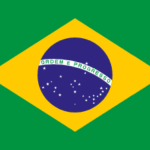 BrazilScored on the same twelve pillars as Ecuador.73
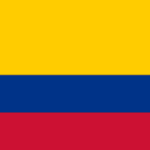 ColombiaScored on the same twelve pillars as Ecuador.72
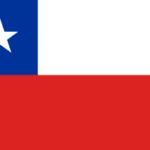 ChileScored on the same twelve pillars as Ecuador.65