Destinations › Africa · The Destination Index · universal template · every figure sourced
Seychelles.
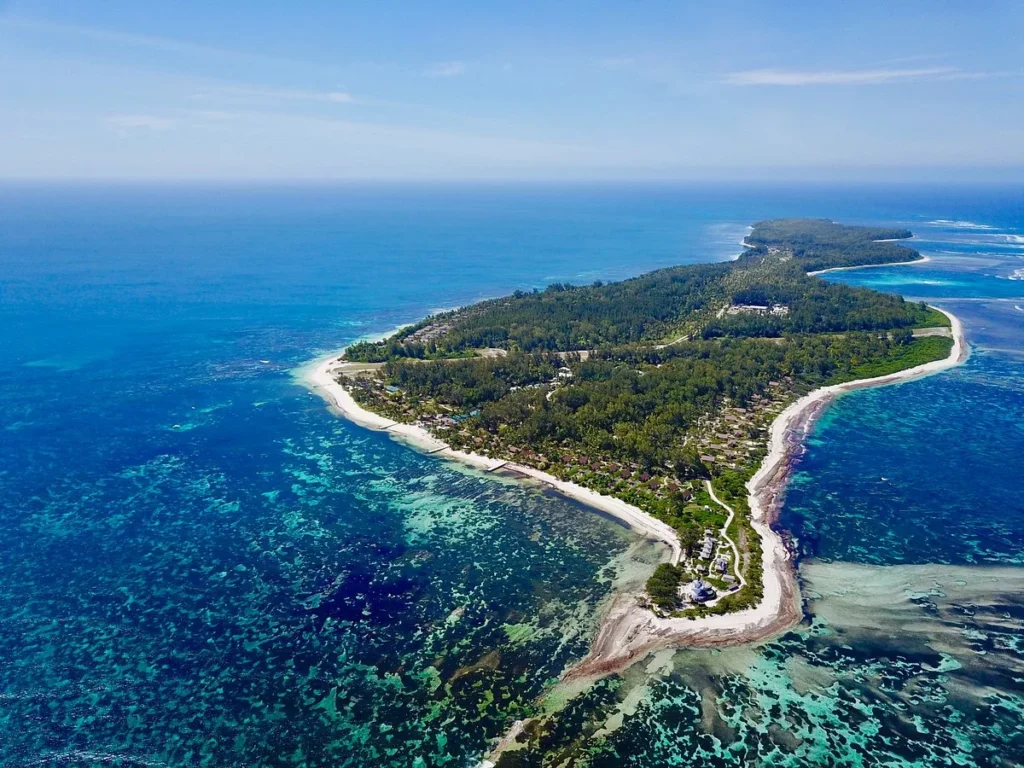
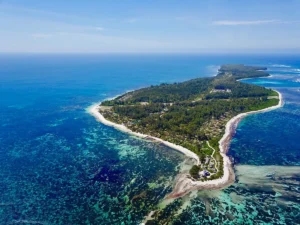
Archipelago in the Indian Ocean, northeast of Madagascar. 455 sq km and 122,730 people, 491 km of coastline, tropical marine; humid; cooler season during southeast monsoon (late May to September); warmer season during northwest monsoon (March to May).
Region · AfricaPopulation · ~122,730Languages · Seychellois Creole (Kreol), English and French (all three official)Eco Index · 57/100 · Weak
The Eco Index across 12 pillars · scored 0 to 5 · World Bank, OWID, WHO/UNICEF JMP, FiBL, Protected Planet, IUCN, UNESCO (2023-24)
Conservation
Wildlife
Water
Food & farming
Organic & clean
Climate & energy
Waste
Health
Heritage
Ownership
Governance
Future
The History of the Seychelles.
Seychelles was uninhabited before Europeans discovered the islands early in the 16th century. After a lengthy struggle, France eventually ceded control of the islands to Great Britain in 1814.
Where the name comes from
Named by France for Jean Moreau de Séchelles, a finance minister. The islands had no permanent population to name them before that. Source: national and regional toponymic records.
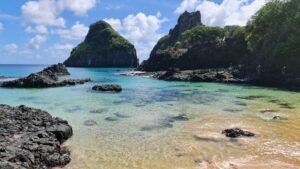
The land itself: the Mahé group is granitic, with a narrow coastal strip and a rocky, hilly interior; the outer islands are flat coral atolls and raised reefs on the Mascarene Plateau. Its high point is Morne Seychellois, 905 m. Source: national mapping and survey records.
Where it starts
Genuinely uninhabited
Seychelles had no permanent population before 1770, which is unusual: most islands described that way turn out to have been settled and then emptied. Austronesian and Arab navigators worked these waters and the islands appear on Portuguese charts from the early sixteenth century, but no settled population has been found. An English East India Company vessel recorded a landing in 1609 and described the giant tortoises and the coco de mer.
How it got here
27 August 1770
The Telemaque landed the first settlers on Sainte Anne on 27 August 1770: fifteen white settlers together with enslaved Africans and Indians. Every Seychellois community descends from what followed. The islands passed between France and Britain during the Napoleonic wars, slavery was abolished in 1835, and liberated Africans taken from intercepted slave ships were later settled here. Seychelles was separated from Mauritius in 1903 and became independent on 29 June 1976.
The timeline
Before 1609
No permanent population.
The islands had no permanent population. Austronesian and Arab navigators were working these waters, and the islands appear on Portuguese charts from the early sixteenth century, but no settled population has been found. ↗
1609
First recorded landing.
An English East India Company vessel records a landing and describes the islands' giant tortoises and coco de mer. ↗
1600s to 1700s
A pirate anchorage.
The islands are used as an anchorage by pirates and privateers working the Indian Ocean. ↗
27 August 1770
The first settlers.
The Telemaque lands the first settlers on Sainte Anne: fifteen white settlers together with enslaved Africans and Indians. Every Seychellois community descends from what followed. ↗
1794 to 1811
French then British.
The islands change hands repeatedly during the Napoleonic wars before passing to Britain. ↗
1835
Abolition.
Slavery is abolished, and liberated Africans taken from intercepted slave ships are later settled here. ↗
1903
A separate colony.
The islands are separated from Mauritius and administered as a colony in their own right. ↗
1976
Independence.
Seychelles becomes independent on 29 June 1976, after the islands had passed from French to British control. ↗
2020
250 years.
The first settlers reached Seychelles on 27 August 1770 aboard the Telemaque, twenty-eight people in all. The National Museums marked 250 years of settlement in 2020. ↗
The Seychelles protects about 32.6 per cent of its territorial waters and around 68.1 per cent of its land (World Bank, 2025), having designated 30 per cent of its ocean by 2020, a decade ahead of the global target (The Nature Conservancy). Enforcement is genuine, anchored by the strictly protected Aldabra atoll and Vallee de Mai UNESCO World Heritage Sites and a national marine spatial plan.
Is wild Seychelles protected? 68.1% of the land is, already past the 30% target for 2030
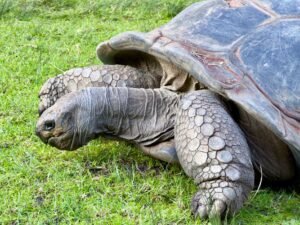
Found only here. Coco de mer palm, Aldabra giant tortoise, Seychelles black parrot, magpie-robin and warbler, jellyfish tree and sooglossid frogs.
The watchlist
ThreatenedSeychelles Owl (Otus insularis)Critically Endangered on the IUCN Red List, and recorded in Seychelles in GBIF occurrence data (bird).
ThreatenedHawksbill (Eretmochelys imbricata)Critically Endangered on the IUCN Red List, and recorded in Seychelles in GBIF occurrence data (turtle).
ThreatenedSphyrna lewiniCritically Endangered on the IUCN Red List, and recorded in Seychelles in GBIF occurrence data (shark or ray).
ThreatenedYellow Gecko (Ailuronyx trachygaster)Critically Endangered on the IUCN Red List, and recorded in Seychelles in GBIF occurrence data (reptile).
ThreatenedPhalangacris alluaudiCritically Endangered on the IUCN Red List, and recorded in Seychelles in GBIF occurrence data (insect).
ThreatenedPsychotria silhouettaeListed as threatened on the IUCN Red List, and recorded in Seychelles in GBIF occurrence data (plant).
ThreatenedCampnosperma seychellarumListed as threatened on the IUCN Red List, and recorded in Seychelles in GBIF occurrence data (plant).
ThreatenedGrisollea thomassetiiListed as threatened on the IUCN Red List, and recorded in Seychelles in GBIF occurrence data (plant).
7 mammal species recorded here are on the IUCN threatened list (2022, World Bank / IUCN Red List).
Birds · 13
13 bird species recorded here are on the IUCN threatened list (2022, World Bank / IUCN Red List).
Fish · 41
41 fish species recorded here are on the IUCN threatened list (2022, World Bank / IUCN Red List).
Plants · 61
61 plant species recorded here are on the IUCN threatened list (2022, World Bank / IUCN Red List).
Species named here are drawn from GBIF occurrence records for Seychelles filtered to the IUCN Red List threatened categories. Species are listed where GBIF holds occurrence records for them in this country. Record counts are not published here because the figure cannot be reproduced from a public GBIF query.
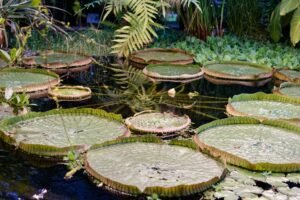
Botanical garden in Mont Fleuri, mapped and named in the open record for Seychelles. OpenStreetMap.
Water and Ocean in the Seychelles.
Fresh water comes from rainfall catchment, a few small rivers and reservoirs on Mahe, and increasingly from desalination, and only about 64.7 per cent of the population uses safely managed drinking water (WHO/UNICEF JMP via World Bank, 2024). La Digue and Praslin face seasonal shortages in the dry season, so supply is genuinely stressed despite near-universal piped access.
64.7% of people here have safely managed drinking water at home (2024, WHO/UNICEF JMP). Coverage is well short of universal, so a visitor should not assume the tap is safe.
Cleanest water: Aldabra and the Marine National Parks (Sainte Anne, Curieuse and Aldabra).
What are the rules on Seychelles beaches?
·Tap water: Varies.
✓Plastic rules: Banned plastic bags, cups, plates, cutlery and polystyrene takeaway boxes from 2017 and plastic straws from 2019..
✓Solo travel: rated easy on the record for this destination.
✓Marine protection: 32.6% of the sea is protected. The 30x30 pledge is met.
How is the sea around Seychelles doing?
One cross-section, every answer measured.
Surface
What the coast carries
Trade winds, two seasons, neither extreme; reef-safe sunscreen is non-negotiable.
Nearshore
Protected water
32.6% of territorial waters are protected, against the 30% pledged for 2030 under the Global Biodiversity Framework.
Cleanest
Where the water is cleanest
Aldabra and the Marine National Parks (Sainte Anne, Curieuse and Aldabra)..
The record
Measured
Fresh water comes from rainfall catchment, a few small rivers and reservoirs on Mahe, and increasingly from desalination, and only about 64.7 per cent of the population uses safely managed drinking water (WHO/UNICEF JMP via World Bank, 2024). La Digue and Praslin face seasonal shortages in the dry season, so supply is genuinely stressed despite near-universal piped access.
Marine protected
32.6% of territorial waters
Against the 30x30 target of 30% by 2030 (2025, World Bank / WDPA).
Coastline
491 km
The length of shore exposed to sea-level rise and storm surge (national hydrographic survey records).
Safely managed drinking water
64.7%
Share of people with a safe supply at home (2024, WHO/UNICEF JMP).
Sanitation
99.7%
Share with at least a basic service (2024, WHO/UNICEF JMP).
Is the tap water safe in Seychelles?
64.7% of people have safely managed drinking water at home (2024, WHO/UNICEF JMP).
When is the best time to visit Seychelles? Tap your month.
As a small, remote archipelago the Seychelles imports the large majority of its food, with only a small domestic sector growing fruit, root crops and vegetables. Eating local in practice means fish, breadfruit and tropical fruit rather than a broad home-grown diet.
Where does the food in Seychelles come from?
26.1% imported
about US$397m a year
On the plate: Breadfruit, cassava, sweet potato, plantain, coconut, mango and other tropical fruit.
How often each food is on the plate
Share of people eating each one regularly. These overlap, so they do not add up to 100%.
Rice51%
Breadfruit42%
Cassava33%
Sweet potato24%
Plantain15%
3 of 10
bites are imported
The island buys in more food energy than it eats. About US$397m a year leaves the country to pay for it. The green slice is roughly what still grows here.
About 26.1% of everything the Seychelles buys in from abroad is food, roughly 3 in every 10 imported items on the dock (2024, World Bank). Farming itself is 2.6% of the economy and 3.4% of the land is agricultural, of which 0.3% is arable. The green slice is roughly what still grows here.
What is killing people in the Seychelles? The imported diet.
Cause of death, and the diet behind it.
Non-communicable diseases, all combined69%
Diabetes9.3%
Adults living with overweight or obesity. 60.8%.
Can the Seychelles feed itself?
0.3%
Arable land
3.4%
Agricultural land
371
Arable acres
2.6%
Agriculture, share of GDP
Harvest: Tropical fruit through the warmer wet season (December to March); calmer months are best for fishing.
Feeding itself
As a small, remote archipelago the Seychelles imports the large majority of its food, with only a small domestic sector growing fruit, root crops and vegetables. Eating local in practice means fish, breadfruit and tropical fruit rather than a broad home-grown diet.
Certification
The Seychelles has only a very small agricultural sector, and internationally comparable organic farmland data is not published (no FiBL country figure). Some family plots and agroecology initiatives use low-input methods, but the certified organic area is negligible in scale.
Water for crops
Fresh water comes from rainfall catchment, a few small rivers and reservoirs on Mahe, and increasingly from desalination, and only about 64.7 per cent of the population uses safely managed drinking water (WHO/UNICEF JMP via World Bank, 2024). La Digue and Praslin face seasonal shortages in the dry season, so supply is genuinely stressed despite near-universal piped access.
Why the organic number looks like that. Certified-organic farmland is not separately reported for the Seychelles, and that is a certification gap rather than proof nothing is grown cleanly. What the official land record does show: 3.4% of the country is agricultural land and 0.3% is arable (2023, World Bank). Certification is paid for per farm per year by a foreign body, which prices out smallholders, so the organic number reads worse than the practice.
The plant-based kitchen here is not an import. By tonnage, the largest crops grown in Seychelles are coconuts, bananas and tomatoes (FAO, FAOSTAT crop production, 2024). That is what the land itself puts on a plate.
The Seychelles runs its electricity almost entirely on imported diesel and heavy fuel oil, with low-carbon sources supplying only around 14 per cent, mostly solar with a little wind. Per-person emissions are moderate at about 5 tonnes of CO2 in 2024, reflecting a small, tourism-based high-income economy rather than heavy industry. The government targets 15 per cent renewables by 2030 and has become a global leader in ocean climate policy, pioneering a debt-for-nature swap and blue bonds to protect nearly a third of its waters. The energy transition itself, however, remains at an early stage.
What powers the Seychelles?
Renewable 15.9%Fossil 84.1%
Climate pollution per person
The safe amount, what the planet can absorb
2 tonnes
One person here
7.24 tonnes
The world average, for comparison
4.7 tonnes
The worst it ever got
12.87 tonnes
The grid
The Seychelles runs its electricity almost entirely on imported diesel and heavy fuel oil, with low-carbon sources supplying only around 14 per cent, mostly solar with a little wind. Per-person emissions are moderate at about 5 tonnes of CO2 in 2024, reflecting a small, tourism-based high-income economy rather than heavy industry.
Pollution
Air is among the cleanest measured, with an annual mean PM2.5 of about 4.96 micrograms per cubic metre (UChicago AQLI, 2022). The country banned plastic bags, plastic cups, plates and cutlery and polystyrene takeaway boxes from 2017 and plastic straws from 2019, though drifting ocean plastic still accumulates on remote atolls such as Aldabra.
Water stress
Fresh water comes from rainfall catchment, a few small rivers and reservoirs on Mahe, and increasingly from desalination, and only about 64.7 per cent of the population uses safely managed drinking water (WHO/UNICEF JMP via World Bank, 2024). La Digue and Praslin face seasonal shortages in the dry season, so supply is genuinely stressed despite near-universal piped access.
What pollutes most here
1The gridThe share of electricity still generated from fossil fuel.84.1%
2IndustryOver-built luxury resort enclaves and industrial tuna transhipment around Port Victoria..named
3AirModelled annual mean against a WHO guideline of 5 µg/m³.4.96
4On the recordAir is among the cleanest measured, with an annual mean PM2.5 of about 4.96 micrograms per cubic metre (UChicago AQLI, 2022).
What has the Seychelles promised on climate?
Net zero, whole economy2050
Electricity renewable today4.5% (2021)
Land protected, against a 30% target68.1% by 2025
Sea protected, against a 30% target32.6% by 2025
The net-zero target year on file with Climate Watch is 2050, status: in policy document. Measured against it, 4.5% of electricity is already renewable (2021, World Bank), so 95.5% of the grid is still to be converted. The pledge on file is measured here against what has actually been delivered, not taken on its own (UNFCCC NDC Registry, CBD Kunming-Montreal Target 3).
The biggest line item
One return flight against a whole year of living.
A resident's entire year7.24 t CO2e
Safe-climate budget, per year2 t CO2e
Singapore return, economy3.15 t CO2e
Sydney return, economy2.91 t CO2e
Dubai return, economy2.13 t CO2e
Johannesburg return, economy1.97 t CO2e
Frankfurt return, economy1.3 t CO2e
How much CO2 does flying to the Seychelles emit?
Tap where you would fly from. One return flight, economy.
Every prompt runs on a machine in a building on somebody’s grid. What that costs the planet depends less on the prompt than on what is burning to power it. Here is what would power one in the Seychelles.
Grid renewable
15.9 %
What a machine here runs on.
What powers a data centre in the Seychelles?
Almost everything a machine here consumes is burned fossil fuel.
Renewable 15.9%Fossil 84.1%
Where the cables land. 2 landing points · Carana, Victoria
22% residents to 78% visitors across a year. 428,000 international arrivals in 2019 against 122,730 people who live here (2025, World Bank / UN Tourism).
Where a visitor dollar goes in Seychelles
428k
Visitors a year
3.5
Visitors per resident
How deep in debt is the Seychelles?· for every $100 the Seychelles earns in a year, it owes…
Pay to the order of: the creditorsmemo · the 2001 peak
$ 200The worst year on the IMF record. The Seychelles owed $200 for every $100 it earned.
IMF World Economic Outlook, 2001signed, the creditors
Pay to the order of: the creditorsmemo · today
$ 55What is owed now, for every $100 of national income (2026).
IMF World Economic Outlook, 2026signed, the creditors
Pay to the order of: the creditorsmemo · projected 2031
$ 47The IMF's own forecast has this falling to $47 by 2031.
IMF World Economic Outlook projection, 2031signed, the forecast
For every $100 the Seychelles earns in a year, it owes $55 (2026, IMF World Economic Outlook). The interest on that is paid before schools, clinics or coastline get their turn.
Where does a tourist dollar actually go in the Seychelles?
Play one tourist dollar around the board. Every square is a measured fact from this page.
START!
1
GO: a visitor lands
$100 goes on the table. 428,000 international arrivals in 2019 against 122,730 residents, 3.5 visitors for every resident (World Bank / UN Tourism).
$100 in play
2
The bed
Who owns the largest places to stay in the Seychelles is not published in the records we can check, so this square is left open rather than guessed. Where a listing names its owner, it is shown in the ownership table below.
not published
3
The plate
Food is 26.1% of everything the Seychelles imports (2024, World Bank), so a large part of every restaurant bill is paid to a supplier abroad. Eating what the land here actually grows, coconuts, vegetables, bananas, fruits, tomatoes, tropical fruits, cassava, keeps that money with the grower.
sails in
4
The power
95.5% of the electricity is fossil (2021, World Bank). Lighting, cooling and hot water are paid for largely in imported fuel.
burns away
5
What actually stays
Of the two parts of a visitor's bill that can be measured here, the plate and the power mostly leave the Seychelles. Choosing locally grown food is the part of that a visitor can actually control.
less than you think
6
Pay the bank first
The Seychelles owes $55 for every $100 it earns (IMF World Economic Outlook, 2026 projection). The interest is paid before anything else on this board.
$55 per $100
7
No plan B
46.2% of everything the Seychelles sells abroad is prepared meat and fish (2023, UN Comtrade). One market moving takes the whole board with it.
46.2% one export
8
Community chest
Tourism earns 18.4% of everything the Seychelles makes from exports (2020, World Bank / UN Tourism). That is how much of the economy depends on the game continuing.
18.4% of exports
9
The flight
Getting here is usually the biggest single line on the bill. From Singapore a return economy seat is 3.15 t CO2, on the UK Government's published conversion factors. It is the one part of the trip this board cannot reduce.
3.15 t CO2
10
Back to GO
The economy turns over about US$2 billion a year (IMF World Economic Outlook, 2026 projection). Every lap of this board is a choice about how much of it stays.
US$2bn
GDPUS$2.4bn
Agriculture, share of GDP2.6%
Visitors a year124,500
Visitors per resident1
Residents~122,730
Agriculture
Farming is 2.6% of the economy. As a small, remote archipelago the Seychelles imports the large majority of its food, with only a small domestic sector growing fruit, root crops and vegetables.
Natural materials
Traditional craft uses coconut coir, palm thatch and woven vacoa (screwpine) leaves for baskets and hats, and these skills survive at a small scale. Everyday life, however, is fairly import and plastic dependent, so the natural-materials tradition is present rather than dominant.
Energy
The Seychelles runs its electricity almost entirely on imported diesel and heavy fuel oil, with low-carbon sources supplying only around 14 per cent, mostly solar with a little wind. Per-person emissions are moderate at about 5 tonnes of CO2 in 2024, reflecting a small, tourism-based high-income economy rather than heavy industry.
Who owns the biggest hotels in the Seychelles?
By rooms · company records and press.
FS Seychelles Desroches · ~71 roomsCorporatenot published
Visitors, over time
2015296k
2016333k
2017382k
2018405k
2019428k
2020124k
International tourism receipts run at about US$0.23 billion in 2020 (World Bank / UN Tourism). That is 18.4% of everything the country earns from exports.
How much of your money actually stays here?
Tap the holiday you are planning.
All-inclusive resortForeign-owned hotel and tourist restaurantsLocally owned stay and local restaurantsGuesthouse, markets and public transport
Resort guest, villa renter, family, nomad or backpacker. The honest playbook for each, from the same sourced numbers.
Already booked a resort? · the rescue list
Five swaps that move your money back on-island
1. Eat where the country eats Choose kitchens cooking what the land here grows, coconuts, vegetables, bananas, fruits, tomatoes, tropical fruits and cassava, over an imported menu. The checked list →
2. Book with a local operator Never the lobby desk. The margin on a tour is the part that stays. Eco tours →
3. Stay somewhere locally owned Ownership decides where the room rate books. Eco stays →
4. Use the transport residents use Ferries link Mahe, Praslin and La Digue; buses run on Mahe and Praslin; bicycles suit car-light La Digue.
5. Buy the craft, not the souvenir Natural-materials work made here pays the maker directly; imported gifts pay a shipping line.
swipe →
First time here
The Seychelles protects a third of its ocean and shelters extraordinary endemic species, but relies on imported food and stressed island water supplies.
Best time: The calmer, drier and cooler transition months.
Getting around
Ferries link Mahe, Praslin and La Digue; buses run on Mahe and Praslin; bicycles suit car-light La Digue.
Transport is where the fare either stays or leaves.
Eating here
The everyday plate that actually grows here is coconuts, vegetables, bananas, fruits, tomatoes, tropical fruits and cassava. Ordering those keeps the money with the grower and cuts the imported share of the meal.
Eating what the country grows is the cheapest way to cut the import bill.
Good to know
Cards widely accepted; SCR. Turtles need distance, not selfies.
Rate my hotel. Tap yours for the honest verdict.
Ownership from company records and press.
FS Seychelles Desroches
.
Who owns the place to stay
FS Seychelles DesrochesCorporate · 71 rooms
The one property listed here does not publish who ultimately owns it, so no claim is made either way. Ownership is what decides how much of a room rate stays in the country, which is why we show it when a listing states it.
Society and Governance in the Seychelles.
How well is the Seychelles actually run?
Governance, measured · World Bank WGI
Four measured answers, none of them opinion. Averaged across corruption control, delivery and accountability, the Seychelles scores 68 out of 100 (2024, World Bank Worldwide Governance Indicators). That is a state that generally does what it says it will do, which is what makes a climate pledge worth reading.
How well is Seychelles run? · each scored out of 100, higher is better
Clean government, scored 73 of 100
Control of corruption scores 72.8 out of 100 (2024, World Bank Worldwide Governance Indicators). That is above the halfway mark of governments measured.
73
Freedom and rights, scored 68 of 100
Voice and accountability, which measures free expression, free media and the ability to choose a government, scores 68 out of 100 (2024, World Bank WGI). Citizens have some room to question their government.
68
Government effectiveness, scored 64 of 100
Government effectiveness, which measures the quality of public services and how well policy is actually delivered, scores 63.5 out of 100 (2024, World Bank WGI). Delivery is rated above average.
64
Income equality, scored 32 of 100
The Gini index of income inequality reads 32.1 (2018, World Bank). Zero is perfect equality and 100 is one person holding everything. Below 40 is the level usually treated as manageable, and the Seychelles sits inside it.
32
LGBTQ+ status: MixedSolo female travel: Easy94% adult literacyIndustry to avoid: Over-built luxury resort enclaves and industrial tuna transhipment around Port Victoria.
What is daily life in Seychelles really like? Measured
Getting around, breathing, throwing away, learning. The honest checklist.
TransportAirWaterWastePower
✓How you get around Ferries link Mahe, Praslin and La Digue; buses run on Mahe and Praslin; bicycles suit car-light La Digue.
✓Air quality, measured Modelled annual mean 4.96. The WHO guideline is 5 µg/m³.
✓Where the air is cleanest Everywhere; the outer islands and the Morne Seychellois highlands are pristine.
✓Tap water Varies
✓What to drink Resorts desalinate and it is drinkable; Mahé local areas are bottled.
✓Plastic rules Banned plastic bags, cups, plates, cutlery and polystyrene takeaway boxes from 2017 and plastic straws from 2019.
✓Sockets and voltage Type C/D/M, 230V
94.0%
literacy. Public spending on education runs at 4.5% of GDP and 10.7% of all government spending, and secondary enrolment stands at 70.8% gross (UNESCO Institute for Statistics, 2023 to 2025).
Made in the Seychelles.
Traditional craft uses coconut coir, palm thatch and woven vacoa (screwpine) leaves for baskets and hats, and these skills survive at a small scale. Everyday life, however, is fairly import and plastic dependent, so the natural-materials tradition is present rather than dominant. Every step of processing done at home is value that stops leaving the country.
What Seychelles actually sells the world
The single biggest thing Seychelles sells the world is prepared meat and fish, 46.2% of all exports in 2023 (about US$0.25 billion, UN Comtrade). The next four are mineral fuels and oils at 35.4%, iron and steel at 7.1%, fish and seafood at 5.4%, animal feed residues at 1.4%.
Made now · natural materials
Traditional craft uses coconut coir
Worked in Seychelles from local material, and still a working craft rather than a museum piece.
Made now · natural materials
Palm thatch
Worked in Seychelles from local material, and still a working craft rather than a museum piece.
Made now · natural materials
Woven vacoa (screwpine) leaves for baskets
Worked in Seychelles from local material, and still a working craft rather than a museum piece.
Made now · natural materials
Hats
Worked in Seychelles from local material, and still a working craft rather than a museum piece.
Made now · natural materials
Coir and palm weaving
Worked in Seychelles from local material, and still a working craft rather than a museum piece.
Made now · natural materials
However
Worked in Seychelles from local material, and still a working craft rather than a museum piece.
Buys in · 5.9% of imports
Electrical machinery and electronics
Seychelles imported US$0.09 billion of electrical machinery and electronics in 2023, 5.9% of everything it bought abroad, and sells none of it back. Every point of that is a business that could be built at home rather than shipped in. UN Comtrade.
Buys in · 5.0% of imports
Vehicles
Seychelles imported US$0.07 billion of vehicles in 2023, 5.0% of everything it bought abroad, and sells none of it back. Every point of that is a business that could be built at home rather than shipped in. UN Comtrade.
Buys in · 4.4% of imports
Iron and steel articles
Seychelles imported US$0.06 billion of iron and steel articles in 2023, 4.4% of everything it bought abroad, and sells none of it back. Every point of that is a business that could be built at home rather than shipped in. UN Comtrade.
Buys in · 3.1% of imports
Ships and boats
Seychelles imported US$0.05 billion of ships and boats in 2023, 3.1% of everything it bought abroad, and sells none of it back. Every point of that is a business that could be built at home rather than shipped in. UN Comtrade.
The maths for an entrepreneur. the Seychelles produces about US$2 billion a year, which is roughly US$19,449 per person (2025, World Bank). Farming is 2.6% of that, while food is 26.1% of everything the country imports. The country buys in more food than its own farms contribute to the economy, and every point of that gap is a business someone could build here rather than ship in.
A living tradition of Seychelles, still practised rather than archived.
Sega
A living tradition of Seychelles, still practised rather than archived.
Kanmtole dancing
A living tradition of Seychelles, still practised rather than archived.
Kreol language and storytelling
A living tradition of Seychelles, still practised rather than archived.
Creole ancestral healingA living tradition of Seychelles, still practised rather than archived.
Does Seychelles protect its heritage by law?
Partly, and the gaps say as much as the protections.
What is kept alive. Seychellois Creole culture carries strong African and Malagasy ancestral roots. The moutya, a hypnotic drum dance born among enslaved people as a form of gathering and quiet resistance and once held after dark, is recognised by UNESCO and has been revived as a national art form. The lively sega and the European-influenced kanmtole are still danced at celebrations.
Who it belongs to. Creole culture is very much alive in the Kreol language, music and cuisine, and there is a genuine guesthouse and small-operator sector. Even so, the tourism economy is heavily weighted towards foreign-owned luxury resorts, so a large share of value leaves local hands.
Only here. Coco de mer, the largest seed in the plant kingdom, which grows wild only in the Seychelles (Vallee de Mai, Praslin)..
Three futures for the Seychelles, every one run forward from measured data.
Where the making actually happens
Named cultural and craft sites on the open map: Museum of Natural History (Victoria), Museum Road (Praslin), Seychelles National Museum Secretariat (Victoria), National Museum of History (Victoria), Lazare Souvenir Museum Gallery. OpenStreetMap.
Every measured trend on one line
Run forward at the pace already recorded.
+0%
Forest cover
1995: 73.3 % → 2023: 73.3 %
+60%
CO2 per person
1995: 4.52 t → 2024: 7.24 t
-2%
Tourist arrivals
1995: 127 k → 2020: 124 k
+62%
Protected land
2013: 42.1 % → 2025: 68.1 %
-61%
Agricultural land
1995: 8.7 % → 2023: 3.37 %
-3%
Urban population
1995: 46.9 % → 2025: 45.5 %
-10%
Air pollution
1995: 10.2 µg/m³ → 2023: 9.3 µg/m³
+41%
Adult overweight
1995: 43.1 % → 2022: 60.8 %
+8%
Electricity access
1995: 92.2 % → 2024: 100 %
+171%
GDP per person
1995: 7181 → 2025: 19449
+64%
Population
1995: 75 k → 2025: 123 k
-37%
Renewable energy use
1995: 3 % → 2022: 1.9 %
+5%
Life expectancy
1995: 72.5 yrs → 2024: 76.3 yrs
+2393%
Fertiliser use
1999: 23 ha → 2023: 573.3 ha
+3%
Rural population
1995: 53.2 % → 2025: 54.5 %
+170%
Water productivity
1995: 60.7 $/m3 → 2022: 164.2 $/m3
-3%
Health spending
2000: 4.61 % → 2023: 4.48 %
+0%
Forest area
1995: 337 km2 → 2023: 337 km2
+0%
Emissions: Agriculture
1990: 0.01 e → 2023: 0.01 e
+100%
Emissions: Building
1990: 0.01 e → 2023: 0.02 e
+311%
Emissions: Electricity/Heat
1990: 0.09 e → 2023: 0.37 e
+327%
Emissions: Energy
1990: 0.15 e → 2023: 0.64 e
-100%
Emissions: Manufacturing/Construction
2009: 0.01 e → 2023: 0 e
+300%
Emissions: Transportation
1990: 0.05 e → 2023: 0.2 e
World Bank open data, recorded series
How much forest is left?
Forest cover moved from 73.3% to 73.3% across 28 recorded years.
World Bank AG.LND.FRST.ZS
How much climate pollution per person?
CO2 per person moved from 4.5 t to 7.2 t across 29 recorded years.
World Bank EN.GHG.CO2.PC.CE.AR5
How many people visit?
Tourist arrivals moved from 127k to 124k across 25 recorded years.
World Bank ST.INT.ARVL
How much land is protected?
Protected land moved from 42.1% to 68.1% across 12 recorded years.
World Bank ER.LND.PTLD.ZS
How much land is farmed?
Agricultural land moved from 8.7% to 3.4% across 28 recorded years.
World Bank AG.LND.AGRI.ZS
How fast is it urbanising?
Urban population moved from 46.9% to 45.5% across 30 recorded years.
World Bank SP.URB.TOTL.IN.ZS
Is the air getting cleaner?
Air pollution moved from 10.2 µg/m³ to 9.3 µg/m³ across 28 recorded years.
World Bank EN.ATM.PM25.MC.M3
Is diet-related disease rising?
Adult overweight moved from 43.1% to 60.8% across 27 recorded years.
World Bank SH.STA.OWAD.ZS
Who has power?
Electricity access moved from 92.2% to 100.0% across 29 recorded years.
World Bank EG.ELC.ACCS.ZS
Is income rising?
GDP per person moved from 7181 to 19449 across 30 recorded years.
World Bank NY.GDP.PCAP.CD
How fast is it growing?
Population moved from 75k to 123k across 30 recorded years.
World Bank SP.POP.TOTL
What share of all energy is renewable?
Renewable energy use moved from 3% to 1.9% across 27 recorded years.
World Bank EG.FEC.RNEW.ZS
How long do people live?
Life expectancy moved from 72.48 yrs to 76.3 yrs across 29 recorded years.
World Bank SP.DYN.LE00.IN
How much fertiliser goes on the land?
Fertiliser use moved from 23 kg/ha to 573.33 kg/ha across 24 recorded years.
World Bank AG.CON.FERT.ZS
How many people still live rurally?
Rural population moved from 53.15% to 54.52% across 30 recorded years.
World Bank SP.RUR.TOTL.ZS
How much value per cubic metre of water?
Water productivity moved from 60.74 $/m3 to 164.22 $/m3 across 27 recorded years.
World Bank ER.GDP.FWTL.M3.KD
How much goes on health?
Health spending moved from 4.61% to 4.48% across 23 recorded years.
World Bank SH.XPD.CHEX.GD.ZS
How much forest is there in total?
Forest area moved from 337 km2 to 337 km2 across 28 recorded years.
World Bank AG.LND.FRST.K2
How have agriculture emissions moved?
Agriculture emissions moved from 0.01 to 0.01 MtCO2e across 33 recorded years.
Climate Watch (WRI), historical emissions
How have building emissions moved?
Building emissions moved from 0.01 to 0.02 MtCO2e across 33 recorded years.
Climate Watch (WRI), historical emissions
How have electricity/heat emissions moved?
Electricity/Heat emissions moved from 0.09 to 0.37 MtCO2e across 33 recorded years.
Climate Watch (WRI), historical emissions
How have energy emissions moved?
Energy emissions moved from 0.15 to 0.64 MtCO2e across 33 recorded years.
Climate Watch (WRI), historical emissions
How have manufacturing/construction emissions moved?
Manufacturing/Construction emissions moved from 0.01 to 0.0 MtCO2e across 14 recorded years.
Climate Watch (WRI), historical emissions
How have transportation emissions moved?
Transportation emissions moved from 0.05 to 0.2 MtCO2e across 33 recorded years.
Climate Watch (WRI), historical emissions
Worst caseCurrent pathBest case
Worst case
Every measured decline continues at the pace already recorded. The weakest pillar, food and farming at 1/5, is the one that gives way first.
Computed from: recorded series extended with no policy change
Current path
Every line above is a recorded World Bank series for this country. The current path is simply those series continuing at the pace already measured.
Computed from: recorded series, no policy change assumed
Best case
The pledges are met on their own stated timetables and the weakest pillars are lifted to match the strongest. Seychelles already shows it can do this: conservation scores 5/5.
Computed from: each published target delivered on its own date
What the best case actually asks for
Lift food and farming
It scores 1 out of 5 today, among the weakest parts of Seychelles's record. As a small, remote archipelago the Seychelles imports the large majority of its food, with only a small domestic sector growing fruit, root crops and vegetables. Eating local in practice means fish, breadfruit and tropical fruit rather than a broad home-grown diet. Lifting it toward the 5/5 the strongest pillars already reach is what the best case turns on.
measured each year
Costs: spending and enforcement, not new technology
Lift energy
It scores 2 out of 5 today, among the weakest parts of Seychelles's record. The Seychelles runs its electricity almost entirely on imported diesel and heavy fuel oil, with low-carbon sources supplying only around 14 per cent, mostly solar with a little wind. Per-person emissions are moderate at about 5 tonnes of CO2 in 2024, reflecting a small, tourism-based high-income economy rather than heavy industry. The government targets 15 per cent renewables by 2030 and has become a global leader in ocean climate policy, pioneering a debt-for-nature swap and blue bonds to protect nearly a third of its waters. The energy transition itself, however, remains at an early stage. Lifting it toward the 5/5 the strongest pillars already reach is what the best case turns on.
measured each year
Costs: spending and enforcement, not new technology
Lift natural fibres
It scores 2 out of 5 today, among the weakest parts of Seychelles's record. Traditional craft uses coconut coir, palm thatch and woven vacoa (screwpine) leaves for baskets and hats, and these skills survive at a small scale. Everyday life, however, is fairly import and plastic dependent, so the natural-materials tradition is present rather than dominant. Lifting it toward the 5/5 the strongest pillars already reach is what the best case turns on.
measured each year
Costs: spending and enforcement, not new technology
Government and Goals in the Seychelles.
Who is in charge of Seychelles now · Office-holders from the UN Protocol and Liaison Service public list of Heads of State and Heads of Government, 8 September 2026. Legislature and election dates from IFES ElectionGuide. Constitution dates from the Constitute Project. Governance scores from the World Bank Worldwide Governance Indicators 2024.
Patrick Herminie
President
Patrick Herminie is the head of government of Seychelles, in office since 26 October 2025. Every climate, protection and energy pledge on this page is delivered, or not, under this administration.
Public opinion, measured
Voice and accountability, the freedom to question government: 68 / 100. Above the halfway mark of governments measured. World Bank WGI 2024
Control of corruption: 72.8 / 100. Above the halfway mark of governments measured. World Bank WGI 2024
Political stability and absence of violence: 81.5 / 100. Among the strongest measured. World Bank WGI 2024
Rule of law: 67.2 / 100. Above the halfway mark of governments measured. World Bank WGI 2024
Regulatory quality: 61 / 100. Above the halfway mark of governments measured. World Bank WGI 2024
Patrick HerminiePresident
National AssemblyLegislature, unicameral
Last election27 September 2025
Constitution1993, as revised to 2025
Government typepresidential republic
Seychelles national goals: climate commitments on record · as recorded by Climate Watch, World Resources Institute
2050
Net zero
In Policy Document
Net-zero target as recorded by Climate Watch. Status: In Policy Document (7/30/2021) ↗
The questions people actually type, answered in full sentences from the sourced data above.
swipe →
Is Seychelles sustainable?
Seychelles scores 57 out of 100 on the Throne Eco Index, across twelve equally weighted pillars. The Seychelles protects a third of its ocean and shelters extraordinary endemic species, but relies on imported food and stressed island water supplies.
Is the water in Seychelles safe and plentiful?
Fresh water comes from rainfall catchment, a few small rivers and reservoirs on Mahe, and increasingly from desalination, and only about 64.7 per cent of the population uses safely managed drinking water (WHO/UNICEF JMP via World Bank, 2024). La Digue and Praslin face seasonal shortages in the dry season, so supply is genuinely stressed despite near-universal piped access.
Can Seychelles feed itself?
As a small, remote archipelago the Seychelles imports the large majority of its food, with only a small domestic sector growing fruit, root crops and vegetables. Eating local in practice means fish, breadfruit and tropical fruit rather than a broad home-grown diet.
Is it easy to eat plant-based in Seychelles?
Creole cuisine is built around fish, but locally available breadfruit, cassava, sweet potato, plantain, coconut and tropical fruit make plant eating workable, and tourist areas cater for vegetarians. Choice narrows away from the main islands and much fresh produce is imported.
How much of Seychelles is actually protected?
The Seychelles protects about 32.6 per cent of its territorial waters and around 68.1 per cent of its land (World Bank, 2025), having designated 30 per cent of its ocean by 2020, a decade ahead of the global target (The Nature Conservancy). Enforcement is genuine, anchored by the strictly protected Aldabra atoll and Vallee de Mai UNESCO World Heritage Sites and a national marine spatial plan.
What wildlife is left in Seychelles?
The islands carry exceptional endemism, including the Aldabra giant tortoise, the coco de mer palm, endemic birds such as the Seychelles black parrot, magpie-robin and warbler, the jellyfish tree and unique sooglossid frogs, with 122 threatened species recorded (IUCN via World Bank, 2022). Island rewilding has pulled species like the magpie-robin back from the brink of extinction.
Is Seychelles on clean energy?
The Seychelles runs its electricity almost entirely on imported diesel and heavy fuel oil, with low-carbon sources supplying only around 14 per cent, mostly solar with a little wind. Per-person emissions are moderate at about 5 tonnes of CO2 in 2024, reflecting a small, tourism-based high-income economy rather than heavy industry. The government targets 15 per cent renewables by 2030 and has become a global leader in ocean climate policy, pioneering a debt-for-nature swap and blue bonds to protect nearly a third of its waters.
How polluted is Seychelles?
Air is among the cleanest measured, with an annual mean PM2.5 of about 4.96 micrograms per cubic metre (UChicago AQLI, 2022). The country banned plastic bags, plastic cups, plates and cutlery and polystyrene takeaway boxes from 2017 and plastic straws from 2019, though drifting ocean plastic still accumulates on remote atolls such as Aldabra.
Does recycling work in Seychelles?
Formal municipal recycling is limited and most waste goes to the Providence landfill on Mahe, but a beverage-container deposit and refund scheme recovers PET, aluminium and glass at reasonable rates. Capacity and separation infrastructure remain constrained by the country's small scale.
Is the farming in Seychelles organic?
The Seychelles has only a very small agricultural sector, and internationally comparable organic farmland data is not published (no FiBL country figure). Some family plots and agroecology initiatives use low-input methods, but the certified organic area is negligible in scale.
Are there natural materials and craft in Seychelles?
Traditional craft uses coconut coir, palm thatch and woven vacoa (screwpine) leaves for baskets and hats, and these skills survive at a small scale. Everyday life, however, is fairly import and plastic dependent, so the natural-materials tradition is present rather than dominant.
Is there living culture in Seychelles?
Creole culture is very much alive in the Kreol language, music and cuisine, and there is a genuine guesthouse and small-operator sector. Even so, the tourism economy is heavily weighted towards foreign-owned luxury resorts, so a large share of value leaves local hands.
What heritage does Seychelles keep alive?
Seychellois Creole culture carries strong African and Malagasy ancestral roots. The moutya, a hypnotic drum dance born among enslaved people as a form of gathering and quiet resistance and once held after dark, is recognised by UNESCO and has been revived as a national art form. The lively sega and the European-influenced kanmtole are still danced at celebrations.
So is the Seychelles actually green? The measured answer
What is working: land protected at 68.1%, sea protected at 32.6%.
What is not: renewable electricity at 4.5% against a 100% mark.
Seychelles sits 71 of 77 at 57/100. Every name links to its own destination page, built exactly like this one. The full ranking →
What is Seychelles particularly good at?
✓Conservation, scored 5/5. The Seychelles protects about 32.6 per cent of its territorial waters and around 68.1 per cent of its land (World Bank, 2025), having designated 30 per cent of its ocean by 2020, a decade ahead of the global target (The Nature Conservancy). Enforcement is genuine, anchored by the strictly protected Aldabra atoll and Vallee de Mai UNESCO World Heritage Sites and a national marine spatial plan.
✓Heritage, scored 4/5. Seychellois Creole culture carries strong African and Malagasy ancestral roots. The moutya, a hypnotic drum dance born among enslaved people as a form of gathering and quiet resistance and once held after dark, is recognised by UNESCO and has been revived as a national art form. The lively sega and the European-influenced kanmtole are still danced at celebrations. Traditional Creole spiritual and healing knowledge, along with the Kreol language itself, remains part of island life.
✓Pollution, scored 4/5. Air is among the cleanest measured, with an annual mean PM2.5 of about 4.96 micrograms per cubic metre (UChicago AQLI, 2022). The country banned plastic bags, plastic cups, plates and cutlery and polystyrene takeaway boxes from 2017 and plastic straws from 2019, though drifting ocean plastic still accumulates on remote atolls such as Aldabra.
Where does Seychelles score worst?
✕Recycling, scored 2/5. Formal municipal recycling is limited and most waste goes to the Providence landfill on Mahe, but a beverage-container deposit and refund scheme recovers PET, aluminium and glass at reasonable rates. Capacity and separation infrastructure remain constrained by the country's small scale.
✕Water, scored 2/5. Fresh water comes from rainfall catchment, a few small rivers and reservoirs on Mahe, and increasingly from desalination, and only about 64.7 per cent of the population uses safely managed drinking water (WHO/UNICEF JMP via World Bank, 2024). La Digue and Praslin face seasonal shortages in the dry season, so supply is genuinely stressed despite near-universal piped access.
✕Food and farming, scored 1/5. As a small, remote archipelago the Seychelles imports the large majority of its food, with only a small domestic sector growing fruit, root crops and vegetables. Eating local in practice means fish, breadfruit and tropical fruit rather than a broad home-grown diet.
Similar countries doing it better and worse
TanzaniaScored on the same twelve pillars as Seychelles.73
EthiopiaScored on the same twelve pillars as Seychelles.72
UgandaScored on the same twelve pillars as Seychelles.68
South AfricaScored on the same twelve pillars as Seychelles.62
EgyptScored on the same twelve pillars as Seychelles.60
BotswanaScored on the same twelve pillars as Seychelles.57
A note from the lens of mother natureswipe →
Energy, 2/5
The Seychelles runs its electricity almost entirely on imported diesel and heavy fuel oil, with low-carbon sources supplying only around 14 per cent, mostly solar with a little wind. Per-person emissions are moderate at about 5 tonnes of CO2 in 2024, reflecting a small, tourism-based high-income economy rather than heavy industry.
Food and farming, 1/5
As a small, remote archipelago the Seychelles imports the large majority of its food, with only a small domestic sector growing fruit, root crops and vegetables. Eating local in practice means fish, breadfruit and tropical fruit rather than a broad home-grown diet.
Consequence: It is the lowest-scoring part of Seychelles's record, so it is where the score moves first.
Heritage, 4/5
Seychellois Creole culture carries strong African and Malagasy ancestral roots. The moutya, a hypnotic drum dance born among enslaved people as a form of gathering and quiet resistance and once held after dark, is recognised by UNESCO and has been revived as a national art form.
The Seychelles Directory.
Everything on Hold The Throne that sits in Seychelles, checked and listed.
World Bank Worldwide Governance Indicators, 2024. Percentile among all governments measured.
Government effectiveness
63.5 / 100
World Bank Worldwide Governance Indicators, 2024. Percentile among all governments measured.
Rule of law
67.2 / 100
World Bank Worldwide Governance Indicators, 2024. Percentile among all governments measured.
Political stability
81.5 / 100
World Bank Worldwide Governance Indicators, 2024. Percentile among all governments measured.
Voice and accountability
68 / 100
World Bank Worldwide Governance Indicators, 2024. Percentile among all governments measured.
Environmental Performance Index
47.9 / 100 · 71 of 180
Yale Environmental Performance Index 2024, ranked 71 of 180 countries assessed.
Ecosystem vitality
47.4 / 100 · 110 of 180
Yale Environmental Performance Index 2024, ranked 110 of 180 countries assessed.
Biodiversity and habitat
50.5 / 100 · 84 of 180
Yale Environmental Performance Index 2024, ranked 84 of 180 countries assessed.
Air pollution
17.5 / 100 · 172 of 180
Yale Environmental Performance Index 2024, ranked 172 of 180 countries assessed.
Terrestrial biomes protected
73.4 / 100 · 49 of 180
Yale Environmental Performance Index 2024, ranked 49 of 180 countries assessed.
Marine protected areas
50.5 / 100 · 91 of 131
Yale Environmental Performance Index 2024, ranked 91 of 131 countries assessed.
How the Seychelles Is Scored. The Throne Standard.
Every destination on the index is scored the same way, so a 4 in Barbados means exactly what a 4 means in Iceland. No self-declared data and no brochure claims are accepted. Every figure on this page carries its named source and year, and the history on each page names what empire took as plainly as it scores the present.
The 12 pillars every destination is scored on, equally weighted
01
Conservation
Land and sea actually protected, not pledged
02
Wildlife
What survives, what is endemic, what is lost
03
Water
Fresh water per person, and the ocean’s health
04
Food & farming
Whether the place can feed itself
05
Organic & clean
Certified land and pesticide reality
06
Climate & energy
Emissions per person, how the grid is powered
07
Waste
Where the rubbish goes, what comes back
08
Health
What people eat and die of
09
Heritage
Living culture, and what the law keeps standing
10
Ownership
Who owns the economy, how much of a dollar stays
11
Governance
Freedom, honesty, promises kept
12
Future
Measured trends run forward, pledges against pace
What each 0 to 5 pillar score means, in plain words
The institutions above are the ones cited on this page, ranked by how many of its figures they carry. This same sectioned page renders for all 77 scored destinations, each with its own researched history, comparison charts and three-way future. Read the full methodology
Every figure on this page, and where it came from: 77 sources across 27 institutions
World Bank18 FIGURES
Forest area (% of land area) AG.LND.FRST.ZS, 2023 check
Terrestrial protected areas (% of land area) ER.LND.PTLD.ZS, 2025 check
Marine protected areas (% of territorial waters) ER.MRN.PTMR.ZS, 2025 check
Renewable electricity output (% of total) EG.ELC.RNEW.ZS, 2021 check
CO2 emissions per capita EN.GHG.CO2.PC.CE.AR5, 2024 check
Marine protected areas (% of territorial waters), Seychelles, The Seychelles protects about 32.6 per cent of its territorial waters and around 68.1 per cent of its land (Wo check
Marine protected areas (% of territorial waters), Seychelles corroboration check
Marine protected areas (% of territorial waters), Seychelles corroboration check
birds assessed Critically Endangered on the IUCN Red List, Critically Endangered on the IUCN Red List, and recorded in Seychelles in GBIF occurrence data (bird). check
birds assessed Critically Endangered on the IUCN Red List corroboration check
birds assessed Critically Endangered on the IUCN Red List corroboration check
turtles assessed Critically Endangered on the IUCN Red List, Critically Endangered on the IUCN Red List, and recorded in Seychelles in GBIF occurrence data (turtle). check
turtles assessed Critically Endangered on the IUCN Red List corroboration check
sharks and rays assessed Critically Endangered on the IUCN Red List, Critically Endangered on the IUCN Red List, and recorded in Seychelles in GBIF occurrence data (shark or ray). check
sharks and rays assessed Critically Endangered on the IUCN Red List corroboration check
sharks and rays assessed Critically Endangered on the IUCN Red List corroboration check
squamate reptiles assessed Critically Endangered on the IUCN Red List, Critically Endangered on the IUCN Red List, and recorded in Seychelles in GBIF occurrence data (reptile). check
squamate reptiles assessed Critically Endangered on the IUCN Red List corroboration check
insects assessed Critically Endangered on the IUCN Red List, Critically Endangered on the IUCN Red List, and recorded in Seychelles in GBIF occurrence data (insect). check
insects assessed Critically Endangered on the IUCN Red List corroboration check
Seychelles Islands Foundation6 FIGURES
national protected-area and wildlife authority check
Aldabra Atoll, Enforcement is genuine, anchored by the strictly protected Aldabra atoll and Vallee de Mai UNESCO World Herita check
Supplement to Official Gazette, 30 June 2017: S.I. 38 of 2017, Environment Protection (Restriction on importation, distribution and sale of Plastic Utensils and Polystyrene Boxes) Regulations 2017, The country banned plastic bags, plastic cups, plates and cutlery and polystyrene takeaway boxes from 2017 and check
Supplement to Official Gazette, 30 June 2017: S.I. 38 of 2017, Environment Protection (Restriction on importation, distribution and sale of Plastic Utensils and Polystyrene Boxes) Regulations 2017 corroboration check
Supplement to Official Gazette, 30 June 2017: S.I. 38 of 2017, Environment Protection (Restriction on importation, distribution and sale of Plastic Utensils and Polystyrene Boxes) Regulations 2017 corroboration check
Supplement to Official Gazette, 30 June 2017: S.I. 38 of 2017, Environment Protection (Restriction on importation, distribution and sale of Plastic Utensils and Polystyrene Boxes) Regulations 2017 corroboration check
Supplement to Official Gazette, 30 June 2017: S.I. 37 of 2017, Environment Protection (Restriction on manufacturing, importation, distribution and sale of Plastic Bags) Regulations 2017 corroboration check
Penda Choppy4 FIGURES
'A Case-Study of Seychelles' Slave Routes Through its Folktales', Seychelles Research Journal, Volume 8, Number 1, February 2026, The Telemaque landed the first settlers on Sainte Anne on 27 August 1770: fifteen white settlers together with check
'A Case-Study of Seychelles' Slave Routes Through its Folktales', Seychelles Research Journal, Volume 8, Number 1, February 2026 corroboration check
'A Case-Study of Seychelles' Slave Routes Through its Folktales', Seychelles Research Journal, Volume 8, Number 1, February 2026 corroboration check
'A Case-Study of Seychelles' Slave Routes Through its Folktales', Seychelles Research Journal, Volume 8, Number 1, February 2026 corroboration check
UNESCO Institute for Statistics4 FIGURES
Government expenditure on education as a percentage of GDP, Seychelles, Public spending on education runs at 4.5% of GDP and 10.7% of all government spending, and secondary enrolment check
Government expenditure on education as a percentage of GDP, Seychelles corroboration check
Government expenditure on education as a percentage of GDP, Seychelles corroboration check
Government expenditure on education as a percentage of GDP, Seychelles corroboration check
BirdLife International, IUCN and UNEP-WCMC3 FIGURES
UN SDG Global Database, terrestrial Key Biodiversity Areas covered by protected areas (%) ER_PTD_TERR, Seychelles, 2025 (52.8%), country-reported check
UN SDG Global Database, marine Key Biodiversity Areas covered by protected areas (%) ER_MRN_MPA, Seychelles, 2025 (71.9%), country-reported check
UN SDG Global Database, freshwater Key Biodiversity Areas covered by protected areas (%) ER_PTD_FRHWTR, Seychelles, 2025 (98.9%), country-reported check
FAO3 FIGURES
FAOSTAT, Production: Crops and livestock products (QCL), full normalised dataset, updated 31 December 2025, By tonnage, the largest crops grown in Seychelles are coconuts, bananas and tomatoes (FAO, FAOSTAT crop produc check
FAOSTAT, Production: Crops and livestock products (QCL), full normalised dataset, updated 31 December 2025 corroboration check
FAOSTAT, Production: Crops and livestock products (QCL), full normalised dataset, updated 31 December 2025 corroboration check
FAO, Global Forest Resources Assessment2 FIGURES
UN SDG Global Database, forest area (% of land area) AG_LND_FRST, Seychelles, 2025 (57.6%), country-reported check
UN SDG Global Database, forest area inside legally established protected areas (%) AG_LND_FRSTPRCT, Seychelles, 2025 (24.4%), country-reported check
UNESCO2 FIGURES
Representative List of the Intangible Cultural Heritage of Humanity: Moutya (Seychelles), inscribed 2021 corroboration check
Representative List of the Intangible Cultural Heritage of Humanity: Moutya (Seychelles), inscribed 2021 corroboration check
WHO/UNICEF Joint Monitoring Programme2 FIGURES
World Bank, Safely managed drinking water SH.H2O.SMDW.ZS, 2024 check
UN SDG Global Database, population using safely managed drinking water (%) SH_H2O_SAFE, Seychelles, 2024 (64.7%), modelled estimate check
Only Psychotria silhouettae is still Critically Endangered (2018). Campnosperma seychellarum and Grisollea thomassetii were both reassessed in 2025 and downlisted to Endangered, so the shared line must say threatened, not Critically Endangered. check

 TanzaniaScored on the same twelve pillars as Seychelles.73
 EthiopiaScored on the same twelve pillars as Seychelles.72
 UgandaScored on the same twelve pillars as Seychelles.68
 South AfricaScored on the same twelve pillars as Seychelles.62
 EgyptScored on the same twelve pillars as Seychelles.60
 BotswanaScored on the same twelve pillars as Seychelles.57