Is Bibico Sustainable And Non Toxic Clothing? The Fibre Data
What Materials Does Bibico Use? Natural Fibre Or Synthetic
Bibico builds its wardrobe on four fibres it loves to name: organic cotton, wool, linen and lyocell.
The scan shows cotton is a real backbone of the range, but it also shows the mix is more wool than cotton, and wool is animal hair, not a natural plant fibre.
Across the 414 styles Hold The Throne scanned, the breakdown landed like this: 100% plant fibre, 258 styles (62.3%) the cotton, linen and hemp dresses, blouses and everyday separates. 100% animal fibre, 116 styles (28%) the wool, merino, mohair, alpaca and silk jumpers and knitwear the brand is known for, animal hair, not natural fibre. Animal and synthetic blend, 30 styles (7.2%) animal fibre cut with a petroleum stretch fibre such as nylon, polyester or elastane. Leather, 5 styles (1.2%) animal hide, not natural plant fibre. Other or unclear, 3 styles (0.7%) pieces where Bibico’s own listing did not declare a clean single fibre. A further style each was an animal-and-modal blend and a 100% synthetic piece.
Put together, 62.3% of the rail is natural plant fibre (cotton, linen and hemp).
The largest single block, 62.3%, is now that plant fibre, but a heavy 28% is wool and other animal fibre, animal hair, not natural.
Bibico’s all-natural promise collapses the moment you see that animal fibre, not plant fibre, is the biggest part of the range, and that is before the synthetic-blend corner it never mentions.
Bibico Fibre Composition: What Bibico Clothes Are Made Of
Bibico last fibre scan: 13 June 2026
Sustainable Clothing Brands Like Bibico, Natural Fibre Alternatives
Best natural linen range
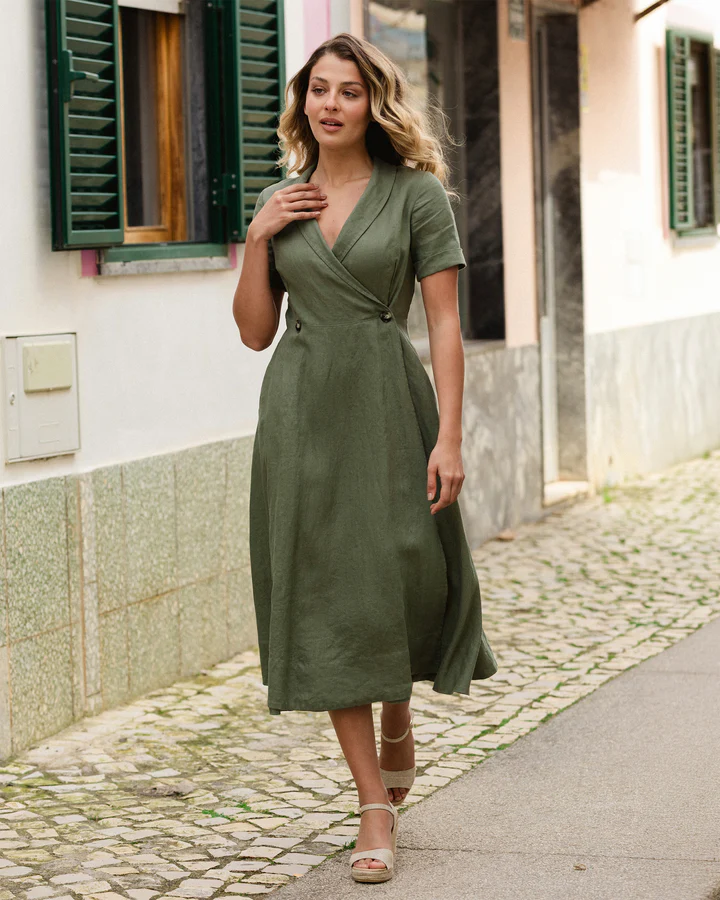
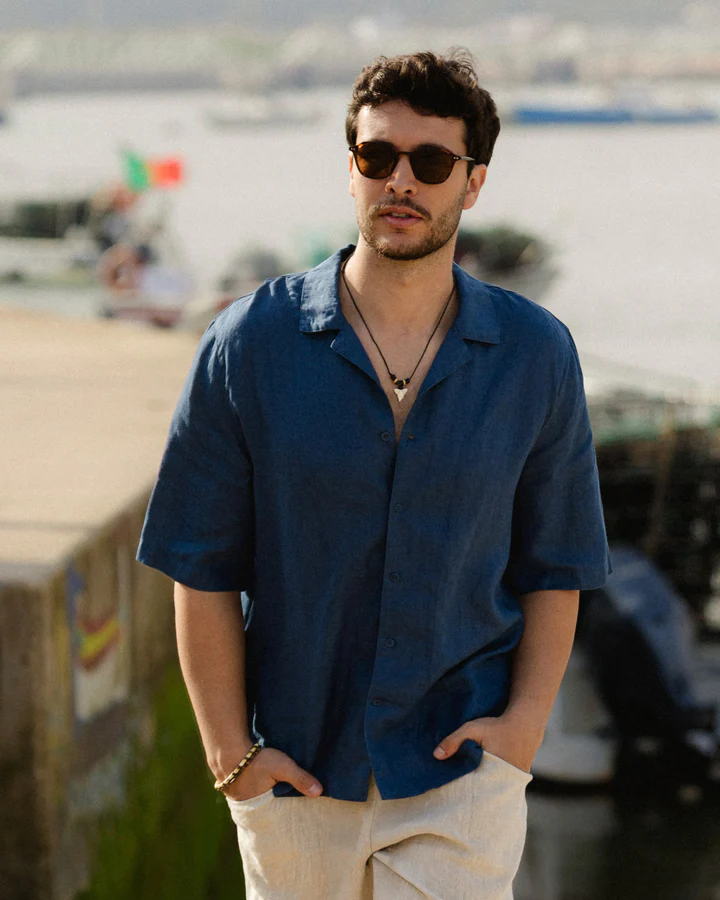
MagicLinen
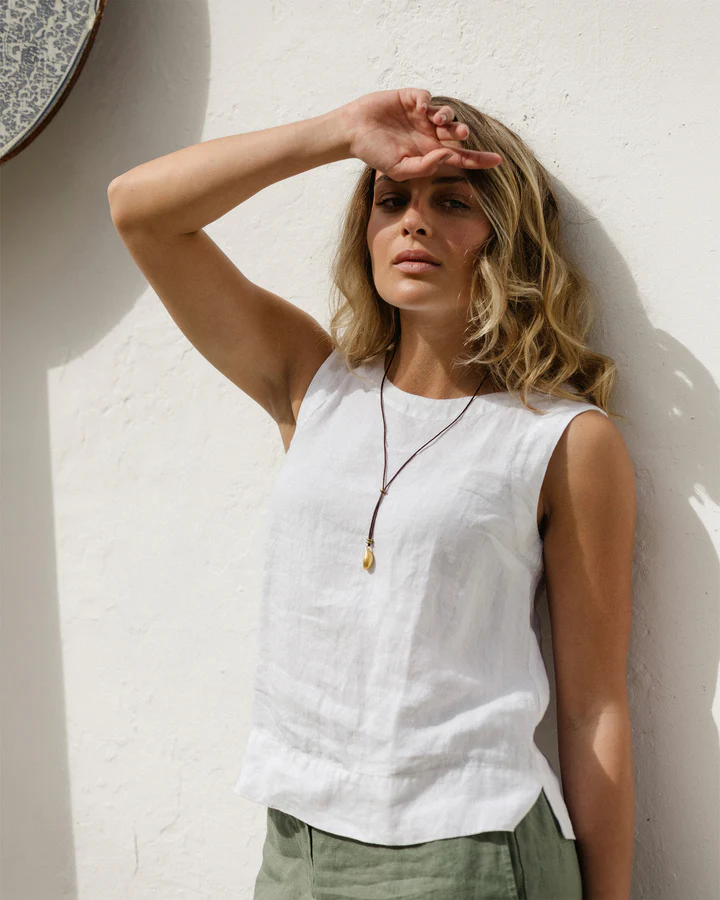
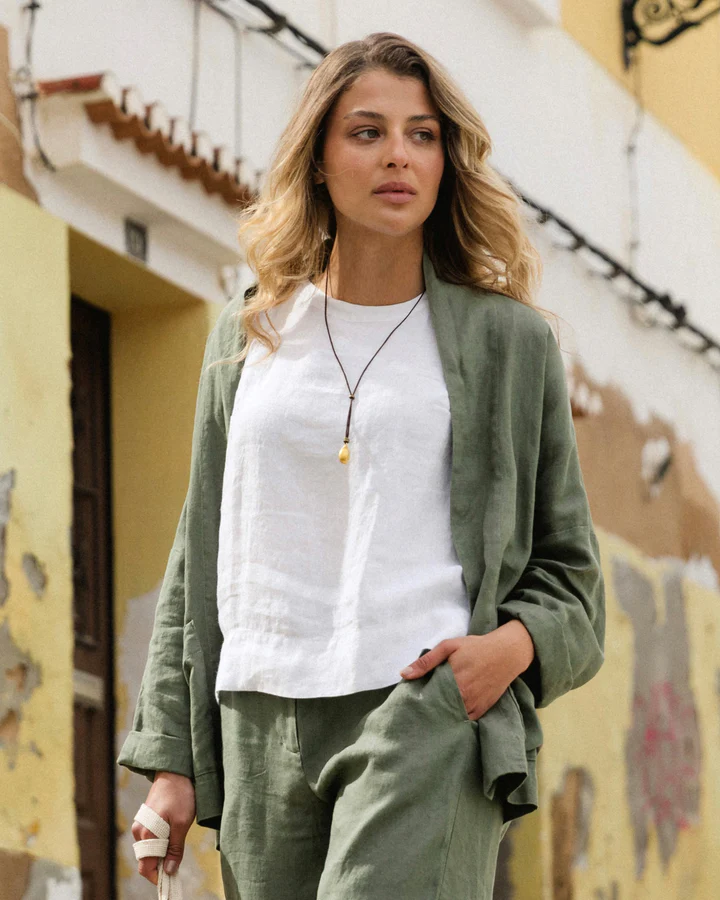
MagicLinen whole range is 100% European linen, handcrafted in Vilnius, Lithuania, and Oeko-Tex certified, which means it is tested free of the harmful chemicals you would normally worry about in dyeing and finishing.
There is no plastic in the cloth, so it breathes in summer and composts at the end of its life.
Best Plant-Dyed Organic Clothing
Sustain by Kat
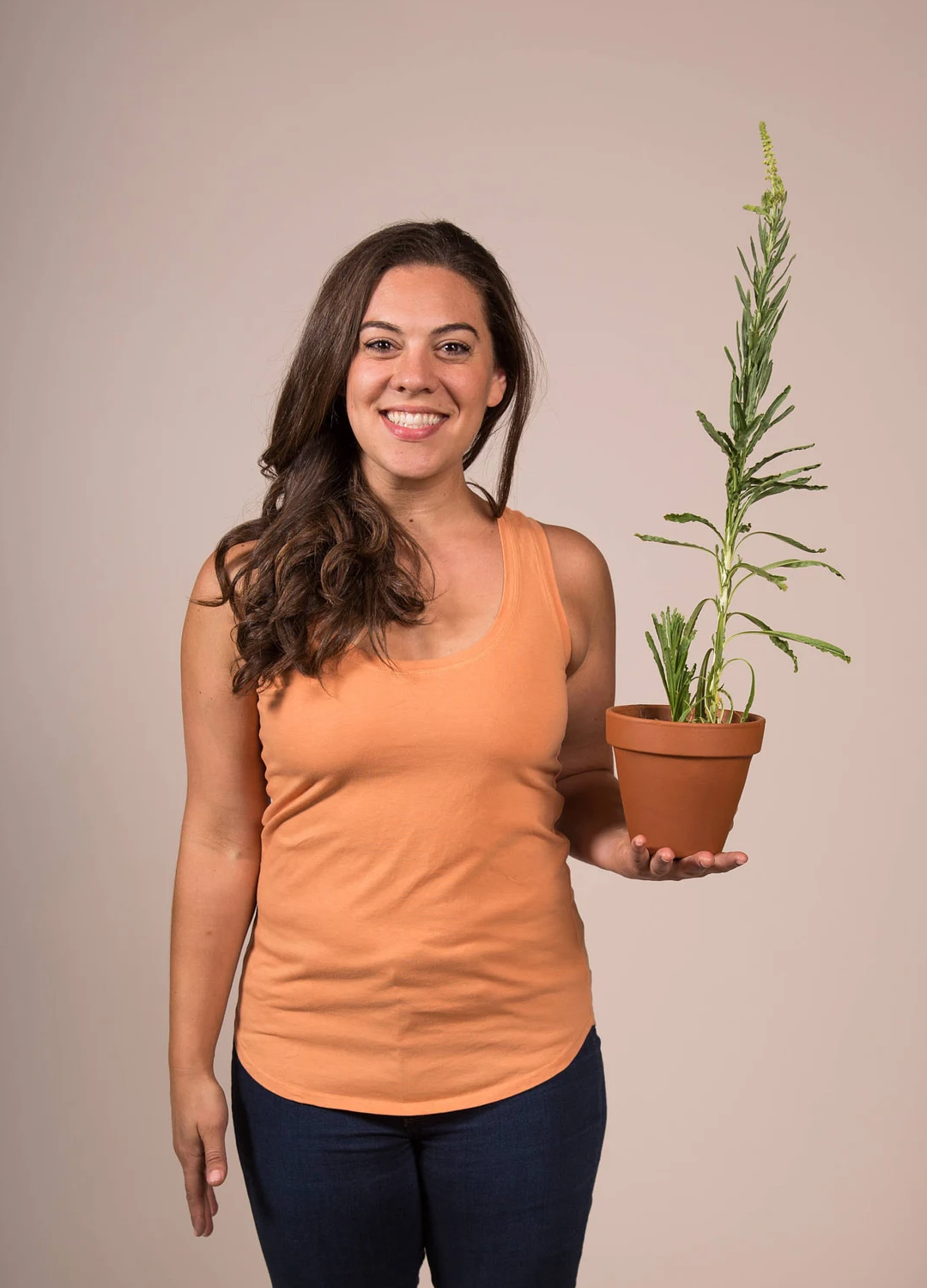
100% natural from the fibre to the thread to the dye.
Every piece is organic and coloured with holistic, plant-based dyes rather than synthetic colour, and the brand is open about making locally in the US and supporting fair-wage artisan communities.
If you came for naturally dyed, slow-made, skin-kind clothing and you want that ethos in soft organic cotton instead of silk, this is where to look next.

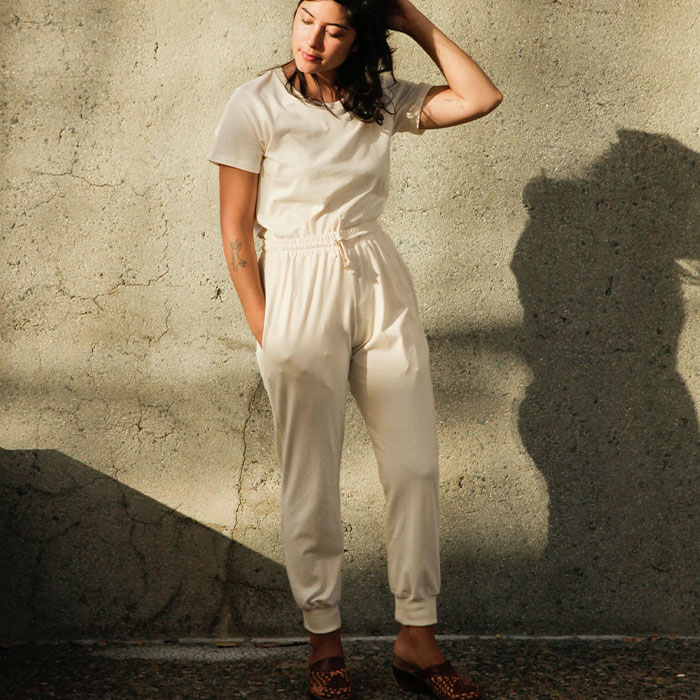
Best Sustainable Organic Cotton Basics And Joggers Brand
Harvest & Mill
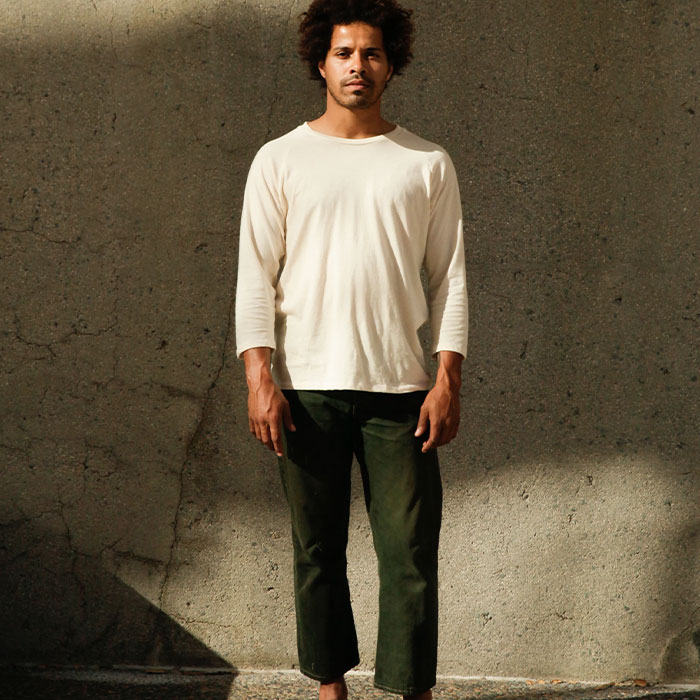
Organic cotton basics grown, milled and sewn entirely in the USA on a “seed to stitch” model, direct from American farmers, heritage mills and local sewing teams.
Vegan and PETA-approved, with much of the range left undyed, plus low-waste cutting and compostable or recyclable packaging.
What Bibico Gets Right About Sustainable Fashion
Is Bibico Natural Fibre Clothing Or A Synthetic Blend?
Here is the fair version, because Bibico earns it on the labour side.
A wardrobe built from the brand’s 100% cotton dresses, organic cotton separates and linen pieces is genuine natural plant fibre, made by fair trade cooperatives, and that is a real thing to celebrate.
The wool jumpers are not part of that picture: wool is animal hair, not a natural fibre, so it sits outside the plant-fibre wardrobe we build here.
A clean, plant-based Bibico outfit looks like this:
- A 100% cotton or organic cotton dress as the foundation, breathable and compostable at end of life.
- A 100% cotton overshirt or knit layer for warmth instead of the wool, so the whole look stays natural plant fibre.
- A pure linen layer for summer, if you can catch one of the two.
But the honest caveat is the part the marketing skips.
Pick wrong and you land on one of the 31 animal-and-synthetic blend pieces, or one of the 3 styles with no clear fibre declared, and the outfit quietly stops being natural plant fibre.
With Bibico you have to read the label of each individual style, because the brand-level promise of all-natural does not hold across the whole rail.
That is the difference between a MIXED brand and a clean pass.
How Bibico Compares To Brands That Fail The Natural Fibre Test
To be clear about where Bibico sits, it is nowhere near the bottom of the pile.
The brands that truly fail the fibre test are the ones spinning polyester and elastane into almost everything and calling it conscious.
Bibico is not that. Its natural half is real cotton and linen, and much of the rest is wool rather than plastic, which is a different problem from the synthetic crowd, though wool is still animal fibre rather than the natural plant cloth we count.
But MIXED is still MIXED.
A genuine clean pass like Harvest & Mill shows what a fully natural rail looks like with no animal fibre, no synthetic-blend column and no unclear compositions hiding in the data.
Bibico beats the high street comfortably, yet it has not closed the gap to the brands that scanned 100% natural plant fibre with nothing to explain away.
You can see every one of those side by side at the clothing data hub.
Is Bibico Clothing Good For Your Skin And Health?
Elastane, nylon and polyester are not just an environmental footnote.
They shed microscopic plastic fibres with every wear and every wash, and those fibres do not stay in the laundry.
Researchers publishing in the journal Environment International confirmed microplastics in human blood for the first time in 2022, found in the majority of the people they tested.
The fibres against your skin all day are part of that story.
This is why the synthetic-blend slice in the Bibico scan matters more than its 7.2% suggests.
The whole point of choosing cotton and linen is to keep plastic off your skin, so a piece cut with elastane stretch undoes the reason you reached for natural plant fibre in the first place.
The fix is simple: choose the 100% cotton and the linen, and skip the blends.
A wardrobe of single-fibre plant cloth, like the rail at Sustain by Kat, sheds no plastic at all.
With Bibico you can get part of the way there, you just have to do the reading the brand should have done for you.
What Would Make Bibico Genuinely Sustainable And Plastic Free
The one that stopped me sits on Bibico’s own materials page.
Describing its lyocell, the brand writes that the fabric “uses no harmful chemicals”.
Describing its lyocell, the brand writes that the fabric “uses no harmful chemicals”. Lyocell is a chemically processed cellulosic
Lyocell is a chemically processed cellulosic, spun from wood pulp dissolved in a solvent.
The modern closed-loop process recycles that solvent and is genuinely cleaner than viscose, which is the honest claim, but to say it uses no chemicals at all is simply wrong.
The scan confirms the lyocell pieces are still a sound choice, yet a transparent brand should describe the process accurately rather than rounding it to zero.
The second gap is the one the data surfaced.
Bibico markets a natural-fibre wardrobe, but the scan caught 31 styles blending animal fibre with synthetic stretch and 3 more with no clear composition declared.
That is a flag because the brand never names a synthetic anywhere in its materials copy, so the buyer has no warning that some pieces contain plastic.
A natural-only brand should either drop the blends or label them plainly.
The rest are fixable transparency gaps rather than scandals:
- Bibico names India and Nepal as its production homes and leans on fair trade cooperatives, which is real, but it does not publish farm-level cotton traceability or a public, downloadable code of conduct and wage floor. The WFTO cooperative link is a strong start, not full traceability.
- The organic share is smaller than the framing suggests. 258 styles scanned as 100% plant fibre, against 116 in 100% animal fibre plus a further 36 in leather, blends and unclear. The homepage talks organic, the rail is mostly not.
- That a handful of styles, 3 in all, would not declare a clean single fibre is itself the issue. Clear composition on every product page is the baseline, and Bibico misses it on fewer than one style in a hundred.
Who Owns Bibico, And Is Bibico Actually A Sustainable Brand?
Bibico is owned by its founder Nieves Ruiz Ramos, known as Snow
Bibico is independent, which is the good news.
It was founded in 2007 by Nieves Ruiz Ramos, known as Snow, a Spanish designer who took a fashion degree in France and then spent years designing for Zara and other high street giants.
She has said she grew disillusioned watching the industry move from four collections a year to a new drop every week, with worse quality and no thought for the people sewing it.
So Snow and her husband built Bibico as the slow-fashion answer, working since 2007 with WFTO fair trade cooperatives, including women’s cooperatives in Mumbai and Nepal that provide training, fair wages and safe work.
On the labour side, this is a brand that visibly practises a lot of what it preaches, and the customer reviews back the quality.
Because Bibico’s cotton is sourced and made in India, the organic claim carries the same caveat Hold The Throne applies to every India-sourced label.
In 2020 GOTS uncovered roughly 20,000 tonnes of fraudulent organic cotton in India, around one sixth of the country’s production, with forged transaction certificates and a cloned certifier website.
It means a certificate alone is not proof, which is exactly why traceability past the certificate matters.
Pair that with a scan that is 62.3% natural plant fibre rather than 100%, the rest being wool and other non-natural fibre, and Bibico is a brand doing a great deal right while still asking you to take part of the fibre story on trust.
Is Bibico Legit And Actually Sustainable?
Bibico is a real, independent, fair-trade-minded slow fashion brand, and on ethics and quality it largely delivers what it claims.
On fibre, it is not the clean all-natural pass the marketing implies: 62.3% of the rail is natural plant fibre, and wool, an animal fibre, makes up most of the rest, so it lands as MIXED rather than a verified pass on the Bibico listing.
Bibico holds 4.8 out of 5 from 934 reviews on Judge.me, and on its own Trustpilot page the single reviewer praised quick delivery, free returns and good-quality jumpers, though that one-review sample is thin.
On the blog Curiously Conscious, ethical-fashion writer Besma called her Bibico jumper “well-made” and “definitely better than high-street alternatives”, while honestly flagging that her piece “was made in the EU rather than a fair trade cooperative”, a reminder that not every style carries the same story.
The most useful critical note across reviews is on consistency: a long-time customer reported the sizing had drifted year to year, with the arms on a medium coming up shorter than before.
Buy Bibico if you want soft, well-made, ethically sewn cotton and linen staples and you are happy to check each label, but know that much of the rail is wool, which is animal hair rather than the natural plant fibre we count, and a few pieces hide synthetic stretch.
Be more careful if you assumed the whole brand was plant-based and plastic-free, because the scan says it is not.
Want the receipts?
Download the Bibico data sheet and browse every brand’s raw material data at the clothing data hub.