Destinations › Africa · The Destination Index · recorded destination information · verify source dates and scope
Madagascar.
Southern Africa, island in the Indian Ocean, east of Mozambique. 587,041 sq km and 32,740,678 people, 4,828 km of coastline, tropical along coast, temperate inland, arid in south.
Region · Africa
Population · ~32,740,678
Languages · Malagasy (official), French (official), with regional Malagasy dialects
Eco Index · 58/100 · Weak · ranked 59 of 77
486,000 visitors a year · 32,740,678 residents
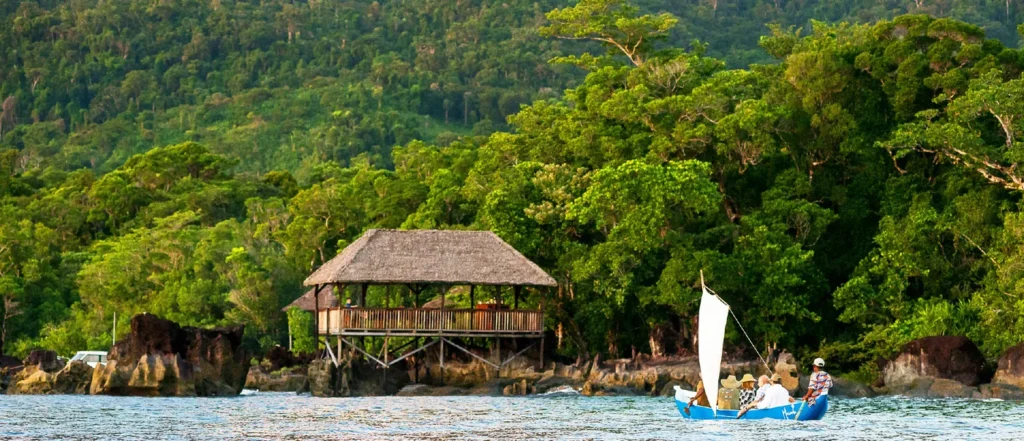
Header photo · Thái Trường Giang
Every figure below carries its named source and year. The Eco Index scores twelve pillars on the same scale everywhere; seven are measured from published data with fixed thresholds, five are assessed from the named sources.
Madagascar at a Glance.
The score, and the four numbers that set the tone. 12 equally-weighted pillars, every pillar sourced.
Compare with:
Renewable power
42%
of electricity
Food imported
18%
of merchandise imports · ~US$962m a year
The Eco Index across 12 pillars · scored 0 to 5 · World Bank, OWID, WHO/UNICEF JMP, FiBL, Protected Planet, IUCN, UNESCO (2023-24)
Water
Food & farming
Plant-based
Organic
Conservation
Wildlife
Materials
Pollution
Recycling
Energy
Culture
Heritage
Facts That Surprise People About Madagascar.
The numbers and firsts that change how you see Madagascar, the sobering and the remarkable. Every one is dated and linked to its source.
SoberingFood
Four in ten people are undernourished
In 2024, 41.8% of Madagascar's population did not get enough food to meet their energy needs, according to World Bank data from the FAO.
SoberingHealth
Four in ten young children are stunted
In 2021, 39.8% of children under five in Madagascar were too short for their age, a sign of long term undernutrition, according to World Bank data.
SoberingHealth
Most people lack safe drinking water
In 2024, only 22.1% of people in Madagascar used safely managed drinking water services, according to World Bank data from WHO and UNICEF.
SoberingEnvironment
Almost a third of tree cover lost since 2001
Between 2001 and 2023 Madagascar lost 4.92 million hectares of tree cover, 29% of its forest cover. Forest Trends says annual deforestation rates have been among the highest in the world since 2013.
Source: Forest Trends, Madagascar country profile · 2023
SoberingNature
Nearly every lemur species is threatened
In July 2020 the IUCN Red List found 103 of the 107 surviving lemur species threatened with extinction, and 33 Critically Endangered, mainly due to deforestation and hunting.
RemarkableNature
Seven baobab species found only here
Madagascar has its own baobab species found nowhere else. A study published in the journal Taxon in July 2026 restored Adansonia bozy as a separate species, raising the island's count of endemic baobabs from six to seven.
Source: Taxon, Phylogenomic analysis of Madagascar's baobabs (2026) · 2026
RemarkableNature
Rainforests where most species are found nowhere else
In 2007 six national parks in eastern Madagascar were listed together as the Rainforests of the Atsinanana World Heritage site. Endemism there is 80 to 90% for all groups of species.
Source: UNESCO World Heritage, Rainforests of the Atsinanana · 2007
Worth knowingNature
Home of the world's smallest primate
Madame Berthe's mouse lemur, found in Madagascar, is the smallest primate in the world. IUCN listed it as Critically Endangered in 2020.
The History of Madagascar.
Madagascar has four elements on UNESCO's intangible heritage lists, among them hiragasy, a performing art of song, dance and speech, the kabary oratorical art and the tsapiky music of the south-west. The valiha, a bamboo tube zither, is the island's most popular instrument.
Where the name comes from
The country is Madagasikara in Malagasy and Madagascar in French, its two official languages, according to the UK Permanent Committee on Geographical Names.
The land itself: a narrow coastal plain rising to a high central plateau and mountains. Its high point is Maromokotro, 2,876 m. Source: Foiben-Taosarintanin'i Madagasikara, the national mapping agency, with the UK Permanent Committee on Geographical Names.
Where it starts
An Austronesian island off Africa
There is no convincing evidence that people settled Madagascar before the middle of the first millennium AD. Malagasy belongs to the Austronesian language family, which is otherwise found only in Southeast Asia and the Pacific, and genetic and cultural evidence also points to settlers from Island Southeast Asia, while the people share African ancestry too. Those settlers brought Asian crops such as rice and mung bean, and their remains are the first reliable archaeological evidence of the Southeast Asian colonisation of the island.
How it got here
Kingdoms, then French rule
From the 9th century Mahilaka, on the north-west coast, was a large Indian Ocean trading port and the earliest known town on the island. Between the 17th and 19th centuries the Sakalava built a loose empire of three kingdoms across most of the west, and from the 1790s the Merina of the central highlands united under one dynasty and, armed by Britain after 1820, conquered other regions. A French colonial takeover in 1895 ended the Merina empire. France put down an armed rebellion in the east in 1947, killing thousands, and independence came on 26 June 1960.
The timeline
c. AD 500
First settlement.
When people first reached Madagascar is debated. A 2019 review found no convincing evidence of settlement before the middle of the first millennium AD, and rejected earlier claims based on stone tools and cut-marked bones. Source
First millennium AD
Crops carried across an ocean.
Southeast Asian settlers brought Asian crops with them, and those crop remains are the first firm archaeological evidence of the westward Austronesian expansion across the Indian Ocean. Source
Today
Malagasy.
The Malagasy people share African ancestry, while their language, genetics and culture point to Austronesian-speaking settlers who crossed the Indian Ocean. Source
9th to 13th centuries
Trading towns.
Mahilaka, on the north-west coast, is a large Indian Ocean trading port and the earliest known urban site in Madagascar. Source
1600s to 1700s
Kingdoms.
The Sakalava build a loose empire of three kingdoms across most of the west, trading through Swahili and Indian middlemen. Source
1790s to 1820s
The Merina kingdom.
The Merina of the central highlands unite under one dynasty. In 1820 Britain recognises their ruler as king of Madagascar and arms his conquest of other regions. Source
1895
French conquest.
A French colonial takeover in 1895 ends the Merina empire, helped by resistance to Merina rule from other groups. Source
1947
The uprising.
French forces put down an armed rebellion in the east, and thousands are killed. Source
1960
Independence.
Madagascar becomes independent from France on 26 June 1960, with Philibert Tsiranana as its first president. Source
Settling Madagascar, Journal of Island and Coastal Archaeology · Ancient crops provide first archaeological signature of the westward Austronesian expansion, PNAS · Malagasy empires (Sakalava and Merina), The Encyclopedia of Empire · BBC News, Madagascar profile, timeline · US Office of the Historian, Madagascar · Douglas et al. 2016, PNAS, full text on PubMed Central · UNESCO open data, World Heritage record for the Rainforests of the Atsinanana
Nature and Biodiversity in Madagascar.
Terrestrial protected areas cover about 12.8% of land and marine protected areas 1.4% of territorial waters (World Bank, 2025), managed through a network of national parks. Enforcement is severely strained, with illegal rosewood logging and slash-and-burn clearance continuing inside and around reserves. Protection on paper substantially outpaces protection on the ground.
Is wild Madagascar protected? 12.8% of the land is, against a 30% target for 2030
How protected is nature in Madagascar?
Forest cover17.3%
Terrestrial protected area12.8%
Marine protected area1.4%
3191 (mammals, birds, fish & plants) listed as threatened.
Found only here. Lemurs (over 100 species), the fossa, tenrecs, and six of the world's baobab species.
The watchlist
ThreatenedIndri (Indri indri) Critically Endangered on the IUCN Red List, and recorded in Madagascar in GBIF occurrence data (mammal).
ThreatenedRayed Tortoise (Astrochelys radiata) Critically Endangered on the IUCN Red List, and recorded in Madagascar in GBIF occurrence data (turtle).
ThreatenedVitex lastellei Critically Endangered on the IUCN Red List, and recorded in Madagascar in GBIF occurrence data (plant).
ThreatenedAloe mandrarensis Critically Endangered on the IUCN Red List, and recorded in Madagascar in GBIF occurrence data (plant).
ThreatenedWhite Sifaka (Propithecus verreauxi) Critically Endangered on the IUCN Red List, and recorded in Madagascar in GBIF occurrence data (mammal).
ThreatenedDiademed Sifaka (Propithecus diadema) Critically Endangered on the IUCN Red List, and recorded in Madagascar in GBIF occurrence data (mammal).
ThreatenedTaxonomy (Hapalemur aureus) Critically Endangered on the IUCN Red List, and recorded in Madagascar in GBIF occurrence data (mammal).
ThreatenedRuffed Lemur (Varecia variegata) Critically Endangered on the IUCN Red List, and recorded in Madagascar in GBIF occurrence data (mammal).
What is still here, and what is gone?
Tap a species for the honest status.
.
Closest to being lost, by name
Indri (Indri indri)
Critically Endangered, the last IUCN category before Extinct in the Wild, and still recorded in Madagascar. GBIF holds 84 verified occurrence records.
Rayed Tortoise (Astrochelys radiata)
Critically Endangered, the last IUCN category before Extinct in the Wild, and still recorded in Madagascar. GBIF holds 16 verified occurrence records.
Vitex lastellei
Critically Endangered, the last IUCN category before Extinct in the Wild, and still recorded in Madagascar. GBIF holds 12 verified occurrence records.
Aloe mandrarensis
Critically Endangered, the last IUCN category before Extinct in the Wild, and still recorded in Madagascar. GBIF holds 9 verified occurrence records.
Species named here are drawn from GBIF occurrence records for Madagascar filtered to the IUCN Red List threatened categories. Species are listed where GBIF holds occurrence records for them in this country. Record counts are not published here because the figure cannot be reproduced from a public GBIF query.
Who is putting it back

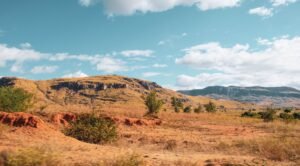
National park in Alaotra-Mangoro, mapped and named in the open record for Madagascar. OpenStreetMap.
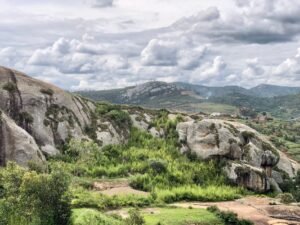
Nature reserve in Melaky, mapped and named in the open record for Madagascar. OpenStreetMap.
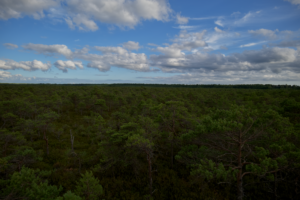
Nature reserve in Atsimo-Andrefana, mapped and named in the open record for Madagascar. OpenStreetMap.
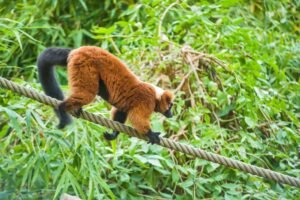
Nature reserve in Amoron'i Mania, mapped and named in the open record for Madagascar. OpenStreetMap.
Botanical garden in Analamanga, mapped and named in the open record for Madagascar. OpenStreetMap.
Water and Ocean in Madagascar.
Madagascar's eastern rainforests are among the wettest places in the region, so physical freshwater is abundant in much of the island, yet access is poor. The World Bank and JMP record only 53.4% of the population using at least basic drinking water in 2020. The semi-arid south suffers recurrent drought that has driven acute food and water crises.
Does Madagascar have enough fresh water? Yes, with headroom
22.1% of people here have safely managed drinking water at home (2024, WHO/UNICEF JMP). Coverage is well short of universal, so a visitor should not assume the tap is safe.
Cleanest water: Rivers of the eastern rainforests, such as around Masoala.
How much fresh water does Madagascar have, per person?
11,072 m³
Madagascar
1,000 m³
the UN “water scarce” line
Madagascar withdraws about 13,458 million cubic metres of fresh water a year (2022). That is 11.3% of the fresh water actually available to it, which FAO counts as low water stress. Of what is taken, farming takes 96%, homes and towns 3%, industry 1%. Source: FAO AQUASTAT.
What are the rules on Madagascar beaches?
✕Tap water: Not drinkable.
✓Plastic rules: 2015 decree banning thin plastic bags, with weak enforcement..
✕Solo travel: rated take care on the record for this destination.
✕Marine protection: 0.9% of the sea is protected. The 30x30 pledge for 2030 is not met yet.
Named on the open map: Plage Libanona and Plage Monseigneur (Tolagnaro), Plage du Paradis (near Tolagnaro), Plage de la Batterie (Toliara), Plage du Village Touristique (Mahajanga), Plage de Morombé (Morombe). Each one is a place you can look up before you go. OpenStreetMap.
Where does the sewage go?
12.8%
of people have safely managed sanitation
12.8% of people here use a safely managed sanitation service, meaning waste is contained, emptied and treated rather than reaching the ground or the sea untreated (2024, World Bank / WHO-UNICEF JMP, SDG 6.2.1). The rest is what the rivers and the coast receive.
How is the sea around Madagascar doing?
One cross-section, every answer measured.
Surface
What the coast carries
Wet Nov–Mar, dry Apr–Oct; the east coast is always humid.
Nearshore
Protected water
1.4% of territorial waters are protected, against the 30% pledged for 2030 under the Global Biodiversity Framework.
Cleanest
Where the water is cleanest
Rivers of the eastern rainforests, such as around Masoala..
The record
Measured
Madagascar's eastern rainforests are among the wettest places in the region, so physical freshwater is abundant in much of the island, yet access is poor. The World Bank and JMP record only 53.4% of the population using at least basic drinking water in 2020.
Madagascar scored 71 out of 100 on the Ocean Health Index in its 2025 assessment, below the global average of 72, and ranked 127th of 220 coastal regions. The index team says it is no longer updating scores, so the 2025 figures may be the last.
Sea protected
1.4%
Against the 30% pledged for 2030 under the Global Biodiversity Framework.
Threatened species
3191 (mammals, birds, fish & plants)
Mammals, birds, fish and higher plants on the IUCN list.
Is the tap water safe in Madagascar?
22.1% of people have safely managed drinking water at home (2024, WHO/UNICEF JMP). Renewable fresh water works out at about 11,072 cubic metres per person a year (World Bank).
How hard is the water supply being pushed?
Of every 10 buckets nature refills, 1 are already taken. Withdrawals run at 11.3% of what Madagascar renews internally each year (2022, World Bank / FAO AQUASTAT). That is inside the 25% mark generally treated as water stress, so the supply has headroom.
When is the best time to visit Madagascar? Tap your month.
Tap your month.
.
How much fresh water does Madagascar actually have?
Nature renews about 11,072 cubic metres of fresh water per person per year here. That ranks Madagascar 164 of 208 countries measured, putting it in the wetter half of the world. The UN treats anything under 1,000 cubic metres as water scarce, and this is above that line. World Bank / FAO AQUASTAT.
Food and Drink in Madagascar.
About seven in ten Malagasy workers are employed in farming (World Bank, 2025). Rice is the leading crop, alongside sugarcane, cassava, sweet potatoes, bananas and maize, which is grown mostly in the south. Imported rice is also sold in local markets, and high levels of acute food insecurity persist in the south. Vanilla and cloves are among the top export earners.
Where does the food in Madagascar come from?
18.4% imported
about US$962m a year
On the plate: Rice (vary), cassava, romazava stew, ravitoto, breds leafy greens, vanilla.
2 of 10
bites are imported
The island buys in more food energy than it eats. About US$962m a year leaves the country to pay for it. The green slice is roughly what still grows here.
About 18.4% of everything Madagascar buys in from abroad is food, roughly 2 in every 10 imported items on the dock (2024, World Bank). Farming itself is 21.7% of the economy and 70.3% of the land is agricultural, of which 5.2% is arable. The green slice is roughly what still grows here.
What is killing people in Madagascar? The imported diet.
Cause of death, and the diet behind it.
Non-communicable diseases, all combined40%
Diabetes4.6%
Adults living with overweight or obesity. 17%.
Can Madagascar feed itself?
5.2%
Arable land
70.3%
Agricultural land
11,829,429
Farmers
7,413,150
Arable acres
21.7%
Agriculture, share of GDP
Harvest: Main rice harvest roughly April to June; vanilla harvested around June to August; lychees May to July.
Feeding itself
Farming supports most Malagasy households, with rice grown across the island alongside cassava, maize, beans and leafy greens. The economy rests on smallholder agriculture, though it imports rice in deficit years and the south faces chronic food insecurity.
Certification
FiBL records about 103,817 hectares of certified organic farmland, roughly 0.3% of agricultural land in 2020. Much of this is export-oriented, covering vanilla, cocoa and essential oils.
Water for crops
Madagascar's eastern rainforests are among the wettest places in the region, so physical freshwater is abundant in much of the island, yet access is poor. The World Bank and JMP record only 53.4% of the population using at least basic drinking water in 2020.
Why the organic number looks like that. Certification covers only part of what is grown cleanly, so a small certified share is a gap in the paperwork rather than proof that nothing is. What the official land record does show: 70.3% of the country is agricultural land and 5.2% is arable (2023, World Bank). Certification is paid for per farm per year by a foreign body, which prices out smallholders, so the organic number reads worse than the practice.
What actually grows here
RiceSugarcaneCassavaSweet potatoesBananasVegetablesMangoes/guavasMaizePotatoes
The food that already fits
The plant-based kitchen here is not an import. By tonnage, the largest crops grown in Madagascar are rice, sugarcane, cassava, sweet potatoes and bananas (FAO, FAOSTAT crop production, 2024). That is what the land itself puts on a plate.
Buy direct where residents buy: Ankilizato Market, Fish Market, Ifanadiana Market, Market (OPCI). Each is a mapped, named marketplace, so the money stays with the seller rather than the importer. OpenStreetMap.
Not yet checked by us. Plant based kitchens listed publicly: Chez Mary, vegetarian snack restaurant on the RN1 at Ambatomirahavavy, near Antananarivo: fruit and vegetable dishes, some vegan, book ahead; L'Oriental Ivandry, Lebanese restaurant in Antananarivo: hummus, aubergine dip, falafel and pitta; Little India, Indian restaurant in Tsaralalana, Antananarivo: samosas, pakoras, aloo bonda and salads, ask for vegan; Bambou Beach, Lebanese restaurant on Madirokely beach, Nosy Be: a vegan plate of falafel, baba ganoush and fattoush; Green Park Hotel, hotel restaurant in Antsirabe: vegetarian pizza, salads and rice dishes made vegan on request. Tell us how they are.
Is this grown in Madagascar?
Tap a food for the honest answer.
.
CassavaRomazava stewRavitotoBreds leafy greensVanilla
World Bank Open Data · FAO, FAOSTAT crop production · World Health Organization · FAO AQUASTAT · HappyCow, Antananarivo listings (print view) · HappyCow, Ambatomirahavavy listings (print view) · HappyCow, Nosy Be listings (print view) · HappyCow, Antsirabe listings (print view) · Alimentarium, The delights of Madagascan cuisine (archived) · FAO GIEWS country brief, Madagascar (September 2026) · World Bank, Employment in agriculture (% of total employment), Madagascar · CIA World Factbook, Madagascar (final edition data, open mirror)
Climate and Energy in Madagascar.
Madagascar is one of the lowest carbon emitters on Earth at roughly 0.15 tonnes of CO2 per person, a reflection of very low energy use and limited electrification rather than a clean power achievement. Its grid is close to 45 per cent renewable, led by hydropower at about 31 per cent, with the rest largely diesel and other thermal generation. The country has a climate pledge and large untapped hydro and solar potential, but energy access and investment remain low. Ultra low emissions lift the score, while a half fossil grid holds it back from the top band.
What powers Madagascar?
Renewable 42.4%Fossil 57.6%
JIRAMA, a state owned company, runs most of Madagascar's grid. The IMF said in 2025 that its production is inefficient, its transmission and distribution losses are high and its tariffs sit below cost, so the gap falls on the state budget. In 2025 JIRAMA signed five agreements with private partners, mainly for rural electrification, and said it was trying delegated management in targeted areas rather than privatisation; under the National Energy Pact it is to identify private investment in transmission and distribution by 2026. In October 2026 JIRAMA said it costs about 1,225 ariary to produce a kilowatt hour that customers pay about 795 ariary for, with annual losses of about 1,030 billion ariary, while load shedding continues in Antananarivo even as the capital's grid deficit roughly halved from 44.9 MW to 23.5 MW in a year.
Climate pollution per person
The safe amount, what the planet can absorb
2 tonnes
One person here
0.15 tonnes
The world average, for comparison
4.7 tonnes
The worst it ever got
0.15 tonnes
The grid
Madagascar is one of the lowest carbon emitters on Earth at roughly 0.15 tonnes of CO2 per person, a reflection of very low energy use and limited electrification rather than a clean power achievement. Its grid is close to 45 per cent renewable, led by hydropower at about 31 per cent, with the rest largely diesel and other thermal generation.
Pollution
Madagascar banned the manufacture, import, sale and use of plastic bags by Decree No. 2014-1587 of 7 October 2014, replaced by Decree No. 2017-010 of 3 January 2017, though enforcement and litter management remain patchy. Annual mean PM2.5 was about 20.6 micrograms per cubic metre in 2023 (IQAir), moderate and driven partly by biomass burning and cooking fires.
Water stress
Madagascar's eastern rainforests are among the wettest places in the region, so physical freshwater is abundant in much of the island, yet access is poor. The World Bank and JMP record only 53.4% of the population using at least basic drinking water in 2020.
What pollutes most here
1The grid The share of electricity still generated from fossil fuel.65%
2Industry Illegal rosewood and hardwood logging, wildlife trafficking and unregulated sapphire mining; avoid buying rosewood or tortoiseshell..named
3Air Modelled annual mean against a WHO guideline of 5 µg/m³.20.6
4On the record Madagascar banned the manufacture, import, sale and use of plastic bags by Decree No. 2014-1587 of 7 October 2014, replaced by Decree No. 2017-010 of 3 January 2017, though enforcement and litter management remain patchy.
What has Madagascar promised on climate?
Electricity renewable today34.1% (2021)
Land protected, against a 30% target12.8% by 2025
Sea protected, against a 30% target1.4% by 2025
Measured on delivery, 34.1% of electricity is already renewable (2021, World Bank), so 65.9% of the grid is still to be converted. The pledge on file is measured here against what has actually been delivered, not taken on its own (UNFCCC NDC Registry, CBD Kunming-Montreal Target 3).
The biggest line item
One return flight against a whole year of living.
A resident's entire year0.15 t CO2e
Safe-climate budget, per year2 t CO2e
Los Angeles return, economy3.21 t CO2e
New York return, economy2.52 t CO2e
Sydney return, economy1.81 t CO2e
London return, economy1.64 t CO2e
Paris return, economy1.58 t CO2e
How much CO2 does flying to Madagascar emit?
Tap where you would fly from. One return flight, economy.
.
Firsts on climate finance. In late 2020 Madagascar became, as Artemis reports, the first African nation to take up sovereign parametric cyclone insurance from the African Risk Capacity. Cyclone Batsirai triggered a US$10.7 million payout in February 2022, which ARC described as its first parametric payout for tropical cyclone cover. After Cyclones Gezani and Fytia in February 2026, ARC paid US$4.87 million and US$770,000, with the African Development Bank's ADRiFi programme helping to pay the premiums. The bank says Madagascar has received about US$13 million in insurance payouts over the last five years with its support.
Climate Watch (WRI) · UNFCCC NDC Registry · World Bank Open Data · UK DESNZ greenhouse gas conversion factors · IMF, The Electricity Sector and Jirama: Republic of Madagascar (Selected Issues Paper, 2025) · L'Express de Madagascar, Réforme: la Jirama envisage une gestion déléguée de ses infrastructures · L'Express de Madagascar, Énergie: la Jirama cherche une issue · Artemis, Cyclone Batsirai triggers $10.7m ARC payout for Madagascar · African Development Bank via AllAfrica, Madagascar cyclone insurance payouts (June 2026)
AI and Data Centres in Madagascar.
Every prompt runs on a machine in a building on somebody’s grid. What that costs the planet depends less on the prompt than on what is burning to power it. Here is what would power one in Madagascar.
Data centres
1
Registered colocation and interconnection facilities, PeeringDB, 2026
Grid renewable
42.4 %
What a machine here runs on.
What powers a data centre in Madagascar?
Most of the power behind a machine here is still burned.
Renewable 42.4%Fossil 57.6%
Cooling water. Every one of those halls runs on the national grid, which is 34.1% renewable today (World Bank). A data centre is only as clean as the electricity behind it, so the same figure that decides this country's climate score also decides the footprint of the AI running inside it. Cooling water use is not separately published by facility, and no operator here reports it.
The rules. Madagascar has 1 colocation and interconnection facilities on the public PeeringDB register, concentrated in Antananarivo (1), alongside 1 internet exchange (MGIX). Named sites include Bâtiment Sirius.
Where the cables land. 4 landing points · Fort Dauphin, Mahajanga, Toamasina, Toliara
Economy and Tourism in Madagascar.
99% residents to 1% visitors across a year. 486,000 international arrivals in 2019 against 32,740,678 people who live here (2025, World Bank / UN Tourism).
Where a visitor dollar goes in Madagascar
87k
Visitors a year
0.0
Visitors per resident
How deep in debt is Madagascar?· for every $100 Madagascar earns in a year, it owes…
Pay to the order of: the creditorsmemo · the 1991 peak
$ 114The worst year on the IMF record. Madagascar owed $114 for every $100 it earned.
IMF World Economic Outlook, 1991signed, the creditors
Pay to the order of: the creditorsmemo · today
$ 49What is owed now, for every $100 of national income (2026).
IMF World Economic Outlook, 2026signed, the creditors
Pay to the order of: the creditorsmemo · projected 2031
$ 48The IMF's own forecast has this falling to $48 by 2031.
IMF World Economic Outlook projection, 2031signed, the forecast
For every $100 Madagascar earns in a year, it owes $49 (2026, IMF World Economic Outlook). The interest on that is paid before schools, clinics or coastline get their turn.
Where does a tourist dollar actually go in Madagascar?
Play one tourist dollar around the board. Every square is a measured fact from this page.
START!
1
GO: a visitor lands
$100 goes on the table. 486,000 international arrivals in 2019 against 32,740,678 residents, one visitor a year for every 67 residents (World Bank / UN Tourism).
$100 in play2
The bed
Who owns the largest places to stay in Madagascar is not published in the records we can check, so this square is left open rather than guessed. Where a listing names its owner, it is shown in the ownership table below.
not published3
The plate
Food is 18.4% of everything Madagascar imports (2024, World Bank), so a large part of every restaurant bill is paid to a supplier abroad. Eating what the land here actually grows, rice, sugarcane, cassava, sweet potatoes, bananas, vegetables, mangoes/guavas, maize, potatoes, keeps that money with the grower.
sails in4
The power
65.9% of the electricity is fossil (2021, World Bank). Lighting, cooling and hot water are paid for largely in imported fuel.
burns away5
What actually stays
Of the two parts of a visitor's bill that can be measured here, the plate and the power mostly leave Madagascar. Choosing locally grown food is the part of that a visitor can actually control.
less than you think6
Pay the bank first
Madagascar owes $49 for every $100 it earns (IMF World Economic Outlook, 2026 projection). The interest is paid before anything else on this board.
$49 per $1007
No plan B
25.4% of everything Madagascar sells abroad is nickel (2023, UN Comtrade). One market moving takes the whole board with it.
25.4% one export8
Community chest
Tourism earns 7.8% of everything Madagascar makes from exports (2020, World Bank / UN Tourism). That is how much of the economy depends on the game continuing.
7.8% of exports9
The flight
Getting here is usually the biggest single line on the bill. From Los Angeles a return economy seat is 3.21 t CO2, on the UK Government's published conversion factors. It is the one part of the trip this board cannot reduce.
3.21 t CO210
Back to GO
The economy turns over about US$21 billion a year (IMF World Economic Outlook, 2026 projection). Every lap of this board is a choice about how much of it stays.
US$21bnGDPUS$19.6bn
Agriculture, share of GDP21.7%
Visitors a year87,100
Visitors per resident0
Residents~32,740,678
Agriculture
Farming is 21.7% of the economy. Farming supports most Malagasy households, with rice grown across the island alongside cassava, maize, beans and leafy greens.
Natural materials
Madagascar has a living natural-fibre tradition of raffia, wild landibe silk, cotton and sisal, used in the lamba wraps worn across the island and in mats and baskets. Weaving and plaiting remain everyday village skills.
Energy
Madagascar is one of the lowest carbon emitters on Earth at roughly 0.15 tonnes of CO2 per person, a reflection of very low energy use and limited electrification rather than a clean power achievement. Its grid is close to 45 per cent renewable, led by hydropower at about 31 per cent, with the rest largely diesel and other thermal generation.
Who owns the biggest hotels in Madagascar?
By rooms · company records and press.
Masoala Forest Lodge · ~7 roomsIndependentnot published
Visitors, over time
2015282k
2016333k
2017285k
2018360k
2019486k
202087k
International tourism receipts run at about US$0.20 billion in 2020 (World Bank / UN Tourism). That is 7.8% of everything the country earns from exports.
How much of your money actually stays here?
Tap the holiday you are planning.
.
Visiting Madagascar, whoever you are.
Resort guest, villa renter, family, nomad or backpacker. The honest playbook for each, from the same sourced numbers.
Already booked a resort? · the rescue list
Five swaps that move your money back on-island
1. Eat where the country eats Choose kitchens cooking what the land here grows, rice, sugarcane, cassava, sweet potatoes, bananas, vegetables, mangoes/guavas, maize and potatoes, over an imported menu.
2. Book with a local operator Never the lobby desk. The margin on a tour is the part that stays.
3. Stay somewhere locally owned Ownership decides where the room rate books. Eco stays
4. Use the transport residents use Shared taxi-brousse minibuses on slow, rough roads; domestic flights save days; travel is slow and seasonal.
5. Buy the craft, not the souvenir Natural-materials work made here pays the maker directly; imported gifts pay a shipping line.
Swipe
First time here
A biologically unique island where the great majority of plants and animals live nowhere else, set against severe deforestation, deep poverty and fragile water and food security.
Best time: Dry season.
Getting around
Shared taxi-brousse minibuses on slow, rough roads; domestic flights save days; travel is slow and seasonal.
Transport is where the fare either stays or leaves.
Eating here
The everyday plate that actually grows here is rice, sugarcane, cassava, sweet potatoes, bananas, vegetables, mangoes/guavas, maize and potatoes. Ordering those keeps the money with the grower and cuts the imported share of the meal.
Eating what the country grows is the cheapest way to cut the import bill.
Good to know
Cash-heavy; MGA. Small notes go a long way.
Rate my hotel. Tap yours for the honest verdict.
Ownership from company records and press.
.
Who owns the place to stay
Masoala Forest LodgeIndependent · 7 rooms
The one property listed here does not publish who ultimately owns it, so no claim is made either way. Ownership is what decides how much of a room rate stays in the country, which is why we show it when a listing states it.
Society and Governance in Madagascar.
How well is Madagascar actually run?
Governance, measured · World Bank WGI
Four measured answers, none of them opinion. Averaged across corruption control, delivery and accountability, Madagascar scores 35 out of 100 (2024, World Bank Worldwide Governance Indicators). That matters here because every pledge on this page is only as good as the machinery meant to deliver it.
What is daily life in Madagascar really like? Measured
Getting around, breathing, throwing away, learning. The honest checklist.
TransportAirWaterWastePower
✓How you get around Shared taxi-brousse minibuses on slow, rough roads; domestic flights save days; travel is slow and seasonal.
✓Air quality, measured Modelled annual mean 20.6. The WHO guideline is 5 µg/m³.
✓Where the air is cleanest Eastern rainforest highlands away from towns.
·Tap water Not drinkable
✓What to drink Bottled water; treat everything, including ice.
✓Plastic rules 2015 decree banning thin plastic bags, with weak enforcement.
✓Sockets and voltage Type C/D/M, 230V
74.7%
literacy. Public spending on education runs at 3.0% of GDP and 18.0% of all government spending, and secondary enrolment stands at 34.1% gross (UNESCO Institute for Statistics, 2019 to 2023).
Made in Madagascar.
Madagascar has a living natural-fibre tradition of raffia, wild landibe silk, cotton and sisal, used in the lamba wraps worn across the island and in mats and baskets. Weaving and plaiting remain everyday village skills. Every step of processing done at home is value that stops leaving the country.
What Madagascar actually sells the world
The single biggest thing Madagascar sells the world is nickel, 25.4% of all exports in 2023 (about US$0.83 billion, UN Comtrade). The next four are coffee, tea and spices at 16.4%, knitted clothing at 7.8%, ores, slag and ash at 7.7%, woven clothing at 7.5%.
Made now · natural materials
Wild landibe silk
Worked in Madagascar from local material, and still a working craft rather than a museum piece.
Made now · natural materials
Cotton
Worked in Madagascar from local material, and still a working craft rather than a museum piece.
Made now · natural materials
Sisal
Worked in Madagascar from local material, and still a working craft rather than a museum piece.
Made now · natural materials
Used in the lamba wraps worn across the island
Worked in Madagascar from local material, and still a working craft rather than a museum piece.
Buys in · 20.7% of imports
Mineral fuels and oils
Madagascar imported US$1.00 billion of mineral fuels and oils in 2023, 20.7% of everything it bought abroad, and sells none of it back. Every point of that is a business that could be built at home rather than shipped in. UN Comtrade.
Buys in · 8.3% of imports
Machinery and mechanical appliances
Madagascar imported US$0.40 billion of machinery and mechanical appliances in 2023, 8.3% of everything it bought abroad, and sells none of it back. Every point of that is a business that could be built at home rather than shipped in. UN Comtrade.
Buys in · 5.6% of imports
Electrical machinery and electronics
Madagascar imported US$0.27 billion of electrical machinery and electronics in 2023, 5.6% of everything it bought abroad, and sells none of it back. Every point of that is a business that could be built at home rather than shipped in. UN Comtrade.
Buys in · 5.5% of imports
Cereals
Madagascar imported US$0.27 billion of cereals in 2023, 5.5% of everything it bought abroad, and sells none of it back. Every point of that is a business that could be built at home rather than shipped in. UN Comtrade.
The maths for an entrepreneur. Madagascar produces about US$20 billion a year, which is roughly US$599 per person (2025, World Bank). Farming is 21.7% of that, while food is 18.4% of everything the country imports. With 5.2% of the land arable, the raw material for that is already in the ground.
See the verified makersCulture in Madagascar.
Hira gasy performance of music and dance
A performing art of the Central Highlands that blends song, dance and speech, usually staged by two troupes in public spaces.
Kabary oratory
Formal, poetic Malagasy speech full of proverbs and wordplay, given at festivities, funerals and official ceremonies.
Tsapiky dance musicA fast music style of south-west Madagascar that mixes electric guitars and drums with local instruments, played at weddings, funerals and festivals.
Valiha tube zitherA tube zither with strings stretched along a length of bamboo and plucked with both hands. It is Madagascar's most popular instrument.
Does Madagascar protect its heritage by law?
Partly, and the gaps say as much as the protections.
What is kept alive. Madagascar's Malagasy culture is distinctive and strongly ancestral. Hira gasy performances of music, dance and oratory, salegy and tsapiky dance music, and the valiha tube zither are widely alive. Ancestor veneration through the razana is central, expressed in the famadihana turning of the bones ceremony and observed through fady ancestral taboos.
Who it belongs to. Malagasy culture is a living blend of Austronesian and African roots, expressed in ancestral customs, famadihana rites and 18 recognised ethnic groups. Community-based ecotourism around parks such as Andasibe and Ranomafana channels some guiding and park income to villages. Deep poverty means benefits are fragile and unevenly shared.
Only here. Lemurs, a whole primate lineage that lives in the wild only in Madagascar..
The Future of Madagascar.
Three futures for Madagascar, every one run forward from measured data.
Where the making actually happens
Named cultural and craft sites on the open map: Photography Museum Madagascar (Antananarivo), Pirates Museum Antananarivo (Antananarivo), Tulé'art Recycling Museum (Toliara), Culture Center (Antsirabe), Fort Flacourt Museum Entrance (Tolanaro). OpenStreetMap. Named craft workshops on the open map: Maro Madagascar, Point de vente produits Artisanaux.
Every measured trend on one line
Run forward at the pace already recorded.
-25%
Forest cover
1995: 22.9% to 2024: 17.3%
-50%
Renewable electricity
2000: 68.5% to 2021: 34.1%
+46%
CO2 per person
1995: 0.1 t to 2024: 0.15 t
-24%
Tourist arrivals
1995: 115k to 2020: 87.1k
+156%
Protected land
2013: 5% to 2025: 12.8%
-12%
Farm workforce
1995: 78.8% to 2025: 69.2%
+250%
Protected sea
2013: 0.4% to 2025: 1.4%
+12%
Agricultural land
1995: 62.7% to 2024: 70.4%
+40%
Urban population
1995: 23.5% to 2025: 32.9%
+26%
Air pollution
1995: 9.82 µg/m³ to 2023: 12.4 µg/m³
-54%
Fresh water per person
1995: 23,984 m³ to 2022: 11,072 m³
+169%
Adult overweight
1995: 6.31% to 2022: 17%
+286%
Electricity access
1995: 11% to 2024: 42.5%
+119%
GDP per person
1995: 273 to 2025: 599
+133%
Population
1995: 14,051k to 2025: 32,741k
-3%
Renewable energy use
1995: 86.1% to 2022: 83.1%
+24%
Energy per person
1995: 244 kg to 2024: 302 kg
+168%
Protected area, total
2013: 1.9% to 2025: 5.1%
+16%
Life expectancy
1995: 54.8 yrs to 2024: 63.8 yrs
+22%
Cereal yield
1995: 1,968 kg/ha to 2024: 2,393 kg/ha
+49%
Fertiliser use
1995: 4.33 kg/ha to 2024: 6.46 kg/ha
-12%
Rural population
1995: 76.5% to 2025: 67.1%
+122%
Water productivity
1995: 0.45 $/m3 to 2022: 0.99 $/m3
-14%
Health spending
2000: 3.99% to 2023: 3.43%
-26%
Forest area
1995: 133,458 km2 to 2025: 99,221 km2
+90%
Electric power use
1995: 40.4 kWh to 2024: 76.7 kWh
+3%
Emissions: Agriculture
1990: 24 MtCO2e to 2023: 24.8 MtCO2e
+141%
Emissions: Building
1990: 1.74 MtCO2e to 2023: 4.2 MtCO2e
+632%
Emissions: Electricity/Heat
1990: 0.19 MtCO2e to 2023: 1.39 MtCO2e
+219%
Emissions: Energy
1990: 2.52 MtCO2e to 2023: 8.04 MtCO2e
+3000%
Emissions: Industrial Processes
1990: 0.03 MtCO2e to 2023: 0.93 MtCO2e
+6400%
Emissions: Manufacturing/Construction
1990: 0.01 MtCO2e to 2023: 0.65 MtCO2e
+183%
Emissions: Transportation
1990: 0.54 MtCO2e to 2023: 1.53 MtCO2e
World Bank open data, recorded series
How much forest is left?
Forest cover moved from 22.9% to 17.3% across 29 recorded years.
How clean is the grid?
Renewable electricity moved from 68.5% to 34.1% across 21 recorded years.
How much climate pollution per person?
CO2 per person moved from 0.1 t to 0.15 t across 29 recorded years.
How many people visit?
Tourist arrivals moved from 115k to 87.1k across 25 recorded years.
How much land is protected?
Protected land moved from 5% to 12.8% across 12 recorded years.
How many people still farm?
Farm workforce moved from 78.8% to 69.2% across 30 recorded years.
How much sea is protected?
Protected sea moved from 0.4% to 1.4% across 12 recorded years.
How much land is farmed?
Agricultural land moved from 62.7% to 70.4% across 29 recorded years.
How fast is it urbanising?
Urban population moved from 23.5% to 32.9% across 30 recorded years.
Is the air getting cleaner?
Air pollution moved from 9.82 µg/m³ to 12.4 µg/m³ across 28 recorded years.
Is water getting scarcer?
Fresh water per person moved from 23,984 m³ to 11,072 m³ across 27 recorded years.
Is diet-related disease rising?
Adult overweight moved from 6.31% to 17% across 27 recorded years.
Who has power?
Electricity access moved from 11% to 42.5% across 29 recorded years.
Is income rising?
GDP per person moved from 273 to 599 across 30 recorded years.
How fast is it growing?
Population moved from 14,051k to 32,741k across 30 recorded years.
What share of all energy is renewable?
Renewable energy use moved from 86.1% to 83.1% across 27 recorded years.
How much energy does one person use?
Energy per person moved from 244 kg to 302 kg across 29 recorded years.
How much land and sea is protected together?
Protected area, total moved from 1.9% to 5.1% across 12 recorded years.
How long do people live?
Life expectancy moved from 54.8 yrs to 63.8 yrs across 29 recorded years.
How much does a hectare of cereal produce?
Cereal yield moved from 1,968 kg/ha to 2,393 kg/ha across 29 recorded years.
How much fertiliser goes on the land?
Fertiliser use moved from 4.33 kg/ha to 6.46 kg/ha across 29 recorded years.
How many people still live rurally?
Rural population moved from 76.5% to 67.1% across 30 recorded years.
How much value per cubic metre of water?
Water productivity moved from 0.45 $/m3 to 0.99 $/m3 across 27 recorded years.
How much goes on health?
Health spending moved from 3.99% to 3.43% across 23 recorded years.
How much forest is there in total?
Forest area moved from 133,458 km2 to 99,221 km2 across 30 recorded years.
How much electricity per person?
Electric power use moved from 40.4 kWh to 76.7 kWh across 29 recorded years.
How have agriculture emissions moved?
Agriculture emissions moved from 24.04 to 24.83 MtCO2e across 33 recorded years.
Climate Watch (WRI), historical emissions
How have building emissions moved?
Building emissions moved from 1.74 to 4.2 MtCO2e across 33 recorded years.
Climate Watch (WRI), historical emissions
How have electricity/heat emissions moved?
Electricity/Heat emissions moved from 0.19 to 1.39 MtCO2e across 33 recorded years.
Climate Watch (WRI), historical emissions
How have energy emissions moved?
Energy emissions moved from 2.52 to 8.04 MtCO2e across 33 recorded years.
Climate Watch (WRI), historical emissions
How have industrial processes emissions moved?
Industrial Processes emissions moved from 0.03 to 0.93 MtCO2e across 33 recorded years.
Climate Watch (WRI), historical emissions
How have manufacturing/construction emissions moved?
Manufacturing/Construction emissions moved from 0.01 to 0.65 MtCO2e across 33 recorded years.
Climate Watch (WRI), historical emissions
How have transportation emissions moved?
Transportation emissions moved from 0.54 to 1.53 MtCO2e across 33 recorded years.
Climate Watch (WRI), historical emissions
Worst caseCurrent pathBest case
Worst case
Every measured decline continues at the pace already recorded. The weakest pillar, organic farming at 1/5, is the one that gives way first.
Computed from: recorded series extended with no policy change
Current path
Every line above is a recorded World Bank series for this country. The current path is simply those series continuing at the pace already measured.
Computed from: recorded series, no policy change assumed
Best case
The pledges are met on their own stated timetables and the weakest pillars are lifted to match the strongest. Madagascar already shows it can do this: wildlife scores 5/5.
Computed from: each published target delivered on its own date
What the best case actually asks for
Lift organic farming
It scores 1 out of 5 today, among the weakest parts of Madagascar's record. FiBL records about 103,817 hectares of certified organic farmland, roughly 0.3% of agricultural land in 2020. Much of this is export-oriented, covering vanilla, cocoa and essential oils. Most smallholder farming is low-input but uncertified.
measured each year
Costs: spending and enforcement, not new technology
Lift recycling
It scores 1 out of 5 today, among the weakest parts of Madagascar's record. There is no reliable national municipal recycling rate and formal collection systems are minimal, especially outside Antananarivo. Recovery is largely informal, with pickers salvaging metal and plastic.
measured each year
Costs: spending and enforcement, not new technology
Lift water
It scores 2 out of 5 today, among the weakest parts of Madagascar's record. Madagascar's eastern rainforests are among the wettest places in the region, so physical freshwater is abundant in much of the island, yet access is poor.
measured each year
Costs: spending and enforcement, not new technology
Government and Goals in Madagascar.
Who is in charge of Madagascar now · Office-holders from the UN Protocol and Liaison Service public list of Heads of State and Heads of Government, 20 October 2026. Legislature and election dates from IFES ElectionGuide. Constitution dates from the Constitute Project. Governance scores from the World Bank Worldwide Governance Indicators 2024.
Mamitiana Rajaonarison
Prime Minister
Mamitiana Rajaonarison is the head of government of Madagascar, in office since 15 March 2026. Every climate, protection and energy pledge on this page is delivered, or not, under this administration.
Public opinion, measured
Voice and accountability, the freedom to question government scores 45.8 out of 100 in 2025. On this World Bank scale, 100 is the strongest governance measured. Down from 46.7 in 2024. World Bank Worldwide Governance Indicators, 2025 data (updated 25 September 2026)
Control of corruption scores 27.1 out of 100 in 2025. On this World Bank scale, 100 is the strongest governance measured. Down from 27.3 in 2024. World Bank Worldwide Governance Indicators, 2025 data (updated 25 September 2026)
Political stability and absence of violence scores 56.4 out of 100 in 2025. On this World Bank scale, 100 is the strongest governance measured. Down from 56.9 in 2024. World Bank Worldwide Governance Indicators, 2025 data (updated 25 September 2026)
Rule of law scores 43.1 out of 100 in 2025. On this World Bank scale, 100 is the strongest governance measured. Down from 44.1 in 2024. World Bank Worldwide Governance Indicators, 2025 data (updated 25 September 2026)
Regulatory quality scores 41.2 out of 100 in 2025. On this World Bank scale, 100 is the strongest governance measured. Down from 42.3 in 2024. World Bank Worldwide Governance Indicators, 2025 data (updated 25 September 2026)
Mamitiana RajaonarisonPrime Minister
Parliament (Parlement)Legislature, bicameral
Last election29 May 2024
Constitution2010
Government typesemi-presidential republic
Madagascar national goals: what has been pledged, and how far it has got · each pledge measured against this country's own recorded delivery
2030
30% of land protected
✕ far behindTarget 3 of the Kunming-Montreal Global Biodiversity Framework, adopted by more than 190 parties in December 2022. Madagascar currently protects 12.8% of its land, which is 43% of the way to the pledge. Source
2030
30% of sea protected
✕ far behindThe marine half of the same 30x30 pledge. Madagascar currently protects 1.4% of its territorial waters, which is 5% of the way there. Source
2030
Paris Agreement pledge
on recordMadagascar has a Nationally Determined Contribution lodged with the UNFCCC. The registry holds the current text, its target year and the sectors it covers. Source
Plastic policy
in force, weakly enforced2015 decree banning thin plastic bags, with weak enforcement..
Grid, as it stands
35% renewableRecorded renewable share of electricity output, the number every energy pledge is measured against. Source
Plain Answers About Madagascar.
The questions people actually type, answered in full sentences from the sourced data above.
Swipe
Is Madagascar sustainable?
Madagascar scores 58 out of 100 on the Throne Eco Index, across twelve equally weighted pillars. A biologically unique island where the great majority of plants and animals live nowhere else, set against severe deforestation, deep poverty and fragile water and food security.
Is the water in Madagascar safe and plentiful?
Madagascar's eastern rainforests are among the wettest places in the region, so physical freshwater is abundant in much of the island, yet access is poor. The World Bank and JMP record only 53.4% of the population using at least basic drinking water in 2020. The semi-arid south suffers recurrent drought that has driven acute food and water crises.
Can Madagascar feed itself?
Farming supports most Malagasy households, with rice grown across the island alongside cassava, maize, beans and leafy greens. The economy rests on smallholder agriculture, though it imports rice in deficit years and the south faces chronic food insecurity. Vanilla, cloves and lychees are major cash and export crops.
Is it easy to eat plant-based in Madagascar?
The everyday diet centres on rice served with breds (leafy greens), beans, cassava and vegetables, making plant-based eating the default for many households. Zebu beef is prized but expensive, so meat is often occasional. Fresh produce is cheap and widely sold in markets.
How much of Madagascar is actually protected?
Terrestrial protected areas cover about 12.8% of land and marine protected areas 1.4% of territorial waters (World Bank, 2025), managed through a network of national parks. Enforcement is severely strained, with illegal rosewood logging and slash-and-burn clearance continuing inside and around reserves. Protection on paper substantially outpaces protection on the ground.
What wildlife is left in Madagascar?
Madagascar is one of the planet's top biodiversity priorities, with 82% of its 11,516 described native vascular plant species found nowhere else and over 100 lemur species all endemic. Reptiles show over 90% endemism and the island has its own carnivores such as the fossa. It is also one of the most threatened biotas on Earth, with around 90% of lemur species at risk of extinction.
Is Madagascar on clean energy?
Madagascar is one of the lowest carbon emitters on Earth at roughly 0.15 tonnes of CO2 per person, a reflection of very low energy use and limited electrification rather than a clean power achievement. Its grid is close to 45 per cent renewable, led by hydropower at about 31 per cent, with the rest largely diesel and other thermal generation. The country has a climate pledge and large untapped hydro and solar potential, but energy access and investment remain low.
How polluted is Madagascar?
Madagascar banned the manufacture, import, sale and use of plastic bags by Decree No. 2014-1587 of 7 October 2014, replaced by Decree No. 2017-010 of 3 January 2017, though enforcement and litter management remain patchy. Annual mean PM2.5 was about 20.6 micrograms per cubic metre in 2023 (IQAir), moderate and driven partly by biomass burning and cooking fires. Open dumping and burning of waste are common.
Does recycling work in Madagascar?
There is no reliable national municipal recycling rate and formal collection systems are minimal, especially outside Antananarivo. Recovery is largely informal, with pickers salvaging metal and plastic. Scored from documented reality rather than a published rate.
Is the farming in Madagascar organic?
FiBL records about 103,817 hectares of certified organic farmland, roughly 0.3% of agricultural land in 2020. Much of this is export-oriented, covering vanilla, cocoa and essential oils. Most smallholder farming is low-input but uncertified.
Are there natural materials and craft in Madagascar?
Madagascar has a living natural-fibre tradition of raffia, wild landibe silk, cotton and sisal, used in the lamba wraps worn across the island and in mats and baskets. Weaving and plaiting remain everyday village skills. Single-use plastic has spread, but natural materials still dominate craft production.
Is there living culture in Madagascar?
Malagasy culture is a living blend of Austronesian and African roots, expressed in ancestral customs, famadihana rites and 18 recognised ethnic groups. Community-based ecotourism around parks such as Andasibe and Ranomafana channels some guiding and park income to villages. Deep poverty means benefits are fragile and unevenly shared.
What heritage does Madagascar keep alive?
Madagascar's Malagasy culture is distinctive and strongly ancestral. Hira gasy performances of music, dance and oratory, salegy and tsapiky dance music, and the valiha tube zither are widely alive. Ancestor veneration through the razana is central, expressed in the famadihana turning of the bones ceremony and observed through fady ancestral taboos.
So is Madagascar actually green? The measured answer
What is working: the record is thin on the headline measures, and the sourced numbers below say why.
What is not: land protected at 12.8% against a 30% mark, sea protected at 1.4% against a 30% mark, renewable electricity at 34.1% against a 100% mark.
How Madagascar Ranks, region and world.
Where Madagascar sits on the Eco Index, against its Africa neighbours and the 77 destinations scored worldwide.
How does Madagascar compare in Africa?
1Ethiopia70
2Zambia70
3Uganda65
4Tanzania65
5Namibia65
Scored Africa destinations, Eco Index.
The global top 10 of the 77 destinations scored
1Switzerland78
2France78
3Finland77
4Slovenia77
5Australia77
6Portugal75
7Germany75
8New Zealand75
9Italy73
10Spain73
Madagascar sits 59 of 77 at 58/100. Every name links to its own destination page, built exactly like this one. The full ranking
What is Madagascar particularly good at?
✓ Wildlife, scored 5/5. Madagascar is one of the planet's top biodiversity priorities, with 82% of its 11,516 described native vascular plant species found nowhere else and over 100 lemur species all endemic. Reptiles show over 90% endemism and the island has its own carnivores such as the fossa. It is also one of the most threatened biotas on Earth, with around 90% of lemur species at risk of extinction.
✓ Heritage, scored 5/5. Madagascar's Malagasy culture is distinctive and strongly ancestral. Hira gasy performances of music, dance and oratory, salegy and tsapiky dance music, and the valiha tube zither are widely alive. Ancestor veneration through the razana is central, expressed in the famadihana turning of the bones ceremony and observed through fady ancestral taboos. Around eighteen ethnic groups sustain these living traditions across the island.
✓ Plant-based eating, scored 4/5. The everyday diet centres on rice served with breds (leafy greens), beans, cassava and vegetables, making plant-based eating the default for many households. Zebu beef is prized but expensive, so meat is often occasional. Fresh produce is cheap and widely sold in markets.
Where does Madagascar score worst?
✕ Organic farming, scored 1/5. FiBL records about 103,817 hectares of certified organic farmland, roughly 0.3% of agricultural land in 2020. Much of this is export-oriented, covering vanilla, cocoa and essential oils. Most smallholder farming is low-input but uncertified.
✕ Recycling, scored 1/5. There is no reliable national municipal recycling rate and formal collection systems are minimal, especially outside Antananarivo. Recovery is largely informal, with pickers salvaging metal and plastic. Scored from documented reality rather than a published rate.
✕ Water, scored 2/5. Madagascar's eastern rainforests are among the wettest places in the region, so physical freshwater is abundant in much of the island, yet access is poor. The World Bank and JMP record 55.3% of the population using at least basic drinking water in 2024, and only 22.1% with a safely managed supply. The semi-arid south suffers recurrent drought that has driven acute food and water crises.
A note from the lens of mother natureSwipe
Organic farming, 1/5
FiBL records about 103,817 hectares of certified organic farmland, roughly 0.3% of agricultural land in 2020. Much of this is export-oriented, covering vanilla, cocoa and essential oils. Most smallholder farming is low-input but uncertified.
Consequence: It is the lowest-scoring part of Madagascar's record, so it is where the score moves first.
Recycling, 1/5
There is no reliable national municipal recycling rate and formal collection systems are minimal, especially outside Antananarivo. Recovery is largely informal, with pickers salvaging metal and plastic. Scored from documented reality rather than a published rate.
Water, 2/5
Madagascar's eastern rainforests are among the wettest places in the region, so physical freshwater is abundant in much of the island, yet access is poor. The World Bank and JMP record 55.3% of the population using at least basic drinking water in 2024, and only 22.1% with a safely managed supply.
The Madagascar Directory.
Everything on Hold The Throne that sits in Madagascar, checked and listed.
How the rest of the world scores Madagascar
Independent global indices, for calibration.
Forest cover
17.3
World Bank, 2024.
Protected land
12.8
World Bank, 2025.
Protected sea
1.4
World Bank, 2025.
Renewable grid
34.1
World Bank, 2021.
CO2 per person
0.15 t (2024)
World Bank, 2024.
Threatened species
3191 (mammals, birds, fish & plants)
Recorded figure, sourced on this page.
Control of corruption
27.1 / 100
World Bank Worldwide Governance Indicators, 2025. Score from 0 to 100, where 100 is the strongest governance.
Government effectiveness
34.5 / 100
World Bank Worldwide Governance Indicators, 2025. Score from 0 to 100, where 100 is the strongest governance.
Rule of law
43.1 / 100
World Bank Worldwide Governance Indicators, 2025. Score from 0 to 100, where 100 is the strongest governance.
Political stability
56.4 / 100
World Bank Worldwide Governance Indicators, 2025. Score from 0 to 100, where 100 is the strongest governance.
Voice and accountability
45.8 / 100
World Bank Worldwide Governance Indicators, 2025. Score from 0 to 100, where 100 is the strongest governance.
Environmental Performance Index
31.1 / 100 · 146 of 177
Yale Environmental Performance Index 2026, ranked 146 of 177 countries assessed.
Ecosystem vitality
31.6 / 100 · 151 of 177
Yale Environmental Performance Index 2026, ranked 151 of 177 countries assessed.
Biodiversity and habitat
31.0 / 100 · 129 of 177
Yale Environmental Performance Index 2026, ranked 129 of 177 countries assessed.
Air quality
38.8 / 100 · 82 of 177
Yale Environmental Performance Index 2026, ranked 82 of 177 countries assessed.
Terrestrial biomes protected
42.3 / 100 · 118 of 177
Yale Environmental Performance Index 2026, ranked 118 of 177 countries assessed.
Marine habitat protected
15.3 / 100 · 66 of 111
Yale Environmental Performance Index 2026, ranked 66 of 111 countries assessed.
How Madagascar Is Scored. The Throne Standard.
Every destination on the index is scored the same way, so a 4 in Barbados means exactly what a 4 means in Iceland. No self-declared data and no brochure claims are accepted. Seven pillars are scored from published measurements with the same fixed thresholds everywhere: energy (low-carbon share of electricity, 90% or more scores 5, 70% 4, 50% 3, 25% 2), conservation (land and sea protected), water (safe drinking water, wastewater treated, water stress), organic farmland, recycling, food import dependence and air quality. Where a measurement is not published for a place, that pillar keeps its source-assessed score and is labelled as such. Wildlife, culture, heritage, materials and plant-based eating have no comparable measurement and are assessed from the named sources. The Eco Index is the average of the twelve pillar scores multiplied by 20. Every figure on this page carries its named source and year, and the history on each page names what empire took as plainly as it scores the present.
The 12 pillars every destination is scored on, equally weighted
01
Water
Safe drinking water, wastewater treated and water stress. Measured.
02
Food & farming
How much of the import bill is food: whether the place feeds itself. Measured.
03
Plant-based
How easy it is to eat plant-based, from documented sources.
04
Organic
Certified organic share of farmland. Measured.
05
Conservation
Land and sea legally protected, against the 30 by 30 goal. Measured.
06
Wildlife
What survives, what is endemic, what is lost, from documented sources.
07
Materials
Local natural fibres and craft, from documented sources.
08
Pollution
Air quality (PM2.5, measured) and plastics and waste policy.
09
Recycling
Share of municipal waste recycled. Measured.
10
Energy
Low-carbon share of electricity, nuclear included. Measured.
11
Culture
Living culture and community-led visits, from documented sources.
12
Heritage
What the law keeps standing, from documented sources.
What each 0 to 5 pillar score means, in plain words
0
Absent
nothing verifiable exists
1
Failing
measurably going the wrong way
2
Weak
claims outrun delivery
3
Fair
real effort, mixed results
4
Strong
genuinely good, evidence named
5
Leading
world class, and the trend holds
Where the numbers come from.



The institutions above are the ones cited on this page, ranked by how many of its figures they carry. This same sectioned page renders for all 77 scored destinations, each with its own researched history, comparison charts and three-way future. Read the full methodology
Every figure on this page, and where it came from: 87 sources across 32 institutions
World Bank15 FIGURES
- Forest area (% of land area) AG.LND.FRST.ZS, Madagascar 21.3% (2023) check
- Threatened species (mammals EN.MAM.THRD.NO, birds EN.BIR.THRD.NO, fish EN.FSH.THRD.NO, higher plants EN.HPT.THRD.NO), 2022 check
- Renewable electricity output (% of total) EG.ELC.RNEW.ZS, 2021 check
- CO2 emissions per capita EN.GHG.CO2.PC.CE.AR5, 2024 check
- GDP (current US$) NY.GDP.MKTP.CD, 2025 check
- International tourist arrivals ST.INT.ARVL, 2020 check
- Agricultural land (% of land area) AG.LND.AGRI.ZS, 2023 check
- Arable land (% of land area) AG.LND.ARBL.ZS, 2023 check
- Agriculture, value added (% of GDP) NV.AGR.TOTL.ZS, 2025 check
- Adult literacy rate SE.ADT.LITR.ZS, 2021 check
- Renewable internal freshwater per capita (m3) ER.H2O.INTR.PC, 2022 check
- Safely managed sanitation (% of population) SH.STA.SMSS.ZS, 2024 check
- Overweight prevalence, adults (%) SH.STA.OWAD.ZS, 2022 check
- Population total SP.POP.TOTL, 2025 check
- What a Waste 2.0 country-level dataset check
IUCN Red List of Threatened Species13 FIGURES
- Indri indri assessment, Critically Endangered on the IUCN Red List, and recorded in Madagascar in GBIF occurrence data (mammal). check
- Indri indri assessment corroboration check
- Astrochelys radiata (Radiated Tortoise) assessment, Critically Endangered on the IUCN Red List, and recorded in Madagascar in GBIF occurrence data (turtle). check
- Astrochelys radiata (Radiated Tortoise) assessment corroboration check
- Vitex lastellei assessment, Critically Endangered on the IUCN Red List, and recorded in Madagascar in GBIF occurrence data (plant). check
- Vitex lastellei assessment corroboration check
Convention on Biological Diversity8 FIGURES
- Madagascar country profile, species assessed as threatened (2013) check
- Madagascar country profile (built from Madagascar's own national reporting) corroboration check
- Kunming-Montreal Global Biodiversity Framework, Target 3 guidance notes corroboration check
UNESCO Institute for Statistics6 FIGURES
- public data API, Madagascar education finance and participation indicators, Public spending on education runs at 3.0% of GDP and 18.0% of all government spending, and secondary enrolment check
- public data API, Madagascar education finance and participation indicators corroboration check
IUCN5 FIGURES
- Red List update press release, 9 July 2020, Lemurs (over 100 species), the fossa, tenrecs, and six of the world's baobab species. check
- Red List update press release, 9 July 2020 corroboration check
World Bank Open Data4 FIGURES
- CO2 emissions excluding LULUCF per capita, Madagascar (compiled from EDGAR, Joint Research Centre of the European Commission, and the IEA), Madagascar is one of the lowest carbon emitters on Earth at roughly 0.15 tonnes of CO2 per person, a reflectio check
- CO2 emissions excluding LULUCF per capita, Madagascar (compiled from EDGAR, Joint Research Centre of the European Commission, and the IEA) corroboration check
BirdLife International, IUCN and UNEP-WCMC3 FIGURES
- UN SDG Global Database, terrestrial Key Biodiversity Areas covered by protected areas (%) ER_PTD_TERR, Madagascar, 2025 (46.7%), country-reported check
- UN SDG Global Database, marine Key Biodiversity Areas covered by protected areas (%) ER_MRN_MPA, Madagascar, 2025 (30.3%), country-reported check
- UN SDG Global Database, freshwater Key Biodiversity Areas covered by protected areas (%) ER_PTD_FRHWTR, Madagascar, 2025 (58.9%), country-reported check
Crowther et al.2 FIGURES
- Ancient crops provide first archaeological signature of the westward Austronesian expansion, PNAS 113(24), 2016, The Southeast Asian settlers brought Asian crops with them, and those crop remains are the first firm archaeol check
- Ancient crops provide first archaeological signature of the westward Austronesian expansion, PNAS 113(24), 2016 corroboration check
FAO2 FIGURES
- FAOSTAT Production: Crops and livestock products (QCL), Africa bulk dataset, released 31 December 2025, By tonnage, the largest crops grown in Madagascar are rice, sugarcane, cassava, sweet potatoes and bananas (FA check
- FAOSTAT Production: Crops and livestock products (QCL), Africa bulk dataset, released 31 December 2025 corroboration check
FAO, Global Forest Resources Assessment2 FIGURES
IUCN Red List Categories and Criteria2 FIGURES
Low Carbon Power2 FIGURES
UNESCO2 FIGURES
WHO/UNICEF Joint Monitoring Programme2 FIGURES
World Bank and UNEP-WCMC2 FIGURES
111 FIGURE
- 516 described native vascular plant species, 82% endemic (Antonelli et al., Science, 2022) check
African Development Bank1 FIGURE
- Madagascar energy factsheet check
CBD1 FIGURE
- Kunming-Montreal Global Biodiversity Framework Target 3 check
Constitute Project1 FIGURE
- Madagascar 2010 check
Decree No. 2014-1587 of 7 October 20141 FIGURE
- repealed and replaced by Decree No. 2017-010 of 3 January 2017 check
FiBL1 FIGURE
- The World of Organic Agriculture, organic farmland statistics check
IFES ElectionGuide1 FIGURE
- Madagascar elections and chambers check
INSTAT Madagascar1 FIGURE
- national statistical authority check
IUCN Red List1 FIGURE
- threatened species by country (Summary Statistics, Table 5) check
Madagascar National Parks1 FIGURE
- national protected-area and wildlife authority check
Our World in Data1 FIGURE
- CO2 country profile: Madagascar check
UN Protocol and Liaison Service1 FIGURE
- Heads of State, Heads of Government and Ministers for Foreign Affairs, public list dated 20 October 2026 check
UN Statistics Division, Energy Balances1 FIGURE
- UN SDG Global Database, renewable share of total final energy consumption (%) EG_FEC_RNEW, Madagascar, 2024 (83.4%), modelled estimate check
UNFCCC1 FIGURE
- NDC Registry check
University of Chicago EPIC1 FIGURE
- Air Quality Life Index, annual mean PM2.5 check
Village communities from about AD 5001 FIGURE
- but radiocarbon and OSL dated forager occupation at Lakaton'i Anja from at least 2000 BC, and first arrival is actively contested in the literature check
WHO/UNICEF JMP1 FIGURE
- World Bank, At least basic drinking water SH.H2O.BASW.ZS, Madagascar 53.4% (2020) check