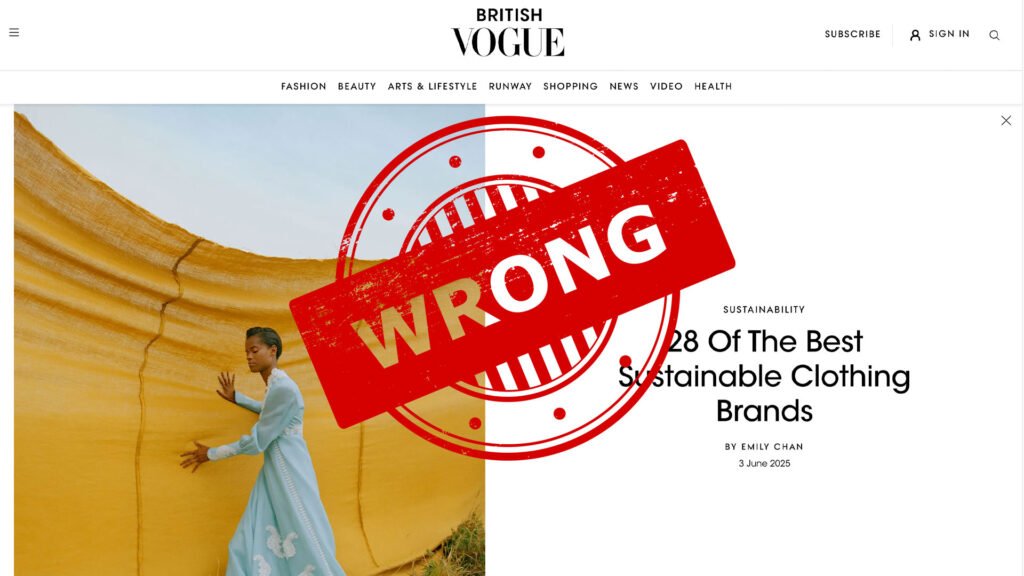
Why Vogue's Sustainable Clothing List Gets Fibre Wrong, With Proof
Vogue's 28 best sustainable clothing brands list is right about ethics and wrong about fibre. Of 28 brands, 26 fail a plant-fibre-only test because they lean on TENCEL, viscose, wool, silk and recycled polyester. The proof is composition by composition.
Vogue's best sustainable clothing brands list is wrong on fibre, proven with real data, 0 of 28 passed
Vogue’s roundup of the best sustainable clothing brands is well researched. The labour stories are real. The carbon math is real. The certifications are real.
The fibre is wrong.
I read every brand on the list and pulled the actual compositions. Not the marketing copy, the woven-in content. And once you stop reading the dye story and start reading the care label, the list falls apart. Twenty six of twenty eight brands lean on fibres that do not break down clean in your soil or your skin. That is the gotcha. Good intentions, synthetic and animal fibre reality.
There is a big problem with the sustainable clothing lists
The pattern repeats across almost every sustainable clothing brands list, and Vogue’s is no exception. The brand does the hard ethical work, then weaves a plastic or animal fibre right through the middle of the garment.
A few examples up front, with the real fibre.
Reformation, the poster brand for slow fashion, builds its signature dresses on TENCEL lyocell, FSC viscose and cupro plus silk and wool. Those are man made cellulosics. Chemically regenerated wood pulp. Not a plant fibre you wear off the field.
Ganni runs roughly 39% synthetic across its range, polyester, elastane and polyamide, with elastane in most stretch styles.
Stella McCartney, famous for no leather and no fur, still builds on viscose, modal, wool, silk and elastane.
Gabriela Hearst is merino wool, cashmere and mulberry silk at the core. Animal fibre is the whole signature.
None of those are bad brands. They are just not natural fibre clothing, and the list calls them that.
The issue with Vogue's criteria
Vogue judges these brands on broad sustainability signals. Environmental footprint. Responsibly sourced and certified materials. Carbon reduction. Animal welfare. Ethical manufacturing. Garment longevity. Innovation.
All good things. None of them is fibre purity.
That is the gap. The list explicitly treats certified TENCEL lyocell, ECOVERO viscose, recycled polyester and responsibly sourced wool, silk and cashmere as sustainable. By that standard, a recycled plastic fleece counts. By our standard it does not, because it sheds microplastic in the wash and sits in landfill for centuries.
The greenwashing trap is subtle. A man made cellulosic like viscose or lyocell starts as a tree, so it sounds like a plant. But it gets dissolved in solvent and extruded into filament. The certification tells you the wood was grown responsibly. It does not tell you the finished fibre composts in a home bin. Recycled polyester is the same story dressed differently. Recycling a bottle into a t shirt is better than virgin plastic, but the shirt is still plastic, and it still does not break down.
The test that actually matters for a non toxic, compostable wardrobe is simple. What is the garment made of? If the answer is 100% organic cotton, linen, hemp or another true plant fibre, it composts and it does not shed plastic. If the answer has TENCEL, viscose, modal, cupro, elastane, polyester, nylon, wool, silk or cashmere woven in, it does not. That is the whole standard.
The clean version of this wardrobe is short: organic cotton, linen and hemp, the fibres that compost and do not shed plastic.
Is Vogue's list actually natural? Data by data
The list is by Emily Chan, Vogue’s sustainability editor, and to be fair she knows the material world better than most. The reporting is solid. But solid on ethics is not the same as clean on fibre. Every composition below is logged in our clothing data, so you can see the exact fabric data for yourself.
So I went brand by brand. Twenty eight brands. I pulled the real composition for each. Below is where each one lands. Bold is the fibre that decides it.
If you would rather skip to brands that actually pass, jump to the alternatives, or browse the full natural fibre clothing directory.
1. Ninety Percent
Its everyday tees and dresses are often a 50/50 organic cotton and TENCEL Modal blend. That is one pass and one fail. The organic cotton is real field fibre. The Modal is not: modal and lyocell sound plant based because they begin as wood, but they are dissolved in solvent and extruded back out as filament, so they are regenerated cellulosics, not a fibre you wear off the field, the kind you find in our organic cotton directory.
Ninety Percent does the ethical part, with profit sharing and transparency.
Skip the 50/50 modal tee. Buy a full organic cotton tee instead: it is all field fibre and composts at the end, where the modal half never will.
2. Everlane
Everlane’s knitwear and underwear basics lean on cashmere, Italian wool, silk and ReNew recycled polyester. The wool, cashmere and silk all fail because they come off an animal, with the welfare and slaughter cost attached. The recycled polyester fails too: it is still plastic that never composts and sheds microfibre in every wash.
Everlane reports on cost transparency and labour.
For the recycled polyester underwear, buy a KENT 3-pack of organic cotton boxers instead, so there is no plastic against your skin. More options in the non-toxic underwear directory.
3. Reformation
Reformation’s signature dresses are TENCEL lyocell, FSC viscose, cupro and Eco crepe, plus silk and wool. Nothing here passes. TENCEL lyocell, viscose, cupro and Eco crepe are regenerated cellulosics: dissolved wood pulp, not field fibre, and certification tells you the wood was grown well, not that the finished fibre composts. The silk and wool are animal fibre, grown off an animal. None of it is plant fibre off the field.
Reformation built its name as a poster brand for slow fashion. That is the credit. The care label is a different document from the marketing.
For the everyday version of the dress, buy a Terra Thread organic cotton tee, a plant fibre that actually breaks down. Browse our biodegradable clothing directory for more.
4. Asket
Asket’s core includes 100% merino wool jumpers and 100% TENCEL lyocell pieces. Two fibres, zero pass. Merino is animal fibre off a sheep, with the welfare cost attached. Lyocell is regenerated cellulosic, dissolved wood pulp not field fibre. Neither is plant off the field, so the material fails the standard.
Asket is built on minimalism, durability, and repair over replacement. The lifespan philosophy is right, the material is not plant.
For its merino tee, buy an organic cotton tee instead. For the warmth of its merino jumper, a hemp warm layer holds heat with zero animal fibre.
5. Ganni
71% of the range is 100% organic cotton, which is field fibre and passes. The rest, roughly a third, is synthetic, polyester, elastane and polyamide, which are plastic that never composts, with wool through the stretch styles, which comes off an animal. Even a few percent of elastane is enough plastic to stop a garment composting and to shed microplastic for life, so the cotton pieces pass and the stretch and wool ones do not.
For the stretch underwear and basics, buy a 3-pack of organic cotton boxers from KENT instead, with no plastic stretch. More clean options are in our non-toxic underwear directory.
6. Organic Basics
Its cotton underwear and basics are blended with elastane, and the range uses TENCEL lyocell, ECOVERO viscose, recycled nylon and wool. Cotton is the only field fibre here, and it never stands alone. TENCEL lyocell and ECOVERO viscose are regenerated cellulosic, dissolved wood pulp not field fibre. Wool comes off an animal. Recycled nylon is still nylon, plastic that never composts, and a little elastane keeps a garment out of the compost forever. Five fibres, none pass.
The name promises more than the label delivers. Organic Basics built its range on cotton underwear and basics, then blended in synthetics and regenerated cellulosics across the line.
Buy a 3-pack of organic cotton boxers or organic cotton socks from KENT instead. More in our non-toxic underwear directory.
7. Sezane
Sezane runs its core on silk blouses, merino and RWS wool knits, mohair, alpaca and FSC ECOVERO viscose. None of it passes. Silk, merino, RWS wool, mohair and alpaca all come off an animal, and RWS improves welfare but improved welfare is not no animal fibre. ECOVERO viscose is regenerated cellulosic, dissolved wood pulp, not field fibre.
Sezane is well made and built around its Paris studio knits and blouses.
For the knits, buy a hemp warm layer, which gives you the warmth with nothing from an animal in it. More plant fibre options are in our organic cotton directory.
8. Omnes
Omnes builds its dresses and tees from LENZING ECOVERO viscose alongside cotton. One fibre passes and one fails. Cotton is plant fibre off the field, so it passes. ECOVERO viscose fails: it is a regenerated cellulosic, wood pulp dissolved in solvent and reformed, not field fibre, so it does not compost like a true plant fibre.
ECOVERO is a cleaner, traceable viscose, and Lenzing put traceability behind it.
The viscose keeps Omnes off the list. Buy a Terra Thread organic cotton tee instead, and find more plant fibre pieces in our organic cotton directory.
9. Patagonia
Patagonia states 72% of its line uses recycled materials, mostly recycled polyester and recycled nylon, and overall the line is roughly 70% synthetic. The regenerative organic cotton line passes: that is plant fibre off the field. The rest fails. Recycled polyester and recycled nylon are plastic, and plastic never composts, no matter how many bottles it keeps from landfill. The jacket is still plastic and still sheds microfibre in every wash.
Patagonia funds repair, activism and regenerative organic cotton, and its regenerative cotton program is one of the larger ones in the industry.
Buy their regenerative cotton line, and for the outdoor layers get a hemp warm layer instead of recycled plastic. More clean options in our organic cotton directory.
10. Another Tomorrow
It uses RWS merino wool knits, peace silk, recycled cashmere and FSC viscose, with cotton tees blended with TENCEL. The cotton is plant fibre off the field and passes. Everything else fails. The merino wool, peace silk and recycled cashmere are all animal fibre, off an animal: peace silk is more humane but still an animal fibre, and recycled cashmere is still cashmere. The viscose and the TENCEL are regenerated cellulosics, dissolved wood pulp, not field fibre. So the cotton passes and the wool, silk, cashmere, viscose and TENCEL all fail.
Another Tomorrow is serious about traceability.
For the tee, buy a Terra Thread organic cotton tee instead, fully plant and traceable. For the merino knits, buy a hemp warm layer.
11. Bite Studios
Bite Studios is built on animal fibre, not plant fibre. Its signature tailoring uses organic silk and certified wool alongside cotton and TENCEL. That is two fails, and the cotton is the only clean pass. Certified wool means better farm standards, but it is still off an animal, and so is the silk, no matter how it is processed. Both carry the welfare and slaughter questions a growing number of us think the industry should move away from rather than certify around. TENCEL fails too: it is regenerated cellulosic, dissolved wood pulp put through a chemical bath, not fibre off the field.
Bite Studios builds tailoring around certified wool and organic silk, blended with cotton and TENCEL.
For the silk tops and tailored layers, buy an organic cotton tee instead, the polish without an animal in it. More like it in our organic cotton directory.
12. ELV Denim
ELV Denim makes 100% upcycled denim from vintage jeans, but the brand publishes no fibre percentages, and vintage jeans usually carry 1 to 2% elastane, a synthetic plastic that never composts. Without published percentages I cannot confirm a plant only garment, and unverified is not a pass.
ELV Denim reworks vintage jeans into new pieces, a circular, upcycled approach to denim.
For denim you can actually verify, buy Nudie Jeans rigid 100% organic cotton instead, or browse more checked pieces in our denim directory.
13. Akyn
Akyn runs on TENCEL lyocell as one of its most used fabrics, with certified merino wool in the knits. That is zero passes and two fails. Lyocell is regenerated wood pulp, dissolved cellulose, not field fibre. Merino is animal fibre off a sheep, with the welfare cost attached. Neither is plant fibre off the field, so neither passes.
Akyn is Amy Powney’s brand, built around traceable supply and certified materials.
For the TENCEL tee, buy an organic cotton tee from Terra Thread instead. For the merino knit, buy a hemp warm layer from Hemptees.
14. Maria McManus
Maria McManus leans on recycled cashmere knitwear with cotton, plus wool and recycled nylon. The cotton passes because it is plant fibre off the field. The rest fails: recycled cashmere is still cashmere and wool is still wool, both come off an animal, and recycled nylon is still plastic that never composts and sheds microplastic. Recycling lowers the footprint, it does not change what the fibre is or how it ends, animal on one side and plastic on the other.
Maria McManus founded the label in New York and built it on recycled cashmere and recycled materials, with traceability and lower-impact production as the stated focus.
For warmth that stays fully plant, buy a hemp warm layer over an organic cotton tee. More like it in our organic cotton directory.
15. Studio 189
Studio 189 builds the core of its range on cotton, batik and indigo, which is plant fibre off the field and passes. The range also includes silk pieces like the Silk Sing Dress, and silk fails: it comes off an animal, so it is not plant fibre. The cotton passes, the silk does not.
Studio 189 works in cotton, batik and indigo with craft and community behind it. Where it gives you a silk dress, the cotton craft is the part that stays on the plant side.
Skip the silk and buy a naturally dyed handwoven cotton piece from Story MFG instead. More like it in our handwoven clothing directory.
16. Conner Ives
The materials are mixed: TENCEL shirting, recycled polyamide eveningwear, recycled wool and silk chiffon alongside upcycled cotton. The upcycled cotton is the only plant fibre that passes. Recycled polyamide fails because it is plastic that never composts, the wool and silk fail because they come off an animal, and TENCEL fails because it is regenerated cellulosic, dissolved wood pulp not field fibre.
Conner Ives upcycles existing material into the collections.
For a clean plant version of the TENCEL shirting, buy an organic cotton tee. More like it in our organic cotton directory.
17. Ahluwalia
The patchwork is reclaimed silk, viscose, polyester and polyamide blends. Four fibres, four fails, none of them off a field. Silk is spun off an animal. Viscose is dissolved wood pulp, not plant fibre as it grew. Polyester and polyamide are plastic that never composts. Reclaiming used cloth beats cutting new, but the result still sheds microfibre and still is not a fibre you could return to the soil.
Ahluwalia is built on patchwork and on reclaiming existing fabric rather than making new cloth, which is the circular thinking the industry has been slow to adopt.
For the same bold energy in plant fibre, buy a naturally dyed organic cotton tee, or browse our organic cotton directory for more.
18. Brogger
Brogger builds on wool and on viscose and silk blends, for example a 70% viscose and 30% silk floral jacquard dress, with virgin wool in separate pieces. Nothing here passes. Viscose is regenerated cellulosic, dissolved wood pulp not field fibre. Silk and wool are animal fibres, off an animal, so they carry the welfare question. The range is cellulosic and animal with no real plant base under it. No plastic villain, but no plant fibre either.
Skip the viscose and silk dress and buy a 100% organic cotton tee from Terra Thread instead. More plant options in our organic cotton directory.
19. SS Daley
The core is Scottish lambswool and 100% wool jumpers, with silk, alpaca, merino and goat hair through the rest. That is animal fibre from top to bottom, and every one of these fails: wool, merino, alpaca and goat hair are shorn off an animal, and silk is reeled from animals too. Nothing here is plant fibre off the field, so the card fails on every count, however heritage the mill.
SS Daley is a British label known for knitwear, built on Scottish lambswool and wool jumpers with silk, alpaca, merino and goat hair across the range.
Nothing here is plant fibre, so skip it. For the same warmth with no animal in it, buy a hemp warm layer from Hemptees.
20. Tolu Coker
Tolu Coker is cotton and recycled cotton heavy and deadstock based, but the line also runs gabardine, knits and leather with no published percentages and no plant only confirmation. Cotton and recycled cotton pass: they are field fibre. Leather fails because it comes off an animal. The gabardine and knits are unspecified, and without numbers a plant only garment cannot be confirmed. Unverified is not a pass.
Tolu Coker is a London label known for deadstock sourcing and strong design.
For a basic with a confirmed composition, buy a Terra Thread 100% organic cotton tee. For more verified compositions, see our denim directory.
21. Paolina Russo
Paolina Russo’s pieces carry spandex in a 98/2 cotton spandex jersey, plus 100% wool styles and recycled polyester and elastane elsewhere. The cotton is field fibre and passes. Everything around it fails: even at 2%, spandex is plastic spun through the cotton, enough to stop the garment composting and to shed microfibre for life; the wool comes off an animal; the recycled polyester and elastane are plastic that never composts.
Buy an organic cotton tee instead of the jersey top, and a hemp warm layer instead of the wool. More in our organic cotton directory.
22. Chopova Lowena
The signature carabiner skirts are thick upcycled vintage wool, often 100% wool or blended with nylon or cotton, on a reclaimed leather belt, and the jersey and sweatpants add recycled lyocell and TENCEL. Almost nothing passes. Upcycled or not, wool is animal fibre off an animal, the leather belt is animal too, the nylon is plastic that never composts, and the lyocell and TENCEL are regenerated wood pulp dissolved in a chemical bath, not fibre off a field. Only the occasional cotton content passes.
Chopova Lowena builds its skirts from reclaimed vintage textiles and leather belts, upcycling existing material rather than milling new, and the carabiner skirt is its signature look.
Skip the wool and lyocell. For a plant dyed handmade piece in the same spirit, buy a naturally dyed handmade cotton piece, and browse more in our handwoven clothing directory. For the jersey and sweatpants, buy an organic cotton tee instead.
23. Torisheju
Torisheju is made from boiled wool, duchess satin, silk and polyester, all of it deadstock. Nothing here passes. The wool and silk are animal fibre, off a sheep and a silkworm. The polyester is plastic that never composts. Rescuing the cloth from landfill is the right call, but rescued is not plant: it still sheds, and it still does not break down.
Torisheju works in deadstock tailoring, cutting its pieces from fabric that already exists rather than ordering new, which keeps that fabric out of landfill.
Buy an organic cotton tee instead. For more, see our organic cotton directory.
24. Chloe
Chloe’s ready to wear runs on silk, wool and cashmere, viscose, and a lot of cotton and linen. The cotton and linen pass: plant fibre off the field. Everything else fails. Silk, wool and cashmere are animal fibres, off an animal, so the welfare cost stays intact no matter how well sourced. Viscose is regenerated cellulosic, dissolved wood pulp, not field fibre. Plant fibre shares the rail with animal fibre and wood pulp rather than leading it.
Under Gabriela Hearst, Chloe pushed on traceability and made progress there. Better sourced animal fibre is still animal fibre.
For a silk piece, buy organic linen instead. For a cashmere knit, buy a hemp warm layer. More in our linen directory.
25. Stella McCartney
The core fabrics are viscose, modal, wool, silk, organic cotton and elastane. One passes: the organic cotton is plant fibre off the field. Five fail. Viscose and modal are regenerated cellulosics, dissolved wood pulp not field fibre. Wool and silk come off an animal. Elastane is plastic that never composts.
Stella McCartney is the most famous ethical name here, and the no leather, no fur, no feathers stance is real. Refusing leather is a genuine line, it is just not a plant fibre wardrobe, and the wool and silk keep animals in the chain.
For the minimal tops and tees, buy a Terra Thread organic cotton tee instead. More options are in our organic cotton directory.
26. Gabriela Hearst
Gabriela Hearst is built on merino wool, cashmere and mulberry silk. Animal fibre is not a detail here, it is the signature. Nothing on this card passes. Wool and cashmere come off an animal, silk comes off the silkworm, and all three carry the welfare and slaughter questions more of us are stepping away from entirely.
The craftsmanship and traceability are documented. The fibre is still animal across the board.
For the same luxe basics in plant fibre, buy a Terra Thread organic cotton tee, and swap the cashmere for a hemp warm layer. For more, browse the linen directory.
27. Vivienne Westwood
Vivienne Westwood runs a long fibre list and almost all of it fails the plant test. Alongside cotton, the range carries wool, silk, viscose, modal, cupro, acetate, polyester, nylon and spandex. Only the cotton passes. Wool and silk fail because they come off an animal. Viscose, modal, cupro and acetate fail because they are regenerated cellulosics, dissolved wood pulp not field fibre. Polyester, nylon and spandex fail because they are plastic that sheds and never composts.
Vivienne Westwood built the label on punk and political activism, and the brand stays known for that iconography.
For the same punk energy in clean plant fibre, buy a hemp tee or an organic cotton tee. More like it in our hemp directory.
28. Marine Serre
The signature moon print second skin is the tell. The regenerated jersey is typically recycled polyester and elastane stretch, with recycled wool and silk elsewhere. Nothing here passes. Recycled polyester is plastic, the elastane is plastic, and plastic that hugs the body sheds microfibre every wash and never composts. The wool and silk are animal fibres, off an animal, not field fibre.
Upcycling is central to the brand, and the recycled jersey is built from existing material rather than new plastic. That keeps waste out of landfill, but recycled plastic is still plastic and animal fibre is still animal fibre.
For second skin basics without the plastic, buy a plant fibre organic cotton tee from Terra Thread. More like it in our organic cotton directory.
The best similar brands and alternatives

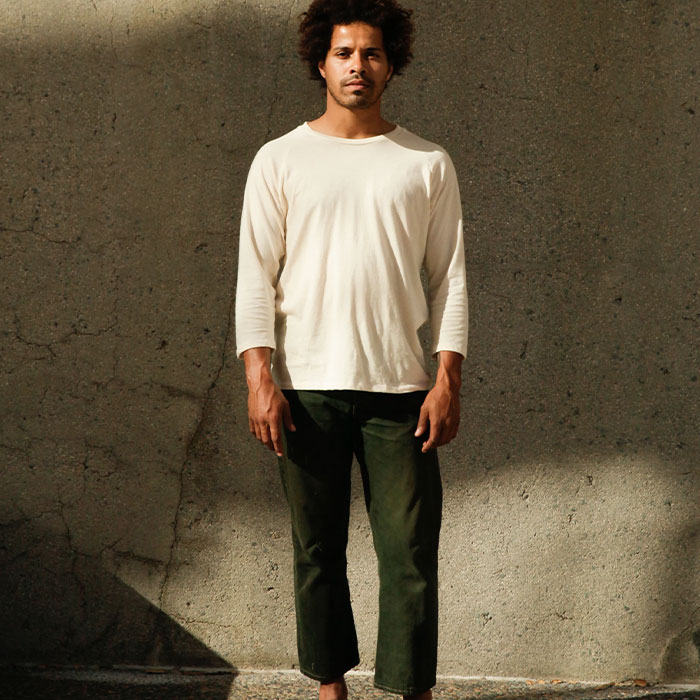
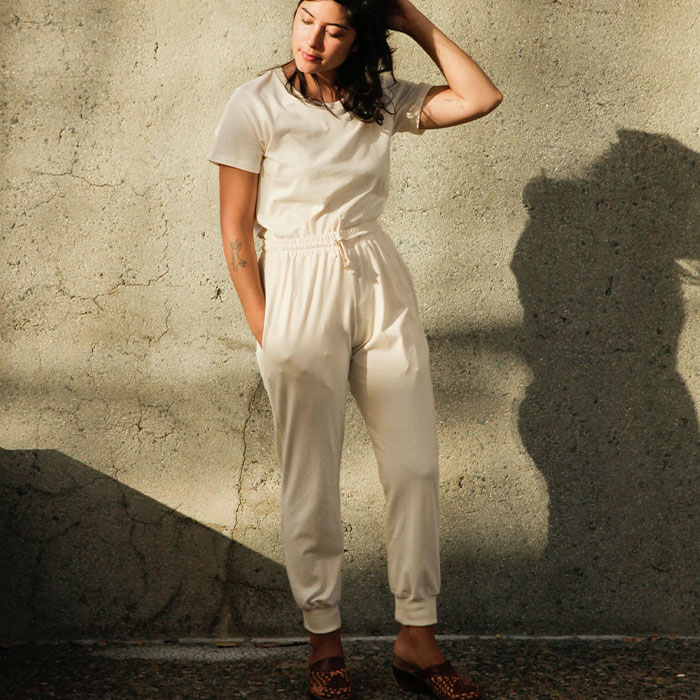
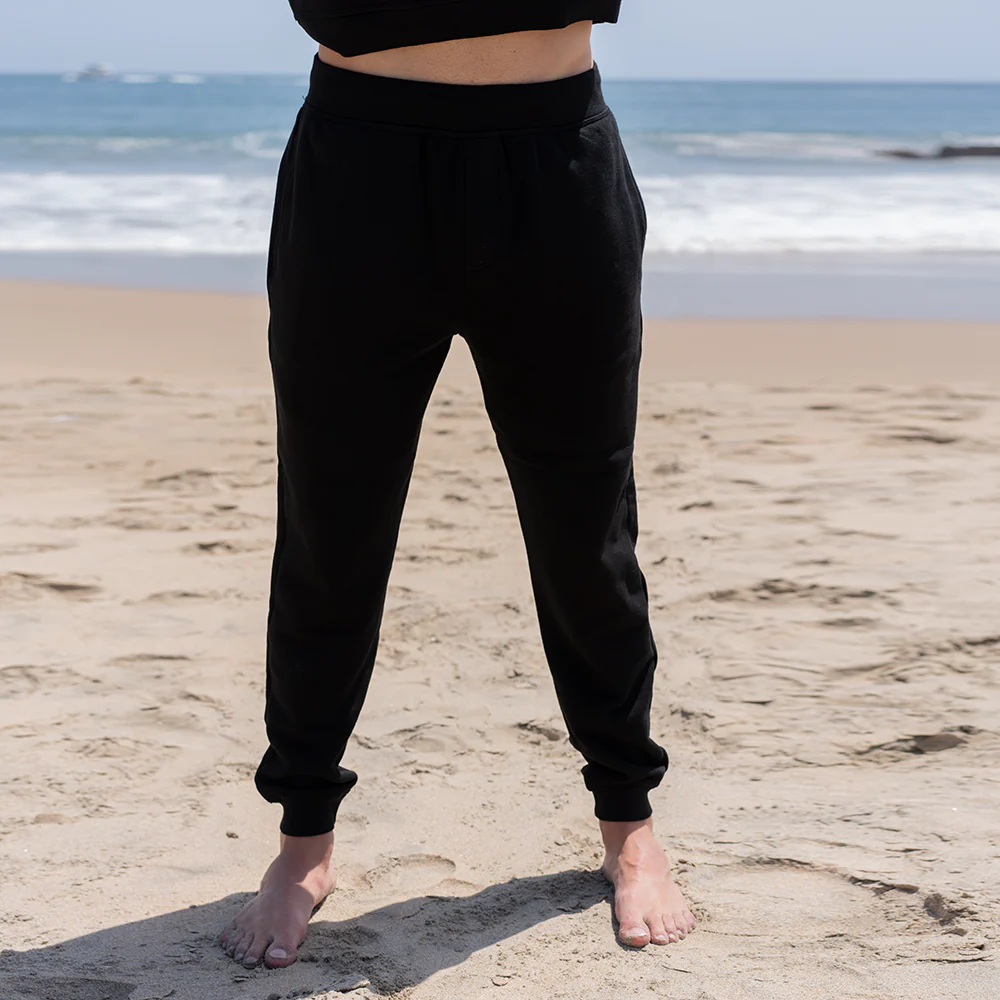
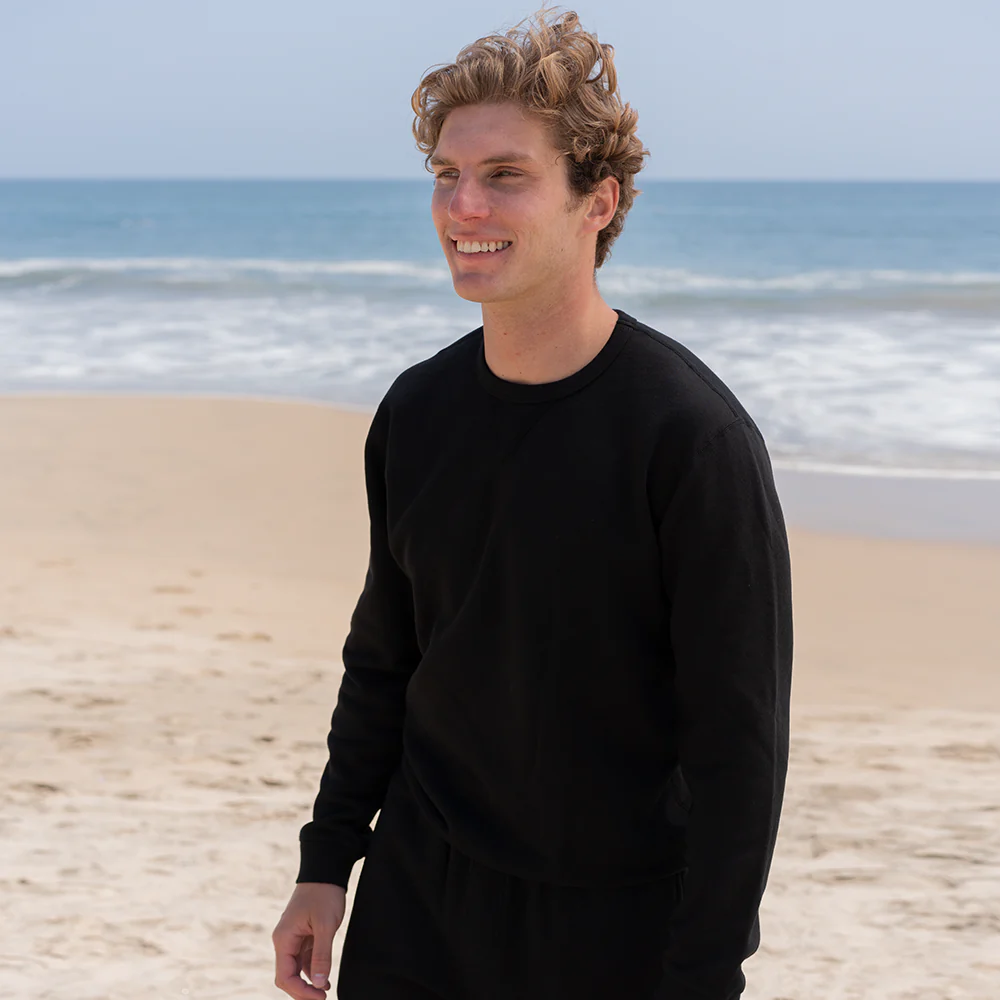
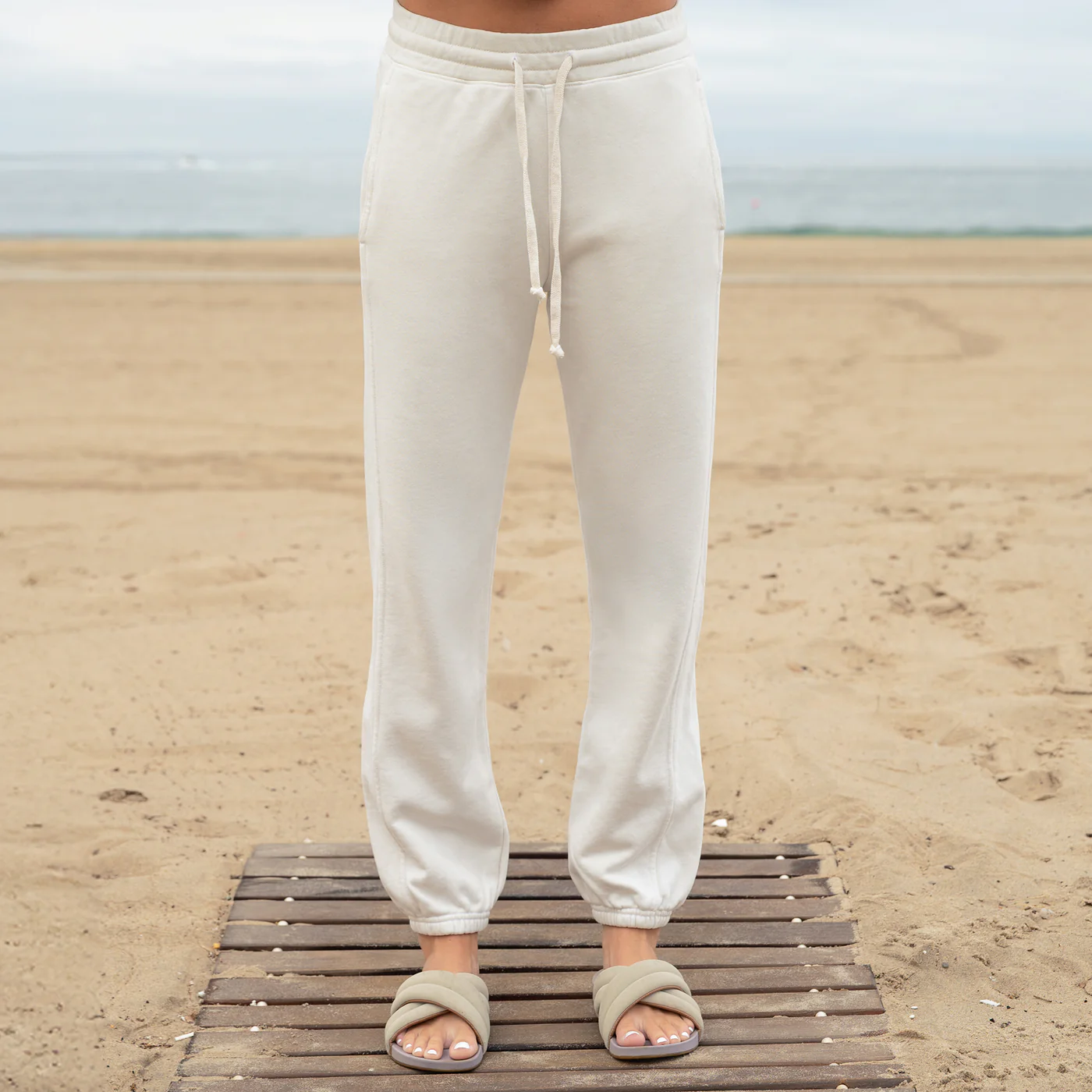
Best sustainable clothing brand for basics and joggers
Harvest & Mill
Organic cotton basics grown, milled and sewn entirely in the USA on a “seed to stitch” model, direct from American farmers, heritage mills and local sewing teams.
Vegan and PETA-approved, with much of the range left undyed, plus low-waste cutting and compostable or recyclable packaging.
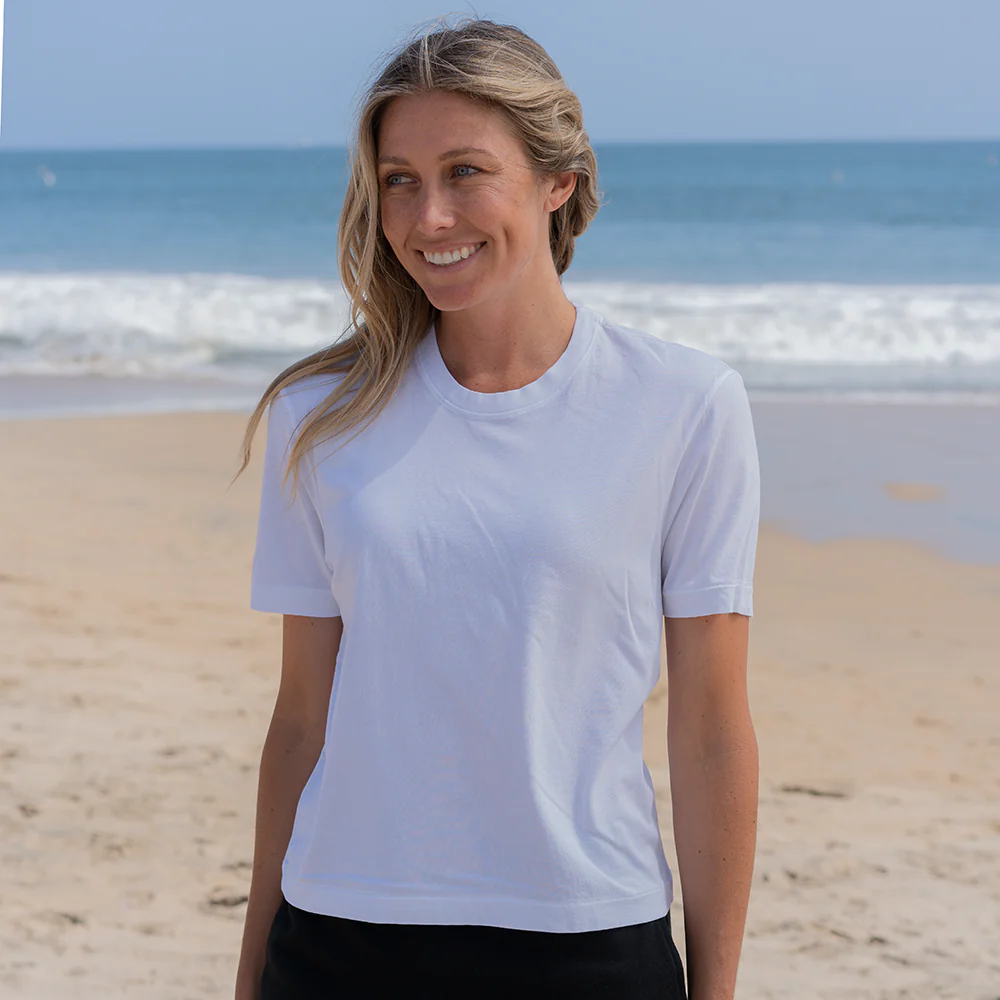
Best organic cotton basics and underwear
Oddobody
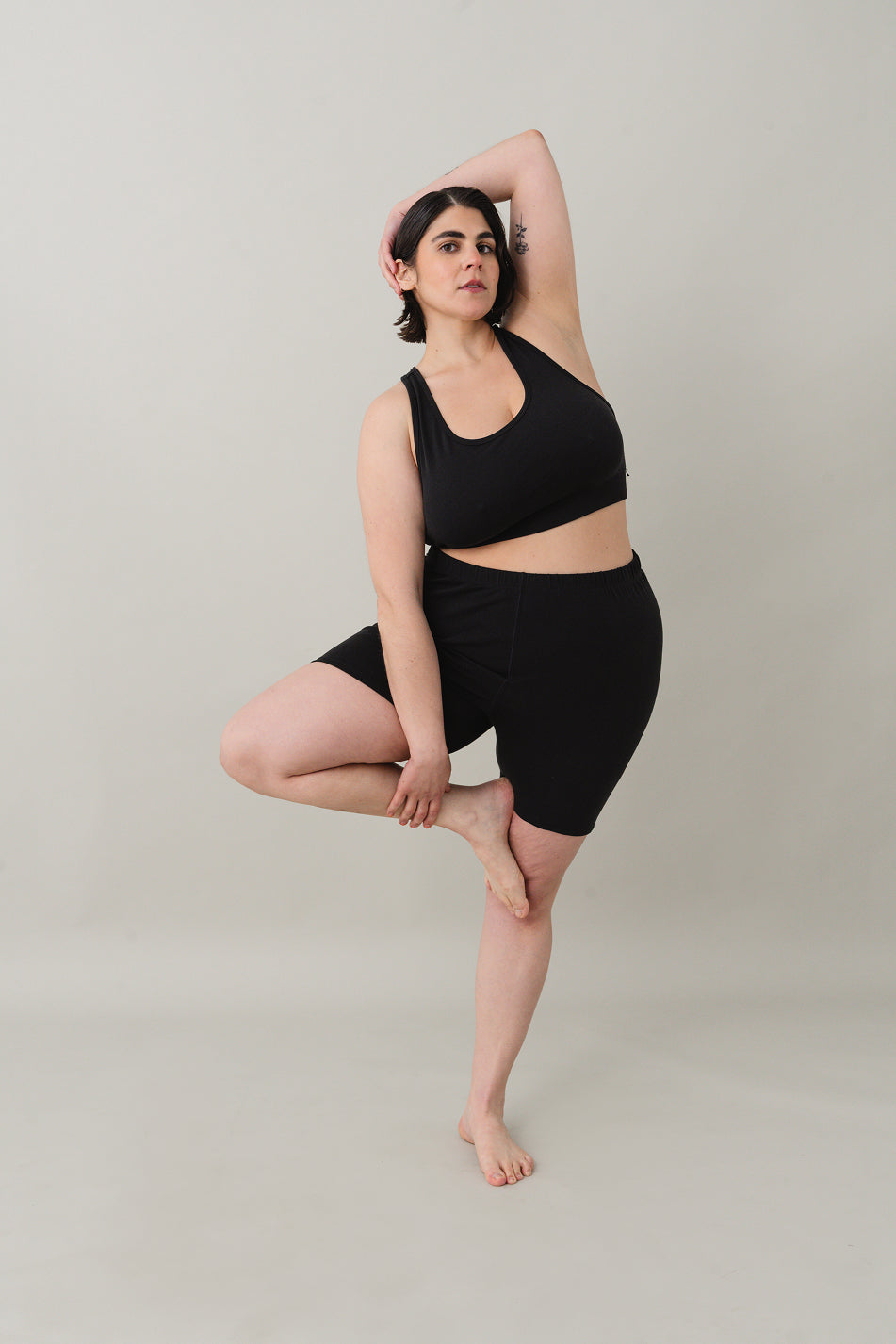
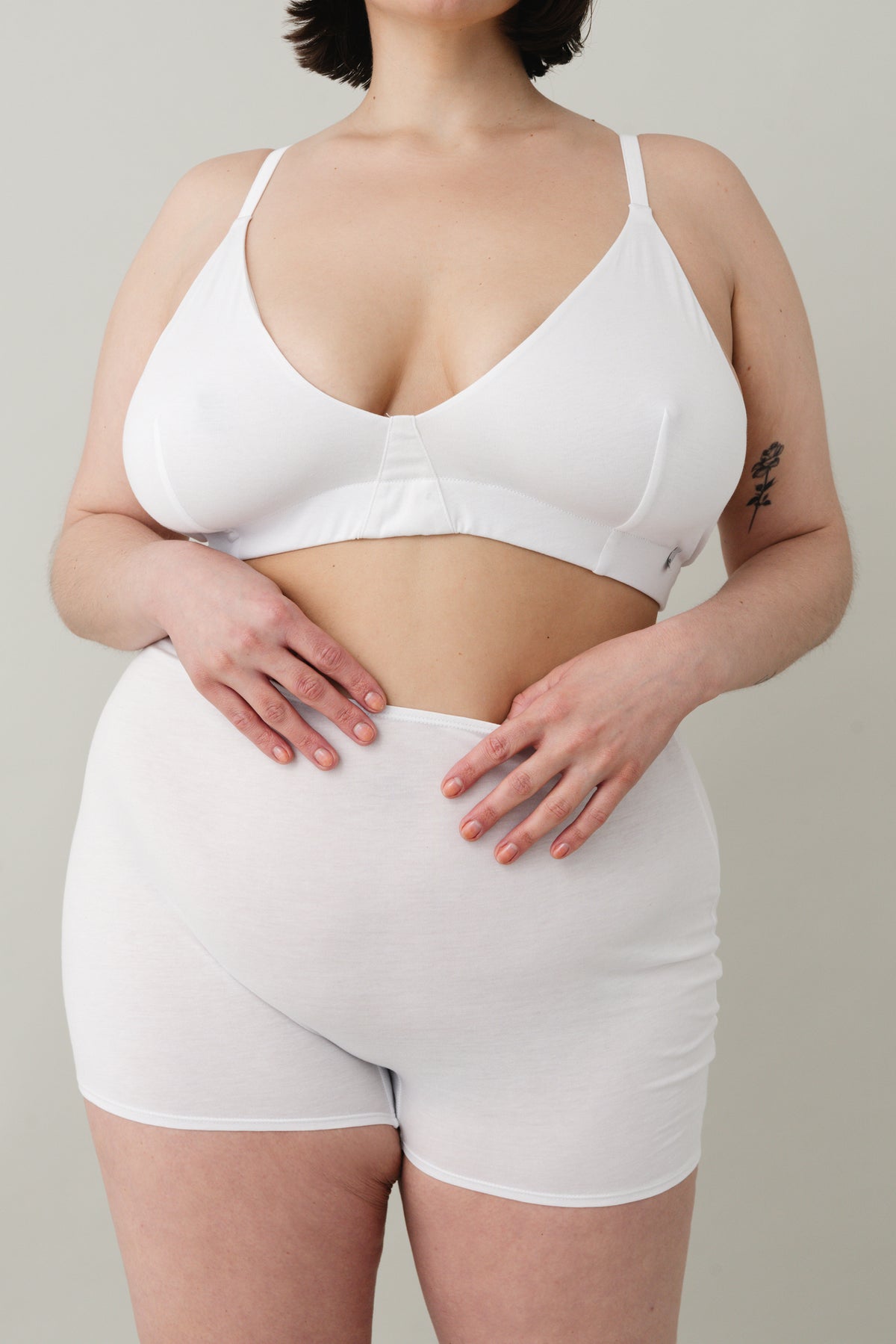
Buttery-soft organic cotton basics and underwear, ribbed and seamless, in a tight capsule of everyday essentials.
The Throne Standard scan found every live style 100% organic cotton, no synthetics and nothing to read past.
Best for a 100% organic cotton tee
The Classic T-Shirt Company
Exactly what the name promises: a properly made tee in 100% organic cotton, sold on its own without a fast-fashion catalogue around it.
Every scanned style came back single-fibre organic cotton, so there is no elastane hiding in the collar.
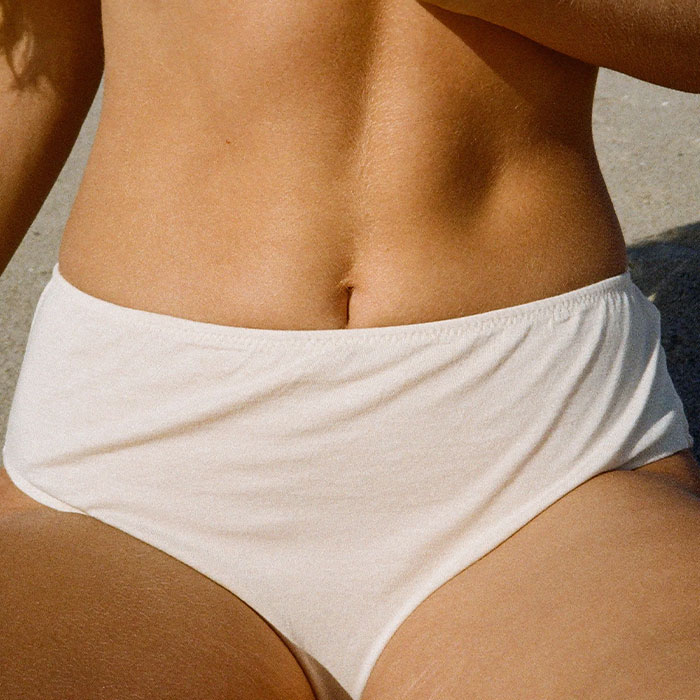


Best compostable sustainable underwear
KENT
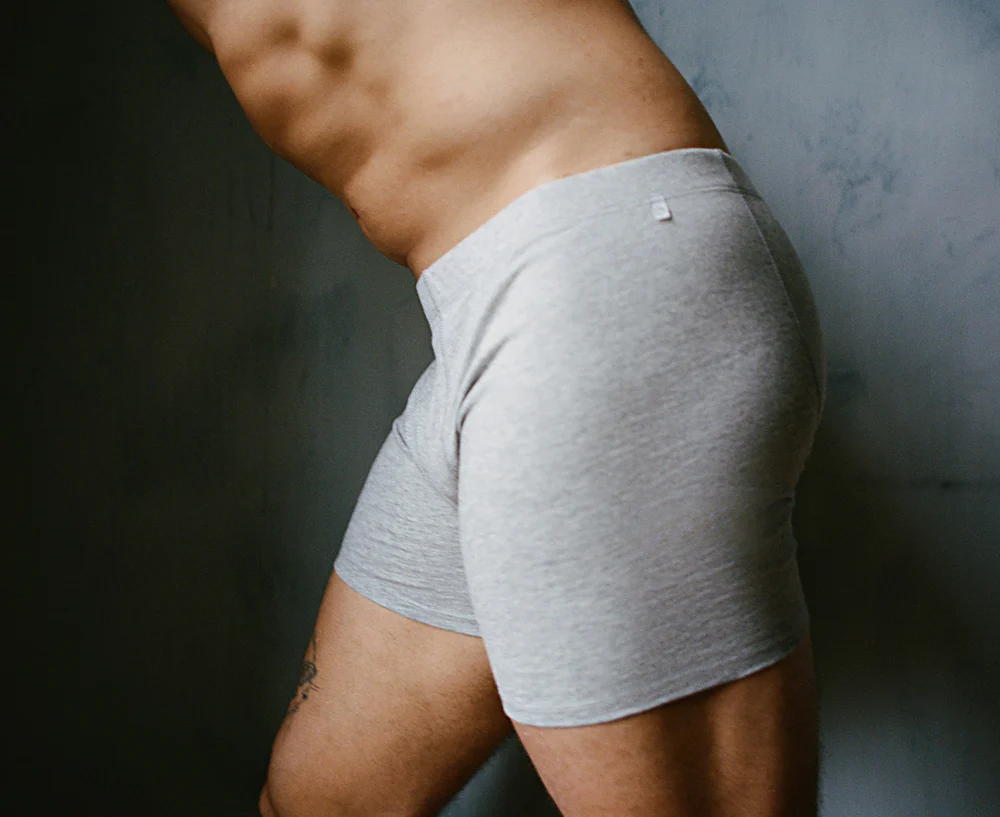
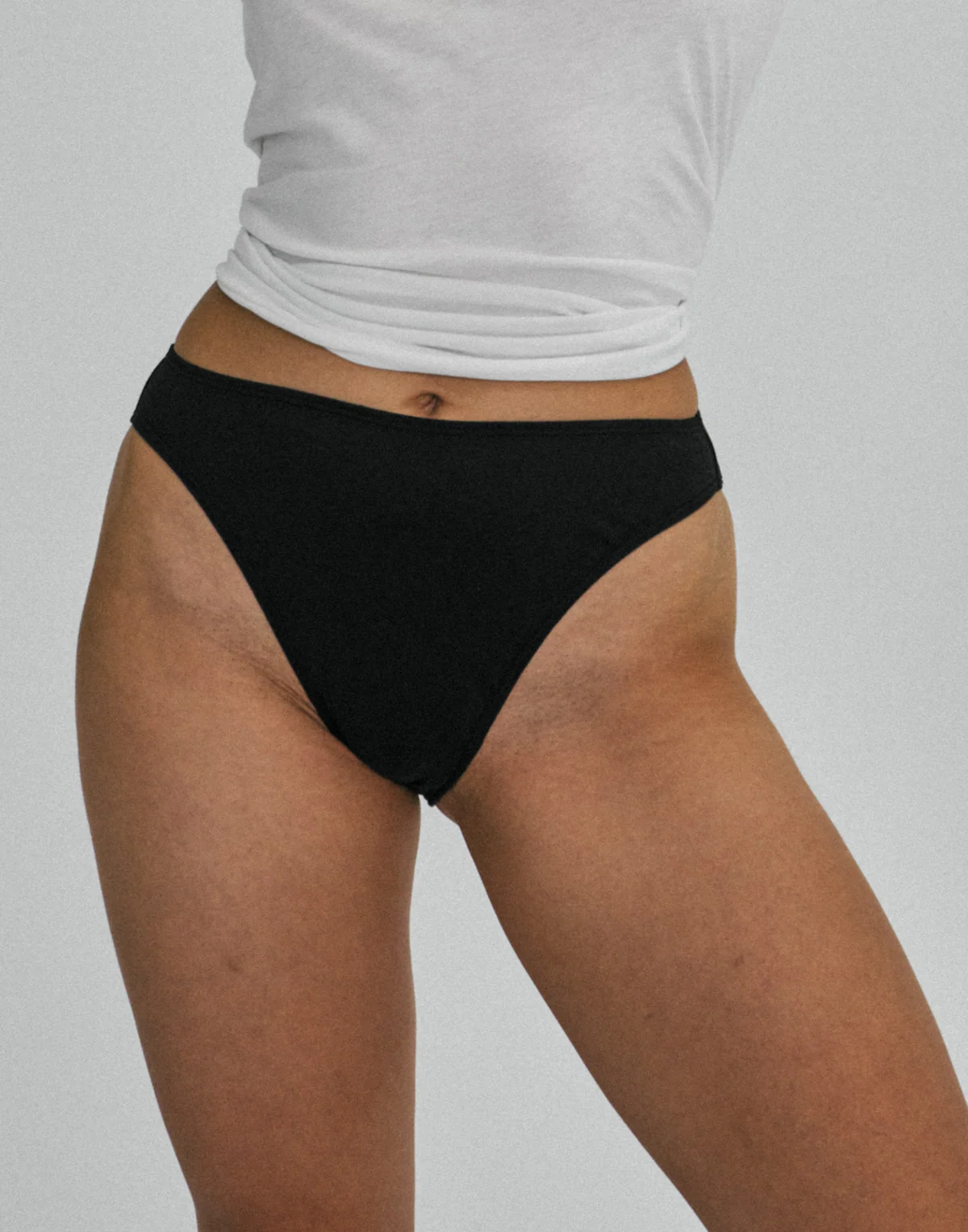
The world’s first verified compostable underwear.
100% GOTS-certified organic pima cotton with no spandex, nylon, elastane or polyester, designed to return to the earth in 90 days. Free of plastics, pesticides, PFAS and petrochemicals, right down to the packaging.

Best for hemp basics
Hemptees
Plant-fibre purists: tees and basics in 100% hemp, one of the lowest-water, no-pesticide crops there is.
The scan read every live style as pure hemp, so it sheds no microplastic and composts at the end of its life.

Best Fairtrade GOTS organic cotton
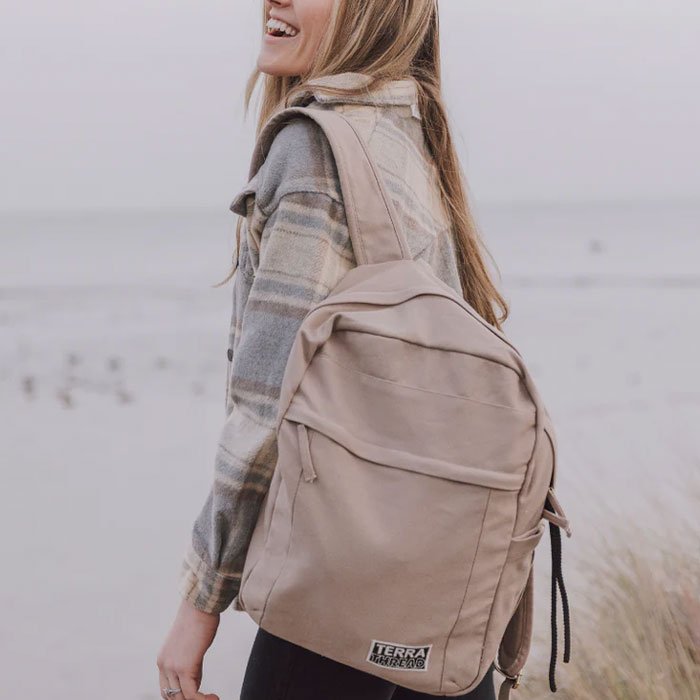
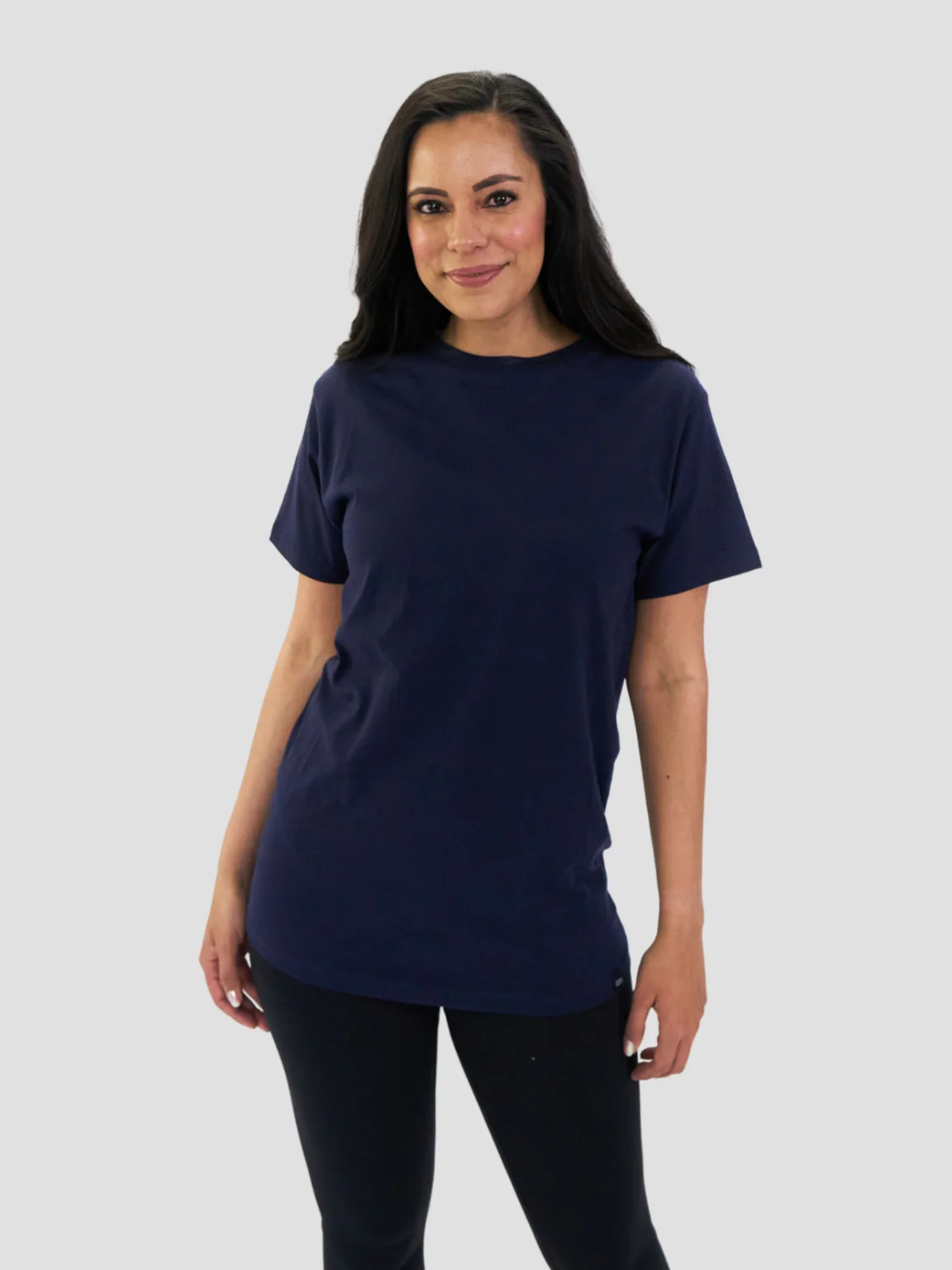
Terra Thread
Fairtrade-certified, GOTS organic cotton tees, totes and bags at an honest price.
The Throne Standard scan found the clothing range 100% organic cotton, with no synthetic blend column to watch for.
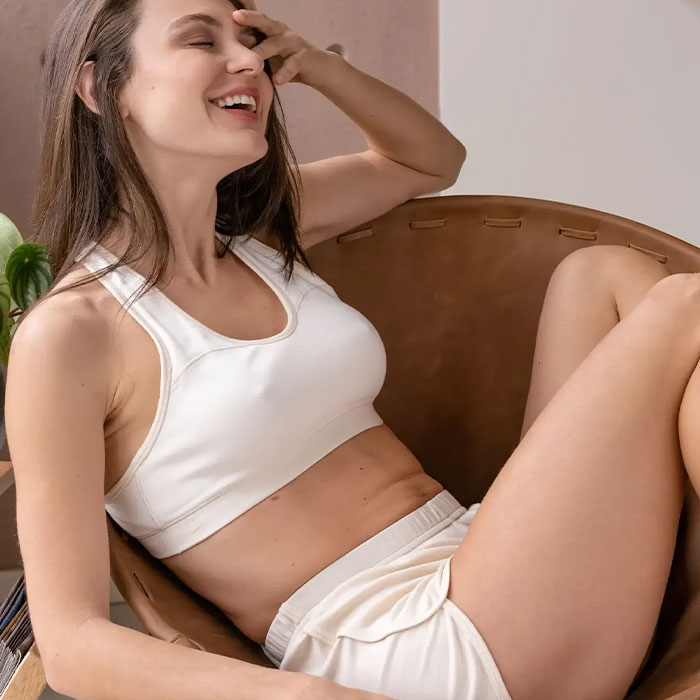
Best sustainable activewear
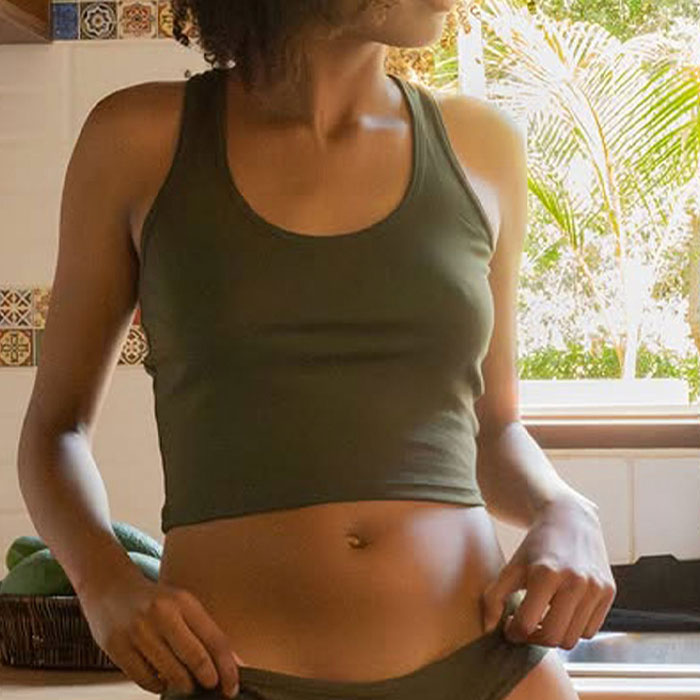
Eco Aya
100% plastic-free clothing made from regenerative organic Pima cotton, with the entire supply chain based in a single origin: Peru.
No polyester, nylon, acrylic or elastane, so the fabric sheds zero micro- or nano-fibers.
How to spot greenwashing on a fibre label in ten seconds
You do not need a chemistry degree. You need four habits.
1. Read the fabric percentage, not the adjective.
“Eco” and “natural” mean nothing. 98% organic cotton, 2% elastane means nothing biodegrades. The number is the truth.
2. Learn the regenerated words.
Bamboo viscose, rayon, modal, cupro, viscose and yes even EcoVero viscose and TENCEL lyocell are processed wood pulp, not raw plant fibre. They may be lower impact than polyester. They are not the same as cotton, linen or hemp clothing you can put on a compost heap.
3. Treat “bamboo” as a red flag, not a green one.
Soft bamboo fabric is almost always bamboo viscose. The bamboo grew. The fabric did not arrive without a chemical bath.
4. Check exactly what fabrics a clothing brand actually uses.
Do not take a sustainable clothing brand at its word, read the composition. Our clothing data report records the real fabric labels product by product, so you can see whether each garment is natural fibre, synthetic or chemically processed before you buy. It is the fastest way to know if a brand’s clothes are genuinely 100% natural materials or just marketed that way.
What counts as sustainable clothing, really
The most ethical clothing brand makes its clothes from 100% natural materials, plant fibres like organic cotton, linen and hemp that compost instead of shedding plastic; it keeps those fabrics clean with unbleached cloth and natural or low impact dyes rather than chemical finishes; and it backs the fabric with transparent sourcing and fair worker rights. Natural materials, clean processing and fair labour: a truly ethical clothing brand passes all three, not just one.
Let me be honest both ways. On ethics and labour and carbon, plenty of these brands are excellent, and you should not feel bad owning them. Reformation, Patagonia, Asket and Akyn are doing serious work.
But on the standard this site holds, plant fibre only, compostable, no plastic shedding, the count is brutal. Out of 28 brands, zero pass clean. Twenty six fail on fibre. Two, ELV Denim and Tolu Coker, are unclear because they will not publish percentages, and unclear is not a pass.
Zero out of 28. That is not me being harsh. That is what happens when a list rewards certified cellulosics and recycled plastic as if they were flax in a field.
So where do you actually shop for natural fibre clothing? Look at brands that put the fibre first and the marketing second. We keep a running directory of clothes that pass the composition test, sorted by hemp, linen, denim and regenerative cotton. Start at the clothes archive and read the label before the story.
One question for you. If a brand will not print the fibre percentage on the page, what exactly are they hoping you will not notice?
To confirm any verdict here, see the exact fabric data, where the real product and fabric labels are recorded.