Is MUD Jeans Sustainable And Non Toxic Clothing? The MUD Jeans Fibre Data
What Is MUD Jeans Made Of? MUD Jeans Uses 100% Organic Cotton
MUD Jeans build their reputation on circular cotton.
The scan backs a lot of it.
Across 184 styles, 32.6% scan as 100% plant fibre, organic or recycled cotton with some hemp and linen.
That is the 32.6% natural plant core, and for a brand that markets a plant-rooted wardrobe it is a low number.
The catch is the rest of the rack.
Several stretch styles carry recycled elastane and T400, both petroleum-based, capped low at around two to three percent but still plastic in the cloth.
Another handful are built on Refibra Lyocell, which MUD Jeans present as plant based.
It begins as wood pulp and recycled cotton, but it is dissolved and chemically regenerated into fibre, so the Throne Standard logs it as a semi-synthetic, not a natural.
Across the range, 72 styles carry that regenerated cellulose and 94 carry synthetic stretch, so most of the catalogue is a plant-dominant blend rather than pure plant. 60 styles: 100% plant fibre (organic or recycled cotton, hemp, linen) 52 styles: plant fibre blended with synthetic (cotton with elastane, LYCRA T400 or recycled polyester) 42 styles: plant fibre with semi-synthetic and synthetic (cotton or Tencel-Refibra with recycled elastane) 30 styles: plant fibre with semi-synthetic and no synthetic (cotton or hemp with Tencel-Refibra)
So the material truth is a brand that is mostly clean cotton with a stretch-and-cellulose tail that the marketing rounds up to fully sustainable.
Compare that with a pure blend brand like Mate the Label and MUD Jeans look excellent.
Compare them with a 100% organic cotton passer and the gap is real.
MUD Jeans Fibre Composition: What MUD Jeans Clothes Are Made Of
MUD Jeans last fibre scan: 13 June 2026
Sustainable Clothing Brands Like MUD Jeans, Natural Fibre Alternatives

Best Sustainable Organic Cotton Basics And Joggers Brand
Harvest & Mill
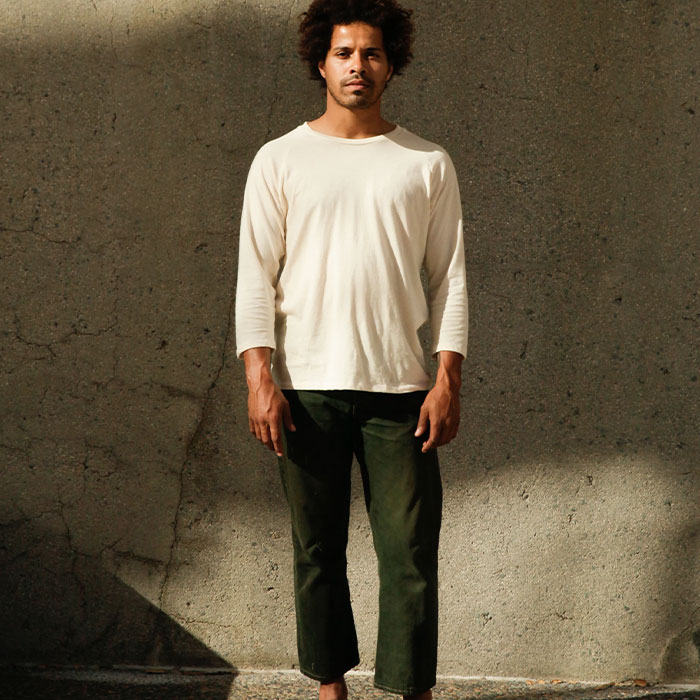
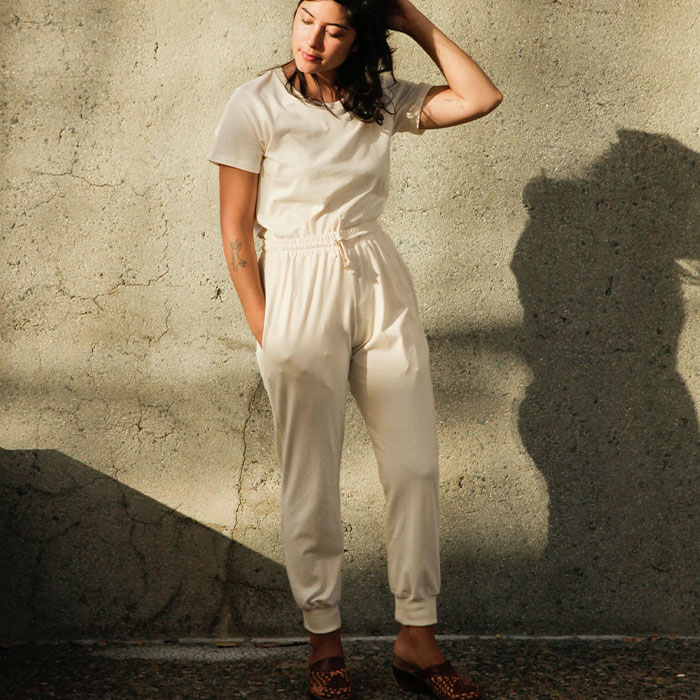
Harvest & Mill organic cotton basics grown, milled and sewn entirely in the USA on a “seed to stitch” model, direct from American farmers, heritage mills and local sewing teams.
Vegan and PETA-approved, with much of the range left undyed, plus low-waste cutting and compostable or recyclable packaging.
Best Handwoven, plant-dyed craft clothing
Story MFG
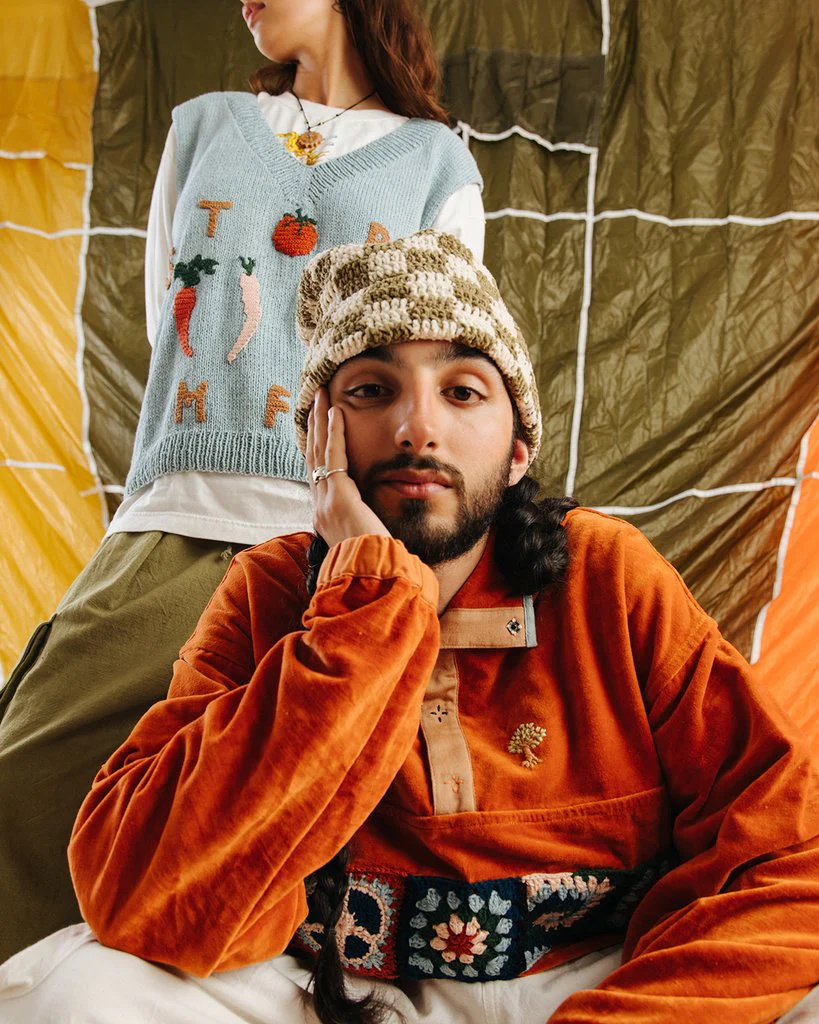
With Story MFG, almost everything, from the organic cotton to the dye plants, grows within a few miles of their studio, then it is handwoven and naturally dyed with indigo, madder and other plants.
That short, visible supply chain is exactly the kind of traceability past the certificate that the Throne Standard rewards.
It is handwoven organic cotton rather than silk, so expect texture and slow-made variation, which is the whole point.

Best 100% Organic Cotton Tee, A Natural Fibre Alternative
The Classic T-Shirt Company
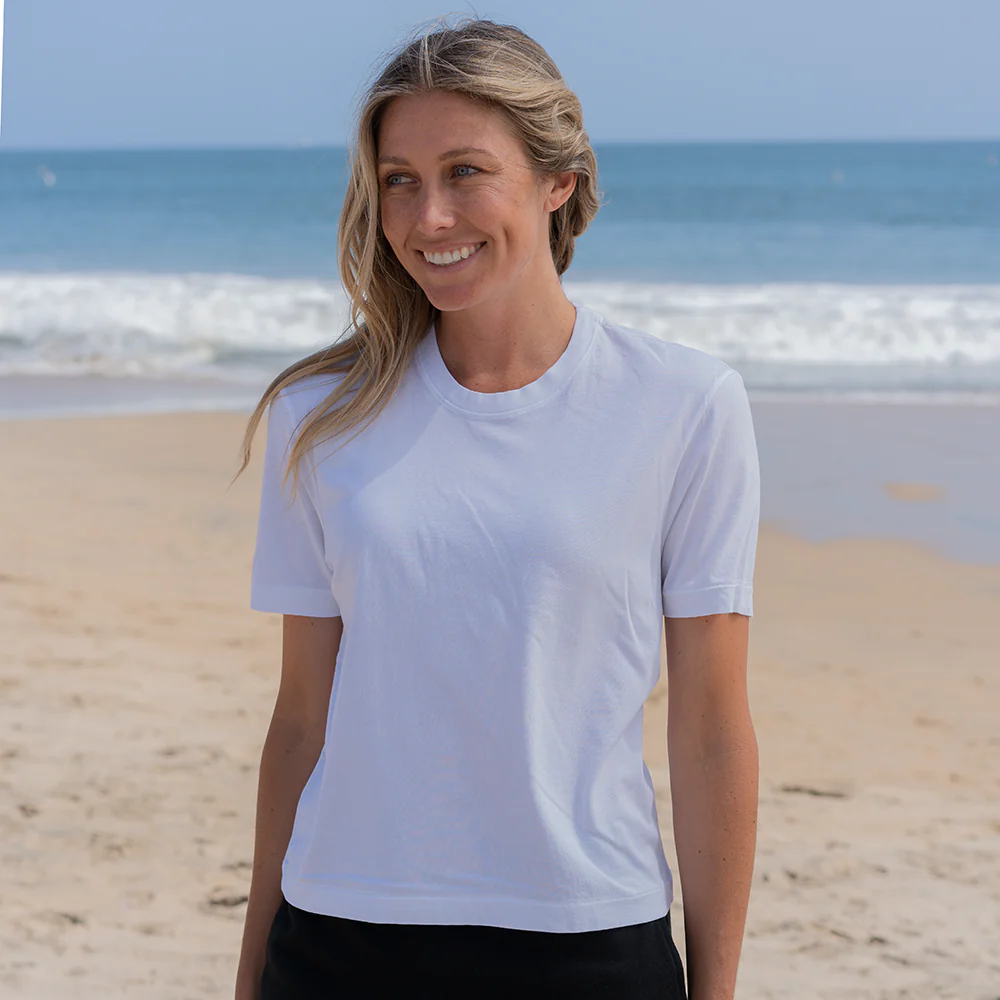
Exactly what the name promises: a properly made tee in 100% organic cotton, sold on its own without a fast-fashion catalogue around it.
Every scanned style came back single-fibre organic cotton, so there is no elastane hiding in the collar.
What MUD Jeans Gets Right, And Where MUD Jeans Uses 100% Organic Cotton
Where a MUD Jeans outfit is clean cotton, and where the plastic creeps in
We cannot hand you a head-to-toe plant-pure MUD Jeans outfit and keep a straight face, because a slice of the range is not plant pure.
So here is the honest version of how to dress in MUD Jeans and stay close to clean.
- Reach for the rigid, non-stretch styles first. The 100% organic cotton and 100% cotton jeans are the clean cotton heart of the brand, no elastane, no regenerated cellulose.
- Check the composition line on each product before you add to cart. If it lists elastane, T400 or Lyocell, you have left the natural column.
- Skip the stretch fits if a fully plant wardrobe is your goal. The recycled elastane is low, but low is not zero.
Dressed that way a MUD Jeans pair sits proudly next to the rest of your natural-fibre wardrobe.
Dressed off the wrong rack, you have bought sustainable-leaning denim with a thread of plastic in it, and you deserve to know which one you picked.
How MUD Jeans Compares To Brands That Fail The Natural Fibre Test
Let us be fair to MUD Jeans, because the comparison flatters them.
Most denim on the market is conventional cotton blended with five to twenty percent elastane and finished with petroleum dyes.
Fast fashion stretch jeans are practically plastic-cotton hybrids that shed microfibre from the first wash.
Against that field MUD Jeans win comfortably.
Their elastane is recycled and capped at two to three percent, their cotton is organic or recycled, and their indigo and supply chain are documented.
At 32.6% natural they fall short of a pass, and we will not pretend otherwise.
The clean passers in our directory hit 95% natural and above with no synthetic stretch at all.
MUD Jeans sit below that line, better than the high street but with most of the range still a plant-and-plastic blend.
Browse the full field at the clothing data hub and you can see exactly where that middle lands.
MUD Jeans Is Mostly 100% Organic Cotton, Is That Good For Your Skin And Health?
This is the real reason we count fibres instead of trusting a green logo.
A two percent elastane jean is a long way from a polyester one, and recycled elastane is better than virgin, but plastic in the cloth is still plastic in the cloth.
The way to lift above the question entirely is to choose rigid natural-fibre denim, the kind that wears in rather than wearing out into the water supply.
A pure blend brand like Mate the Label shows how far synthetic content can quietly travel through a wardrobe, and why reading the composition line matters every single time.
What Would Make MUD Jeans Pass
MUD Jeans are one of the more transparent denim brands alive, which makes the copy slips stand out more, not less.
The one that stopped us is the language around Tencel.
MUD Jeans describe their Lyocell as “a plant based alternative” made “from sustainable wood pulp,” framing it firmly as a natural, plant fibre.
Tencel and Refibra Lyocell begin as plant matter, yes, but the wood pulp is dissolved in solvent and chemically regenerated into fibre.
That is the textbook definition of a semi-synthetic, not a natural.
Our scan logs those four styles outside the plant column for exactly that reason, and a brand this transparent should call the fibre what it is rather than borrowing the word natural.
- The semi-synthetic worded as plant based. Lyocell is regenerated cellulose, a man-made fibre from a natural source. Honest, lower-impact, but not the same as cotton, and the copy blurs that line.
- Recycled elastane is still plastic. MUD Jeans deserve credit for capping it low and using recycled, but a stretch jean is not a synthetic-free jean, and the sustainability pages could state the elastane percentage as plainly as they state the recycled-cotton one.
- The living wage gap. MUD Jeans publish a code of conduct covering the ILO core freedoms and name their Tunisian factory, which is more than most. But we could not find a clear, audited living-wage commitment for every worker in the chain, only fair-labour language. Traceability past the certificate is the whole point, and wages are where it counts most.
It makes them a good brand whose marketing rounds up.
Fix the fibre wording and publish the wage floor, and the gap between the badge and the cloth nearly closes.
Who Owns MUD Jeans, And Is MUD Jeans Actually A Sustainable Brand?
MUD Jeans is owned by founder Bert van Son and remains an independent, certified B-Corp
MUD Jeans is independent.
It was founded in 2012 by Bert van Son, a textile-industry veteran who built the brand around leasing jeans rather than selling them, and he remains founder and chief executive.
There is no fashion conglomerate behind it and the company has raised only modest outside impact funding (around 2 million dollars from green investors such as StartGreen Capital and DOEN Participaties), which means the circular model is the business, not a marketing layer bolted onto a bigger group.
On the practise-what-you-preach test MUD Jeans score well.
They are a certified B-Corp, they publish a sustainability report, they name their fabric mill in Valencia and their manufacturer in Tunisia, and they run a genuine take-back and recycling loop where worn jeans become new fibre.
The lease model is real, not a stunt.
Importantly for our doubt checklist, MUD Jeans is made in Tunisia from Spanish-milled fabric, not India, so the organic-cotton fraud concerns we flag for India-sourced brands do not apply here.
The ownership story is one of the cleaner ones we have scanned: the brand is run by the person who built it, on the model it preaches, and audited by an independent standard.
The honesty wobble is in the fibre marketing, not the boardroom.
Is MUD Jeans Legit And Sustainable? MUD Jeans And The Fibre Verdict
Yes, MUD Jeans is a real, independent, B-Corp circular denim brand doing far more than the high street.
But legit and clean are not the same word, and we will not vouch that MUD Jeans is a fully plant pass, because the scan says it is not.
They claim a circular, sustainable, plant-rooted wardrobe; the hard verdict is 32.6% natural, with recycled elastane and regenerated cellulose making up the bulk of the rest.
Buy MUD Jeans if you want the most ethical, traceable, repairable denim brand on the market and you are happy with a low recycled-elastane content for the stretch and comfort.
Choose the rigid 100% cotton styles and you are very close to clean.
Avoid MUD Jeans, or pick one of the passers above, if your standard is zero plastic in the weave and a fibre that is natural rather than merely natural-derived.
What do real wearers say?
On Trustpilot, where the brand sits mid-pack across its reviews, the honesty cuts both ways.
The most useful critical note is durability: one reviewer described their leased jeans ripping while sitting cross-legged about five months in and becoming unwearable, and several UK customers flagged painful return shipping and a missing customs invoice that made sending items back a hassle.
One subscriber complained the monthly lease payment kept coming after they asked to cancel.
On the other side, a long-term owner wrote that after almost three years their pair had not faded, ripped or thinned, and lease customers repeatedly praised getting good jeans without paying upfront and the free repairs.
That is the real trade: you get the most circular denim model going and strong ethics, the cost is a stretch-fibre asterisk, mid-range durability reports and a returns process that can sting from outside the EU.
Cross-check the fibres yourself on the MUD Jeans listing and the wider clothing data hub.
Want the receipts?
Download the MUD Jeans data sheet and browse every brand’s raw material data at the clothing data hub.